EMOTION
Etymologically the word 'emotion' is derived
from the Latin word, 'emovere' which means
'to stir up' or 'to excite. In common usage emotion is
referred to as a subjective feeling.
Feelings are simple experiences of the affective type,
pleasant or unpleasant.
Emotions are agitated states of our mind and body
leading us to perform some or other type of behaviour
al acts.
INTRODUCTION
According to Woodworth,
Emotion is a 'moved' or 'stirred-up‘ state of an
organism. It is a stirred-up state of feeling and appears
that way to the individual himself. It is a disturbed
muscular and glandular activity and appears that way to
the external observer. OR
Merriam-Webster defines emotion as a conscious &
subjective mental reaction towards a particular event &
is usually accompanied by changes in the physiological
& behavioural aspects of a person.
DEFINITION
 Emotions are universal.
 Emotions are personal/ unique.
 Emotions rises abruptly but subside slowly.
 Emotions are the product of our perceptions.
 Same emotions can be aroused by a number of
different stimuli, objects,& situations.
NATURE & CHARACTERISTICS OF
EMOTIONS
There are three types of components-
Cognitive components(Knowing)
Affective component(Feeling)
Conative component(Doing)
COMPONENTS OF EMOTION
1. Positive Emotions
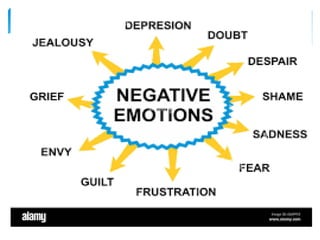
2. Negative Emotions
KINDS OF EMOTIONS
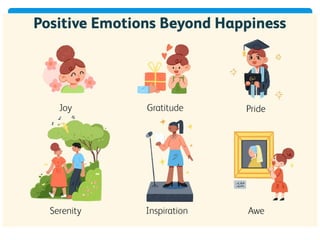
Positive emotions that lead one to
feel good about one’s self will lead
to an emotionally happy & satisfied
result.
POSITIVE EMOTIONS
Unpleasant emotions like fear,
anger , jealousy which are harmful
to the well being & development of
an indiviudual are termed as
negative emotions.
NEGATIVE EMOTIONS
CHANGES IN EMOTIONAL
REACTIONS
 External Changes.
 Physiological Changes.
 Psychological Changes.
1. Facial Expressions : Face is flushed
in anger & pale in fear. Mouth
turns down in unpleasant
emotions & turn up in pleasant
emotions.
EXTERNAL CHANGES
2.Bodily movement & gestures:
Unexpected fearful situation might
cause a startle pattern in which the
eyes close, mouth widens , head &
neck are thrust forward.
3 . Voice disturbances: A tremor or a
break in the voice –deep sorrow. A
loud sharp high-pitched voice – anger.
Speech is low & monotonous –
dejection & sadness & rapid- tension &
excitement.
Physiological changes occurring during an
emotional state are mainly due to the
autonomic nervous system and the endocrine
gland system. The autonomic nervous system
has two sub divisions-sympathetic division and
parasympathetic division. The sympathetic
division of the autonomic nervous system
prepares the body for emergency action
during aroused states.
PHYSIOLOGICAL CHANGES
Increased blood pressure (BP) and heart
rate.
 Changes in the rate of respiration.
 Dilation of pupils.
 Sweating and decreased secretion of saliva.
Increased blood sugar level.
Decreased mobility of the gastrointestinal
tract.
Erect hair on the skin.
 Muscular tensions and tremors
The physiological changes produced by the
parasympathetic nervous system are as follows:
 Reduction of heart rate and BP.
 Diversion of blood to the internal organs
and digestive tract.
 Regulation of salt and water level in the body.
 Building up and conservation of body energy.
During emotional experiences perception ,learning ,
consciousness and memory are affected.
I. Thinking & reasoning will be affected adversely.
II. Learning will be slowed down during emotion.
III. Memory will be inhibited.
IV. Disorientation of time, place & person may
experience during an intense emotion.
V. Person may be unable to concentrate in his tasks.
VI. Decrease in self –confidence & self –esteem.
PSYCHOLOGICAL CHANGES
 James-Lange Theory
 Cannon-Bard Theory
 Schachter-Singer Theory
 Lazarus Theory
THEORIES OF EMOTIONS
The James-Lange theory proposes that an event
or stimulus causes a physiological arousal
without any interpretation or conscious
thought and you experience the resulting
emotion only after you interpret the physical
response.
JAMES- LANGE THEORY
The Cannon Bard theory, on the other hand ,
suggests that the given stimulus evokes both a
physiological and an emotional response
simultaneously and that neither one causes the
other.
CANNNON BARD THEORY
The Schachter-Singer theory takes a more
cognitive approach to the issue . He believes
that an event causes physiological arousal , but
that you must then identify a reason for the
arousal before you label the emotion.
Schachter-Singer Theory
When an event occurs, a cognitive appraisal is
made (either consciously or subconsciously) and
based on the result of that appraisal, an emotion
and physiological response follow.
Lazarus Theory
Dr . Schindler says-by controlling our own emotions we
can eliminate half of the nagging illnesses that plague
our daily lives. Our body functions well when we are
happy. There is an old saying, "Joy is the best
medicine”.
1. Intense and unpleasant emotions disturb the whole
individual. If they persist longer they may cause illness
or worsen the condition of one already ill.
EMOTIONS IN HEALTH AND ILLNESS
2. Negative emotions can weaken body's immune
system and cause infections. When the person is
stressed or anxious he may not take care of his
health as well as he should. He may not feel like
exercising, eating nutritious food or taking
the prescribed medicine. He may abuse
alcohol, tobacco or other drugs.
 Modern medicine shows that uncontrolled emotionality
plays a vital role in the causation of many physical disorders
which include:
I. Peptic ulcer.
II. Heart diseases.
III. Epilepsy.
IV. Diabetes and tuberculosis (TB) are made worse.
V. Bronchial asthma.
VI. Increased BP.
VII. Insomnia, chronic constipation.
VIII. Functional colitis.
IX. Skin disorders like pruritus, psoriasis, etc.
X. Susceptible to infections.
The knowledge about emotions is important for a nurse.
Normally the patients are less self controlled because of their
illness. They may be tense, irritable and unbalanced. Therefore,
the nurse has to be very mature and balanced in her behavior
towards the patient.
1. The nurse has to substitute patient's negative emotions with
positive emotions. She has to replace fear, depression and
hatred with hope, courage and love.
2. The nurse should avoid tensions at all costs. She should
develop sound philosophy of life and learn self-control.
Nursing Implications of Emotions
THANK YOU

emotion ppt.pdf

  • 1.
  • 2.
    Etymologically the word'emotion' is derived from the Latin word, 'emovere' which means 'to stir up' or 'to excite. In common usage emotion is referred to as a subjective feeling. Feelings are simple experiences of the affective type, pleasant or unpleasant. Emotions are agitated states of our mind and body leading us to perform some or other type of behaviour al acts. INTRODUCTION
  • 3.
    According to Woodworth, Emotionis a 'moved' or 'stirred-up‘ state of an organism. It is a stirred-up state of feeling and appears that way to the individual himself. It is a disturbed muscular and glandular activity and appears that way to the external observer. OR Merriam-Webster defines emotion as a conscious & subjective mental reaction towards a particular event & is usually accompanied by changes in the physiological & behavioural aspects of a person. DEFINITION
  • 4.
     Emotions areuniversal.  Emotions are personal/ unique.  Emotions rises abruptly but subside slowly.  Emotions are the product of our perceptions.  Same emotions can be aroused by a number of different stimuli, objects,& situations. NATURE & CHARACTERISTICS OF EMOTIONS
  • 5.
    There are threetypes of components- Cognitive components(Knowing) Affective component(Feeling) Conative component(Doing) COMPONENTS OF EMOTION
  • 6.
    1. Positive Emotions 2.Negative Emotions KINDS OF EMOTIONS
  • 7.
    Positive emotions thatlead one to feel good about one’s self will lead to an emotionally happy & satisfied result. POSITIVE EMOTIONS
  • 10.
    Unpleasant emotions likefear, anger , jealousy which are harmful to the well being & development of an indiviudual are termed as negative emotions. NEGATIVE EMOTIONS
  • 13.
    CHANGES IN EMOTIONAL REACTIONS External Changes.  Physiological Changes.  Psychological Changes.
  • 14.
    1. Facial Expressions: Face is flushed in anger & pale in fear. Mouth turns down in unpleasant emotions & turn up in pleasant emotions. EXTERNAL CHANGES
  • 16.
    2.Bodily movement &gestures: Unexpected fearful situation might cause a startle pattern in which the eyes close, mouth widens , head & neck are thrust forward. 3 . Voice disturbances: A tremor or a break in the voice –deep sorrow. A loud sharp high-pitched voice – anger. Speech is low & monotonous – dejection & sadness & rapid- tension & excitement.
  • 17.
    Physiological changes occurringduring an emotional state are mainly due to the autonomic nervous system and the endocrine gland system. The autonomic nervous system has two sub divisions-sympathetic division and parasympathetic division. The sympathetic division of the autonomic nervous system prepares the body for emergency action during aroused states. PHYSIOLOGICAL CHANGES
  • 18.
    Increased blood pressure(BP) and heart rate.  Changes in the rate of respiration.  Dilation of pupils.  Sweating and decreased secretion of saliva. Increased blood sugar level. Decreased mobility of the gastrointestinal tract. Erect hair on the skin.  Muscular tensions and tremors
  • 19.
    The physiological changesproduced by the parasympathetic nervous system are as follows:  Reduction of heart rate and BP.  Diversion of blood to the internal organs and digestive tract.  Regulation of salt and water level in the body.  Building up and conservation of body energy.
  • 20.
    During emotional experiencesperception ,learning , consciousness and memory are affected. I. Thinking & reasoning will be affected adversely. II. Learning will be slowed down during emotion. III. Memory will be inhibited. IV. Disorientation of time, place & person may experience during an intense emotion. V. Person may be unable to concentrate in his tasks. VI. Decrease in self –confidence & self –esteem. PSYCHOLOGICAL CHANGES
  • 21.
     James-Lange Theory Cannon-Bard Theory  Schachter-Singer Theory  Lazarus Theory THEORIES OF EMOTIONS
  • 22.
    The James-Lange theoryproposes that an event or stimulus causes a physiological arousal without any interpretation or conscious thought and you experience the resulting emotion only after you interpret the physical response. JAMES- LANGE THEORY
  • 23.
    The Cannon Bardtheory, on the other hand , suggests that the given stimulus evokes both a physiological and an emotional response simultaneously and that neither one causes the other. CANNNON BARD THEORY
  • 24.
    The Schachter-Singer theorytakes a more cognitive approach to the issue . He believes that an event causes physiological arousal , but that you must then identify a reason for the arousal before you label the emotion. Schachter-Singer Theory
  • 25.
    When an eventoccurs, a cognitive appraisal is made (either consciously or subconsciously) and based on the result of that appraisal, an emotion and physiological response follow. Lazarus Theory
  • 28.
    Dr . Schindlersays-by controlling our own emotions we can eliminate half of the nagging illnesses that plague our daily lives. Our body functions well when we are happy. There is an old saying, "Joy is the best medicine”. 1. Intense and unpleasant emotions disturb the whole individual. If they persist longer they may cause illness or worsen the condition of one already ill. EMOTIONS IN HEALTH AND ILLNESS
  • 29.
    2. Negative emotionscan weaken body's immune system and cause infections. When the person is stressed or anxious he may not take care of his health as well as he should. He may not feel like exercising, eating nutritious food or taking the prescribed medicine. He may abuse alcohol, tobacco or other drugs.
  • 30.
     Modern medicineshows that uncontrolled emotionality plays a vital role in the causation of many physical disorders which include: I. Peptic ulcer. II. Heart diseases. III. Epilepsy. IV. Diabetes and tuberculosis (TB) are made worse. V. Bronchial asthma. VI. Increased BP. VII. Insomnia, chronic constipation. VIII. Functional colitis. IX. Skin disorders like pruritus, psoriasis, etc. X. Susceptible to infections.
  • 31.
    The knowledge aboutemotions is important for a nurse. Normally the patients are less self controlled because of their illness. They may be tense, irritable and unbalanced. Therefore, the nurse has to be very mature and balanced in her behavior towards the patient. 1. The nurse has to substitute patient's negative emotions with positive emotions. She has to replace fear, depression and hatred with hope, courage and love. 2. The nurse should avoid tensions at all costs. She should develop sound philosophy of life and learn self-control. Nursing Implications of Emotions
  • 32.