EMOTIONS
UNIT 4: Bsc Nursing
By, Mrs Jinchu Paul
RGCN Faculty
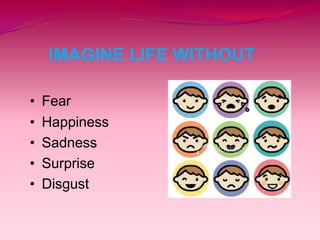
IMAGINE LIFE WITHOUT
• Fear
• Happiness
• Sadness
• Surprise
• Disgust
WHAT ARE EMOTIONS?
Introduction
• Emotion is a complex psychological
phenomenon which occurs as
animals or people live their lives.
• It is Intense feeling that are directed
at someone or something
DEFINITION
“Emotion is a complete effective
experience that involves diffuse
physiological changes and can be
expressed overtly in characteristic
behaviour patterns”.
Charles G Morris:
EMOTIONS INCLUDE THREE THINGS
1. Conscious experience (feelings)
2. Expressions which can be seen by
others
3. Actions of the body ('physiological
arousal')
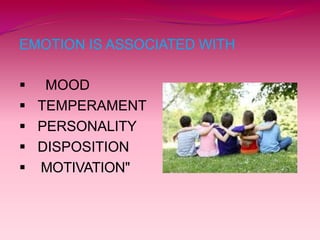
EMOTION IS ASSOCIATED WITH
 MOOD
 TEMPERAMENT
 PERSONALITY
 DISPOSITION
 MOTIVATION"
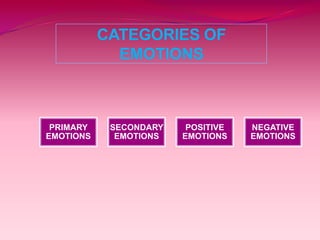
CATEGORIES OF
EMOTIONS
PRIMARY
EMOTIONS
SECONDARY
EMOTIONS
POSITIVE
EMOTIONS
NEGATIVE
EMOTIONS
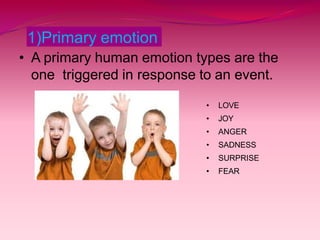
1)Primary emotion
• A primary human emotion types are the
one triggered in response to an event.
• LOVE
• JOY
• ANGER
• SADNESS
• SURPRISE
• FEAR
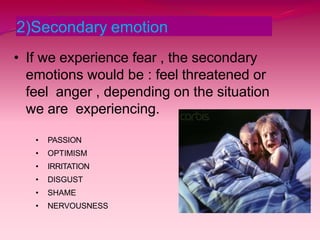
2)Secondary emotion
• If we experience fear , the secondary
emotions would be : feel threatened or
feel anger , depending on the situation
we are experiencing.
• PASSION
• OPTIMISM
• IRRITATION
• DISGUST
• SHAME
• NERVOUSNESS
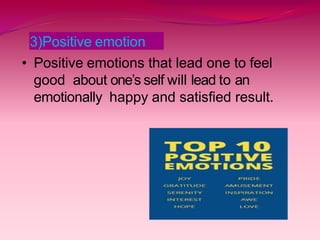
3)Positive emotion
• Positive emotions that lead one to feel
good about one’s self will lead to an
emotionally happy and satisfied result.
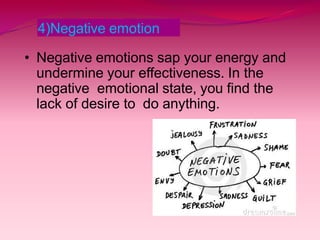
4)Negative emotion
• Negative emotions sap your energy and
undermine your effectiveness. In the
negative emotional state, you find the
lack of desire to do anything.
FACTORS AFFECTING
EMOTIONS
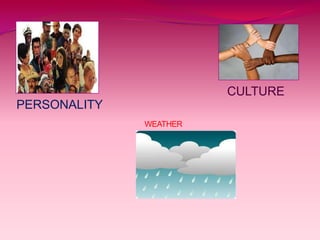
CULTURE
PERSONALITY
WEATHER
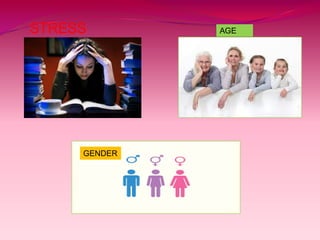
STRESS AGE
GENDER
ENVIROMENTAL
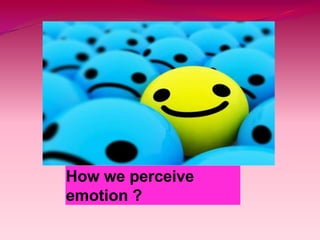
How we perceive
emotion ?
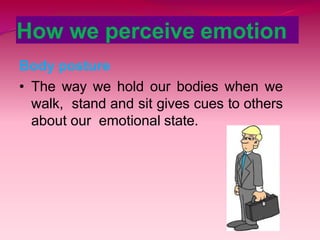
How we perceive emotion
Body posture
• The way we hold our bodies when we
walk, stand and sit gives cues to others
about our emotional state.
• It clues them in to how relaxed or tense
we are and how confident or shy we
are.
• Depending on how close we're standing to
another person, it can also show
aggression or love, dominance or
submission.
Speech Patterns
• We may choose our words carefully
when we're angry or expressing
happiness.
• Our emotions cause us not only to
feel differently, but also to speak
differently
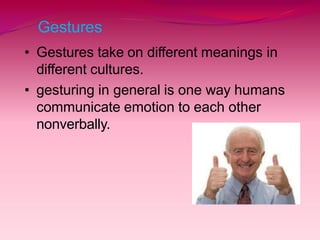
Gestures
• Gestures take on different meanings in
different cultures.
• gesturing in general is one way humans
communicate emotion to each other
nonverbally.
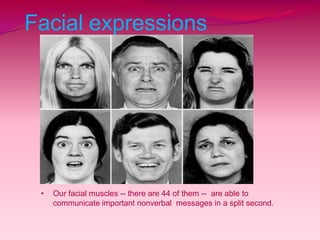
Facial expressions
• Our facial muscles -- there are 44 of them -- are able to
communicate important nonverbal messages in a split second.
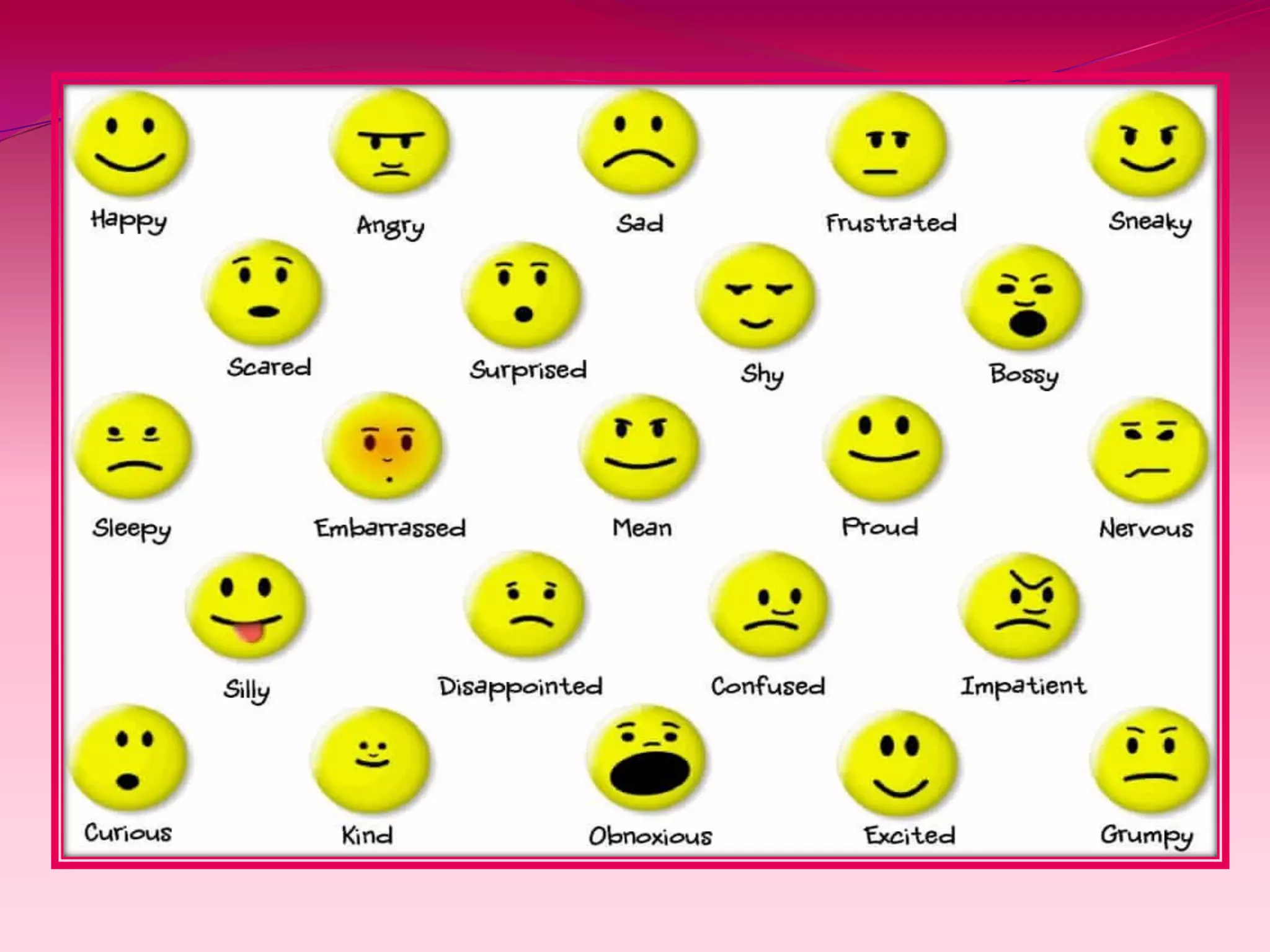
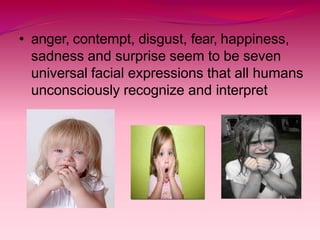
• anger, contempt, disgust, fear, happiness,
sadness and surprise seem to be seven
universal facial expressions that all humans
unconsciously recognize and interpret
Physiological Cues
• our emotions are accompanied by
subtle physiological change
• A subtle flush of the face or increase in
heart rate or body temperature could be
a clue to the emotional state of the
person you're talking to.
THEORIES OF EMOTIONS
1)Cannon-bard theory of
emotion
It states that
• we react to a stimulus and experience
the associated emotion at the same
time.
• we feel emotions and experience
physiological reactions such as sweating,
trembling and muscle tension
simultaneously.
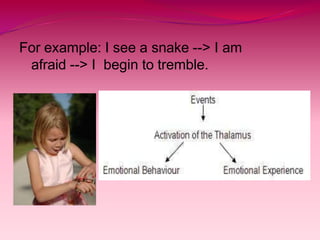
For example: I see a snake --> I am
afraid --> I begin to tremble.
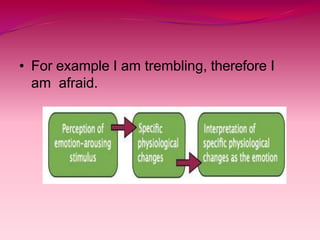
2)James-lange theory of
emotion
It states that
• emotions occur as a result of
physiological reactions to events.
• proposes that you will interpret your
physical reactions and conclude that you
are frightened.
• For example I am trembling, therefore I
am afraid.
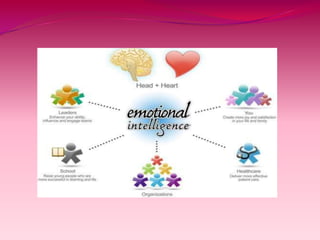
EMOTIONAL INTELLIGENCE
• Emotional intelligence (EI) refers to the
ability to perceive, control and evaluate
emotions.
FOUR BRANCHES
• Salovey and Mayer proposed a model
that identified four different factors of
emotional intelligence
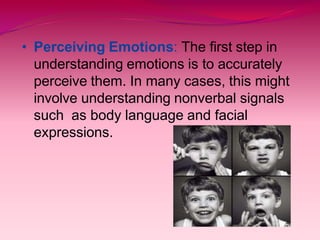
• Perceiving Emotions: The first step in
understanding emotions is to accurately
perceive them. In many cases, this might
involve understanding nonverbal signals
such as body language and facial
expressions.
• Reasoning With Emotions: The next
step involves using emotions to
promote thinking and cognitive activity.
Emotions help prioritize what we pay
attention and react to; we respond
emotionally to things that garner our
attention.
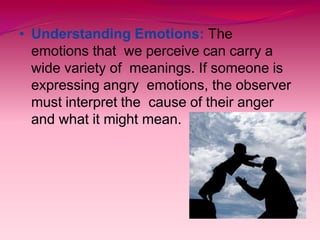
• Understanding Emotions: The
emotions that we perceive can carry a
wide variety of meanings. If someone is
expressing angry emotions, the observer
must interpret the cause of their anger
and what it might mean.
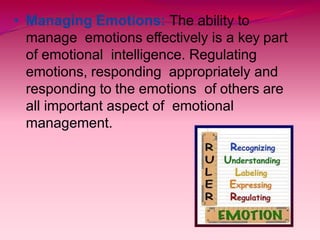
• Managing Emotions: The ability to
manage emotions effectively is a key part
of emotional intelligence. Regulating
emotions, responding appropriately and
responding to the emotions of others are
all important aspect of emotional
management.
Emotions 1st yr bs c

Emotions 1st yr bs c

  • 2.
    EMOTIONS UNIT 4: BscNursing By, Mrs Jinchu Paul RGCN Faculty
  • 3.
    IMAGINE LIFE WITHOUT •Fear • Happiness • Sadness • Surprise • Disgust
  • 4.
  • 5.
    Introduction • Emotion isa complex psychological phenomenon which occurs as animals or people live their lives. • It is Intense feeling that are directed at someone or something
  • 6.
    DEFINITION “Emotion is acomplete effective experience that involves diffuse physiological changes and can be expressed overtly in characteristic behaviour patterns”. Charles G Morris:
  • 7.
    EMOTIONS INCLUDE THREETHINGS 1. Conscious experience (feelings) 2. Expressions which can be seen by others 3. Actions of the body ('physiological arousal')
  • 8.
    EMOTION IS ASSOCIATEDWITH  MOOD  TEMPERAMENT  PERSONALITY  DISPOSITION  MOTIVATION"
  • 9.
  • 10.
    1)Primary emotion • Aprimary human emotion types are the one triggered in response to an event. • LOVE • JOY • ANGER • SADNESS • SURPRISE • FEAR
  • 11.
    2)Secondary emotion • Ifwe experience fear , the secondary emotions would be : feel threatened or feel anger , depending on the situation we are experiencing. • PASSION • OPTIMISM • IRRITATION • DISGUST • SHAME • NERVOUSNESS
  • 12.
    3)Positive emotion • Positiveemotions that lead one to feel good about one’s self will lead to an emotionally happy and satisfied result.
  • 13.
    4)Negative emotion • Negativeemotions sap your energy and undermine your effectiveness. In the negative emotional state, you find the lack of desire to do anything.
  • 14.
  • 15.
  • 16.
  • 17.
  • 18.
  • 19.
    How we perceiveemotion Body posture • The way we hold our bodies when we walk, stand and sit gives cues to others about our emotional state.
  • 20.
    • It cluesthem in to how relaxed or tense we are and how confident or shy we are. • Depending on how close we're standing to another person, it can also show aggression or love, dominance or submission.
  • 21.
    Speech Patterns • Wemay choose our words carefully when we're angry or expressing happiness. • Our emotions cause us not only to feel differently, but also to speak differently
  • 22.
    Gestures • Gestures takeon different meanings in different cultures. • gesturing in general is one way humans communicate emotion to each other nonverbally.
  • 23.
    Facial expressions • Ourfacial muscles -- there are 44 of them -- are able to communicate important nonverbal messages in a split second.
  • 24.
    • anger, contempt,disgust, fear, happiness, sadness and surprise seem to be seven universal facial expressions that all humans unconsciously recognize and interpret
  • 25.
    Physiological Cues • ouremotions are accompanied by subtle physiological change • A subtle flush of the face or increase in heart rate or body temperature could be a clue to the emotional state of the person you're talking to.
  • 26.
  • 27.
    1)Cannon-bard theory of emotion Itstates that • we react to a stimulus and experience the associated emotion at the same time. • we feel emotions and experience physiological reactions such as sweating, trembling and muscle tension simultaneously.
  • 28.
    For example: Isee a snake --> I am afraid --> I begin to tremble.
  • 29.
    2)James-lange theory of emotion Itstates that • emotions occur as a result of physiological reactions to events. • proposes that you will interpret your physical reactions and conclude that you are frightened.
  • 30.
    • For exampleI am trembling, therefore I am afraid.
  • 32.
    EMOTIONAL INTELLIGENCE • Emotionalintelligence (EI) refers to the ability to perceive, control and evaluate emotions.
  • 33.
    FOUR BRANCHES • Saloveyand Mayer proposed a model that identified four different factors of emotional intelligence
  • 34.
    • Perceiving Emotions:The first step in understanding emotions is to accurately perceive them. In many cases, this might involve understanding nonverbal signals such as body language and facial expressions.
  • 35.
    • Reasoning WithEmotions: The next step involves using emotions to promote thinking and cognitive activity. Emotions help prioritize what we pay attention and react to; we respond emotionally to things that garner our attention.
  • 36.
    • Understanding Emotions:The emotions that we perceive can carry a wide variety of meanings. If someone is expressing angry emotions, the observer must interpret the cause of their anger and what it might mean.
  • 37.
    • Managing Emotions:The ability to manage emotions effectively is a key part of emotional intelligence. Regulating emotions, responding appropriately and responding to the emotions of others are all important aspect of emotional management.