Man, Microbes and
Environment
ANTIMICROBIAL AND TARGETS
ANTIMICROBIAL
“An antimicrobial is an agent that kills microorganisms or inhibits their
growth”
Or
“Any substance of natural, semi-synthetic or synthetic origin that kills or
inhibits the growth of microorganisms but causes little or no damage to
the host”
EXPLANATION
The word antimicrobial was derived from the Greek words
● anti (against),
● mikros (little) and
● bios (life)
● This is not synonymous with antibiotics, a similar term derived from
the Greek word
■ anti (against) and
■ biotikos (concerning life).
GENERAL PROPERTIES OF ANTIMICROBIAL
AGENTS
Antimicrobial agents share certain common properties. We
can learn much about how these agents work and why
they sometimes do not work by considering such
properties as
● selective toxicity,
● spectrum of activity,
● mode of action,
● side effects, and
● resistance of microorganisms to them.
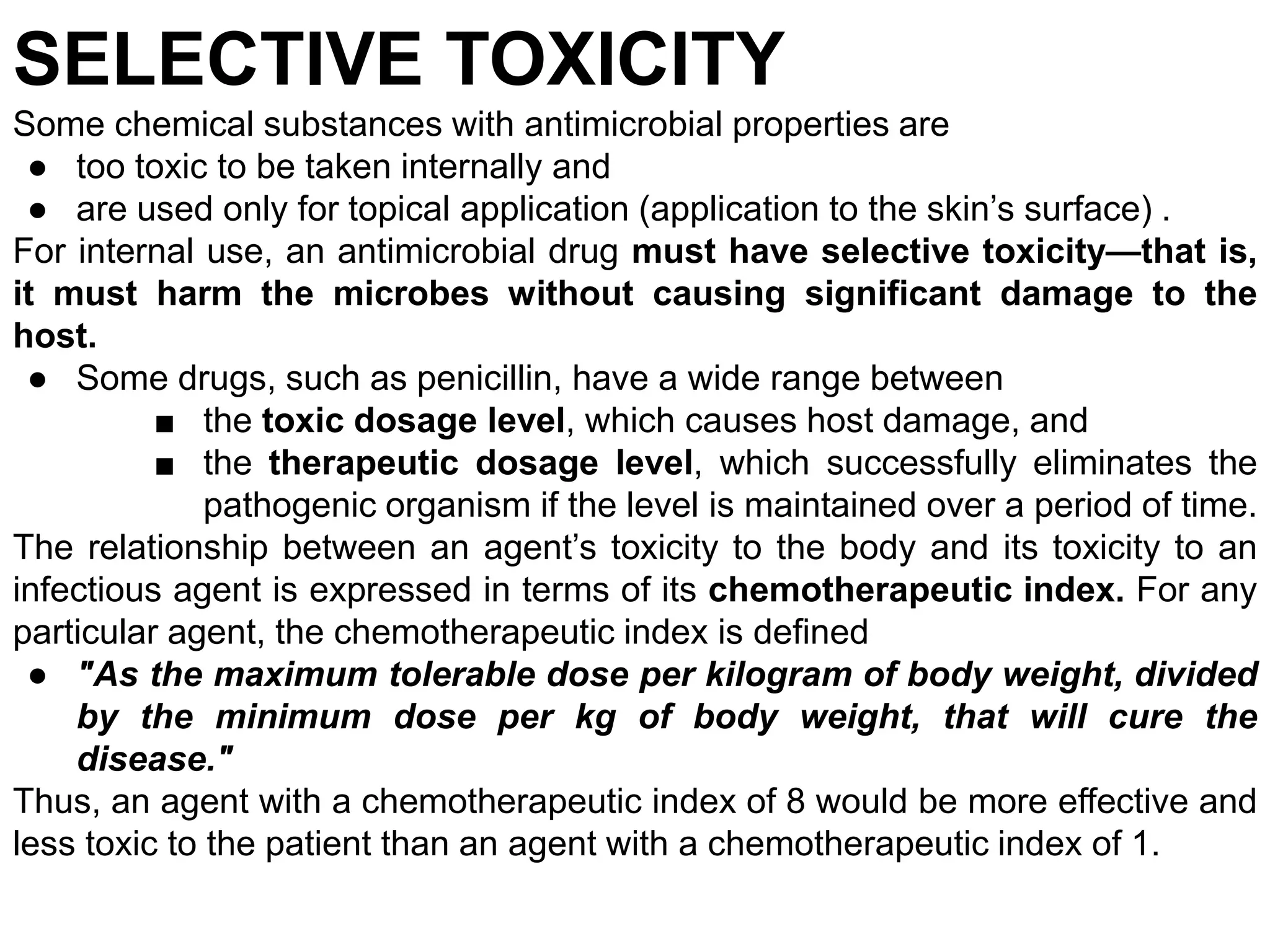
SELECTIVE TOXICITY
Some chemical substances with antimicrobial properties are
● too toxic to be taken internally and
● are used only for topical application (application to the skin’s surface) .
For internal use, an antimicrobial drug must have selective toxicity—that is,
it must harm the microbes without causing significant damage to the
host.
● Some drugs, such as penicillin, have a wide range between
■ the toxic dosage level, which causes host damage, and
■ the therapeutic dosage level, which successfully eliminates the
pathogenic organism if the level is maintained over a period of time.
The relationship between an agent’s toxicity to the body and its toxicity to an
infectious agent is expressed in terms of its chemotherapeutic index. For any
particular agent, the chemotherapeutic index is defined
● "As the maximum tolerable dose per kilogram of body weight, divided
by the minimum dose per kg of body weight, that will cure the
disease."
Thus, an agent with a chemotherapeutic index of 8 would be more effective and
less toxic to the patient than an agent with a chemotherapeutic index of 1.
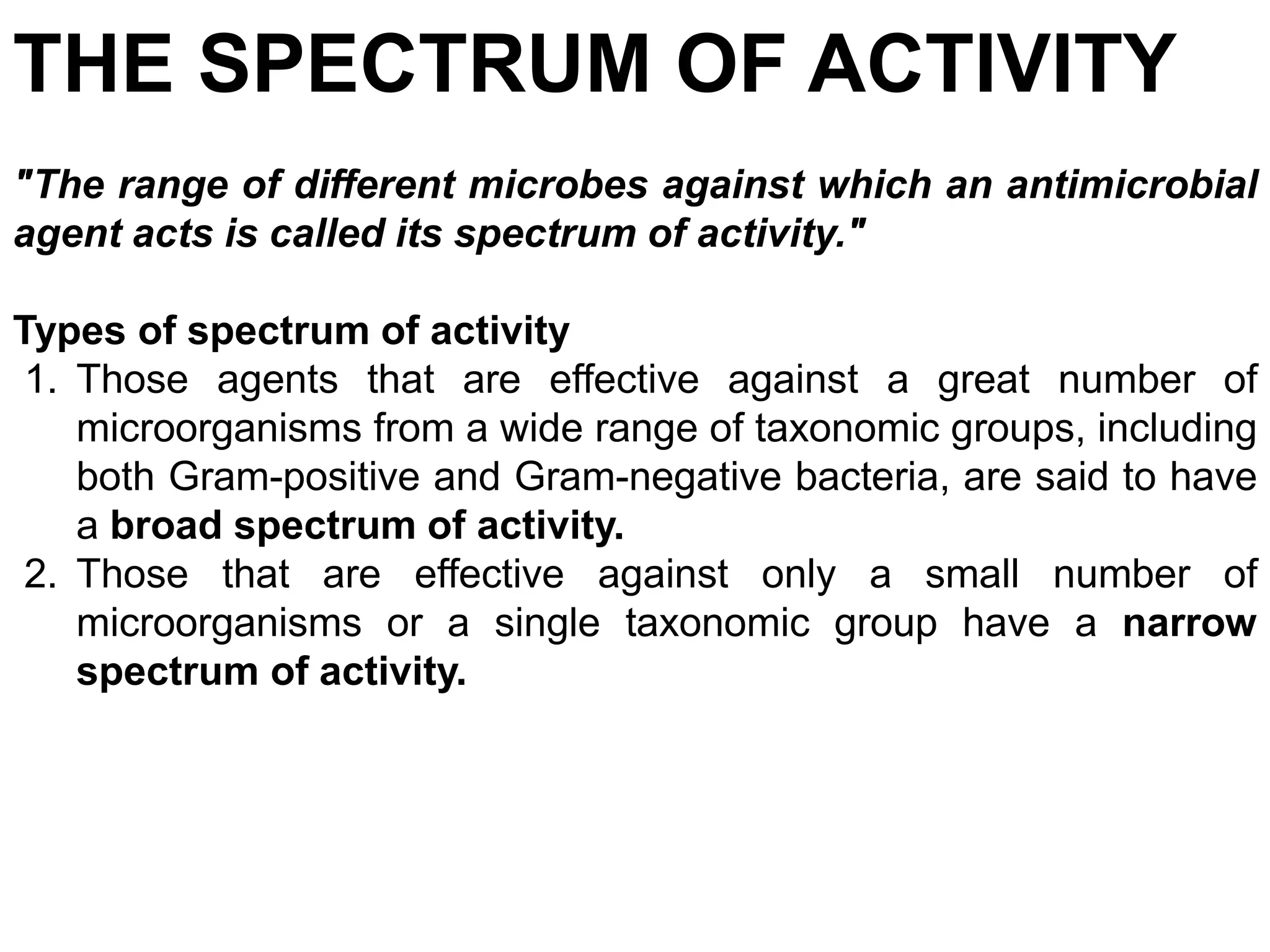
THE SPECTRUM OF ACTIVITY
"The range of different microbes against which an antimicrobial
agent acts is called its spectrum of activity."
Types of spectrum of activity
1. Those agents that are effective against a great number of
microorganisms from a wide range of taxonomic groups, including
both Gram-positive and Gram-negative bacteria, are said to have
a broad spectrum of activity.
2. Those that are effective against only a small number of
microorganisms or a single taxonomic group have a narrow
spectrum of activity.
MODE OF ACTION
1. Inhibitors of cell wall synthesis
2. Inhibitors of cell membrane function
3. Inhibitors of protein synthesis
4. Inhibitors of nucleic acid synthesis
5. Action as Antimetabolites
Inhibitors of cell wall synthesis:
● Many bacterial and fungal cells have rigid external cell walls,
whereas animal cells lack cell walls. Consequently, inhibiting cell
wall synthesis selectively damages bacterial and fungal cells.
● Bacterial cells, especially Gram-positive ones, have a high internal
osmotic pressure. Without a normal, sturdy cell wall, these cells
burst when subjected to the low osmotic pressure of body fluids.
● Antibiotics such as penicillin and cephalosporin contain a
chemical structure called a b-lactam ring, which attaches to the
enzymes that cross-link peptidoglycans.
● By interfering with the cross-linking of tetrapeptides, these
antibiotics prevent cell wall synthesis..
● Fungi and Archaea, whose cell walls lack peptidoglycan, are
unaffected by these antibiotics.
Inhibitors of cell membrane function
● All cells are bounded by a membrane. Although the membranes of
all cells are quite similar, those of bacteria and fungi differ
sufficiently from those of animal cells to allow selective action
of antimicrobial agents.
● Certain polypeptide antibiotics, such as polymyxins, act as
detergents and distort bacterial cell membranes, probably by binding
to phospholipids in the membrane.
● These antibiotics are especially effective against Gram-negative
bacteria, which have an outer membrane rich in phospholipids.
● Polyene antibiotics, such as amphotericin B, bind to particular
sterols, present in the membranes of fungal (and animal) cells.
● Thus, polymyxins do not act on fungi, and polyenes do not act on
bacteria.
Inhibitors of protein synthesis
● In all cells, protein synthesis requires not only the information stored
in DNA, plus several kinds of RNA, but also ribosomes.
● Differences between bacterial (70S) and animal (80S) ribosomes
allow antimicrobial agents to attack bacterial cells without
significantly damaging animal cells—that is, with selective
toxicity.
● Aminoglycoside antibiotics, such as streptomycin, derive their
name from the amino acids and glycosidic bonds they contain. They
act on the 30S portion of bacterial ribosomes by interfering
with the accurate reading (translation) of the mRNA message—
that is, the incorporation of the correct amino acids.
● Chloramphenicol and erythromycin act on the 50S portion of
bacterial ribosomes, inhibiting the formation of the growing
polypeptide.
● Because animal cell ribosomes consist of 60S and 40S
subunits, these antibiotics have little effect on host cells.
● (Mitochondria, however, which have 70S ribosomes, can be affected
by such drugs.)
Inhibitors of nucleic acid synthesis
● Differences between the enzymes used by bacterial and animal cells to
synthesize nucleic acids provide a means for selective action of
antimicrobial agents.
● Antibiotics of the rifamycin family bind to a bacterial RNA polymerase
and inhibit RNA synthesis.
Action as Antimetabolites
● The normal metabolic processes of microbial cells involve a series of
intermediate compounds called metabolites that are essential for cellular
growth and survival. Antimetabolites are substances that affect the
utilization of metabolites and therefore prevent a cell from carrying
out necessary metabolic reactions.
● Antimetabolites function in two ways:
○ by competitively inhibiting enzymes and
○ by being erroneously incorporated into important molecules such
as nucleic acids.
Antimetabolites are structurally similar to normal metabolites. The actions of
antimetabolites are sometimes called molecular mimicry because they mimic,
or imitate, the normal molecule, preventing a reaction from occurring or causing
it to go away.
KINDS OF SIDE EFFECTS
The side effects of antimicrobial agents on infected
persons (hosts) fall into three general categories:
● Toxicity
● Allergy
● Disruption of Normal Microflora
THE RESISTANCE OF MICROORGANISMS
Resistance of a microorganism to an antibiotic
means that a microorganism formerly susceptible to
the action of the antibiotic is no longer affected by it.
TYPES OF ANTIMICROBIAL DRUGS
Different types of antimicrobial drugs are commonly available.
These are as follows:
1. Antibacterial (antibiotics) drug: A drug which is used to
inhibit the pathogenic activity of bacteria is called as
antibacterial drugs. Example: Zithromax.
2. Antifungal drug: A drug which is used to prevent the fungal
activity in the host is called an antifungal drug. Example:
Amphotericin B
3. Antiviral agent: A drug which is used to stop the pathogenic
action of a virus is called as antiviral agents. Example: Tamiflu.
4. Antiparasitic drug: A drug which is used to prevent the
growth of pathogenic parasites. Example: Anthelmintics
ANTIBIOTICS, TARGETS & MODE OF ACTION
ANTIBIOTICS
“A low molecular substance produced by a microorganism that at a low
concentration inhibits or kills other microorganisms.”
● Antibiotics are medicines that help stop infections caused by
bacteria.
● They do this by killing the bacteria or by keeping them from copying
themselves or reproducing.
● The word antibiotic means “against life.” Any drug that kills germs in
your body is technically an antibiotic.
● The development of chemical synthesis has helped to produce the
synthetic components which act as an antimicrobial agent against
the pathogenic bacteria. These synthetic components are also called
as antibiotics.
● Pathogenic bacteria can be killed by the synthetic components at
low concentrations.
DISCOVERY
● In 1908, a German bacteriologist, Paul Ehrlich
had developed a synthetic component from an
arsenic based structures for the treatment of
syphilis, which is called as arsphenamine or
salvarsan.
● Then, in 1929, Alexander Fleming discovered
Penicillin from the fungus Penicillium notatum.
Penicillin is used to treat different type of
bacterial infections.
Sources of Antibiotics Agents:-
1. Natural Antibiotics:
● The original antibiotics were derived from fungal sources. These can
be referred to as “natural” antibiotics
● Organisms develop resistance faster to the natural antimicrobials
because they have been pre-exposed to these compounds in
nature. Natural antibiotics are often more toxic than synthetic
antibiotics.
● Benzylpenicillin and Gentamicin are natural antibiotics
2. Semi-synthetic Antibiotics:
● They are chemically-altered natural compound
● Semi-synthetic drugs were developed to decrease toxicity and
increase effectiveness
● Ampicillin and Amikacin are semi-synthetic antibiotics
3. Synthetic Antibiotics:
● They are chemically designed in the lab. Synthetic drugs have an
advantage that the bacteria are not exposed to the compounds until
they are released. They are also designed to have even greater
effectiveness and less toxicity.
● Moxifloxacin and Norfloxacin are synthetic antibiotics
TYPES OF ANTIBIOTICS:
1. On base of effect on bacteria:
● Bactericidal antibiotics like Penicillin,
Aminoglycosides, Ofloxacin.
● Bacteriostatic antibiotics like Erythromycin,
Tetracycline, Chloramphenicol.
● Some antibiotics can be both bacteriostatic and
bactericidal, depending on the dose, duration of
exposure and the state of the invading bacteria.
2. On base of spectrum of activity:
● Broad spectrum antibiotics like Chloramphenicol
● Narrow spectrum antibiotics like Penicillin
● Limited spectrum antibiotics like Dysidazirine.
MODE OF ACTION
1. Inhibitors of cell wall synthesis
2. Inhibitors of cell membrane function
3. Inhibitors of protein synthesis
4. Inhibitors of nucleic acid synthesis
5. Action as Antimetabolites
EMERGENCE & MECHANISM OF ANTIBIOTIC RESISTANCE
Antibiotic Resistance
“Antibiotic resistance is the ability of a microorganism to
withstand the effects of an antibiotic.”
● Resistance of a microorganism to an antibiotic means that a
microorganism formerly susceptible to the action of the
antibiotic is no longer affected by it.
● An important factor in the development of drug-resistant
strains of microorganisms is that many antibiotics are
bacteriostatic rather than bactericidal.
● Unfortunately, the most resilient microbes evade defenses and
are likely to develop resistance to the antibiotic.
Emergence of Antibiotic resistance:-
Microorganisms generally acquire antibiotic resistance by genetic changes,
but sometimes they do so by nongenetic mechanisms.
Nongenetic resistance
● Nongenetic resistance occurs when microorganisms (such as those that
cause tuberculosis) persist in the tissues out of reach of antimicrobial
agents.
● If the sequestered microorganisms start to multiply and release their
progeny, the progeny are still susceptible to the antibiotic. This type of
resistance might more properly be called evasion.
● Another type of nongenetic resistance occurs when certain strains of
bacteria temporarily change to L forms that lack most of their cell walls.
● For several generations, while the cell wall is lacking, these organisms
are resistant to antibiotics that act on cell walls.
● However, when they revert to producing cell walls, they again become
susceptible to the antibiotics.
Genetic resistance
Genetic resistance to antimicrobial agents develops
from genetic changes followed by natural selection.
However, bacteria may also become resistant in two
ways:
● By a genetic mutation
● By acquiring resistance from another
bacterium
Types of Antibiotic Resistance:
1. Intrinsic Resistance:
● Intrinsic resistance is the innate ability of a bacterial species to resist
activity of a particular antimicrobial agent through its inherent structural
or functional characteristics, which allow tolerance of a particular drug
or antimicrobial class. This can also be called “insensitivity” since it
occurs in organisms that have never been susceptible to that particular
drug. Such natural insensitivity can be due to:
■ Lack of affinity of the drug for the bacterial target
■ Inaccessibility of the drug into the bacterial cell
■ Extrusion of the drug by chromosomally encoded active
exporters
■ Innate production of enzymes that inactivate the drug
2. Acquired Resistance:
● Acquired resistance is said to occur when a particular microorganism
obtains the ability to resist the activity of a particular antimicrobial agent
to which it was previously susceptible. This can result from the mutation
of genes involved in normal physiological processes and cellular
structures, from the acquisition of foreign resistance genes or from a
combination of these two mechanisms.
Mechanism of Antibiotic Resistance
The four main mechanisms by which microorganisms
exhibit resistance to antimicrobials
are:
1. Preventing access
2. Reduced drug accumulation
3. Drug inactivation or modification
4. Modification of target
First-Line, Second-Line, and Third-Line Drugs
DETERMINING MICROBIAL
SENSITIVITIES TO ANTIMICROBIAL
AGENTS
1. THE DISK DIFFUSION METHOD
2. THE DILUTION METHOD
3. SERUM KILLING POWER
4. AUTOMATED METHODS
THE DISK DIFFUSION METHOD
THE DILUTION METHOD
AUTOMATED METHODS
MICROBES AS CELL FACTORIES
INTRODUCTION
● The idea of exploiting microbial products is not new.
● Humans have long enlisted bacteria and yeast to make bread, wine
and cheese, and more recently discovered antibiotics that help fight
disease.
● Now, researchers in the growing field of metabolic engineering are
trying to manipulate bacteria's unique abilities to help generate
energy and clean up Earth's atmosphere.
● Microbial Cell Factories is the world leading, primary research fully
focusing on Applied Microbiology.
MICROBIAL CELL FACTORY
● Microbial cell factory is an approach to bioengineering which
considers microbial cells as a production facility in which the
optimization process largely depends on metabolic
engineering.
METABOLIC ENGINEERING
● It is generally referred to as the targeted and purposeful alteration of metabolic
pathways found in an organism in order to better understand and utilize cellular
pathways for chemical transformation, energy transduction, and supramolecular
assembly.
● This multidisciplinary field draws principles from chemical engineering,
computational sciences, biochemistry, and molecular biology.
● In essence, metabolic engineering is the application of engineering principles of
design and analysis to the metabolic pathways in order to achieve a particular goal.
● This goal may be to increase process productivity, as in the case in production of
antibiotics, biosynthetic precursors or polymers, or to extend metabolic capability by
the addition of extrinsic activities for chemical production or degradation.
● Previous strategies to attain these goals seem more of an art with experimentation
by trial-and-error.
● The interest in metabolic engineering is stimulated by potential commercial
applications where improved methods for developing strains which can increase
production of useful metabolites.
● Recent endeavors have focused on using biologically derived processes as
alternatives to chemical processes.
● Such manufacturing processes pursue goals related to “sustainable
developments” and “green chemistry” as well as positioning companies to
exploit advances in the biotechnology field.
METABOLITE:
● A metabolite is the intermediate end product of metabolism.
● The term metabolite is usually restricted to small molecules.
● Metabolites have various functions, including fuel, structure,
signaling, stimulatory and inhibitory effects on enzymes, catalytic
activity of their own (usually as a cofactor to an enzyme), defense,
and interactions with other organisms (e.g. pigments, odorants, and
pheromones)
1. PRIMARY METABOLITES:
● Primary metabolism, also referred to as trophophase, is characterized
by balanced growth of microorganisms. It occurs when all the
nutrients needed by the organisms are provided in the medium.
● Primary metabolism is essential for the very existence and reproduction
of cells. In the trophophase,
○ cells possess optimal concentrations of almost all the
macromolecules (proteins, DNA, RNA etc.).
○ exponential growth of microorganisms occurs.
○ Several metabolic products, collectively referred to as primary
metabolites, are produced in trophophase (i.e., during the period of
growth).
The primary metabolites are divided into two groups:
1. Primary essential metabolites:
● These are the compounds produced in adequate quantizes to
sustain cell growth e.g. vitamins, amino acids, nucleosides.
● The native microorganisms usually do not overproduce essential
primary metabolites, since it is a wasteful exercise.
● However, for industrial overproduction, the regulatory mechanisms
are suitably manipulated.
1. Primary metabolic end products:
● These are the normal and traditional end products of fermentation
process of primary metabolism.
● The end products may or may not have any significant function to
perform in the microorganisms, although they have many other
industrial applications e.g. ethanol, acetone, lactic acid.
● Carbon dioxide is a metabolic end product of Saccharomyces
cerevisiae. This CO2 is essential for leavening of dough in baking
industry.
Limitations in growth:
Due to insufficient/ limited supply of any nutrient (substrate or even O2), the growth
rate of microorganisms slows down. However, the metabolism does not stop. It
continues as long as the cell lives, but the formation of products differs.
Overproduction of primary metabolites:
Excessive production of primary metabolites is very important for their large scale
use for a variety of purposes. Over-production has been successfully accomplished
by eliminating the feedback inhibition by
● Using auxotrophic mutants with a block in one of the steps in the biosynthetic
pathway concerned with the formation of primary metabolite (this should be an
intermediate and not the final end product). In this manner, the end product (E)
formation is blocked, hence no feedback inhibition. But overproduction of the
required metabolite (C) occurs as illustrated below.
● Mutant microorganisms with anti-metabolite resistance which exhibit a
defective metabolic regulation can also overproduce primary metabolites.
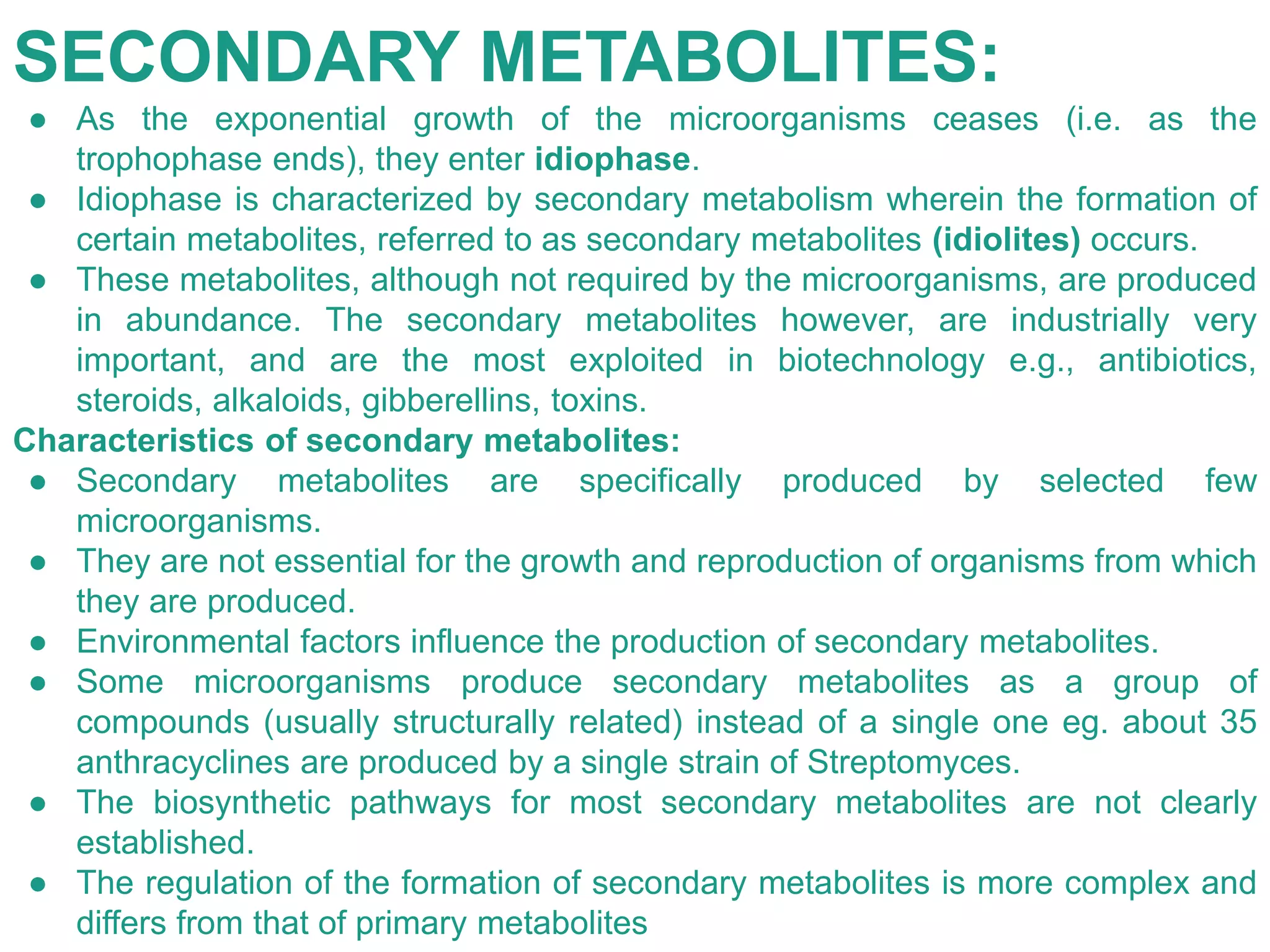
SECONDARY METABOLITES:
● As the exponential growth of the microorganisms ceases (i.e. as the
trophophase ends), they enter idiophase.
● Idiophase is characterized by secondary metabolism wherein the formation of
certain metabolites, referred to as secondary metabolites (idiolites) occurs.
● These metabolites, although not required by the microorganisms, are produced
in abundance. The secondary metabolites however, are industrially very
important, and are the most exploited in biotechnology e.g., antibiotics,
steroids, alkaloids, gibberellins, toxins.
Characteristics of secondary metabolites:
● Secondary metabolites are specifically produced by selected few
microorganisms.
● They are not essential for the growth and reproduction of organisms from which
they are produced.
● Environmental factors influence the production of secondary metabolites.
● Some microorganisms produce secondary metabolites as a group of
compounds (usually structurally related) instead of a single one eg. about 35
anthracyclines are produced by a single strain of Streptomyces.
● The biosynthetic pathways for most secondary metabolites are not clearly
established.
● The regulation of the formation of secondary metabolites is more complex and
differs from that of primary metabolites
Functions of secondary metabolites:
Secondary metabolites are not essential for growth and
multiplication of cells. Their occurrence and structures vary
widely. Several hypotheses have been put forth to explain the
role of secondary metabolites, two of them are given below.
1. The secondary metabolites may perform certain (unknown)
functions that are beneficial for the cells to survive.
2. The secondary metabolites have absolutely no
function,Their production alone is important for the cell,
whatever may be the product (which is considered to be
useless).
Strategies for overproduction of secondary
products:
1. MICROBIAL RESPONSE:
i. Elicitation
ii. Quorum Sensing
2. GENETIC ENGINEERING
i. Classical genetic methods
a. Mutation and random selection
b. Mutation and rational selection
c. Genetic recombination methods
ii. Molecular genetic improvement methods
a. Amplification of SM Biosynthetic Genes
b. Inactivation of Competing Pathways
c. Disruption or Amplification of Regulatory Genes
d. Manipulation of Secretary Mechanisms
1. MICROBIAL RESPONSE:
1a) Elicitation
● Environmental abiotic and biotic stress factors have been proved to effect
variety of responses in microbes.
● Elicitors, as stress factors, induce or enhance the biosynthesis of
secondary metabolites added to a biological system.
● They are classified into various groups based on their nature and origin:
■ physical or chemical,
■ biotic or abiotic.
● Initial studies on elicitation of secondary metabolites were carried out on
plant cells and extended, over the years, to bacteria, animal cell cultures
and filamentous fungi.
● Abiotic stress (abiotic elicitors) imposed by pH improves pigment
production by Monascus purpureus and antibiotic production by
Streptomyces spp.
● Traditionally carbohydrates have been used as carbon sources in
fermentation processes.
● They have also been used widely in small amounts as elicit or molecules in
bacterial and fungal fermentations for overproduction of commercially
important secondary metabolites.
1b) Quorum Sensing:
● Quorum sensing is the communication between cells through the
release of chemical signals when cell density reaches a threshold
concentration.
● Under these conditions, they sense the presence of other microbes. This
process, investigated for more than 30 years, was first discovered in Gram-
negative bacteria, and then in Gram-positive bacteria and dimorphic fungi.
● The quorum sensing signals differ in different microbial systems; examples
are acylhomoserine lactones, modified or unmodified peptides, complex γ -
butyrolactone molecules and their derivatives.
● A number of physiological activities of microbes(e.g. symbiosis,
competence, conjugation, sporulation, biofilm formation, virulence, motility
and the production of various secondary metabolites) are regulated through
the quorum-sensing.
● Filamentous fungi are a main microbial source for production of
pharmaceutical and biotechnological products.
● However, until recently, very little was reported in the literature regarding
quorum Sensing phenomena in these fungi.
● Scientists explored for the first time, the possibility of overproduction of
fungal metabolites in response to the supplementation of liquid cultures by
variety of Quorum sensing molecules
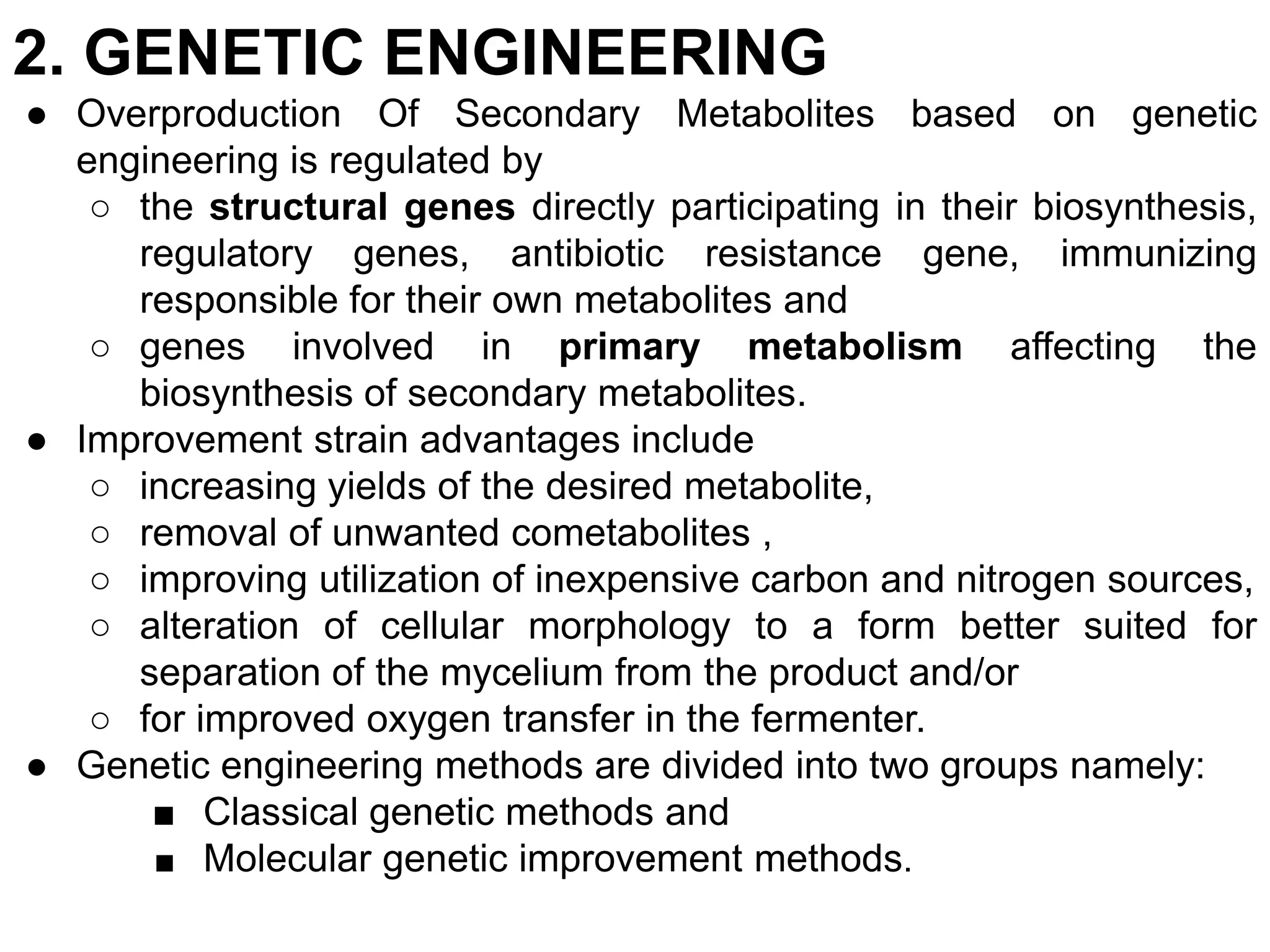
2. GENETIC ENGINEERING
● Overproduction Of Secondary Metabolites based on genetic
engineering is regulated by
○ the structural genes directly participating in their biosynthesis,
regulatory genes, antibiotic resistance gene, immunizing
responsible for their own metabolites and
○ genes involved in primary metabolism affecting the
biosynthesis of secondary metabolites.
● Improvement strain advantages include
○ increasing yields of the desired metabolite,
○ removal of unwanted cometabolites ,
○ improving utilization of inexpensive carbon and nitrogen sources,
○ alteration of cellular morphology to a form better suited for
separation of the mycelium from the product and/or
○ for improved oxygen transfer in the fermenter.
● Genetic engineering methods are divided into two groups namely:
■ Classical genetic methods and
■ Molecular genetic improvement methods.
1. CLASSICAL GENETIC METHODS
Classical genetic methods are simple, no need to sophisticated
equipment, minimal specialized technical manipulation,
effectiveness (rapid titer increases) the only drawback, is labor
intensive.
1. Mutation and random selection
2. Mutation and rational selection
3. Genetic recombination methods
MOLECULAR GENETIC IMPROVEMENT METHODS
● Requirement knowledge and tools to perform molecular genetics
improvement include, identification of biosynthetic pathway,
adequate vectors and effective transformation protocols.
● The main strategies being used in molecular genetics improvement
of SM producing strains are as follow:
i. Amplification of SM Biosynthetic Genes
● Targeted gene duplication (or amplification)
● Whole pathway amplification
ii. Inactivation of Competing Pathways
iii. Disruption or Amplification of Regulatory Genes
iv. Manipulation of Secretary Mechanisms

Microbes, Man and Environment (Antimicrobial and targets) .pptx

  • 1.
  • 2.
    ANTIMICROBIAL AND TARGETS ANTIMICROBIAL “Anantimicrobial is an agent that kills microorganisms or inhibits their growth” Or “Any substance of natural, semi-synthetic or synthetic origin that kills or inhibits the growth of microorganisms but causes little or no damage to the host” EXPLANATION The word antimicrobial was derived from the Greek words ● anti (against), ● mikros (little) and ● bios (life) ● This is not synonymous with antibiotics, a similar term derived from the Greek word ■ anti (against) and ■ biotikos (concerning life).
  • 4.
    GENERAL PROPERTIES OFANTIMICROBIAL AGENTS Antimicrobial agents share certain common properties. We can learn much about how these agents work and why they sometimes do not work by considering such properties as ● selective toxicity, ● spectrum of activity, ● mode of action, ● side effects, and ● resistance of microorganisms to them.
  • 5.
    SELECTIVE TOXICITY Some chemicalsubstances with antimicrobial properties are ● too toxic to be taken internally and ● are used only for topical application (application to the skin’s surface) . For internal use, an antimicrobial drug must have selective toxicity—that is, it must harm the microbes without causing significant damage to the host. ● Some drugs, such as penicillin, have a wide range between ■ the toxic dosage level, which causes host damage, and ■ the therapeutic dosage level, which successfully eliminates the pathogenic organism if the level is maintained over a period of time. The relationship between an agent’s toxicity to the body and its toxicity to an infectious agent is expressed in terms of its chemotherapeutic index. For any particular agent, the chemotherapeutic index is defined ● "As the maximum tolerable dose per kilogram of body weight, divided by the minimum dose per kg of body weight, that will cure the disease." Thus, an agent with a chemotherapeutic index of 8 would be more effective and less toxic to the patient than an agent with a chemotherapeutic index of 1.
  • 6.
    THE SPECTRUM OFACTIVITY "The range of different microbes against which an antimicrobial agent acts is called its spectrum of activity." Types of spectrum of activity 1. Those agents that are effective against a great number of microorganisms from a wide range of taxonomic groups, including both Gram-positive and Gram-negative bacteria, are said to have a broad spectrum of activity. 2. Those that are effective against only a small number of microorganisms or a single taxonomic group have a narrow spectrum of activity.
  • 7.
    MODE OF ACTION 1.Inhibitors of cell wall synthesis 2. Inhibitors of cell membrane function 3. Inhibitors of protein synthesis 4. Inhibitors of nucleic acid synthesis 5. Action as Antimetabolites
  • 8.
    Inhibitors of cellwall synthesis: ● Many bacterial and fungal cells have rigid external cell walls, whereas animal cells lack cell walls. Consequently, inhibiting cell wall synthesis selectively damages bacterial and fungal cells. ● Bacterial cells, especially Gram-positive ones, have a high internal osmotic pressure. Without a normal, sturdy cell wall, these cells burst when subjected to the low osmotic pressure of body fluids. ● Antibiotics such as penicillin and cephalosporin contain a chemical structure called a b-lactam ring, which attaches to the enzymes that cross-link peptidoglycans. ● By interfering with the cross-linking of tetrapeptides, these antibiotics prevent cell wall synthesis.. ● Fungi and Archaea, whose cell walls lack peptidoglycan, are unaffected by these antibiotics.
  • 9.
    Inhibitors of cellmembrane function ● All cells are bounded by a membrane. Although the membranes of all cells are quite similar, those of bacteria and fungi differ sufficiently from those of animal cells to allow selective action of antimicrobial agents. ● Certain polypeptide antibiotics, such as polymyxins, act as detergents and distort bacterial cell membranes, probably by binding to phospholipids in the membrane. ● These antibiotics are especially effective against Gram-negative bacteria, which have an outer membrane rich in phospholipids. ● Polyene antibiotics, such as amphotericin B, bind to particular sterols, present in the membranes of fungal (and animal) cells. ● Thus, polymyxins do not act on fungi, and polyenes do not act on bacteria.
  • 10.
    Inhibitors of proteinsynthesis ● In all cells, protein synthesis requires not only the information stored in DNA, plus several kinds of RNA, but also ribosomes. ● Differences between bacterial (70S) and animal (80S) ribosomes allow antimicrobial agents to attack bacterial cells without significantly damaging animal cells—that is, with selective toxicity. ● Aminoglycoside antibiotics, such as streptomycin, derive their name from the amino acids and glycosidic bonds they contain. They act on the 30S portion of bacterial ribosomes by interfering with the accurate reading (translation) of the mRNA message— that is, the incorporation of the correct amino acids. ● Chloramphenicol and erythromycin act on the 50S portion of bacterial ribosomes, inhibiting the formation of the growing polypeptide. ● Because animal cell ribosomes consist of 60S and 40S subunits, these antibiotics have little effect on host cells. ● (Mitochondria, however, which have 70S ribosomes, can be affected by such drugs.)
  • 11.
    Inhibitors of nucleicacid synthesis ● Differences between the enzymes used by bacterial and animal cells to synthesize nucleic acids provide a means for selective action of antimicrobial agents. ● Antibiotics of the rifamycin family bind to a bacterial RNA polymerase and inhibit RNA synthesis. Action as Antimetabolites ● The normal metabolic processes of microbial cells involve a series of intermediate compounds called metabolites that are essential for cellular growth and survival. Antimetabolites are substances that affect the utilization of metabolites and therefore prevent a cell from carrying out necessary metabolic reactions. ● Antimetabolites function in two ways: ○ by competitively inhibiting enzymes and ○ by being erroneously incorporated into important molecules such as nucleic acids. Antimetabolites are structurally similar to normal metabolites. The actions of antimetabolites are sometimes called molecular mimicry because they mimic, or imitate, the normal molecule, preventing a reaction from occurring or causing it to go away.
  • 13.
    KINDS OF SIDEEFFECTS The side effects of antimicrobial agents on infected persons (hosts) fall into three general categories: ● Toxicity ● Allergy ● Disruption of Normal Microflora THE RESISTANCE OF MICROORGANISMS Resistance of a microorganism to an antibiotic means that a microorganism formerly susceptible to the action of the antibiotic is no longer affected by it.
  • 14.
    TYPES OF ANTIMICROBIALDRUGS Different types of antimicrobial drugs are commonly available. These are as follows: 1. Antibacterial (antibiotics) drug: A drug which is used to inhibit the pathogenic activity of bacteria is called as antibacterial drugs. Example: Zithromax. 2. Antifungal drug: A drug which is used to prevent the fungal activity in the host is called an antifungal drug. Example: Amphotericin B 3. Antiviral agent: A drug which is used to stop the pathogenic action of a virus is called as antiviral agents. Example: Tamiflu. 4. Antiparasitic drug: A drug which is used to prevent the growth of pathogenic parasites. Example: Anthelmintics
  • 15.
    ANTIBIOTICS, TARGETS &MODE OF ACTION ANTIBIOTICS “A low molecular substance produced by a microorganism that at a low concentration inhibits or kills other microorganisms.” ● Antibiotics are medicines that help stop infections caused by bacteria. ● They do this by killing the bacteria or by keeping them from copying themselves or reproducing. ● The word antibiotic means “against life.” Any drug that kills germs in your body is technically an antibiotic. ● The development of chemical synthesis has helped to produce the synthetic components which act as an antimicrobial agent against the pathogenic bacteria. These synthetic components are also called as antibiotics. ● Pathogenic bacteria can be killed by the synthetic components at low concentrations.
  • 16.
    DISCOVERY ● In 1908,a German bacteriologist, Paul Ehrlich had developed a synthetic component from an arsenic based structures for the treatment of syphilis, which is called as arsphenamine or salvarsan. ● Then, in 1929, Alexander Fleming discovered Penicillin from the fungus Penicillium notatum. Penicillin is used to treat different type of bacterial infections.
  • 17.
    Sources of AntibioticsAgents:- 1. Natural Antibiotics: ● The original antibiotics were derived from fungal sources. These can be referred to as “natural” antibiotics ● Organisms develop resistance faster to the natural antimicrobials because they have been pre-exposed to these compounds in nature. Natural antibiotics are often more toxic than synthetic antibiotics. ● Benzylpenicillin and Gentamicin are natural antibiotics 2. Semi-synthetic Antibiotics: ● They are chemically-altered natural compound ● Semi-synthetic drugs were developed to decrease toxicity and increase effectiveness ● Ampicillin and Amikacin are semi-synthetic antibiotics 3. Synthetic Antibiotics: ● They are chemically designed in the lab. Synthetic drugs have an advantage that the bacteria are not exposed to the compounds until they are released. They are also designed to have even greater effectiveness and less toxicity. ● Moxifloxacin and Norfloxacin are synthetic antibiotics
  • 18.
    TYPES OF ANTIBIOTICS: 1.On base of effect on bacteria: ● Bactericidal antibiotics like Penicillin, Aminoglycosides, Ofloxacin. ● Bacteriostatic antibiotics like Erythromycin, Tetracycline, Chloramphenicol. ● Some antibiotics can be both bacteriostatic and bactericidal, depending on the dose, duration of exposure and the state of the invading bacteria. 2. On base of spectrum of activity: ● Broad spectrum antibiotics like Chloramphenicol ● Narrow spectrum antibiotics like Penicillin ● Limited spectrum antibiotics like Dysidazirine.
  • 19.
    MODE OF ACTION 1.Inhibitors of cell wall synthesis 2. Inhibitors of cell membrane function 3. Inhibitors of protein synthesis 4. Inhibitors of nucleic acid synthesis 5. Action as Antimetabolites
  • 21.
    EMERGENCE & MECHANISMOF ANTIBIOTIC RESISTANCE Antibiotic Resistance “Antibiotic resistance is the ability of a microorganism to withstand the effects of an antibiotic.” ● Resistance of a microorganism to an antibiotic means that a microorganism formerly susceptible to the action of the antibiotic is no longer affected by it. ● An important factor in the development of drug-resistant strains of microorganisms is that many antibiotics are bacteriostatic rather than bactericidal. ● Unfortunately, the most resilient microbes evade defenses and are likely to develop resistance to the antibiotic.
  • 22.
    Emergence of Antibioticresistance:- Microorganisms generally acquire antibiotic resistance by genetic changes, but sometimes they do so by nongenetic mechanisms. Nongenetic resistance ● Nongenetic resistance occurs when microorganisms (such as those that cause tuberculosis) persist in the tissues out of reach of antimicrobial agents. ● If the sequestered microorganisms start to multiply and release their progeny, the progeny are still susceptible to the antibiotic. This type of resistance might more properly be called evasion. ● Another type of nongenetic resistance occurs when certain strains of bacteria temporarily change to L forms that lack most of their cell walls. ● For several generations, while the cell wall is lacking, these organisms are resistant to antibiotics that act on cell walls. ● However, when they revert to producing cell walls, they again become susceptible to the antibiotics.
  • 23.
    Genetic resistance Genetic resistanceto antimicrobial agents develops from genetic changes followed by natural selection. However, bacteria may also become resistant in two ways: ● By a genetic mutation ● By acquiring resistance from another bacterium
  • 24.
    Types of AntibioticResistance: 1. Intrinsic Resistance: ● Intrinsic resistance is the innate ability of a bacterial species to resist activity of a particular antimicrobial agent through its inherent structural or functional characteristics, which allow tolerance of a particular drug or antimicrobial class. This can also be called “insensitivity” since it occurs in organisms that have never been susceptible to that particular drug. Such natural insensitivity can be due to: ■ Lack of affinity of the drug for the bacterial target ■ Inaccessibility of the drug into the bacterial cell ■ Extrusion of the drug by chromosomally encoded active exporters ■ Innate production of enzymes that inactivate the drug 2. Acquired Resistance: ● Acquired resistance is said to occur when a particular microorganism obtains the ability to resist the activity of a particular antimicrobial agent to which it was previously susceptible. This can result from the mutation of genes involved in normal physiological processes and cellular structures, from the acquisition of foreign resistance genes or from a combination of these two mechanisms.
  • 25.
    Mechanism of AntibioticResistance The four main mechanisms by which microorganisms exhibit resistance to antimicrobials are: 1. Preventing access 2. Reduced drug accumulation 3. Drug inactivation or modification 4. Modification of target First-Line, Second-Line, and Third-Line Drugs
  • 26.
    DETERMINING MICROBIAL SENSITIVITIES TOANTIMICROBIAL AGENTS 1. THE DISK DIFFUSION METHOD 2. THE DILUTION METHOD 3. SERUM KILLING POWER 4. AUTOMATED METHODS
  • 27.
  • 28.
  • 29.
  • 30.
    MICROBES AS CELLFACTORIES INTRODUCTION ● The idea of exploiting microbial products is not new. ● Humans have long enlisted bacteria and yeast to make bread, wine and cheese, and more recently discovered antibiotics that help fight disease. ● Now, researchers in the growing field of metabolic engineering are trying to manipulate bacteria's unique abilities to help generate energy and clean up Earth's atmosphere. ● Microbial Cell Factories is the world leading, primary research fully focusing on Applied Microbiology. MICROBIAL CELL FACTORY ● Microbial cell factory is an approach to bioengineering which considers microbial cells as a production facility in which the optimization process largely depends on metabolic engineering.
  • 31.
    METABOLIC ENGINEERING ● Itis generally referred to as the targeted and purposeful alteration of metabolic pathways found in an organism in order to better understand and utilize cellular pathways for chemical transformation, energy transduction, and supramolecular assembly. ● This multidisciplinary field draws principles from chemical engineering, computational sciences, biochemistry, and molecular biology. ● In essence, metabolic engineering is the application of engineering principles of design and analysis to the metabolic pathways in order to achieve a particular goal. ● This goal may be to increase process productivity, as in the case in production of antibiotics, biosynthetic precursors or polymers, or to extend metabolic capability by the addition of extrinsic activities for chemical production or degradation. ● Previous strategies to attain these goals seem more of an art with experimentation by trial-and-error. ● The interest in metabolic engineering is stimulated by potential commercial applications where improved methods for developing strains which can increase production of useful metabolites. ● Recent endeavors have focused on using biologically derived processes as alternatives to chemical processes. ● Such manufacturing processes pursue goals related to “sustainable developments” and “green chemistry” as well as positioning companies to exploit advances in the biotechnology field.
  • 32.
    METABOLITE: ● A metaboliteis the intermediate end product of metabolism. ● The term metabolite is usually restricted to small molecules. ● Metabolites have various functions, including fuel, structure, signaling, stimulatory and inhibitory effects on enzymes, catalytic activity of their own (usually as a cofactor to an enzyme), defense, and interactions with other organisms (e.g. pigments, odorants, and pheromones) 1. PRIMARY METABOLITES: ● Primary metabolism, also referred to as trophophase, is characterized by balanced growth of microorganisms. It occurs when all the nutrients needed by the organisms are provided in the medium. ● Primary metabolism is essential for the very existence and reproduction of cells. In the trophophase, ○ cells possess optimal concentrations of almost all the macromolecules (proteins, DNA, RNA etc.). ○ exponential growth of microorganisms occurs. ○ Several metabolic products, collectively referred to as primary metabolites, are produced in trophophase (i.e., during the period of growth).
  • 33.
    The primary metabolitesare divided into two groups: 1. Primary essential metabolites: ● These are the compounds produced in adequate quantizes to sustain cell growth e.g. vitamins, amino acids, nucleosides. ● The native microorganisms usually do not overproduce essential primary metabolites, since it is a wasteful exercise. ● However, for industrial overproduction, the regulatory mechanisms are suitably manipulated. 1. Primary metabolic end products: ● These are the normal and traditional end products of fermentation process of primary metabolism. ● The end products may or may not have any significant function to perform in the microorganisms, although they have many other industrial applications e.g. ethanol, acetone, lactic acid. ● Carbon dioxide is a metabolic end product of Saccharomyces cerevisiae. This CO2 is essential for leavening of dough in baking industry.
  • 34.
    Limitations in growth: Dueto insufficient/ limited supply of any nutrient (substrate or even O2), the growth rate of microorganisms slows down. However, the metabolism does not stop. It continues as long as the cell lives, but the formation of products differs. Overproduction of primary metabolites: Excessive production of primary metabolites is very important for their large scale use for a variety of purposes. Over-production has been successfully accomplished by eliminating the feedback inhibition by ● Using auxotrophic mutants with a block in one of the steps in the biosynthetic pathway concerned with the formation of primary metabolite (this should be an intermediate and not the final end product). In this manner, the end product (E) formation is blocked, hence no feedback inhibition. But overproduction of the required metabolite (C) occurs as illustrated below. ● Mutant microorganisms with anti-metabolite resistance which exhibit a defective metabolic regulation can also overproduce primary metabolites.
  • 35.
    SECONDARY METABOLITES: ● Asthe exponential growth of the microorganisms ceases (i.e. as the trophophase ends), they enter idiophase. ● Idiophase is characterized by secondary metabolism wherein the formation of certain metabolites, referred to as secondary metabolites (idiolites) occurs. ● These metabolites, although not required by the microorganisms, are produced in abundance. The secondary metabolites however, are industrially very important, and are the most exploited in biotechnology e.g., antibiotics, steroids, alkaloids, gibberellins, toxins. Characteristics of secondary metabolites: ● Secondary metabolites are specifically produced by selected few microorganisms. ● They are not essential for the growth and reproduction of organisms from which they are produced. ● Environmental factors influence the production of secondary metabolites. ● Some microorganisms produce secondary metabolites as a group of compounds (usually structurally related) instead of a single one eg. about 35 anthracyclines are produced by a single strain of Streptomyces. ● The biosynthetic pathways for most secondary metabolites are not clearly established. ● The regulation of the formation of secondary metabolites is more complex and differs from that of primary metabolites
  • 36.
    Functions of secondarymetabolites: Secondary metabolites are not essential for growth and multiplication of cells. Their occurrence and structures vary widely. Several hypotheses have been put forth to explain the role of secondary metabolites, two of them are given below. 1. The secondary metabolites may perform certain (unknown) functions that are beneficial for the cells to survive. 2. The secondary metabolites have absolutely no function,Their production alone is important for the cell, whatever may be the product (which is considered to be useless).
  • 37.
    Strategies for overproductionof secondary products: 1. MICROBIAL RESPONSE: i. Elicitation ii. Quorum Sensing 2. GENETIC ENGINEERING i. Classical genetic methods a. Mutation and random selection b. Mutation and rational selection c. Genetic recombination methods ii. Molecular genetic improvement methods a. Amplification of SM Biosynthetic Genes b. Inactivation of Competing Pathways c. Disruption or Amplification of Regulatory Genes d. Manipulation of Secretary Mechanisms
  • 38.
    1. MICROBIAL RESPONSE: 1a)Elicitation ● Environmental abiotic and biotic stress factors have been proved to effect variety of responses in microbes. ● Elicitors, as stress factors, induce or enhance the biosynthesis of secondary metabolites added to a biological system. ● They are classified into various groups based on their nature and origin: ■ physical or chemical, ■ biotic or abiotic. ● Initial studies on elicitation of secondary metabolites were carried out on plant cells and extended, over the years, to bacteria, animal cell cultures and filamentous fungi. ● Abiotic stress (abiotic elicitors) imposed by pH improves pigment production by Monascus purpureus and antibiotic production by Streptomyces spp. ● Traditionally carbohydrates have been used as carbon sources in fermentation processes. ● They have also been used widely in small amounts as elicit or molecules in bacterial and fungal fermentations for overproduction of commercially important secondary metabolites.
  • 39.
    1b) Quorum Sensing: ●Quorum sensing is the communication between cells through the release of chemical signals when cell density reaches a threshold concentration. ● Under these conditions, they sense the presence of other microbes. This process, investigated for more than 30 years, was first discovered in Gram- negative bacteria, and then in Gram-positive bacteria and dimorphic fungi. ● The quorum sensing signals differ in different microbial systems; examples are acylhomoserine lactones, modified or unmodified peptides, complex γ - butyrolactone molecules and their derivatives. ● A number of physiological activities of microbes(e.g. symbiosis, competence, conjugation, sporulation, biofilm formation, virulence, motility and the production of various secondary metabolites) are regulated through the quorum-sensing. ● Filamentous fungi are a main microbial source for production of pharmaceutical and biotechnological products. ● However, until recently, very little was reported in the literature regarding quorum Sensing phenomena in these fungi. ● Scientists explored for the first time, the possibility of overproduction of fungal metabolites in response to the supplementation of liquid cultures by variety of Quorum sensing molecules
  • 40.
    2. GENETIC ENGINEERING ●Overproduction Of Secondary Metabolites based on genetic engineering is regulated by ○ the structural genes directly participating in their biosynthesis, regulatory genes, antibiotic resistance gene, immunizing responsible for their own metabolites and ○ genes involved in primary metabolism affecting the biosynthesis of secondary metabolites. ● Improvement strain advantages include ○ increasing yields of the desired metabolite, ○ removal of unwanted cometabolites , ○ improving utilization of inexpensive carbon and nitrogen sources, ○ alteration of cellular morphology to a form better suited for separation of the mycelium from the product and/or ○ for improved oxygen transfer in the fermenter. ● Genetic engineering methods are divided into two groups namely: ■ Classical genetic methods and ■ Molecular genetic improvement methods.
  • 41.
    1. CLASSICAL GENETICMETHODS Classical genetic methods are simple, no need to sophisticated equipment, minimal specialized technical manipulation, effectiveness (rapid titer increases) the only drawback, is labor intensive. 1. Mutation and random selection 2. Mutation and rational selection 3. Genetic recombination methods
  • 42.
    MOLECULAR GENETIC IMPROVEMENTMETHODS ● Requirement knowledge and tools to perform molecular genetics improvement include, identification of biosynthetic pathway, adequate vectors and effective transformation protocols. ● The main strategies being used in molecular genetics improvement of SM producing strains are as follow: i. Amplification of SM Biosynthetic Genes ● Targeted gene duplication (or amplification) ● Whole pathway amplification ii. Inactivation of Competing Pathways iii. Disruption or Amplification of Regulatory Genes iv. Manipulation of Secretary Mechanisms