CHAPTER 3
SECTION 3
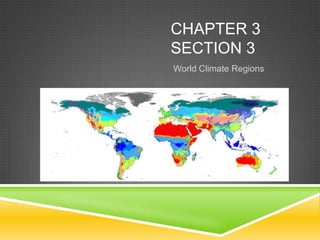
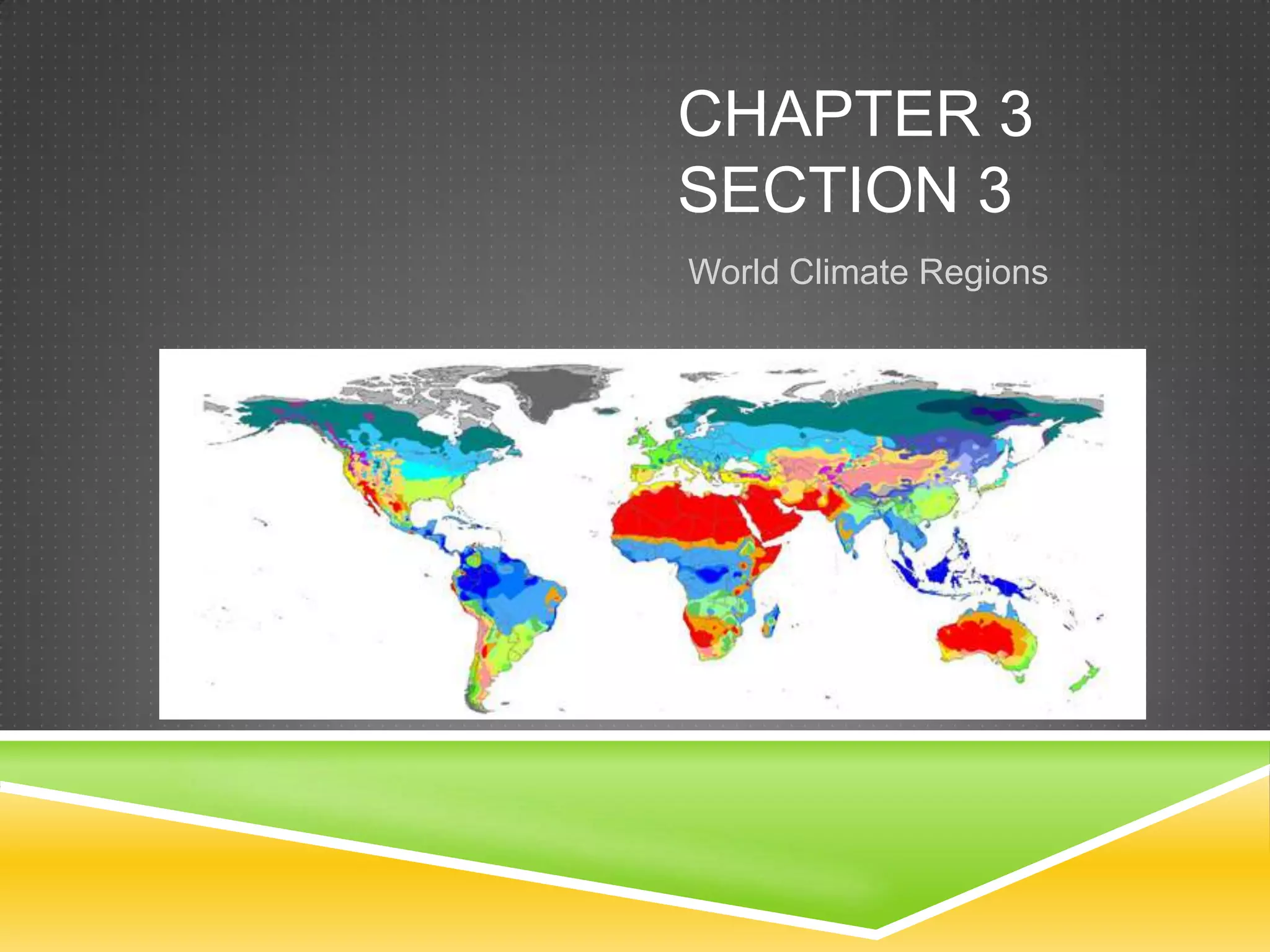
World Climate Regions
WORLD CLIMATE
REGIONS
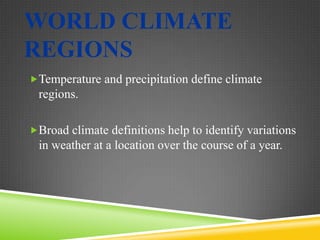
Temperature and precipitation define climate

regions.
Broad climate definitions help to identify variations

in weather at a location over the course of a year.
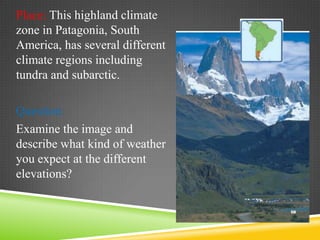
Place: This highland climate
zone in Patagonia, South
America, has several different
climate regions including
tundra and subarctic.
Question:
Examine the image and
describe what kind of weather
you expect at the different
elevations?
I. Defining a Climate Region
A. Typical Weather

Temperature and precipitation define climate.
2. Location, topography, elevation may impact
climate.
3. Five general climate regions:
1.

a.

b.
c.
d.
e.

tropical (low-latitude)
Dry
mid-latitude
high latitude
highland
II. Types of Climates
A. Tropical Wet
1.

Always hot; daily rainfall adds up to more than 80”
annually.

B. Tropical Wet and Dry
1.

Warm, wet summer season; cooler, dry winter season.

C. Semiarid
1.

Hot summers; mild to cold winters; little precipitation.

D. Desert
1.

Two kinds of desert—hot, cool/cold; less than 10” rain
per year.
E. Mediterranean
1.

Summers dry and hot; winters cool and rainy.

F. Marine West Coast
1.

Moderate temperatures; frequently cloudy, foggy, damp.

G. Humid Subtropical
1.

Long periods of summer heat and humidity; winters mild
to cool.

H. Humid Continental
1.

Great variety of temperature, precipitation; four distinct
seasons.
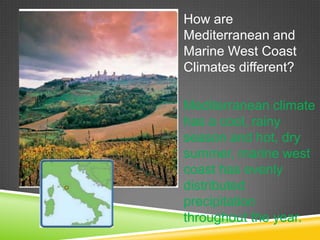
How are
Mediterranean and
Marine West Coast
Climates different?
Mediterranean climate
has a cool, rainy
season and hot, dry
summer, marine west
coast has evenly
distributed
precipitation
throughout the year.
I.

Subarctic
1.

J.

Summers are short and cool; winters are long and very cold.

Tundra
1.

Tundra—flat, treeless ring of lands around the Arctic Ocean.

2.

Very little precipitation; summer temperatures around 40 F.

3.

Permafrost is the constantly frozen subsoil found in this
region.

K. Ice Cap
1.

Snow, ice, permanently freezing temperatures.

L. Highlands
1.

Climate varies with latitude, elevation, topography, location.
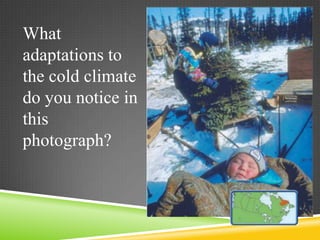
What
adaptations to
the cold climate
do you notice in
this
photograph?

Chapter 3 section 3 powerpoint

  • 1.
  • 2.
    WORLD CLIMATE REGIONS Temperature andprecipitation define climate regions. Broad climate definitions help to identify variations in weather at a location over the course of a year.
  • 3.
    Place: This highlandclimate zone in Patagonia, South America, has several different climate regions including tundra and subarctic. Question: Examine the image and describe what kind of weather you expect at the different elevations?
  • 4.
    I. Defining aClimate Region A. Typical Weather Temperature and precipitation define climate. 2. Location, topography, elevation may impact climate. 3. Five general climate regions: 1. a. b. c. d. e. tropical (low-latitude) Dry mid-latitude high latitude highland
  • 5.
    II. Types ofClimates A. Tropical Wet 1. Always hot; daily rainfall adds up to more than 80” annually. B. Tropical Wet and Dry 1. Warm, wet summer season; cooler, dry winter season. C. Semiarid 1. Hot summers; mild to cold winters; little precipitation. D. Desert 1. Two kinds of desert—hot, cool/cold; less than 10” rain per year.
  • 6.
    E. Mediterranean 1. Summers dryand hot; winters cool and rainy. F. Marine West Coast 1. Moderate temperatures; frequently cloudy, foggy, damp. G. Humid Subtropical 1. Long periods of summer heat and humidity; winters mild to cool. H. Humid Continental 1. Great variety of temperature, precipitation; four distinct seasons.
  • 7.
    How are Mediterranean and MarineWest Coast Climates different? Mediterranean climate has a cool, rainy season and hot, dry summer, marine west coast has evenly distributed precipitation throughout the year.
  • 8.
    I. Subarctic 1. J. Summers are shortand cool; winters are long and very cold. Tundra 1. Tundra—flat, treeless ring of lands around the Arctic Ocean. 2. Very little precipitation; summer temperatures around 40 F. 3. Permafrost is the constantly frozen subsoil found in this region. K. Ice Cap 1. Snow, ice, permanently freezing temperatures. L. Highlands 1. Climate varies with latitude, elevation, topography, location.
  • 9.
    What adaptations to the coldclimate do you notice in this photograph?