Climate and VegetationChapter 5, Section 2
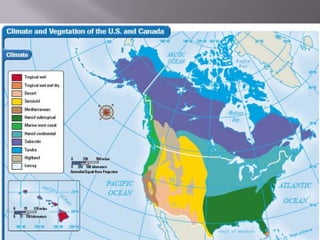
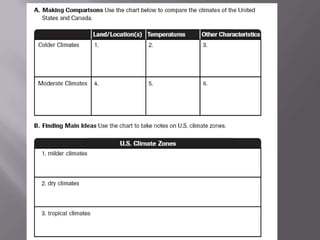
Colder ClimatesArctic Coastline = tundraCold, treeless plainLong, super cold winters;  summers brief and chilly (high 40˚ F)Most of the rest of Canada and Alaska = subarcticVery cold winters; mild summersSome areas have permafrost = permanently frozen groundRocky Mountain and Pacific Ranges = highlandTemperature and vegetation vary based on elevationModerate ClimatesNorth Central and NE U.S. and Southern Canada = humid continentalCold winters; warm summersProductive agriculture regionNorthern California to Southern Alaska = Marine West Coast Winters long and mild; summers moderately warm
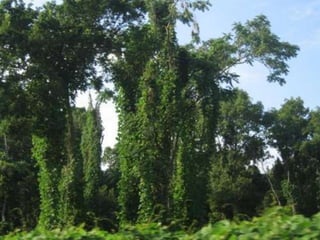
Milder ClimatesMost Southern states = humid subtropicalSummers hot and muggy; winters mild and coolMoist air from GOM bring rain in winterLong growing season for cropsCentral and Southern California = MediterraneanSummers dry, sunny and warm; winters mild and rainy
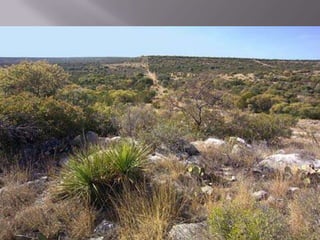
Dry ClimatesGreat Plains and Northern Great Basin = semiarid15” of rain annuallyOnly short grasses and shrubs growSouthwestern states = desertHot and dry; < 10” of rain annually
Tropical ClimateHawaii = Tropical WetSupports lush rainforestsTemperature varies only a few degrees in the 70sRains almost every daySouth Florida = Tropical Wet and DryNearly always warm with a wet and dry seasonEverglades = swampland covering 4000 sq. miles
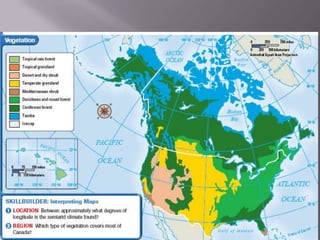
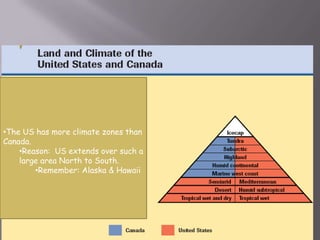
The US has more climate zones than Canada.
Reason:  US extends over such a large area North to South.
Remember: Alaska & Hawaii
Human-Environment Interaction Chapter 5, Section 3
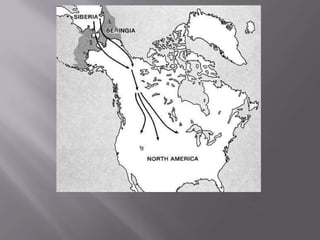
First SettlersFirst inhabitants were nomads who crossed over Beringia from AsiaMostly hunters and gatherers that moved around the countryAbout 3000 years ago, people began relying more on agriculture for food, and created permanent settlements to live in
Building CitiesWhere a city is built and develops depends on the physical settingWaterLandscapeClimateWeatherAvailability of natural resources
Trails and Inland Waterwayscreated trails that led inland as cities started moving away from the coastNational and Wilderness roadsSanta Fe and Oregon TrailsUsed existing waterways and created connectionsSt. Lawrence Seaway – connects Great Lakes to St. Lawrence R. using a series of locks
Transcontinental RailroadBegan in the early 19th century (1800s)Had to work around natural barriersCompleted in 1869 (US) and 1885 (Canada)Helped promote westward expansion
Highway SystemSpurred by the development of the automobile in the early 1900sUS = 4 million miles of road46,000 miles crisscross the countryRuns north to south and east to westCanada = 560,000 miles of roadMostly runs east to west

Ch. 5, sec.2,3 Climate and Vegetation

  • 1.
  • 4.
    Colder ClimatesArctic Coastline= tundraCold, treeless plainLong, super cold winters; summers brief and chilly (high 40˚ F)Most of the rest of Canada and Alaska = subarcticVery cold winters; mild summersSome areas have permafrost = permanently frozen groundRocky Mountain and Pacific Ranges = highlandTemperature and vegetation vary based on elevationModerate ClimatesNorth Central and NE U.S. and Southern Canada = humid continentalCold winters; warm summersProductive agriculture regionNorthern California to Southern Alaska = Marine West Coast Winters long and mild; summers moderately warm
  • 5.
    Milder ClimatesMost Southernstates = humid subtropicalSummers hot and muggy; winters mild and coolMoist air from GOM bring rain in winterLong growing season for cropsCentral and Southern California = MediterraneanSummers dry, sunny and warm; winters mild and rainy
  • 7.
    Dry ClimatesGreat Plainsand Northern Great Basin = semiarid15” of rain annuallyOnly short grasses and shrubs growSouthwestern states = desertHot and dry; < 10” of rain annually
  • 9.
    Tropical ClimateHawaii =Tropical WetSupports lush rainforestsTemperature varies only a few degrees in the 70sRains almost every daySouth Florida = Tropical Wet and DryNearly always warm with a wet and dry seasonEverglades = swampland covering 4000 sq. miles
  • 10.
    The US hasmore climate zones than Canada.
  • 11.
    Reason: USextends over such a large area North to South.
  • 12.
  • 13.
  • 14.
    First SettlersFirst inhabitantswere nomads who crossed over Beringia from AsiaMostly hunters and gatherers that moved around the countryAbout 3000 years ago, people began relying more on agriculture for food, and created permanent settlements to live in
  • 16.
    Building CitiesWhere acity is built and develops depends on the physical settingWaterLandscapeClimateWeatherAvailability of natural resources
  • 17.
    Trails and InlandWaterwayscreated trails that led inland as cities started moving away from the coastNational and Wilderness roadsSanta Fe and Oregon TrailsUsed existing waterways and created connectionsSt. Lawrence Seaway – connects Great Lakes to St. Lawrence R. using a series of locks
  • 18.
    Transcontinental RailroadBegan inthe early 19th century (1800s)Had to work around natural barriersCompleted in 1869 (US) and 1885 (Canada)Helped promote westward expansion
  • 19.
    Highway SystemSpurred bythe development of the automobile in the early 1900sUS = 4 million miles of road46,000 miles crisscross the countryRuns north to south and east to westCanada = 560,000 miles of roadMostly runs east to west