



Soils and Vegetation
Section 4 Preview
Soils and Vegetation
 Soil and climate help to determine the

vegetation of a region.
 Human land use alters the vegetation in
both positive and negative ways.
I.

Soil Regions
A. Shaping Human Existence
1. Soil is a thin layer of weathered
rock, humus, air, water.
2. Topsoil refers to the top 6” of soil.
3. Soil characteristics vary with climate.
4. Type of soil determines type of vegetation that
can be supported.
5. Type of vegetation determines type of possible
human activity.
Skillbuilder: Interpreting Charts
1.
Place: What characteristics would soil in a cold, dry climate most
likely have?
2.
Region: How does the soil on warm and wet climates differ from
the soil in cold and dry climates in terms of depth and texture?
II.

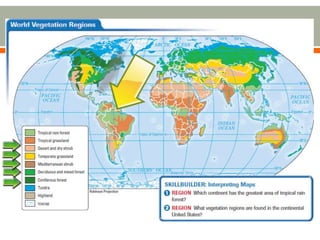
Vegetation Regions
A. Natural Environments.

1. Ecosystem—interdependent community of
plants and animals.
2. Biome—the ecosystem of a region.
3. Biomes are further divided into:
a.
b.
c.
d.

Forest
grassland
Desert
tundra
B. Forestlands
1. Forest regions categorized by trees they support—
broadleaf or needle.
2. Deciduous—broadleaf trees:
maple, oak, birch, cottonwood.
a. mostly in Northern Hemisphere.
3. Rain forest—tropical forest covered with broadleaf trees.
4. Coniferous—needle leaf trees; cone bearing:
pine, fir, cedar.
a. mostly in Northern Hemisphere.
5. Deciduous and coniferous trees together form mixed
forest.
C. Grasslands
1. Flat regions with few trees.
2. A savanna is a tropical grassland.
3. Steppe, or prairie, are temperate grasslands of
Northern Hemisphere.
D. Desert and Tundra
1. Plants in these regions have adapted to climate
extremes:
a.
b.

tundra plants (mosses, lichen) hug the ground.
desert plants (cacti, sagebrush) conserve water, withstand
heat.
III. Human

Impact on the Environment

A. Altering the Landscape

1. Humans either adapt to land, or alter it to meet
their needs.
2. Some human activities that affect the
environment:
a.
b.
c.
d.

building dams
installing irrigation systems
planting crops
slashing and burning vegetation
Lake Powell
o 186 miles long
o 1900 miles of shoreline
o 500 feet deep

Chapter 3 section 4 powerpoint

  • 1.
  • 2.
    Section 4 Preview Soilsand Vegetation  Soil and climate help to determine the vegetation of a region.  Human land use alters the vegetation in both positive and negative ways.
  • 3.
    I. Soil Regions A. ShapingHuman Existence 1. Soil is a thin layer of weathered rock, humus, air, water. 2. Topsoil refers to the top 6” of soil. 3. Soil characteristics vary with climate. 4. Type of soil determines type of vegetation that can be supported. 5. Type of vegetation determines type of possible human activity.
  • 4.
    Skillbuilder: Interpreting Charts 1. Place:What characteristics would soil in a cold, dry climate most likely have? 2. Region: How does the soil on warm and wet climates differ from the soil in cold and dry climates in terms of depth and texture?
  • 5.
    II. Vegetation Regions A. NaturalEnvironments. 1. Ecosystem—interdependent community of plants and animals. 2. Biome—the ecosystem of a region. 3. Biomes are further divided into: a. b. c. d. Forest grassland Desert tundra
  • 7.
    B. Forestlands 1. Forestregions categorized by trees they support— broadleaf or needle. 2. Deciduous—broadleaf trees: maple, oak, birch, cottonwood. a. mostly in Northern Hemisphere. 3. Rain forest—tropical forest covered with broadleaf trees. 4. Coniferous—needle leaf trees; cone bearing: pine, fir, cedar. a. mostly in Northern Hemisphere. 5. Deciduous and coniferous trees together form mixed forest.
  • 8.
    C. Grasslands 1. Flatregions with few trees. 2. A savanna is a tropical grassland. 3. Steppe, or prairie, are temperate grasslands of Northern Hemisphere. D. Desert and Tundra 1. Plants in these regions have adapted to climate extremes: a. b. tundra plants (mosses, lichen) hug the ground. desert plants (cacti, sagebrush) conserve water, withstand heat.
  • 9.
    III. Human Impact onthe Environment A. Altering the Landscape 1. Humans either adapt to land, or alter it to meet their needs. 2. Some human activities that affect the environment: a. b. c. d. building dams installing irrigation systems planting crops slashing and burning vegetation
  • 10.
    Lake Powell o 186miles long o 1900 miles of shoreline o 500 feet deep