Chapter 5: Heredity
Section 1: Genetics
Minersville Area School District
Mr. Motuk
Room 124
I. Genetics
A. Heredity: The passing of traits from parent to
offspring.
1. Genes on chromosomes control the traits
that show up in an organism.
2. The different forms of a trait that a gene may
have are alleles.
3. During meiosis a pair of chromosomes
separates and the alleles move into separate
sex cells.
4. Each sex cell now contains one allele for
each trait.
5. The study of how traits are inherited is
genetics.
B. Gregor Mendel-The father of Genetics
1. Mendel was the first to use mathematics of
probability to explain heredity and to trace one
trait for several generations.
2. Hybrid: receives different genetic information
for a trait from each parent.
a. Dominant allele: covers up or dominates
the other trait.
b. Recessive allele: The trait seems to
disappear, is covered up by the dominant
allele.
3. Probability helps you predict the chance
something will happen.
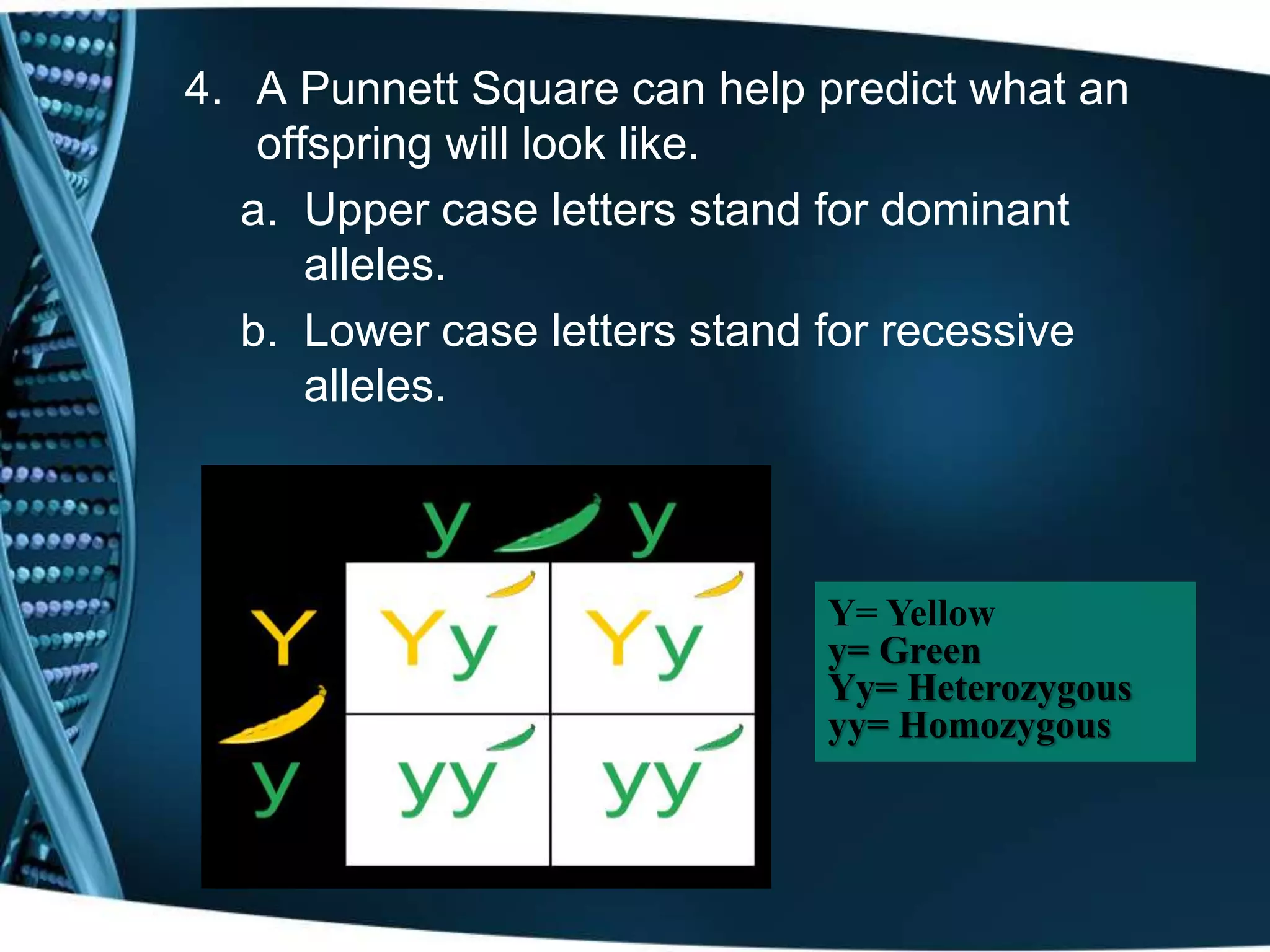
4. A Punnett Square can help predict what an
offspring will look like.
a. Upper case letters stand for dominant
alleles.
b. Lower case letters stand for recessive
alleles.
Y= Yellow
y= Green
Yy= Heterozygous
yy= Homozygous
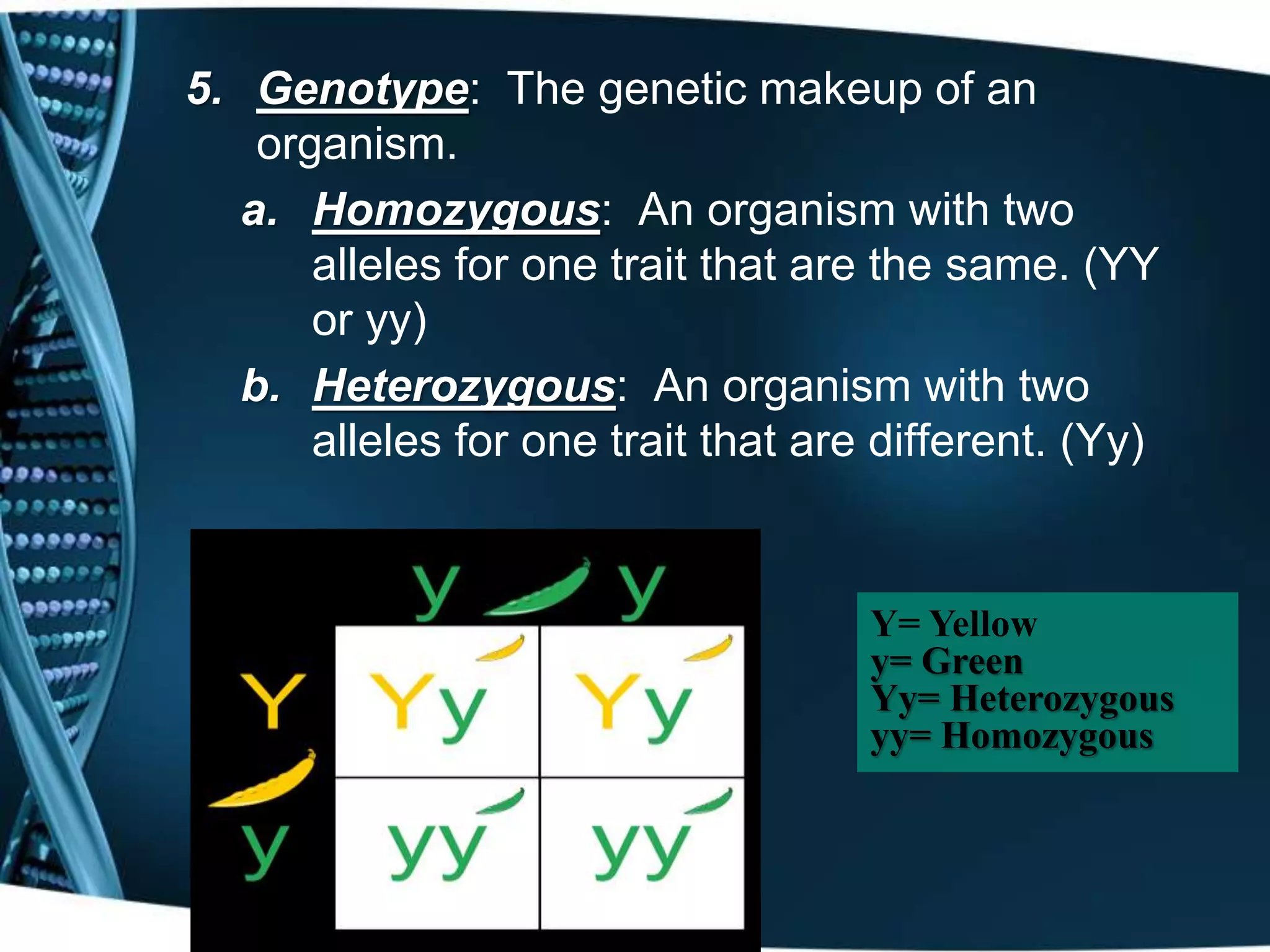
5. Genotype: The genetic makeup of an
organism.
a. Homozygous: An organism with two
alleles for one trait that are the same. (YY
or yy)
b. Heterozygous: An organism with two
alleles for one trait that are different. (Yy)
Y= Yellow
y= Green
Yy= Heterozygous
yy= Homozygous
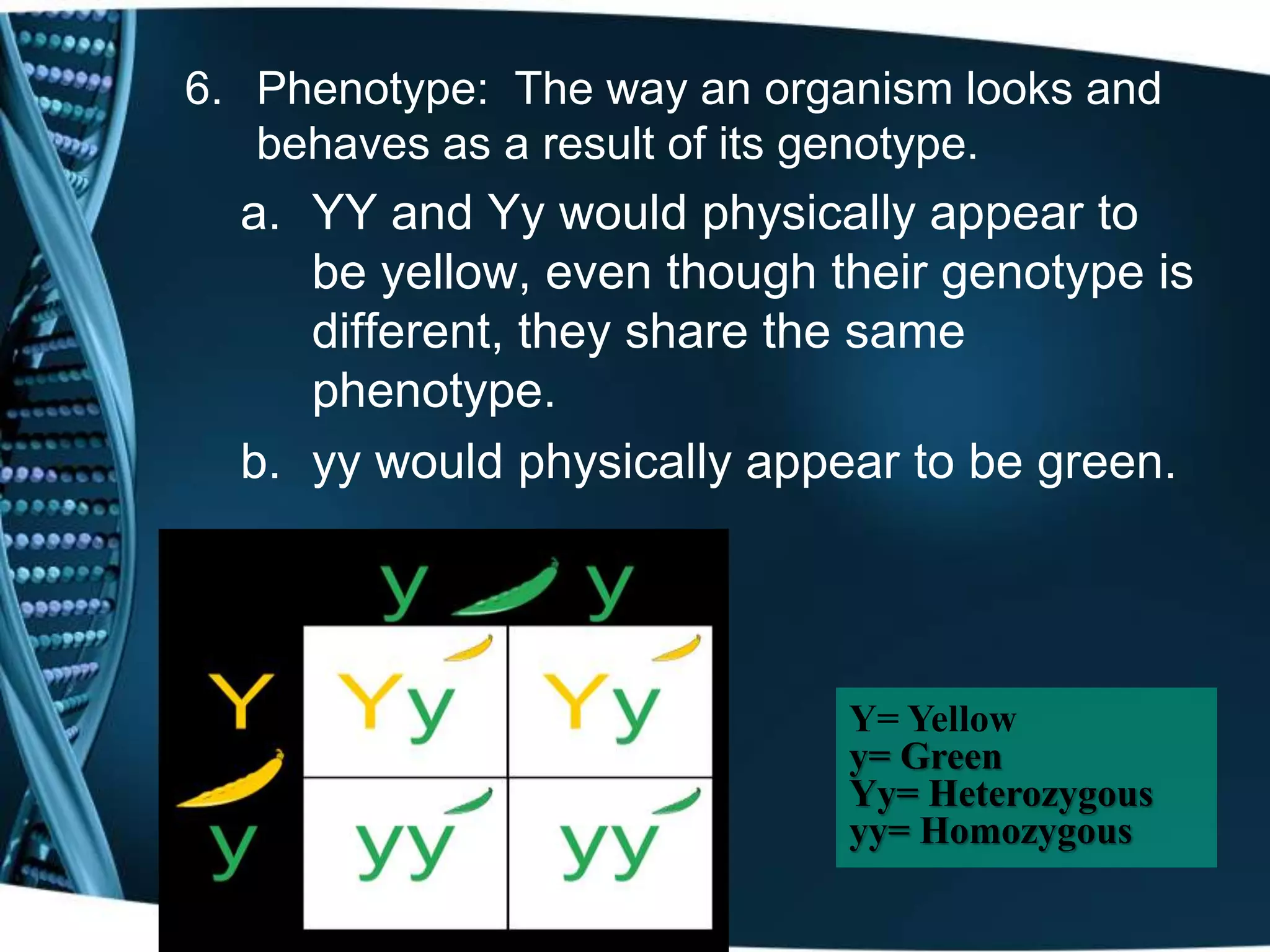
6. Phenotype: The way an organism looks and
behaves as a result of its genotype.
a. YY and Yy would physically appear to
be yellow, even though their genotype is
different, they share the same
phenotype.
b. yy would physically appear to be green.
Y= Yellow
y= Green
Yy= Heterozygous
yy= Homozygous

Do not copy (Chapter 5 Section 1: Supplemental Notes)

  • 1.
    Chapter 5: Heredity Section1: Genetics Minersville Area School District Mr. Motuk Room 124
  • 2.
    I. Genetics A. Heredity:The passing of traits from parent to offspring. 1. Genes on chromosomes control the traits that show up in an organism. 2. The different forms of a trait that a gene may have are alleles. 3. During meiosis a pair of chromosomes separates and the alleles move into separate sex cells. 4. Each sex cell now contains one allele for each trait. 5. The study of how traits are inherited is genetics.
  • 3.
    B. Gregor Mendel-Thefather of Genetics 1. Mendel was the first to use mathematics of probability to explain heredity and to trace one trait for several generations. 2. Hybrid: receives different genetic information for a trait from each parent. a. Dominant allele: covers up or dominates the other trait. b. Recessive allele: The trait seems to disappear, is covered up by the dominant allele. 3. Probability helps you predict the chance something will happen.
  • 5.
    4. A PunnettSquare can help predict what an offspring will look like. a. Upper case letters stand for dominant alleles. b. Lower case letters stand for recessive alleles. Y= Yellow y= Green Yy= Heterozygous yy= Homozygous
  • 6.
    5. Genotype: Thegenetic makeup of an organism. a. Homozygous: An organism with two alleles for one trait that are the same. (YY or yy) b. Heterozygous: An organism with two alleles for one trait that are different. (Yy) Y= Yellow y= Green Yy= Heterozygous yy= Homozygous
  • 7.
    6. Phenotype: Theway an organism looks and behaves as a result of its genotype. a. YY and Yy would physically appear to be yellow, even though their genotype is different, they share the same phenotype. b. yy would physically appear to be green. Y= Yellow y= Green Yy= Heterozygous yy= Homozygous