Human Anatomy,  Second Edition McKinley & O'Loughlin   Chapter 15B Lecture Outline: Brain and Cranial Nerves
Diencephalon Relay and switching centers for some sensory and motor pathways and for control of visceral activities Surrounds third ventricle 15-
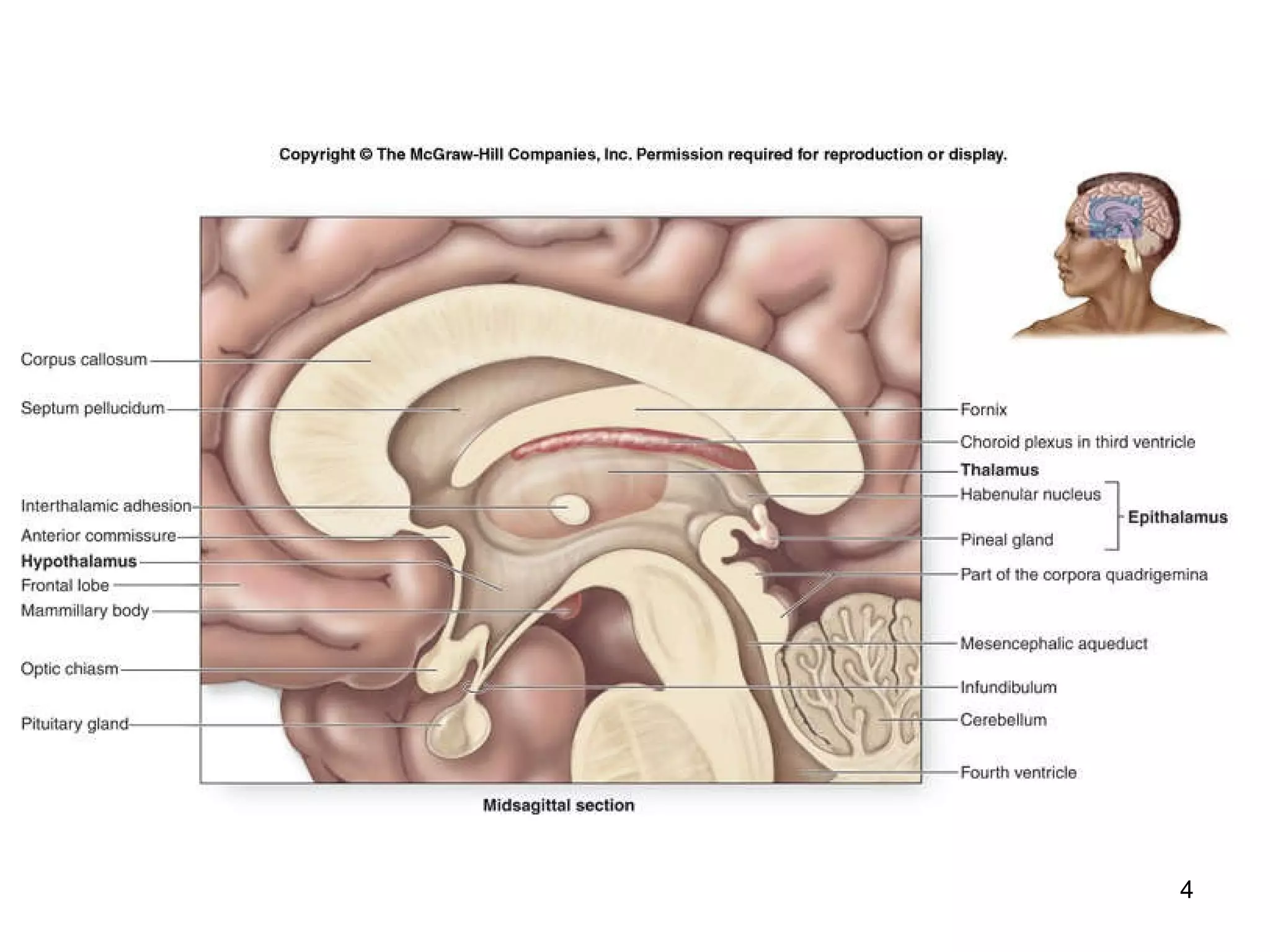
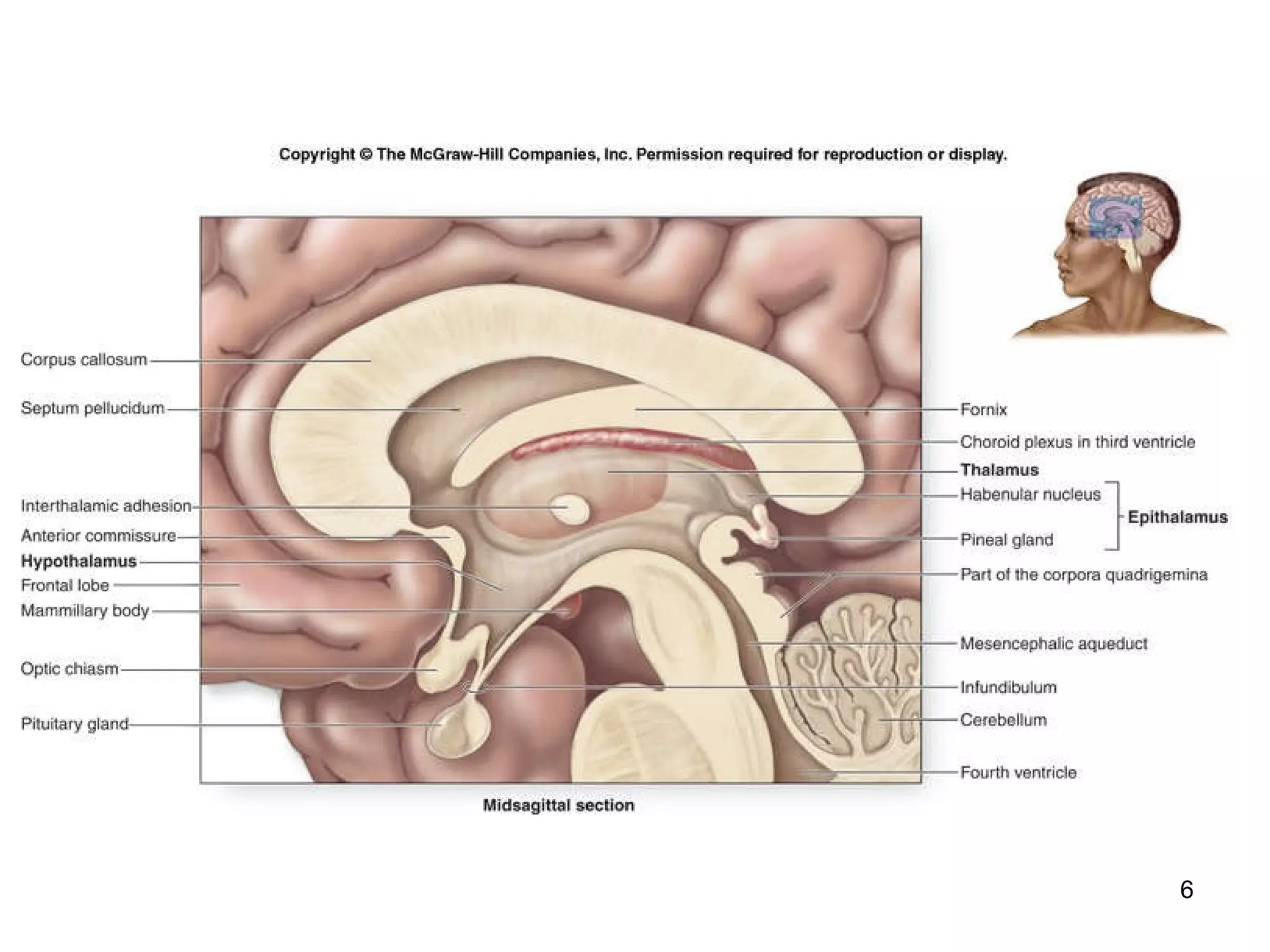
Posterior roof of the diencephalon over the third ventricle Pineal gland (body) Endocrine gland - secretes melatonin that helps regulate day-night cycles (circadian rhythms) Epithalamus 15-
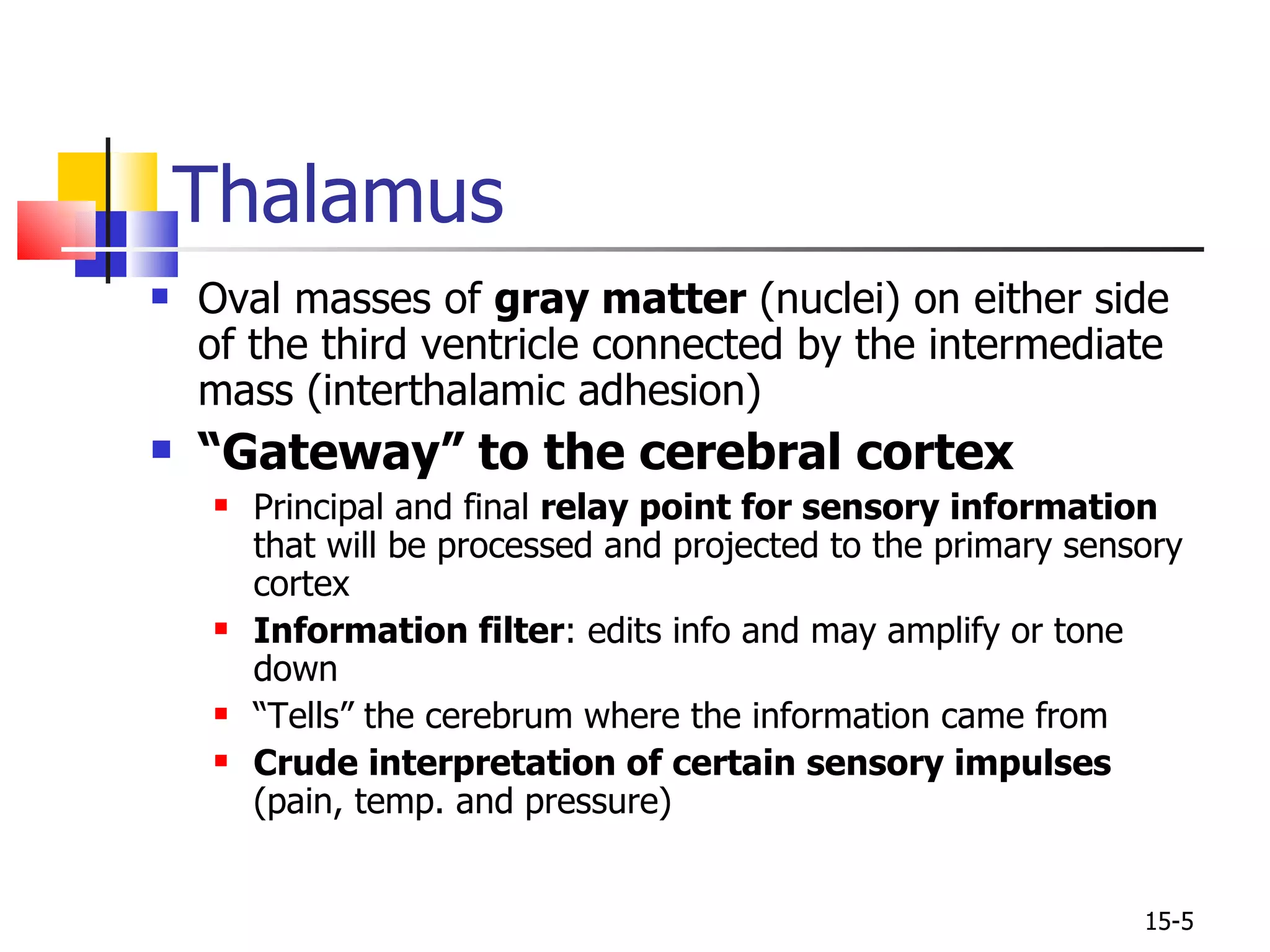
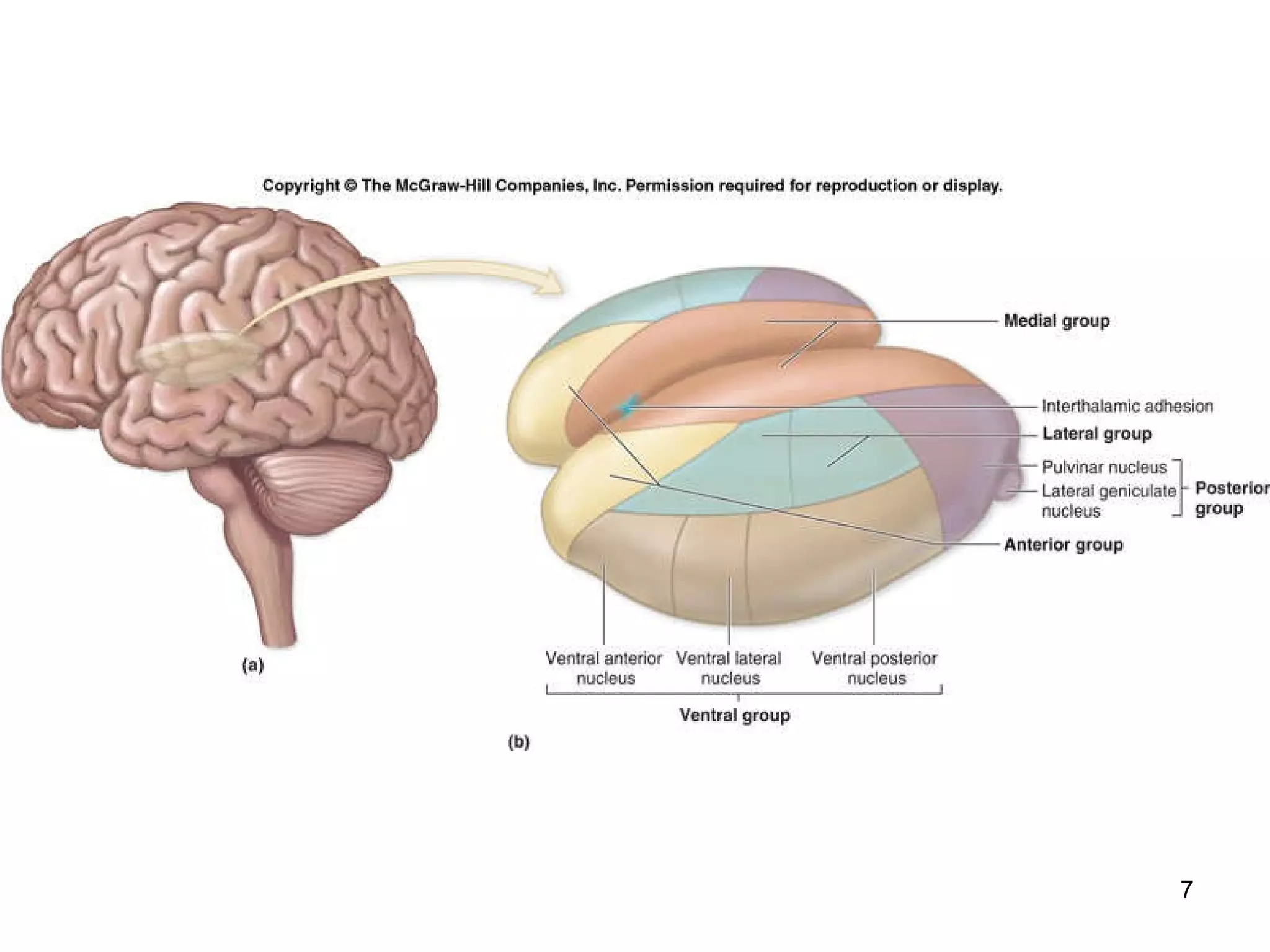
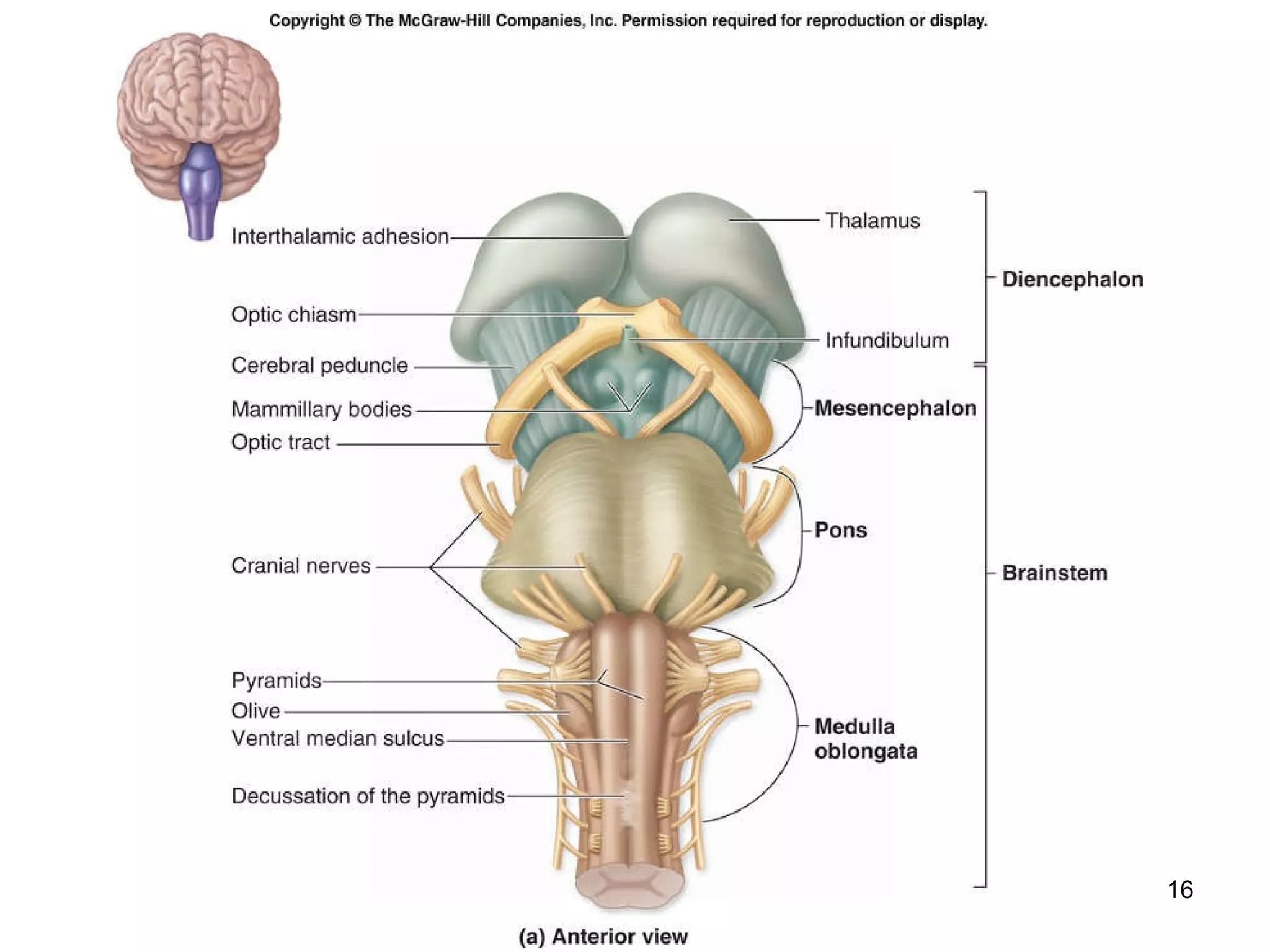
Oval masses of  gray matter  (nuclei) on either side of the third ventricle connected by the intermediate mass (interthalamic adhesion) “ Gateway” to the cerebral cortex Principal and final  relay point for sensory information  that will be processed and projected to the primary sensory cortex Information filter : edits info and may amplify or tone down “ Tells” the cerebrum where the information came from Crude interpretation of certain sensory impulses  (pain, temp. and pressure)  Thalamus 15-
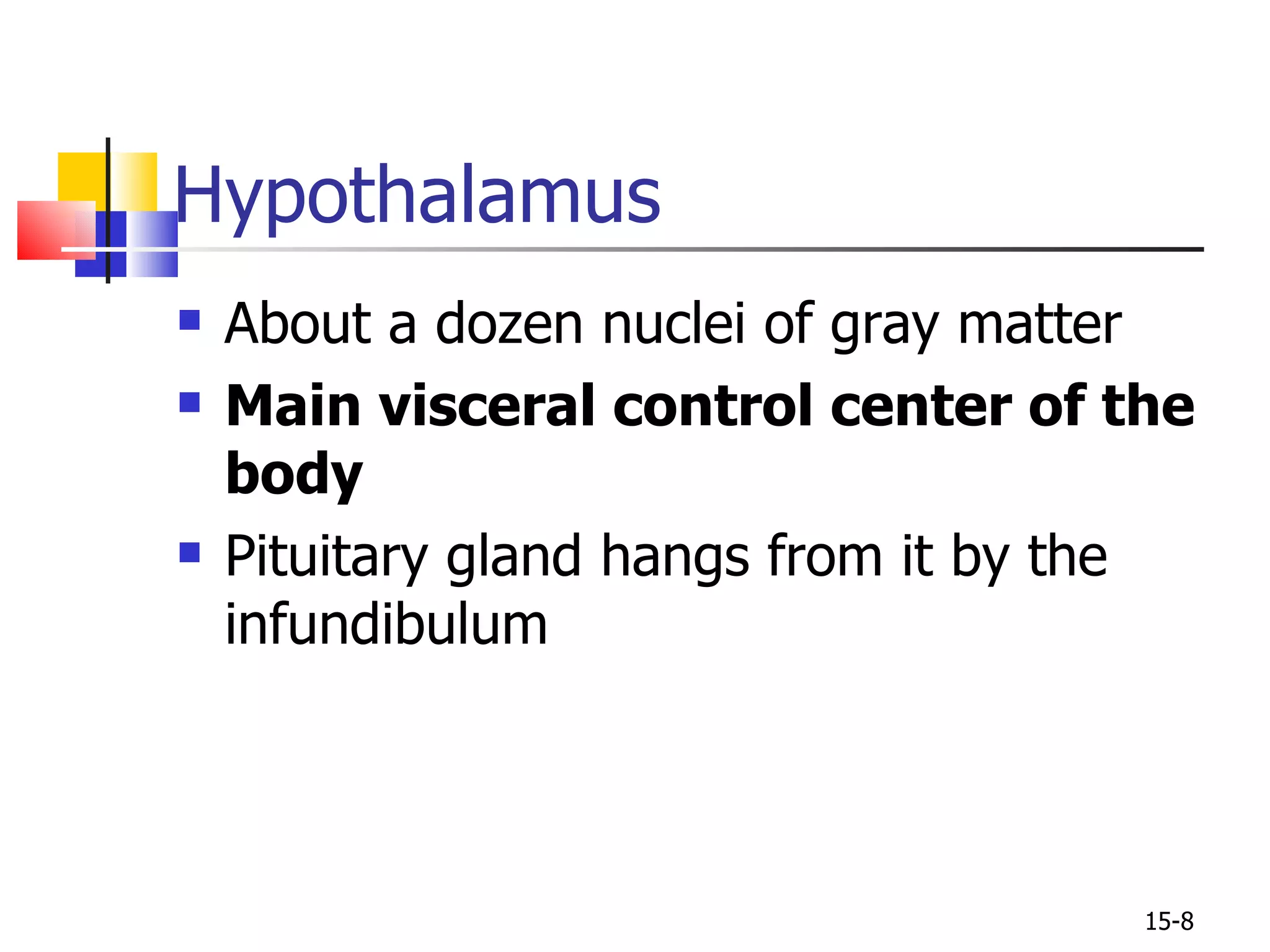
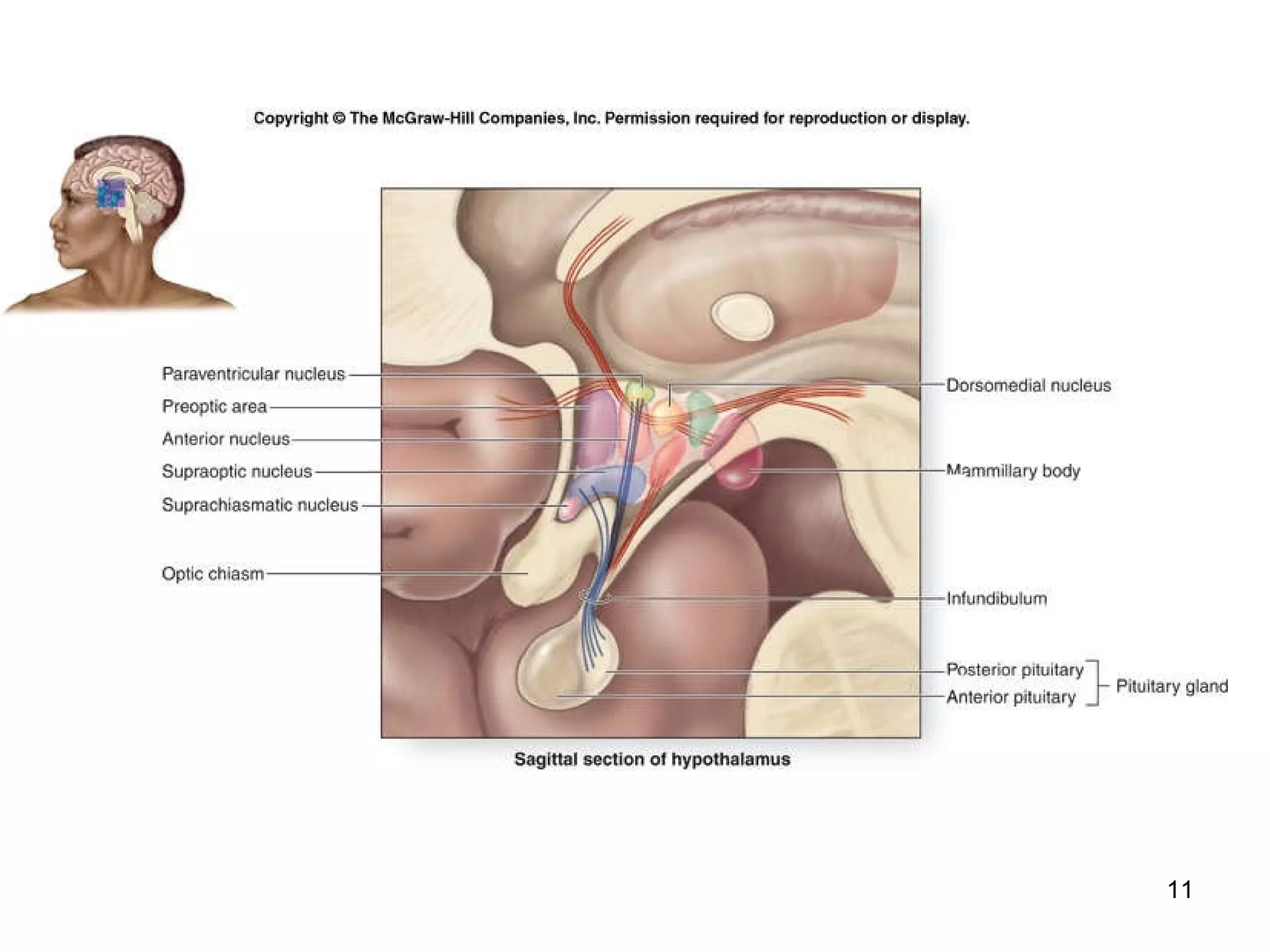
About a dozen nuclei of gray matter Main visceral control center of the body Pituitary gland hangs from it by the infundibulum Hypothalamus 15-
Hypothalamus - 4 major regions Mammillary region Relay station for smell reflexes Tuberal region Neurons here synthesize regulating hormones that go to the anterior pituitary Supraoptic region Nuclei here synthesize posterior pituitary hormones Preoptic region Regulates certain autonomic activities 15-
Master control of the ANS Master control of the endocrine system Regulation of body temperature Control of emotional behavior (part of limbic system) Control of food intake Control of water intake Regulation of sleep-wake (circadian) rhythms (works with pineal gland) Functions of the Hypothalamus 15-
Pleasure Center in Hypothalamus Small bundle of neural tissue Norepinephrine and dopamine are the neurotransmitters (resemble amphetamines) When the brain is flooded from outside with drugs, then it stops producing the NTs Cocaine targets this area.  It blocks the reabsorption of NTs so they have a prolonged effect, but they eventually diffuse away and the lack leads to depression 15-
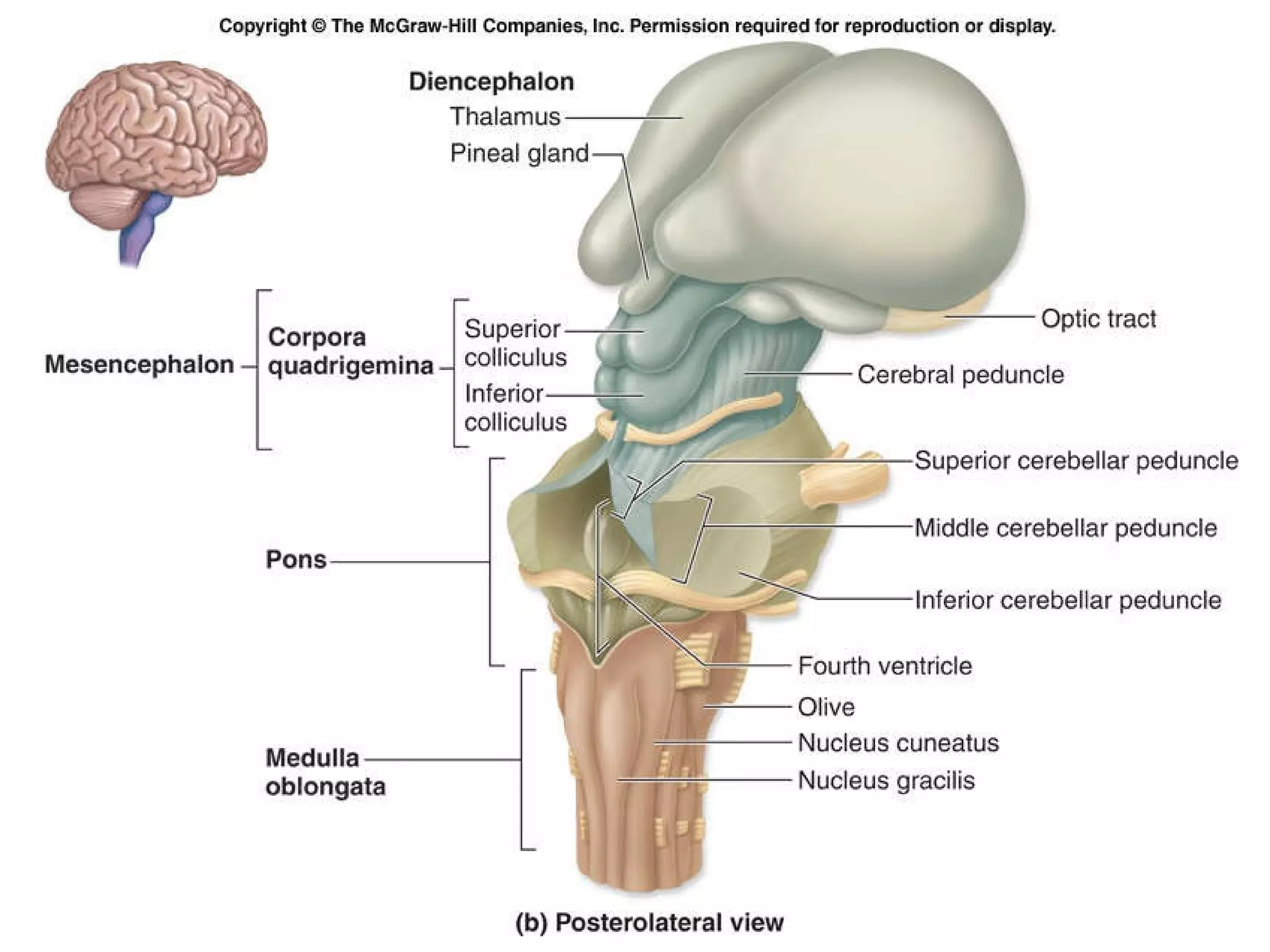
Thumb sized White matter  - Bidirectional passageway for tracts between the cerebrum and the spinal cord Gray matter Many autonomic centers and reflex centers Has nuclei of most of the cranial nerves Reticular formation - diffuse gray matter involved in consciousness and sleep/wake cycle Brainstem 15-
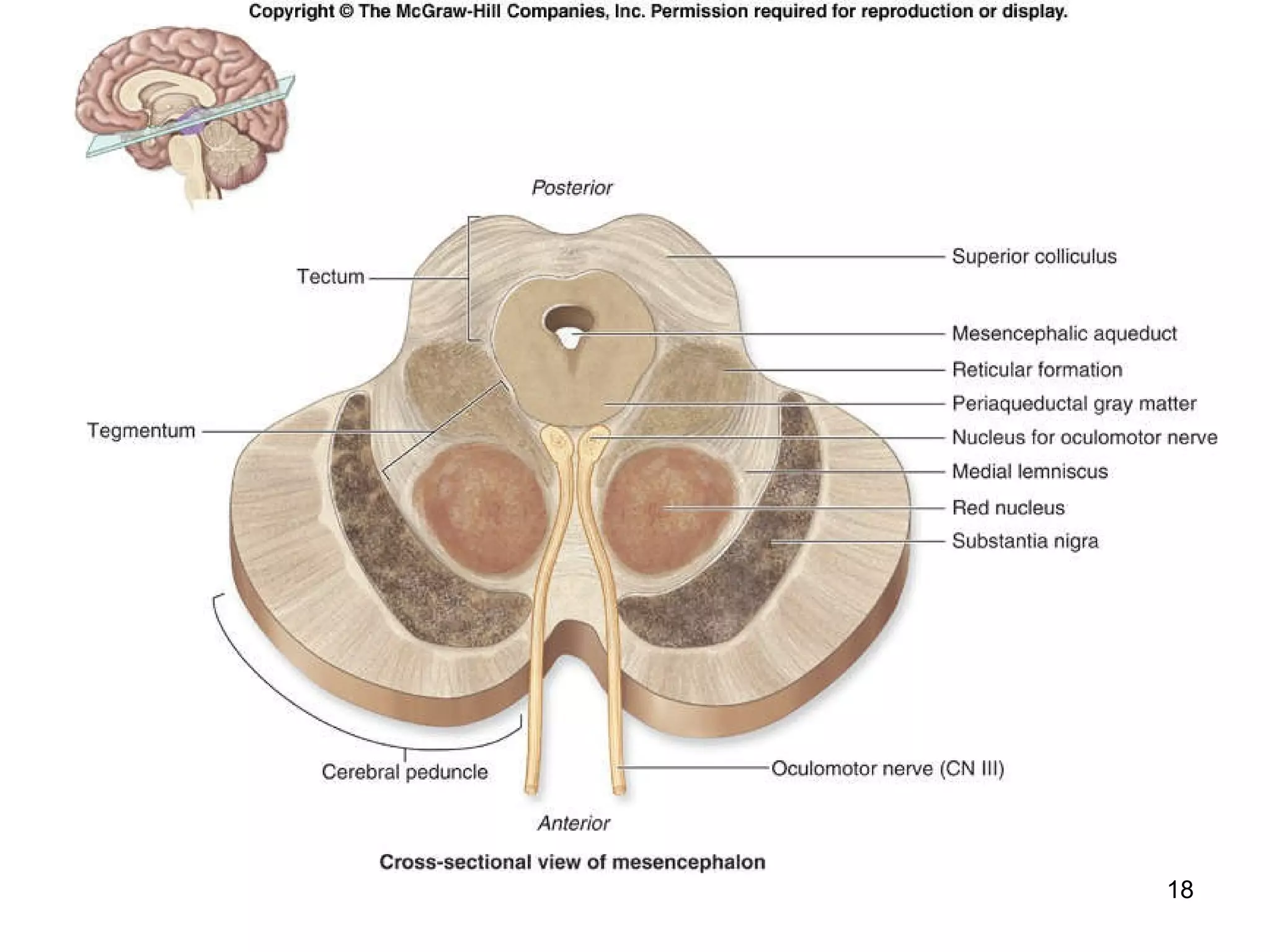
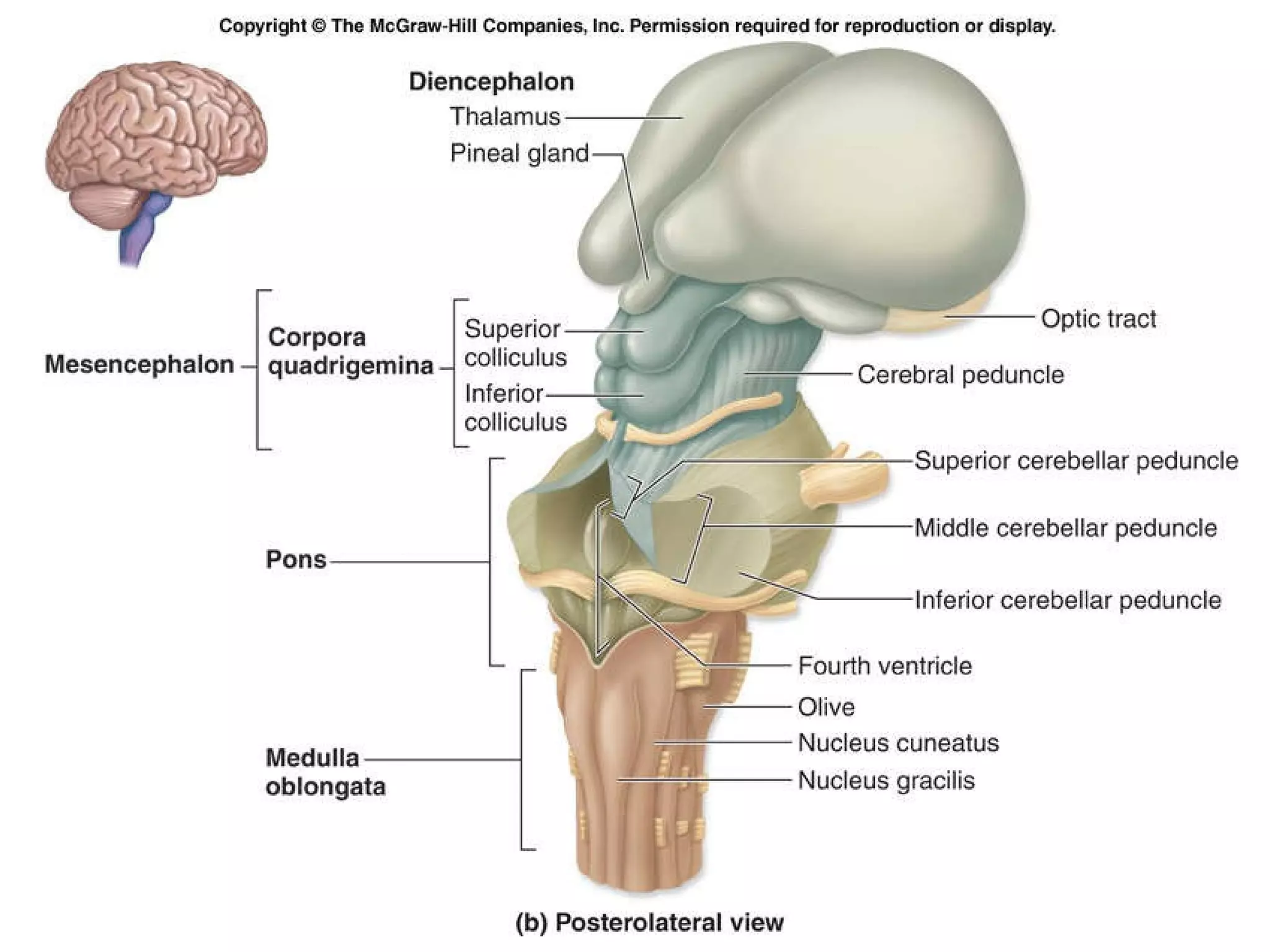
Cerebral aqueduct  passes through  Cerebral peduncles  (pyramidal tracts) Superior cerebellar peduncles connect to the cerebellum Substantia nigra  relays inhibitory signals to the cerebral nuclei that regulate their motor output to skeletal muscles. (Parkinson’s disease)  Medial lemniscus  just posterior (part of sensory pathway). Midbrain (Mesencephalon) 15-
Tegmentum contains the  red nuclei and the reticular formation . Red nucleus functions with basal nuclei and cerebellum to coordinate muscle movements. Tegmentum integrates info from the cerebrum and cerebellum and issues involuntary motor commands to the erector spinae to help maintain posture. Tectum contains the  corpora quadrigemina : superior and inferior colliculi, visual and auditory reflex centers Cranial nerves III and IV Midbrain (Mesencephalon) 15-
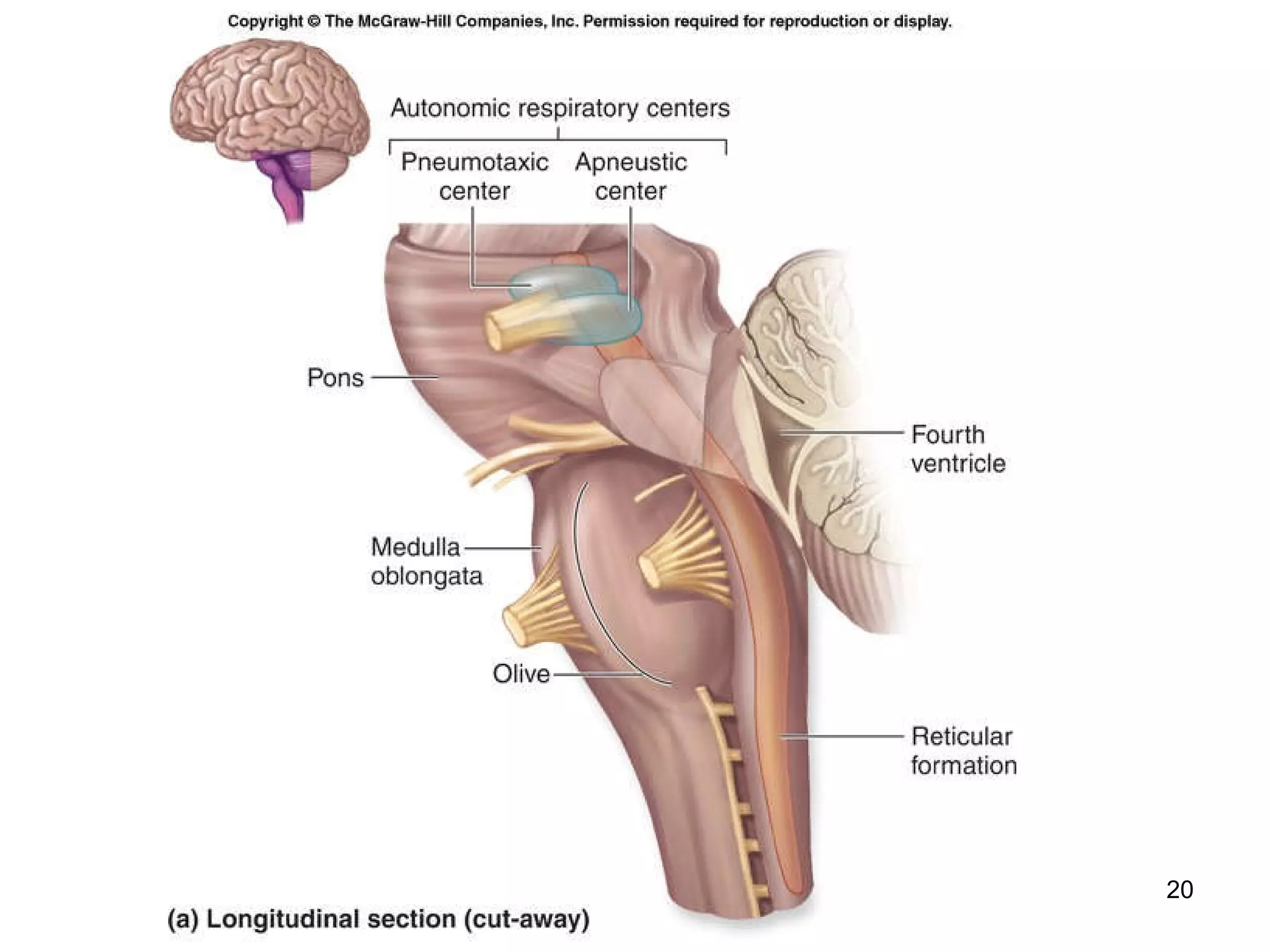
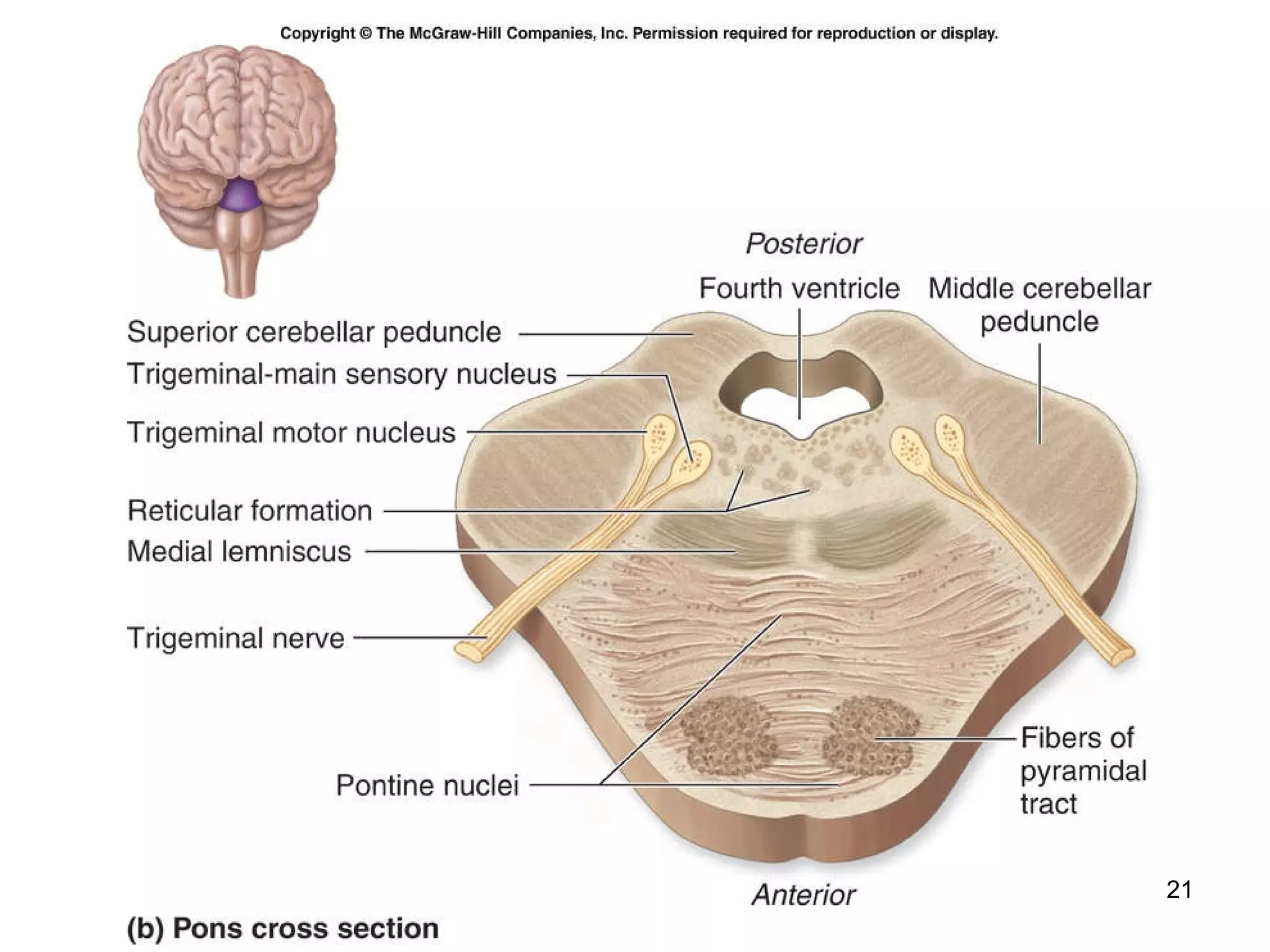
Sensory and motor projection tracts Middle cerebellar peduncles connect two halves of cerebellum Autonomic respiratory centers  help control rate and depth of breathing and modify activity of the respiratory center in the medulla oblongata Cranial nerve nuclei (V-part of VIII) Superior olivary complex receives auditory input and is involved in the pathway for sound localization Pons (“Bridge”) 15-
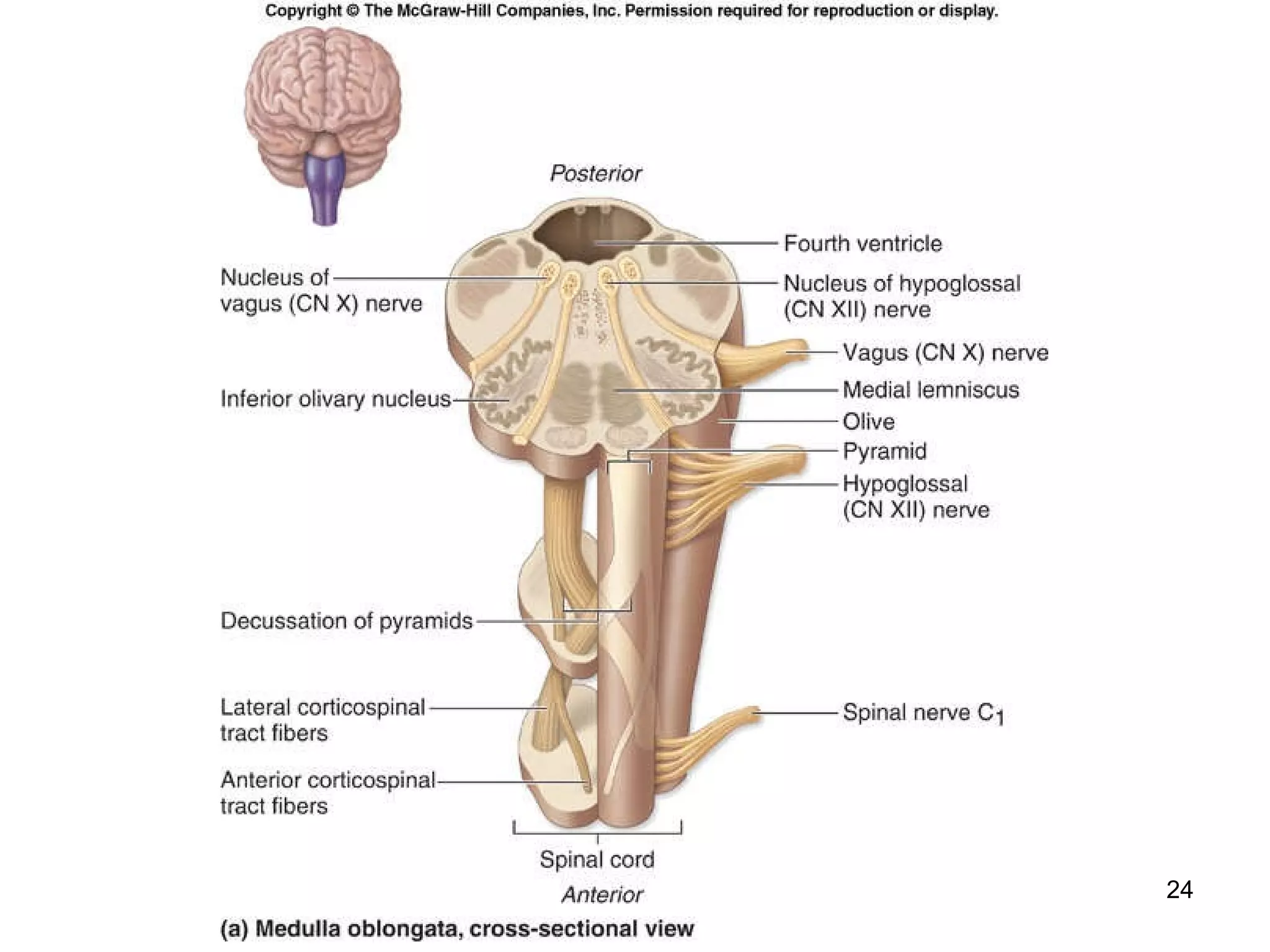
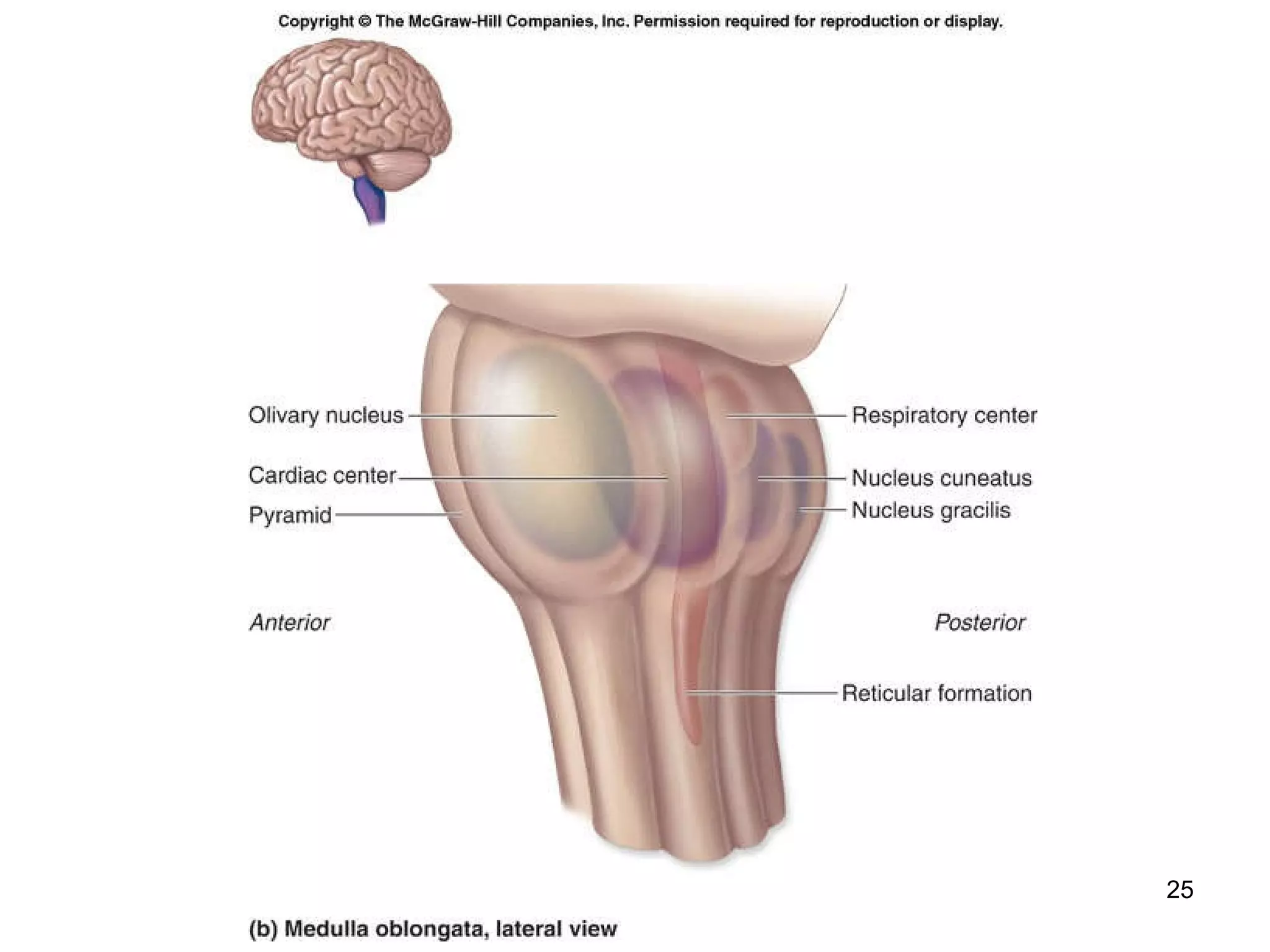
Decussation of the pyramids Olives have inferior olivary nuclei that relay ascending sensory impulses (especially proprioceptive info) to cerebellum by inferior cerebellar peduncles. Inferior cerebellar peduncles connect medulla to cerebellum Cranial nerves part of VIII-XII Nucleus cuneatus and nucleus gracilis , part of somatic sensory pathway, extend by medial lemniscus to the thalamus. Medulla Oblongata 15-
Medulla Oblongata Autonomic nuclei regulate essential functions  (damage or polio can cause problems or even be deadly) Cardiac center (H.R. and strength of contraction) Vasomotor center (B.P.) Respiratory center (respiratory rate) Other nuclei: coughing, sneezing, salivating, swallowing, gagging, and vomiting. 15-
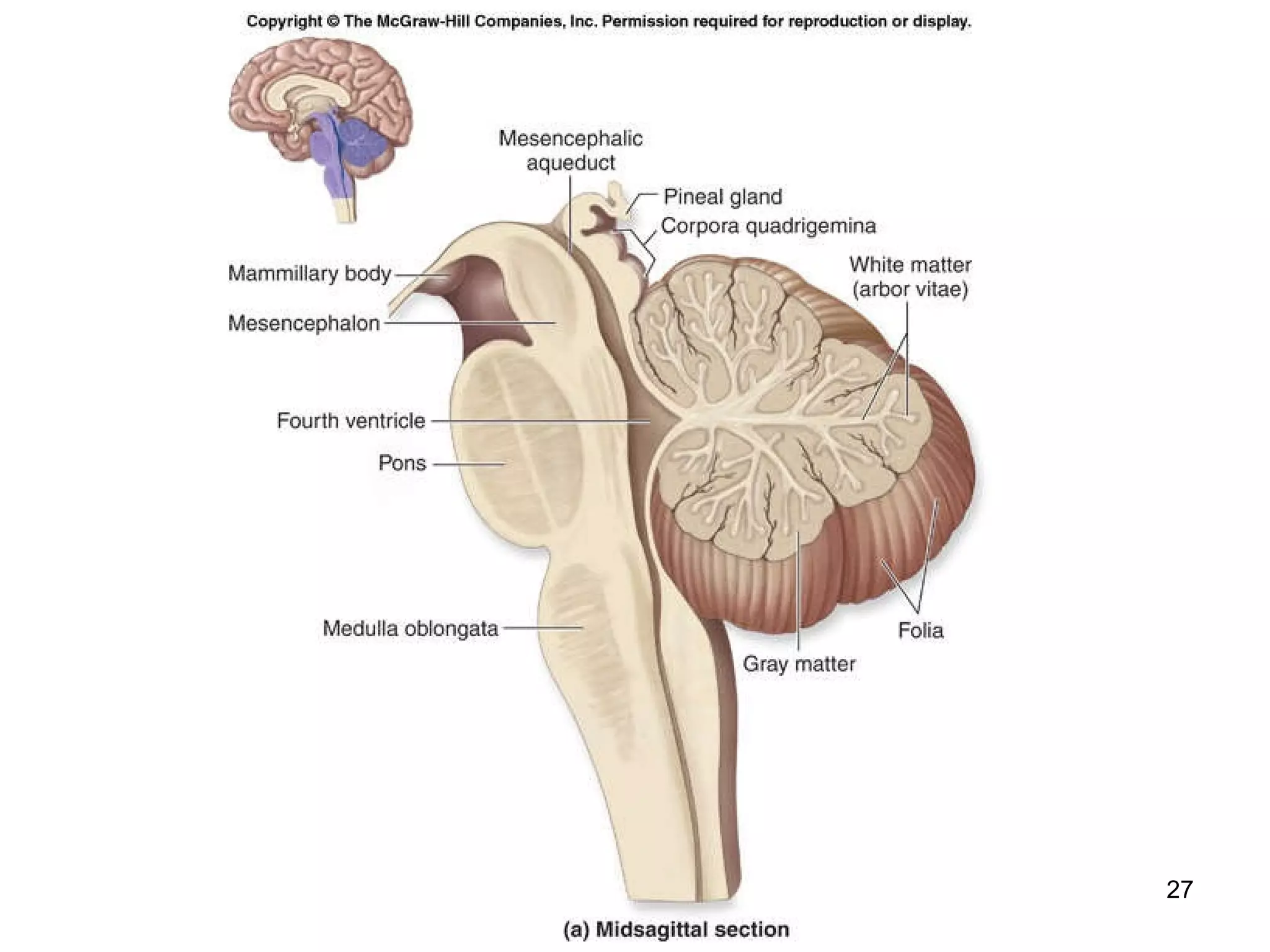
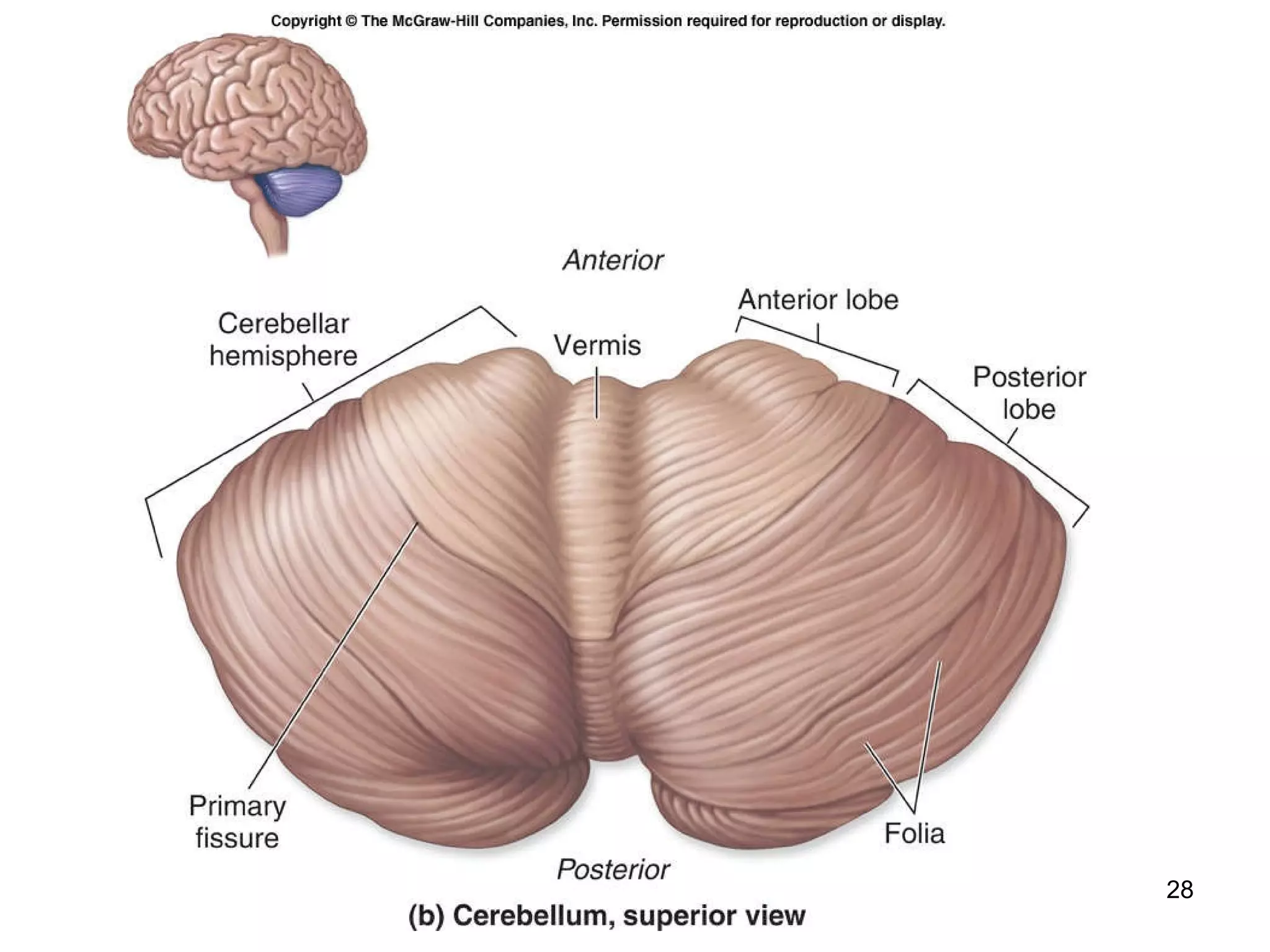
Cerebellar cortex in folds, folia Vermis  separates the two hemispheres Arbor vitae  (“tree of life”), white matter Cerebellar nuclei are deep Coordinates, a comparator function Stores memories of learned movement patterns Equilibrium and posture Receives proprioceptive info and other info Cerebellum 15-
Connect to brainstem Allow cerebellum to  “fine-tune” skeletal muscle movements  and interpret all body proprioceptive movement. Cerebellar Peduncles 15-
Impaired skeletal muscle function such as ataxia or loss of equilibrium that may lead to uncoordinated walking movements Sobriety tests Disturbance of gait Loss of balance and posture Inability to detect proprioceptive information Effects of Alcohol and Drugs on the Cerebellum 15-
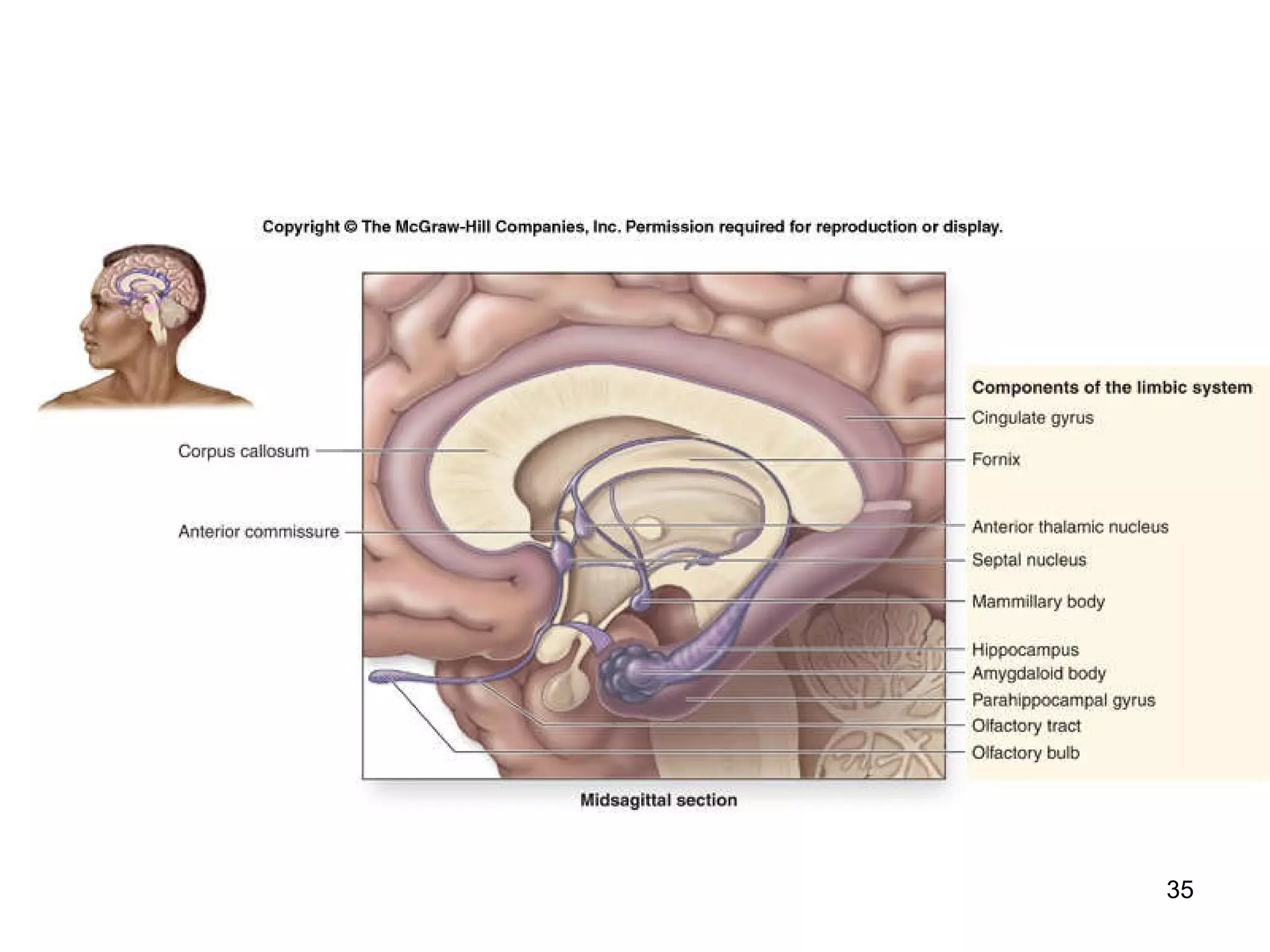
Limbic System “ Emotional brain” (emotions related to survival) Behavior is a function of the entire brain, but the limbic system controls most of the involuntary aspects. Interacts with the prefrontal lobes a lot, i.e., thinking and feelings interact. Structures border the diencephalon Cingulate gyrus receives input from other components of limbic system Hippocampus  connects to diencephalon via the fornix. It and parahippocampal gyrus important in storing memories and forming long-term memory. 15-
Limbic System Amygdala  connects to hippocampus.  Involved in several aspects of emotion, esp. fear. It can help store and code memories based on how a person emotionally perceives them. Olfactory bulbs, tracts, and cortex  - odors can provoke certain emotions or be associated with certain memories Fornix  is white matter connecting the hippocampus with other limbic system structures. Various nuclei in the diencephalon also interconnect other parts of the limbic system and contribute to its overall function. 15-
Lesions in Limbic System Memory impairment Voracious appetite Increased sexual activity (often perverse in nature) Docility 15-
Later, Chapter 17 Reticular Formation 15-
May be sensory or motor malfunctions or both Headache Cerebral palsy Encephalitis Epilepsy Huntington disease Parkinson disease Brain Disorders 15-
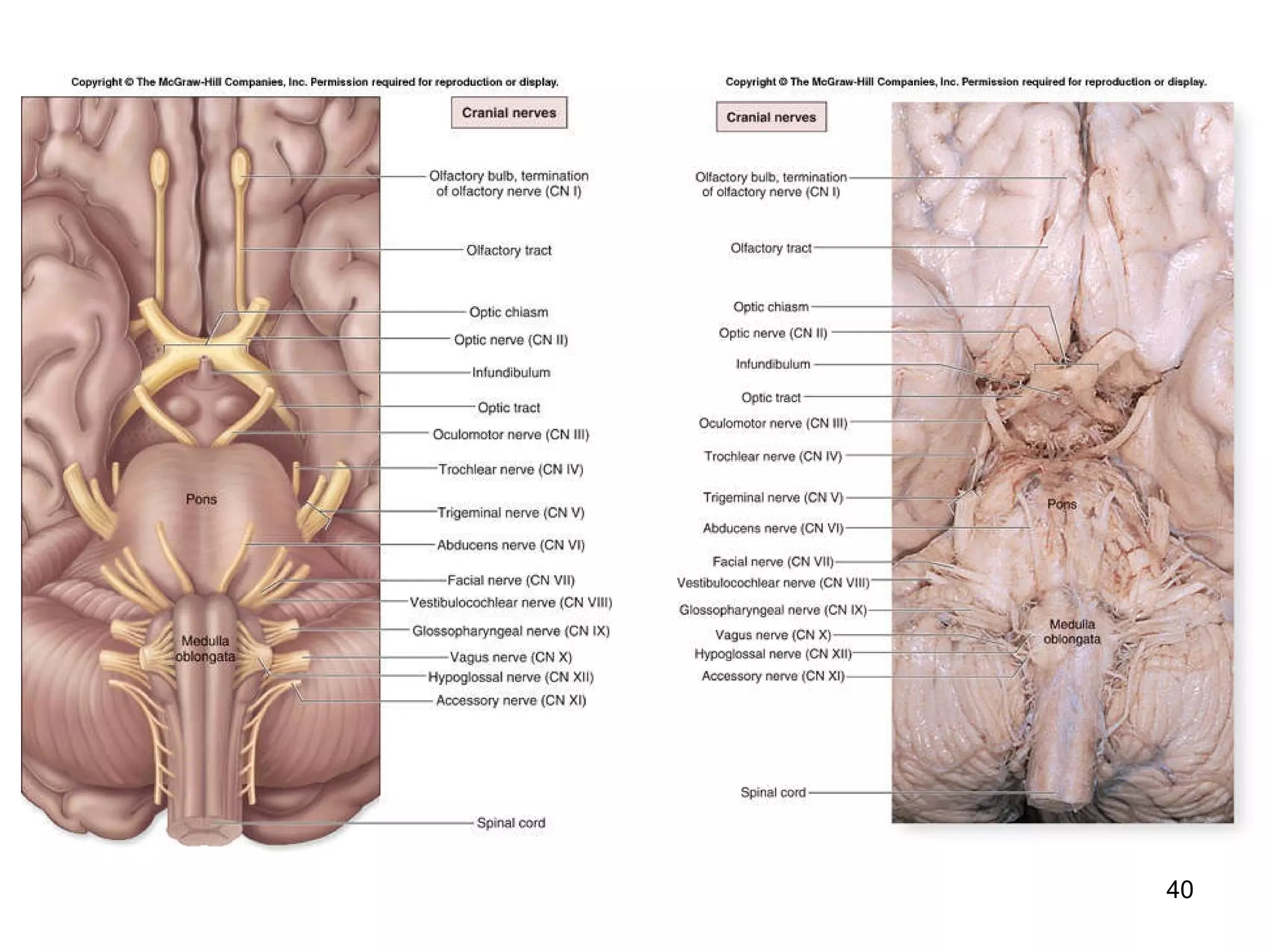
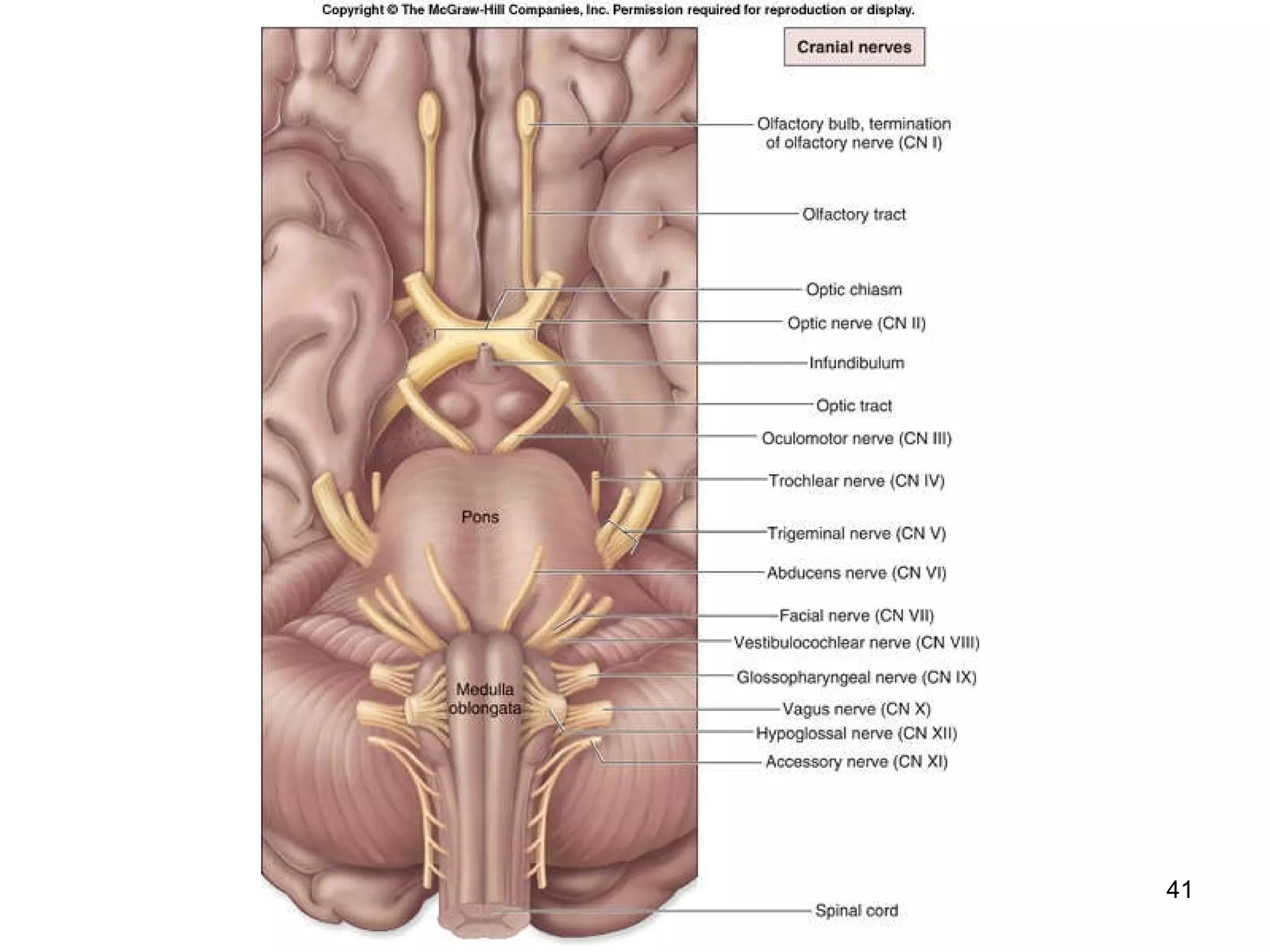
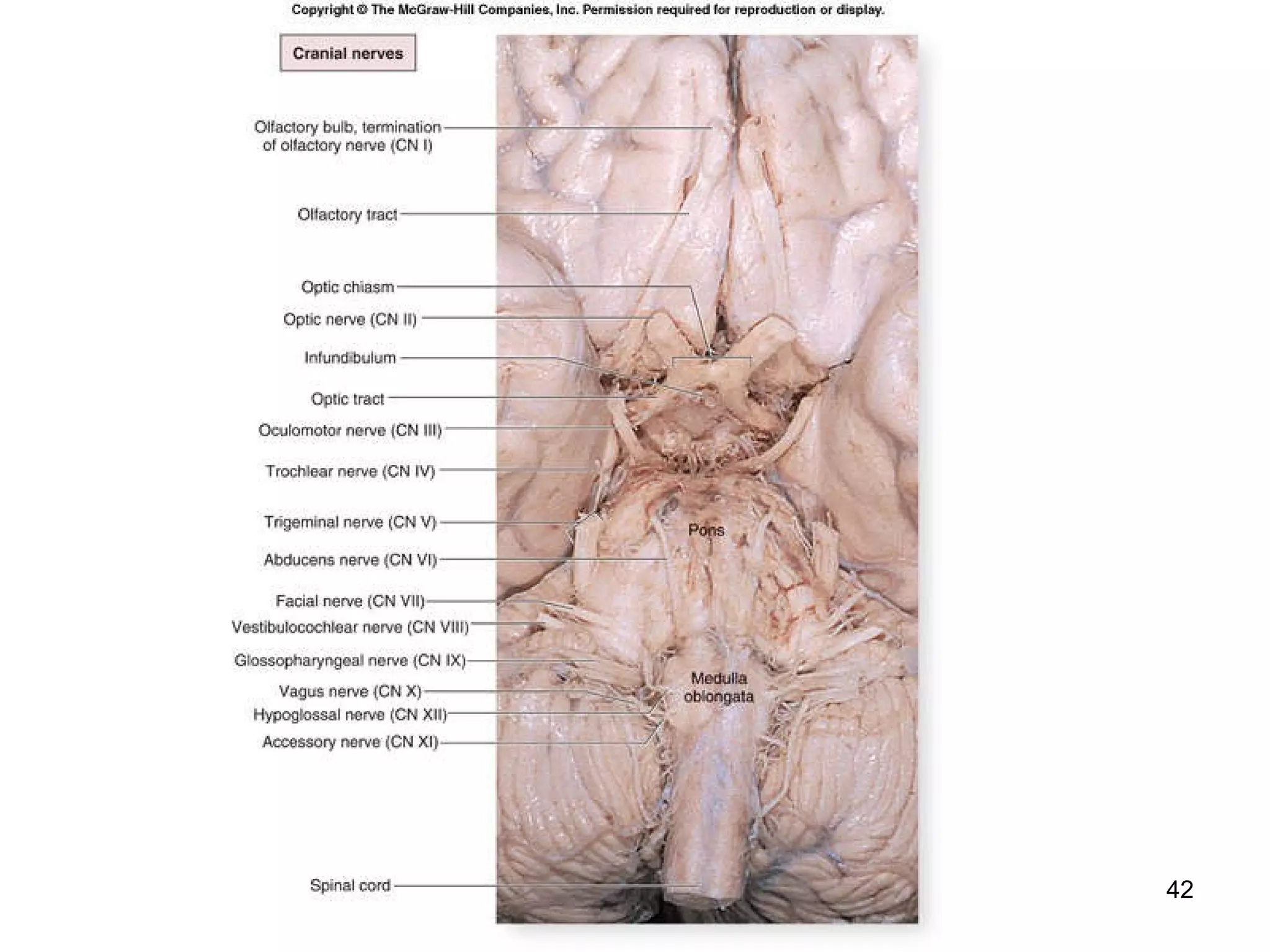
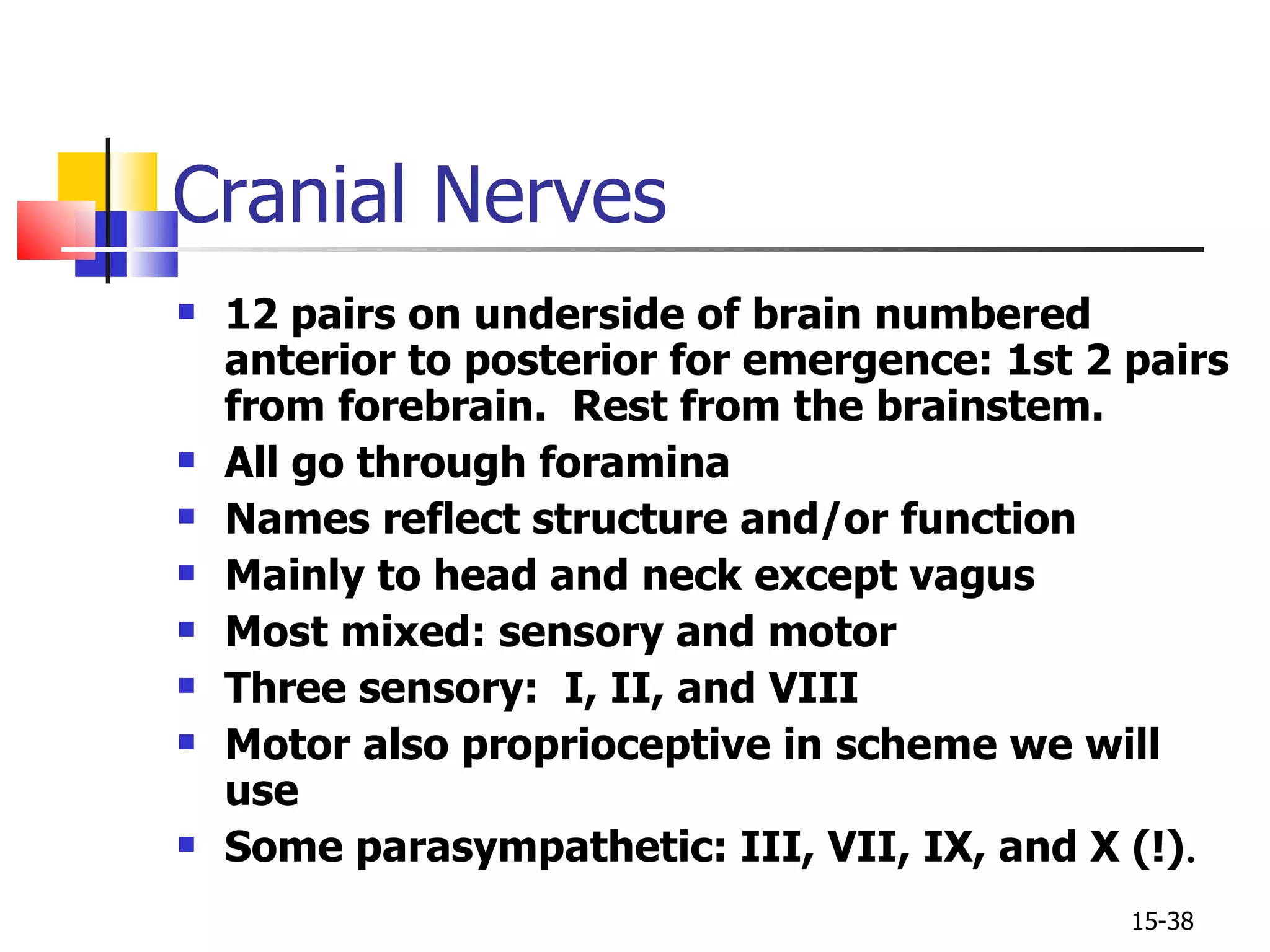
12 pairs on underside of brain numbered anterior to posterior for emergence: 1st 2 pairs from forebrain.  Rest from the brainstem. All go through foramina Names reflect structure and/or function Mainly to head and neck except vagus Most mixed: sensory and motor Three sensory:  I, II, and VIII Motor also proprioceptive in scheme we will use Some parasympathetic: III, VII, IX, and X (!) . Cranial Nerves 15-
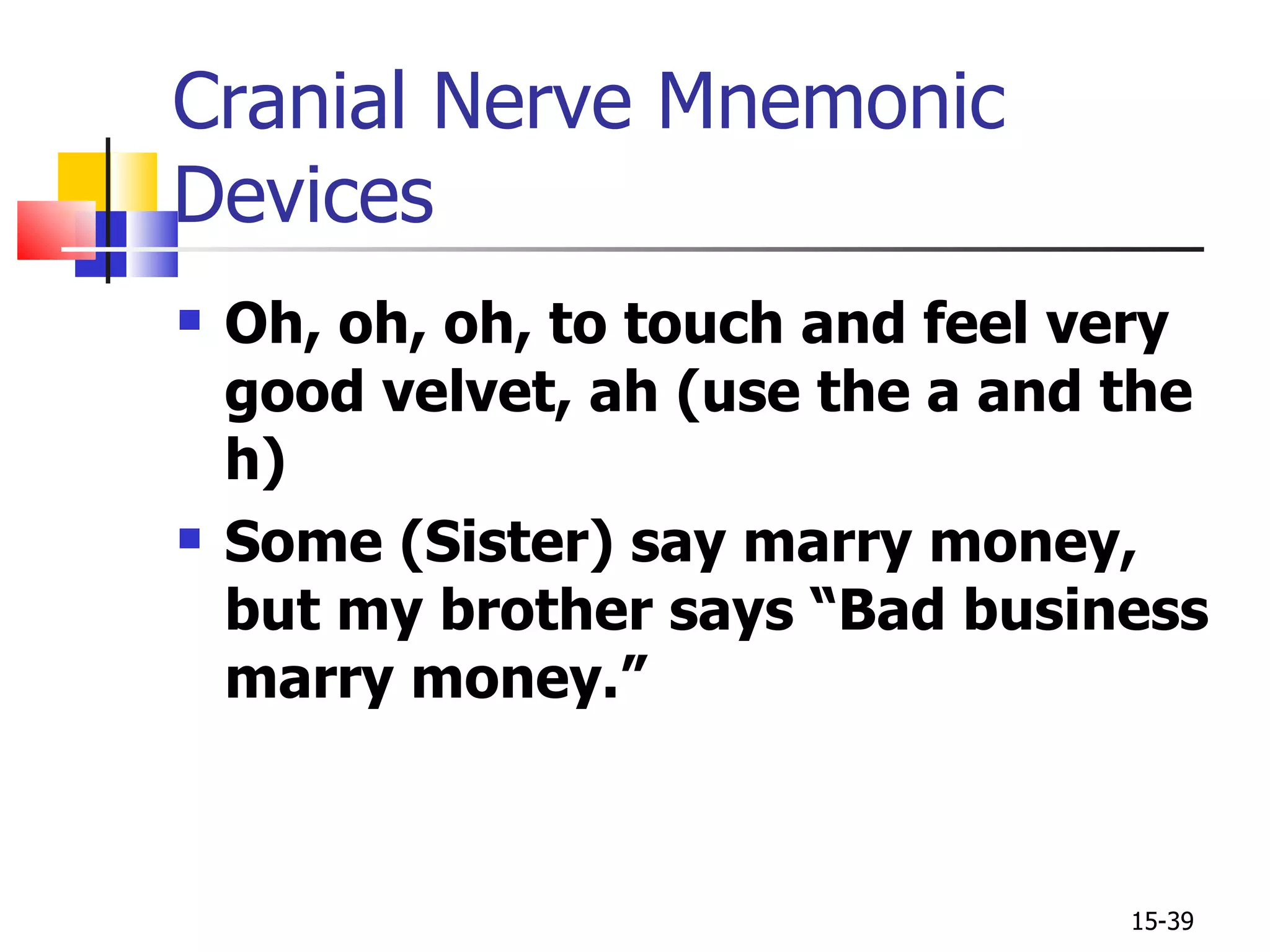
Cranial Nerve Mnemonic Devices Oh, oh, oh, to touch and feel very good velvet, ah (use the a and the h) Some (Sister) say marry money, but my brother says “Bad business marry money.” 15-
Cranial Nerves in Forebrain CN I ( olfactory ): smell CN II ( optic ): vision 15-
Cranial Nerves in Midbrain CN III ( oculomotor , “eye mover”): controls 3 of 4 rectus and inferior oblique muscles, constricts pupil and makes lens bulge for near vision  (ANS) CN IV ( trochlear ): controls superior oblique muscle 15-
Cranial Nerves in Pons CN V ( trigeminal ): sensory to face, motor for mastication, largest CN CN VI ( abducens ): controls lateral rectus muscle CN VII (facial): motor to face, anterior 2/3 of taste  (ANS) CN VIII, part ( vestibulocochlear ):  balance and hearing 15-
Cranial Nerves in Medulla CN VIII, part ( vestibulocochlear ):  balance and hearing CN IX ( glossopharyngeal ): posterior 1/3 of taste, monitors B.P. and [gas] in major blood vessels, controls swallowing muscles  (ANS) CN X ( vagus , the “wanderer”): motor to soft palate, pharynx, and esophagus and viscera in thorax and abdominopelvic regions, unconscious sensations from viscera, etc.- important for ANS function  (major ANS) 15-
CN XI ( accessory ): some motor fibers from lateral gray horns of C1-C5. Motor to voluntary swallowing muscles, laryngeal muscles to vocal cords. Motor to trapezius and sternocleidomastoid. Accessory to vagus. CN XII ( hypoglossal ): motor to tongue Cranial Nerves in Medulla 15-

Chapter 15 B

  • 1.
    Human Anatomy, Second Edition McKinley & O'Loughlin Chapter 15B Lecture Outline: Brain and Cranial Nerves
  • 2.
    Diencephalon Relay andswitching centers for some sensory and motor pathways and for control of visceral activities Surrounds third ventricle 15-
  • 3.
    Posterior roof ofthe diencephalon over the third ventricle Pineal gland (body) Endocrine gland - secretes melatonin that helps regulate day-night cycles (circadian rhythms) Epithalamus 15-
  • 5.
    Oval masses of gray matter (nuclei) on either side of the third ventricle connected by the intermediate mass (interthalamic adhesion) “ Gateway” to the cerebral cortex Principal and final relay point for sensory information that will be processed and projected to the primary sensory cortex Information filter : edits info and may amplify or tone down “ Tells” the cerebrum where the information came from Crude interpretation of certain sensory impulses (pain, temp. and pressure) Thalamus 15-
  • 8.
    About a dozennuclei of gray matter Main visceral control center of the body Pituitary gland hangs from it by the infundibulum Hypothalamus 15-
  • 9.
    Hypothalamus - 4major regions Mammillary region Relay station for smell reflexes Tuberal region Neurons here synthesize regulating hormones that go to the anterior pituitary Supraoptic region Nuclei here synthesize posterior pituitary hormones Preoptic region Regulates certain autonomic activities 15-
  • 10.
    Master control ofthe ANS Master control of the endocrine system Regulation of body temperature Control of emotional behavior (part of limbic system) Control of food intake Control of water intake Regulation of sleep-wake (circadian) rhythms (works with pineal gland) Functions of the Hypothalamus 15-
  • 12.
    Pleasure Center inHypothalamus Small bundle of neural tissue Norepinephrine and dopamine are the neurotransmitters (resemble amphetamines) When the brain is flooded from outside with drugs, then it stops producing the NTs Cocaine targets this area. It blocks the reabsorption of NTs so they have a prolonged effect, but they eventually diffuse away and the lack leads to depression 15-
  • 13.
    Thumb sized Whitematter - Bidirectional passageway for tracts between the cerebrum and the spinal cord Gray matter Many autonomic centers and reflex centers Has nuclei of most of the cranial nerves Reticular formation - diffuse gray matter involved in consciousness and sleep/wake cycle Brainstem 15-
  • 14.
    Cerebral aqueduct passes through Cerebral peduncles (pyramidal tracts) Superior cerebellar peduncles connect to the cerebellum Substantia nigra relays inhibitory signals to the cerebral nuclei that regulate their motor output to skeletal muscles. (Parkinson’s disease) Medial lemniscus just posterior (part of sensory pathway). Midbrain (Mesencephalon) 15-
  • 15.
    Tegmentum contains the red nuclei and the reticular formation . Red nucleus functions with basal nuclei and cerebellum to coordinate muscle movements. Tegmentum integrates info from the cerebrum and cerebellum and issues involuntary motor commands to the erector spinae to help maintain posture. Tectum contains the corpora quadrigemina : superior and inferior colliculi, visual and auditory reflex centers Cranial nerves III and IV Midbrain (Mesencephalon) 15-
  • 19.
    Sensory and motorprojection tracts Middle cerebellar peduncles connect two halves of cerebellum Autonomic respiratory centers help control rate and depth of breathing and modify activity of the respiratory center in the medulla oblongata Cranial nerve nuclei (V-part of VIII) Superior olivary complex receives auditory input and is involved in the pathway for sound localization Pons (“Bridge”) 15-
  • 22.
    Decussation of thepyramids Olives have inferior olivary nuclei that relay ascending sensory impulses (especially proprioceptive info) to cerebellum by inferior cerebellar peduncles. Inferior cerebellar peduncles connect medulla to cerebellum Cranial nerves part of VIII-XII Nucleus cuneatus and nucleus gracilis , part of somatic sensory pathway, extend by medial lemniscus to the thalamus. Medulla Oblongata 15-
  • 23.
    Medulla Oblongata Autonomicnuclei regulate essential functions (damage or polio can cause problems or even be deadly) Cardiac center (H.R. and strength of contraction) Vasomotor center (B.P.) Respiratory center (respiratory rate) Other nuclei: coughing, sneezing, salivating, swallowing, gagging, and vomiting. 15-
  • 26.
    Cerebellar cortex infolds, folia Vermis separates the two hemispheres Arbor vitae (“tree of life”), white matter Cerebellar nuclei are deep Coordinates, a comparator function Stores memories of learned movement patterns Equilibrium and posture Receives proprioceptive info and other info Cerebellum 15-
  • 29.
    Connect to brainstemAllow cerebellum to “fine-tune” skeletal muscle movements and interpret all body proprioceptive movement. Cerebellar Peduncles 15-
  • 31.
    Impaired skeletal musclefunction such as ataxia or loss of equilibrium that may lead to uncoordinated walking movements Sobriety tests Disturbance of gait Loss of balance and posture Inability to detect proprioceptive information Effects of Alcohol and Drugs on the Cerebellum 15-
  • 32.
    Limbic System “Emotional brain” (emotions related to survival) Behavior is a function of the entire brain, but the limbic system controls most of the involuntary aspects. Interacts with the prefrontal lobes a lot, i.e., thinking and feelings interact. Structures border the diencephalon Cingulate gyrus receives input from other components of limbic system Hippocampus connects to diencephalon via the fornix. It and parahippocampal gyrus important in storing memories and forming long-term memory. 15-
  • 33.
    Limbic System Amygdala connects to hippocampus. Involved in several aspects of emotion, esp. fear. It can help store and code memories based on how a person emotionally perceives them. Olfactory bulbs, tracts, and cortex - odors can provoke certain emotions or be associated with certain memories Fornix is white matter connecting the hippocampus with other limbic system structures. Various nuclei in the diencephalon also interconnect other parts of the limbic system and contribute to its overall function. 15-
  • 34.
    Lesions in LimbicSystem Memory impairment Voracious appetite Increased sexual activity (often perverse in nature) Docility 15-
  • 36.
    Later, Chapter 17Reticular Formation 15-
  • 37.
    May be sensoryor motor malfunctions or both Headache Cerebral palsy Encephalitis Epilepsy Huntington disease Parkinson disease Brain Disorders 15-
  • 38.
    12 pairs onunderside of brain numbered anterior to posterior for emergence: 1st 2 pairs from forebrain. Rest from the brainstem. All go through foramina Names reflect structure and/or function Mainly to head and neck except vagus Most mixed: sensory and motor Three sensory: I, II, and VIII Motor also proprioceptive in scheme we will use Some parasympathetic: III, VII, IX, and X (!) . Cranial Nerves 15-
  • 39.
    Cranial Nerve MnemonicDevices Oh, oh, oh, to touch and feel very good velvet, ah (use the a and the h) Some (Sister) say marry money, but my brother says “Bad business marry money.” 15-
  • 43.
    Cranial Nerves inForebrain CN I ( olfactory ): smell CN II ( optic ): vision 15-
  • 44.
    Cranial Nerves inMidbrain CN III ( oculomotor , “eye mover”): controls 3 of 4 rectus and inferior oblique muscles, constricts pupil and makes lens bulge for near vision (ANS) CN IV ( trochlear ): controls superior oblique muscle 15-
  • 45.
    Cranial Nerves inPons CN V ( trigeminal ): sensory to face, motor for mastication, largest CN CN VI ( abducens ): controls lateral rectus muscle CN VII (facial): motor to face, anterior 2/3 of taste (ANS) CN VIII, part ( vestibulocochlear ): balance and hearing 15-
  • 46.
    Cranial Nerves inMedulla CN VIII, part ( vestibulocochlear ): balance and hearing CN IX ( glossopharyngeal ): posterior 1/3 of taste, monitors B.P. and [gas] in major blood vessels, controls swallowing muscles (ANS) CN X ( vagus , the “wanderer”): motor to soft palate, pharynx, and esophagus and viscera in thorax and abdominopelvic regions, unconscious sensations from viscera, etc.- important for ANS function (major ANS) 15-
  • 47.
    CN XI (accessory ): some motor fibers from lateral gray horns of C1-C5. Motor to voluntary swallowing muscles, laryngeal muscles to vocal cords. Motor to trapezius and sternocleidomastoid. Accessory to vagus. CN XII ( hypoglossal ): motor to tongue Cranial Nerves in Medulla 15-