the Parts & Functions
of the Brain
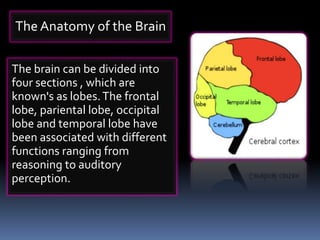
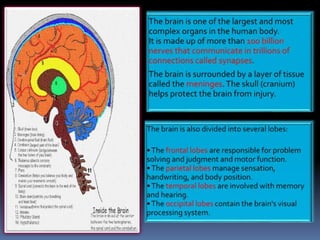
The brain can be divided into
four sections , which are
known's as lobes.The frontal
lobe, pariental lobe, occipital
lobe and temporal lobe have
been associated with different
functions ranging from
reasoning to auditory
perception.
The Anatomy of the Brain
The four of the
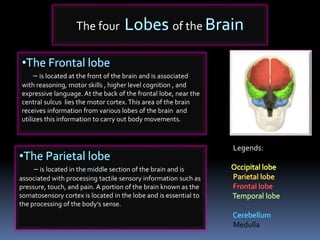
– is located at the front of the brain and is associated
with reasoning, motor skills , higher level cognition , and
expressive language. At the back of the frontal lobe, near the
central sulcus lies the motor cortex.This area of the brain
receives information from various lobes of the brain and
utilizes this information to carry out body movements.
– is located in the middle section of the brain and is
associated with processing tactile sensory information such as
pressure, touch, and pain. A portion of the brain known as the
somatosensory cortex is located in the lobe and is essential to
the processing of the body’s sense.
Legends:
Medulla
– is located on the bottom section of the brain.This lobe is also the
location of the primary auditory cortex, which is important for interpreting
sounds and the language we hear.The hippocampus is also located in the
temporal lobe, which is why this portion of the brain is also heavily
associated with the formation of memories.
– is located at the back portion of the brain and is associated with
interpreting visual stimuli and information.The primary visual cortex, which
receives and interprets information from the retinas of the eyes, is located in
the occipital lobe.
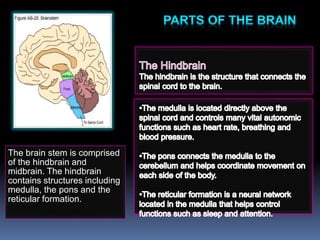
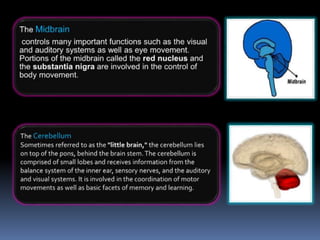
The brain stem is comprised
of the hindbrain and
midbrain. The hindbrain
contains structures including
medulla, the pons and the
reticular formation.
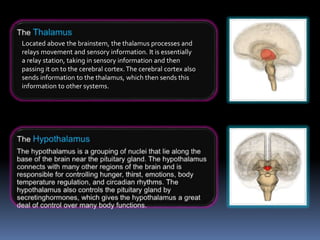
Located above the brainstem, the thalamus processes and
relays movement and sensory information. It is essentially
a relay station, taking in sensory information and then
passing it on to the cerebral cortex.The cerebral cortex also
sends information to the thalamus, which then sends this
information to other systems.
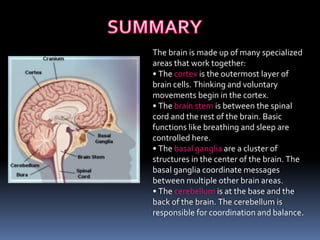
The brain is made up of many specialized
areas that work together:
• The cortex is the outermost layer of
brain cells. Thinking and voluntary
movements begin in the cortex.
• The brain stem is between the spinal
cord and the rest of the brain. Basic
functions like breathing and sleep are
controlled here.
• The basal ganglia are a cluster of
structures in the center of the brain. The
basal ganglia coordinate messages
between multiple other brain areas.
• The cerebellum is at the base and the
back of the brain. The cerebellum is
responsible for coordination and balance.
The Parts & Function of the Brain

The Parts & Function of the Brain

  • 1.
    the Parts &Functions of the Brain
  • 4.
    The brain canbe divided into four sections , which are known's as lobes.The frontal lobe, pariental lobe, occipital lobe and temporal lobe have been associated with different functions ranging from reasoning to auditory perception. The Anatomy of the Brain
  • 5.
    The four ofthe – is located at the front of the brain and is associated with reasoning, motor skills , higher level cognition , and expressive language. At the back of the frontal lobe, near the central sulcus lies the motor cortex.This area of the brain receives information from various lobes of the brain and utilizes this information to carry out body movements. – is located in the middle section of the brain and is associated with processing tactile sensory information such as pressure, touch, and pain. A portion of the brain known as the somatosensory cortex is located in the lobe and is essential to the processing of the body’s sense. Legends: Medulla
  • 6.
    – is locatedon the bottom section of the brain.This lobe is also the location of the primary auditory cortex, which is important for interpreting sounds and the language we hear.The hippocampus is also located in the temporal lobe, which is why this portion of the brain is also heavily associated with the formation of memories. – is located at the back portion of the brain and is associated with interpreting visual stimuli and information.The primary visual cortex, which receives and interprets information from the retinas of the eyes, is located in the occipital lobe.
  • 7.
    The brain stemis comprised of the hindbrain and midbrain. The hindbrain contains structures including medulla, the pons and the reticular formation.
  • 9.
    Located above thebrainstem, the thalamus processes and relays movement and sensory information. It is essentially a relay station, taking in sensory information and then passing it on to the cerebral cortex.The cerebral cortex also sends information to the thalamus, which then sends this information to other systems.
  • 11.
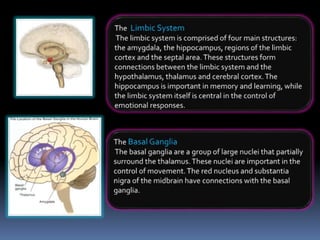
    The brain ismade up of many specialized areas that work together: • The cortex is the outermost layer of brain cells. Thinking and voluntary movements begin in the cortex. • The brain stem is between the spinal cord and the rest of the brain. Basic functions like breathing and sleep are controlled here. • The basal ganglia are a cluster of structures in the center of the brain. The basal ganglia coordinate messages between multiple other brain areas. • The cerebellum is at the base and the back of the brain. The cerebellum is responsible for coordination and balance.