DISEASE & IMMUNITY
OUR BODY’S ARMY HELPING US STAY HEALTHY!!
Pathogens
Bacteria
e.g. cholera,
syphilis, TB, tetanus
Virus
e.g. influenza, AIDS,
common cold
Protoctist
e.g. malaria,
amoebic dysentery
Fungus
e.g. athlete’s foot,
ring worm
PATHOGENS
• A PATHOGEN IS A MICROORGANISM THAT CAUSES DISEASE. IF A
PATHOGEN CAN BE PASSES FROM A PERSON TO ANOTHER THIS IS
CALLED A TRANSMISSIBLE DISEASE.
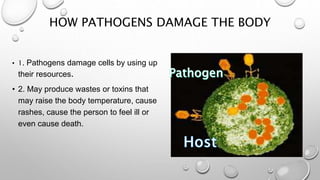
HOW PATHOGENS DAMAGE THE BODY
• 1. Pathogens damage cells by using up
their resources.
• 2. May produce wastes or toxins that
may raise the body temperature, cause
rashes, cause the person to feel ill or
even cause death.
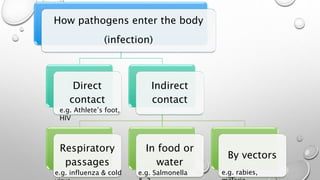
How pathogens enter the body
(infection)
Direct
contact
Indirect
contact
Respiratory
passages
In food or
water
By vectors
e.g. Athlete’s foot,
HIV
e.g. influenza & cold e.g. Salmonella e.g. rabies,
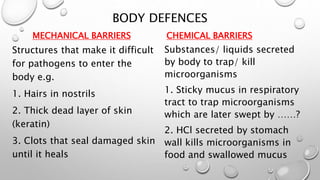
BODY DEFENCES
MECHANICAL BARRIERS
Structures that make it difficult
for pathogens to enter the
body e.g.
1. Hairs in nostrils
2. Thick dead layer of skin
(keratin)
3. Clots that seal damaged skin
until it heals
CHEMICAL BARRIERS
Substances/ liquids secreted
by body to trap/ kill
microorganisms
1. Sticky mucus in respiratory
tract to trap microorganisms
which are later swept by ……?
2. HCl secreted by stomach
wall kills microorganisms in
food and swallowed mucus
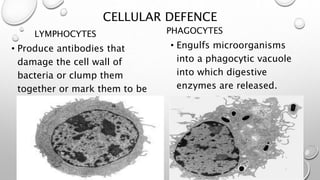
CELLULAR DEFENCE
LYMPHOCYTES
• Produce antibodies that
damage the cell wall of
bacteria or clump them
together or mark them to be
easily detected by phagocytes.
PHAGOCYTES
• Engulfs microorganisms
into a phagocytic vacuole
into which digestive
enzymes are released.
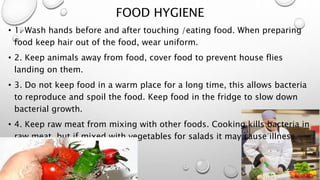
FOOD HYGIENE
• 1. Wash hands before and after touching /eating food. When preparing
food keep hair out of the food, wear uniform.
• 2. Keep animals away from food, cover food to prevent house flies
landing on them.
• 3. Do not keep food in a warm place for a long time, this allows bacteria
to reproduce and spoil the food. Keep food in the fridge to slow down
bacterial growth.
• 4. Keep raw meat from mixing with other foods. Cooking kills bacteria in
raw meat, but if mixed with vegetables for salads it may cause illness.
PERSONAL HYGIENE
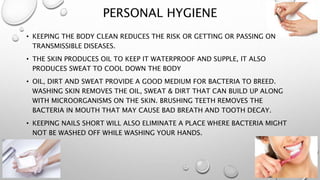
• KEEPING THE BODY CLEAN REDUCES THE RISK OR GETTING OR PASSING ON
TRANSMISSIBLE DISEASES.
• THE SKIN PRODUCES OIL TO KEEP IT WATERPROOF AND SUPPLE, IT ALSO
PRODUCES SWEAT TO COOL DOWN THE BODY
• OIL, DIRT AND SWEAT PROVIDE A GOOD MEDIUM FOR BACTERIA TO BREED.
WASHING SKIN REMOVES THE OIL, SWEAT & DIRT THAT CAN BUILD UP ALONG
WITH MICROORGANISMS ON THE SKIN. BRUSHING TEETH REMOVES THE
BACTERIA IN MOUTH THAT MAY CAUSE BAD BREATH AND TOOTH DECAY.
• KEEPING NAILS SHORT WILL ALSO ELIMINATE A PLACE WHERE BACTERIA MIGHT
NOT BE WASHED OFF WHILE WASHING YOUR HANDS.
WASTE DISPOSAL
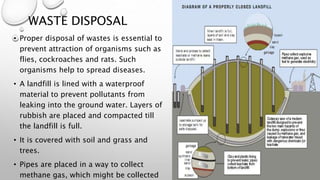
• Proper disposal of wastes is essential to
prevent attraction of organisms such as
flies, cockroaches and rats. Such
organisms help to spread diseases.
• A landfill is lined with a waterproof
material to prevent pollutants from
leaking into the ground water. Layers of
rubbish are placed and compacted till
the landfill is full.
• It is covered with soil and grass and
trees.
• Pipes are placed in a way to collect
methane gas, which might be collected
THE IMMUNE SYSTEM
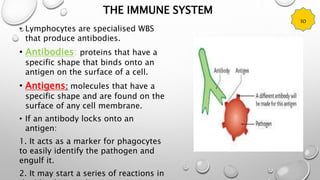
• Lymphocytes are specialised WBS
that produce antibodies.
• Antibodies: proteins that have a
specific shape that binds onto an
antigen on the surface of a cell.
• Antigens: molecules that have a
specific shape and are found on the
surface of any cell membrane.
• If an antibody locks onto an
antigen:
1. It acts as a marker for phagocytes
to easily identify the pathogen and
engulf it.
2. It may start a series of reactions in
10
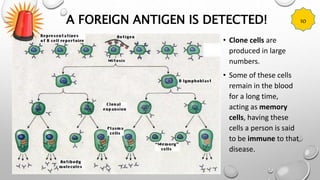
A FOREIGN ANTIGEN IS DETECTED!
• Clone cells are
produced in large
numbers.
• Some of these cells
remain in the blood
for a long time,
acting as memory
cells, having these
cells a person is said
to be immune to that
disease.
10
ACTIVE & PASSIVE IMMUNITY
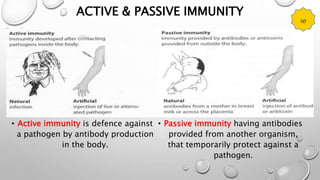
• Active immunity is defence against
a pathogen by antibody production
in the body.
• Passive immunity having antibodies
provided from another organism,
that temporarily protect against a
pathogen.
10
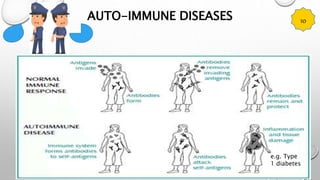
AUTO-IMMUNE DISEASES 10
e.g. Type
1 diabetes

11 disease & immunity 2019

  • 1.
    DISEASE & IMMUNITY OURBODY’S ARMY HELPING US STAY HEALTHY!!
  • 2.
    Pathogens Bacteria e.g. cholera, syphilis, TB,tetanus Virus e.g. influenza, AIDS, common cold Protoctist e.g. malaria, amoebic dysentery Fungus e.g. athlete’s foot, ring worm PATHOGENS • A PATHOGEN IS A MICROORGANISM THAT CAUSES DISEASE. IF A PATHOGEN CAN BE PASSES FROM A PERSON TO ANOTHER THIS IS CALLED A TRANSMISSIBLE DISEASE.
  • 3.
    HOW PATHOGENS DAMAGETHE BODY • 1. Pathogens damage cells by using up their resources. • 2. May produce wastes or toxins that may raise the body temperature, cause rashes, cause the person to feel ill or even cause death.
  • 4.
    How pathogens enterthe body (infection) Direct contact Indirect contact Respiratory passages In food or water By vectors e.g. Athlete’s foot, HIV e.g. influenza & cold e.g. Salmonella e.g. rabies,
  • 5.
    BODY DEFENCES MECHANICAL BARRIERS Structuresthat make it difficult for pathogens to enter the body e.g. 1. Hairs in nostrils 2. Thick dead layer of skin (keratin) 3. Clots that seal damaged skin until it heals CHEMICAL BARRIERS Substances/ liquids secreted by body to trap/ kill microorganisms 1. Sticky mucus in respiratory tract to trap microorganisms which are later swept by ……? 2. HCl secreted by stomach wall kills microorganisms in food and swallowed mucus
  • 6.
    CELLULAR DEFENCE LYMPHOCYTES • Produceantibodies that damage the cell wall of bacteria or clump them together or mark them to be easily detected by phagocytes. PHAGOCYTES • Engulfs microorganisms into a phagocytic vacuole into which digestive enzymes are released.
  • 7.
    FOOD HYGIENE • 1.Wash hands before and after touching /eating food. When preparing food keep hair out of the food, wear uniform. • 2. Keep animals away from food, cover food to prevent house flies landing on them. • 3. Do not keep food in a warm place for a long time, this allows bacteria to reproduce and spoil the food. Keep food in the fridge to slow down bacterial growth. • 4. Keep raw meat from mixing with other foods. Cooking kills bacteria in raw meat, but if mixed with vegetables for salads it may cause illness.
  • 8.
    PERSONAL HYGIENE • KEEPINGTHE BODY CLEAN REDUCES THE RISK OR GETTING OR PASSING ON TRANSMISSIBLE DISEASES. • THE SKIN PRODUCES OIL TO KEEP IT WATERPROOF AND SUPPLE, IT ALSO PRODUCES SWEAT TO COOL DOWN THE BODY • OIL, DIRT AND SWEAT PROVIDE A GOOD MEDIUM FOR BACTERIA TO BREED. WASHING SKIN REMOVES THE OIL, SWEAT & DIRT THAT CAN BUILD UP ALONG WITH MICROORGANISMS ON THE SKIN. BRUSHING TEETH REMOVES THE BACTERIA IN MOUTH THAT MAY CAUSE BAD BREATH AND TOOTH DECAY. • KEEPING NAILS SHORT WILL ALSO ELIMINATE A PLACE WHERE BACTERIA MIGHT NOT BE WASHED OFF WHILE WASHING YOUR HANDS.
  • 9.
    WASTE DISPOSAL • Properdisposal of wastes is essential to prevent attraction of organisms such as flies, cockroaches and rats. Such organisms help to spread diseases. • A landfill is lined with a waterproof material to prevent pollutants from leaking into the ground water. Layers of rubbish are placed and compacted till the landfill is full. • It is covered with soil and grass and trees. • Pipes are placed in a way to collect methane gas, which might be collected
  • 10.
    THE IMMUNE SYSTEM •Lymphocytes are specialised WBS that produce antibodies. • Antibodies: proteins that have a specific shape that binds onto an antigen on the surface of a cell. • Antigens: molecules that have a specific shape and are found on the surface of any cell membrane. • If an antibody locks onto an antigen: 1. It acts as a marker for phagocytes to easily identify the pathogen and engulf it. 2. It may start a series of reactions in 10
  • 11.
    A FOREIGN ANTIGENIS DETECTED! • Clone cells are produced in large numbers. • Some of these cells remain in the blood for a long time, acting as memory cells, having these cells a person is said to be immune to that disease. 10
  • 12.
    ACTIVE & PASSIVEIMMUNITY • Active immunity is defence against a pathogen by antibody production in the body. • Passive immunity having antibodies provided from another organism, that temporarily protect against a pathogen. 10
  • 13.