Chapter 7
Shock
Introduction to Shock
• Perfusion
− Adequate blood and oxygen are provided to
all cells in the body.
• Hypoperfusion
− The cardiovascular system fails.
− Blood circulation eventually ceases.
Damage Caused by Shock
• Brain
− 4 to 6 minutes
• Abdominal organs
− 45 to 90 minutes
• Skin and muscle cells
− 3 to 6 hours
Perfusion Triangle
• Think of the circulatory system as having
three components.
− Heart (pump)
− Blood vessels (pipes)
− Blood (fluid)
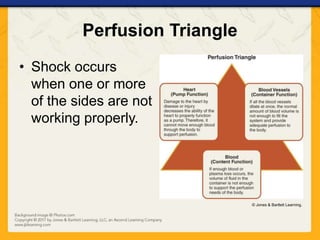
Perfusion Triangle
• Shock occurs
when one or more
of the sides are not
working properly.
© Jones & Bartlett Learning.
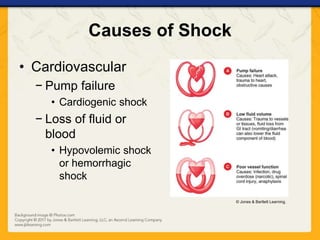
Causes of Shock
• Cardiovascular
− Pump failure
• Cardiogenic shock
− Loss of fluid or
blood
• Hypovolemic shock
or hemorrhagic
shock
© Jones & Bartlett Learning.
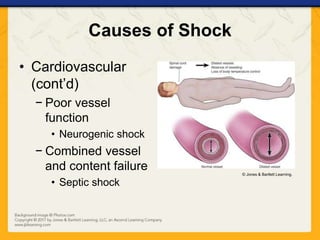
Causes of Shock
• Cardiovascular
(cont’d)
− Poor vessel
function
• Neurogenic shock
− Combined vessel
and content failure
• Septic shock
© Jones & Bartlett Learning.
Causes of Shock
• Noncardiovascular
− Respiratory
insufficiency
• Chest injury
• Airway obstruction
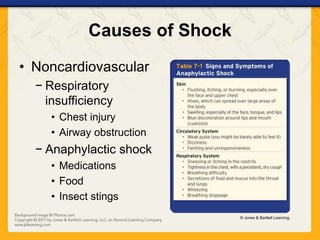
− Anaphylactic shock
• Medications
• Food
• Insect stings
© Jones & Bartlett Learning.
Causes of Shock
• Noncardiovascular (cont’d)
− Psychogenic shock
• Fainting, or syncope
• Causes include fear, bad news, and unpleasant
sights.
The Progression of Shock
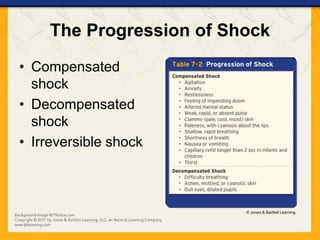
• Compensated
shock
• Decompensated
shock
• Irreversible shock
© Jones & Bartlett Learning.
Shock: What to Look For
• Altered mental status
• Pale, cold, and clammy skin
• Pale or cyanotic lips and/or nail beds
• Nausea/vomiting
• Rapid breathing and heart rate
• Unresponsiveness when shock is severe
Shock: What to Do
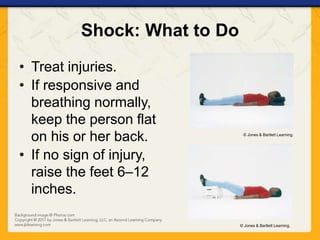
• Treat injuries.
• If responsive and
breathing normally,
keep the person flat
on his or her back.
• If no sign of injury,
raise the feet 6–12
inches.
© Jones & Bartlett Learning.
Shock: What to Do
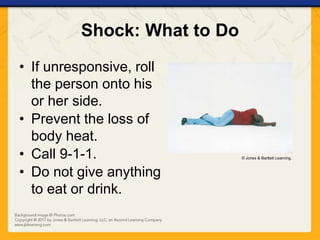
• If unresponsive, roll
the person onto his
or her side.
• Prevent the loss of
body heat.
• Call 9-1-1.
• Do not give anything
to eat or drink.
© Jones & Bartlett Learning.
Anaphylaxis: What to Look For
• Shortness of breath
• Swelling of tongue, mouth, nose
• Intense itching
• Flushed skin or swollen face
• Sneezing, coughing, wheezing
• Tightness and swelling in the throat
• Tightness in the chest
Anaphylaxis: What to Look For
• Increased heart rate
• Cyanosis
• Dizziness
• History of previous severe allergic
reactions
• Medical identification tag
Anaphylaxis: What to Do
• Call 9-1-1.
• Monitor breathing
• If the person has an epinephrine auto-
injector, help administer it.
• If the person can swallow, give an
antihistamine.
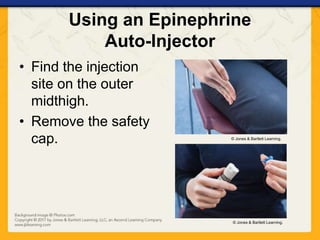
Using an Epinephrine
Auto-Injector
• Find the injection
site on the outer
midthigh.
• Remove the safety
cap. © Jones & Bartlett Learning.
© Jones & Bartlett Learning.
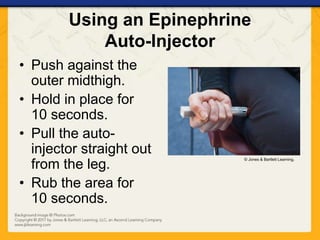
Using an Epinephrine
Auto-Injector
• Push against the
outer midthigh.
• Hold in place for
10 seconds.
• Pull the auto-
injector straight out
from the leg.
• Rub the area for
10 seconds.
© Jones & Bartlett Learning.
Mild Allergic Reaction:
What to Look For
• Red, itchy eyes
• Itchy, sneezing, runny nose
• Rash on skin, usually on one part of the
body
Mild Allergic Reaction:
What to Do
• Help the person:
− Self-administer his or her asthma “rescue”
inhaler
− Take an antihistamine
Fainting: What to Do
• If a person suddenly collapses:
− Check breathing.
− If breathing stops, call 9-1-1 and give CPR.
− If person is breathing:
• Keep the person flat on his or her back.
• Monitor breathing; if it stops, give CPR.
• Check and treat any injuries.
• Wipe the person’s forehead with a cool, wet cloth.
Fainting: What to Do
• If a person is about to faint:
− Prevent a hard fall.
• If you feel faint:
− Lie down or sit down.
− Do not place your head between your knees.

Ch07 presentation shock

  • 1.
  • 2.
    Introduction to Shock •Perfusion − Adequate blood and oxygen are provided to all cells in the body. • Hypoperfusion − The cardiovascular system fails. − Blood circulation eventually ceases.
  • 3.
    Damage Caused byShock • Brain − 4 to 6 minutes • Abdominal organs − 45 to 90 minutes • Skin and muscle cells − 3 to 6 hours
  • 4.
    Perfusion Triangle • Thinkof the circulatory system as having three components. − Heart (pump) − Blood vessels (pipes) − Blood (fluid)
  • 5.
    Perfusion Triangle • Shockoccurs when one or more of the sides are not working properly. © Jones & Bartlett Learning.
  • 6.
    Causes of Shock •Cardiovascular − Pump failure • Cardiogenic shock − Loss of fluid or blood • Hypovolemic shock or hemorrhagic shock © Jones & Bartlett Learning.
  • 7.
    Causes of Shock •Cardiovascular (cont’d) − Poor vessel function • Neurogenic shock − Combined vessel and content failure • Septic shock © Jones & Bartlett Learning.
  • 8.
    Causes of Shock •Noncardiovascular − Respiratory insufficiency • Chest injury • Airway obstruction − Anaphylactic shock • Medications • Food • Insect stings © Jones & Bartlett Learning.
  • 9.
    Causes of Shock •Noncardiovascular (cont’d) − Psychogenic shock • Fainting, or syncope • Causes include fear, bad news, and unpleasant sights.
  • 10.
    The Progression ofShock • Compensated shock • Decompensated shock • Irreversible shock © Jones & Bartlett Learning.
  • 11.
    Shock: What toLook For • Altered mental status • Pale, cold, and clammy skin • Pale or cyanotic lips and/or nail beds • Nausea/vomiting • Rapid breathing and heart rate • Unresponsiveness when shock is severe
  • 12.
    Shock: What toDo • Treat injuries. • If responsive and breathing normally, keep the person flat on his or her back. • If no sign of injury, raise the feet 6–12 inches. © Jones & Bartlett Learning. © Jones & Bartlett Learning.
  • 13.
    Shock: What toDo • If unresponsive, roll the person onto his or her side. • Prevent the loss of body heat. • Call 9-1-1. • Do not give anything to eat or drink. © Jones & Bartlett Learning.
  • 14.
    Anaphylaxis: What toLook For • Shortness of breath • Swelling of tongue, mouth, nose • Intense itching • Flushed skin or swollen face • Sneezing, coughing, wheezing • Tightness and swelling in the throat • Tightness in the chest
  • 15.
    Anaphylaxis: What toLook For • Increased heart rate • Cyanosis • Dizziness • History of previous severe allergic reactions • Medical identification tag
  • 16.
    Anaphylaxis: What toDo • Call 9-1-1. • Monitor breathing • If the person has an epinephrine auto- injector, help administer it. • If the person can swallow, give an antihistamine.
  • 17.
    Using an Epinephrine Auto-Injector •Find the injection site on the outer midthigh. • Remove the safety cap. © Jones & Bartlett Learning. © Jones & Bartlett Learning.
  • 18.
    Using an Epinephrine Auto-Injector •Push against the outer midthigh. • Hold in place for 10 seconds. • Pull the auto- injector straight out from the leg. • Rub the area for 10 seconds. © Jones & Bartlett Learning.
  • 19.
    Mild Allergic Reaction: Whatto Look For • Red, itchy eyes • Itchy, sneezing, runny nose • Rash on skin, usually on one part of the body
  • 20.
    Mild Allergic Reaction: Whatto Do • Help the person: − Self-administer his or her asthma “rescue” inhaler − Take an antihistamine
  • 21.
    Fainting: What toDo • If a person suddenly collapses: − Check breathing. − If breathing stops, call 9-1-1 and give CPR. − If person is breathing: • Keep the person flat on his or her back. • Monitor breathing; if it stops, give CPR. • Check and treat any injuries. • Wipe the person’s forehead with a cool, wet cloth.
  • 22.
    Fainting: What toDo • If a person is about to faint: − Prevent a hard fall. • If you feel faint: − Lie down or sit down. − Do not place your head between your knees.