Adalberto Toledo 
Javier Rivera 
Stephanie Morales 
Sheila Prado 
Carlos Mendez Gutierrez
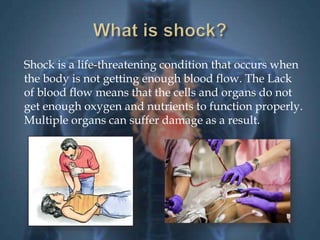
Shock is a life-threatening condition that occurs when 
the body is not getting enough blood flow. The Lack 
of blood flow means that the cells and organs do not 
get enough oxygen and nutrients to function properly. 
Multiple organs can suffer damage as a result.
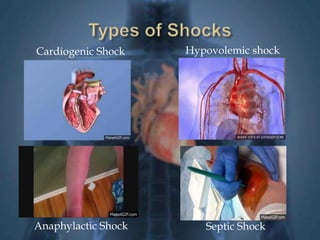
Cardiogenic Shock Hypovolemic shock 
Anaphylactic Shock Septic Shock
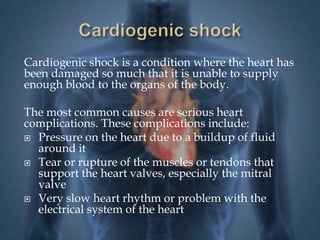
Cardiogenic shock is a condition where the heart has 
been damaged so much that it is unable to supply 
enough blood to the organs of the body. 
The most common causes are serious heart 
complications. These complications include: 
 Pressure on the heart due to a buildup of fluid 
around it 
 Tear or rupture of the muscles or tendons that 
support the heart valves, especially the mitral 
valve 
 Very slow heart rhythm or problem with the 
electrical system of the heart
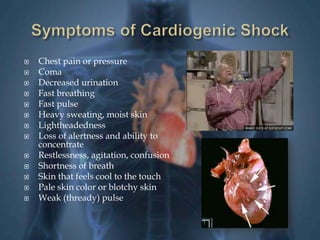
 Chest pain or pressure 
 Coma 
 Decreased urination 
 Fast breathing 
 Fast pulse 
 Heavy sweating, moist skin 
 Lightheadedness 
 Loss of alertness and ability to 
concentrate 
 Restlessness, agitation, confusion 
 Shortness of breath 
 Skin that feels cool to the touch 
 Pale skin color or blotchy skin 
 Weak (thready) pulse
Hypovolemic shock is an emergency condition in which severe blood 
and fluid loss make the heart unable to pump enough blood to the 
body. 
Causes: Losing about a fifth or more of the normal amount of blood in 
your body causes hypovolemic shock. 
Blood loss can be due to: 
 Bleeding from cuts 
 Bleeding from other injuries 
 Internal bleeding, such as in the gastrointestinal tract 
The amount of circulating blood in your body may drop when you 
lose too many other body fluids. This can be due to: 
 Burns 
 Diarrhea 
 Excessive perspiration 
 Vomiting
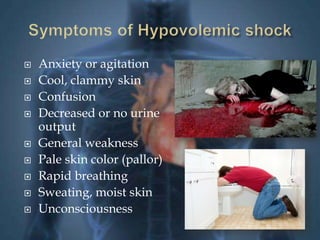
 Anxiety or agitation 
 Cool, clammy skin 
 Confusion 
 Decreased or no urine 
output 
 General weakness 
 Pale skin color (pallor) 
 Rapid breathing 
 Sweating, moist skin 
 Unconsciousness
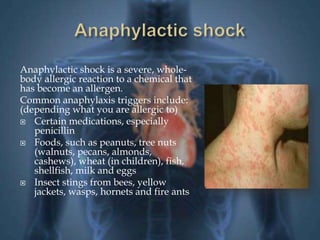
Anaphylactic shock is a severe, whole-body 
allergic reaction to a chemical that 
has become an allergen. 
Common anaphylaxis triggers include: 
(depending what you are allergic to) 
 Certain medications, especially 
penicillin 
 Foods, such as peanuts, tree nuts 
(walnuts, pecans, almonds, 
cashews), wheat (in children), fish, 
shellfish, milk and eggs 
 Insect stings from bees, yellow 
jackets, wasps, hornets and fire ants
Septic shock is a serious condition that occurs when a 
body-wide infection leads to dangerously low blood 
pressure. 
Sepsis can be caused by any type of infection: 
bacterial, fungal, or viral. Sepsis commonly originates 
from: 
 abdominal or digestive system infections 
 lung infections like pneumonia, bronchitis, or 
lower respiratory tract infections, which are 
responsible for around 25 percent of cases (NHS) 
 urinary tract infection 
 reproductive system infection
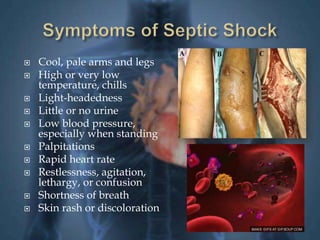
 Cool, pale arms and legs 
 High or very low 
temperature, chills 
 Light-headedness 
 Little or no urine 
 Low blood pressure, 
especially when standing 
 Palpitations 
 Rapid heart rate 
 Restlessness, agitation, 
lethargy, or confusion 
 Shortness of breath 
 Skin rash or discoloration
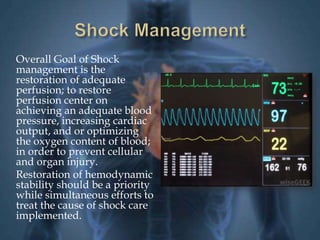
Overall Goal of Shock 
management is the 
restoration of adequate 
perfusion; to restore 
perfusion center on 
achieving an adequate blood 
pressure, increasing cardiac 
output, and or optimizing 
the oxygen content of blood; 
in order to prevent cellular 
and organ injury. 
Restoration of hemodynamic 
stability should be a priority 
while simultaneous efforts to 
treat the cause of shock care 
implemented.
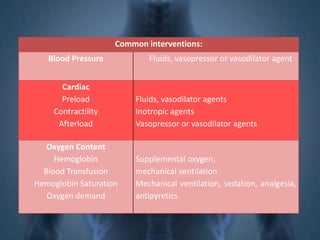
Common interventions: 
Blood Pressure Fluids, vasopressor or vasodilator agent 
Cardiac 
Preload 
Contractility 
Afterload 
Fluids, vasodilator agents 
Inotropic agents 
Vasopressor or vasodilator agents 
Oxygen Content 
Hemoglobin 
Blood Transfusion 
Hemoglobin Saturation 
Oxygen demand 
Supplemental oxygen, 
mechanical ventilation 
Mechanical ventilation, sedation, analgesia, 
antipyretics
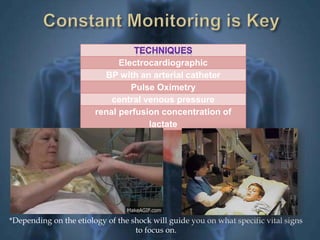
Electrocardiographic 
BP with an arterial catheter 
Pulse Oximetry 
central venous pressure 
renal perfusion concentration of 
lactate 
*Depending on the etiology of the shock will guide you on what specific vital signs 
to focus on.
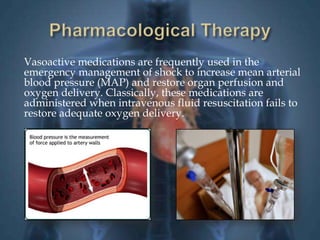
Vasoactive medications are frequently used in the 
emergency management of shock to increase mean arterial 
blood pressure (MAP) and restore organ perfusion and 
oxygen delivery. Classically, these medications are 
administered when intravenous fluid resuscitation fails to 
restore adequate oxygen delivery.
Inotropic agent any of a 
class of agents affecting 
the force of muscle 
contraction, particularly a 
drug affecting the force of 
cardiac contraction; 
positive inotropic agents 
increase, and negative 
inotropic agents decrease 
the force of cardiac muscle 
contraction.
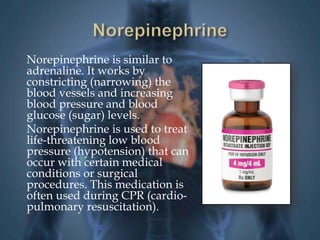
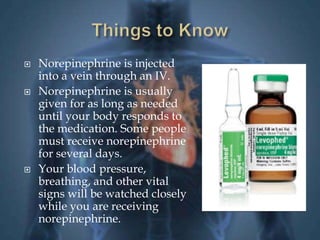
Norepinephrine is similar to 
adrenaline. It works by 
constricting (narrowing) the 
blood vessels and increasing 
blood pressure and blood 
glucose (sugar) levels. 
Norepinephrine is used to treat 
life-threatening low blood 
pressure (hypotension) that can 
occur with certain medical 
conditions or surgical 
procedures. This medication is 
often used during CPR (cardio-pulmonary 
resuscitation).
 Norepinephrine is injected 
into a vein through an IV. 
 Norepinephrine is usually 
given for as long as needed 
until your body responds to 
the medication. Some people 
must receive norepinephrine 
for several days. 
 Your blood pressure, 
breathing, and other vital 
signs will be watched closely 
while you are receiving 
norepinephrine.
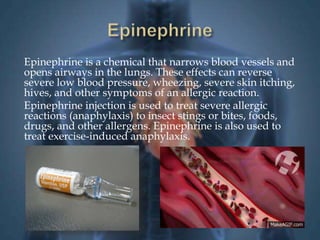
Epinephrine is a chemical that narrows blood vessels and 
opens airways in the lungs. These effects can reverse 
severe low blood pressure, wheezing, severe skin itching, 
hives, and other symptoms of an allergic reaction. 
Epinephrine injection is used to treat severe allergic 
reactions (anaphylaxis) to insect stings or bites, foods, 
drugs, and other allergens. Epinephrine is also used to 
treat exercise-induced anaphylaxis.
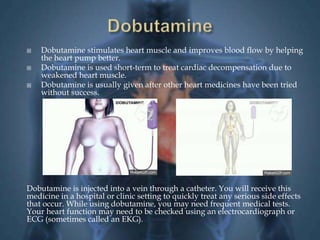
 Dobutamine stimulates heart muscle and improves blood flow by helping 
the heart pump better. 
 Dobutamine is used short-term to treat cardiac decompensation due to 
weakened heart muscle. 
 Dobutamine is usually given after other heart medicines have been tried 
without success. 
Dobutamine is injected into a vein through a catheter. You will receive this 
medicine in a hospital or clinic setting to quickly treat any serious side effects 
that occur. While using dobutamine, you may need frequent medical tests. 
Your heart function may need to be checked using an electrocardiograph or 
ECG (sometimes called an EKG).
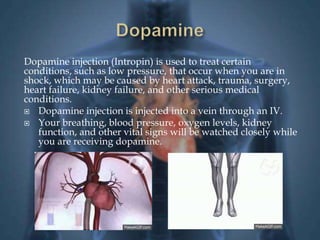
Dopamine injection (Intropin) is used to treat certain 
conditions, such as low pressure, that occur when you are in 
shock, which may be caused by heart attack, trauma, surgery, 
heart failure, kidney failure, and other serious medical 
conditions. 
 Dopamine injection is injected into a vein through an IV. 
 Your breathing, blood pressure, oxygen levels, kidney 
function, and other vital signs will be watched closely while 
you are receiving dopamine.
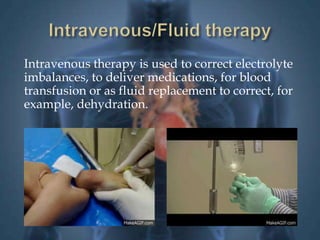
Intravenous therapy is used to correct electrolyte 
imbalances, to deliver medications, for blood 
transfusion or as fluid replacement to correct, for 
example, dehydration.
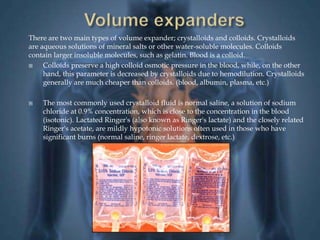
There are two main types of volume expander; crystalloids and colloids. Crystalloids 
are aqueous solutions of mineral salts or other water-soluble molecules. Colloids 
contain larger insoluble molecules, such as gelatin. Blood is a colloid. 
 Colloids preserve a high colloid osmotic pressure in the blood, while, on the other 
hand, this parameter is decreased by crystalloids due to hemodilution. Crystalloids 
generally are much cheaper than colloids. (blood, albumin, plasma, etc.) 
 The most commonly used crystalloid fluid is normal saline, a solution of sodium 
chloride at 0.9% concentration, which is close to the concentration in the blood 
(isotonic). Lactated Ringer's (also known as Ringer's lactate) and the closely related 
Ringer's acetate, are mildly hypotonic solutions often used in those who have 
significant burns (normal saline, ringer lactate, dextrose, etc.)
Safety 
Precautions 
 Dextrose 5% in waters should not 
used to treat hypovolemic shock. 
 0.45% saline is not appropriate for 
volume expansion 
 Smaller bolus amounts are 
indicated for patients with 
suspected or known cardiogenic 
shock. 
 Fresh frozen plasma should be 
used only for correction of 
coagulopathy and not for volume 
replacement. 
 Oxygen demand should also be 
decreased when possible.
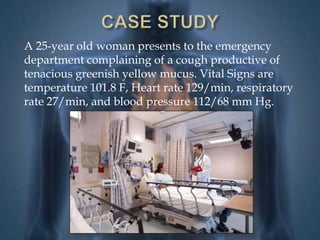
A 25-year old woman presents to the emergency 
department complaining of a cough productive of 
tenacious greenish yellow mucus. Vital Signs are 
temperature 101.8 F, Heart rate 129/min, respiratory 
rate 27/min, and blood pressure 112/68 mm Hg.
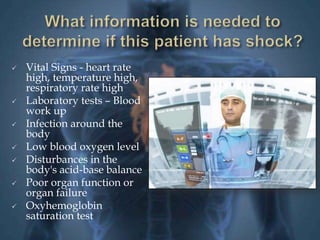
 Vital Signs - heart rate 
high, temperature high, 
respiratory rate high 
 Laboratory tests – Blood 
work up 
 Infection around the 
body 
 Low blood oxygen level 
 Disturbances in the 
body's acid-base balance 
 Poor organ function or 
organ failure 
 Oxyhemoglobin 
saturation test
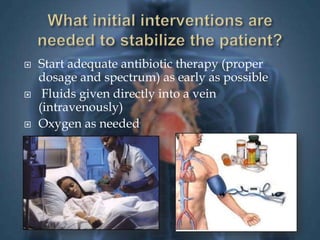
 Start adequate antibiotic therapy (proper 
dosage and spectrum) as early as possible 
 Fluids given directly into a vein 
(intravenously) 
 Oxygen as needed

Shock Management

  • 1.
    Adalberto Toledo JavierRivera Stephanie Morales Sheila Prado Carlos Mendez Gutierrez
  • 2.
    Shock is alife-threatening condition that occurs when the body is not getting enough blood flow. The Lack of blood flow means that the cells and organs do not get enough oxygen and nutrients to function properly. Multiple organs can suffer damage as a result.
  • 3.
    Cardiogenic Shock Hypovolemicshock Anaphylactic Shock Septic Shock
  • 4.
    Cardiogenic shock isa condition where the heart has been damaged so much that it is unable to supply enough blood to the organs of the body. The most common causes are serious heart complications. These complications include:  Pressure on the heart due to a buildup of fluid around it  Tear or rupture of the muscles or tendons that support the heart valves, especially the mitral valve  Very slow heart rhythm or problem with the electrical system of the heart
  • 5.
     Chest painor pressure  Coma  Decreased urination  Fast breathing  Fast pulse  Heavy sweating, moist skin  Lightheadedness  Loss of alertness and ability to concentrate  Restlessness, agitation, confusion  Shortness of breath  Skin that feels cool to the touch  Pale skin color or blotchy skin  Weak (thready) pulse
  • 6.
    Hypovolemic shock isan emergency condition in which severe blood and fluid loss make the heart unable to pump enough blood to the body. Causes: Losing about a fifth or more of the normal amount of blood in your body causes hypovolemic shock. Blood loss can be due to:  Bleeding from cuts  Bleeding from other injuries  Internal bleeding, such as in the gastrointestinal tract The amount of circulating blood in your body may drop when you lose too many other body fluids. This can be due to:  Burns  Diarrhea  Excessive perspiration  Vomiting
  • 7.
     Anxiety oragitation  Cool, clammy skin  Confusion  Decreased or no urine output  General weakness  Pale skin color (pallor)  Rapid breathing  Sweating, moist skin  Unconsciousness
  • 8.
    Anaphylactic shock isa severe, whole-body allergic reaction to a chemical that has become an allergen. Common anaphylaxis triggers include: (depending what you are allergic to)  Certain medications, especially penicillin  Foods, such as peanuts, tree nuts (walnuts, pecans, almonds, cashews), wheat (in children), fish, shellfish, milk and eggs  Insect stings from bees, yellow jackets, wasps, hornets and fire ants
  • 9.
    Septic shock isa serious condition that occurs when a body-wide infection leads to dangerously low blood pressure. Sepsis can be caused by any type of infection: bacterial, fungal, or viral. Sepsis commonly originates from:  abdominal or digestive system infections  lung infections like pneumonia, bronchitis, or lower respiratory tract infections, which are responsible for around 25 percent of cases (NHS)  urinary tract infection  reproductive system infection
  • 10.
     Cool, palearms and legs  High or very low temperature, chills  Light-headedness  Little or no urine  Low blood pressure, especially when standing  Palpitations  Rapid heart rate  Restlessness, agitation, lethargy, or confusion  Shortness of breath  Skin rash or discoloration
  • 11.
    Overall Goal ofShock management is the restoration of adequate perfusion; to restore perfusion center on achieving an adequate blood pressure, increasing cardiac output, and or optimizing the oxygen content of blood; in order to prevent cellular and organ injury. Restoration of hemodynamic stability should be a priority while simultaneous efforts to treat the cause of shock care implemented.
  • 12.
    Common interventions: BloodPressure Fluids, vasopressor or vasodilator agent Cardiac Preload Contractility Afterload Fluids, vasodilator agents Inotropic agents Vasopressor or vasodilator agents Oxygen Content Hemoglobin Blood Transfusion Hemoglobin Saturation Oxygen demand Supplemental oxygen, mechanical ventilation Mechanical ventilation, sedation, analgesia, antipyretics
  • 13.
    Electrocardiographic BP withan arterial catheter Pulse Oximetry central venous pressure renal perfusion concentration of lactate *Depending on the etiology of the shock will guide you on what specific vital signs to focus on.
  • 14.
    Vasoactive medications arefrequently used in the emergency management of shock to increase mean arterial blood pressure (MAP) and restore organ perfusion and oxygen delivery. Classically, these medications are administered when intravenous fluid resuscitation fails to restore adequate oxygen delivery.
  • 15.
    Inotropic agent anyof a class of agents affecting the force of muscle contraction, particularly a drug affecting the force of cardiac contraction; positive inotropic agents increase, and negative inotropic agents decrease the force of cardiac muscle contraction.
  • 16.
    Norepinephrine is similarto adrenaline. It works by constricting (narrowing) the blood vessels and increasing blood pressure and blood glucose (sugar) levels. Norepinephrine is used to treat life-threatening low blood pressure (hypotension) that can occur with certain medical conditions or surgical procedures. This medication is often used during CPR (cardio-pulmonary resuscitation).
  • 17.
     Norepinephrine isinjected into a vein through an IV.  Norepinephrine is usually given for as long as needed until your body responds to the medication. Some people must receive norepinephrine for several days.  Your blood pressure, breathing, and other vital signs will be watched closely while you are receiving norepinephrine.
  • 18.
    Epinephrine is achemical that narrows blood vessels and opens airways in the lungs. These effects can reverse severe low blood pressure, wheezing, severe skin itching, hives, and other symptoms of an allergic reaction. Epinephrine injection is used to treat severe allergic reactions (anaphylaxis) to insect stings or bites, foods, drugs, and other allergens. Epinephrine is also used to treat exercise-induced anaphylaxis.
  • 19.
     Dobutamine stimulatesheart muscle and improves blood flow by helping the heart pump better.  Dobutamine is used short-term to treat cardiac decompensation due to weakened heart muscle.  Dobutamine is usually given after other heart medicines have been tried without success. Dobutamine is injected into a vein through a catheter. You will receive this medicine in a hospital or clinic setting to quickly treat any serious side effects that occur. While using dobutamine, you may need frequent medical tests. Your heart function may need to be checked using an electrocardiograph or ECG (sometimes called an EKG).
  • 20.
    Dopamine injection (Intropin)is used to treat certain conditions, such as low pressure, that occur when you are in shock, which may be caused by heart attack, trauma, surgery, heart failure, kidney failure, and other serious medical conditions.  Dopamine injection is injected into a vein through an IV.  Your breathing, blood pressure, oxygen levels, kidney function, and other vital signs will be watched closely while you are receiving dopamine.
  • 21.
    Intravenous therapy isused to correct electrolyte imbalances, to deliver medications, for blood transfusion or as fluid replacement to correct, for example, dehydration.
  • 22.
    There are twomain types of volume expander; crystalloids and colloids. Crystalloids are aqueous solutions of mineral salts or other water-soluble molecules. Colloids contain larger insoluble molecules, such as gelatin. Blood is a colloid.  Colloids preserve a high colloid osmotic pressure in the blood, while, on the other hand, this parameter is decreased by crystalloids due to hemodilution. Crystalloids generally are much cheaper than colloids. (blood, albumin, plasma, etc.)  The most commonly used crystalloid fluid is normal saline, a solution of sodium chloride at 0.9% concentration, which is close to the concentration in the blood (isotonic). Lactated Ringer's (also known as Ringer's lactate) and the closely related Ringer's acetate, are mildly hypotonic solutions often used in those who have significant burns (normal saline, ringer lactate, dextrose, etc.)
  • 23.
    Safety Precautions Dextrose 5% in waters should not used to treat hypovolemic shock.  0.45% saline is not appropriate for volume expansion  Smaller bolus amounts are indicated for patients with suspected or known cardiogenic shock.  Fresh frozen plasma should be used only for correction of coagulopathy and not for volume replacement.  Oxygen demand should also be decreased when possible.
  • 24.
    A 25-year oldwoman presents to the emergency department complaining of a cough productive of tenacious greenish yellow mucus. Vital Signs are temperature 101.8 F, Heart rate 129/min, respiratory rate 27/min, and blood pressure 112/68 mm Hg.
  • 25.
     Vital Signs- heart rate high, temperature high, respiratory rate high  Laboratory tests – Blood work up  Infection around the body  Low blood oxygen level  Disturbances in the body's acid-base balance  Poor organ function or organ failure  Oxyhemoglobin saturation test
  • 26.
     Start adequateantibiotic therapy (proper dosage and spectrum) as early as possible  Fluids given directly into a vein (intravenously)  Oxygen as needed