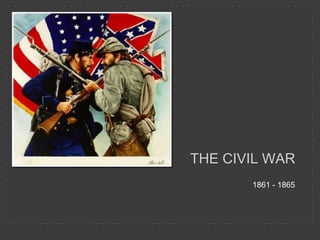
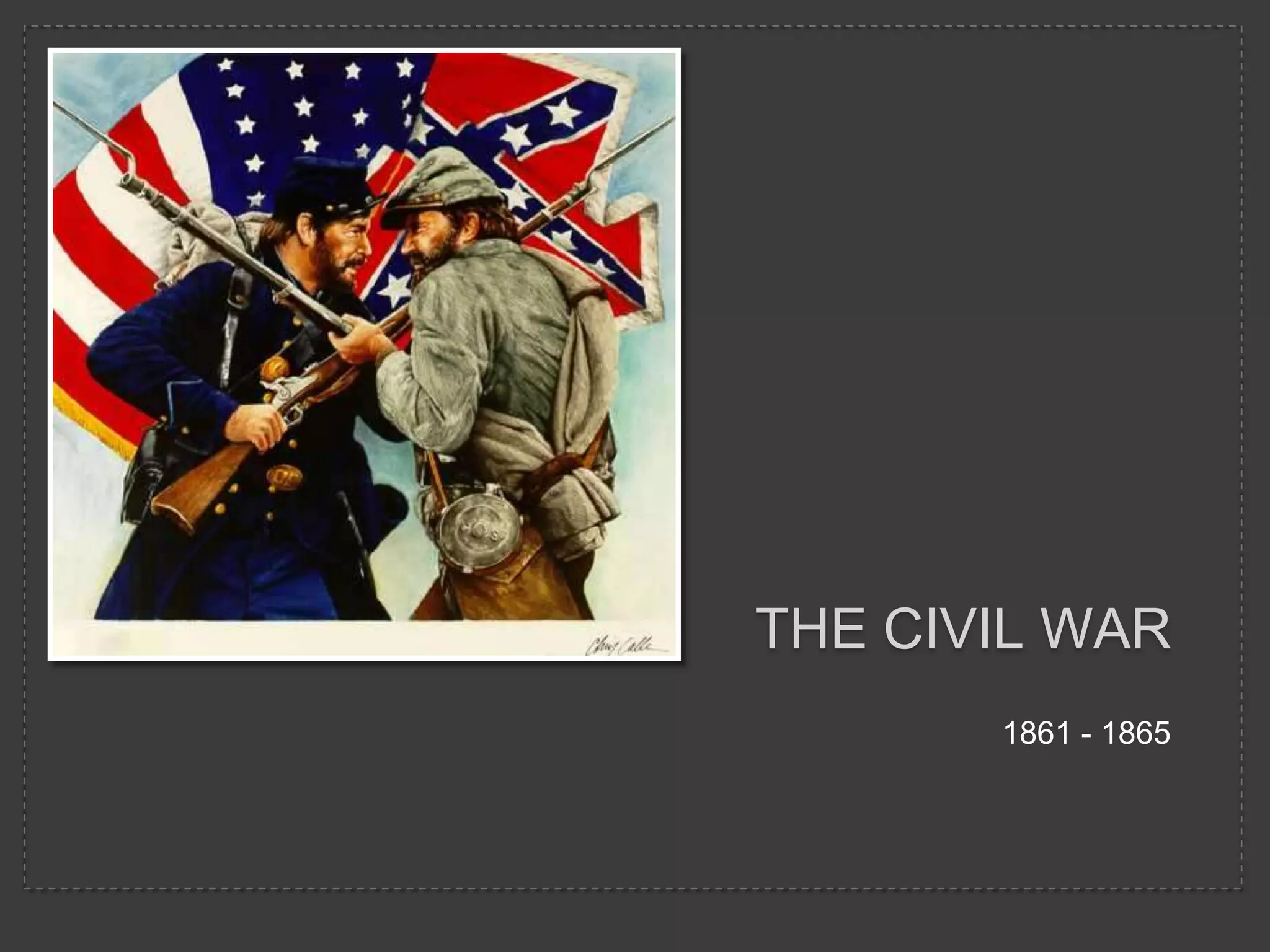
The Civil War1861 - 1865
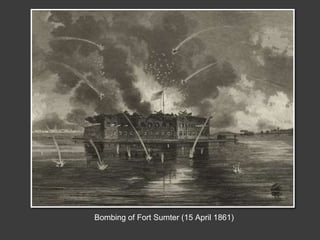
Bombing of Fort Sumter (15 April 1861)
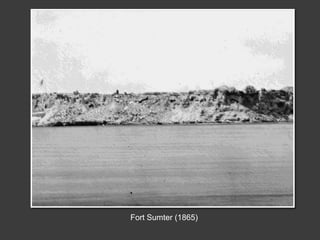
Beginning of the Conflict (1861)Fort Sumter15 April 1861
Four years to the day of Lincoln’s assassination
Shelling was conducted by Southern belligerents upset at the possibility of Lincoln being an anti-slavery president
Lincoln demands the shelling stops
Commands them to disband immediately
Known to Southerners as the beginning of “Lincoln’s Aggression”
The South began to systematically secede from the Union because of Lincoln’s perceived ‘aggression’.
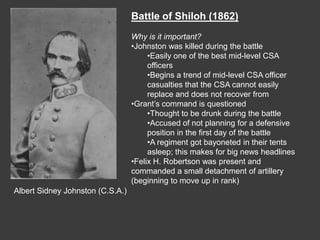
Waco’s own Felix H. Robertson (CSA) was present and helped the shellingBorder States Remain in the UnionMissouri, Kentucky, Maryland Delaware, and later West Virginia stay in the Union despite being slave states
West Virginia calls for gradual abolition and remains loyal to the Union throughout the conflict
Some stay because of Lincoln’s suspension of habeas corpus
Lincoln suspends it in cases involving Southern supporters
Becomes too risky to support the South if you were close to Washington D.C.  Fort Sumter (1865)
Lincoln’s First Moves (1861-1862)Expanding Constitutional PowersSuspension of habeas corpus
Increased size of military and navy without Congressional approval
Blockade of Southern ports
Instructs the Treasury Dept. to pay two secret agents $2 million to secure extra supplies
Reasoning:
“By general law, life and limb must be protected, yet often a limb must be amputated to save a life; but a life is never wisely given to save a limb.”
What does Lincoln mean by this?
It makes no sense to follow the Constitution letter by letter if the ultimate purpose of the Constitution – preserving the Union was under attack.
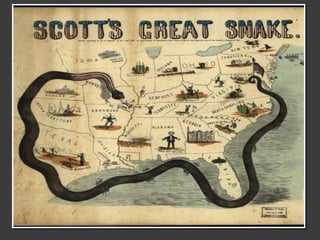
Congress validates most of Lincoln’s actions because of this rationaleMilitary Planning (1862-1863)Northern Military PlanningThe “Anaconda Plan”
Suffocate the South from all sides and let it die by occupying a majority of the enemy territory
Advocated by General-in-Chief Winfield Scott
Called for a blockade on all Southern ports
Advance down the Mississippi River to cut the South into two pieces
This was a fairly passive military strategy
Scott takes on this approach partially due to Lincoln’s push for a blockade
The plan’s failure
No U.S. Navy ships could navigate the Mississippi the way Scott believed
The strategy was too short-sighted; Scott believed that the South would easily give up
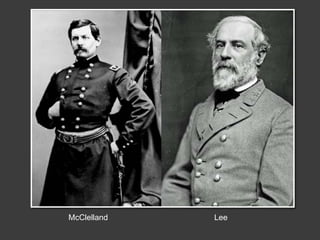
Scott gives up his post and his plan to George B. McClellanSouthern Military StrategyThought the war would be primarily defensive
General Robert E. Lee believed and advocated for this initially
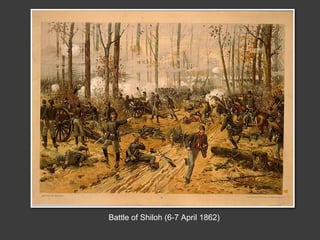
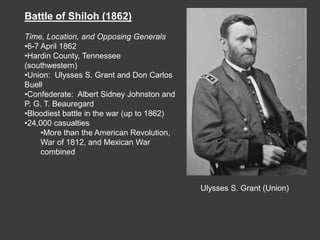
Battle of Shiloh (6-7 April 1862)

Ch 14 The Civil War

Editor's Notes

  • #7 Use the football analogy (strong defense = CSA; weak offense = US)