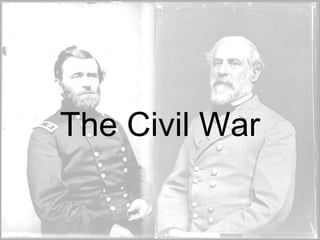
The Civil War
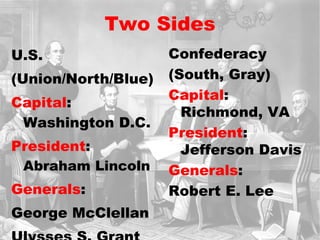
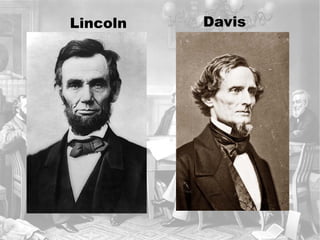
Two Sides U.S. (Union/North/Blue) Capital : Washington D.C. President :  Abraham Lincoln Generals :  George McClellan Ulysses S. Grant  Confederacy (South, Gray) Capital : Richmond, VA President : Jefferson Davis Generals : Robert E. Lee
Lincoln  Davis
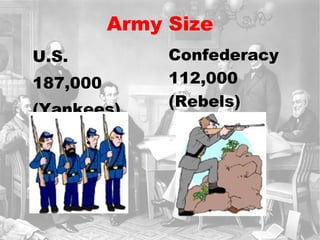
Army Size U.S. 187,000 (Yankees)   Confederacy 112,000 (Rebels)
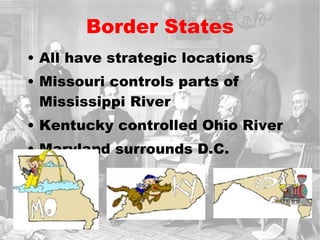
Border States All have strategic locations Missouri controls parts of Mississippi River Kentucky controlled Ohio River Maryland surrounds D.C.
Lincoln’s Controversial Move Worried about Maryland Arrested those who supported secession Suspends Habeas Corpus (told what you’re being accused of)
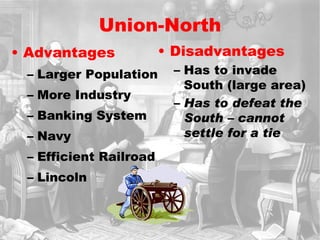
Union-North Advantages Larger Population More Industry Banking System Navy Efficient Railroad Lincoln Disadvantages Has to invade South (large area) Has to defeat the South – cannot settle for a tie
Confederacy-South Advantages Fighting on Home Turf Slaves can cover work Military Leadership In a position to defend, only have to avoid defeat Disadvantages Smaller Population Few Factories Limited Railroad System State’s Rights Backfire
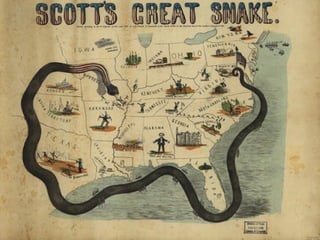
War Aims & Strategies North Aim: Bring the Southern States Back Blockade Southern Ports Control Mississippi (Anaconda Plan) Capture Richmond South Aim: Win recognition of Independence Play Defense Get European Help Follow example of Revolutionary War
 
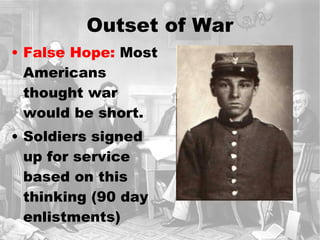
Outset of War False Hope:  Most Americans thought war would be short. Soldiers signed up for service based on this thinking (90 day enlistments)
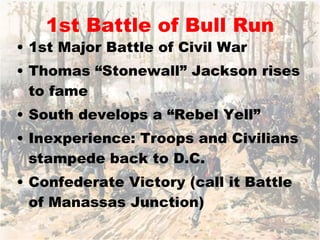
1st Battle of Bull Run 1st Major Battle of Civil War Thomas “Stonewall” Jackson rises to fame South develops a “Rebel Yell” Inexperience: Troops and Civilians stampede back to D.C. Confederate Victory (call it Battle of Manassas Junction)
 
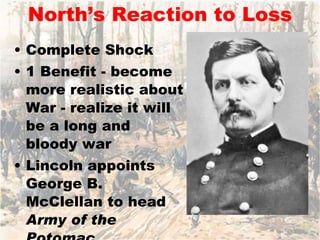
North’s Reaction to Loss Complete Shock 1 Benefit - become more realistic about War - realize it will be a long and bloody war Lincoln appoints George B. McClellan to head  Army of the Potomac
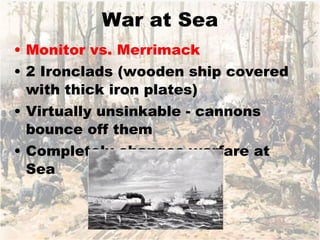
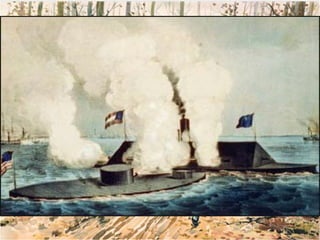
War at Sea Monitor vs. Merrimack 2 Ironclads (wooden ship covered with thick iron plates) Virtually unsinkable - cannons bounce off them Completely changes warfare at Sea
 
Ft. Henry and Ft. Donelson Grant’s rise to fame - captures Tennessee and Cumberland Rivers - calls for Unconditional Surrender (leads to nickname) Important Because : Kick Confederates out of Kentucky Opened path to Tennessee, Mississippi and Alabama
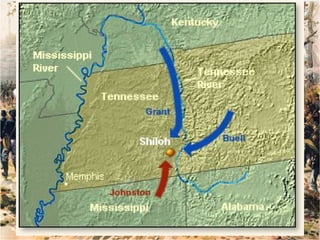
Battle of Shiloh Ulysses Grant marches army to Mississippi Confederates try surprise attack 2 days - 20,000 casualties (Dead and Wounded) - Conf. General Johnston among the dead More deaths in 1 battle than any other previous war Union Victory - continues advance towards Mississippi
 
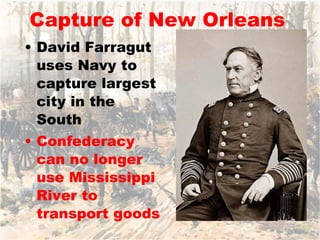
Capture of New Orleans David Farragut uses Navy to capture largest city in the South Confederacy can no longer use Mississippi River to transport goods
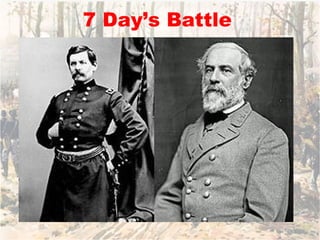
7 Day’s Battle
7 Day’s Battle McClellan tries to capture Richmond Meets Robert E. Lee’s defenses McClellan is cautious, Lee is risky J.E.B. Stuarts goes on daring Cavalry ride - gathers intelligence Union Defeat (Major Turning Point) - Lee becomes famous
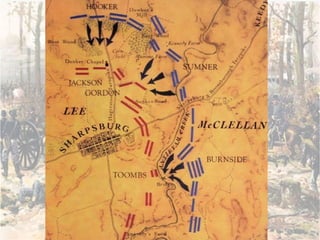
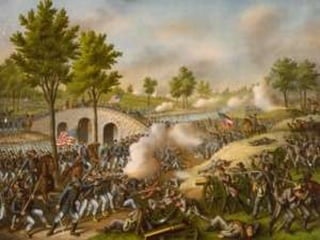
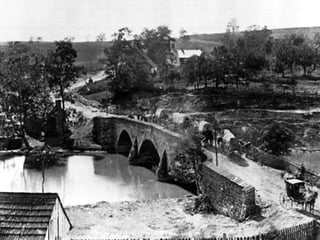
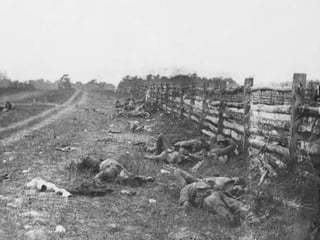
Battle of Antietam Lee responds by marching Army into Maryland (near Sharpsburg) McClellan finds copy of Lee’s Battle plans - waited 4 days to attack Bloodiest Day of Entire War (23,000 Casualties) Slight Union Victory - McClellan does not pursue - Lincoln fires him


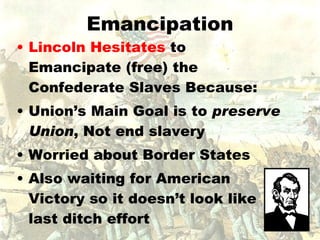
Emancipation Lincoln Hesitates  to Emancipate (free) the Confederate Slaves Because: Union’s Main Goal is to  preserve Union , Not end slavery Worried about Border States Also waiting for American Victory so it doesn’t look like last ditch effort
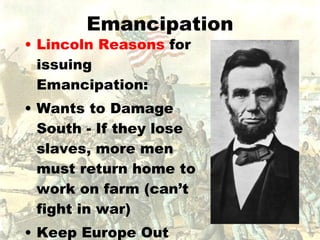
Emancipation Lincoln Reasons  for issuing Emancipation: Wants to Damage South - If they lose slaves, more men must return home to work on farm (can’t fight in war) Keep Europe Out
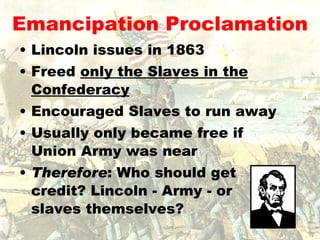
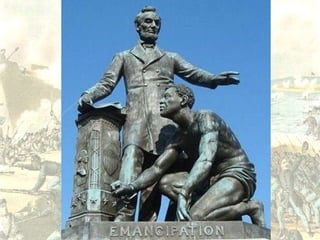
Emancipation Proclamation Lincoln issues in 1863 Freed  only the Slaves in the Confederacy Encouraged Slaves to run away Usually only became free if Union Army was near Therefore : Who should get credit? Lincoln - Army - or slaves themselves?
 
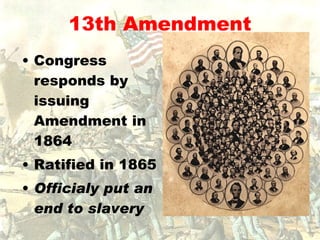
13th Amendment Congress responds by issuing Amendment in 1864 Ratified in 1865 Officialy put an end to slavery
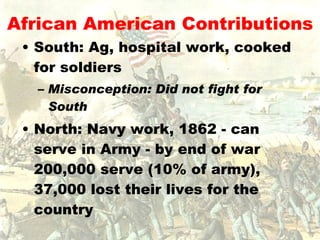
African American Contributions South: Ag, hospital work, cooked for soldiers Misconception: Did not fight for South North: Navy work, 1862 - can serve in Army - by end of war 200,000 serve (10% of army), 37,000 lost their lives for the country
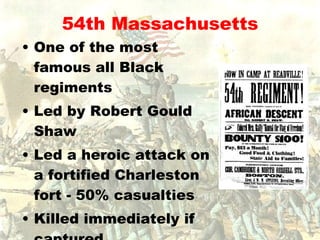
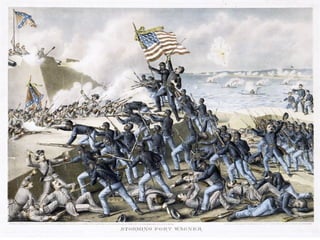
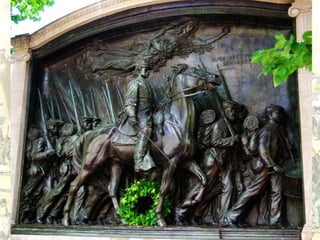
54th Massachusetts One of the most famous all Black regiments Led by Robert Gould Shaw Led a heroic attack on a fortified Charleston fort - 50% casualties Killed immediately if captured
 
 
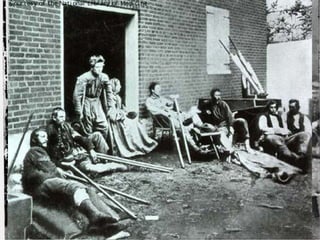
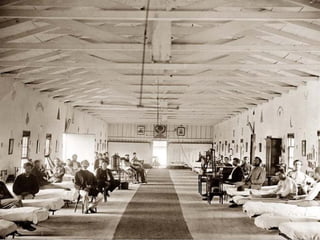
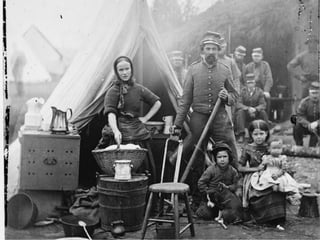
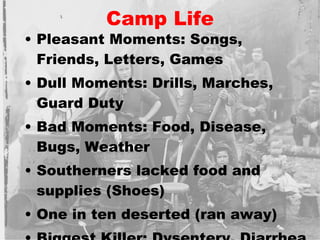
Camp Life Pleasant Moments: Songs, Friends, Letters, Games Dull Moments: Drills, Marches, Guard Duty Bad Moments: Food, Disease, Bugs, Weather Southerners lacked food and supplies (Shoes) One in ten deserted (ran away) Biggest Killer: Dysentery, Diarrhea
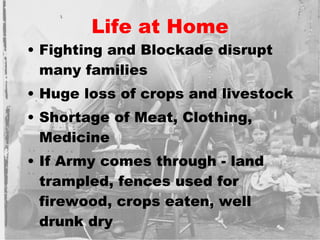
Life at Home Fighting and Blockade disrupt many families Huge loss of crops and livestock Shortage of Meat, Clothing, Medicine If Army comes through - land trampled, fences used for firewood, crops eaten, well drunk dry
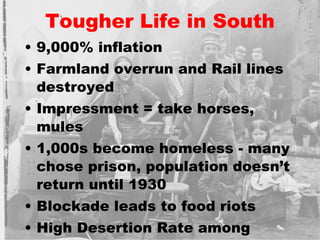
Tougher Life in South 9,000% inflation Farmland overrun and Rail lines destroyed Impressment = take horses, mules 1,000s become homeless - many chose prison, population doesn’t return until 1930 Blockade leads to food riots High Desertion Rate among soldiers
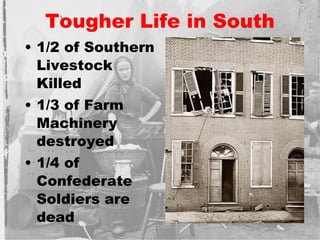
Tougher Life in South 1/2 of Southern Livestock Killed 1/3 of Farm Machinery destroyed 1/4 of Confederate Soldiers are dead
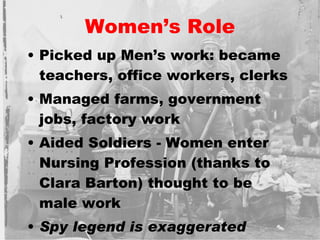
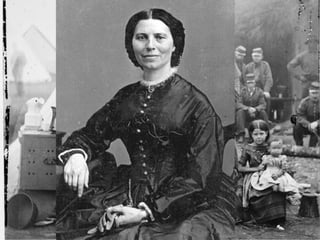
Women’s Role Picked up Men’s work: became teachers, office workers, clerks Managed farms, government jobs, factory work Aided Soldiers - Women enter Nursing Profession (thanks to Clara Barton) thought to be male work Spy legend is exaggerated
 
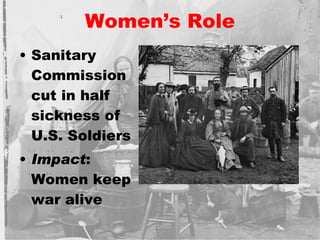
Women’s Role Sanitary Commission cut in half sickness of U.S. Soldiers Impact : Women keep war alive


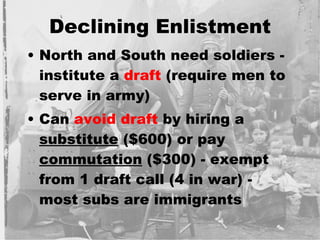
Declining Enlistment North and South need soldiers - institute a  draft  (require men to serve in army) Can  avoid draft  by hiring a  substitute  ($600) or pay  commutation  ($300) - exempt from 1 draft call (4 in war) - most subs are immigrants
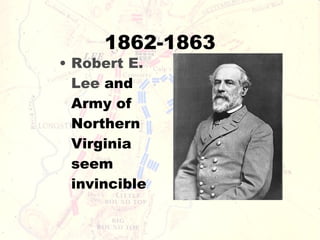
1862-1863 Robert E. Lee  and Army of Northern Virginia seem invincible
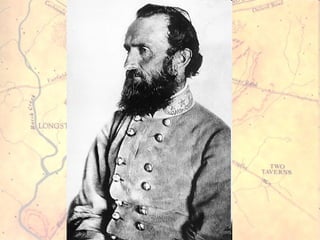
Battle of Chancellorsville Union Army is rebuilt – Lee strikes before North can launch a major campaign Virginia Wilderness –  Lee ’s big risk pays off – divides Army twice in front of enemy Stonewall Jackson  is injured (dies from wounds) Major Confederate Victory
 
Battle of Gettysburg Lee  feels confident with Army – decides to invade the North George Meade  is ordered to find and attack Lee Accidentally meet near Gettysburg Pennsylvania (Confederates looking for shoes) 3 Days –  Bloodiest  Battle of the War: 50,000 Casualties
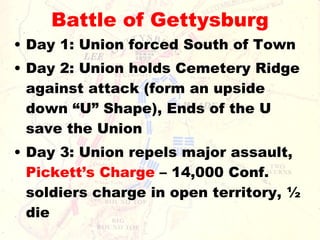
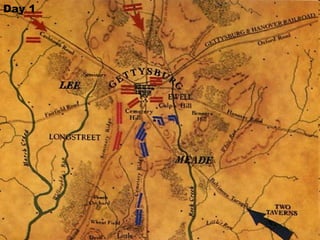
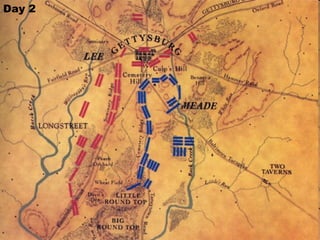
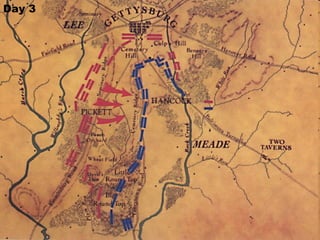
Battle of Gettysburg Day 1: Union forced South of Town Day 2: Union holds Cemetery Ridge against attack (form an upside down “U” Shape), Ends of the U save the Union Day 3: Union repels major assault,  Pickett’s Charge  – 14,000 Conf. soldiers charge in open territory, ½ die
Day 1
Day 2
Day 3
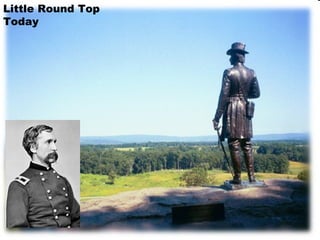
Little Round Top Today
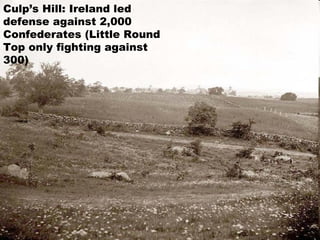
Culp’s Hill: Ireland led defense against 2,000 Confederates (Little Round Top only fighting against 300)
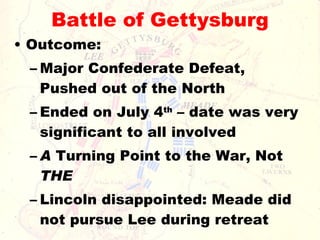
Battle of Gettysburg Outcome:  Major Confederate Defeat, Pushed out of the North Ended on July 4 th  – date was very significant to all involved A  Turning Point to the War, Not  THE Lincoln disappointed: Meade did not pursue Lee during retreat
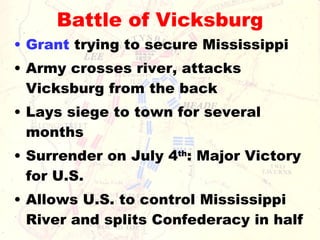
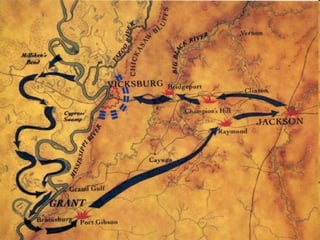
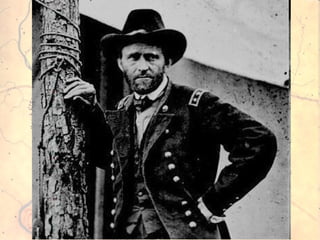
Battle of Vicksburg Grant  trying to secure Mississippi Army crosses river, attacks Vicksburg from the back Lays siege to town for several months Surrender on July 4 th : Major Victory for U.S. Allows U.S. to control Mississippi River and splits Confederacy in half
 
 
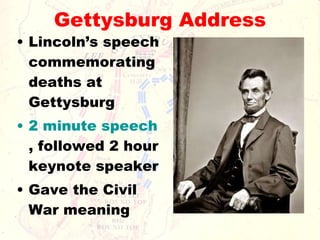
Gettysburg Address Lincoln’s speech commemorating deaths at Gettysburg 2 minute speech , followed 2 hour keynote speaker Gave the Civil War meaning
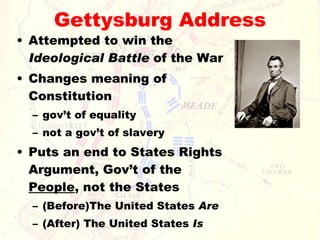
Gettysburg Address Attempted to win the  Ideological Battle  of the War Changes meaning of Constitution  gov’t of equality not a gov’t of slavery Puts an end to States Rights Argument, Gov’t of the  People , not the States (Before)The United States  Are   (After) The United States  Is
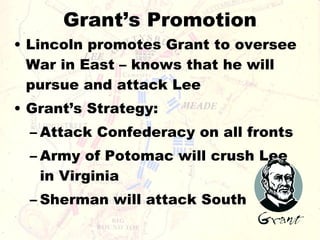
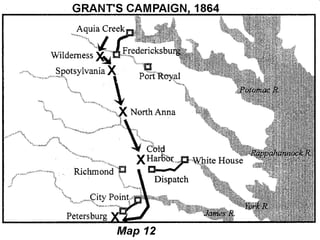
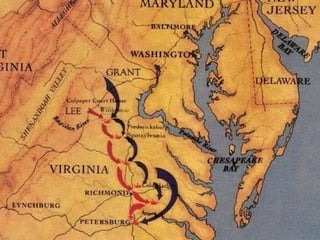
Grant’s Promotion Lincoln promotes Grant to oversee War in East – knows that he will pursue and attack Lee Grant’s Strategy: Attack Confederacy on all fronts Army of Potomac will crush Lee in Virginia Sherman will attack South
 
 
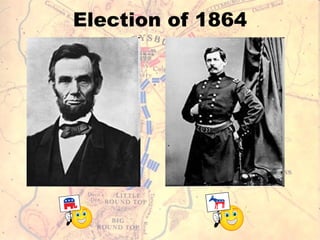
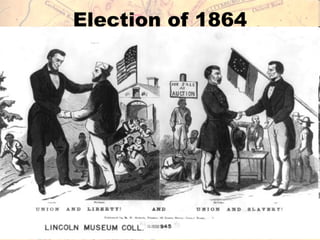
Election of 1864 Virginia clashes ending in ties, 100,000 men are dead, Confederates are pushed to Petersburg North is war weary, Democrats want to negotiate peace Summer of 1864 – Lincoln is sure he will lose election
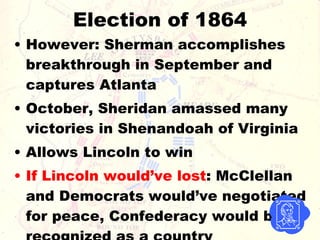
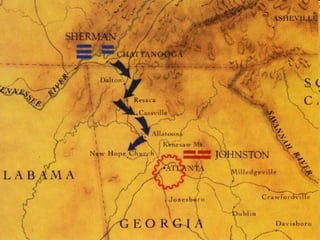
Election of 1864 However: Sherman accomplishes breakthrough in September and captures Atlanta October, Sheridan amassed many victories in Shenandoah of Virginia Allows Lincoln to win If Lincoln would’ve lost : McClellan and Democrats would’ve negotiated for peace, Confederacy would be recognized as a country
 
Election of 1864
Election of 1864
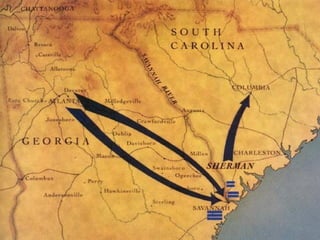
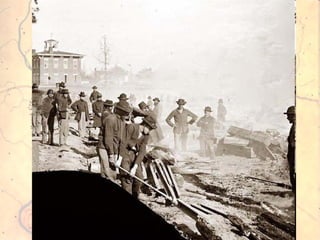
Sherman’s March After capture of Atlanta, Sherman marched Army to the Sea Unleashed  total war : Army destroyed anything in its path Continued up through South Carolina Meant to turn Southern Civilians against War, only made them more bitter and steadfast in cause
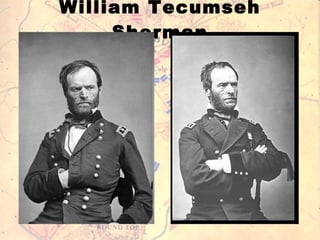
William Tecumseh Sherman


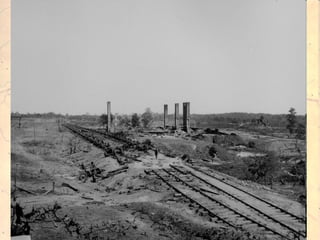
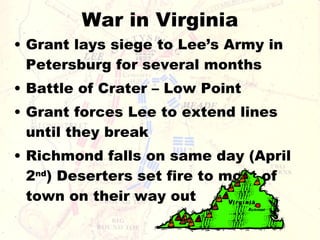
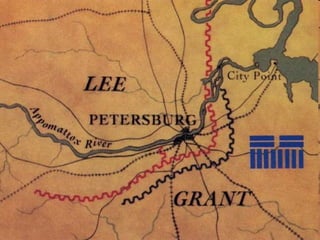
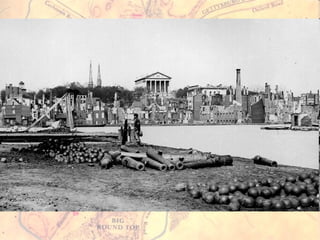
War in Virginia Grant lays siege to Lee’s Army in Petersburg for several months Battle of Crater – Low Point Grant forces Lee to extend lines until they break Richmond falls on same day (April 2 nd ) Deserters set fire to most of town on their way out


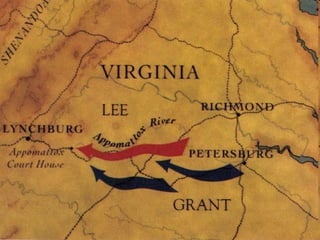
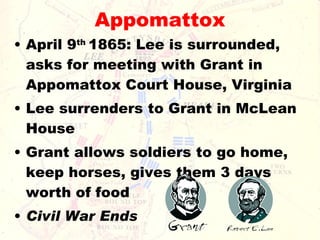
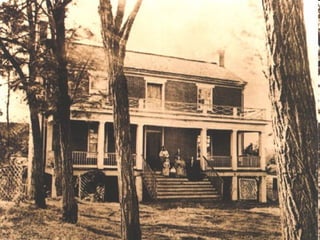
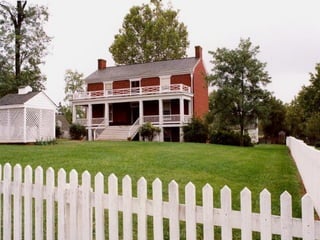
Appomattox April 9 th  1865: Lee is surrounded, asks for meeting with Grant in Appomattox Court House, Virginia Lee surrenders to Grant in McLean House Grant allows soldiers to go home, keep horses, gives them 3 days worth of food Civil War Ends
 
 
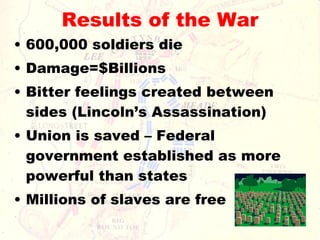
Results of the War 600,000 soldiers die Damage=$Billions Bitter feelings created between sides (Lincoln’s Assassination) Union is saved – Federal government established as more powerful than states Millions of slaves are free
Winners and Losers Winners: 4 Million Free Slaves Anyone interested in Union Losers: Democrats Confederates
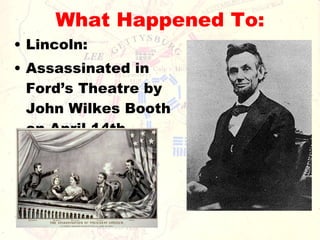
What Happened To: Lincoln: Assassinated in Ford’s Theatre by John Wilkes Booth on April 14th
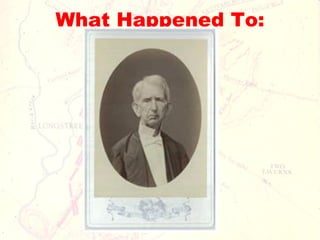
What Happened To:
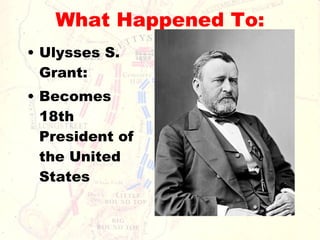
What Happened To: Ulysses S. Grant: Becomes 18th President of the United States
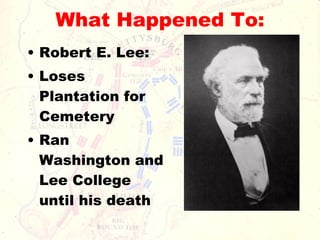
What Happened To: Robert E. Lee: Loses Plantation for Cemetery Ran Washington and Lee College until his death
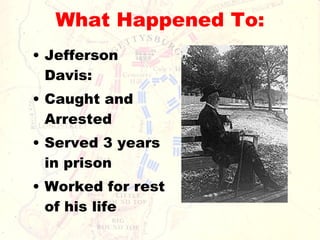
What Happened To: Jefferson Davis: Caught and Arrested Served 3 years in prison Worked for rest of his life
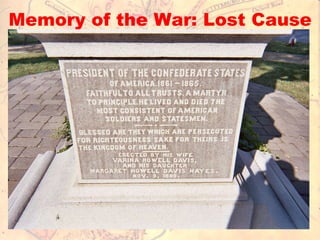
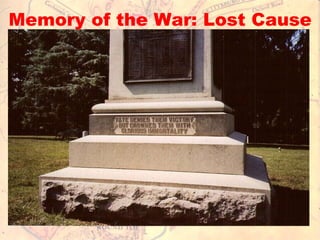
Memory of the War: Lost Cause
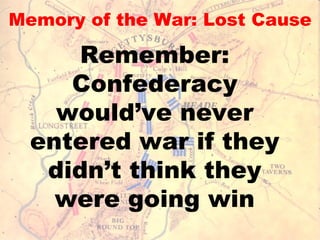
Memory of the War: Lost Cause Remember: Confederacy would’ve never entered war if they didn’t think they were going win

Civil War Lecture

  • 1.
  • 2.
    Two Sides U.S.(Union/North/Blue) Capital : Washington D.C. President : Abraham Lincoln Generals : George McClellan Ulysses S. Grant Confederacy (South, Gray) Capital : Richmond, VA President : Jefferson Davis Generals : Robert E. Lee
  • 3.
  • 4.
    Army Size U.S.187,000 (Yankees) Confederacy 112,000 (Rebels)
  • 5.
    Border States Allhave strategic locations Missouri controls parts of Mississippi River Kentucky controlled Ohio River Maryland surrounds D.C.
  • 6.
    Lincoln’s Controversial MoveWorried about Maryland Arrested those who supported secession Suspends Habeas Corpus (told what you’re being accused of)
  • 7.
    Union-North Advantages LargerPopulation More Industry Banking System Navy Efficient Railroad Lincoln Disadvantages Has to invade South (large area) Has to defeat the South – cannot settle for a tie
  • 8.
    Confederacy-South Advantages Fightingon Home Turf Slaves can cover work Military Leadership In a position to defend, only have to avoid defeat Disadvantages Smaller Population Few Factories Limited Railroad System State’s Rights Backfire
  • 9.
    War Aims &Strategies North Aim: Bring the Southern States Back Blockade Southern Ports Control Mississippi (Anaconda Plan) Capture Richmond South Aim: Win recognition of Independence Play Defense Get European Help Follow example of Revolutionary War
  • 10.
  • 11.
    Outset of WarFalse Hope: Most Americans thought war would be short. Soldiers signed up for service based on this thinking (90 day enlistments)
  • 12.
    1st Battle ofBull Run 1st Major Battle of Civil War Thomas “Stonewall” Jackson rises to fame South develops a “Rebel Yell” Inexperience: Troops and Civilians stampede back to D.C. Confederate Victory (call it Battle of Manassas Junction)
  • 13.
  • 14.
    North’s Reaction toLoss Complete Shock 1 Benefit - become more realistic about War - realize it will be a long and bloody war Lincoln appoints George B. McClellan to head Army of the Potomac
  • 15.
    War at SeaMonitor vs. Merrimack 2 Ironclads (wooden ship covered with thick iron plates) Virtually unsinkable - cannons bounce off them Completely changes warfare at Sea
  • 16.
  • 17.
    Ft. Henry andFt. Donelson Grant’s rise to fame - captures Tennessee and Cumberland Rivers - calls for Unconditional Surrender (leads to nickname) Important Because : Kick Confederates out of Kentucky Opened path to Tennessee, Mississippi and Alabama
  • 18.
    Battle of ShilohUlysses Grant marches army to Mississippi Confederates try surprise attack 2 days - 20,000 casualties (Dead and Wounded) - Conf. General Johnston among the dead More deaths in 1 battle than any other previous war Union Victory - continues advance towards Mississippi
  • 19.
  • 20.
    Capture of NewOrleans David Farragut uses Navy to capture largest city in the South Confederacy can no longer use Mississippi River to transport goods
  • 21.
  • 22.
    7 Day’s BattleMcClellan tries to capture Richmond Meets Robert E. Lee’s defenses McClellan is cautious, Lee is risky J.E.B. Stuarts goes on daring Cavalry ride - gathers intelligence Union Defeat (Major Turning Point) - Lee becomes famous
  • 23.
    Battle of AntietamLee responds by marching Army into Maryland (near Sharpsburg) McClellan finds copy of Lee’s Battle plans - waited 4 days to attack Bloodiest Day of Entire War (23,000 Casualties) Slight Union Victory - McClellan does not pursue - Lincoln fires him
  • 24.
  • 25.
  • 26.
  • 27.
  • 28.
    Emancipation Lincoln Hesitates to Emancipate (free) the Confederate Slaves Because: Union’s Main Goal is to preserve Union , Not end slavery Worried about Border States Also waiting for American Victory so it doesn’t look like last ditch effort
  • 29.
    Emancipation Lincoln Reasons for issuing Emancipation: Wants to Damage South - If they lose slaves, more men must return home to work on farm (can’t fight in war) Keep Europe Out
  • 30.
    Emancipation Proclamation Lincolnissues in 1863 Freed only the Slaves in the Confederacy Encouraged Slaves to run away Usually only became free if Union Army was near Therefore : Who should get credit? Lincoln - Army - or slaves themselves?
  • 31.
  • 32.
    13th Amendment Congressresponds by issuing Amendment in 1864 Ratified in 1865 Officialy put an end to slavery
  • 33.
    African American ContributionsSouth: Ag, hospital work, cooked for soldiers Misconception: Did not fight for South North: Navy work, 1862 - can serve in Army - by end of war 200,000 serve (10% of army), 37,000 lost their lives for the country
  • 34.
    54th Massachusetts Oneof the most famous all Black regiments Led by Robert Gould Shaw Led a heroic attack on a fortified Charleston fort - 50% casualties Killed immediately if captured
  • 35.
  • 36.
  • 37.
    Camp Life PleasantMoments: Songs, Friends, Letters, Games Dull Moments: Drills, Marches, Guard Duty Bad Moments: Food, Disease, Bugs, Weather Southerners lacked food and supplies (Shoes) One in ten deserted (ran away) Biggest Killer: Dysentery, Diarrhea
  • 38.
    Life at HomeFighting and Blockade disrupt many families Huge loss of crops and livestock Shortage of Meat, Clothing, Medicine If Army comes through - land trampled, fences used for firewood, crops eaten, well drunk dry
  • 39.
    Tougher Life inSouth 9,000% inflation Farmland overrun and Rail lines destroyed Impressment = take horses, mules 1,000s become homeless - many chose prison, population doesn’t return until 1930 Blockade leads to food riots High Desertion Rate among soldiers
  • 40.
    Tougher Life inSouth 1/2 of Southern Livestock Killed 1/3 of Farm Machinery destroyed 1/4 of Confederate Soldiers are dead
  • 41.
    Women’s Role Pickedup Men’s work: became teachers, office workers, clerks Managed farms, government jobs, factory work Aided Soldiers - Women enter Nursing Profession (thanks to Clara Barton) thought to be male work Spy legend is exaggerated
  • 42.
  • 43.
    Women’s Role SanitaryCommission cut in half sickness of U.S. Soldiers Impact : Women keep war alive
  • 44.
  • 45.
  • 46.
  • 47.
    Declining Enlistment Northand South need soldiers - institute a draft (require men to serve in army) Can avoid draft by hiring a substitute ($600) or pay commutation ($300) - exempt from 1 draft call (4 in war) - most subs are immigrants
  • 48.
    1862-1863 Robert E.Lee and Army of Northern Virginia seem invincible
  • 49.
    Battle of ChancellorsvilleUnion Army is rebuilt – Lee strikes before North can launch a major campaign Virginia Wilderness – Lee ’s big risk pays off – divides Army twice in front of enemy Stonewall Jackson is injured (dies from wounds) Major Confederate Victory
  • 50.
  • 51.
    Battle of GettysburgLee feels confident with Army – decides to invade the North George Meade is ordered to find and attack Lee Accidentally meet near Gettysburg Pennsylvania (Confederates looking for shoes) 3 Days – Bloodiest Battle of the War: 50,000 Casualties
  • 52.
    Battle of GettysburgDay 1: Union forced South of Town Day 2: Union holds Cemetery Ridge against attack (form an upside down “U” Shape), Ends of the U save the Union Day 3: Union repels major assault, Pickett’s Charge – 14,000 Conf. soldiers charge in open territory, ½ die
  • 53.
  • 54.
  • 55.
  • 56.
  • 57.
    Culp’s Hill: Irelandled defense against 2,000 Confederates (Little Round Top only fighting against 300)
  • 58.
    Battle of GettysburgOutcome: Major Confederate Defeat, Pushed out of the North Ended on July 4 th – date was very significant to all involved A Turning Point to the War, Not THE Lincoln disappointed: Meade did not pursue Lee during retreat
  • 59.
    Battle of VicksburgGrant trying to secure Mississippi Army crosses river, attacks Vicksburg from the back Lays siege to town for several months Surrender on July 4 th : Major Victory for U.S. Allows U.S. to control Mississippi River and splits Confederacy in half
  • 60.
  • 61.
  • 62.
    Gettysburg Address Lincoln’sspeech commemorating deaths at Gettysburg 2 minute speech , followed 2 hour keynote speaker Gave the Civil War meaning
  • 63.
    Gettysburg Address Attemptedto win the Ideological Battle of the War Changes meaning of Constitution gov’t of equality not a gov’t of slavery Puts an end to States Rights Argument, Gov’t of the People , not the States (Before)The United States Are (After) The United States Is
  • 64.
    Grant’s Promotion Lincolnpromotes Grant to oversee War in East – knows that he will pursue and attack Lee Grant’s Strategy: Attack Confederacy on all fronts Army of Potomac will crush Lee in Virginia Sherman will attack South
  • 65.
  • 66.
  • 67.
    Election of 1864Virginia clashes ending in ties, 100,000 men are dead, Confederates are pushed to Petersburg North is war weary, Democrats want to negotiate peace Summer of 1864 – Lincoln is sure he will lose election
  • 68.
    Election of 1864However: Sherman accomplishes breakthrough in September and captures Atlanta October, Sheridan amassed many victories in Shenandoah of Virginia Allows Lincoln to win If Lincoln would’ve lost : McClellan and Democrats would’ve negotiated for peace, Confederacy would be recognized as a country
  • 69.
  • 70.
  • 71.
  • 72.
    Sherman’s March Aftercapture of Atlanta, Sherman marched Army to the Sea Unleashed total war : Army destroyed anything in its path Continued up through South Carolina Meant to turn Southern Civilians against War, only made them more bitter and steadfast in cause
  • 73.
  • 74.
  • 75.
  • 76.
  • 77.
    War in VirginiaGrant lays siege to Lee’s Army in Petersburg for several months Battle of Crater – Low Point Grant forces Lee to extend lines until they break Richmond falls on same day (April 2 nd ) Deserters set fire to most of town on their way out
  • 78.
  • 79.
  • 80.
  • 81.
    Appomattox April 9th 1865: Lee is surrounded, asks for meeting with Grant in Appomattox Court House, Virginia Lee surrenders to Grant in McLean House Grant allows soldiers to go home, keep horses, gives them 3 days worth of food Civil War Ends
  • 82.
  • 83.
  • 84.
    Results of theWar 600,000 soldiers die Damage=$Billions Bitter feelings created between sides (Lincoln’s Assassination) Union is saved – Federal government established as more powerful than states Millions of slaves are free
  • 85.
    Winners and LosersWinners: 4 Million Free Slaves Anyone interested in Union Losers: Democrats Confederates
  • 86.
    What Happened To:Lincoln: Assassinated in Ford’s Theatre by John Wilkes Booth on April 14th
  • 87.
  • 88.
    What Happened To:Ulysses S. Grant: Becomes 18th President of the United States
  • 89.
    What Happened To:Robert E. Lee: Loses Plantation for Cemetery Ran Washington and Lee College until his death
  • 90.
    What Happened To:Jefferson Davis: Caught and Arrested Served 3 years in prison Worked for rest of his life
  • 91.
    Memory of theWar: Lost Cause
  • 92.
    Memory of theWar: Lost Cause
  • 93.
    Memory of theWar: Lost Cause Remember: Confederacy would’ve never entered war if they didn’t think they were going win