Downloaded 500 times

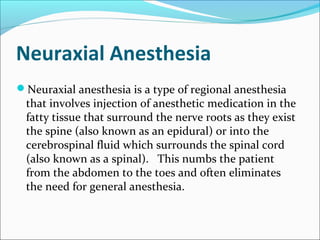

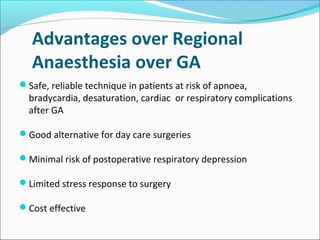

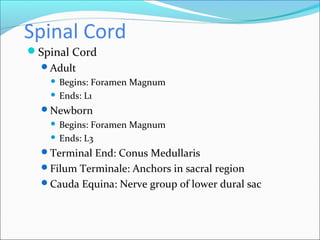
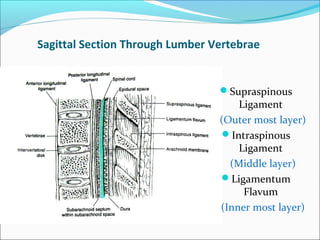
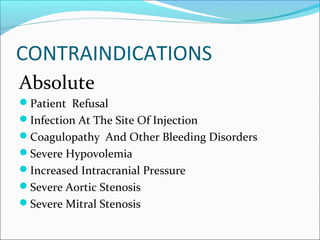
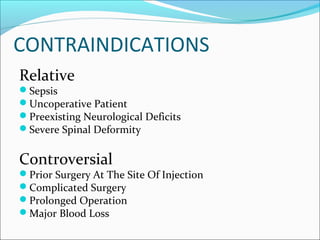
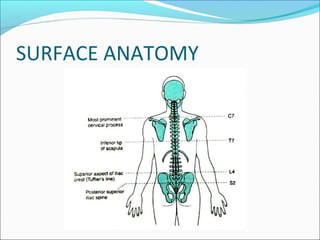
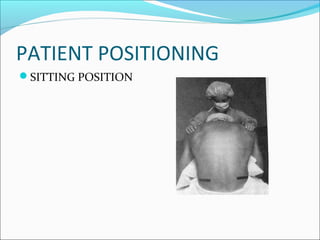

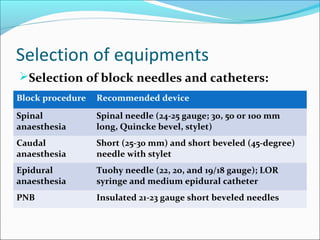
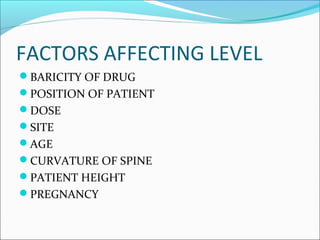
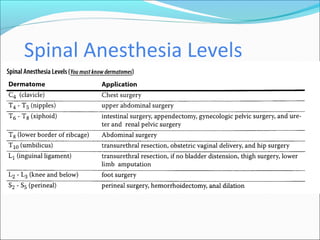
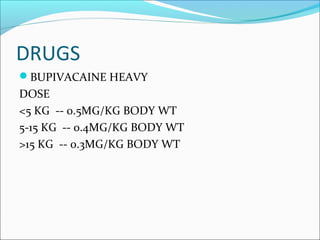

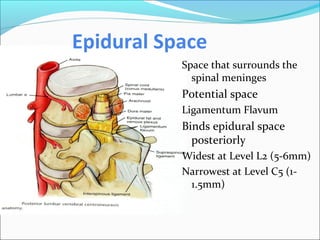
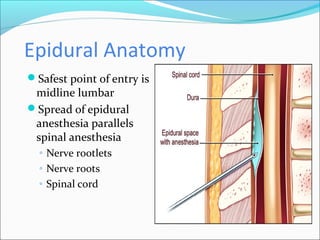
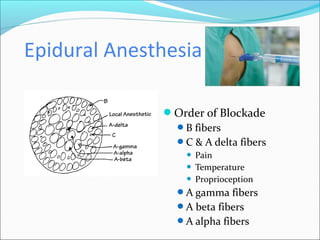
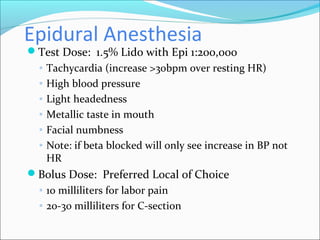
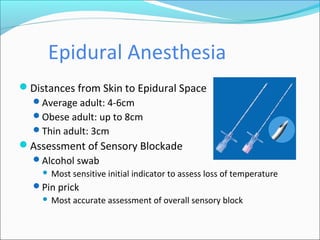
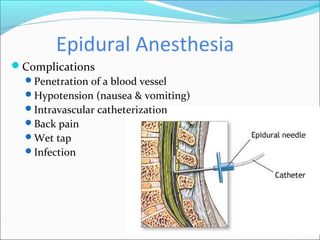
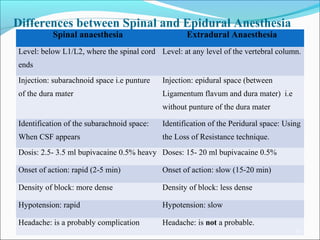
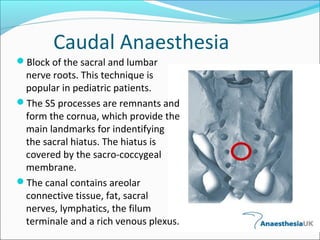
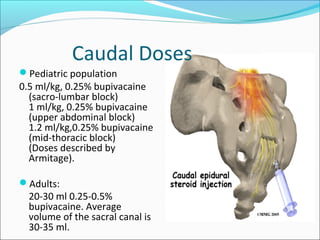
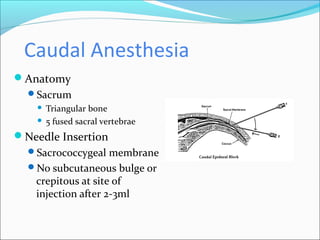
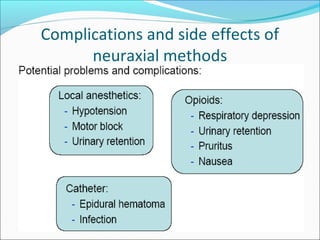

Neuraxial anesthesia involves injecting anesthetic medication into the epidural space surrounding the spinal cord or into the cerebrospinal fluid surrounding the spinal cord. This numbs the patient from the abdomen to the toes and can eliminate the need for general anesthesia. There are several types of neuraxial anesthesia including spinal, epidural and caudal blocks. Neuraxial anesthesia provides analgesia with less risk of respiratory depression compared to general anesthesia and limits surgical stress responses. Potential complications include hypotension, neurological issues, and post-dural puncture headache. Careful patient positioning and drug selection can affect the level and density of the resulting nerve block.


