Skeletal Muscle Relaxants andSkeletal Muscle Relaxants and
Reversal AgentsReversal Agents
Dr Pranav Bansal
Professor & HeaD
DePartment of anaestHesiology
BPs gmC, KHanPur Kalan, soniPat
Learning Objectives
 PY3.4 Describe the structure of neuro-muscular junction and
transmission of impulses
 PY3.5 Discuss the action of neuro-muscular blocking agents
 PH1.15 Describe mechanism/s of action, types, doses, side
effects, indications and contraindications of skeletal muscle
relaxants
 AS4.1 Describe and discuss the pharmacology of drugs used in
induction and maintenance of general anaesthesia (including
depolarising and non-depolarising muscle relaxants,
anticholinesterases. Part 2/2)
Introduction
What are neuromuscular blocking drugs ?
These are agents that act peripherally at
neuromuscular junction/muscle fibre itself to block
neuromuscular transmission.
Why do we need them ?
In order to facilitate muscle relaxation for surgery,
Optimize surgical working conditions & for mechanical
ventilation during surgery or in ICU
HISTORY
How skeletal muscle
relaxation can be achieved
Intra-operatively?
 High doses of volatile anesthetics
 Regional anesthesia
 Administration of neuromuscular blocking
agents
Muscle Relaxants
 How do they work?
 Neuromuscular junction

Nerve terminal

Motor endplate of a muscle

Synaptic cleft
 Nerve stimulation
 Release of Acetylcholine (Ach)
 Postsynaptic events
Neuromuscular Junction
(NMJ)
Skeletal Muscle Relaxants
 Drugs that act peripherally at the neuromuscular
junction (Nicotinic receptor of Ach – Muscle).
 Types of Skeletal muscle relaxants:

Competitive (Non-depolarizing)

Non-competitive (Depolarizing)

Miscellaneous : Aminoglycosides
Muscle Relaxants
 Depolarizing muscle relaxant
 Succinylcholine, Decamethonium
 Nondepolarizing muscle relaxants
 Ultrashort acting
 Short acting
 Intermediate acting
 Long acting
Depolarizing Muscle
Relaxant
 Succinylcholine
 What is the mechanism of action?
 Physically resemble Ach
 Act as acetylcholine receptor agonist
 Not metabolized locally at NMJ
 Metabolized by pseudocholinesterase in plasma
 Depolarizing action persists > Ach
 Continuous end-plate depolarization causes muscle
relaxation
SUCCINYLCHOLINE
It causes paralysis of skeletal muscle.
 Sequence of paralysis may be different from that of
non depolarizing drugs but respiratory muscles are
paralyzed last
 Produces a transient twitching of skeletal muscle
before causing block
 It causes maintained depolarization at the end plate,
which leads to a loss of electrical excitability.
 It has shorter duration of action.
12
DEPOLARIZING AGENTS
 Mechanism of action:
 These drugs act like acetylcholine but persist at the synapse
at high concentration and for longer duration and constantly
stimulate the receptor.
 First, opening of the Na+ channel occurs resulting in
depolarization, this leads to transient twitching of the muscle,
continued binding of drugs make the receptor incapable to
transmit the impulses, paralysis occurs.
 The continued depolarization makes the receptor incapable
of transmitting further impulses.
Depolarizing Muscle
Relaxant
 Succinylcholine
 What is the clinical use of
succinylcholine?
 Most often used to facilitate intubation
 What is intubating dose of
succinylcholine?
 1-1.5 mg/kg
 Onset 30-60 seconds, duration 5-10
minutes
Depolarizing Muscle
Relaxant
 Succinylcholine
 What is phase I neuromuscular
blockade?
 What is phase II neuromuscular
blockade?

Resemble blockade produced by
nondepolarizing muscle relaxant

Succinylcholine infusion or dose >5-7 mg/kg
Succinylcholine Side effects:

Cardiovascular

Fasciculation

Muscle pain

Increase intraocular pressure

Increase intragastric pressure

Increase intracranial pressure

Hyperkalemia
 Prolonged Paralysis: Succinylcholine-induced neuromuscular
blockade can be significantly prolonged if a patient has an abnormal
genetic variant of butyrylcholinesterase (Atypical
Pseudocholinesterase).

Malignant hyperthermia
 Prolonged paralysis: due to factors which reduce the activity of
plasma cholinesterase:

genetic variants as abnormal cholinesterase, its severe
deficiency.

anti -cholinesterase drugs

liver disease
 Malignant hyperthermia: rare inherited condition probably
caused by a mutation of Ca++
release channel of sarcoplasmic
reticulum, which results muscle spasm and dramatic rise in body
temperature. (This is treated by cooling the body and
administration of Dantrolene)
Signs of MH
 Specific
 Muscle rigidity
 Increased CO2
production
 Rhabdomyolysis
 Marked temperature
elevation
 Non-specific
 Tachycardia
 Tachypnea
 Acidosis
 Hyperkalemia
Immediate Therapy of MH
 Discontinue triggering agents
 Hyperventilate with oxygen
 Get help
 Dantrolene 2.5 mg/kg push. Must dilute 20 mg bottle with
60 ml DW. Continue for 24-48 hours
 Cooling the patient
 Do not give calcium channel blockers
 Labs as necessary for K+, myoglobin
19
Succinylcholine
 Therapeutic uses:
 When rapid endotracheal intubations is required.
 Electroconvulsive shock therapy.
Pharmacokinetics:
 Administered intravenously.
 Metabolised to succinyl-monocholine and choline. Succinyl-
monocholine is metabolized much more slowly to succinic acid
and choline. The elimination half-life of succinylcholine is
estimated to be 47 seconds.
Non depolarising neuromuscular blocking
drugs classification (on basis of chemical
strucure)
Benzylisoquinolinium
D-tubocurare
Metocurine
Doxacurium
Atracurium
Cisatracurium
Mivacurium
Aminosteroid
Pancuronium
Vecuronium
Rocuronium
Rapacuronium
Asymmetri
c mixed-
onium
fumarates
Gantacurium
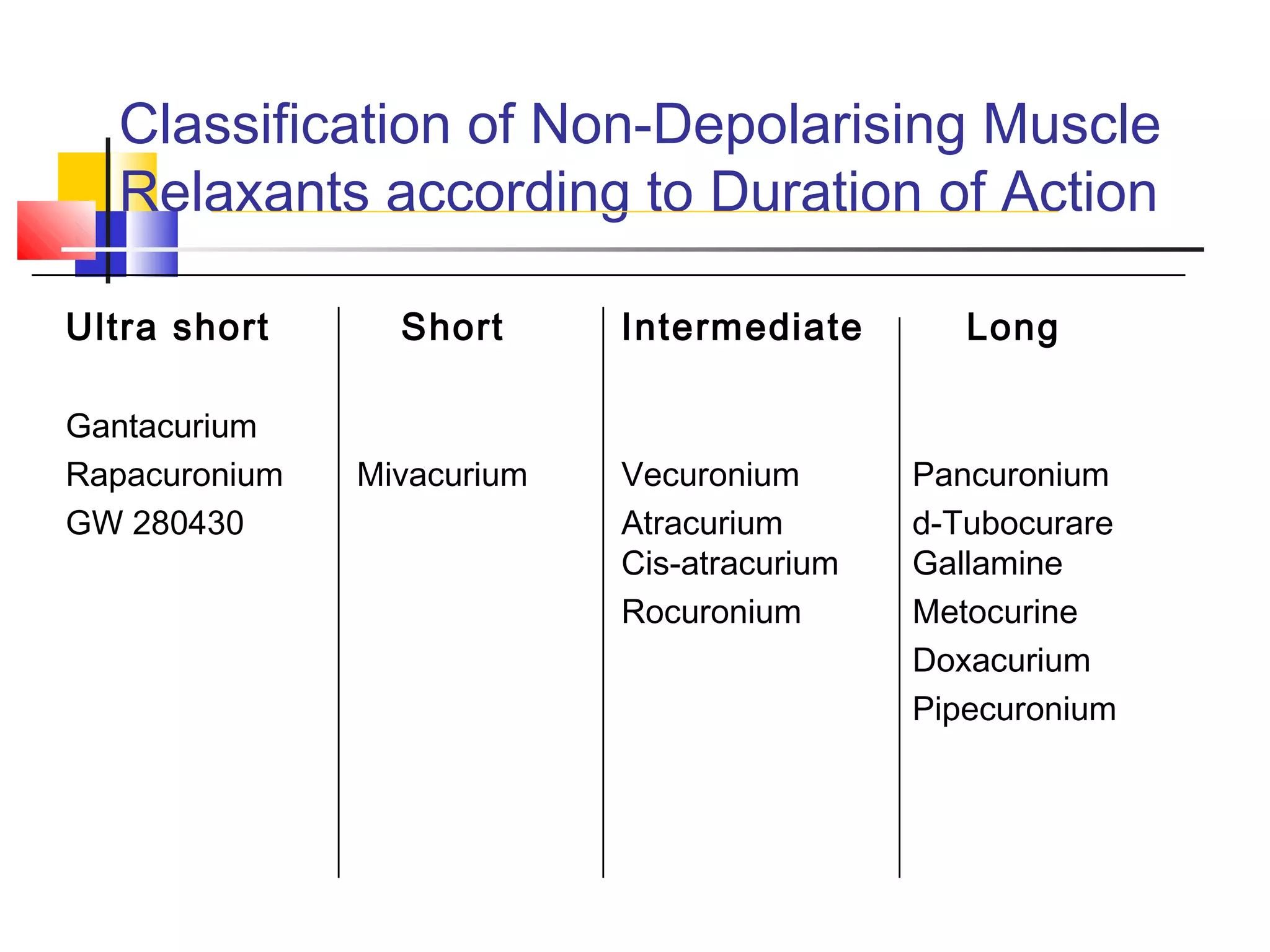
Classification of Non-Depolarising Muscle
Relaxants according to Duration of Action
Ultra short Short Intermediate Long
Gantacurium
Rapacuronium Mivacurium Vecuronium Pancuronium
GW 280430 Atracurium d-Tubocurare
Cis-atracurium Gallamine
Rocuronium Metocurine
Doxacurium
Pipecuronium
Nondepolarizing Muscle
Relaxants
 What is the mechanism of action?
 Compete with Ach at the binding sites
 Do not depolarize the motor endplate
 Act as competitive antagonist
 Excessive concentration causing channel
blockade
 Act at presynaptic sites, prevent movement of
Ach to release sites
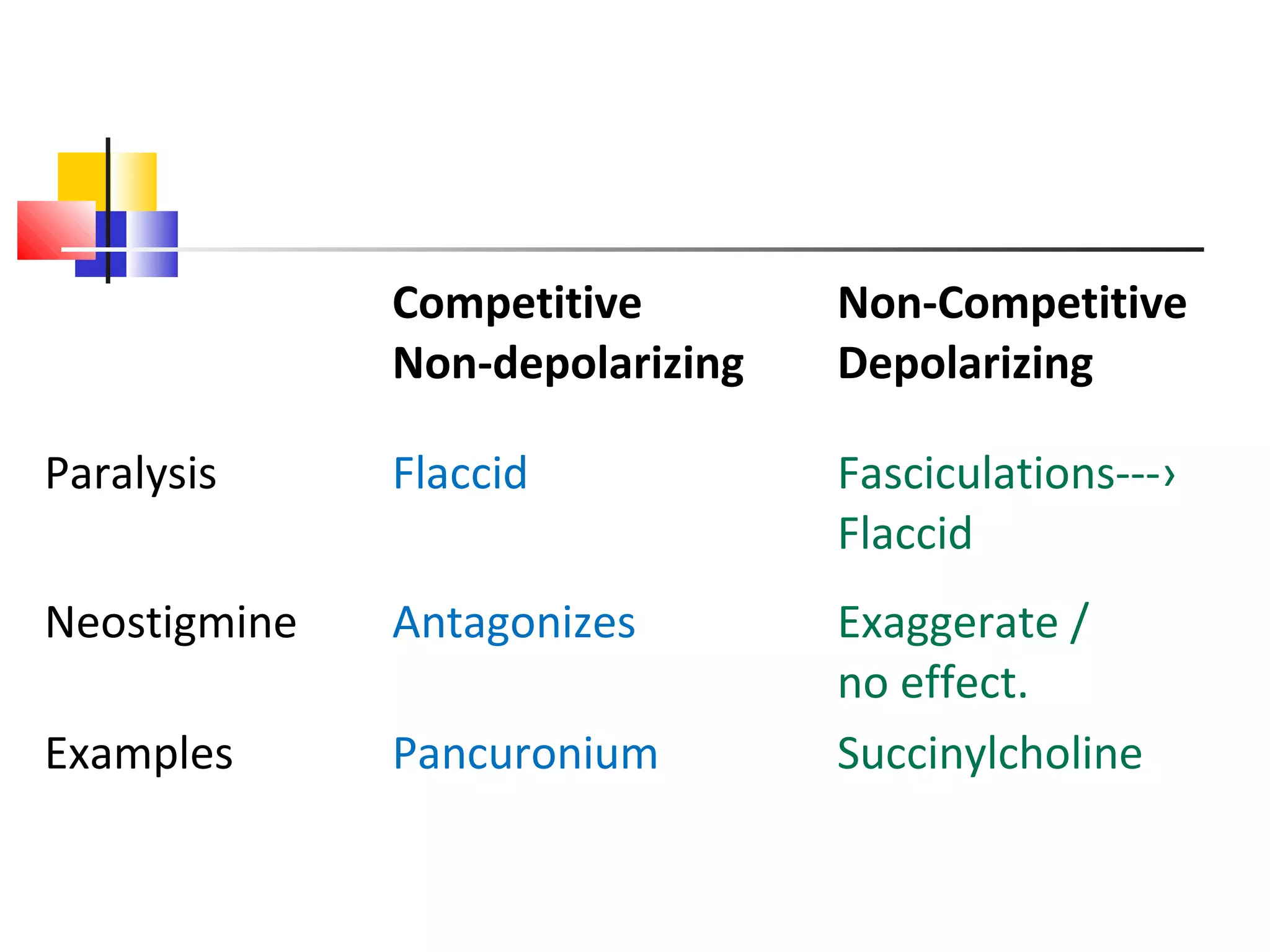
Competitive
Non-depolarizing
Non-Competitive
Depolarizing
Paralysis Flaccid Fasciculations---›
Flaccid
Neostigmine Antagonizes Exaggerate /
no effect.
Examples Pancuronium Succinylcholine
Nondepolarizing Muscle
Relaxants
 Pancuronium
 Aminosteroid compound
 Onset 3-5 minutes, duration 60-90 minutes
 Intubating dose 0.08-0.12 mg/kg
 Elimination mainly by kidney (85%), liver
(15%)
 Side effects : hypertension, tachycrdia,
dysrhythmia
Nondepolarizing Muscle
Relaxants
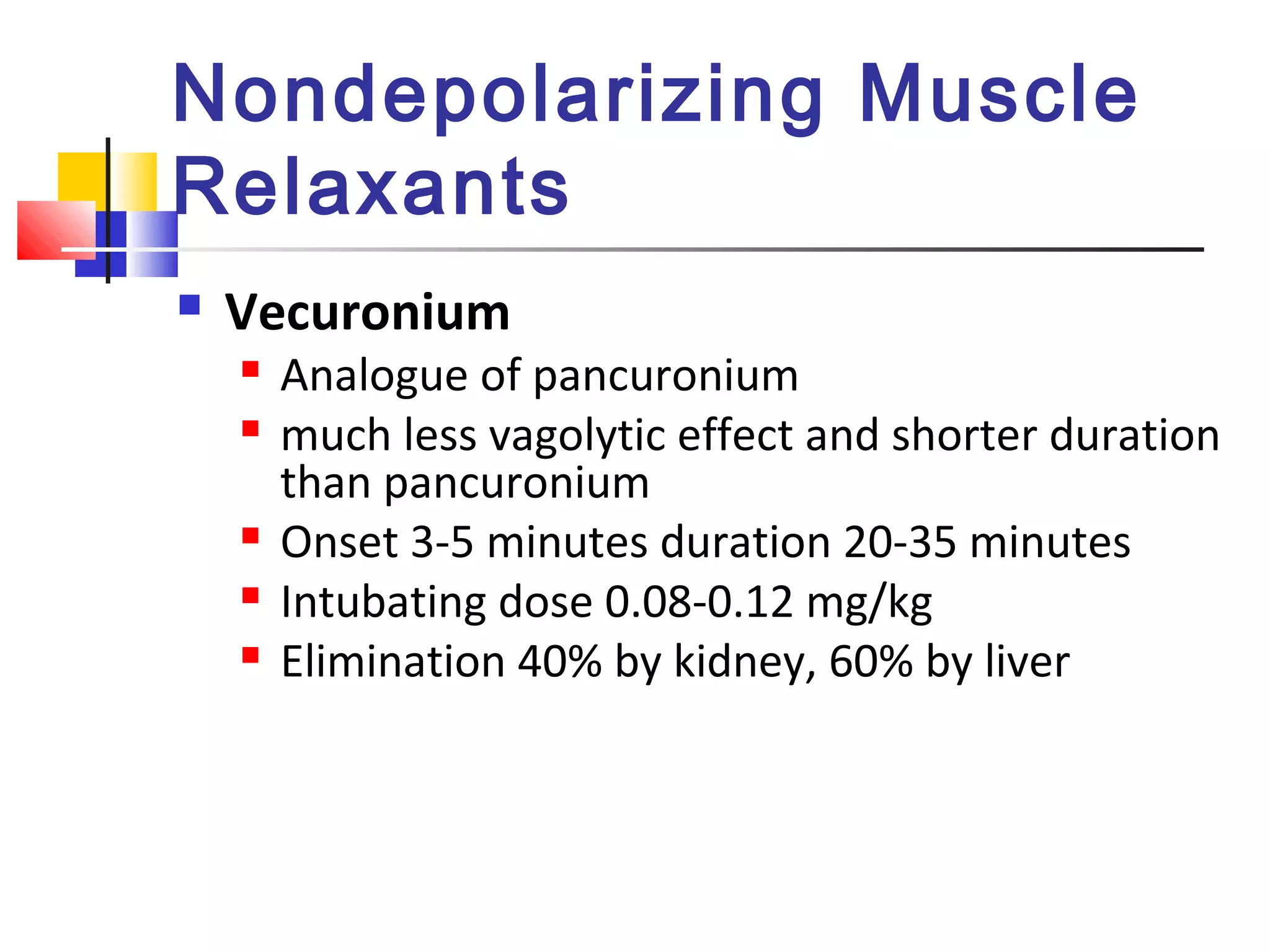
 Vecuronium
 Analogue of pancuronium
 much less vagolytic effect and shorter duration
than pancuronium
 Onset 3-5 minutes duration 20-35 minutes
 Intubating dose 0.08-0.12 mg/kg
 Elimination 40% by kidney, 60% by liver
Atracurium
 Non-organ dependent elimination
 Non specific estererase: 60% of elimination
 Hofmann elimination : spontaneous nonenzymatic
chemical breakdown occurs at physiologic pH and Temp.
 Onset 3-5 minutes, duration 25-35 minutes
 Intubating dose 0.5 mg/kg
 Side effects : histamine release causing hypotension, tachycardia,
bronchospasm
 Laudanosine toxicity-breakdown product from Hofmann elimination,
assoc. with central nervous system excitation resulting in elevation of
MAC and precipitation of seizures.
 Temperature and pH sensitivity-action markedly prolonged in hypo-
thermic or acidotic patients.
Nondepolarizing Muscle
Relaxants
 Cisatracurium
 Isomer of atracurium
 Metabolized by Hofmann elimination
 Onset 3-5 minutes, duration 20-35 minutes
 Intubating dose 0.1-0.2 mg/kg
 Minimal cardiovascular side effects
 Much less laudanosine produced
Mivacurium
 Bisquaternary benzylisoquinoline
 Potency, 1/3 that of atracurium
 slow onset 1.5 min with 0.25 mg/kg
 short duration 12-18 min with 0.25 mg/kg
 histamine release with doses 3-4 X ED95
 hydrolyzed by AChE, recovery may be prolonged in
some populations (e.g. atypical AChE)
Nondepolarizing Muscle
Relaxants
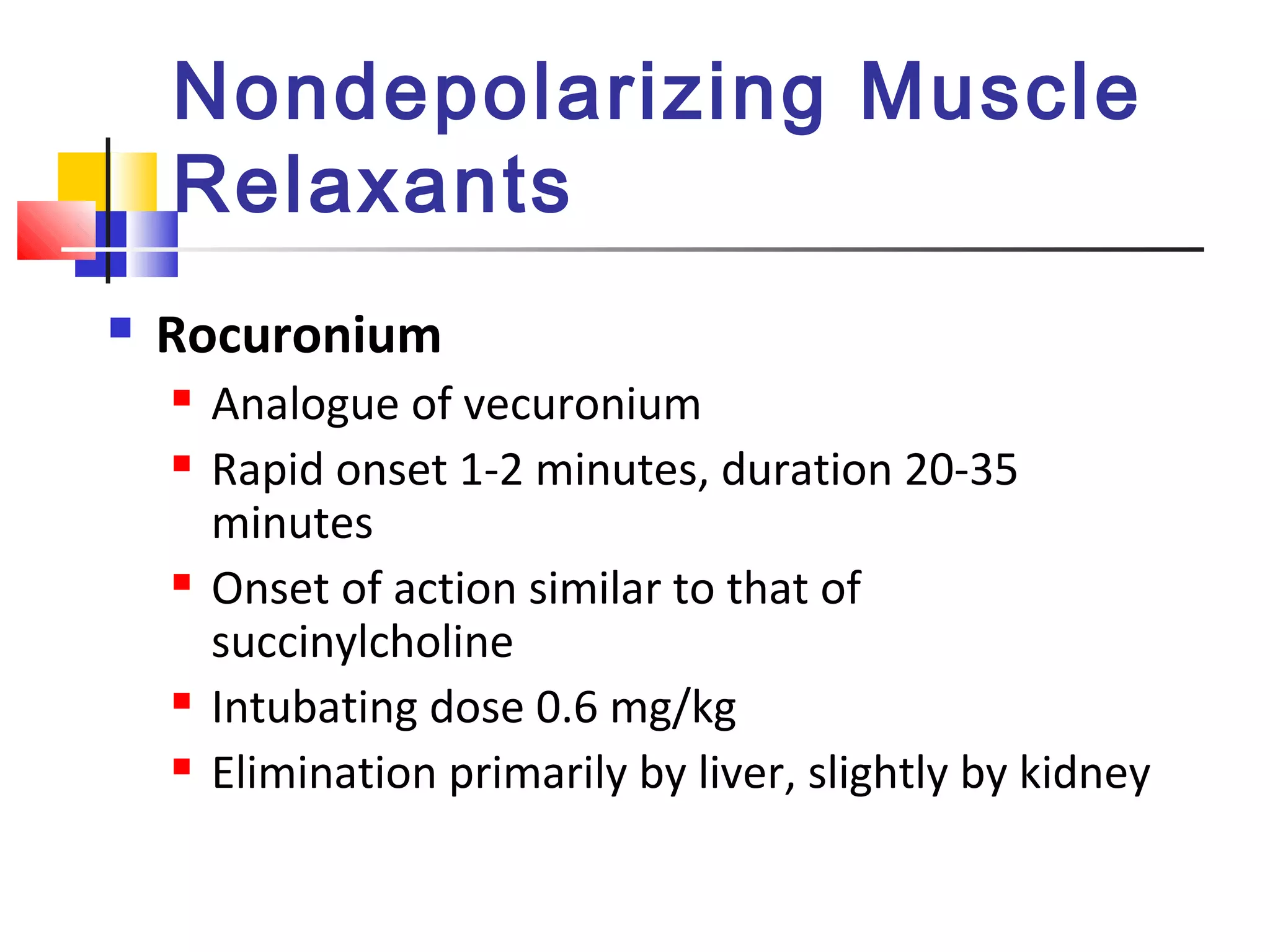
 Rocuronium
 Analogue of vecuronium
 Rapid onset 1-2 minutes, duration 20-35
minutes
 Onset of action similar to that of
succinylcholine
 Intubating dose 0.6 mg/kg
 Elimination primarily by liver, slightly by kidney
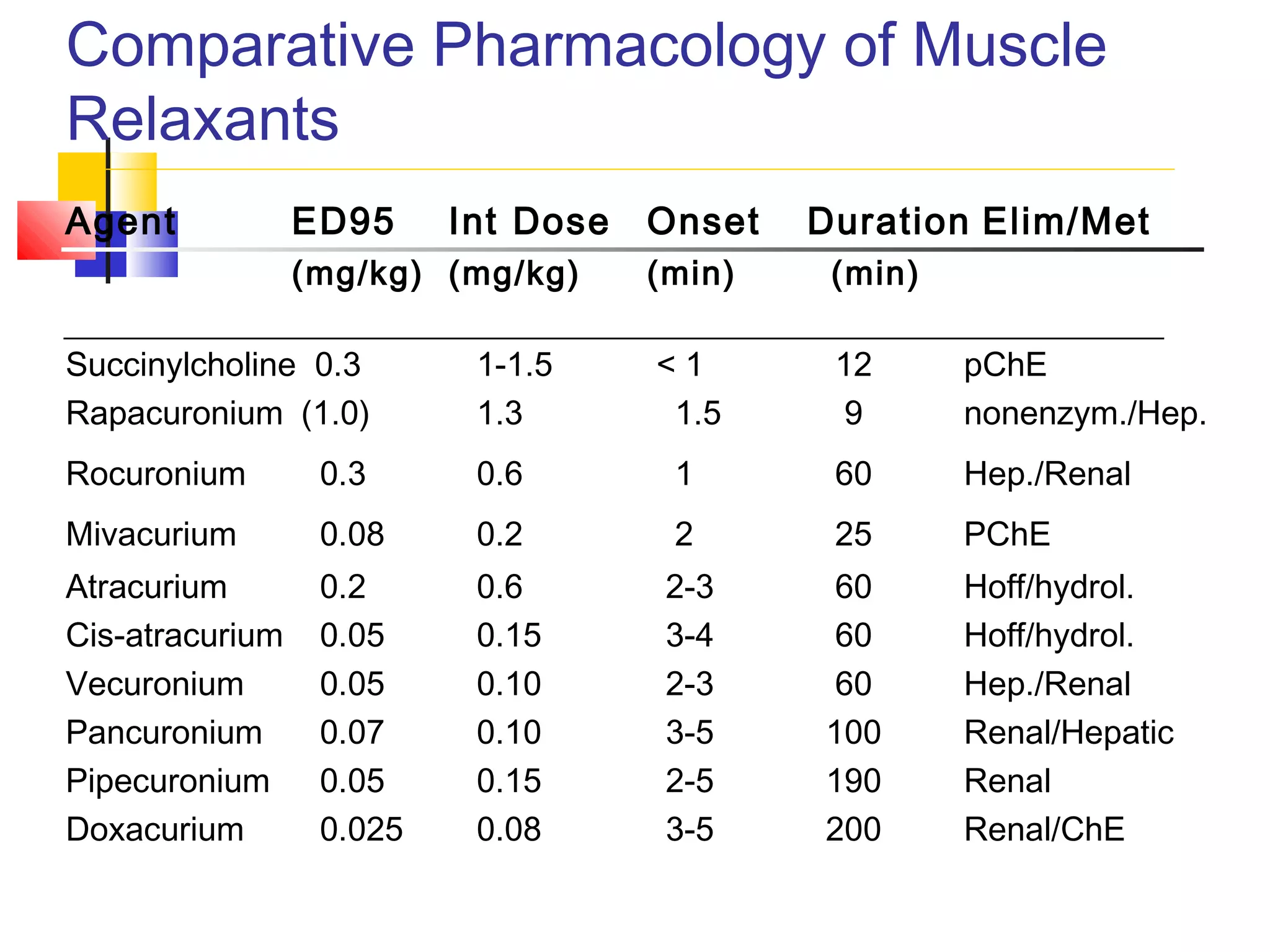
Comparative Pharmacology of Muscle
Relaxants
Agent ED95 Int Dose Onset Duration Elim/Met
(mg/kg) (mg/kg) (min) (min)
Succinylcholine 0.3 1-1.5 < 1 12 pChE
Rapacuronium (1.0) 1.3 1.5 9 nonenzym./Hep.
Rocuronium 0.3 0.6 1 60 Hep./Renal
Mivacurium 0.08 0.2 2 25 PChE
Atracurium 0.2 0.6 2-3 60 Hoff/hydrol.
Cis-atracurium 0.05 0.15 3-4 60 Hoff/hydrol.
Vecuronium 0.05 0.10 2-3 60 Hep./Renal
Pancuronium 0.07 0.10 3-5 100 Renal/Hepatic
Pipecuronium 0.05 0.15 2-5 190 Renal
Doxacurium 0.025 0.08 3-5 200 Renal/ChE
Percent of Dose Dependant
on Renal Elimination
> 90% 60-90% 40-60% <25%
Gallamine (97) Pancuronium (80) d-TC (45) Succinylcholine
Pipecuronium (70) Vecuronium (20)
Doxacurium (70) Atracurium (NS)
Metocurine (60) Mivacurium (NS)
Rocuronium
Alteration of responses
 Temperature
 Acid-base balance
 Electrolyte abnormality
 Age
 Concurrent diseases
 Drug interactions
Alteration of responses
 Concurrent diseases
 Neurologic diseases
 Muscular diseases

Myasthenia gravis

Myasthenic syndrome (Eaton-Lambert synrome)
 Liver diseases
 Kidney diseases
Alteration of responses
 Drug interactions
 Inhalation agents
 Intravenous anesthetics
 Local anesthetics
 Antibiotics
 Anticonvulsants
 Magnesium
Muscle Relaxants
 Muscle relaxants must not be given without
adequate dosage of analgesic and hypnotic
drugs
 Inappropriately given : a patient is
paralyzed but not anesthetized
Skeletal muscle relaxants
Pharmacokinetics :
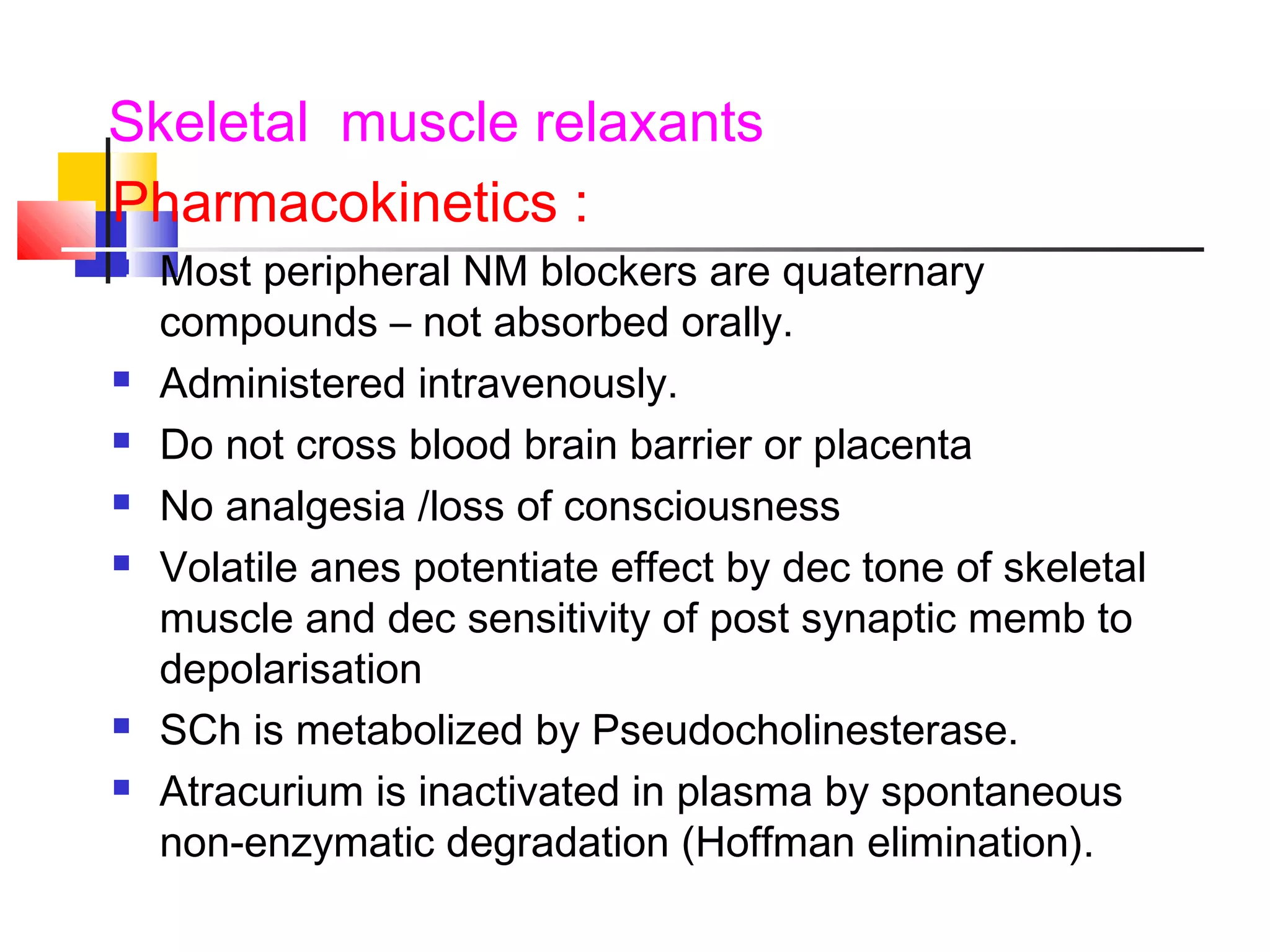
 Most peripheral NM blockers are quaternary
compounds – not absorbed orally.
 Administered intravenously.
 Do not cross blood brain barrier or placenta
 No analgesia /loss of consciousness
 Volatile anes potentiate effect by dec tone of skeletal
muscle and dec sensitivity of post synaptic memb to
depolarisation
 SCh is metabolized by Pseudocholinesterase.
 Atracurium is inactivated in plasma by spontaneous
non-enzymatic degradation (Hoffman elimination).
Reversal of
Neuromuscular Blockade
 Goal : re-establishment of spontaneous
respiration and the ability to protect
airway from aspiration
CHOLINESTERASE INHIBITORS (ANTICHOLINESTERASE INHIBITORS (ANTI
CHOLINESTERASE)CHOLINESTERASE)
 Primary clinical use is to reverse non-depolarising
muscle blockade
 Neuromuscular transmission is blocked when NDMR
compete with Ach to bind to nicotinic cholinergic
receptors.
 The cholinesterase inhibitors indirectly increase
amount of Ach available to compete with NDMR,
thereby re-establish NM transmission.
Antagonism of
Neuromuscular Blockade
 What is the mechanism of action?
 Inhibiting activity of acetylcholineesterase
 More Ach available at NMJ, compete for sites
on nicotinic cholinergic receptors
 Action at muscarinic cholinergic receptor

Bradycardia

Hypersecretion

Increased intestinal tone
Antagonism of
Neuromuscular Blockade
Effectiveness of anticholinesterases depends on the
degree of recovery present when they are
administered
 Anticholinesterases
 Neostigmine

Onset 3-5 minutes, elimination half life 77 minutes

Dose 0.04-0.07 mg/kg
 Pyridostigmine
 Edrophonium
Antagonism of
Neuromuscular Blockade
 Muscarinic side effects are minimized
by anticholinergic agents
 Atropine

Dose 0.01-0.02 mg/kg
 Scopolamine
 Glycopyrrolate
Neostigmine
 Quaternary ammonium group
 Dosage : 0.04-0.08 mg/kg
 Effects apparent in 5-10 min and last more than 1
hour.
 Muscarinic side effects are minimized by prior or
concomitant administration of anticholinergic
agent.
 Also used to treat urinary bladder atony and
paralytic ileus.
Glycopyrrolate
 Dosage : 0.005-0.01 mg/kg up to 0.2-0.3 mg in adults.
 Cannot cross blood-brain barrier and almost always
devoid of central nervous system and ophthalmic
activity.
 Potent inhibition of salivary gland and respiratory tract
secretions.
 Longer duration than atropine (2-4 hours)
Postoperative Residual Curarization
(PORC)
 Common after NDMRs
 Long acting > intermediate > short acting
 Associated with respiratory morbidity
 Not observed in children
 Monitoring decreases incidence
Monitoring
Neuromuscular Function
 What are the purposes of
monitoring?
 Administer additional relaxant as
indicated
 Demonstrate recovery
Monitoring Neuromuscular Function
How to monitor?
 Clinical signs
 Use of nerve stimulator
Monitoring
Neuromuscular Function
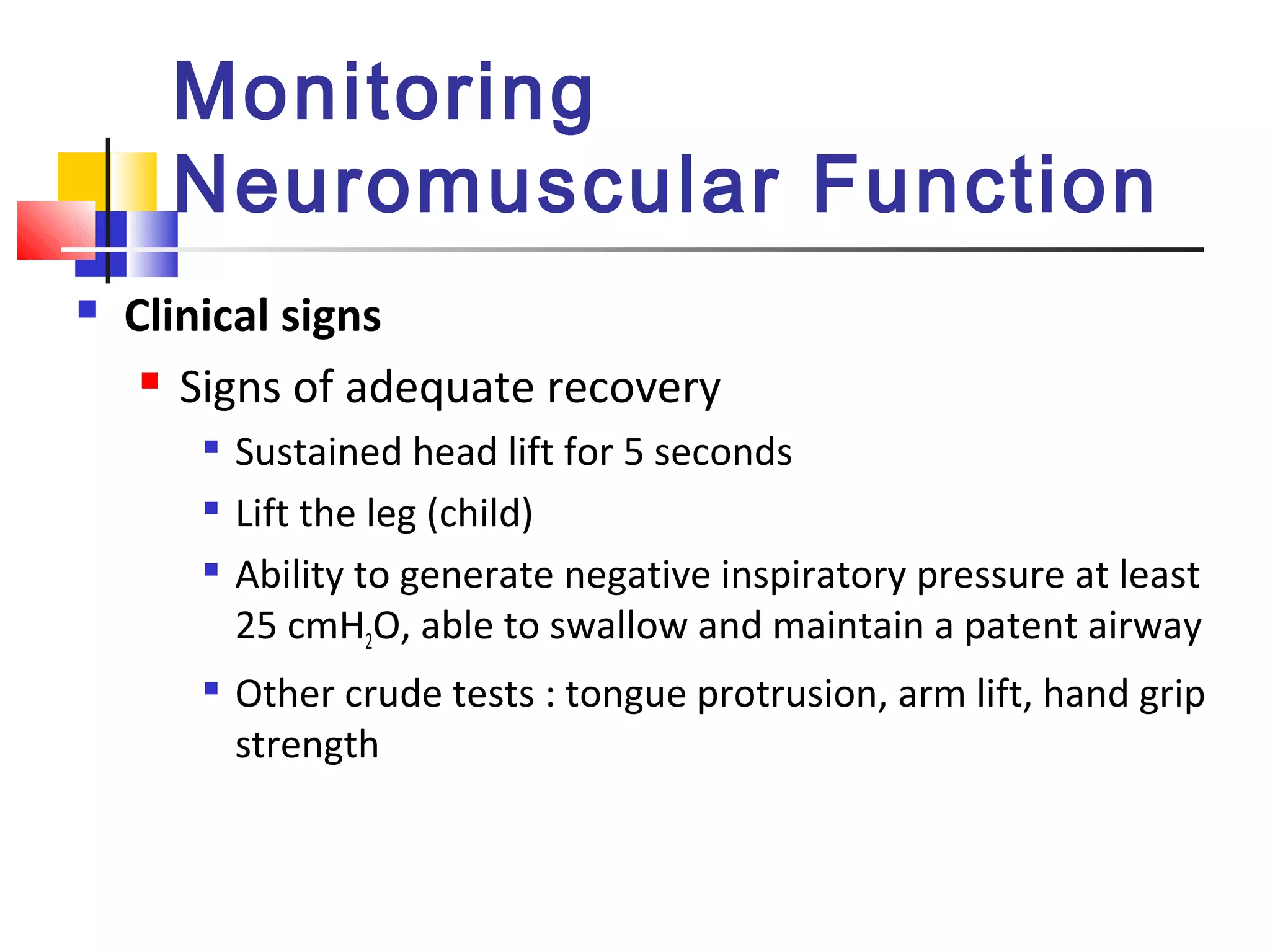
 Clinical signs
 Signs of adequate recovery

Sustained head lift for 5 seconds

Lift the leg (child)

Ability to generate negative inspiratory pressure at least
25 cmH2O, able to swallow and maintain a patent airway

Other crude tests : tongue protrusion, arm lift, hand grip
strength
Muscle relaxant and reversal agents

Muscle relaxant and reversal agents

  • 1.
    Skeletal Muscle RelaxantsandSkeletal Muscle Relaxants and Reversal AgentsReversal Agents Dr Pranav Bansal Professor & HeaD DePartment of anaestHesiology BPs gmC, KHanPur Kalan, soniPat
  • 2.
    Learning Objectives  PY3.4Describe the structure of neuro-muscular junction and transmission of impulses  PY3.5 Discuss the action of neuro-muscular blocking agents  PH1.15 Describe mechanism/s of action, types, doses, side effects, indications and contraindications of skeletal muscle relaxants  AS4.1 Describe and discuss the pharmacology of drugs used in induction and maintenance of general anaesthesia (including depolarising and non-depolarising muscle relaxants, anticholinesterases. Part 2/2)
  • 3.
    Introduction What are neuromuscularblocking drugs ? These are agents that act peripherally at neuromuscular junction/muscle fibre itself to block neuromuscular transmission. Why do we need them ? In order to facilitate muscle relaxation for surgery, Optimize surgical working conditions & for mechanical ventilation during surgery or in ICU
  • 4.
  • 5.
    How skeletal muscle relaxationcan be achieved Intra-operatively?  High doses of volatile anesthetics  Regional anesthesia  Administration of neuromuscular blocking agents
  • 6.
    Muscle Relaxants  Howdo they work?  Neuromuscular junction  Nerve terminal  Motor endplate of a muscle  Synaptic cleft  Nerve stimulation  Release of Acetylcholine (Ach)  Postsynaptic events
  • 7.
  • 8.
    Skeletal Muscle Relaxants Drugs that act peripherally at the neuromuscular junction (Nicotinic receptor of Ach – Muscle).  Types of Skeletal muscle relaxants:  Competitive (Non-depolarizing)  Non-competitive (Depolarizing)  Miscellaneous : Aminoglycosides
  • 9.
    Muscle Relaxants  Depolarizingmuscle relaxant  Succinylcholine, Decamethonium  Nondepolarizing muscle relaxants  Ultrashort acting  Short acting  Intermediate acting  Long acting
  • 10.
    Depolarizing Muscle Relaxant  Succinylcholine What is the mechanism of action?  Physically resemble Ach  Act as acetylcholine receptor agonist  Not metabolized locally at NMJ  Metabolized by pseudocholinesterase in plasma  Depolarizing action persists > Ach  Continuous end-plate depolarization causes muscle relaxation
  • 11.
    SUCCINYLCHOLINE It causes paralysisof skeletal muscle.  Sequence of paralysis may be different from that of non depolarizing drugs but respiratory muscles are paralyzed last  Produces a transient twitching of skeletal muscle before causing block  It causes maintained depolarization at the end plate, which leads to a loss of electrical excitability.  It has shorter duration of action.
  • 12.
    12 DEPOLARIZING AGENTS  Mechanismof action:  These drugs act like acetylcholine but persist at the synapse at high concentration and for longer duration and constantly stimulate the receptor.  First, opening of the Na+ channel occurs resulting in depolarization, this leads to transient twitching of the muscle, continued binding of drugs make the receptor incapable to transmit the impulses, paralysis occurs.  The continued depolarization makes the receptor incapable of transmitting further impulses.
  • 13.
    Depolarizing Muscle Relaxant  Succinylcholine What is the clinical use of succinylcholine?  Most often used to facilitate intubation  What is intubating dose of succinylcholine?  1-1.5 mg/kg  Onset 30-60 seconds, duration 5-10 minutes
  • 14.
    Depolarizing Muscle Relaxant  Succinylcholine What is phase I neuromuscular blockade?  What is phase II neuromuscular blockade?  Resemble blockade produced by nondepolarizing muscle relaxant  Succinylcholine infusion or dose >5-7 mg/kg
  • 15.
    Succinylcholine Side effects:  Cardiovascular  Fasciculation  Musclepain  Increase intraocular pressure  Increase intragastric pressure  Increase intracranial pressure  Hyperkalemia  Prolonged Paralysis: Succinylcholine-induced neuromuscular blockade can be significantly prolonged if a patient has an abnormal genetic variant of butyrylcholinesterase (Atypical Pseudocholinesterase).  Malignant hyperthermia
  • 16.
     Prolonged paralysis:due to factors which reduce the activity of plasma cholinesterase:  genetic variants as abnormal cholinesterase, its severe deficiency.  anti -cholinesterase drugs  liver disease  Malignant hyperthermia: rare inherited condition probably caused by a mutation of Ca++ release channel of sarcoplasmic reticulum, which results muscle spasm and dramatic rise in body temperature. (This is treated by cooling the body and administration of Dantrolene)
  • 17.
    Signs of MH Specific  Muscle rigidity  Increased CO2 production  Rhabdomyolysis  Marked temperature elevation  Non-specific  Tachycardia  Tachypnea  Acidosis  Hyperkalemia
  • 18.
    Immediate Therapy ofMH  Discontinue triggering agents  Hyperventilate with oxygen  Get help  Dantrolene 2.5 mg/kg push. Must dilute 20 mg bottle with 60 ml DW. Continue for 24-48 hours  Cooling the patient  Do not give calcium channel blockers  Labs as necessary for K+, myoglobin
  • 19.
    19 Succinylcholine  Therapeutic uses: When rapid endotracheal intubations is required.  Electroconvulsive shock therapy. Pharmacokinetics:  Administered intravenously.  Metabolised to succinyl-monocholine and choline. Succinyl- monocholine is metabolized much more slowly to succinic acid and choline. The elimination half-life of succinylcholine is estimated to be 47 seconds.
  • 20.
    Non depolarising neuromuscularblocking drugs classification (on basis of chemical strucure) Benzylisoquinolinium D-tubocurare Metocurine Doxacurium Atracurium Cisatracurium Mivacurium Aminosteroid Pancuronium Vecuronium Rocuronium Rapacuronium Asymmetri c mixed- onium fumarates Gantacurium
  • 21.
    Classification of Non-DepolarisingMuscle Relaxants according to Duration of Action Ultra short Short Intermediate Long Gantacurium Rapacuronium Mivacurium Vecuronium Pancuronium GW 280430 Atracurium d-Tubocurare Cis-atracurium Gallamine Rocuronium Metocurine Doxacurium Pipecuronium
  • 22.
    Nondepolarizing Muscle Relaxants  Whatis the mechanism of action?  Compete with Ach at the binding sites  Do not depolarize the motor endplate  Act as competitive antagonist  Excessive concentration causing channel blockade  Act at presynaptic sites, prevent movement of Ach to release sites
  • 23.
  • 24.
    Nondepolarizing Muscle Relaxants  Pancuronium Aminosteroid compound  Onset 3-5 minutes, duration 60-90 minutes  Intubating dose 0.08-0.12 mg/kg  Elimination mainly by kidney (85%), liver (15%)  Side effects : hypertension, tachycrdia, dysrhythmia
  • 25.
    Nondepolarizing Muscle Relaxants  Vecuronium Analogue of pancuronium  much less vagolytic effect and shorter duration than pancuronium  Onset 3-5 minutes duration 20-35 minutes  Intubating dose 0.08-0.12 mg/kg  Elimination 40% by kidney, 60% by liver
  • 26.
    Atracurium  Non-organ dependentelimination  Non specific estererase: 60% of elimination  Hofmann elimination : spontaneous nonenzymatic chemical breakdown occurs at physiologic pH and Temp.  Onset 3-5 minutes, duration 25-35 minutes  Intubating dose 0.5 mg/kg  Side effects : histamine release causing hypotension, tachycardia, bronchospasm  Laudanosine toxicity-breakdown product from Hofmann elimination, assoc. with central nervous system excitation resulting in elevation of MAC and precipitation of seizures.  Temperature and pH sensitivity-action markedly prolonged in hypo- thermic or acidotic patients.
  • 27.
    Nondepolarizing Muscle Relaxants  Cisatracurium Isomer of atracurium  Metabolized by Hofmann elimination  Onset 3-5 minutes, duration 20-35 minutes  Intubating dose 0.1-0.2 mg/kg  Minimal cardiovascular side effects  Much less laudanosine produced
  • 28.
    Mivacurium  Bisquaternary benzylisoquinoline Potency, 1/3 that of atracurium  slow onset 1.5 min with 0.25 mg/kg  short duration 12-18 min with 0.25 mg/kg  histamine release with doses 3-4 X ED95  hydrolyzed by AChE, recovery may be prolonged in some populations (e.g. atypical AChE)
  • 29.
    Nondepolarizing Muscle Relaxants  Rocuronium Analogue of vecuronium  Rapid onset 1-2 minutes, duration 20-35 minutes  Onset of action similar to that of succinylcholine  Intubating dose 0.6 mg/kg  Elimination primarily by liver, slightly by kidney
  • 30.
    Comparative Pharmacology ofMuscle Relaxants Agent ED95 Int Dose Onset Duration Elim/Met (mg/kg) (mg/kg) (min) (min) Succinylcholine 0.3 1-1.5 < 1 12 pChE Rapacuronium (1.0) 1.3 1.5 9 nonenzym./Hep. Rocuronium 0.3 0.6 1 60 Hep./Renal Mivacurium 0.08 0.2 2 25 PChE Atracurium 0.2 0.6 2-3 60 Hoff/hydrol. Cis-atracurium 0.05 0.15 3-4 60 Hoff/hydrol. Vecuronium 0.05 0.10 2-3 60 Hep./Renal Pancuronium 0.07 0.10 3-5 100 Renal/Hepatic Pipecuronium 0.05 0.15 2-5 190 Renal Doxacurium 0.025 0.08 3-5 200 Renal/ChE
  • 31.
    Percent of DoseDependant on Renal Elimination > 90% 60-90% 40-60% <25% Gallamine (97) Pancuronium (80) d-TC (45) Succinylcholine Pipecuronium (70) Vecuronium (20) Doxacurium (70) Atracurium (NS) Metocurine (60) Mivacurium (NS) Rocuronium
  • 32.
    Alteration of responses Temperature  Acid-base balance  Electrolyte abnormality  Age  Concurrent diseases  Drug interactions
  • 33.
    Alteration of responses Concurrent diseases  Neurologic diseases  Muscular diseases  Myasthenia gravis  Myasthenic syndrome (Eaton-Lambert synrome)  Liver diseases  Kidney diseases
  • 34.
    Alteration of responses Drug interactions  Inhalation agents  Intravenous anesthetics  Local anesthetics  Antibiotics  Anticonvulsants  Magnesium
  • 35.
    Muscle Relaxants  Musclerelaxants must not be given without adequate dosage of analgesic and hypnotic drugs  Inappropriately given : a patient is paralyzed but not anesthetized
  • 36.
    Skeletal muscle relaxants Pharmacokinetics:  Most peripheral NM blockers are quaternary compounds – not absorbed orally.  Administered intravenously.  Do not cross blood brain barrier or placenta  No analgesia /loss of consciousness  Volatile anes potentiate effect by dec tone of skeletal muscle and dec sensitivity of post synaptic memb to depolarisation  SCh is metabolized by Pseudocholinesterase.  Atracurium is inactivated in plasma by spontaneous non-enzymatic degradation (Hoffman elimination).
  • 37.
    Reversal of Neuromuscular Blockade Goal : re-establishment of spontaneous respiration and the ability to protect airway from aspiration
  • 38.
    CHOLINESTERASE INHIBITORS (ANTICHOLINESTERASEINHIBITORS (ANTI CHOLINESTERASE)CHOLINESTERASE)  Primary clinical use is to reverse non-depolarising muscle blockade  Neuromuscular transmission is blocked when NDMR compete with Ach to bind to nicotinic cholinergic receptors.  The cholinesterase inhibitors indirectly increase amount of Ach available to compete with NDMR, thereby re-establish NM transmission.
  • 39.
    Antagonism of Neuromuscular Blockade What is the mechanism of action?  Inhibiting activity of acetylcholineesterase  More Ach available at NMJ, compete for sites on nicotinic cholinergic receptors  Action at muscarinic cholinergic receptor  Bradycardia  Hypersecretion  Increased intestinal tone
  • 40.
    Antagonism of Neuromuscular Blockade Effectivenessof anticholinesterases depends on the degree of recovery present when they are administered  Anticholinesterases  Neostigmine  Onset 3-5 minutes, elimination half life 77 minutes  Dose 0.04-0.07 mg/kg  Pyridostigmine  Edrophonium
  • 41.
    Antagonism of Neuromuscular Blockade Muscarinic side effects are minimized by anticholinergic agents  Atropine  Dose 0.01-0.02 mg/kg  Scopolamine  Glycopyrrolate
  • 42.
    Neostigmine  Quaternary ammoniumgroup  Dosage : 0.04-0.08 mg/kg  Effects apparent in 5-10 min and last more than 1 hour.  Muscarinic side effects are minimized by prior or concomitant administration of anticholinergic agent.  Also used to treat urinary bladder atony and paralytic ileus.
  • 43.
    Glycopyrrolate  Dosage :0.005-0.01 mg/kg up to 0.2-0.3 mg in adults.  Cannot cross blood-brain barrier and almost always devoid of central nervous system and ophthalmic activity.  Potent inhibition of salivary gland and respiratory tract secretions.  Longer duration than atropine (2-4 hours)
  • 44.
    Postoperative Residual Curarization (PORC) Common after NDMRs  Long acting > intermediate > short acting  Associated with respiratory morbidity  Not observed in children  Monitoring decreases incidence
  • 45.
    Monitoring Neuromuscular Function  Whatare the purposes of monitoring?  Administer additional relaxant as indicated  Demonstrate recovery
  • 46.
    Monitoring Neuromuscular Function Howto monitor?  Clinical signs  Use of nerve stimulator
  • 47.
    Monitoring Neuromuscular Function  Clinicalsigns  Signs of adequate recovery  Sustained head lift for 5 seconds  Lift the leg (child)  Ability to generate negative inspiratory pressure at least 25 cmH2O, able to swallow and maintain a patent airway  Other crude tests : tongue protrusion, arm lift, hand grip strength

Editor's Notes

  • #29 Mivacurium:
  • #31 This is a “take home” summary table. There is not much on the new agent so it is not included.
  • #32 In renal failure patients, the elimination kinetics were slightly decreased for Rocuronium
  • #45 POST OPERATIVE RESIDUAL CURIZATION OR PARALYSIS Is a common problem especially with long acting agents Until recently the standard was TOF &amp;gt; 0.7 . This value was derived from “awake unanesthetized volunteers who had sign. decreases in measured FVC and max inspiratory pressures. It now appears that a TOF of &amp;gt;0.9 is needed to assure complete recovery from NMB, since we now know that even small degrees of block may modify respiratory response to hypoxia and predispose to aspiration!