CELLULOSE AND CELLOBIOSE
By
Afrasiyab
6th Semester
Botany
CELLULOSE
Introduction
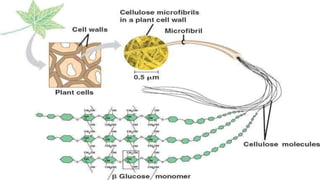
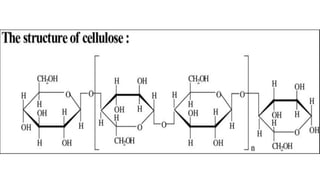
• Cellulose is an organic compound with the formula (C6H10O5)n,
• Polysaccharide carbohydrate consisting of a linear chain of several hundred
to many thousands of β(1→4) linked D-glucose units.
• Cellulose is an important structural component of the primary cell wall of
green plants, many forms of algae and the oomycetes..
History
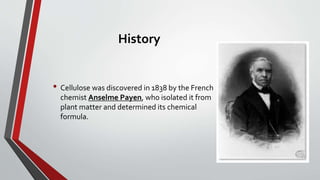
• Cellulose was discovered in 1838 by the French
chemist Anselme Payen, who isolated it from
plant matter and determined its chemical
formula.
Properties
• Cellulose has no taste
• Odorless
• insoluble in water
• Soluble in organic chemicals
• Cellulose is non toxic, biodegradable solid homo-biopolymer.
• At pure state white in color.
• Molecular mass is around 1.44 × 10⁶ to 1.8 × 10⁶ g
• Cross bonding gives the maximum strength
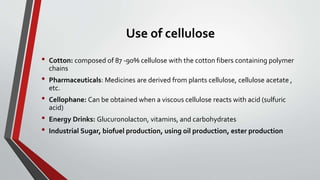
Use of cellulose
• Cotton: composed of 87 -90% cellulose with the cotton fibers containing polymer
chains
• Pharmaceuticals: Medicines are derived from plants cellulose, cellulose acetate ,
etc.
• Cellophane: Can be obtained when a viscous cellulose reacts with acid (sulfuric
acid)
• Energy Drinks: Glucuronolacton, vitamins, and carbohydrates
• Industrial Sugar, biofuel production, using oil production, ester production
CELLOBIOSE
Introduction
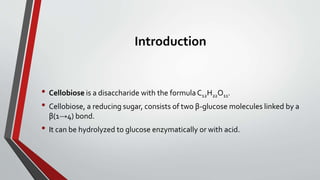
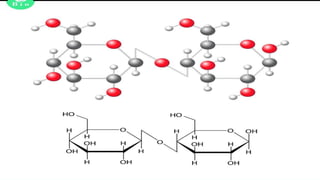
• Cellobiose is a disaccharide with the formulaC12H22O11.
• Cellobiose, a reducing sugar, consists of two β-glucose molecules linked by a
β(1→4) bond.
• It can be hydrolyzed to glucose enzymatically or with acid.
Cont.…..
• It can be obtained by enzymatic or acidic hydrolysis of cellulose and
cellulose rich materials such as cotton, jute, or paper.
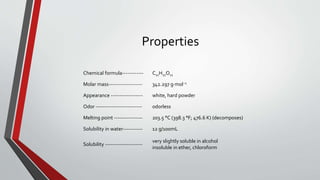
Properties
Chemical formula------------ C12H22O11
Molar mass------------------- 342.297 g·mol−1
Appearance ------------------ white, hard powder
Odor -------------------------- odorless
Melting point ---------------- 203.5 °C (398.3 °F; 476.6 K) (decomposes)
Solubility in water----------- 12 g/100mL
Solubility ---------------------
very slightly soluble in alcohol
insoluble in ether, chloroform
Reference
• www.slideshare.net
• www.google.com
• www.Wikipedia.org/wiki/cellubiose
THE END
THANKS

Cellulose and cellobiose

  • 2.
  • 3.
  • 4.
    Introduction • Cellulose isan organic compound with the formula (C6H10O5)n, • Polysaccharide carbohydrate consisting of a linear chain of several hundred to many thousands of β(1→4) linked D-glucose units. • Cellulose is an important structural component of the primary cell wall of green plants, many forms of algae and the oomycetes..
  • 5.
    History • Cellulose wasdiscovered in 1838 by the French chemist Anselme Payen, who isolated it from plant matter and determined its chemical formula.
  • 6.
    Properties • Cellulose hasno taste • Odorless • insoluble in water • Soluble in organic chemicals • Cellulose is non toxic, biodegradable solid homo-biopolymer. • At pure state white in color. • Molecular mass is around 1.44 × 10⁶ to 1.8 × 10⁶ g • Cross bonding gives the maximum strength
  • 9.
    Use of cellulose •Cotton: composed of 87 -90% cellulose with the cotton fibers containing polymer chains • Pharmaceuticals: Medicines are derived from plants cellulose, cellulose acetate , etc. • Cellophane: Can be obtained when a viscous cellulose reacts with acid (sulfuric acid) • Energy Drinks: Glucuronolacton, vitamins, and carbohydrates • Industrial Sugar, biofuel production, using oil production, ester production
  • 10.
  • 11.
    Introduction • Cellobiose isa disaccharide with the formulaC12H22O11. • Cellobiose, a reducing sugar, consists of two β-glucose molecules linked by a β(1→4) bond. • It can be hydrolyzed to glucose enzymatically or with acid.
  • 12.
    Cont.….. • It canbe obtained by enzymatic or acidic hydrolysis of cellulose and cellulose rich materials such as cotton, jute, or paper.
  • 14.
    Properties Chemical formula------------ C12H22O11 Molarmass------------------- 342.297 g·mol−1 Appearance ------------------ white, hard powder Odor -------------------------- odorless Melting point ---------------- 203.5 °C (398.3 °F; 476.6 K) (decomposes) Solubility in water----------- 12 g/100mL Solubility --------------------- very slightly soluble in alcohol insoluble in ether, chloroform
  • 15.
  • 16.
  • 17.