Sheriff Kubeka
201201410
Cellular respiration
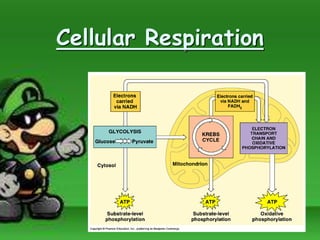
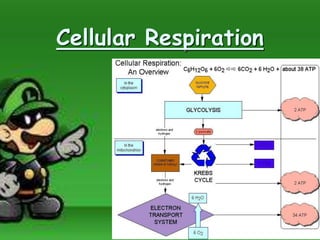
Cellular Respiration
 When we eat, we get energy (glucose and
other sugars)
 Food energy is broken down into usable
energy
 Energy used to bond phosphate
groups to ADP to make ATP
Cellular Respiration
 What is cell respiration???
 Respiration: the process of breaking down
food molecules into usable energy
 THE GOAL:
 Create ATP for cells to use
 Free up electrons—have high energy
Cellular Respiration
2
Cellular Respiration
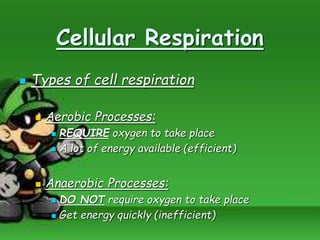
 Types of cell respiration
 Aerobic Processes:
 REQUIRE oxygen to take place
 A lot of energy available (efficient)
 Anaerobic Processes:
 DO NOT require oxygen to take place
 Get energy quickly (inefficient)
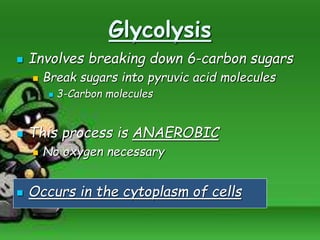
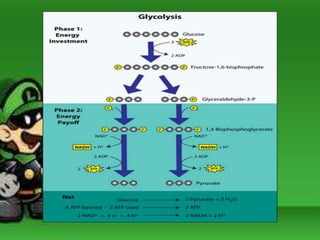
Glycolysis
 Involves breaking down 6-carbon sugars
 Break sugars into pyruvic acid molecules
 3-Carbon molecules
 This process is ANAEROBIC
 No oxygen necessary
 Occurs in the cytoplasm of cells
Glycolysis
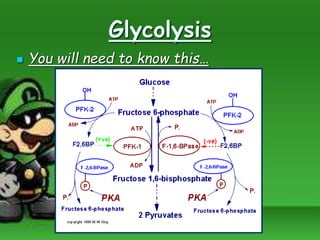
 You will need to know this…
Glycolysis
Just Kidding… 
Glycolysis
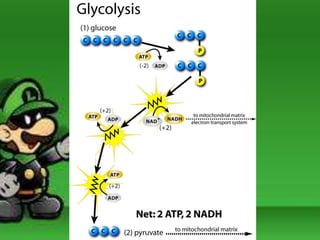
 Glycolysis also creates hydrogen ions
and free electrons
 The whole point of respiration = high energy
 H + ions bond with NAD+ to form
NADH + H +
 NADH carries electrons and H + ions
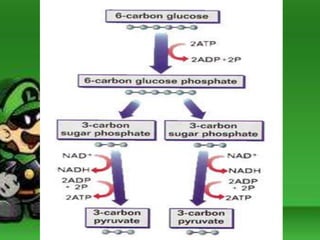
 This process uses 2ATP molecules and
creates 4 ATP molecules
Glycolysis
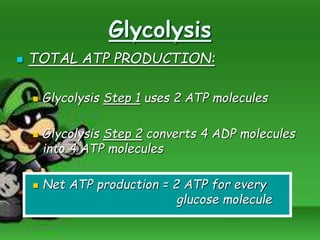
 TOTAL ATP PRODUCTION:
 Glycolysis Step 1 uses 2 ATP molecules
 Glycolysis Step 2 converts 4 ADP molecules
into 4 ATP molecules
 Net ATP production = 2 ATP for every
glucose molecule
Glycolysis
Glycolysis
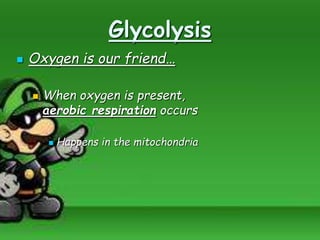
 Oxygen is our friend…
 When oxygen is present,
aerobic respiration occurs
 Happens in the mitochondria
Glycolysis
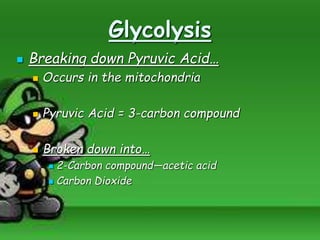
 Breaking down Pyruvic Acid…
 Occurs in the mitochondria
 Pyruvic Acid = 3-carbon compound
 Broken down into…
 2-Carbon compound—acetic acid
 Carbon Dioxide
Glycolysis
 Intermediate Step in Glycolysis
 2-Carbon Compound—Acetic Acid
 Combined with coenzyme A (CoA)
 Forms compound called acetyl-CoA
 This is only an intermediate step—have to
move pyruvic acid into Krebs Cycle
Glycolysis
Glycolysis =
2 ATP
Citric Acid (Krebs) Cycle
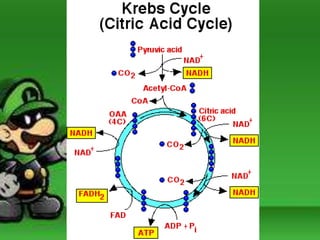
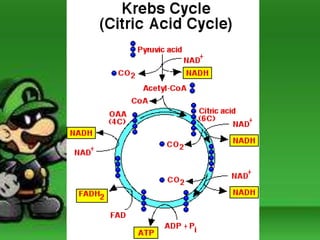
 Produces more ATP and releases more
electrons
 Electrons picked up by NAD + and FAD
 Organic carrier molecules
 Occurs inside mitochondria
 Mitochondrial Matrix
Citric Acid (Krebs) Cycle
 Acetyl CoA combines with a 4-carbon
molecule to form a 6-carbon molecule
 Citric Acid
 Citric Acid broken down into a 5-carbon
compound
 NAD + removes electrons (NADH + H +)
 CO2 released
Citric Acid (Krebs) Cycle
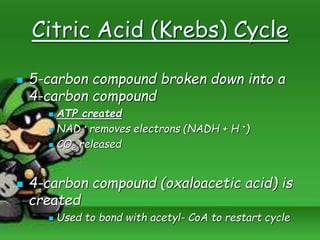
 5-carbon compound broken down into a
4-carbon compound
 ATP created
 NAD + removes electrons (NADH + H +)
 CO2 released
 4-carbon compound (oxaloacetic acid) is
created
 Used to bond with acetyl- CoA to restart cycle
Citric Acid (Krebs) Cycle
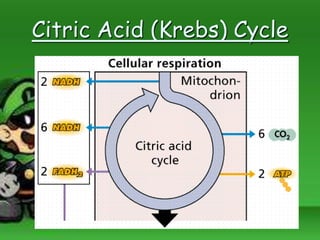
Citric Acid Cycle =
2 ATP
Cellular respiration
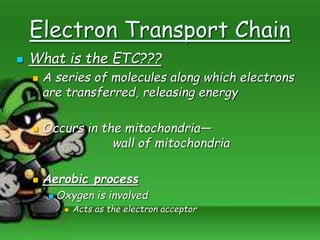
Electron Transport Chain
 What is the ETC???
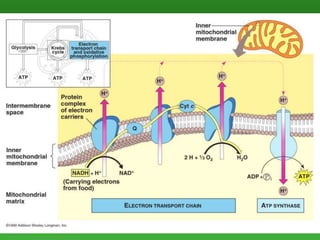
 A series of molecules along which electrons
are transferred, releasing energy
 Occurs in the mitochondria—
wall of mitochondria
 Aerobic process
 Oxygen is involved
 Acts as the electron acceptor
Electron Transport Chain
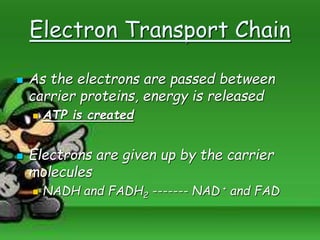
 As the electrons are passed between
carrier proteins, energy is released
 ATP is created
 Electrons are given up by the carrier
molecules
 NADH and FADH2 ------- NAD + and FAD
Electron Transport Chain
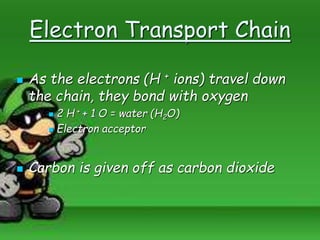
 As the electrons (H + ions) travel down
the chain, they bond with oxygen
 2 H + + 1 O = water (H2O)
 Electron acceptor
 Carbon is given off as carbon dioxide
Electron Transport Chain
Glycolysis
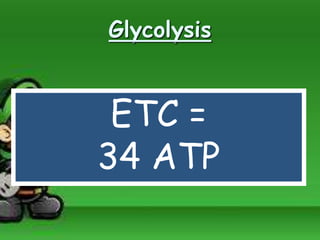
ETC =
34 ATP
Electron Transport Chain
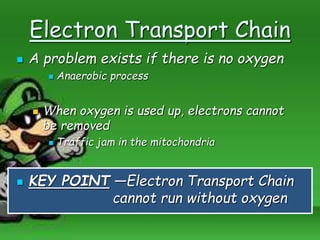
 A problem exists if there is no oxygen
 Anaerobic process
 When oxygen is used up, electrons cannot
be removed
 Traffic jam in the mitochondria
 KEY POINT —Electron Transport Chain
cannot run without oxygen
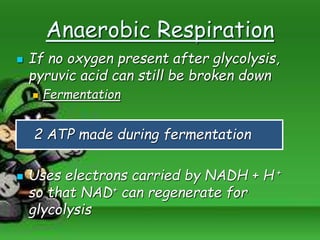
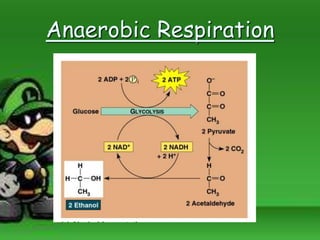
Anaerobic Respiration
 If no oxygen present after glycolysis,
pyruvic acid can still be broken down
 Fermentation
2 ATP made during fermentation
 Uses electrons carried by NADH + H +
so that NAD+ can regenerate for
glycolysis
Anaerobic Respiration
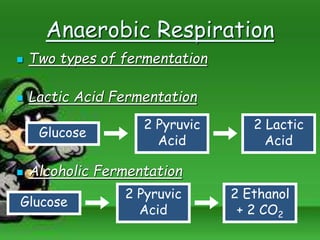
 Two types of fermentation
 Lactic Acid Fermentation
 Alcoholic Fermentation
Glucose
2 Pyruvic
Acid
2 Lactic
Acid
Glucose
2 Pyruvic
Acid
2 Ethanol
+ 2 CO2
Anaerobic Respiration
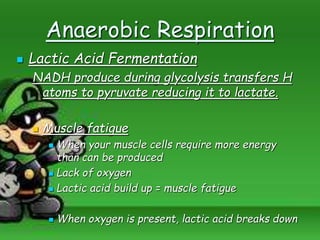
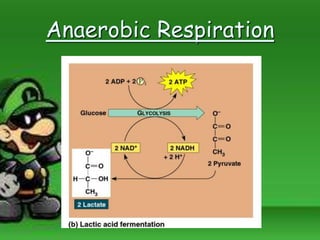
 Lactic Acid Fermentation
NADH produce during glycolysis transfers H
atoms to pyruvate reducing it to lactate.
 Muscle fatigue
 When your muscle cells require more energy
than can be produced
 Lack of oxygen
 Lactic acid build up = muscle fatigue
 When oxygen is present, lactic acid breaks down
Anaerobic Respiration
 Alcohol Fermentation
 Occurs in bacteria, plants and most animals
 Can you think of a bacteria that is used for
fermentation???
 Pyruvic Acid is converted into ethanol and
carbon dioxide
 Dacrboxylate pyruvate , releasing CO2 and
forming 2-C compound called
acetaldehyde.
 NADH produced during glycolysis transfers
hydrogen atoms to acetaldehyde, reducing
it to ethyl alcohol.
 Basis for the production of beer, wine, and
other alcoholic beverages.
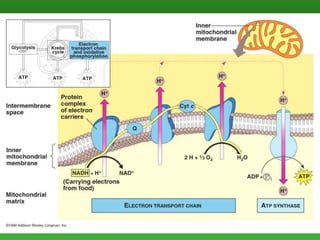
Electron Transport chain
 Occurs in the inner membrane of the
mitochondrion.
 Energized electrons are carried by NADH
and FADH2 to the top of the chain.
 The electrons are passed from protein to
protein within the membrane, slowly
releasing their energy in steps. Some of
that energy is used directly to form ATP.
Anaerobic Respiration
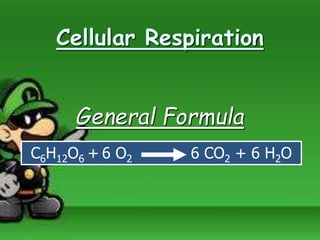
Cellular Respiration
General Formula
C6H12O6 + 6 O2 6 CO2 + 6 H2O
Reference list
o Durana. Y . (2011) . Cellular respiration.
http://www.slideshare.net/yang286/cellula
r-respiration-9394052

Sheriff kubeka

  • 1.
  • 2.
    Cellular Respiration  Whenwe eat, we get energy (glucose and other sugars)  Food energy is broken down into usable energy  Energy used to bond phosphate groups to ADP to make ATP
  • 3.
    Cellular Respiration  Whatis cell respiration???  Respiration: the process of breaking down food molecules into usable energy  THE GOAL:  Create ATP for cells to use  Free up electrons—have high energy
  • 4.
  • 5.
  • 6.
    Cellular Respiration  Typesof cell respiration  Aerobic Processes:  REQUIRE oxygen to take place  A lot of energy available (efficient)  Anaerobic Processes:  DO NOT require oxygen to take place  Get energy quickly (inefficient)
  • 7.
    Glycolysis  Involves breakingdown 6-carbon sugars  Break sugars into pyruvic acid molecules  3-Carbon molecules  This process is ANAEROBIC  No oxygen necessary  Occurs in the cytoplasm of cells
  • 8.
    Glycolysis  You willneed to know this…
  • 9.
  • 10.
    Glycolysis  Glycolysis alsocreates hydrogen ions and free electrons  The whole point of respiration = high energy  H + ions bond with NAD+ to form NADH + H +  NADH carries electrons and H + ions  This process uses 2ATP molecules and creates 4 ATP molecules
  • 12.
    Glycolysis  TOTAL ATPPRODUCTION:  Glycolysis Step 1 uses 2 ATP molecules  Glycolysis Step 2 converts 4 ADP molecules into 4 ATP molecules  Net ATP production = 2 ATP for every glucose molecule
  • 13.
  • 14.
    Glycolysis  Oxygen isour friend…  When oxygen is present, aerobic respiration occurs  Happens in the mitochondria
  • 15.
    Glycolysis  Breaking downPyruvic Acid…  Occurs in the mitochondria  Pyruvic Acid = 3-carbon compound  Broken down into…  2-Carbon compound—acetic acid  Carbon Dioxide
  • 16.
    Glycolysis  Intermediate Stepin Glycolysis  2-Carbon Compound—Acetic Acid  Combined with coenzyme A (CoA)  Forms compound called acetyl-CoA  This is only an intermediate step—have to move pyruvic acid into Krebs Cycle
  • 17.
  • 18.
    Citric Acid (Krebs)Cycle  Produces more ATP and releases more electrons  Electrons picked up by NAD + and FAD  Organic carrier molecules  Occurs inside mitochondria  Mitochondrial Matrix
  • 19.
    Citric Acid (Krebs)Cycle  Acetyl CoA combines with a 4-carbon molecule to form a 6-carbon molecule  Citric Acid  Citric Acid broken down into a 5-carbon compound  NAD + removes electrons (NADH + H +)  CO2 released
  • 21.
    Citric Acid (Krebs)Cycle  5-carbon compound broken down into a 4-carbon compound  ATP created  NAD + removes electrons (NADH + H +)  CO2 released  4-carbon compound (oxaloacetic acid) is created  Used to bond with acetyl- CoA to restart cycle
  • 23.
  • 24.
    Citric Acid Cycle= 2 ATP Cellular respiration
  • 25.
    Electron Transport Chain What is the ETC???  A series of molecules along which electrons are transferred, releasing energy  Occurs in the mitochondria— wall of mitochondria  Aerobic process  Oxygen is involved  Acts as the electron acceptor
  • 26.
    Electron Transport Chain As the electrons are passed between carrier proteins, energy is released  ATP is created  Electrons are given up by the carrier molecules  NADH and FADH2 ------- NAD + and FAD
  • 27.
  • 28.
    Electron Transport Chain As the electrons (H + ions) travel down the chain, they bond with oxygen  2 H + + 1 O = water (H2O)  Electron acceptor  Carbon is given off as carbon dioxide
  • 29.
  • 30.
  • 31.
    Electron Transport Chain A problem exists if there is no oxygen  Anaerobic process  When oxygen is used up, electrons cannot be removed  Traffic jam in the mitochondria  KEY POINT —Electron Transport Chain cannot run without oxygen
  • 32.
    Anaerobic Respiration  Ifno oxygen present after glycolysis, pyruvic acid can still be broken down  Fermentation 2 ATP made during fermentation  Uses electrons carried by NADH + H + so that NAD+ can regenerate for glycolysis
  • 33.
    Anaerobic Respiration  Twotypes of fermentation  Lactic Acid Fermentation  Alcoholic Fermentation Glucose 2 Pyruvic Acid 2 Lactic Acid Glucose 2 Pyruvic Acid 2 Ethanol + 2 CO2
  • 34.
    Anaerobic Respiration  LacticAcid Fermentation NADH produce during glycolysis transfers H atoms to pyruvate reducing it to lactate.  Muscle fatigue  When your muscle cells require more energy than can be produced  Lack of oxygen  Lactic acid build up = muscle fatigue  When oxygen is present, lactic acid breaks down
  • 35.
  • 37.
    Anaerobic Respiration  AlcoholFermentation  Occurs in bacteria, plants and most animals  Can you think of a bacteria that is used for fermentation???  Pyruvic Acid is converted into ethanol and carbon dioxide
  • 38.
     Dacrboxylate pyruvate, releasing CO2 and forming 2-C compound called acetaldehyde.  NADH produced during glycolysis transfers hydrogen atoms to acetaldehyde, reducing it to ethyl alcohol.  Basis for the production of beer, wine, and other alcoholic beverages.
  • 39.
    Electron Transport chain Occurs in the inner membrane of the mitochondrion.  Energized electrons are carried by NADH and FADH2 to the top of the chain.  The electrons are passed from protein to protein within the membrane, slowly releasing their energy in steps. Some of that energy is used directly to form ATP.
  • 40.
  • 41.
  • 42.
    Reference list o Durana.Y . (2011) . Cellular respiration. http://www.slideshare.net/yang286/cellula r-respiration-9394052