Cell Theory
1. All organisms are made up
of one or more cells.
2. The cell is the basic unit of
all life.
3. All cells come from exisiting
cells.
What does a cell look
like?
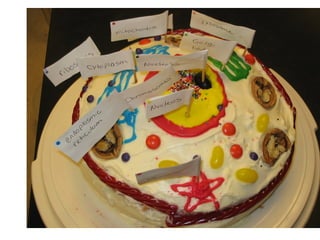
Draw and label what you can
remember about a cell.
There are no wrong or right answers
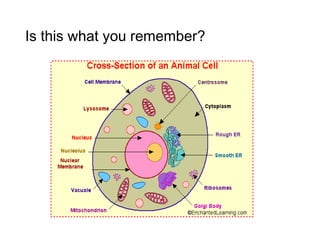
Is this what you remember?
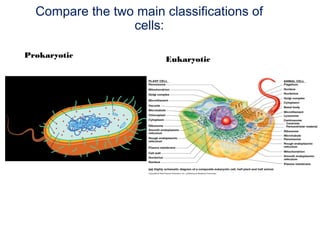
Compare the two main classifications of
cells:
Prokaryotic
Eukaryotic
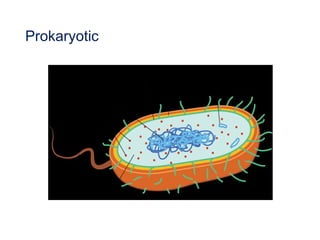
Prokaryotic
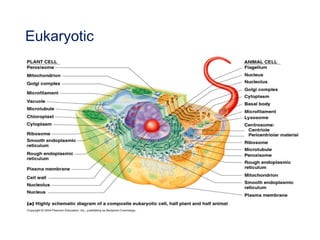
Eukaryotic
The Two Types
of Cells
Prokaryotic and Eukaryotic
Today’s Lesson Focuses On:
•Prokaryotic Cells
•Eukaryotic Cells
•The differences between prokaryotic
and eukaryotic cells
•Organelles and their functions
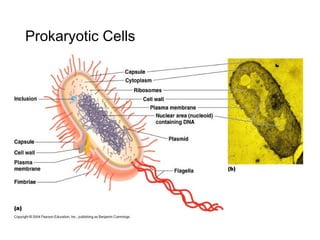
Prokaryotic Cells
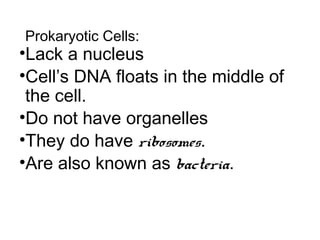
Prokaryotic Cells:
•Lack a nucleus
•Cell’s DNA floats in the middle of
the cell.
•Do not have organelles
•They do have ribosomes.
•Are also known as bacteria.
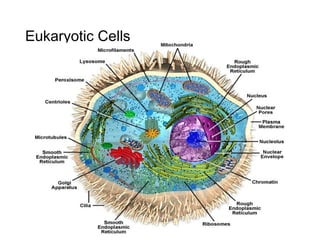
Eukaryotic Cells
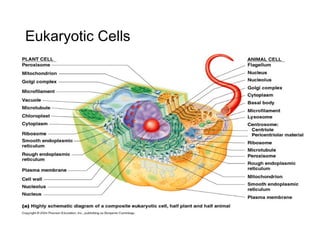
Eukaryotic Cells
Eukaryotic Cells:
•10 time larger than prokaryotic cells
•Include: plant, animal, fungi, and protists
•Have a nucleus and many other
membrane-covered organelles
•DNA is stored in the nucleus of the cell
•The DNA molecules are linear
•All eukaryotic cells have a cell membrane
•Some have a cell wall
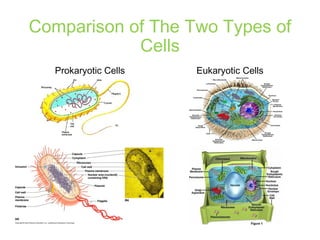
Comparison of The Two Types of
Cells
Prokaryotic Cells Eukaryotic Cells
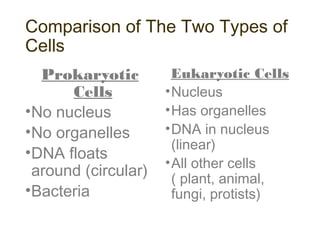
Comparison of The Two Types of
Cells
Prokaryotic
Cells
•No nucleus
•No organelles
•DNA floats
around (circular)
•Bacteria
Eukaryotic Cells
•Nucleus
•Has organelles
•DNA in nucleus
(linear)
•All other cells
( plant, animal,
fungi, protists)
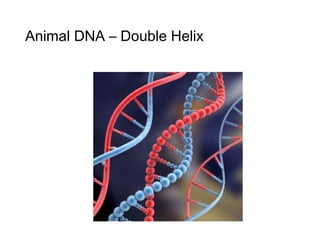
Animal DNA – Double Helix
Eukaryotic Cells:
The Inside Story
Eukaryotic Cells
What is an organelle?
An organelle is a tiny organ for the cell
They are structures that allow the cell to
live, grow, and reproduce.
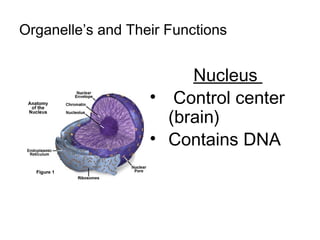
Organelle’s and Their Functions
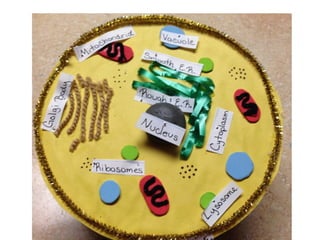
Nucleus
• Control center
(brain)
• Contains DNA
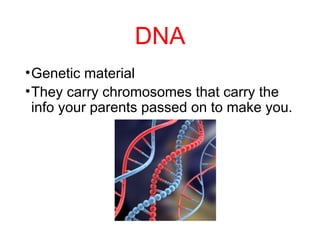
DNA
•Genetic material
•They carry chromosomes that carry the
info your parents passed on to make you.
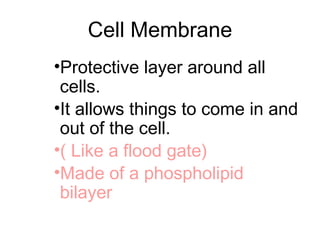
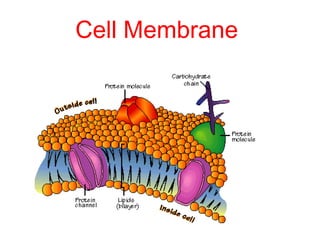
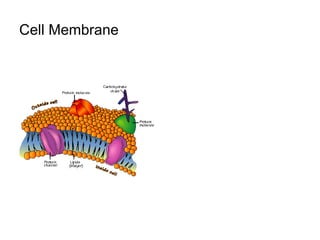
Cell Membrane
•Protective layer around all
cells.
•It allows things to come in and
out of the cell.
•( Like a flood gate)
•Made of a phospholipid
bilayer
Cell Membrane
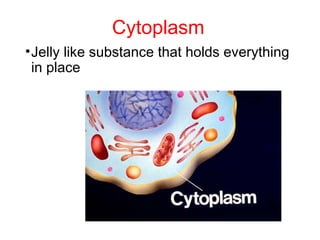
Cytoplasm
•Jelly like substance that holds everything
in place
How do things get in
and out of the cell?
Cell Membrane
•Protective layer
around all cells.
•It allows things to
come in and out of the
cell.
•( Like a flood gate)
Warm Up – Answer only is fine
1. All organisms are made up of one or more ______.
2. The cell is the basic unit of all _________.
3. All cells come from ____________ cells.
4. A ____ _____ is a protective outer layer that lets
things in and out.
5. A ______ is a small tiny organ that has a specific
function for the cell.
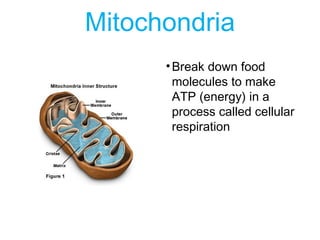
Mitochondria
•Break down food
molecules to make
ATP (energy) in a
process called cellular
respiration
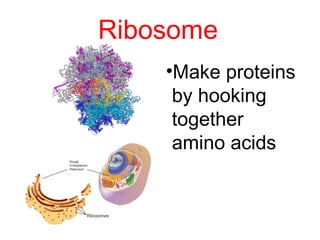
Ribosome
•Make proteins
by hooking
together
amino acids
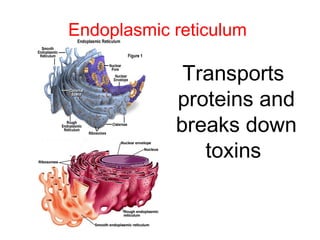
Endoplasmic reticulum
Transports
proteins and
breaks down
toxins
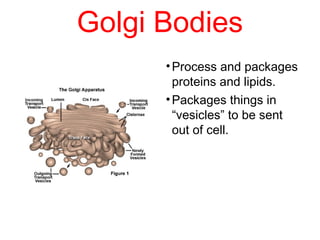
Golgi Bodies
•Process and packages
proteins and lipids.
•Packages things in
“vesicles” to be sent
out of cell.
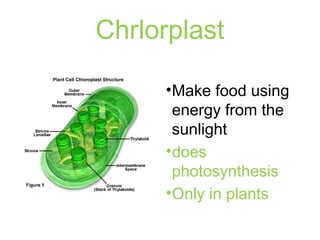
Chrlorplast
•Make food using
energy from the
sunlight
•does
photosynthesis
•Only in plants
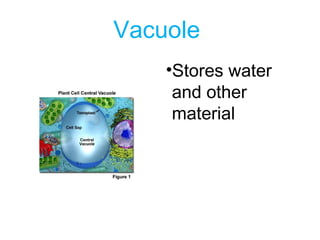
Vacuole
•Stores water
and other
material
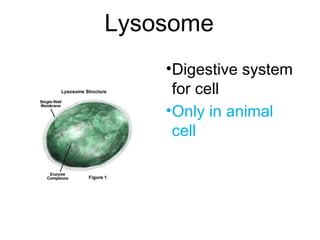
Lysosome
•Digestive system
for cell
•Only in animal
cell
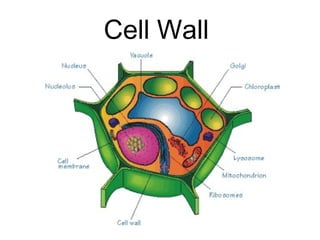
Cell Wall
.
Cell Wall
•Only found in plant cells and
bacteria (prokaryotic cells).
•They are tough, outer
coverings that protect the cell
and give it shape
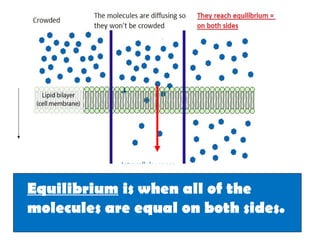
Equilibrium is when all of the
molecules are equal on both sides.
At Equilibrium…
•Particles
enter and
leave the cell
at the same
rate.
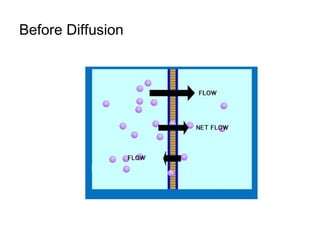
Before Diffusion
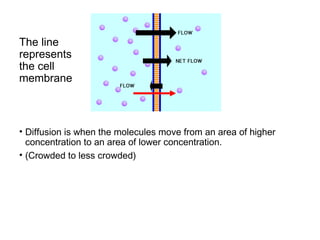
The line
represents
the cell
membrane
• Diffusion is when the molecules move from an area of higher
concentration to an area of lower concentration.
• (Crowded to less crowded)
Diffusion Animations
• http://highered.mheducation.com/sites/0072495855/student_vie
w0/chapter2/animation__how_diffusion_works.html
http://esminfo.prenhall.com/science/BiologyArchive/lectureanim
ations/closerlook/diffusion.html
http://www.stolaf.edu/people/giannini/flashanimat/transport/diffu
sion.swf
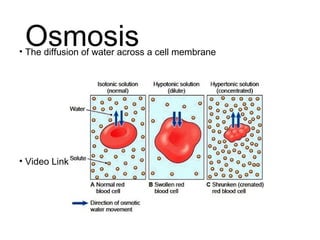
Osmosis• The diffusion of water across a cell membrane
• Video Link
Cell Membrane
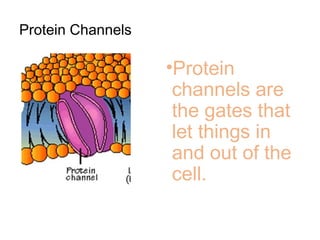
Protein Channels
•Protein
channels are
the gates that
let things in
and out of the
cell.
The cell membrane is selectively
permeable.
=
It allows some things to enter or leave the
cell.
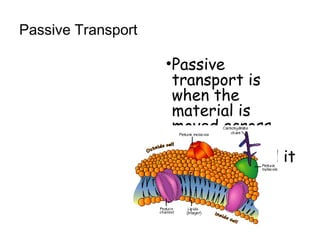
Passive Transport
•Passive
transport is
when the
material is
moved across
the cell
membrane and it
does not use
energy.
Active Transport
•Is movement of
materials across
the cell
membrane that
does use energy.
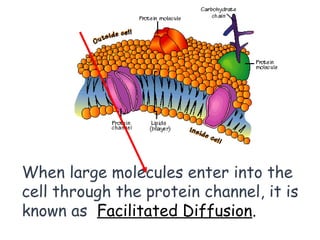
When large molecules enter into the
cell through the protein channel, it is
known as Facilitated Diffusion.
Facilitated Diffusion
• http://highered.mheducation.com/sites/0072495855/student_vie
w0/chapter2/animation__how_facilitated_diffusion_works.html
http://bcs.whfreeman.com/thelifewire/content/chp05/0502001.ht
ml
Active Transport
• http://highered.mheducation.com/sites/0072495855/student_vie
w0/chapter2/animation__how_the_sodium_potassium_pump_w
orks.html
http://sites.sinauer.com/neuroscience5e/animations04.02.html
What is a cell membrane?
• It is a selectively permeable
covering that allows some
materials to come into and out
of the cell.
What is it when the molecules move
from an area of higher concentration to
an area of lower concentration.
(Crowded to less crowded)
• Diffusion
What is it when the molecules on enter
and exit the cell at the same rate and
they are “equal” on both sides of the
membrane?
• Equilibrium
What is the diffusion of water called?
• Osmosis
A very large molecule needs to enter
cell. How can it enter the cell through
the cell membrane? What is this
process called?
• It can enter through the protein channel. This is called Facilitated
Diffusion.
What type of transportation across the
cell membrane does not require
energy?
• Passive transport
What type of transportation across the
cell membrane uses energy?
• Active Transport
What happens if the cell
needs something to come in
but it’s too big to come
through the protein channel?
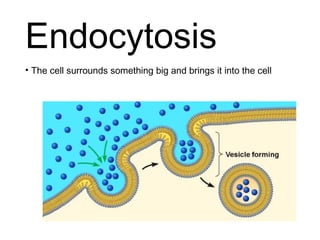
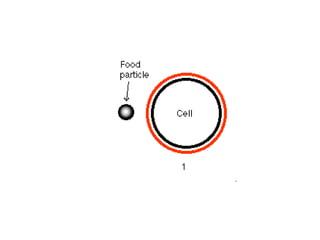
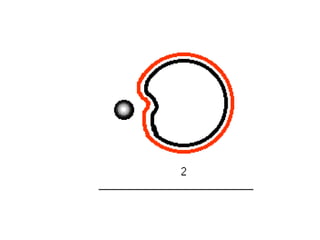
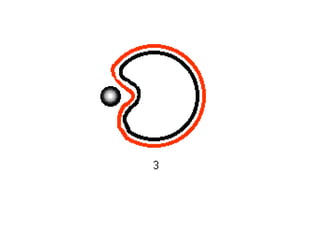
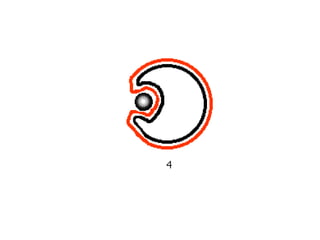
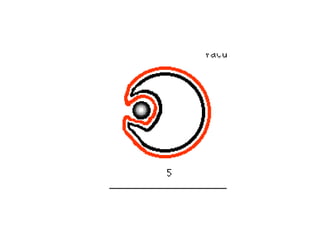
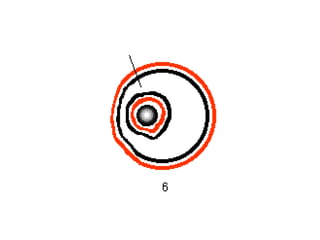
Endocytosis
• The cell surrounds something big and brings it into the cell
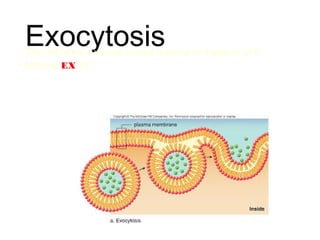
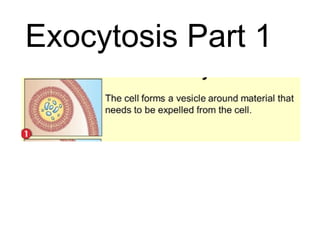
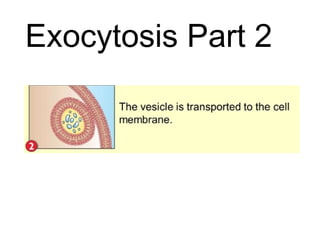
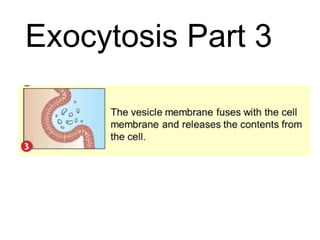
Exocytosis• The cell forms a vesicle around material and gets rid of it
• Material EXITS
Exocytosis Part 1
Exocytosis Part 2
Exocytosis Part 3
Animations:
• Animation 1
• Video 1
• Diffusion
• Osmosis
• Protein Channel
• Facilitated Diffusion
• Active Transport
• Passive Transport
• Equilibrium
• Exocytosis
• Endocytosis
• Selectively Permeable

Cells powerpoint