Biomes
Tropical Rain
Forest
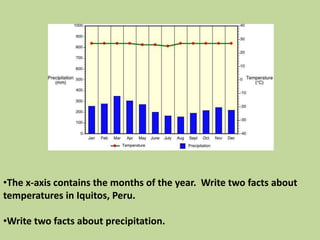
•The x-axis contains the months of the year. Write two facts about
temperatures in Iquitos, Peru.
•Write two facts about precipitation.
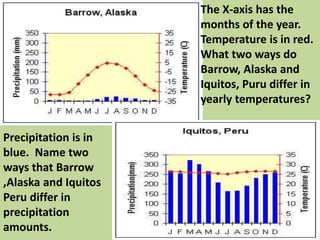
The X-axis has the
months of the year.
Temperature is in red.
What two ways do
Barrow, Alaska and
Iquitos, Puru differ in
yearly temperatures?
Precipitation is in
blue. Name two
ways that Barrow
,Alaska and Iquitos
Peru differ in
precipitation
amounts.
Rainforest Facts
• Warm temperatures, wet weather, and
abundant plant growth
• Warm because they are located near
the equator
Why Diversity???
• Since temperatures are constantly warm in
the rainforest, animals can spend their time
reproducing.. They can reproduce more often
• This explains how animals and plants have
gotten to be so diverse.
Characteristics
• Average temperature is 77˚F
– ranges from 68-93 F
• Receives 200-600 cm of precipitation
per year!
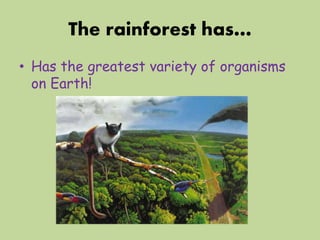
The rainforest has…
• Has the greatest variety of organisms
on Earth!
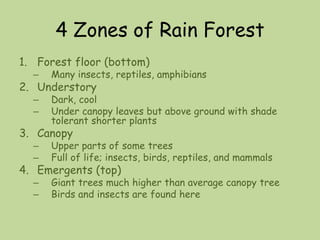
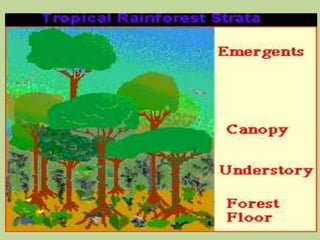
4 Zones of Rain Forest
1. Forest floor (bottom)
– Many insects, reptiles, amphibians
2. Understory
– Dark, cool
– Under canopy leaves but above ground with shade
tolerant shorter plants
3. Canopy
– Upper parts of some trees
– Full of life; insects, birds, reptiles, and mammals
4. Emergents (top)
– Giant trees much higher than average canopy tree
– Birds and insects are found here
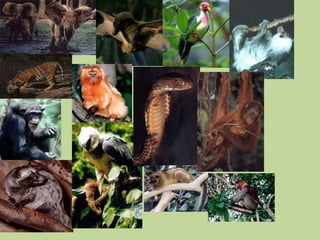
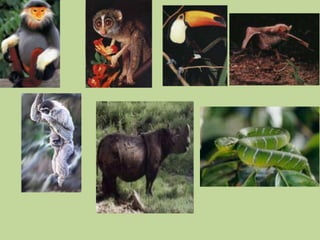
Animals
• Africa Forest Elephant
• Bengal Tiger
• Chimpanzee
• Palm Civet
• Dawn Bat
• Golden Lion Tamarin
• Harpy Eagle
• Jambu Fruit Dove
• King Cobra
• Kinkajou
• Linn's Sloth
• Orangutan
• Proboscis Monkey
• Red-shanked Douc
Langur
• Silvery Gibbon
• Slender Loris
• Sumatran Rhinoceros
• Toco Toucan
• Vampire Bat
• Wagler's Pit Viper
Adaptations
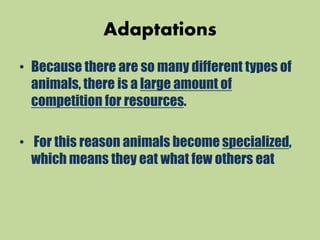
• Because there are so many different types of
animals, there is a large amount of
competition for resources.
• For this reason animals become specialized,
which means they eat what few others eat
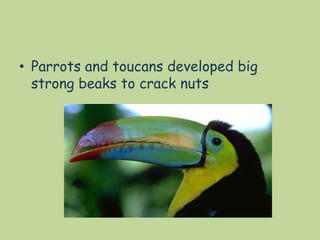
• Parrots and toucans developed big
strong beaks to crack nuts
Animal Adaptations
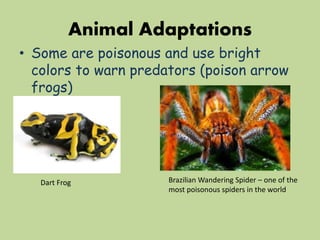
• Some are poisonous and use bright
colors to warn predators (poison arrow
frogs)
Dart Frog Brazilian Wandering Spider – one of the
most poisonous spiders in the world
Animal Adaptations
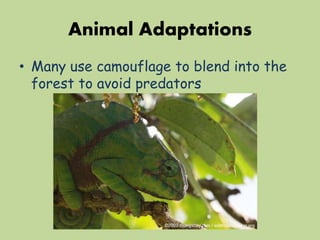
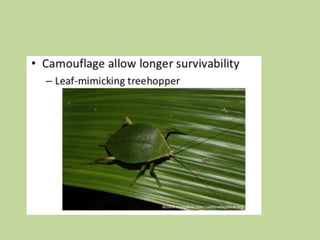
• Many use camouflage to blend into the
forest to avoid predators
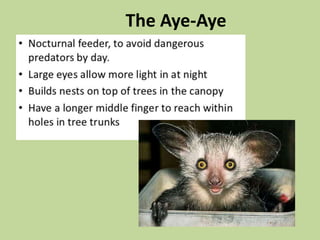
The Aye-Aye
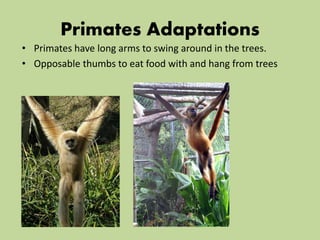
Primates Adaptations
• Primates have long arms to swing around in the trees.
• Opposable thumbs to eat food with and hang from trees
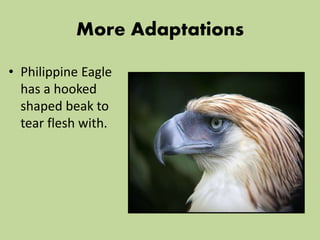
More Adaptations
• Philippine Eagle
has a hooked
shaped beak to
tear flesh with.
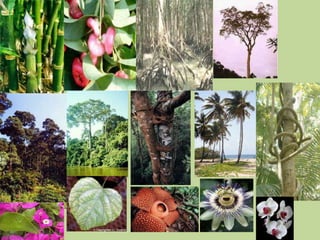
Plants
• Bengal Bamboo
• Durian
• Jambu
• Rafflesia
• Kapok Tree
• Mangrove Forests
• Strangler Figs
• Tualang
• Passionflower
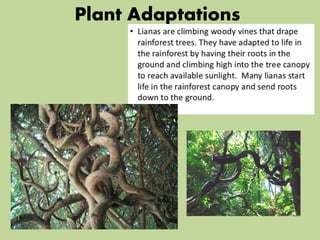
• Liana
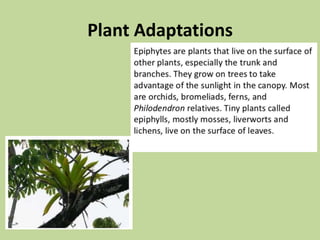
• Orchid
• Bougainvillea
• Curare
• Coconut Tree
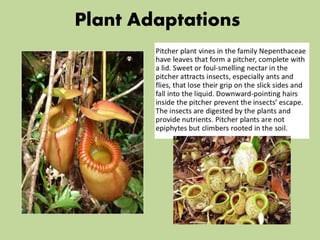
Plant Adaptations
• There are more than 1400 varieties of
plants in the rainforest that can be used in
cancer treatment
• Leaves of trees have drip tips or grooves
to allow them to shed water quickly so
weight of water does not break branches
• Dark understory leaves are very large to
trap what little sunlight they can get
• Some leaf stalks turn toward the
movement of the sun
Plant Adaptations
Plant Adaptations
Plant Adaptations
Plant Adaptations
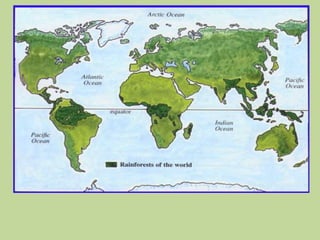
Geographic Location
• Located near equator
• South America (Amazon
Rainforest), Africa,
Southern Asia, Eastern
Australia
Tropical rain forest_biome no owl

Tropical rain forest_biome no owl

  • 1.
  • 2.
    •The x-axis containsthe months of the year. Write two facts about temperatures in Iquitos, Peru. •Write two facts about precipitation.
  • 3.
    The X-axis hasthe months of the year. Temperature is in red. What two ways do Barrow, Alaska and Iquitos, Puru differ in yearly temperatures? Precipitation is in blue. Name two ways that Barrow ,Alaska and Iquitos Peru differ in precipitation amounts.
  • 4.
    Rainforest Facts • Warmtemperatures, wet weather, and abundant plant growth • Warm because they are located near the equator
  • 5.
    Why Diversity??? • Sincetemperatures are constantly warm in the rainforest, animals can spend their time reproducing.. They can reproduce more often • This explains how animals and plants have gotten to be so diverse.
  • 6.
    Characteristics • Average temperatureis 77˚F – ranges from 68-93 F • Receives 200-600 cm of precipitation per year!
  • 7.
    The rainforest has… •Has the greatest variety of organisms on Earth!
  • 8.
    4 Zones ofRain Forest 1. Forest floor (bottom) – Many insects, reptiles, amphibians 2. Understory – Dark, cool – Under canopy leaves but above ground with shade tolerant shorter plants 3. Canopy – Upper parts of some trees – Full of life; insects, birds, reptiles, and mammals 4. Emergents (top) – Giant trees much higher than average canopy tree – Birds and insects are found here
  • 10.
    Animals • Africa ForestElephant • Bengal Tiger • Chimpanzee • Palm Civet • Dawn Bat • Golden Lion Tamarin • Harpy Eagle • Jambu Fruit Dove • King Cobra • Kinkajou • Linn's Sloth • Orangutan • Proboscis Monkey • Red-shanked Douc Langur • Silvery Gibbon • Slender Loris • Sumatran Rhinoceros • Toco Toucan • Vampire Bat • Wagler's Pit Viper
  • 13.
    Adaptations • Because thereare so many different types of animals, there is a large amount of competition for resources. • For this reason animals become specialized, which means they eat what few others eat
  • 14.
    • Parrots andtoucans developed big strong beaks to crack nuts
  • 15.
    Animal Adaptations • Someare poisonous and use bright colors to warn predators (poison arrow frogs) Dart Frog Brazilian Wandering Spider – one of the most poisonous spiders in the world
  • 16.
    Animal Adaptations • Manyuse camouflage to blend into the forest to avoid predators
  • 19.
  • 20.
    Primates Adaptations • Primateshave long arms to swing around in the trees. • Opposable thumbs to eat food with and hang from trees
  • 21.
    More Adaptations • PhilippineEagle has a hooked shaped beak to tear flesh with.
  • 22.
    Plants • Bengal Bamboo •Durian • Jambu • Rafflesia • Kapok Tree • Mangrove Forests • Strangler Figs • Tualang • Passionflower • Liana • Orchid • Bougainvillea • Curare • Coconut Tree
  • 24.
    Plant Adaptations • Thereare more than 1400 varieties of plants in the rainforest that can be used in cancer treatment • Leaves of trees have drip tips or grooves to allow them to shed water quickly so weight of water does not break branches • Dark understory leaves are very large to trap what little sunlight they can get • Some leaf stalks turn toward the movement of the sun
  • 25.
  • 26.
  • 27.
  • 28.
  • 29.
    Geographic Location • Locatednear equator • South America (Amazon Rainforest), Africa, Southern Asia, Eastern Australia