03/25/14
1
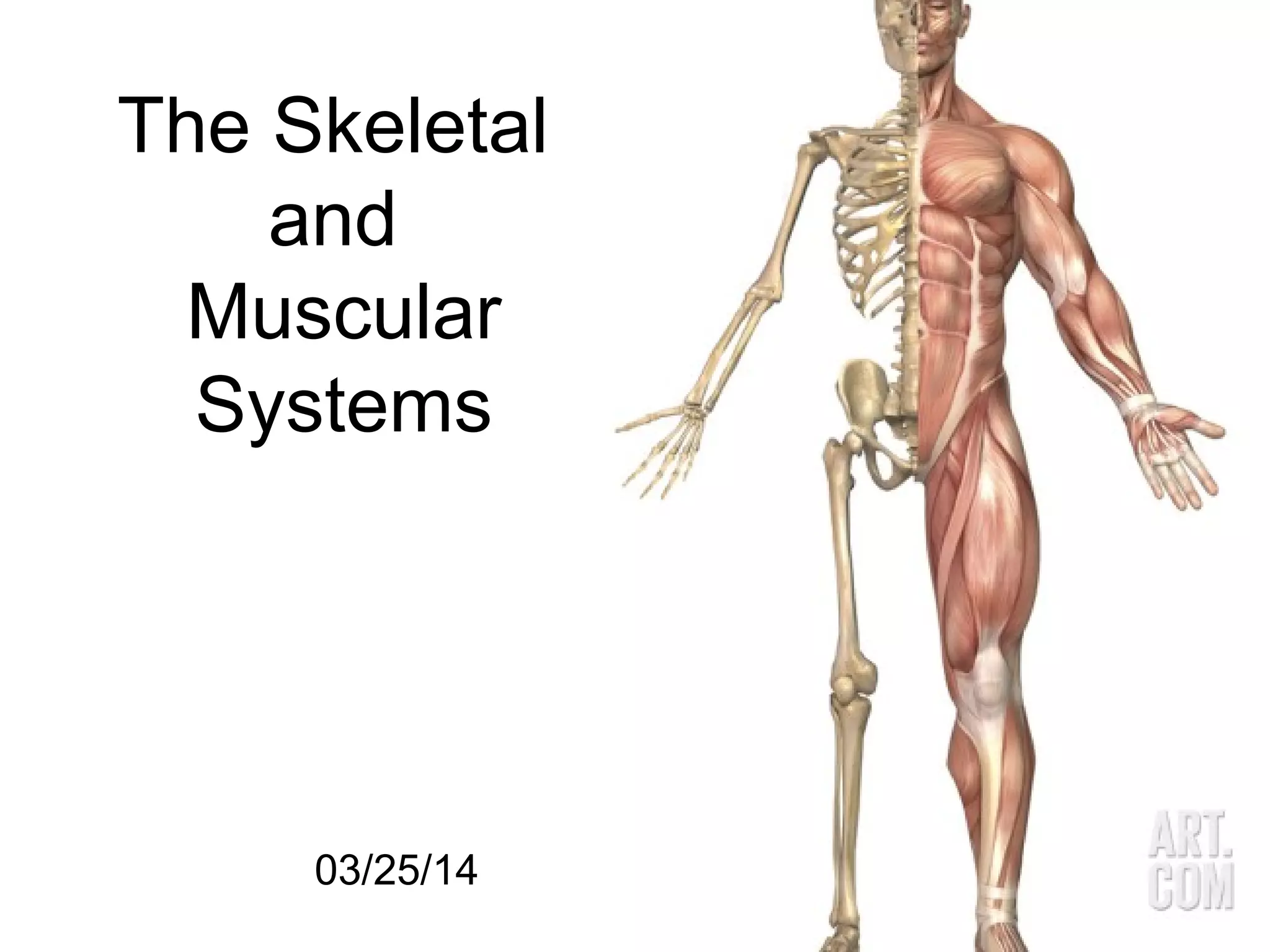
The Skeletal
and
Muscular
Systems
Today’s Warm-Up
Skeletal facts…
1. How many bones are in the average adult
human body?
2. How many bones does a baby have?
3. What/where is the longest bone on the body?
4. What/where is the smallest bone in the body?
206
Over 300!
The “femur” or thighbone
3 bones in the middle ear- stirrup, anvil & hammer
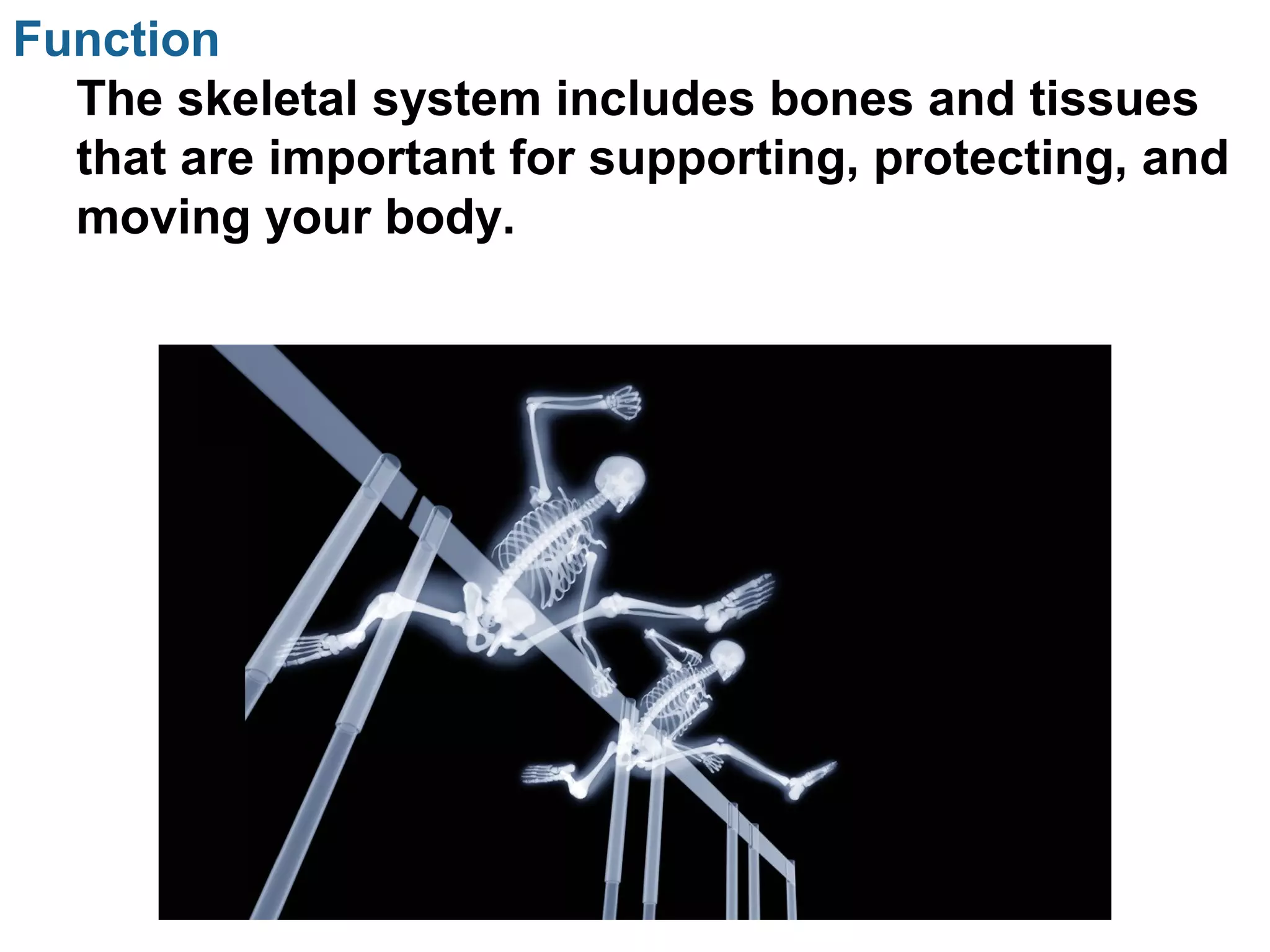
Function
The skeletal system includes bones and tissues
that are important for supporting, protecting, and
moving your body.
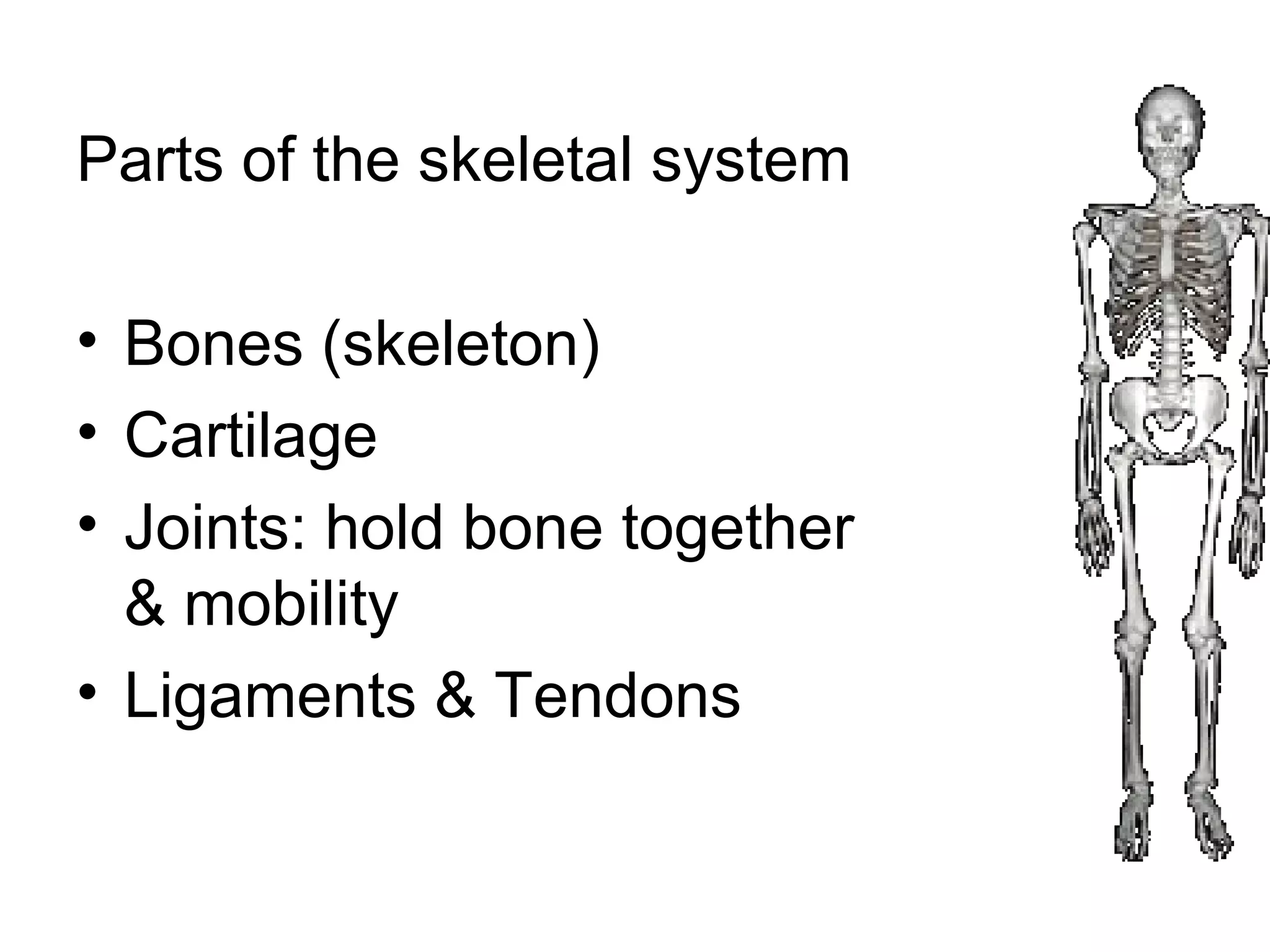
Parts of the skeletal system
• Bones (skeleton)
• Cartilage
• Joints: hold bone together
& mobility
• Ligaments & Tendons
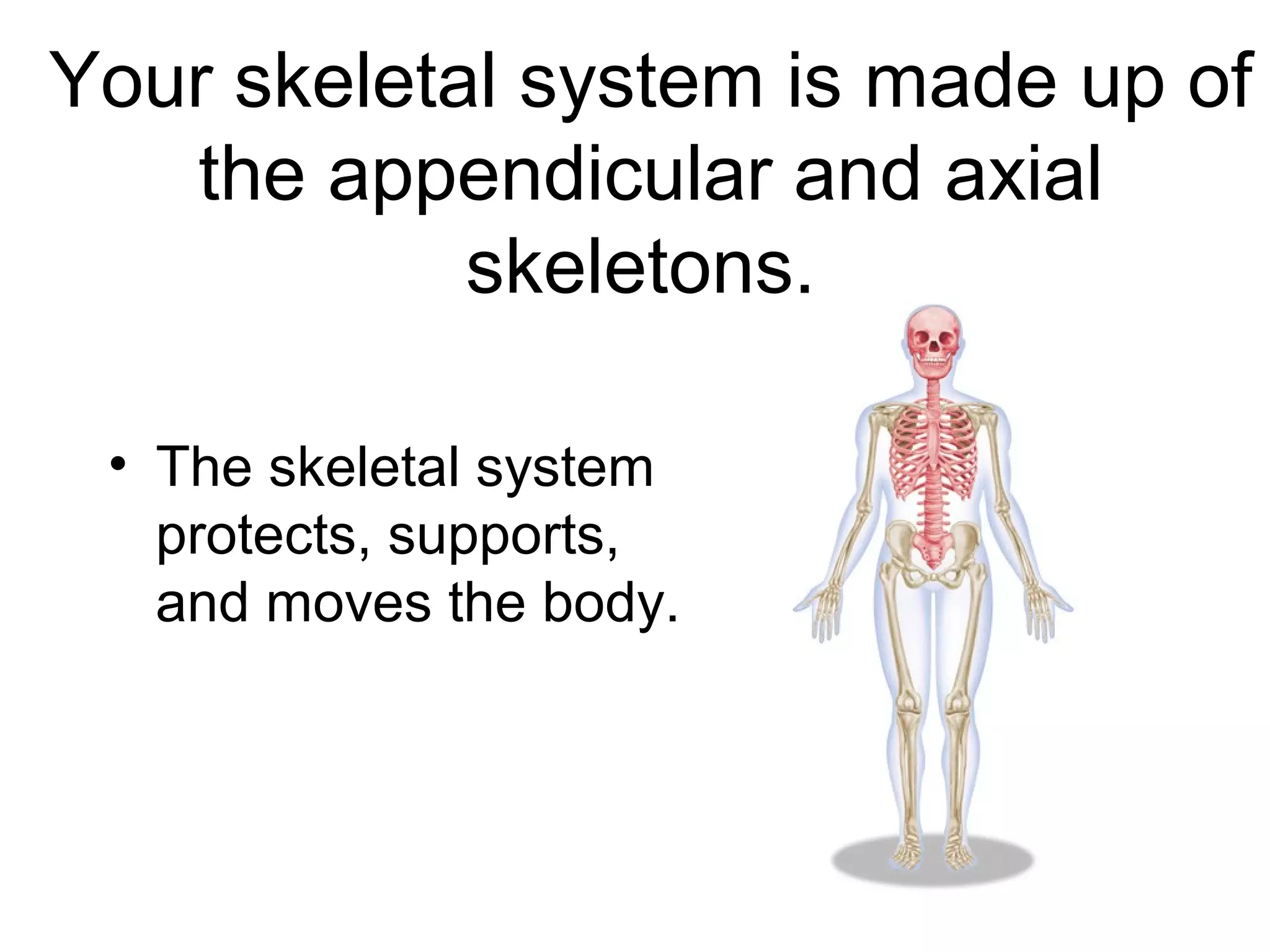
Your skeletal system is made up of
the appendicular and axial
skeletons.
• The skeletal system
protects, supports,
and moves the body.
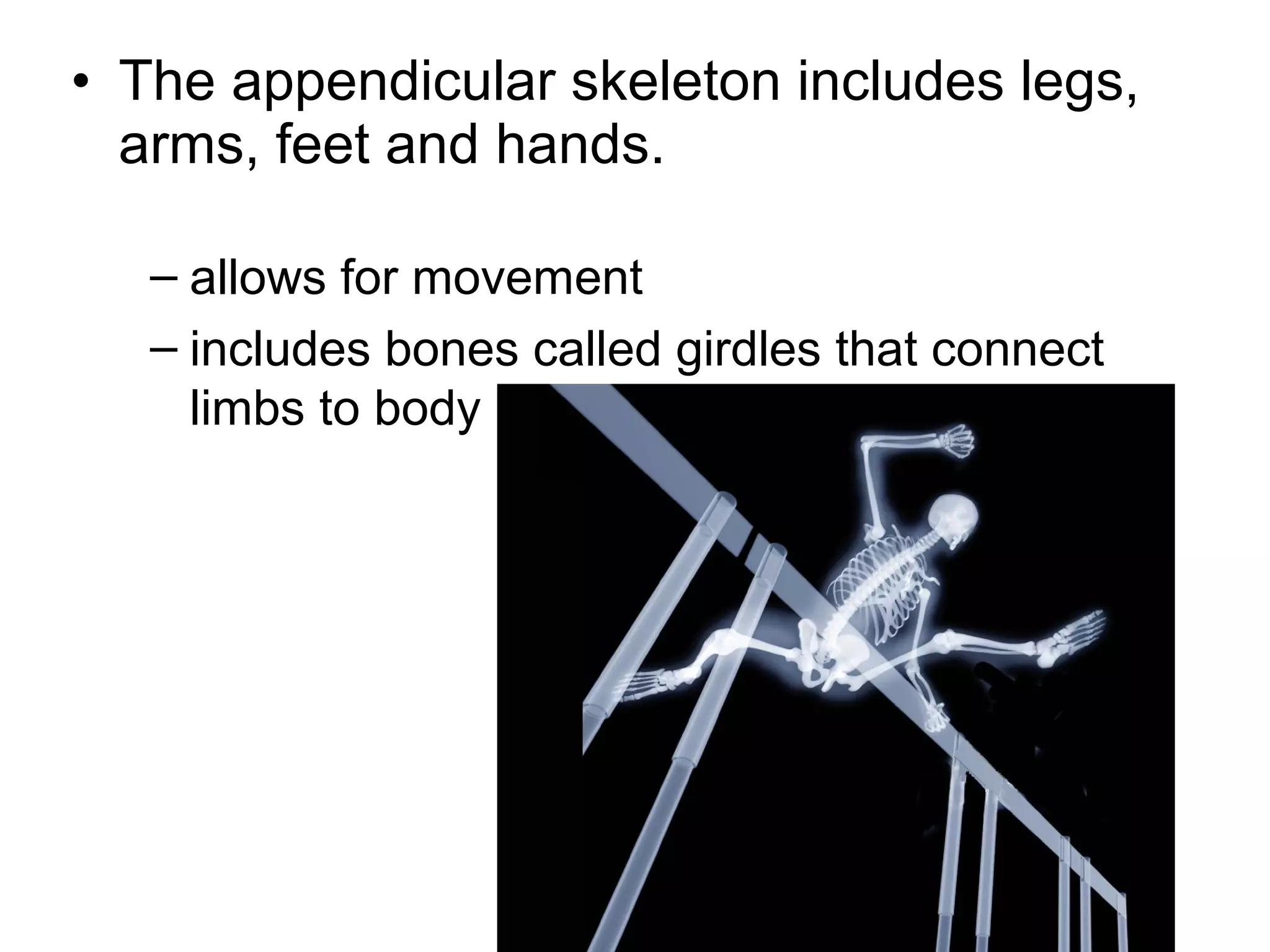
• The appendicular skeleton includes legs,
arms, feet and hands.
– allows for movement
– includes bones called girdles that connect
limbs to body
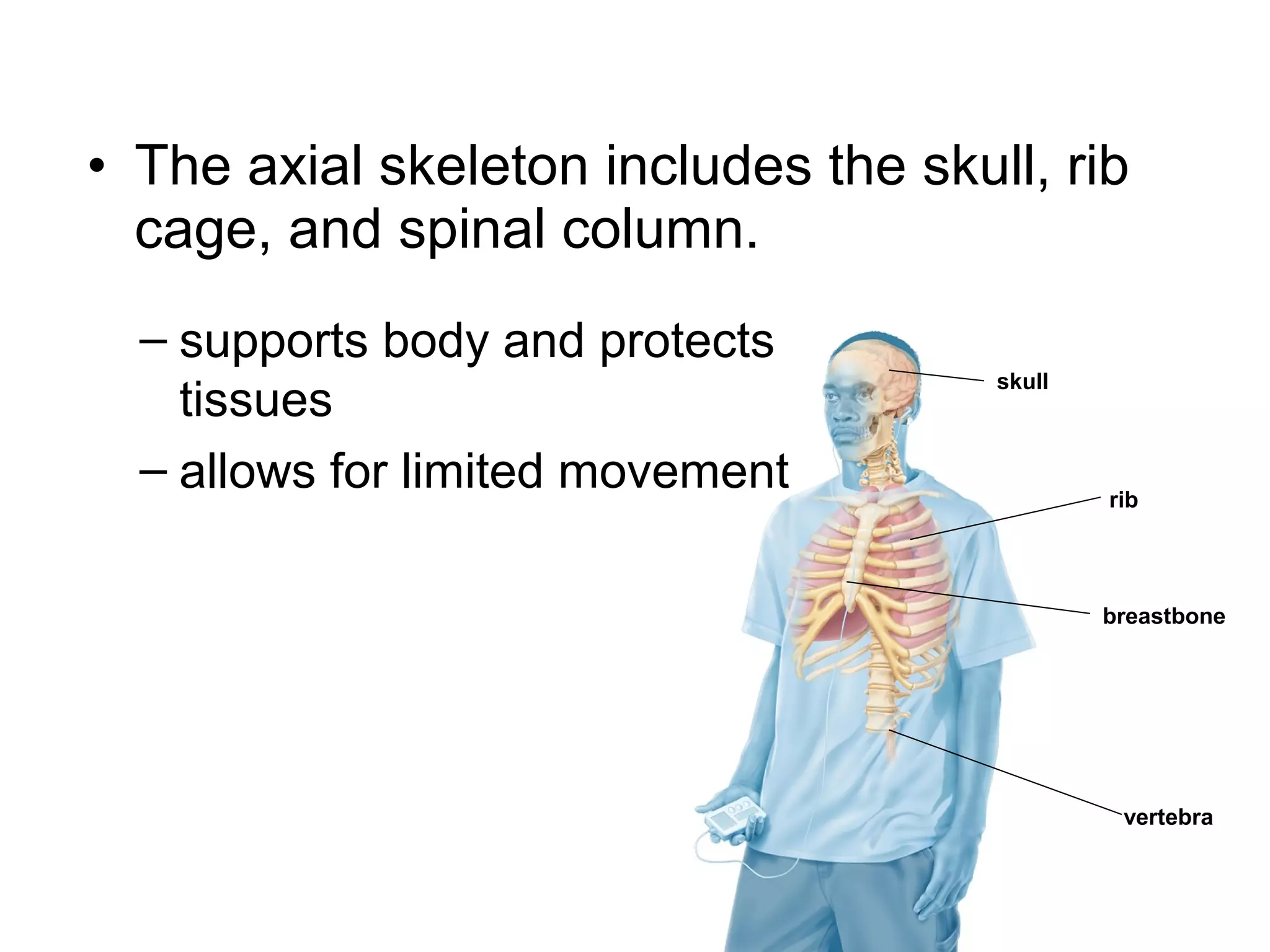
• The axial skeleton includes the skull, rib
cage, and spinal column.
skull
rib
breastbone
vertebra
– supports body and protects
tissues
– allows for limited movement
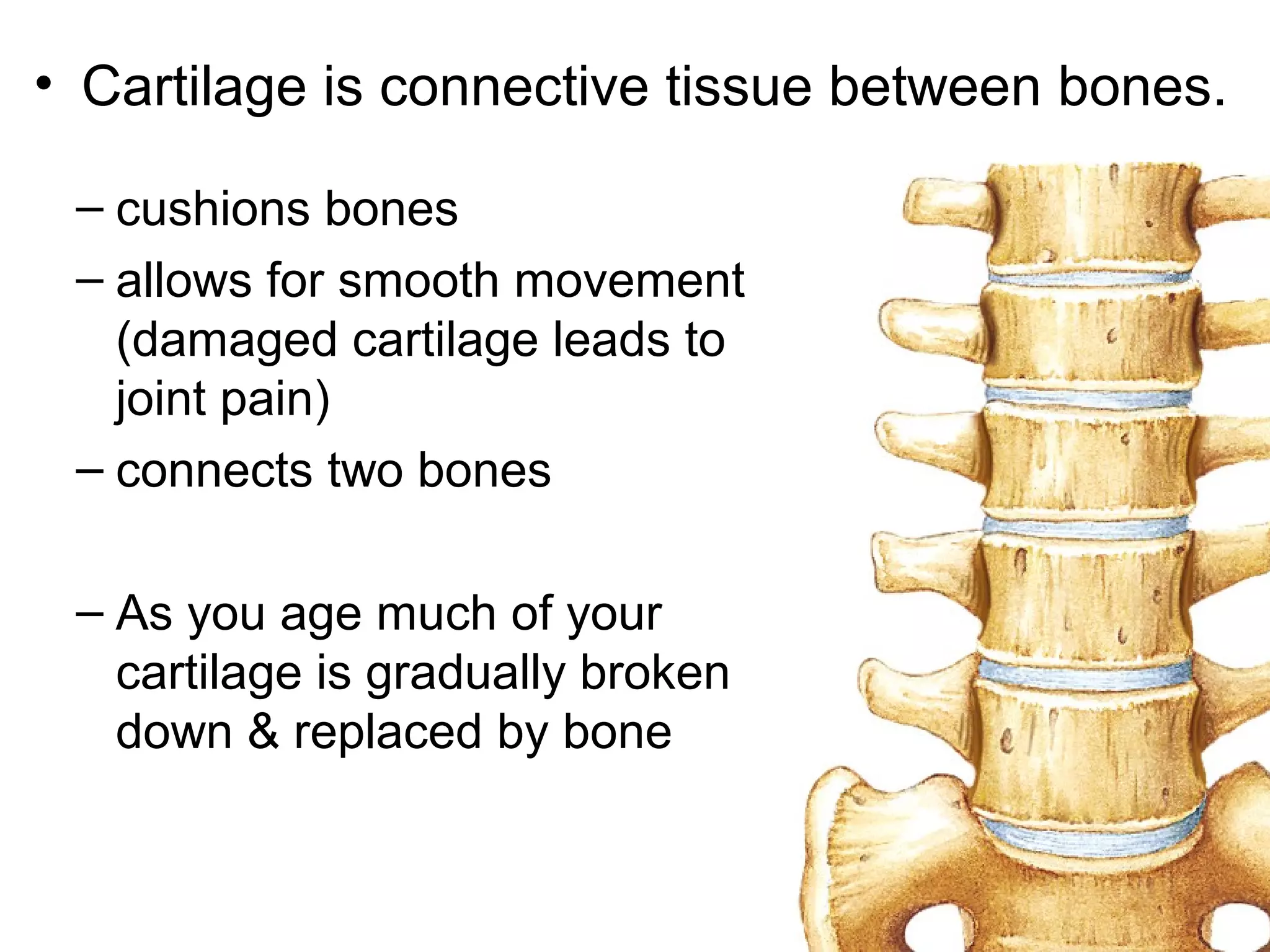
– cushions bones
– allows for smooth movement
(damaged cartilage leads to
joint pain)
– connects two bones
– As you age much of your
cartilage is gradually broken
down & replaced by bone
• Cartilage is connective tissue between bones.
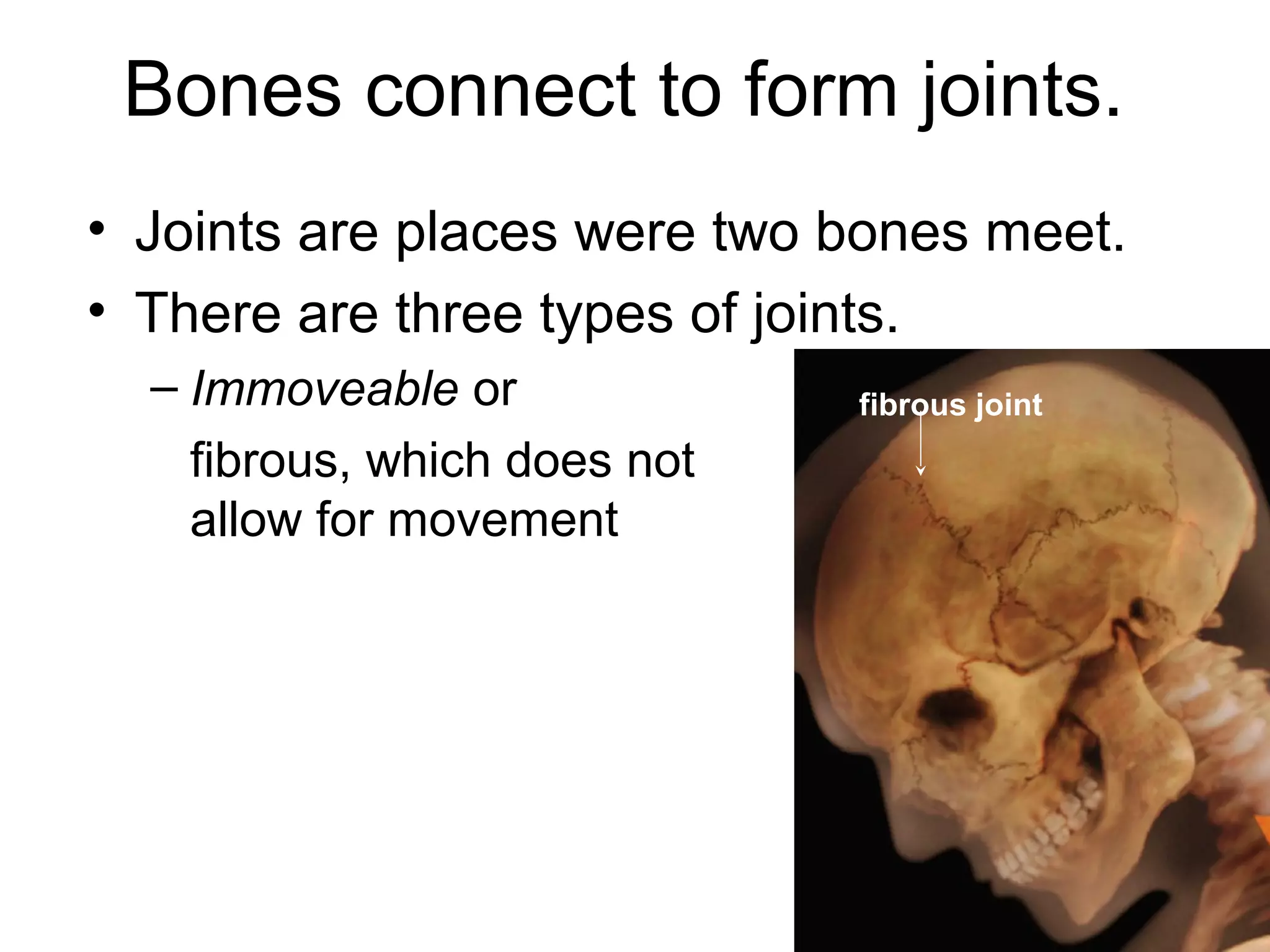
Bones connect to form joints.
• Joints are places were two bones meet.
• There are three types of joints.
– Immoveable or
fibrous, which does not
allow for movement
fibrous joint
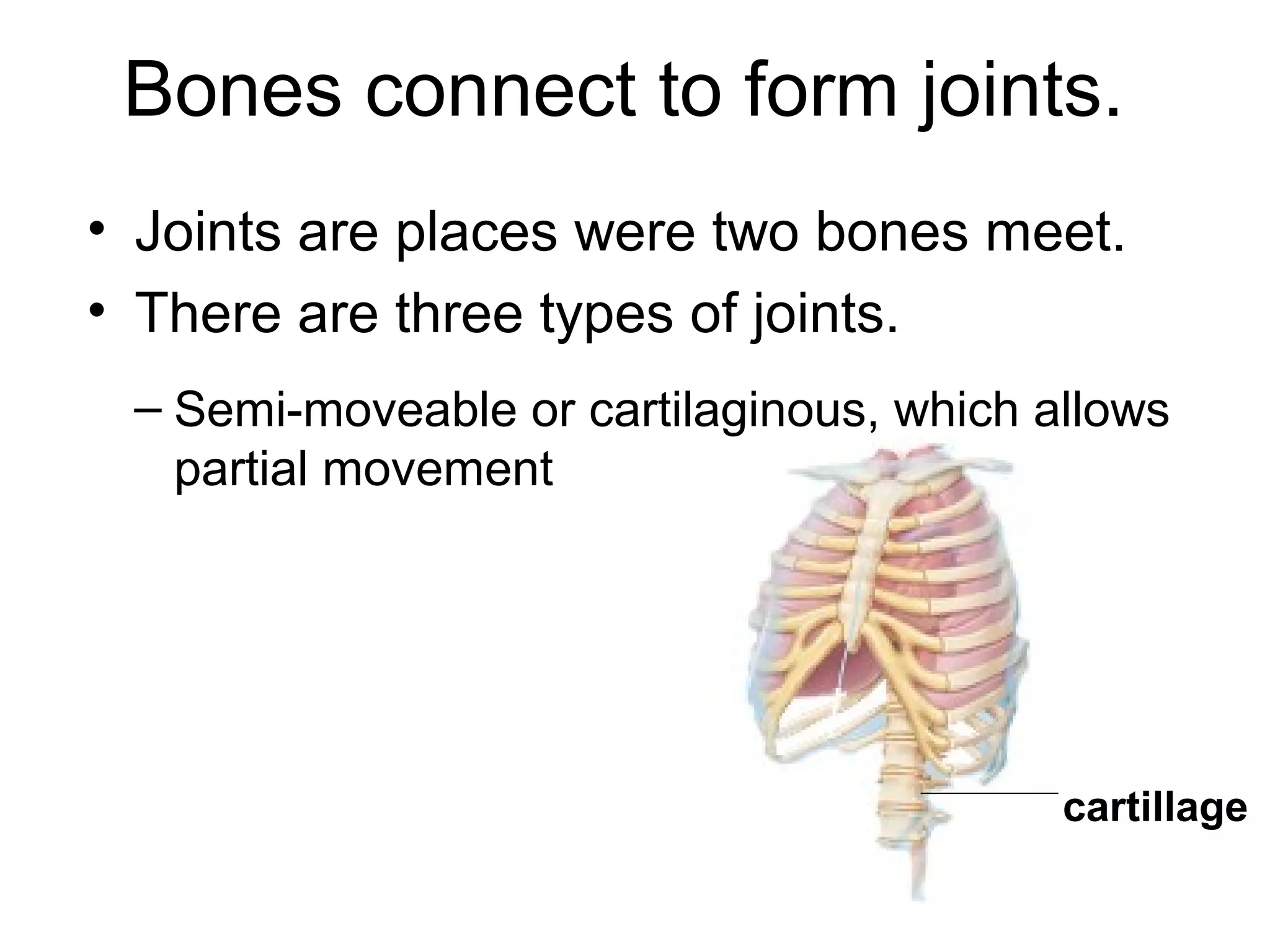
Bones connect to form joints.
• Joints are places were two bones meet.
• There are three types of joints.
cartillage
– Semi-moveable or cartilaginous, which allows
partial movement
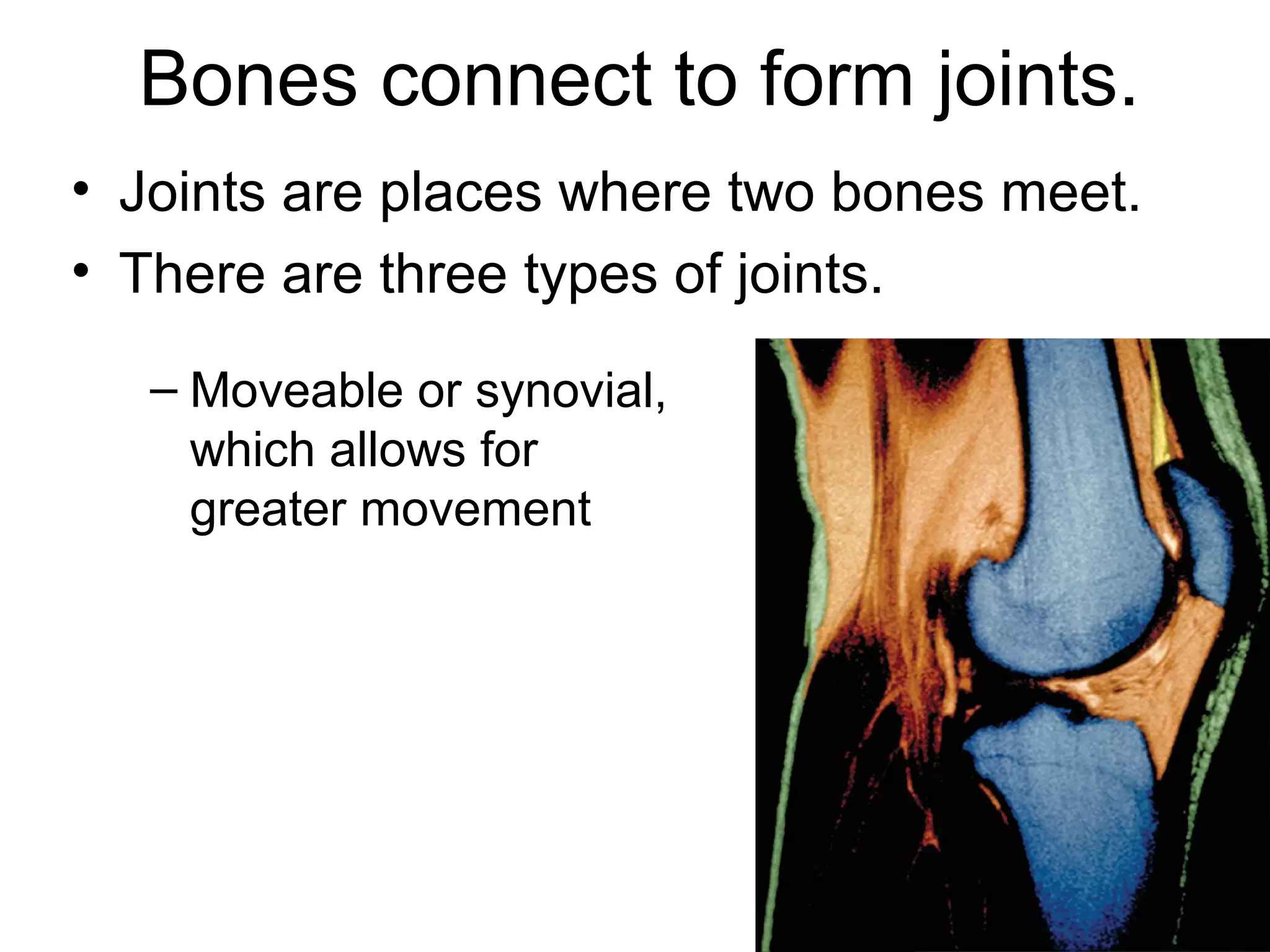
Bones connect to form joints.
– Moveable or synovial,
which allows for
greater movement
• Joints are places where two bones meet.
• There are three types of joints.
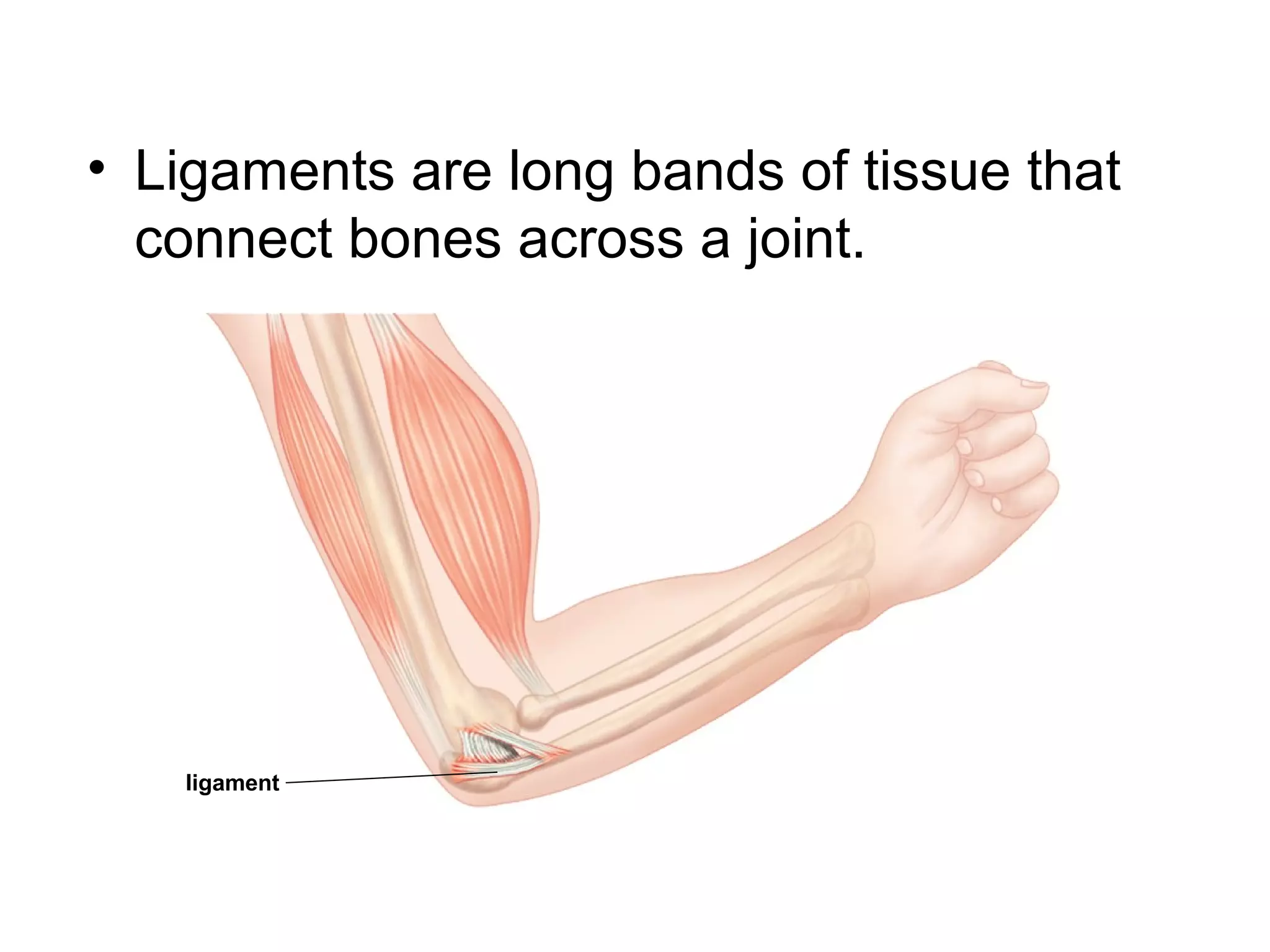
• Ligaments are long bands of tissue that
connect bones across a joint.
ligament
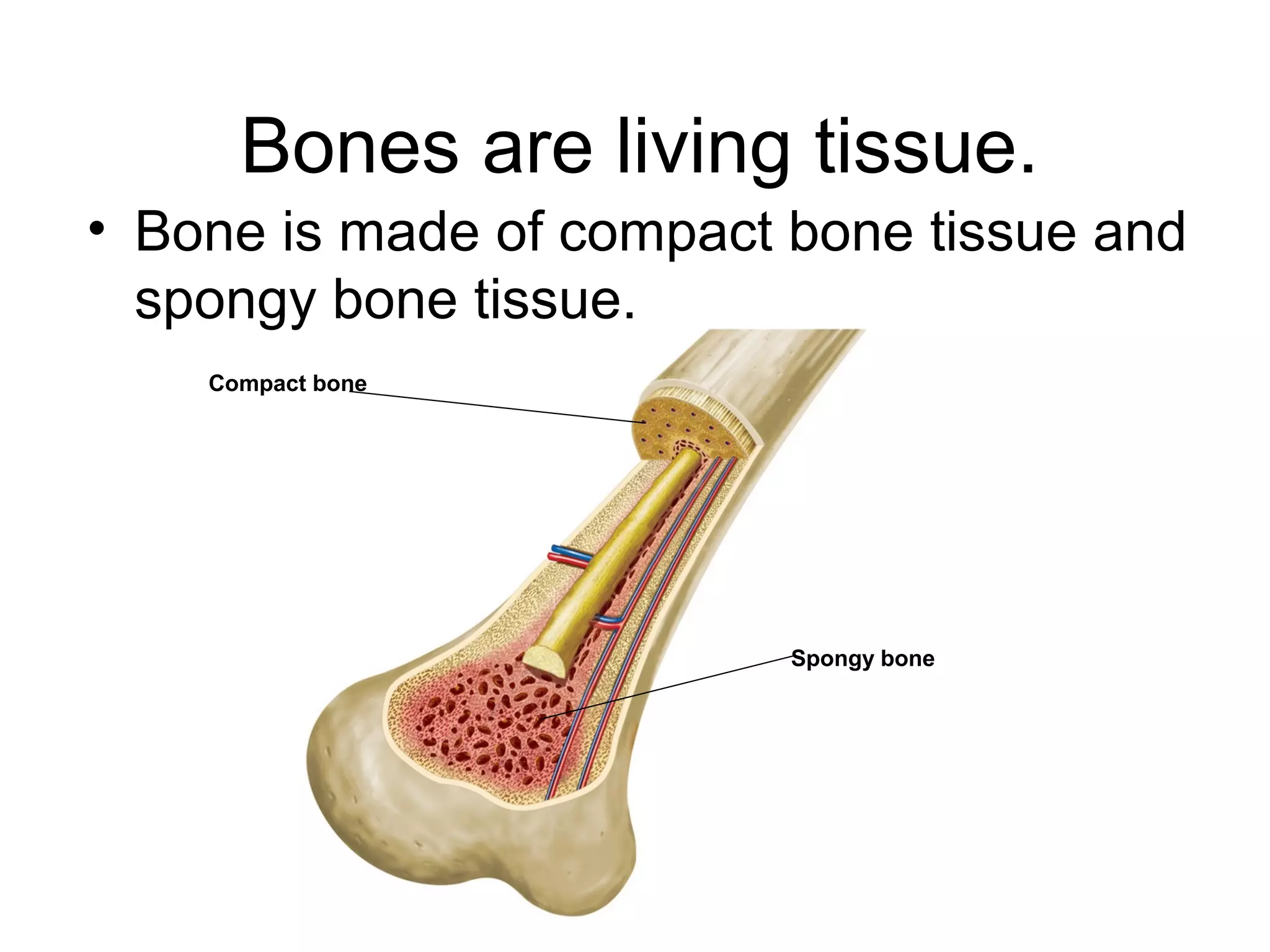
Bones are living tissue.
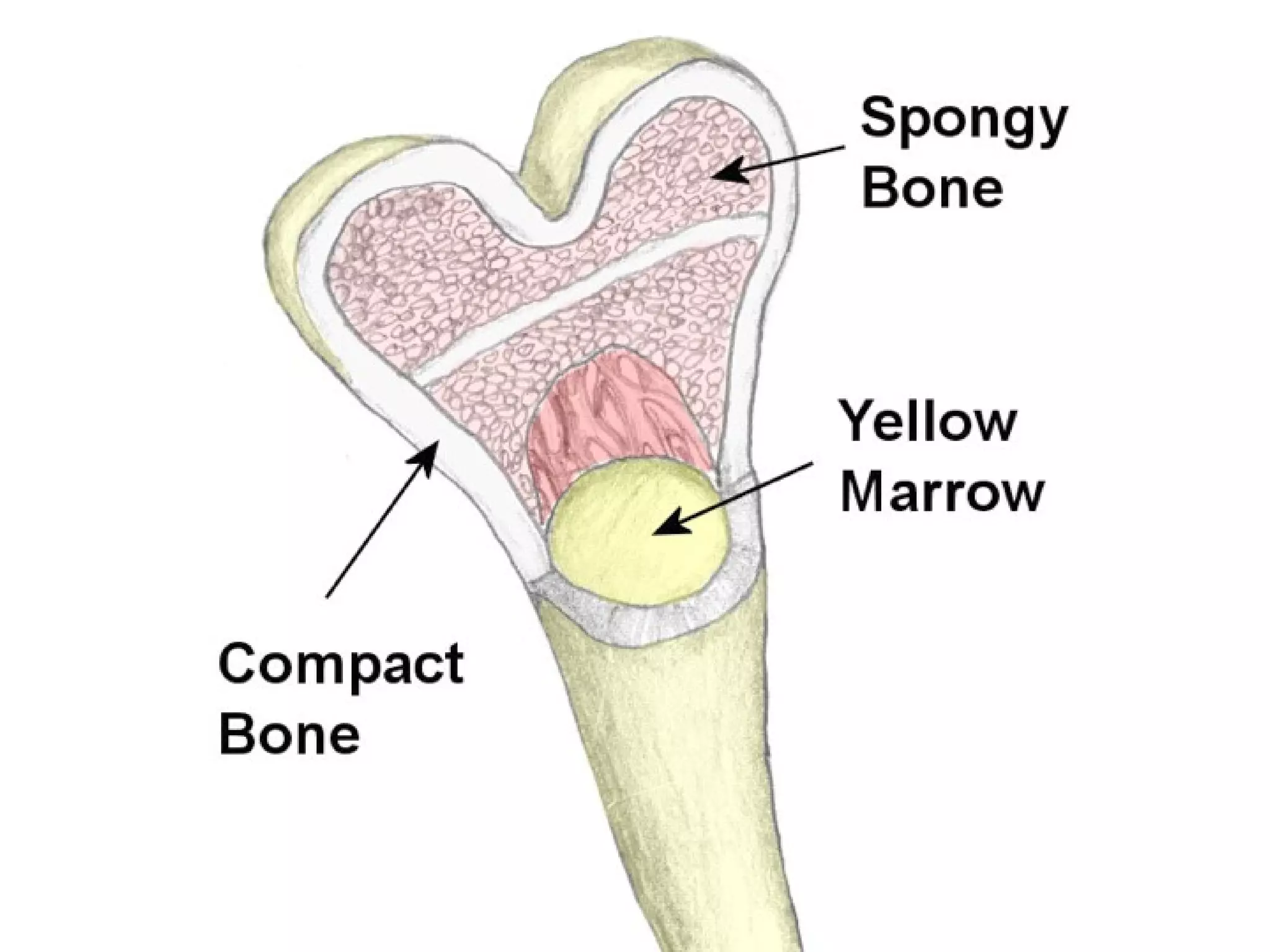
• Bone is made of compact bone tissue and
spongy bone tissue.
Compact bone
Spongy bone
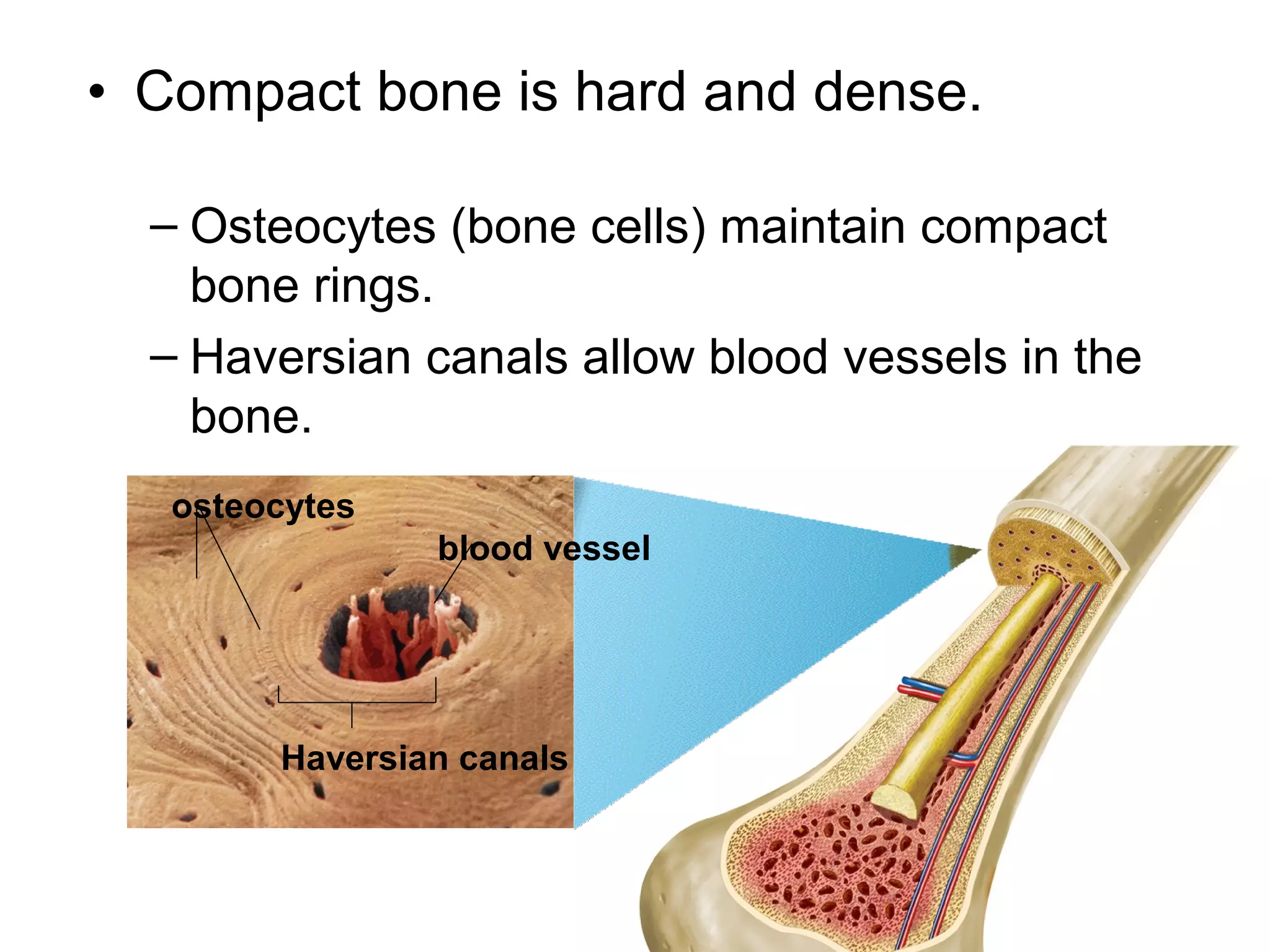
• Compact bone is hard and dense.
– Osteocytes (bone cells) maintain compact
bone rings.
– Haversian canals allow blood vessels in the
bone.
osteocytes
blood vessel
Haversian canals
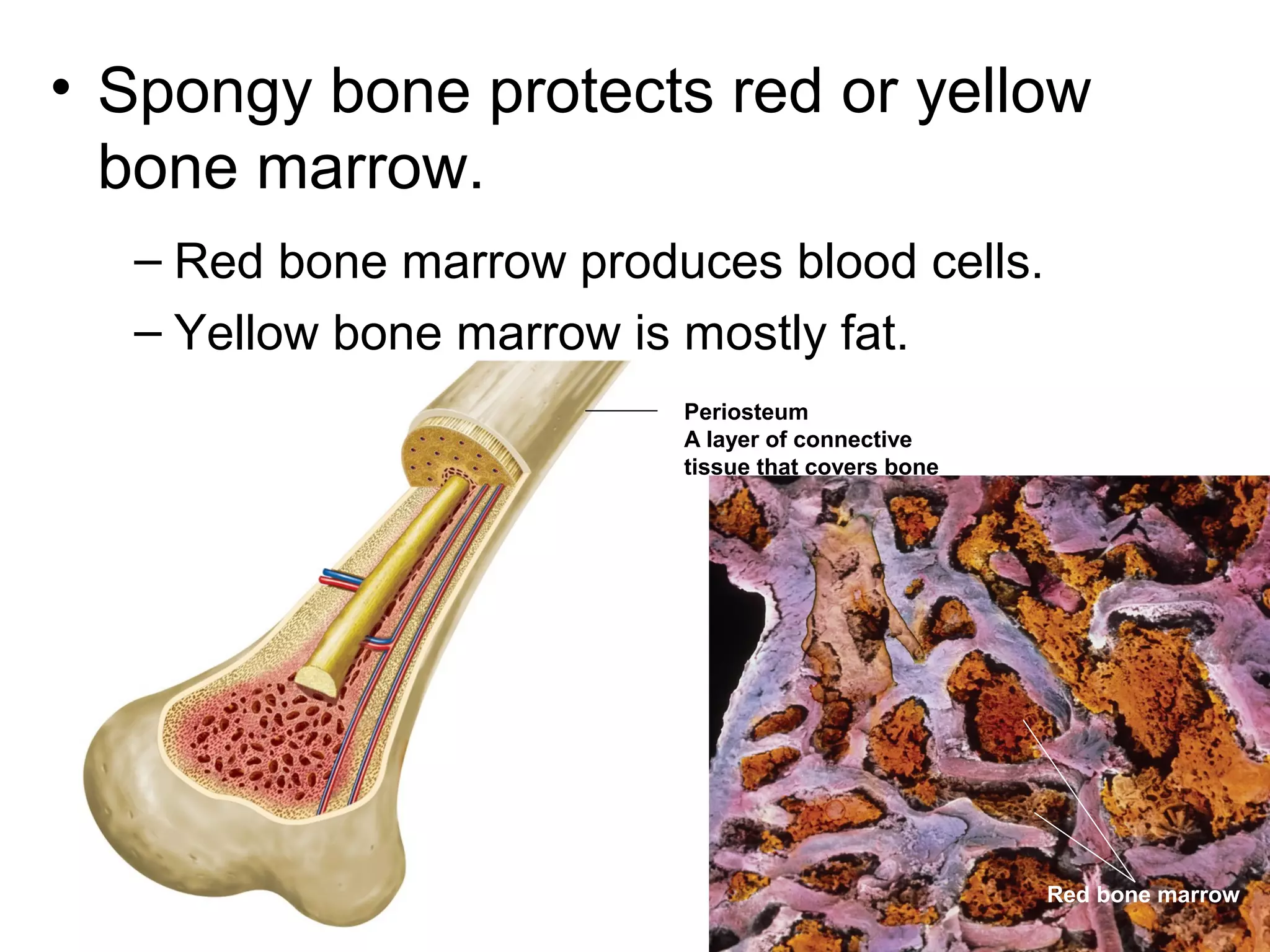
• Spongy bone protects red or yellow
bone marrow.
– Red bone marrow produces blood cells.
– Yellow bone marrow is mostly fat.
Periosteum
A layer of connective
tissue that covers bone
Red bone marrow
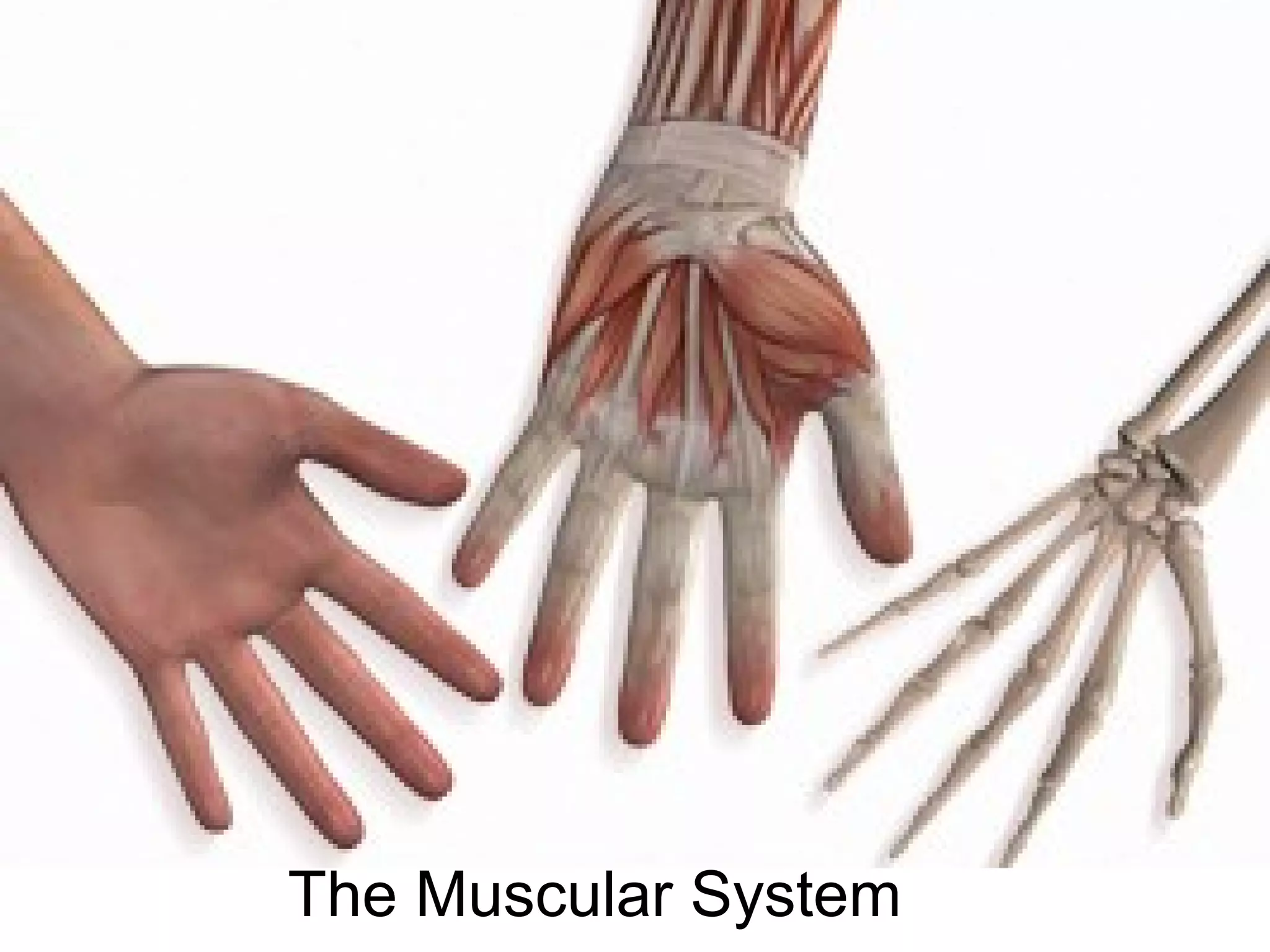
The Muscular System
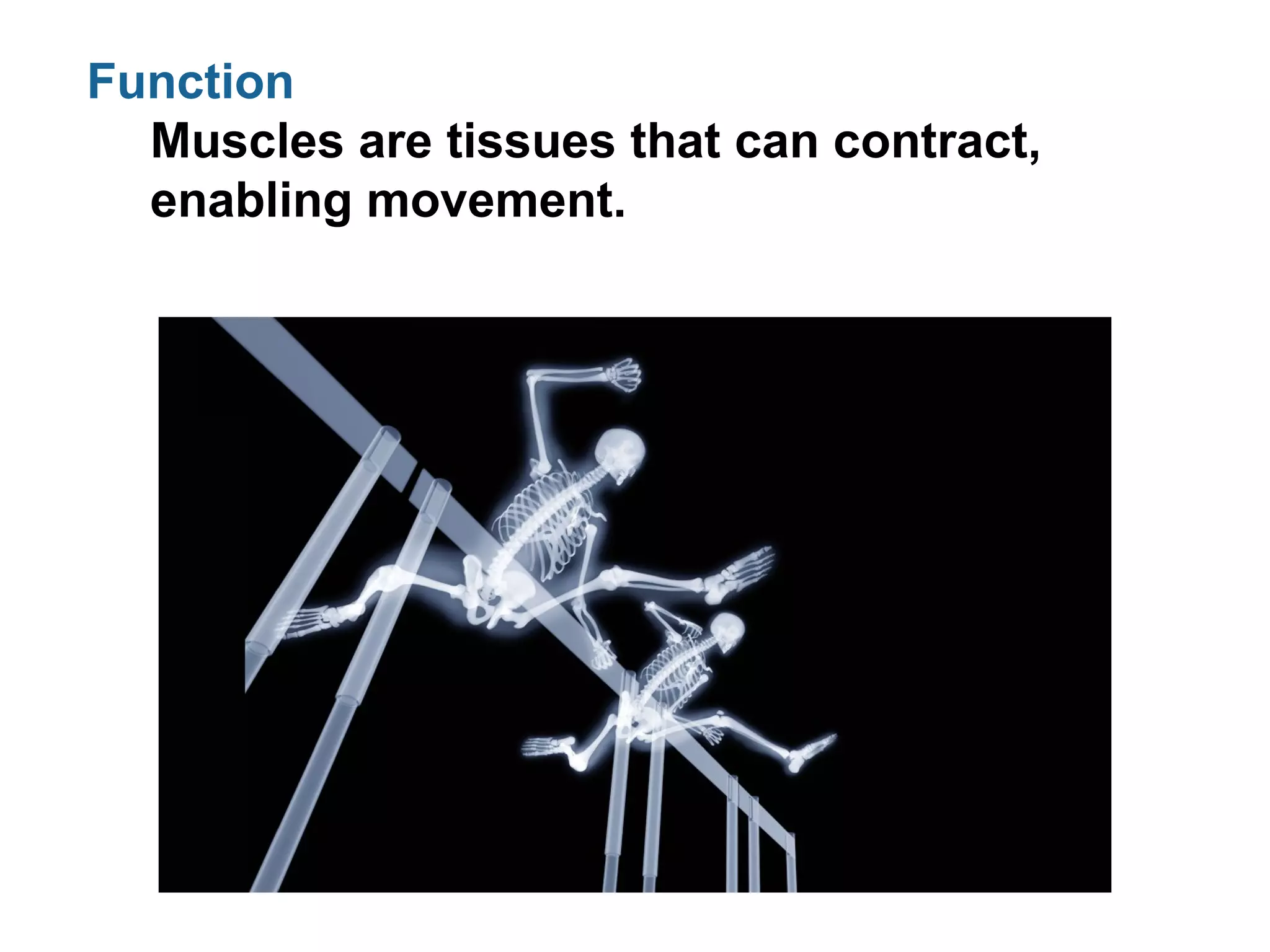
Function
Muscles are tissues that can contract,
enabling movement.
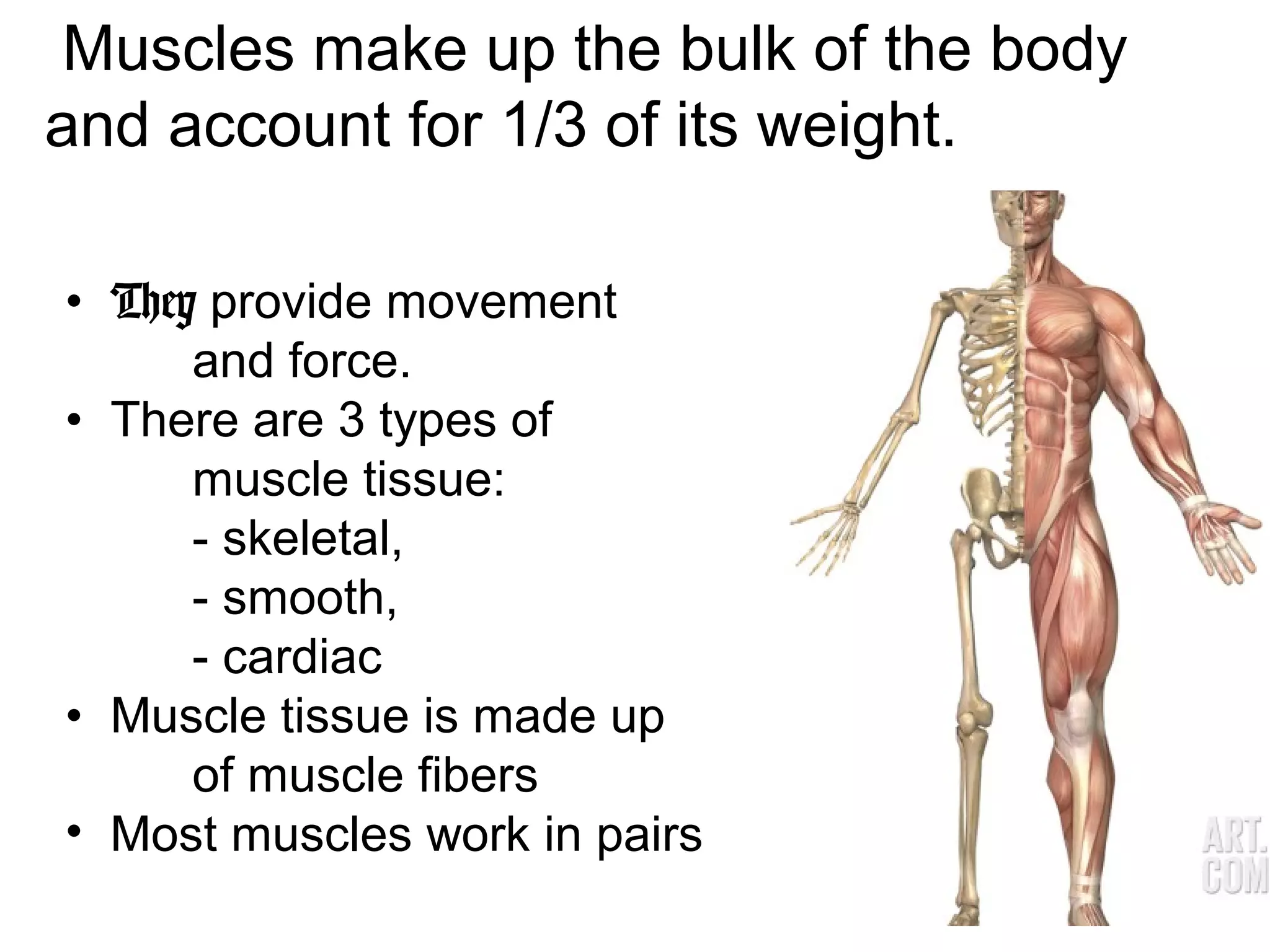
• They provide movement
and force.
• There are 3 types of
muscle tissue:
- skeletal,
- smooth,
- cardiac
• Muscle tissue is made up
of muscle fibers
• Most muscles work in pairs
Muscles make up the bulk of the body
and account for 1/3 of its weight.
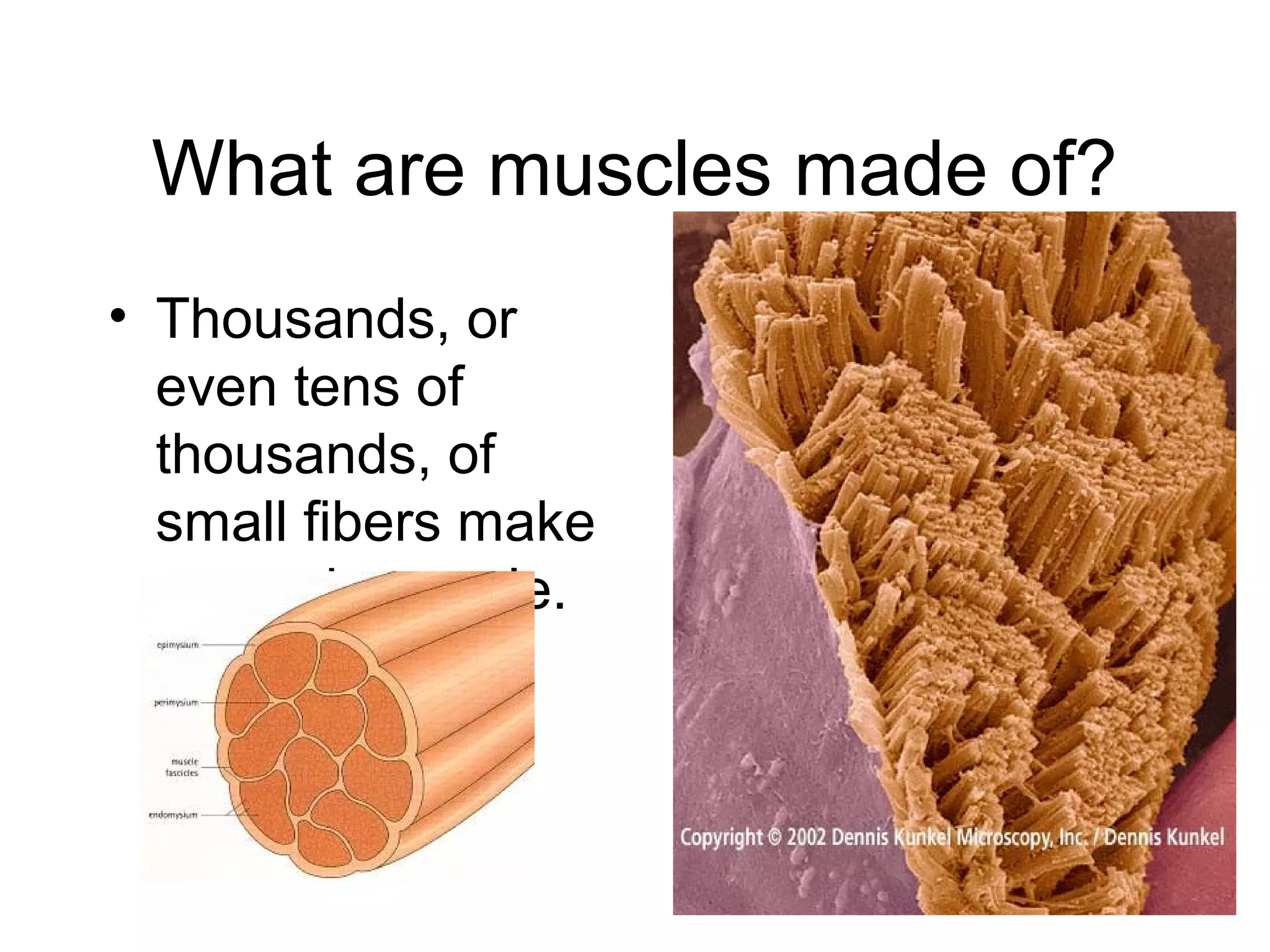
What are muscles made of?
• Thousands, or
even tens of
thousands, of
small fibers make
up each muscle.
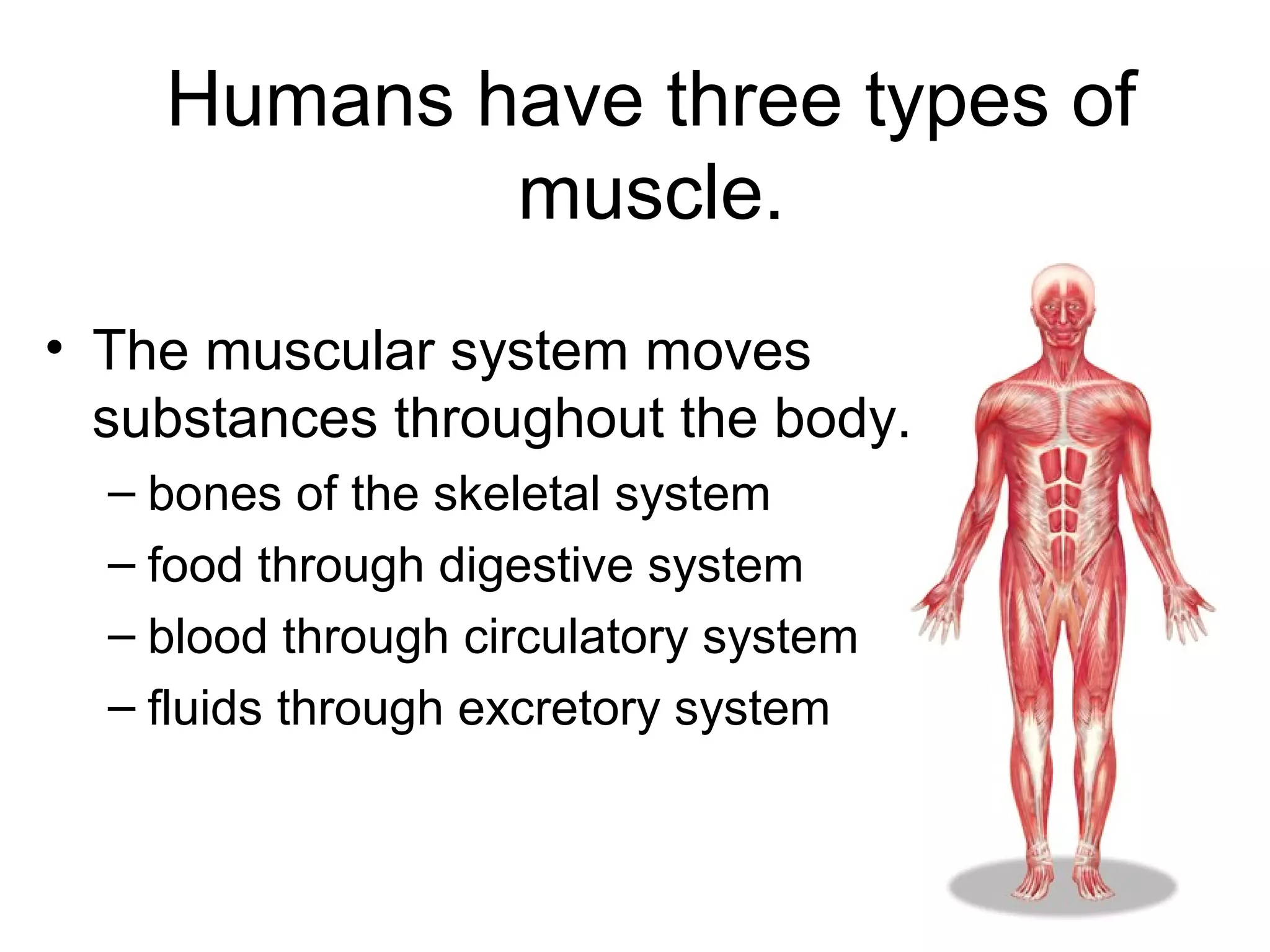
Humans have three types of
muscle.
• The muscular system moves
substances throughout the body.
– bones of the skeletal system
– food through digestive system
– blood through circulatory system
– fluids through excretory system
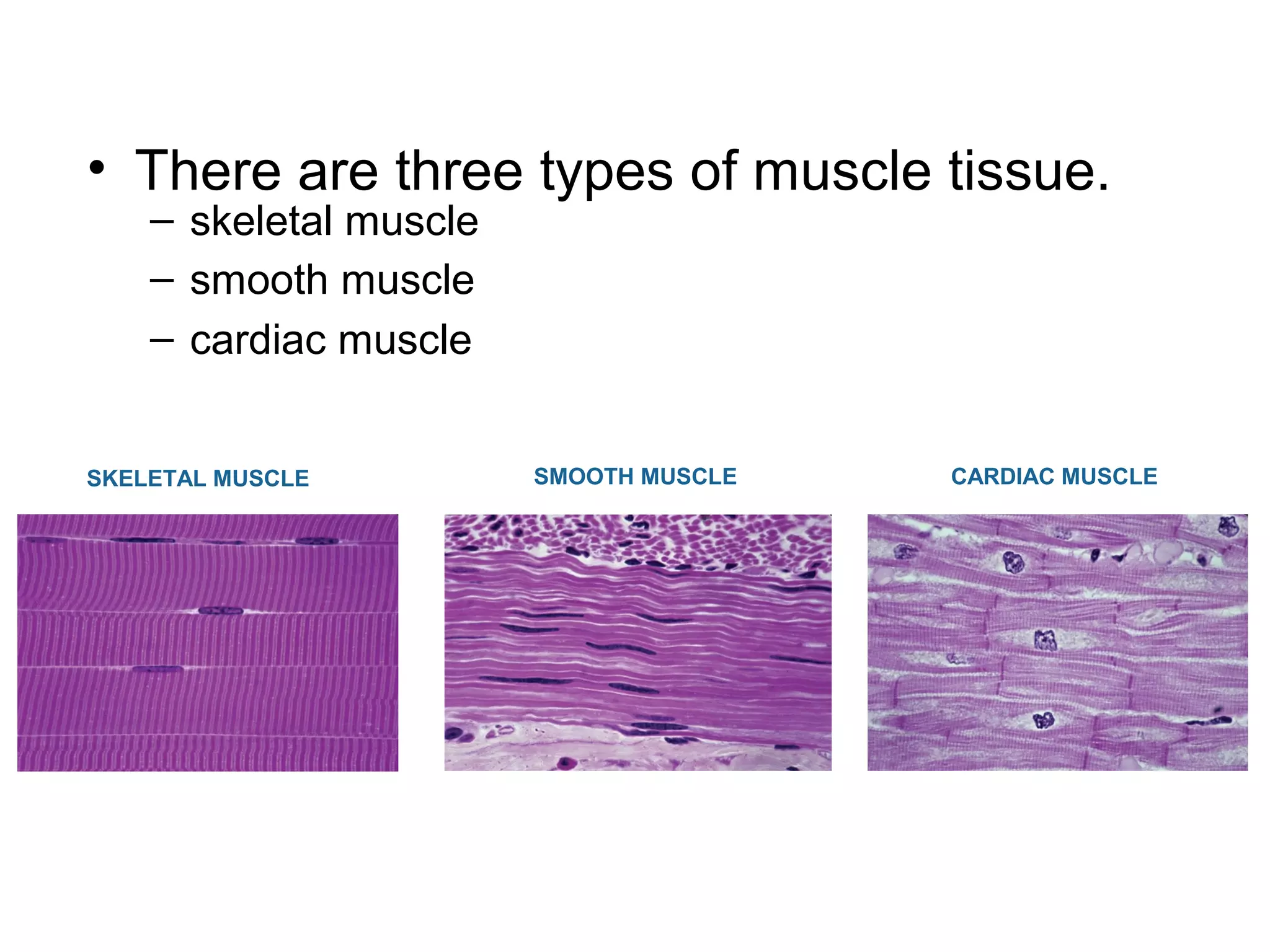
– skeletal muscle
• There are three types of muscle tissue.
SKELETAL MUSCLE CARDIAC MUSCLESMOOTH MUSCLE
– smooth muscle
– cardiac muscle
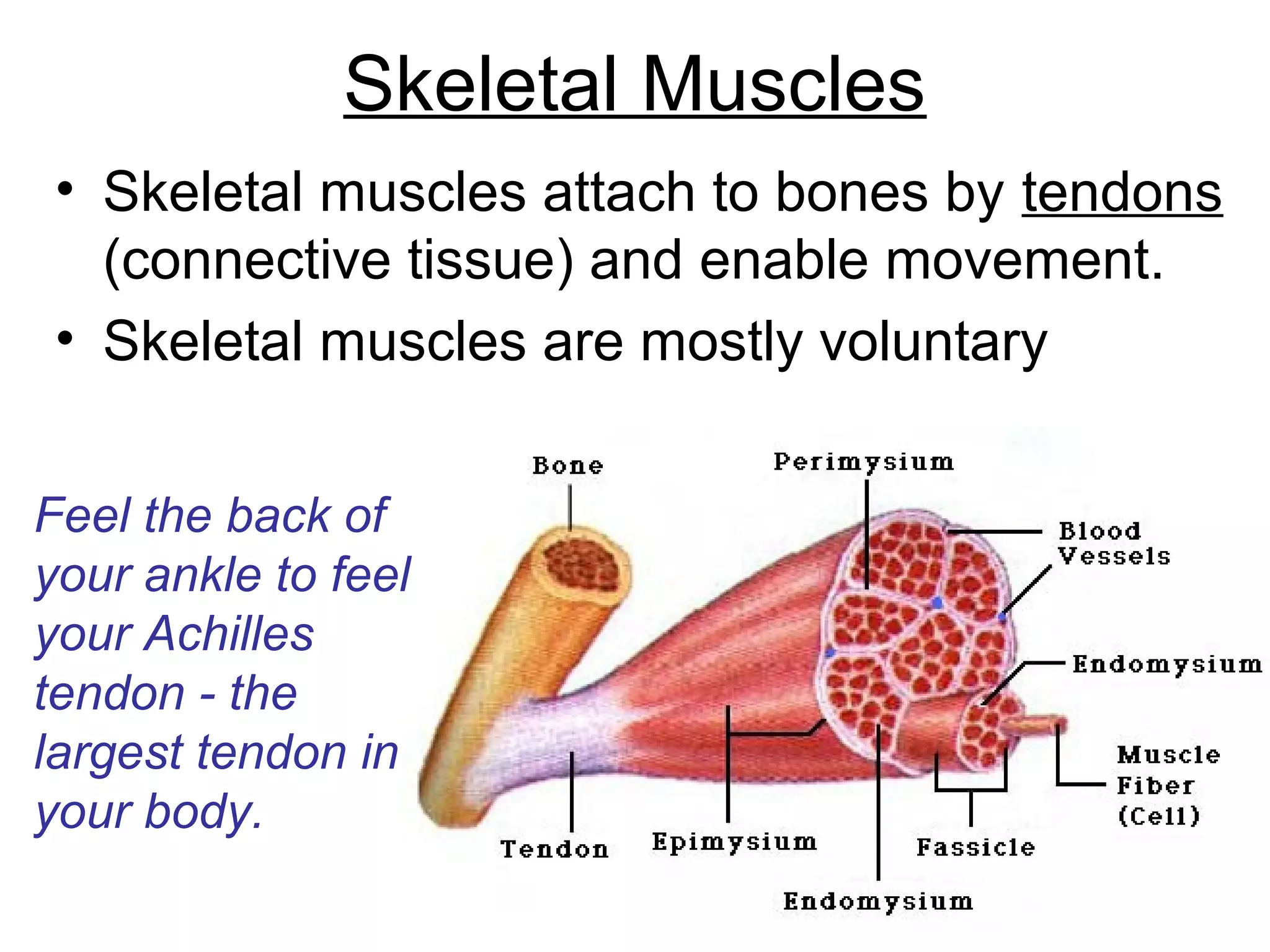
Skeletal Muscles
• Skeletal muscles attach to bones by tendons
(connective tissue) and enable movement.
• Skeletal muscles are mostly voluntary
Feel the back of
your ankle to feel
your Achilles
tendon - the
largest tendon in
your body.
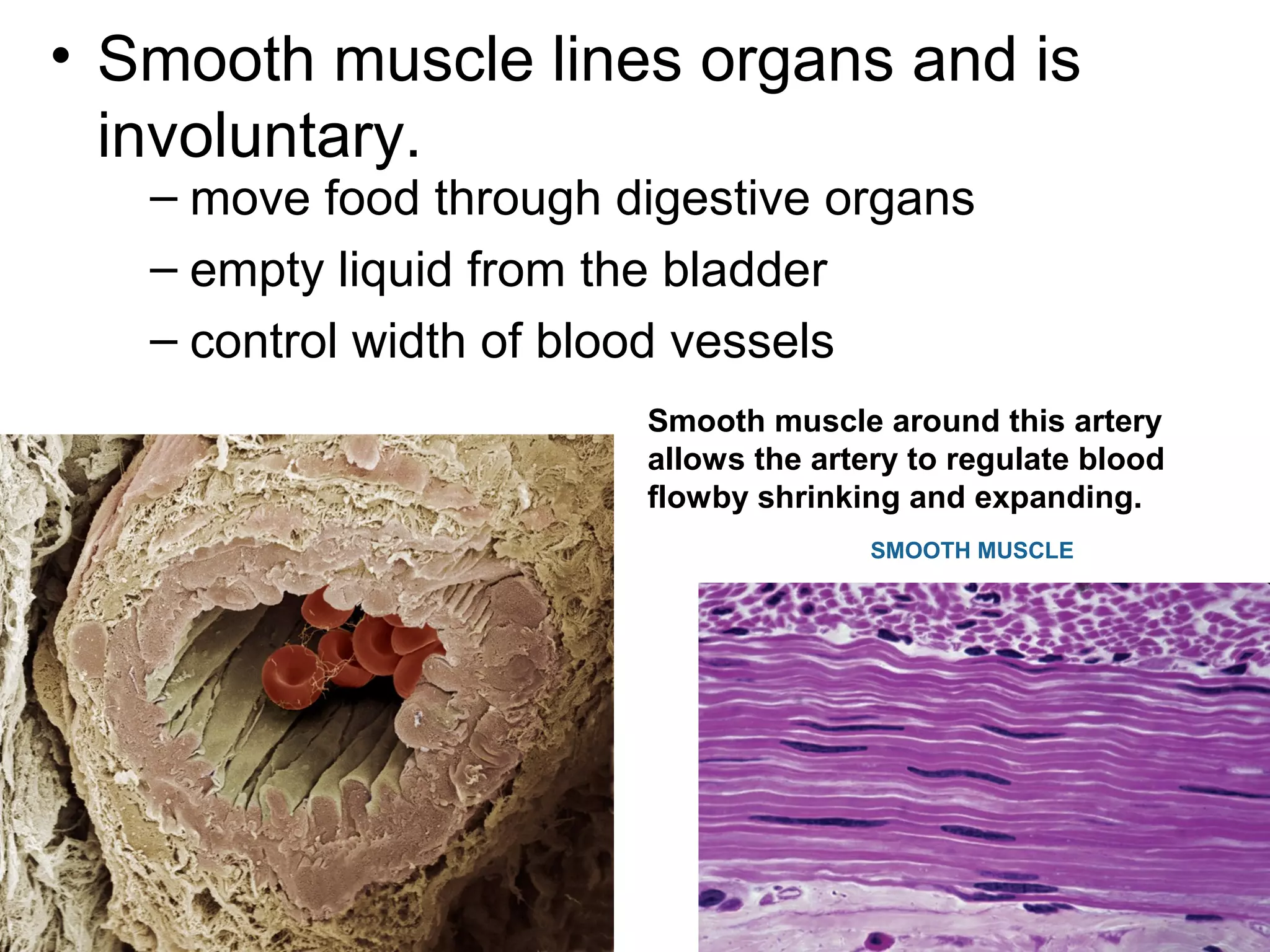
– move food through digestive organs
– empty liquid from the bladder
– control width of blood vessels
• Smooth muscle lines organs and is
involuntary.
Smooth muscle around this artery
allows the artery to regulate blood
flowby shrinking and expanding.
SMOOTH MUSCLE
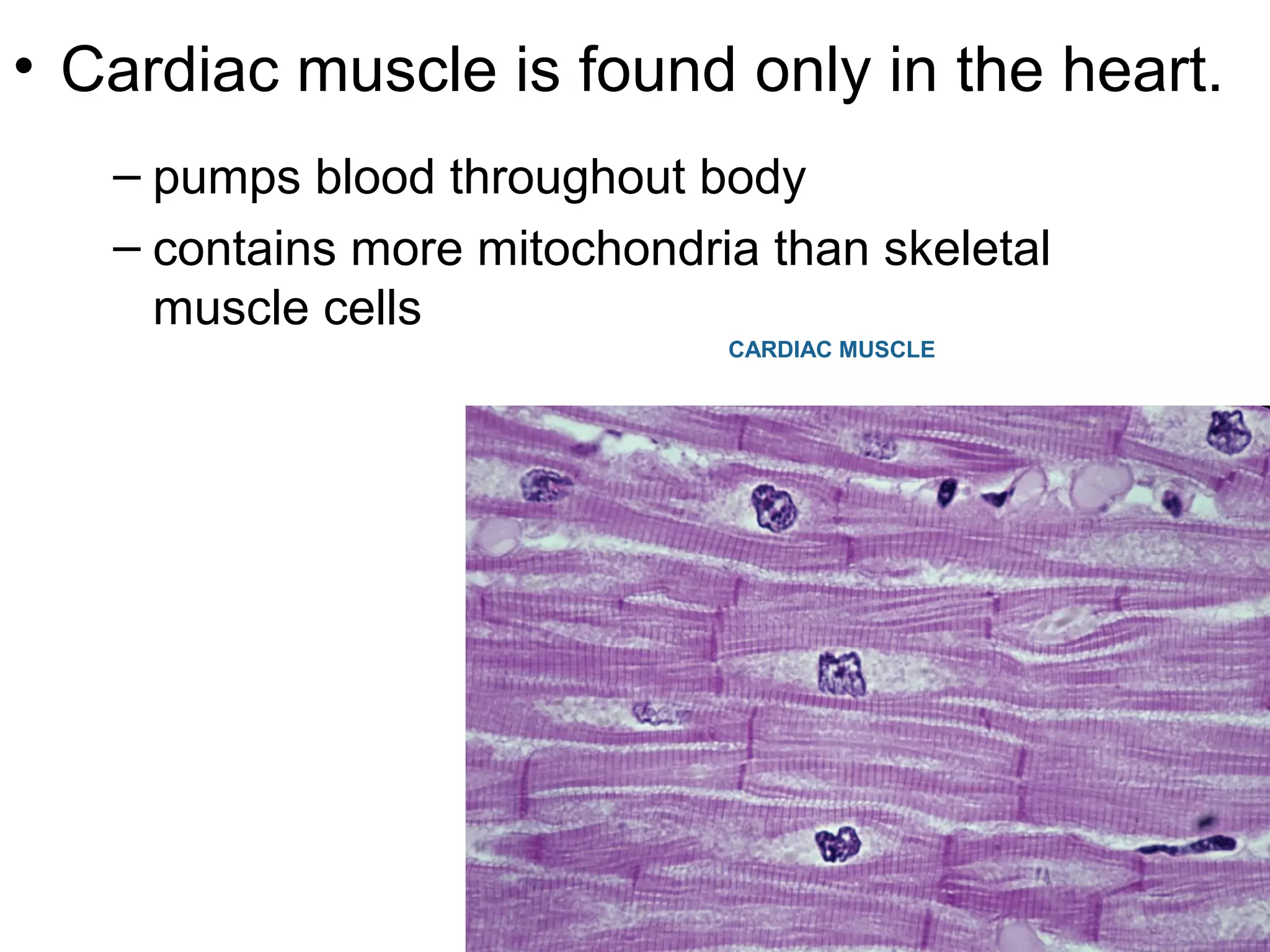
– pumps blood throughout body
– contains more mitochondria than skeletal
muscle cells
• Cardiac muscle is found only in the heart.
CARDIAC MUSCLE
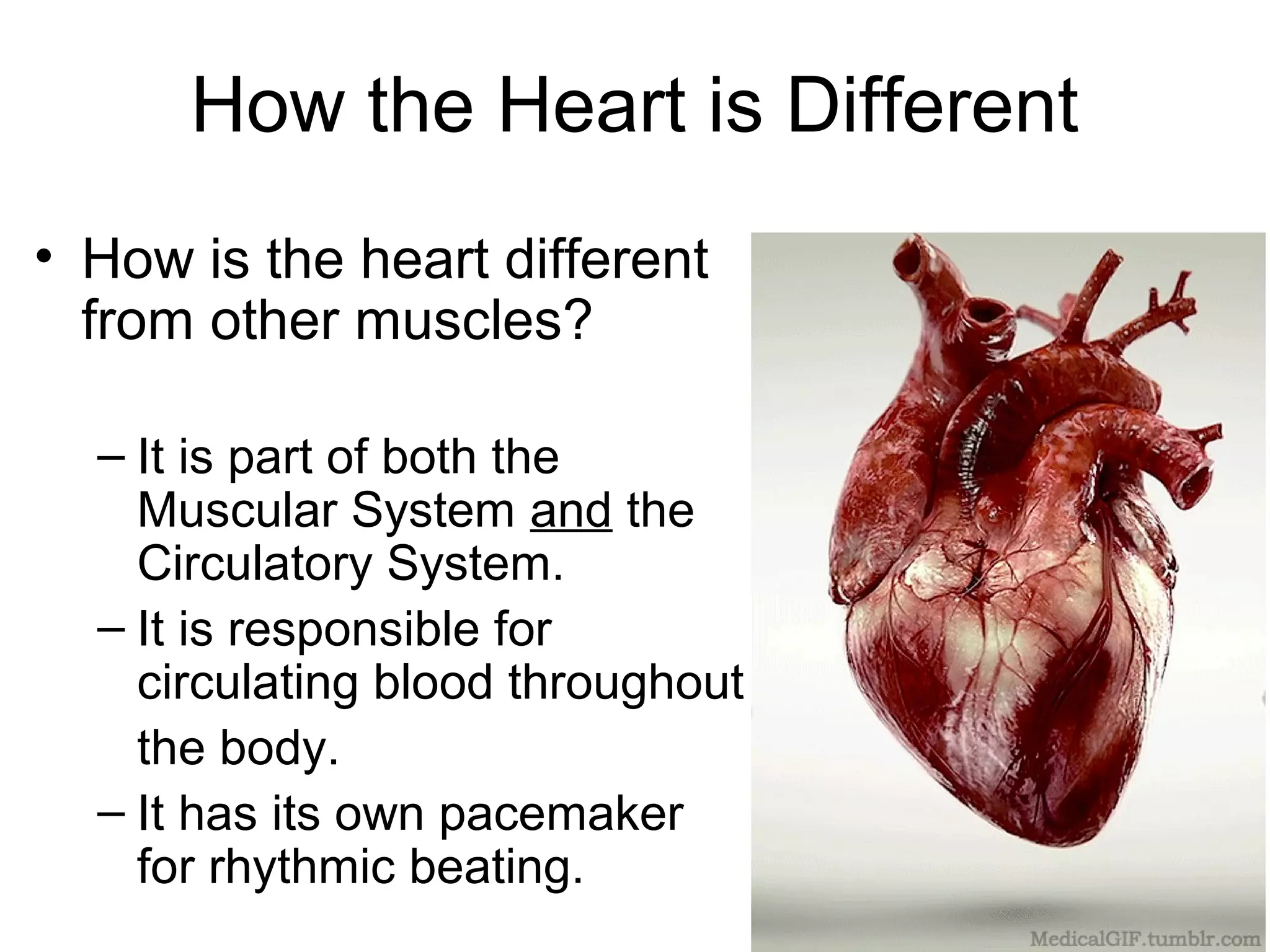
How the Heart is Different
• How is the heart different
from other muscles?
– It is part of both the
Muscular System and the
Circulatory System.
– It is responsible for
circulating blood throughout
the body.
– It has its own pacemaker
for rhythmic beating.
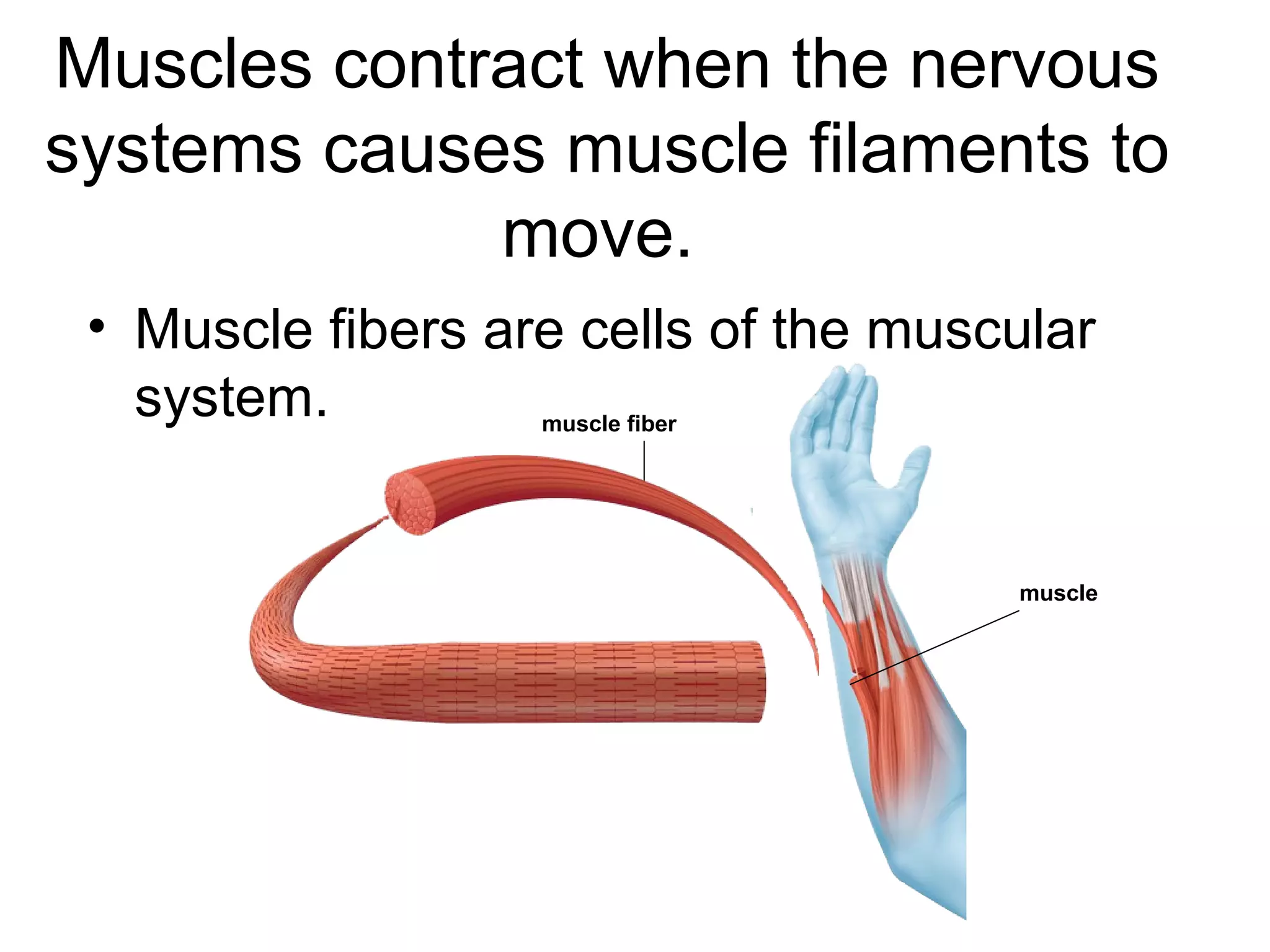
muscle fiber
Muscles contract when the nervous
systems causes muscle filaments to
move.
• Muscle fibers are cells of the muscular
system.
muscle
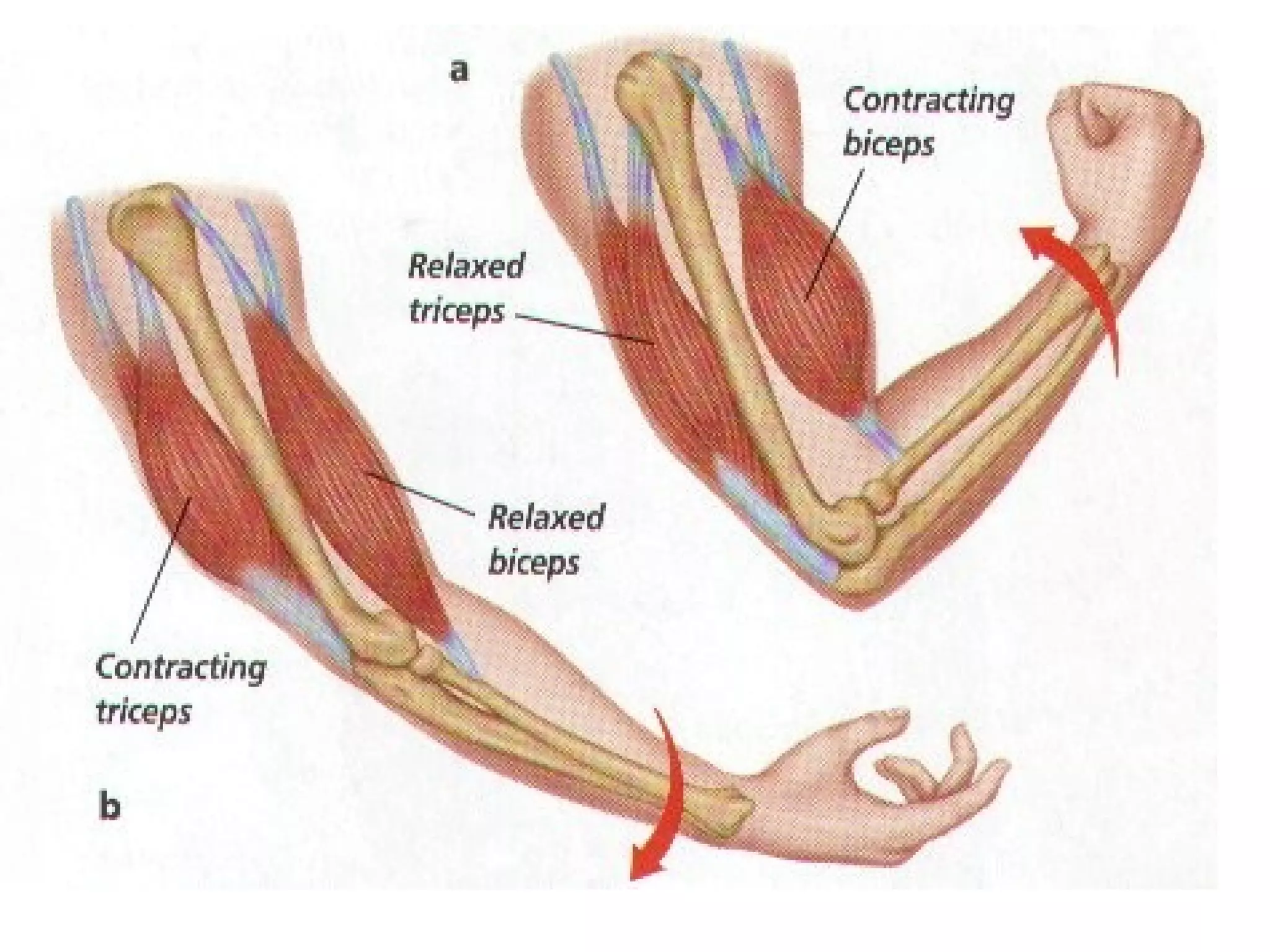
Muscle pairs:
Muscles are grouped together in pairs on your
skeleton
Relaxed or contracted:
When one muscle of a pair contracts, the other
relaxes
Pulling muscles:
Skeletal muscles only pull in one direction. For this
reason they always come in pairs. When one muscle
in a pair contracts, to bend a joint for example, its
partner then contracts and pulls in the opposite
direction to straighten the joint out again.
Today’s Warm-up
• Muscle Trivia…
• How many muscles are in the average adult
human body?
• What is the strongest muscle in the body?
• What is the largest muscle in the body?
Approximately 650
Debatable, but many say the masseter (jaw).
The gluteus maximus in your rear end (buttocks).
Today’s Close
• Here’s one flexible guy and strong
dude…
• In control of both his skeletal and
muscular systems…
Robot Dancing
Amazing Strength Break-Dancing
http://www.youtube.com/watch?v=B9JZbqoR0Kg

2014 muscular and skeletal system

  • 1.
  • 2.
    Today’s Warm-Up Skeletal facts… 1.How many bones are in the average adult human body? 2. How many bones does a baby have? 3. What/where is the longest bone on the body? 4. What/where is the smallest bone in the body? 206 Over 300! The “femur” or thighbone 3 bones in the middle ear- stirrup, anvil & hammer
  • 3.
    Function The skeletal systemincludes bones and tissues that are important for supporting, protecting, and moving your body.
  • 4.
    Parts of theskeletal system • Bones (skeleton) • Cartilage • Joints: hold bone together & mobility • Ligaments & Tendons
  • 5.
    Your skeletal systemis made up of the appendicular and axial skeletons. • The skeletal system protects, supports, and moves the body.
  • 6.
    • The appendicularskeleton includes legs, arms, feet and hands. – allows for movement – includes bones called girdles that connect limbs to body
  • 7.
    • The axialskeleton includes the skull, rib cage, and spinal column. skull rib breastbone vertebra – supports body and protects tissues – allows for limited movement
  • 8.
    – cushions bones –allows for smooth movement (damaged cartilage leads to joint pain) – connects two bones – As you age much of your cartilage is gradually broken down & replaced by bone • Cartilage is connective tissue between bones.
  • 9.
    Bones connect toform joints. • Joints are places were two bones meet. • There are three types of joints. – Immoveable or fibrous, which does not allow for movement fibrous joint
  • 10.
    Bones connect toform joints. • Joints are places were two bones meet. • There are three types of joints. cartillage – Semi-moveable or cartilaginous, which allows partial movement
  • 11.
    Bones connect toform joints. – Moveable or synovial, which allows for greater movement • Joints are places where two bones meet. • There are three types of joints.
  • 12.
    • Ligaments arelong bands of tissue that connect bones across a joint. ligament
  • 13.
    Bones are livingtissue. • Bone is made of compact bone tissue and spongy bone tissue. Compact bone Spongy bone
  • 15.
    • Compact boneis hard and dense. – Osteocytes (bone cells) maintain compact bone rings. – Haversian canals allow blood vessels in the bone. osteocytes blood vessel Haversian canals
  • 16.
    • Spongy boneprotects red or yellow bone marrow. – Red bone marrow produces blood cells. – Yellow bone marrow is mostly fat. Periosteum A layer of connective tissue that covers bone Red bone marrow
  • 17.
  • 18.
    Function Muscles are tissuesthat can contract, enabling movement.
  • 19.
    • They providemovement and force. • There are 3 types of muscle tissue: - skeletal, - smooth, - cardiac • Muscle tissue is made up of muscle fibers • Most muscles work in pairs Muscles make up the bulk of the body and account for 1/3 of its weight.
  • 20.
    What are musclesmade of? • Thousands, or even tens of thousands, of small fibers make up each muscle.
  • 21.
    Humans have threetypes of muscle. • The muscular system moves substances throughout the body. – bones of the skeletal system – food through digestive system – blood through circulatory system – fluids through excretory system
  • 22.
    – skeletal muscle •There are three types of muscle tissue. SKELETAL MUSCLE CARDIAC MUSCLESMOOTH MUSCLE – smooth muscle – cardiac muscle
  • 23.
    Skeletal Muscles • Skeletalmuscles attach to bones by tendons (connective tissue) and enable movement. • Skeletal muscles are mostly voluntary Feel the back of your ankle to feel your Achilles tendon - the largest tendon in your body.
  • 24.
    – move foodthrough digestive organs – empty liquid from the bladder – control width of blood vessels • Smooth muscle lines organs and is involuntary. Smooth muscle around this artery allows the artery to regulate blood flowby shrinking and expanding. SMOOTH MUSCLE
  • 25.
    – pumps bloodthroughout body – contains more mitochondria than skeletal muscle cells • Cardiac muscle is found only in the heart. CARDIAC MUSCLE
  • 26.
    How the Heartis Different • How is the heart different from other muscles? – It is part of both the Muscular System and the Circulatory System. – It is responsible for circulating blood throughout the body. – It has its own pacemaker for rhythmic beating.
  • 27.
    muscle fiber Muscles contractwhen the nervous systems causes muscle filaments to move. • Muscle fibers are cells of the muscular system. muscle
  • 28.
    Muscle pairs: Muscles aregrouped together in pairs on your skeleton Relaxed or contracted: When one muscle of a pair contracts, the other relaxes Pulling muscles: Skeletal muscles only pull in one direction. For this reason they always come in pairs. When one muscle in a pair contracts, to bend a joint for example, its partner then contracts and pulls in the opposite direction to straighten the joint out again.
  • 30.
    Today’s Warm-up • MuscleTrivia… • How many muscles are in the average adult human body? • What is the strongest muscle in the body? • What is the largest muscle in the body? Approximately 650 Debatable, but many say the masseter (jaw). The gluteus maximus in your rear end (buttocks).
  • 31.
    Today’s Close • Here’sone flexible guy and strong dude… • In control of both his skeletal and muscular systems… Robot Dancing Amazing Strength Break-Dancing http://www.youtube.com/watch?v=B9JZbqoR0Kg