CELL INJURY
CELLULAR ADAPTATIONS
Dr. V.Shanthi
Associate professor
Department of Pathology
CELL INJURY AND CELLULAR ADAPTATIONS
• Homeostasis – cell maintaining a steady state and handling the
physiological demand
• Adaptations – A new altered steady state with structural and functional
changes in cell to handle the severe physiologic stress and some pathologic
stimuli
• Cell adaptations are reversible and cell can revert back to normal when the
stimuli is removed
CELL INJURY AND CELLULAR ADAPTATIONS
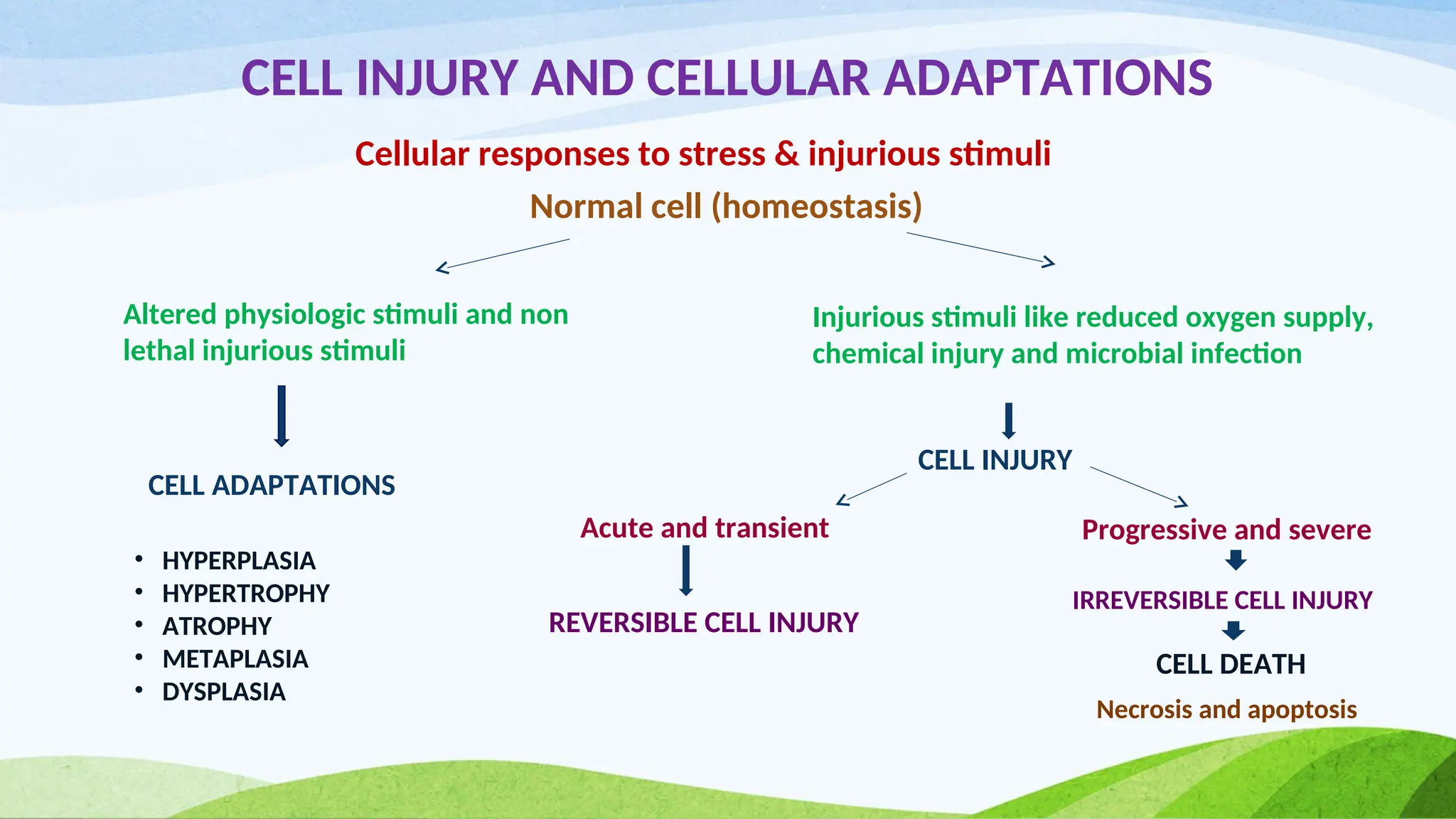
Cellular responses to stress & injurious stimuli
Normal cell (homeostasis)
Altered physiologic stimuli and non
lethal injurious stimuli
Injurious stimuli like reduced oxygen supply,
chemical injury and microbial infection
CELL ADAPTATIONS
CELL INJURY
Acute and transient Progressive and severe
REVERSIBLE CELL INJURY
IRREVERSIBLE CELL INJURY
CELL DEATH
• HYPERPLASIA
• HYPERTROPHY
• ATROPHY
• METAPLASIA
• DYSPLASIA
Necrosis and apoptosis
CELL ADAPTATIONS
HYPERPLASIA
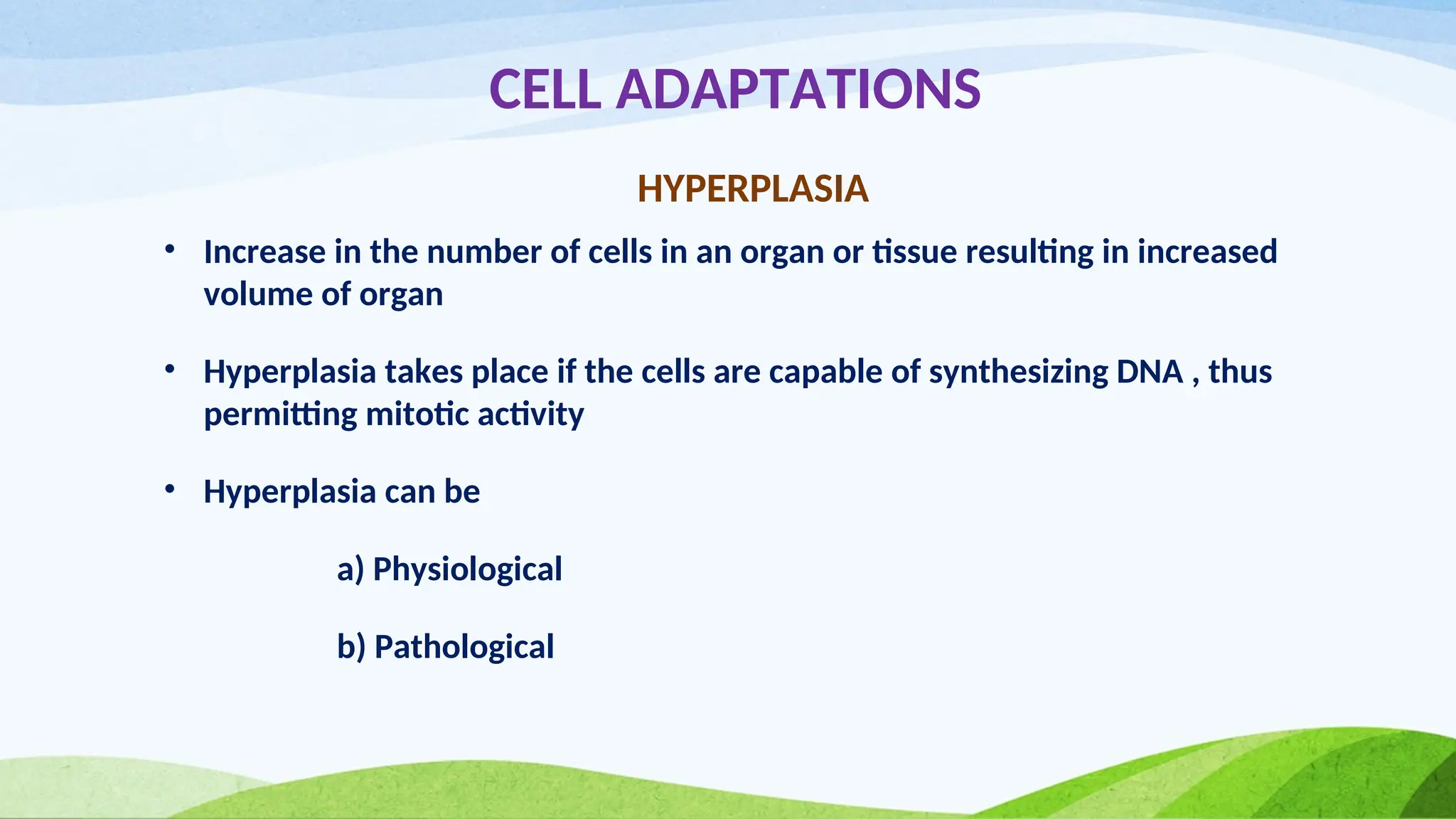
• Increase in the number of cells in an organ or tissue resulting in increased
volume of organ
• Hyperplasia takes place if the cells are capable of synthesizing DNA , thus
permitting mitotic activity
• Hyperplasia can be
a) Physiological
b) Pathological
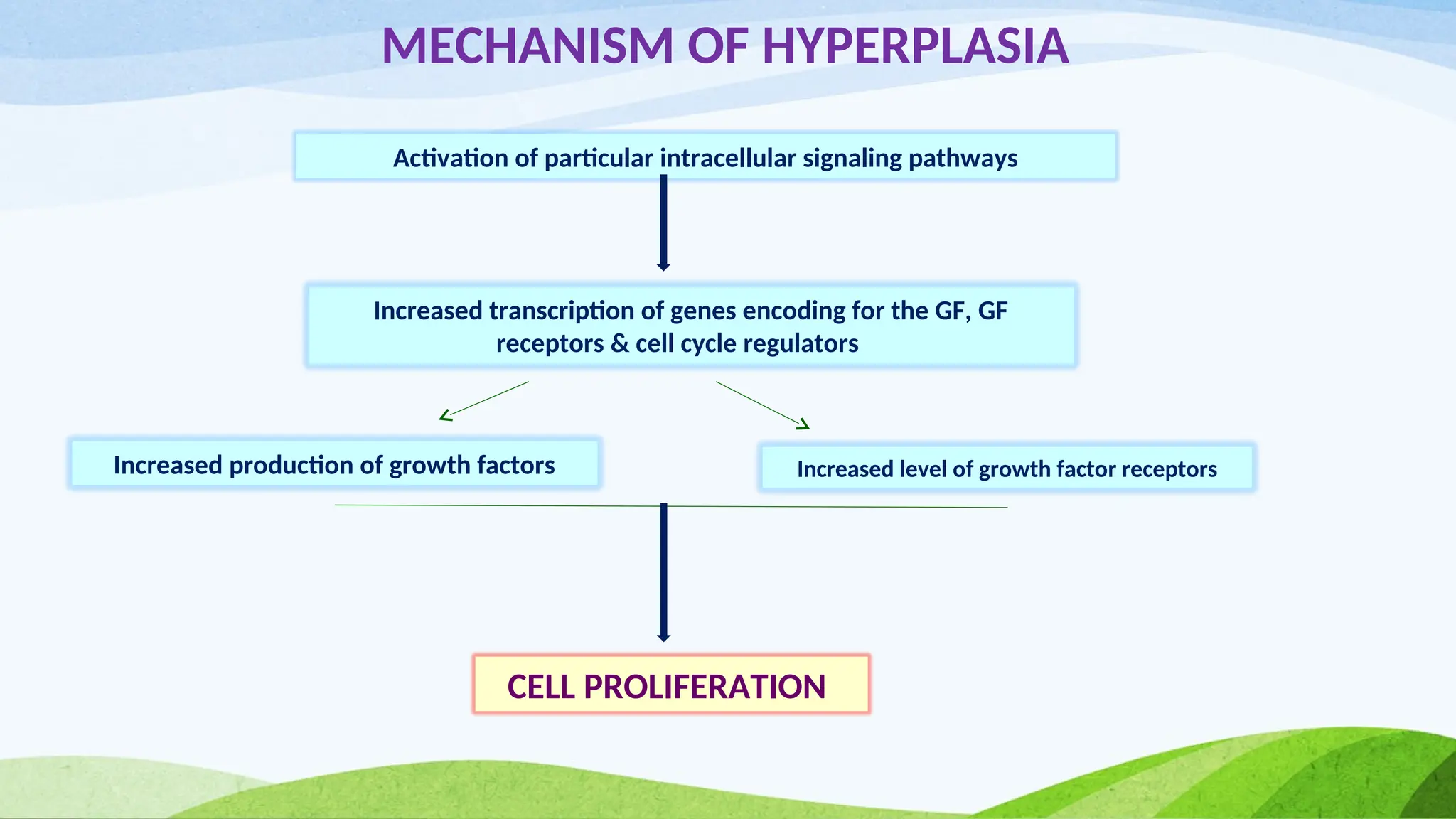
MECHANISM OF HYPERPLASIA
Activation of particular intracellular signaling pathways
Increased transcription of genes encoding for the GF, GF
receptors & cell cycle regulators
Increased production of growth factors Increased level of growth factor receptors
CELL PROLIFERATION
CELL ADAPTATIONS
HYPERPLASIA
PHYSOLOGICAL HYPERPLASIA
This can be divided into
a) Hormonal hyperplasia – increase in functional capacity of a tissue when needed
Eg – proliferation of glandular epithelium of female breast
b) Compensatory hyperplasia – increase in tissue mass after damage or partial
resection
Eg – Liver after partial resection
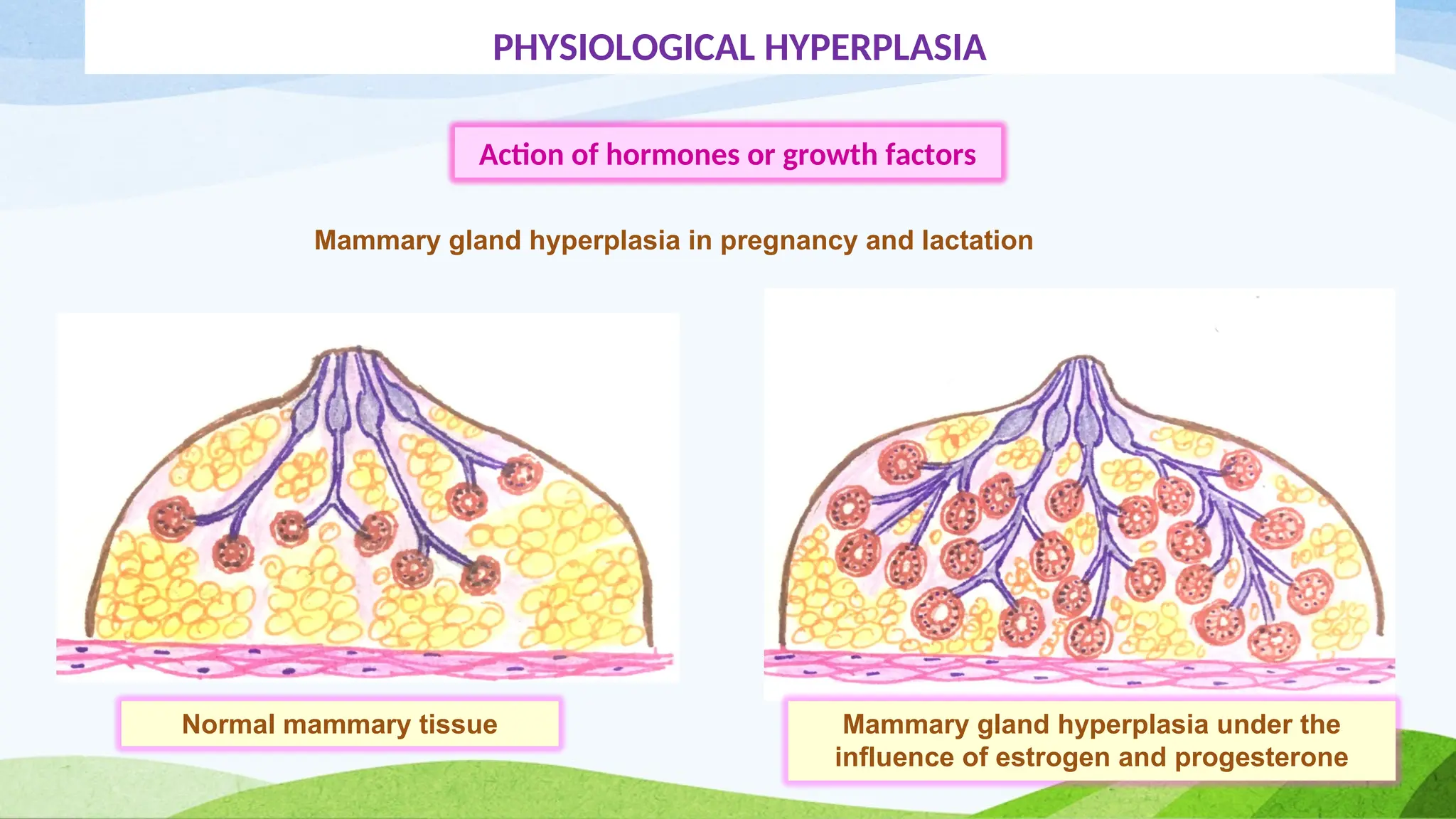
PHYSIOLOGICAL HYPERPLASIA
Action of hormones or growth factors
Mammary gland hyperplasia in pregnancy and lactation
Normal mammary tissue Mammary gland hyperplasia under the
influence of estrogen and progesterone
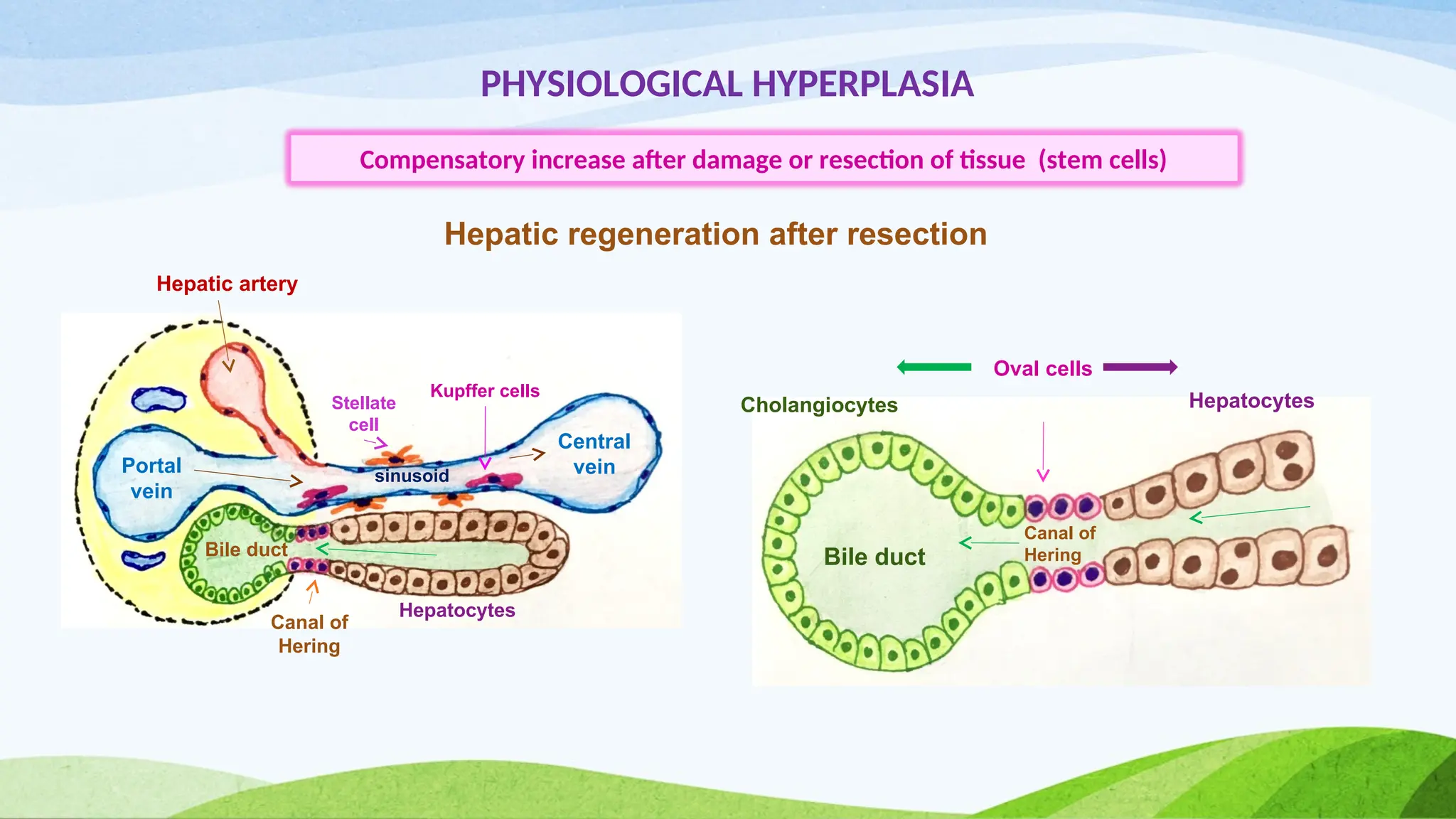
PHYSIOLOGICAL HYPERPLASIA
Compensatory increase after damage or resection of tissue (stem cells)
Portal
vein
Central
vein
Hepatic artery
Bile duct
Canal of
Hering
Stellate
cell
Kupffer cells
Hepatocytes
Oval cells
sinusoid
Cholangiocytes Hepatocytes
Bile duct
Canal of
Hering
Hepatic regeneration after resection
CELL ADAPTATIONS
HYPERPLASIA
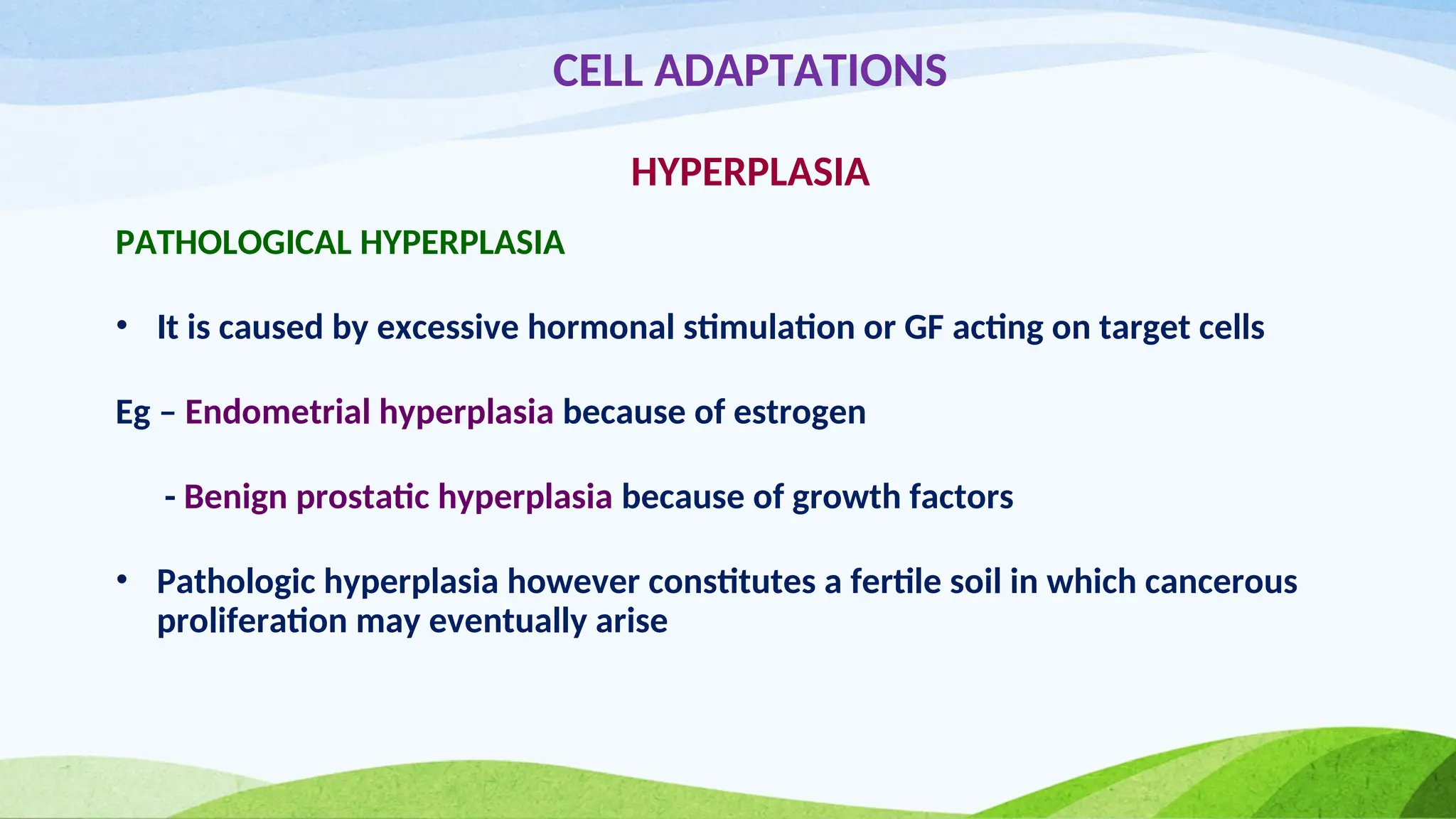
PATHOLOGICAL HYPERPLASIA
• It is caused by excessive hormonal stimulation or GF acting on target cells
Eg – Endometrial hyperplasia because of estrogen
- Benign prostatic hyperplasia because of growth factors
• Pathologic hyperplasia however constitutes a fertile soil in which cancerous
proliferation may eventually arise
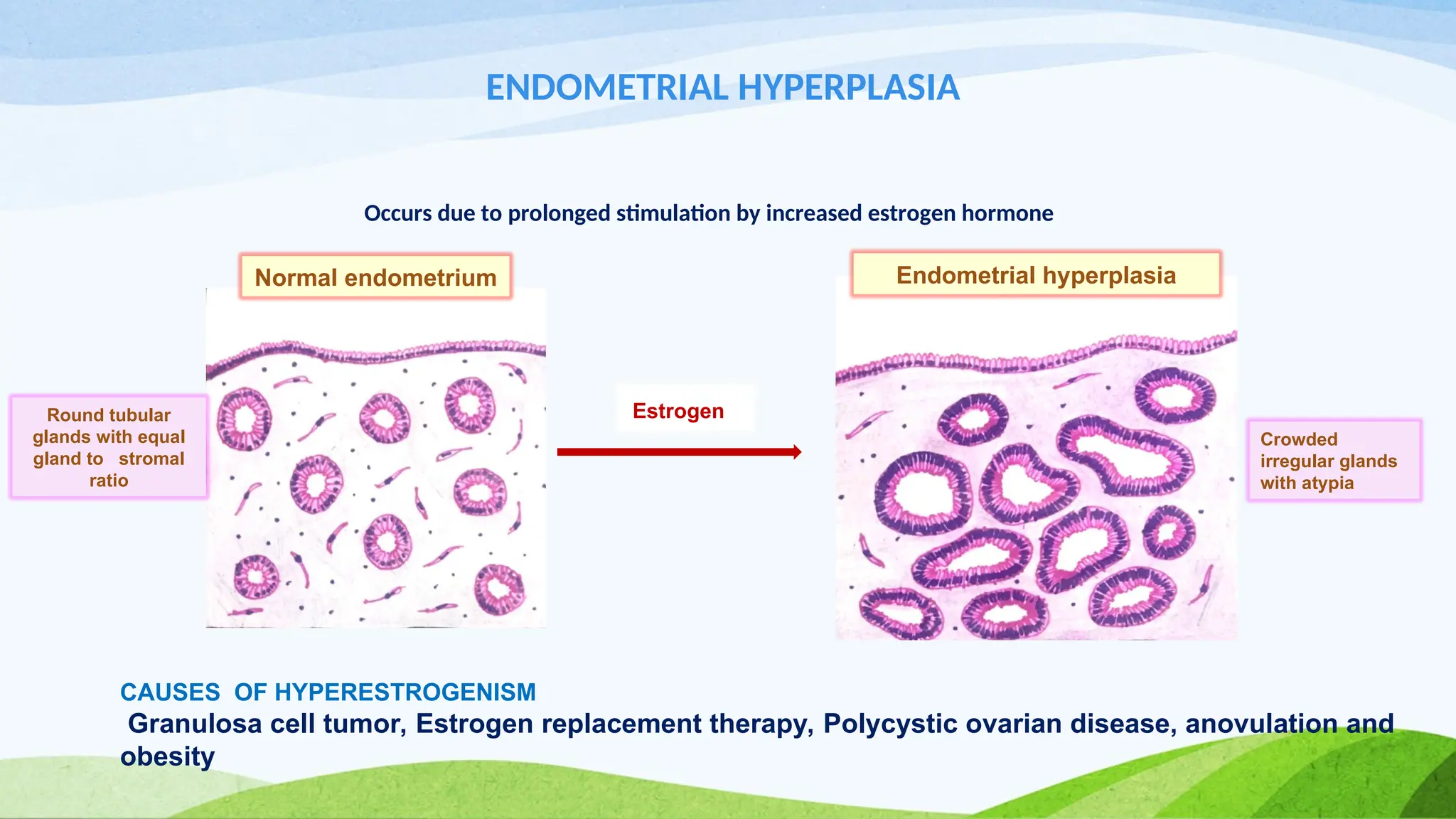
ENDOMETRIAL HYPERPLASIA
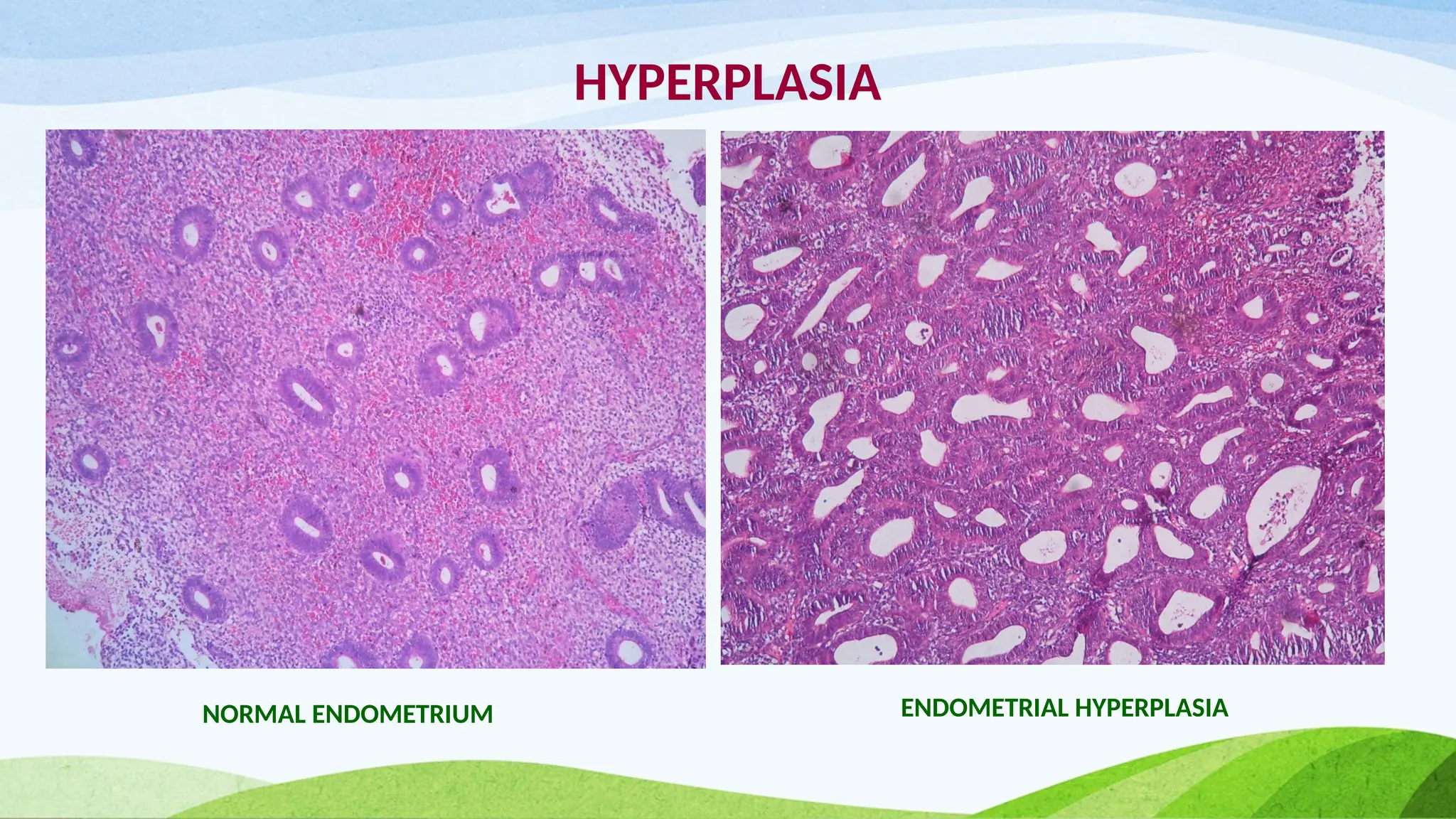
Occurs due to prolonged stimulation by increased estrogen hormone
CAUSES OF HYPERESTROGENISM
Granulosa cell tumor, Estrogen replacement therapy, Polycystic ovarian disease, anovulation and
obesity
Estrogen
Crowded
irregular glands
with atypia
Round tubular
glands with equal
gland to stromal
ratio
Normal endometrium Endometrial hyperplasia
HYPERPLASIA
NORMAL ENDOMETRIUM ENDOMETRIAL HYPERPLASIA
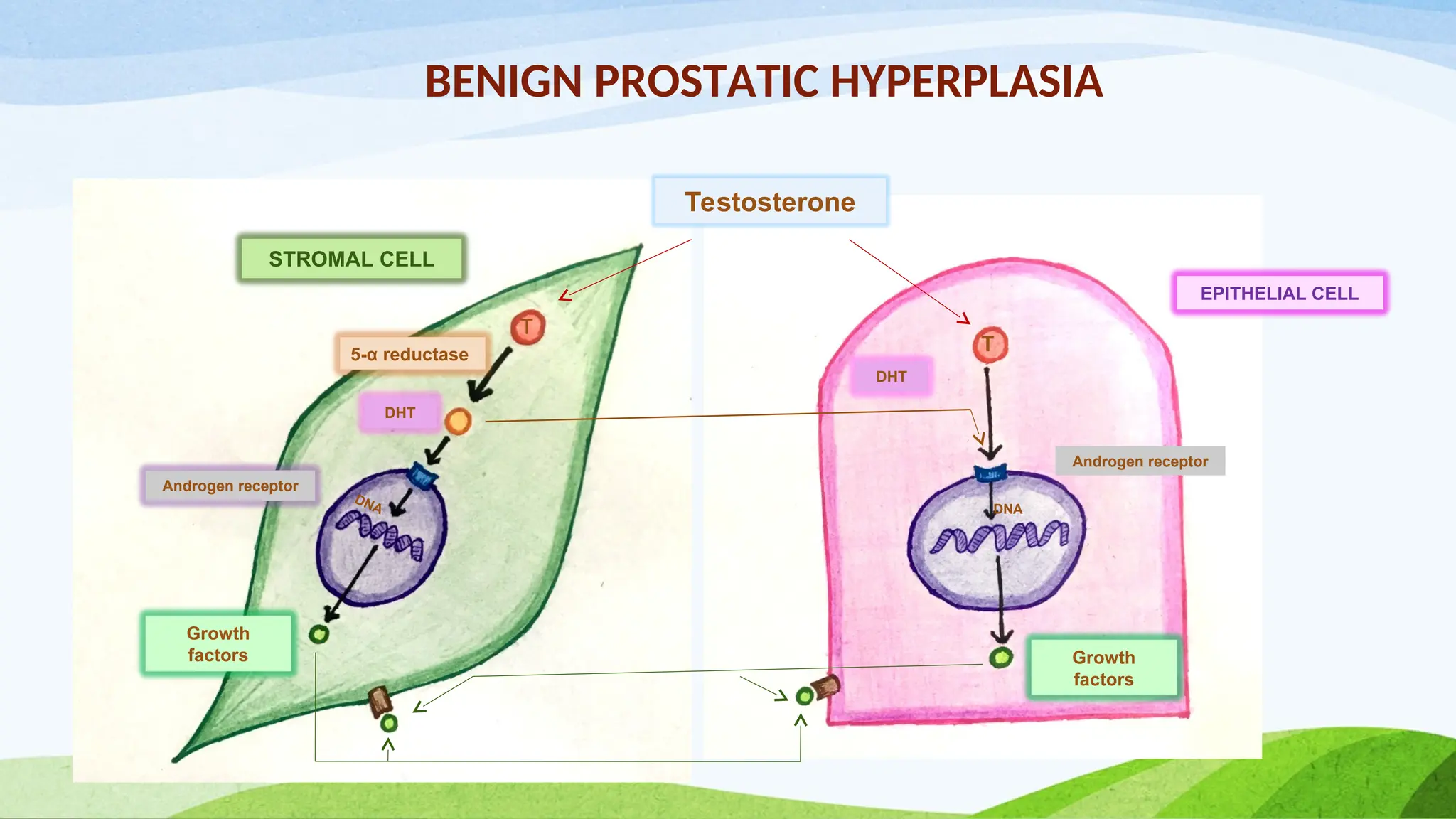
BENIGN PROSTATIC HYPERPLASIA
T
T
Testosterone
DHT
5-α reductase
Androgen receptor
Androgen receptor
DNA
DNA
Growth
factors Growth
factors
STROMAL CELL
EPITHELIAL CELL
DHT
CELL ADAPTATIONS
HYPERTROPHY
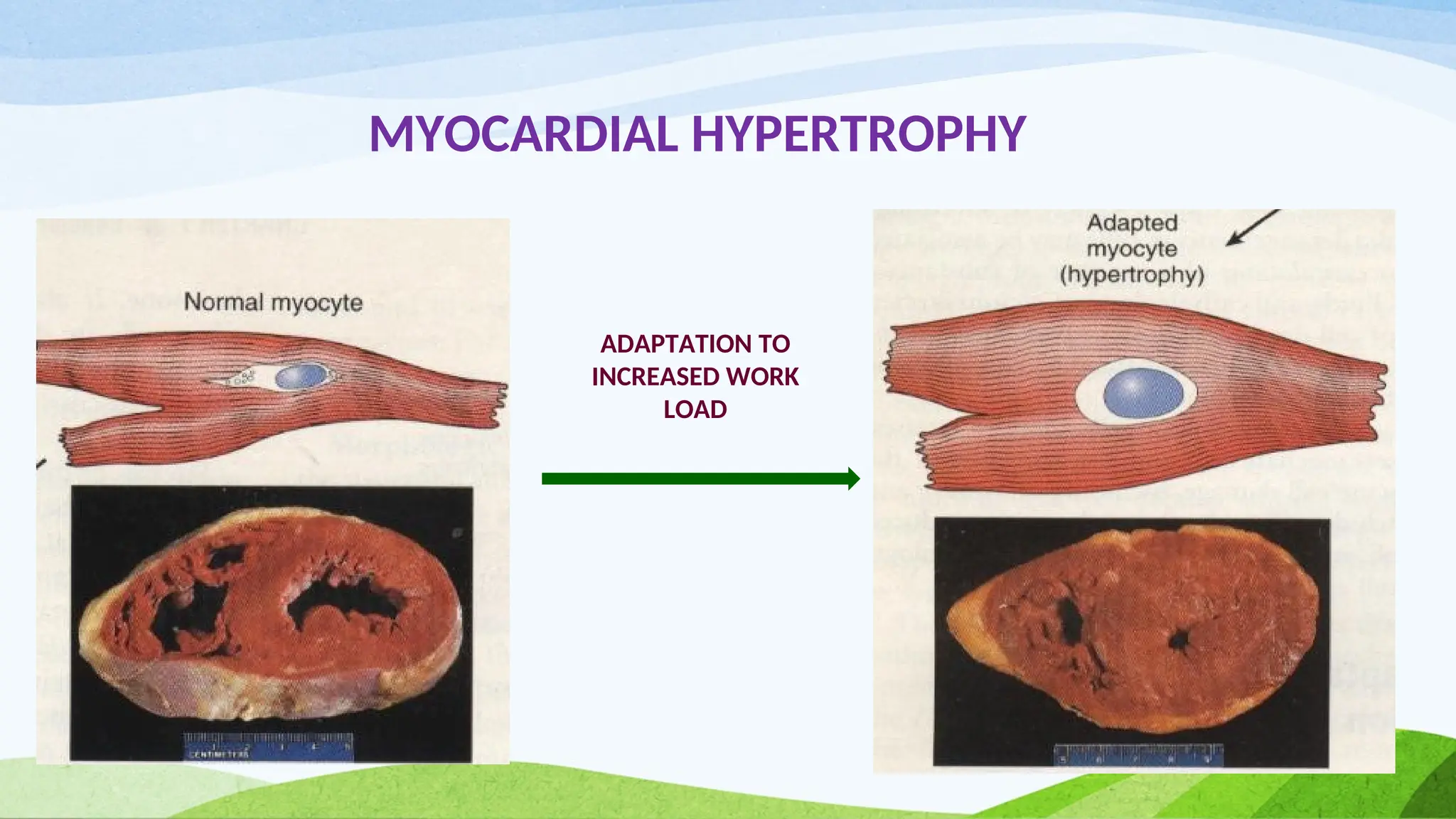
• Hypertrophy refers to an increase in the size of cells , resulting in an
increase in the size of the organ (no new cells but larger cells )
• This is more common in non-dividing cells
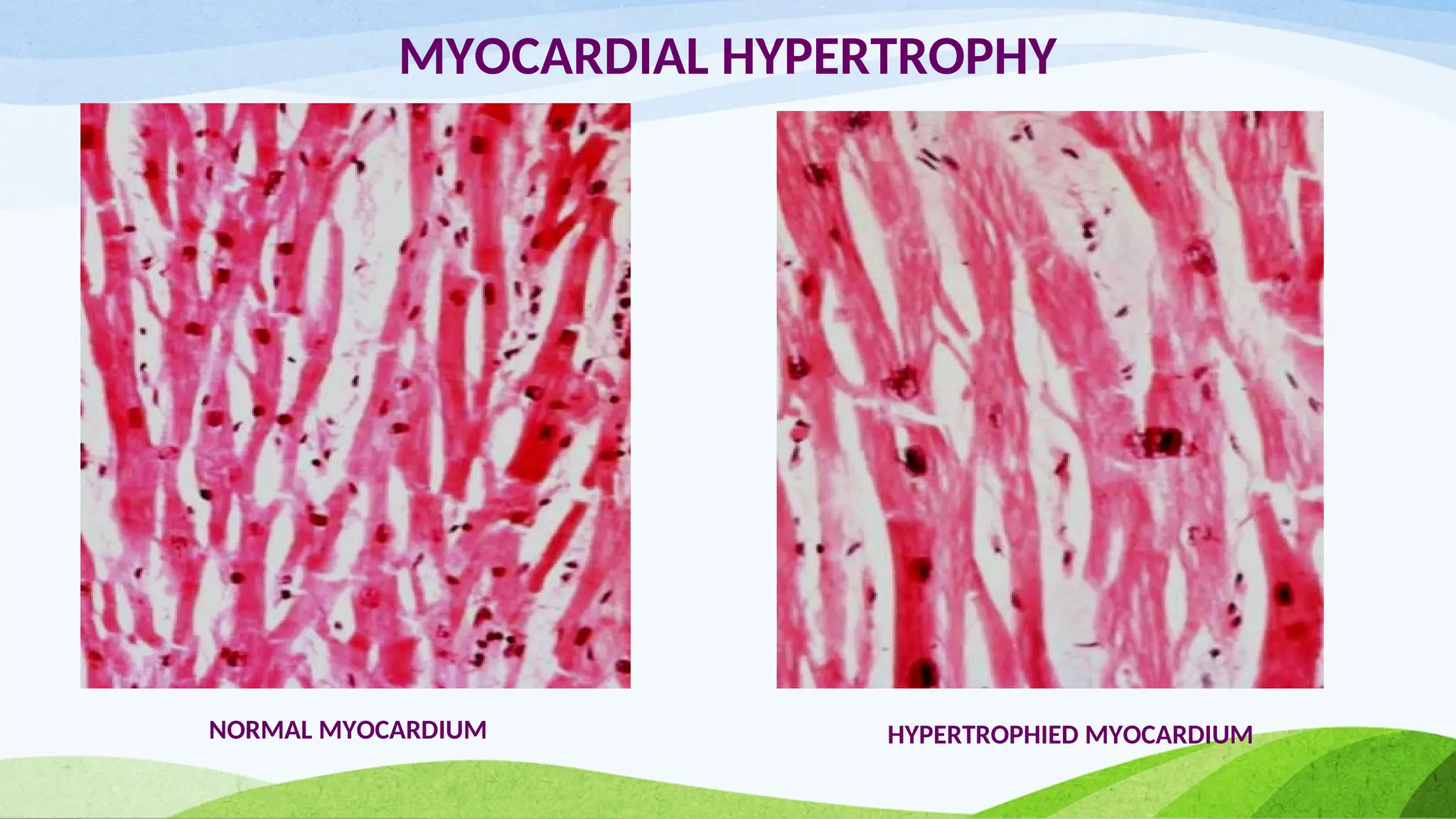
eg. Myocardial fibers
• It can be physiologic or pathologic & is caused by increased
functional demand or by specific hormonal stimulation
CELL ADAPTATIONS
HYPERTROPHY
Some of the examples of hypertrophy are
a) Bulging of muscles in body builders
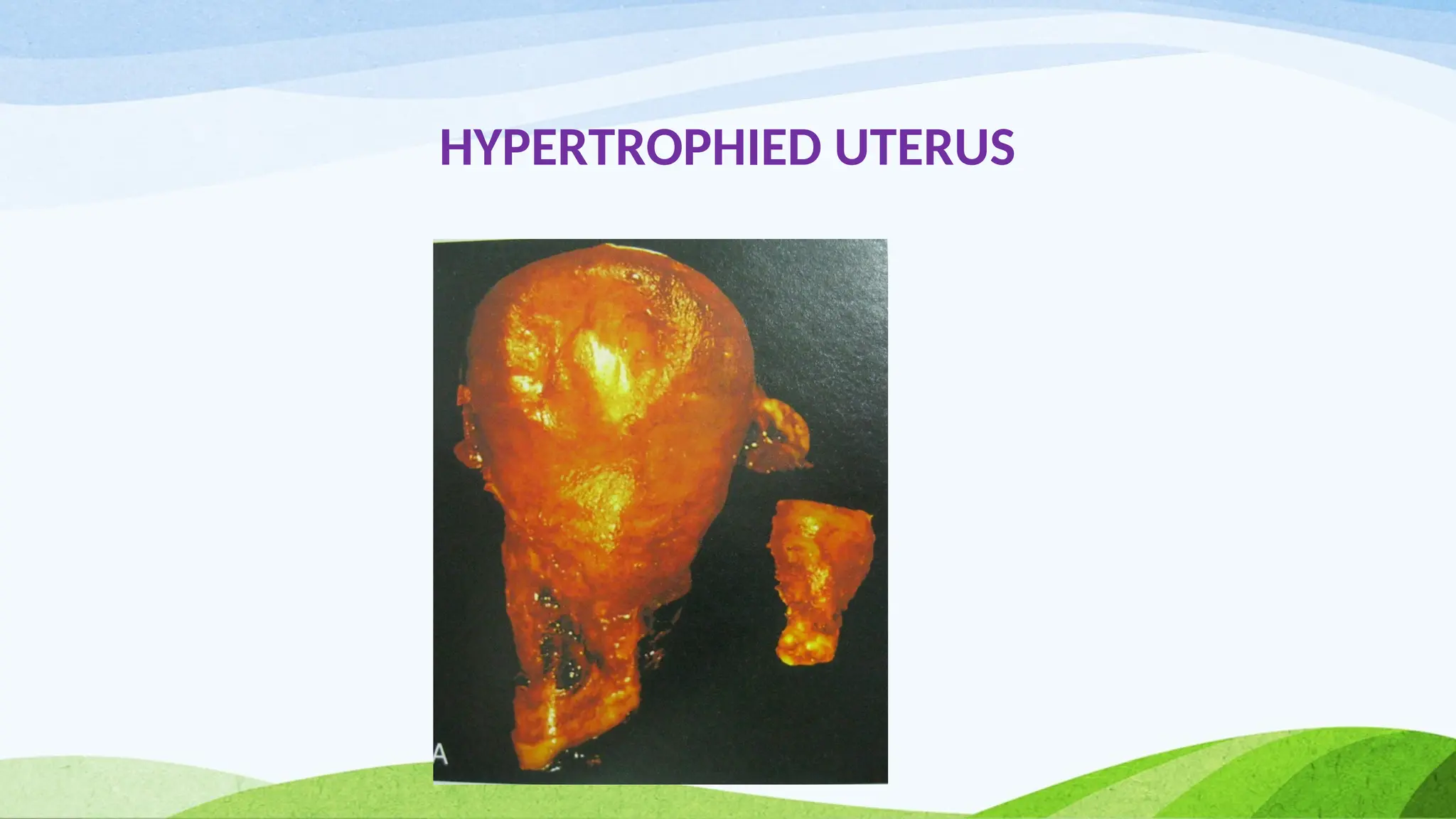
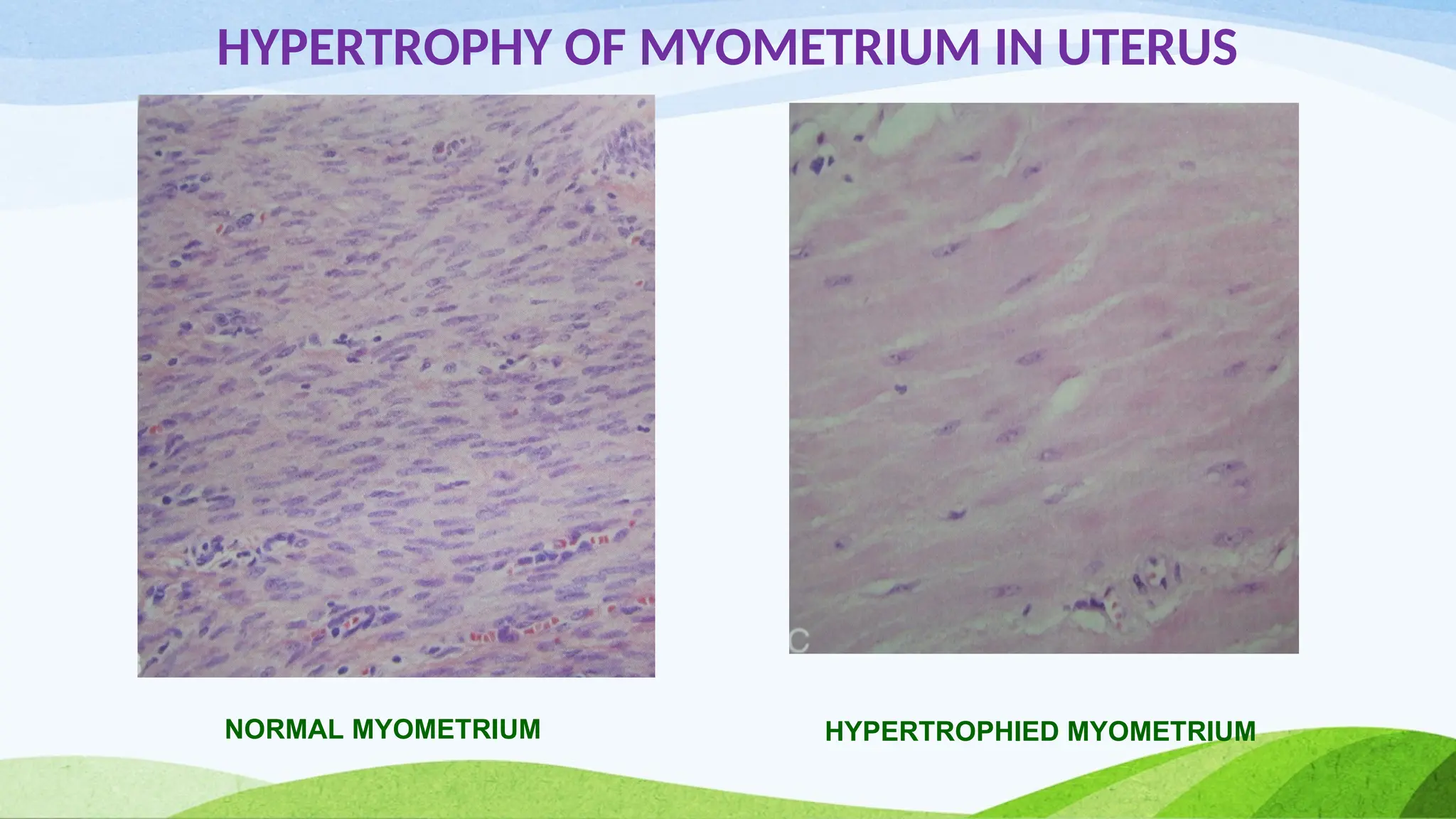
b) Massive physiological growth of the uterus during pregnancy – hormone
induced increase in size of an organ
c) Hypertrophy of myocardium
CELL ADAPTATIONS
HYPERTROPHY
• Hypertrophy results from increased production of cellular proteins
• Mechanical stress and growth factors induce increased production of
proteins which causes hypertrophy
• Selective hypertrophy can occur at the subcellular organelle level also
eg – Individuals taking barbiturate drugs show hypertrophy of smooth
muscle ER in hepatocytes
HYPERTROPHIED UTERUS
HYPERTROPHY OF MYOMETRIUM IN UTERUS
NORMAL MYOMETRIUM HYPERTROPHIED MYOMETRIUM
MYOCARDIAL HYPERTROPHY
ADAPTATION TO
INCREASED WORK
LOAD
MYOCARDIAL HYPERTROPHY
NORMAL MYOCARDIUM HYPERTROPHIED MYOCARDIUM
CELL ADAPTATIONS
HYPERTROPHY
• If the hypertrophied muscle mass cannot compensate for the increased work load
, degenerative changes occur
• The limiting factors for continued hypertrophy may be –
a) Limitations of vascular supply to the enlarged fibers
b) Diminished oxidative capabilities of mitochondria
c) Alterations in protein synthesis & degradation
d) Cytoskeletal alterations
CELL ADAPTATIONS
ATROPHY
• Reduction in the size of the organ or tissue resulting from
decrease in cell size and number is called atrophy
• This is divided into -
a) Physiologic
b) Pathologic
CELL ADAPTATIONS
ATROPHY
PHYSIOLOGIC ATROPHY
• Some embryologic structures like thyroglossal duct & Ductus
arterioses
• Decrease in size of the uterus after parturition
CELL ADAPTATIONS
ATROPHY
PATHOLOGIC ATROPHY
This depends on the underlying cause –
a) Decreased work load – immobilized broken limb in plaster cast
b) Denervation atrophy
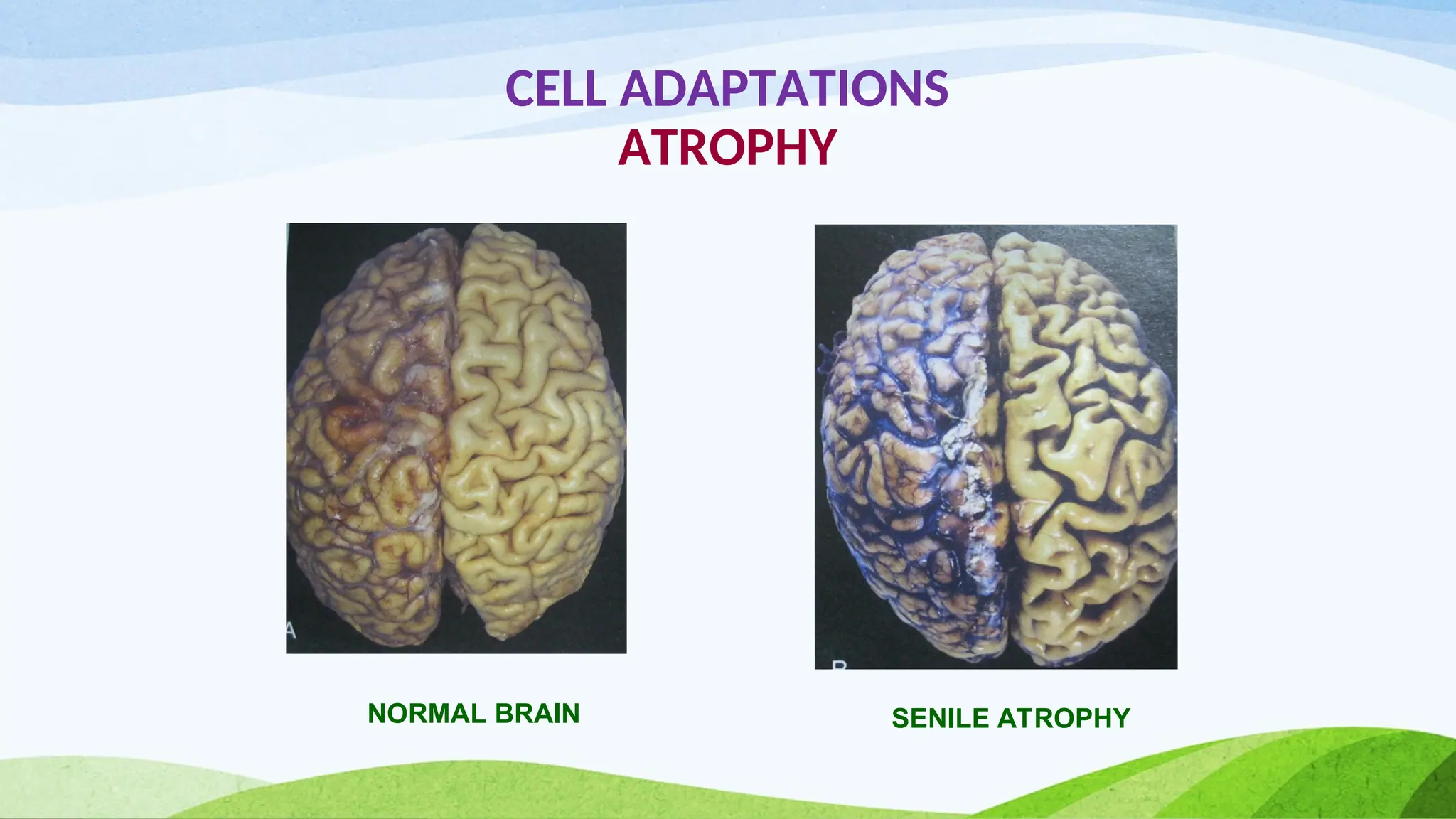
c) Diminished blood supply – e.g. Brain in aged
d) Inadequate nutrition – Marasmus and cachexia in cancer pts
e) Loss of endocrine stimulation
f) Ageing ( senile atrophy ) - in brain & heart
g) Pressure – tissue compression for long time by enlarging benign tumor
CELL ADAPTATIONS
ATROPHY
MECHANISM OF ATROPHY
• Results from decreased protein synthesis and increased protein
degradation by ubiquitin proteosome pathway
• Nutrient deficiency and disuse may activate ubiquitin ligases which
attach the small peptide ubiquitin to cellular proteins and target
these proteins for degradation in proteosomes
• In some cases atrophy is due to autophagy of cells own organelles
CELL ADAPTATIONS
ATROPHY
NORMAL BRAIN SENILE ATROPHY
CELL ADAPTATIONS
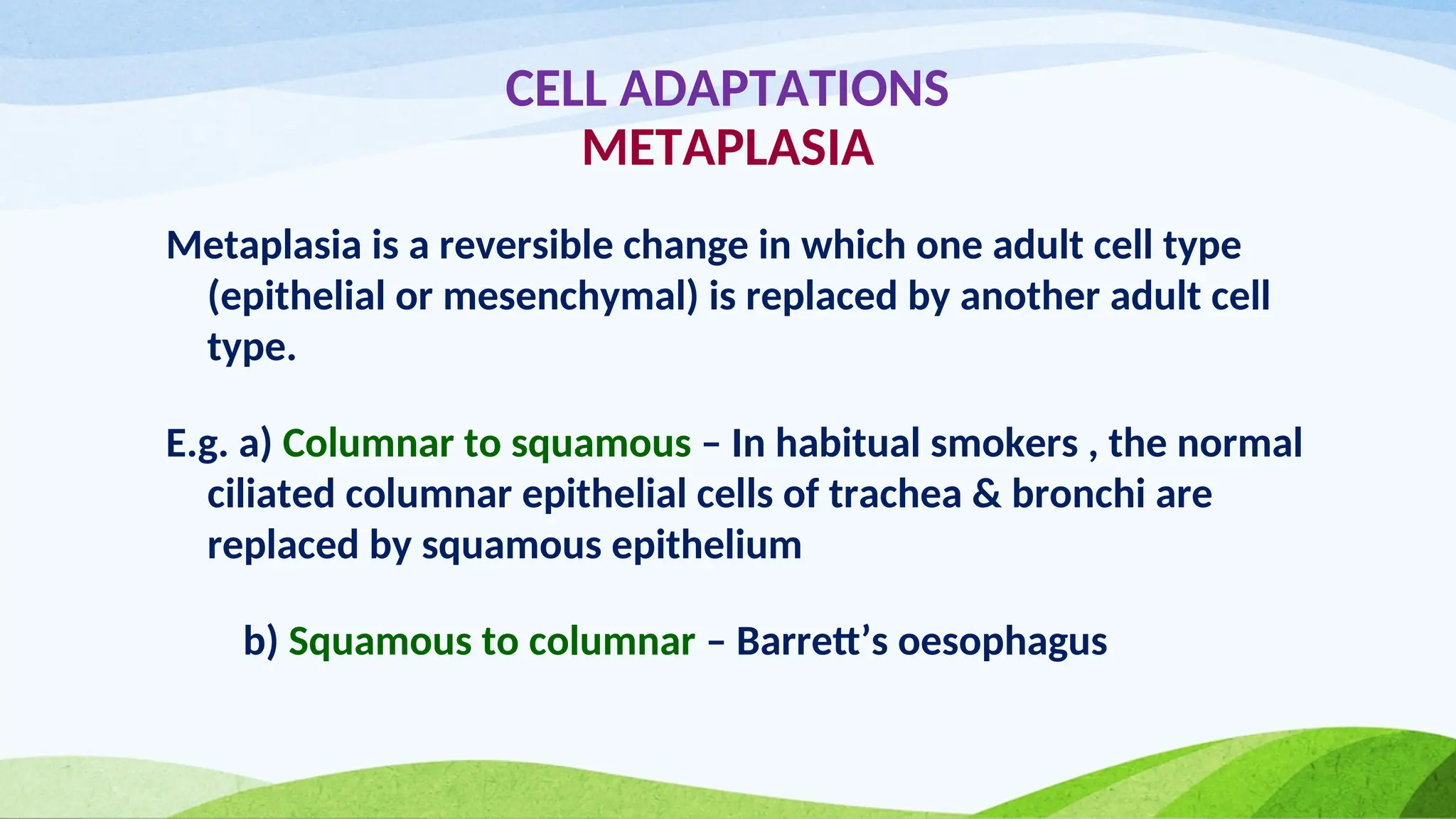
METAPLASIA
Metaplasia is a reversible change in which one adult cell type
(epithelial or mesenchymal) is replaced by another adult cell
type.
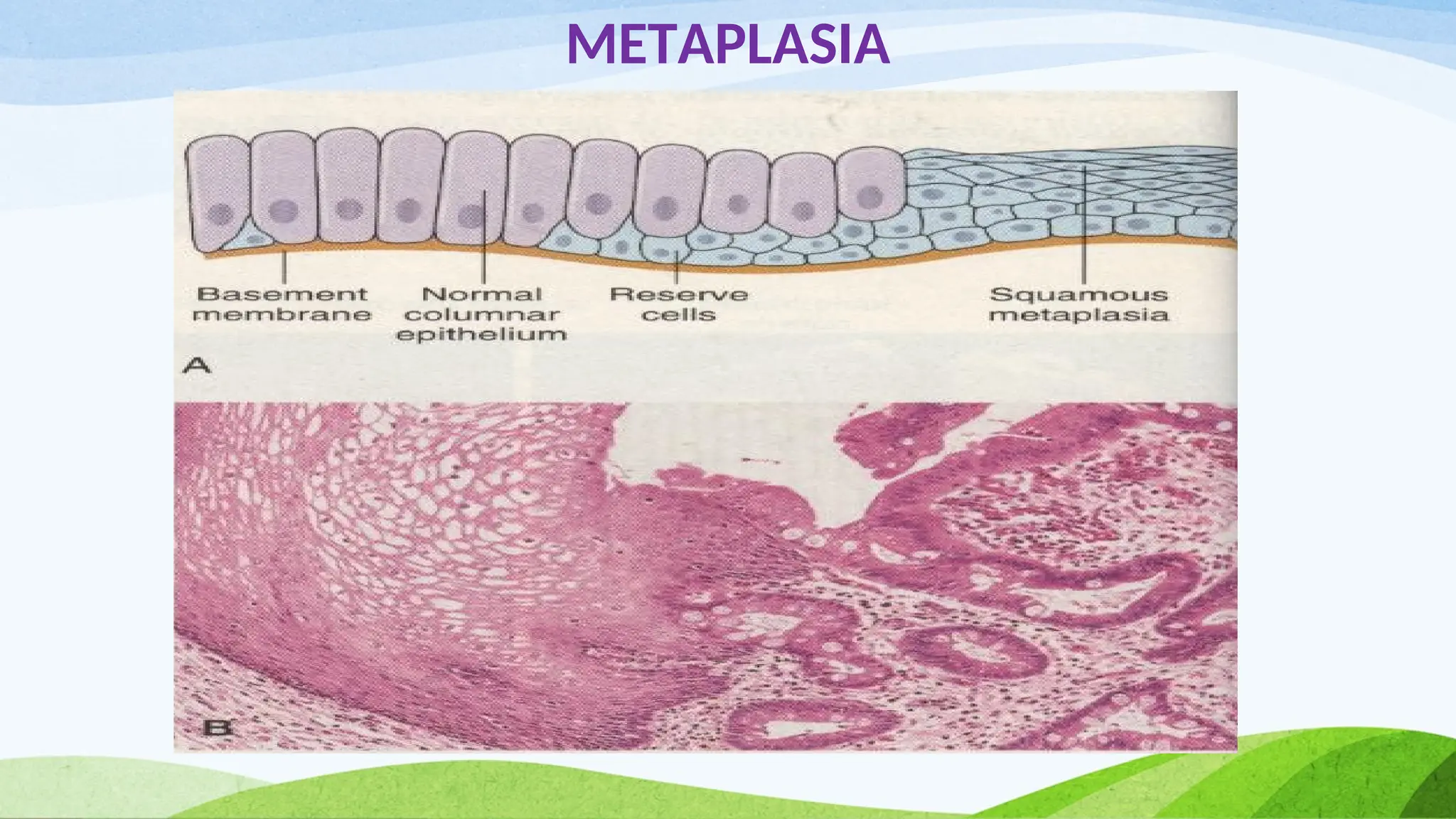
E.g. a) Columnar to squamous – In habitual smokers , the normal
ciliated columnar epithelial cells of trachea & bronchi are
replaced by squamous epithelium
b) Squamous to columnar – Barrett’s oesophagus
CELL ADAPTATIONS
METAPLASIA
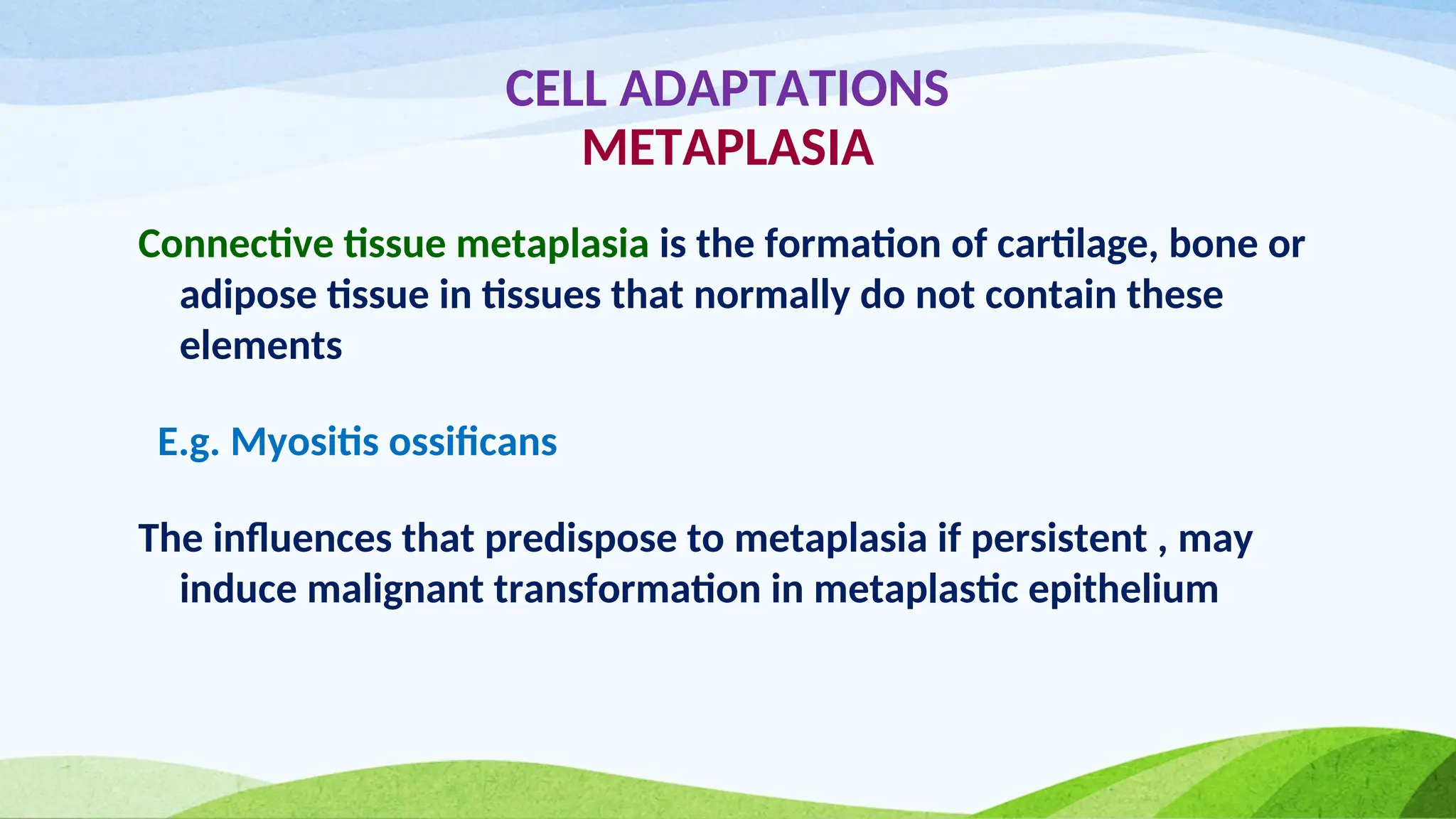
Connective tissue metaplasia is the formation of cartilage, bone or
adipose tissue in tissues that normally do not contain these
elements
E.g. Myositis ossificans
The influences that predispose to metaplasia if persistent , may
induce malignant transformation in metaplastic epithelium
METAPLASIA
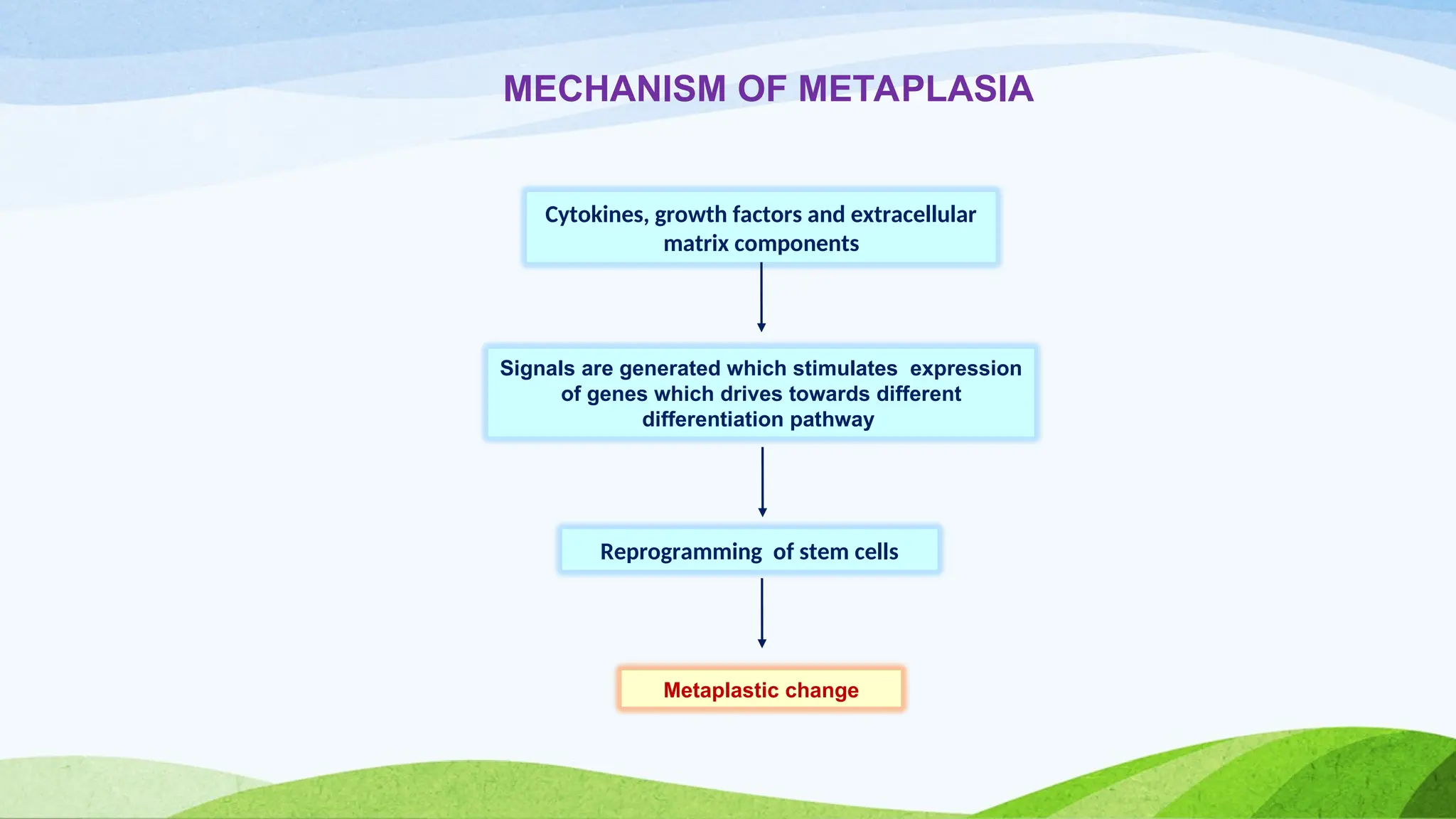
Cytokines, growth factors and extracellular
matrix components
Signals are generated which stimulates expression
of genes which drives towards different
differentiation pathway
Reprogramming of stem cells
Metaplastic change
MECHANISM OF METAPLASIA
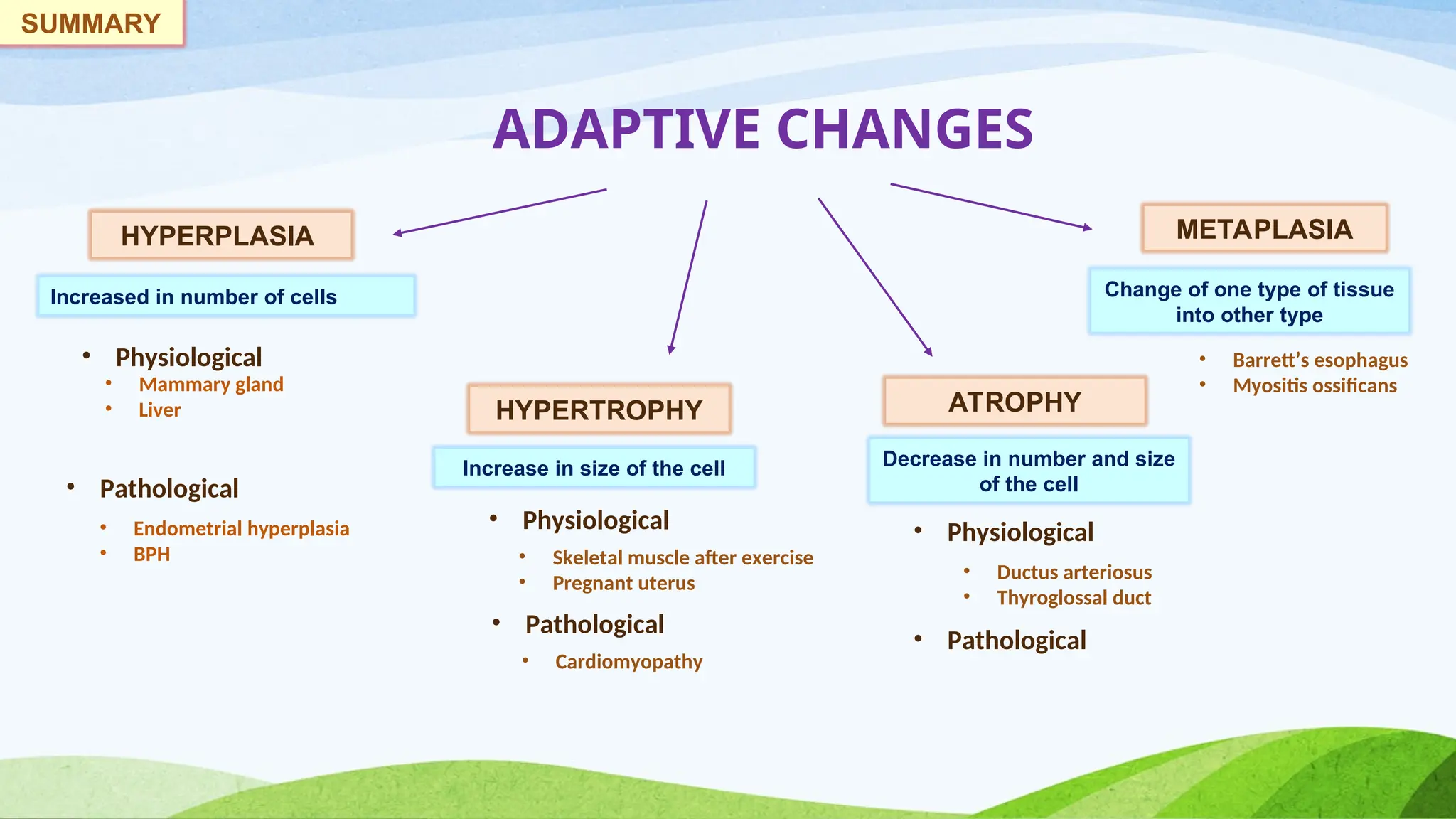
ADAPTIVE CHANGES
HYPERPLASIA
HYPERTROPHY ATROPHY
METAPLASIA
Increased in number of cells
Increase in size of the cell Decrease in number and size
of the cell
Change of one type of tissue
into other type
• Physiological
• Pathological
• Mammary gland
• Liver
• Endometrial hyperplasia
• BPH
• Physiological
• Pathological
• Pathological
• Physiological
• Skeletal muscle after exercise
• Pregnant uterus
• Cardiomyopathy
• Ductus arteriosus
• Thyroglossal duct
• Barrett’s esophagus
• Myositis ossificans
SUMMARY
THANK YOU
The real measure of
your wealth is how
much you would be
worth if you lost all your
money

cell-injury-and-adaptations-Ippt general

  • 1.
    CELL INJURY CELLULAR ADAPTATIONS Dr.V.Shanthi Associate professor Department of Pathology
  • 2.
    CELL INJURY ANDCELLULAR ADAPTATIONS • Homeostasis – cell maintaining a steady state and handling the physiological demand • Adaptations – A new altered steady state with structural and functional changes in cell to handle the severe physiologic stress and some pathologic stimuli • Cell adaptations are reversible and cell can revert back to normal when the stimuli is removed
  • 3.
    CELL INJURY ANDCELLULAR ADAPTATIONS Cellular responses to stress & injurious stimuli Normal cell (homeostasis) Altered physiologic stimuli and non lethal injurious stimuli Injurious stimuli like reduced oxygen supply, chemical injury and microbial infection CELL ADAPTATIONS CELL INJURY Acute and transient Progressive and severe REVERSIBLE CELL INJURY IRREVERSIBLE CELL INJURY CELL DEATH • HYPERPLASIA • HYPERTROPHY • ATROPHY • METAPLASIA • DYSPLASIA Necrosis and apoptosis
  • 4.
    CELL ADAPTATIONS HYPERPLASIA • Increasein the number of cells in an organ or tissue resulting in increased volume of organ • Hyperplasia takes place if the cells are capable of synthesizing DNA , thus permitting mitotic activity • Hyperplasia can be a) Physiological b) Pathological
  • 5.
    MECHANISM OF HYPERPLASIA Activationof particular intracellular signaling pathways Increased transcription of genes encoding for the GF, GF receptors & cell cycle regulators Increased production of growth factors Increased level of growth factor receptors CELL PROLIFERATION
  • 6.
    CELL ADAPTATIONS HYPERPLASIA PHYSOLOGICAL HYPERPLASIA Thiscan be divided into a) Hormonal hyperplasia – increase in functional capacity of a tissue when needed Eg – proliferation of glandular epithelium of female breast b) Compensatory hyperplasia – increase in tissue mass after damage or partial resection Eg – Liver after partial resection
  • 7.
    PHYSIOLOGICAL HYPERPLASIA Action ofhormones or growth factors Mammary gland hyperplasia in pregnancy and lactation Normal mammary tissue Mammary gland hyperplasia under the influence of estrogen and progesterone
  • 8.
    PHYSIOLOGICAL HYPERPLASIA Compensatory increaseafter damage or resection of tissue (stem cells) Portal vein Central vein Hepatic artery Bile duct Canal of Hering Stellate cell Kupffer cells Hepatocytes Oval cells sinusoid Cholangiocytes Hepatocytes Bile duct Canal of Hering Hepatic regeneration after resection
  • 9.
    CELL ADAPTATIONS HYPERPLASIA PATHOLOGICAL HYPERPLASIA •It is caused by excessive hormonal stimulation or GF acting on target cells Eg – Endometrial hyperplasia because of estrogen - Benign prostatic hyperplasia because of growth factors • Pathologic hyperplasia however constitutes a fertile soil in which cancerous proliferation may eventually arise
  • 10.
    ENDOMETRIAL HYPERPLASIA Occurs dueto prolonged stimulation by increased estrogen hormone CAUSES OF HYPERESTROGENISM Granulosa cell tumor, Estrogen replacement therapy, Polycystic ovarian disease, anovulation and obesity Estrogen Crowded irregular glands with atypia Round tubular glands with equal gland to stromal ratio Normal endometrium Endometrial hyperplasia
  • 11.
  • 12.
    BENIGN PROSTATIC HYPERPLASIA T T Testosterone DHT 5-αreductase Androgen receptor Androgen receptor DNA DNA Growth factors Growth factors STROMAL CELL EPITHELIAL CELL DHT
  • 13.
    CELL ADAPTATIONS HYPERTROPHY • Hypertrophyrefers to an increase in the size of cells , resulting in an increase in the size of the organ (no new cells but larger cells ) • This is more common in non-dividing cells eg. Myocardial fibers • It can be physiologic or pathologic & is caused by increased functional demand or by specific hormonal stimulation
  • 14.
    CELL ADAPTATIONS HYPERTROPHY Some ofthe examples of hypertrophy are a) Bulging of muscles in body builders b) Massive physiological growth of the uterus during pregnancy – hormone induced increase in size of an organ c) Hypertrophy of myocardium
  • 15.
    CELL ADAPTATIONS HYPERTROPHY • Hypertrophyresults from increased production of cellular proteins • Mechanical stress and growth factors induce increased production of proteins which causes hypertrophy • Selective hypertrophy can occur at the subcellular organelle level also eg – Individuals taking barbiturate drugs show hypertrophy of smooth muscle ER in hepatocytes
  • 16.
  • 17.
    HYPERTROPHY OF MYOMETRIUMIN UTERUS NORMAL MYOMETRIUM HYPERTROPHIED MYOMETRIUM
  • 18.
  • 19.
  • 20.
    CELL ADAPTATIONS HYPERTROPHY • Ifthe hypertrophied muscle mass cannot compensate for the increased work load , degenerative changes occur • The limiting factors for continued hypertrophy may be – a) Limitations of vascular supply to the enlarged fibers b) Diminished oxidative capabilities of mitochondria c) Alterations in protein synthesis & degradation d) Cytoskeletal alterations
  • 21.
    CELL ADAPTATIONS ATROPHY • Reductionin the size of the organ or tissue resulting from decrease in cell size and number is called atrophy • This is divided into - a) Physiologic b) Pathologic
  • 22.
    CELL ADAPTATIONS ATROPHY PHYSIOLOGIC ATROPHY •Some embryologic structures like thyroglossal duct & Ductus arterioses • Decrease in size of the uterus after parturition
  • 23.
    CELL ADAPTATIONS ATROPHY PATHOLOGIC ATROPHY Thisdepends on the underlying cause – a) Decreased work load – immobilized broken limb in plaster cast b) Denervation atrophy c) Diminished blood supply – e.g. Brain in aged d) Inadequate nutrition – Marasmus and cachexia in cancer pts e) Loss of endocrine stimulation f) Ageing ( senile atrophy ) - in brain & heart g) Pressure – tissue compression for long time by enlarging benign tumor
  • 24.
    CELL ADAPTATIONS ATROPHY MECHANISM OFATROPHY • Results from decreased protein synthesis and increased protein degradation by ubiquitin proteosome pathway • Nutrient deficiency and disuse may activate ubiquitin ligases which attach the small peptide ubiquitin to cellular proteins and target these proteins for degradation in proteosomes • In some cases atrophy is due to autophagy of cells own organelles
  • 25.
  • 26.
    CELL ADAPTATIONS METAPLASIA Metaplasia isa reversible change in which one adult cell type (epithelial or mesenchymal) is replaced by another adult cell type. E.g. a) Columnar to squamous – In habitual smokers , the normal ciliated columnar epithelial cells of trachea & bronchi are replaced by squamous epithelium b) Squamous to columnar – Barrett’s oesophagus
  • 27.
    CELL ADAPTATIONS METAPLASIA Connective tissuemetaplasia is the formation of cartilage, bone or adipose tissue in tissues that normally do not contain these elements E.g. Myositis ossificans The influences that predispose to metaplasia if persistent , may induce malignant transformation in metaplastic epithelium
  • 28.
  • 29.
    Cytokines, growth factorsand extracellular matrix components Signals are generated which stimulates expression of genes which drives towards different differentiation pathway Reprogramming of stem cells Metaplastic change MECHANISM OF METAPLASIA
  • 30.
    ADAPTIVE CHANGES HYPERPLASIA HYPERTROPHY ATROPHY METAPLASIA Increasedin number of cells Increase in size of the cell Decrease in number and size of the cell Change of one type of tissue into other type • Physiological • Pathological • Mammary gland • Liver • Endometrial hyperplasia • BPH • Physiological • Pathological • Pathological • Physiological • Skeletal muscle after exercise • Pregnant uterus • Cardiomyopathy • Ductus arteriosus • Thyroglossal duct • Barrett’s esophagus • Myositis ossificans SUMMARY
  • 31.
    THANK YOU The realmeasure of your wealth is how much you would be worth if you lost all your money

Editor's Notes

  • #12 This occurs due to androgenic (testosterone ) stimulation of prostate in elderly male patients Testosterone in blood 5 α reductase in stromal cells of prostate Dihydrotestosterone (DHT) Acts on the stromal cells and epithelial cells of the prostate proliferation of the cells BPH DHT is 10 times more potent than testosterone