Pre-test
1. What is a cell?
2. Do cells reproduce? Yes or No? If yes, how?
3. What do you think is meant by Rodulf Virchow’s cell
theory, “Cells come from pre-existing cells.”?
4. What is your idea about cell division?
5. A skin tissue is damaged, skin cells then divide to
renew the damaged skin tissue. What do you call that
type of cell division? (Mitosis, Meiosis)
6. Individuals need to maintain the production of egg
cells and sperm cells. What type of cell division do
you think is involved? (Mitosis, Meiosis)
CELL DIVISION
Cell Division
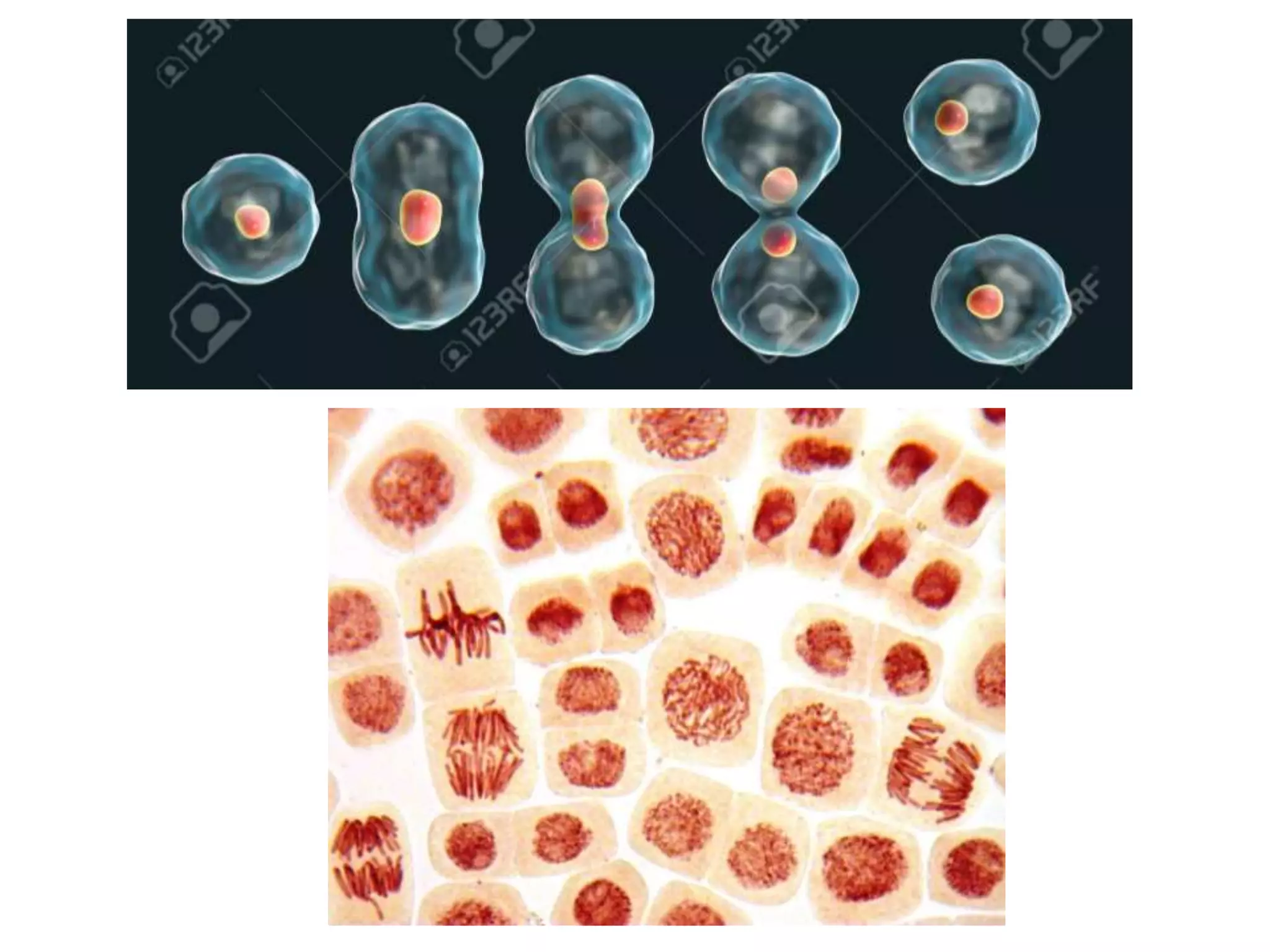
Cell Division — process by which
a cell divides into 2 new cells
• Why do cells need to divide?
1.Living things grow by
producing more cells, NOT
because each cell increases in
size
2.Repair of damaged tissue
• The original cell is called the parent cell; 2 new cells are
called daughter cells
• Before cell division occurs , the cell replicates (copies) all
of its DNA, so each daughter cell gets complete set of
genetic information from parent cell
• Each daughter cell is exactly like the parent cell – same
kind and number of chromosomes as the original cell
Parent Cell
2
Daughter
Cells
•Many organisms, especially unicellular
organisms, reproduce by means of cell division –
called asexual reproduction – Ex: bacteria
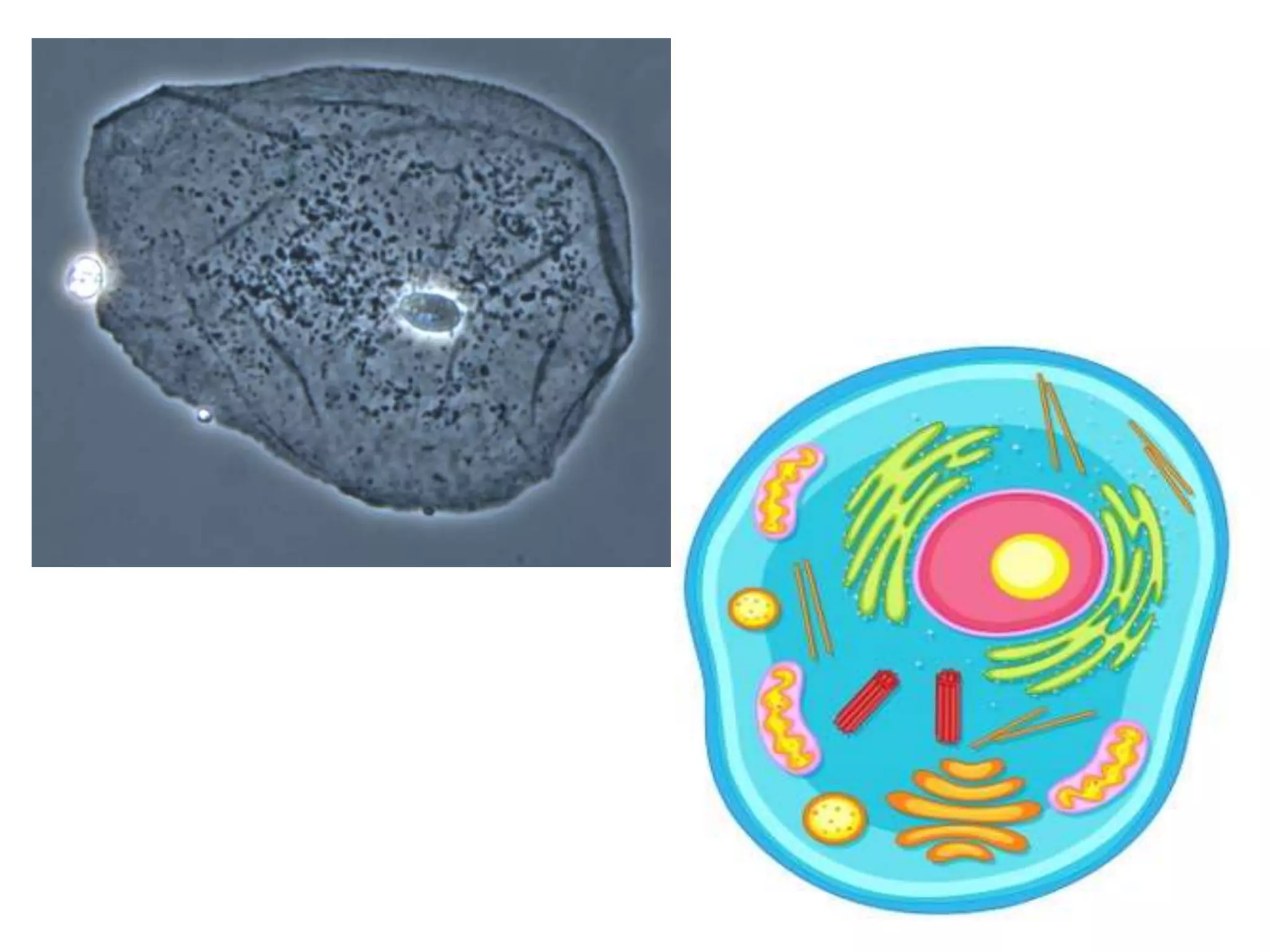
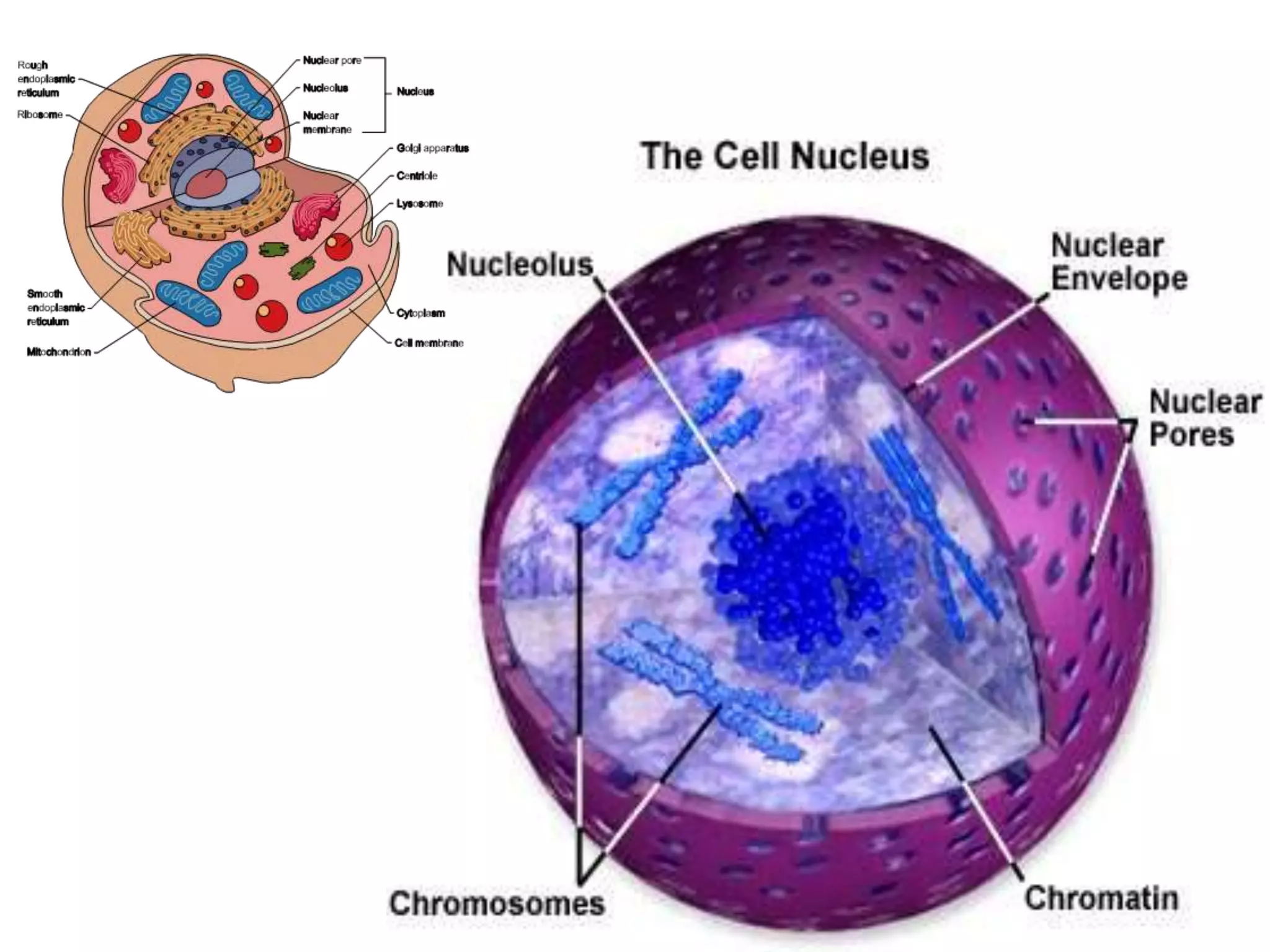
The Animal Cell
Organelles involved in Cell Division
1. NUCLEUS
• The control center of the cell and is bound by
a nuclear membrane.
• It contains the genetic material DNA that is
replicated prior to cell division.
o 2 identical “sister”
chromatids attached at
an area in the middle
called a centromere
o When cells divide,
“sister” chromatids
separate and 1 goes to
each new cell
Chromatin
Duplicates
itself
Coils up into
chromosomes
•Chromatin to chromosomes illustration:
Why does DNA need to change
from chromatin to chromosome?
More efficient division
Chromosome number
•Every organism has its own specific number of
chromosomes
Examples: Human = 46 chromosomes or 23 pairs
Dog = 78 chromosomes or 39 pairs
Goldfish = 94 chromosomes or 47 pairs
Lettuce = 18 chromosomes or 9 pairs
• All somatic (body) cells in an organism have the same
kind and number of chromosomes
Examples: Human = 46 chromosomes
Human skin cell = 46 chromosomes
Human heart cell = 46 chromosomes
Human muscle cell = 46 chromosomes
Fruit fly = 8 chromosomes
Fruit fly skin cell = 8 chromosomes
Fruit fly heart cell = 8 chromosomes
Fruit fly muscle cell = 8 chromosomes
Organelles involved in Cell Division
2. CENTRIOLES
• It is a minute cylindrical organelle arranged
near the nucleus in animal cells. They are
found in pairs and move towards the poles of
the nucleus when it is time for cell division.
• They are also involved in the development of
spindle fibers in cell division.
2 types of Cell Division
Mitosis
• When body cells undergo a cell division.
• Somatic cells
Meiosis
• When sex cells undergo a cell division.
• Gametes (egg, sperm)
Cell Cycle -- series of events cells go through as
they grow and divide
•Cell grows, prepares for division, then divides to
form 2 daughter cells – each of which then begins
the cycle again
The Cell Cycle
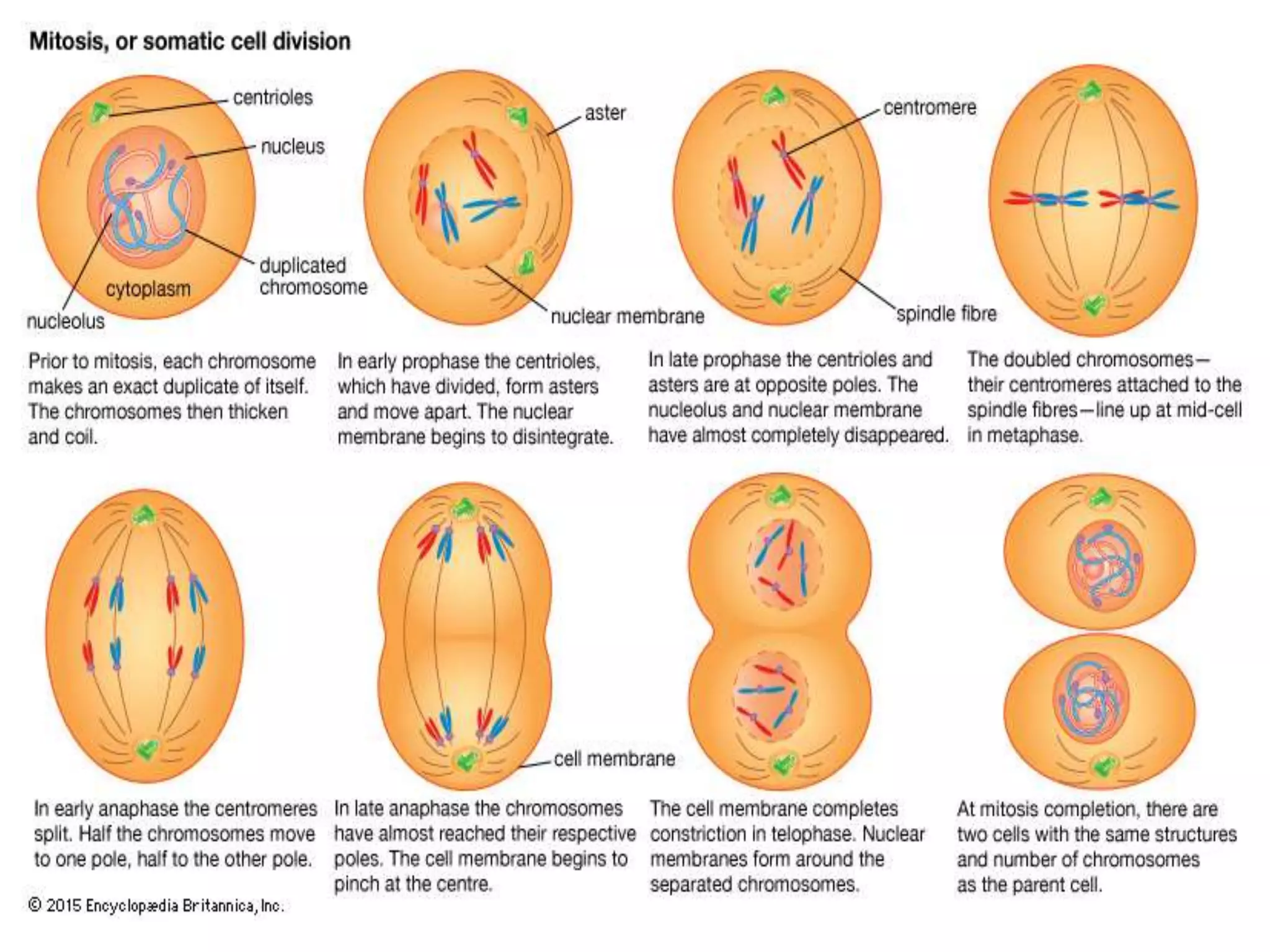
MITOSIS
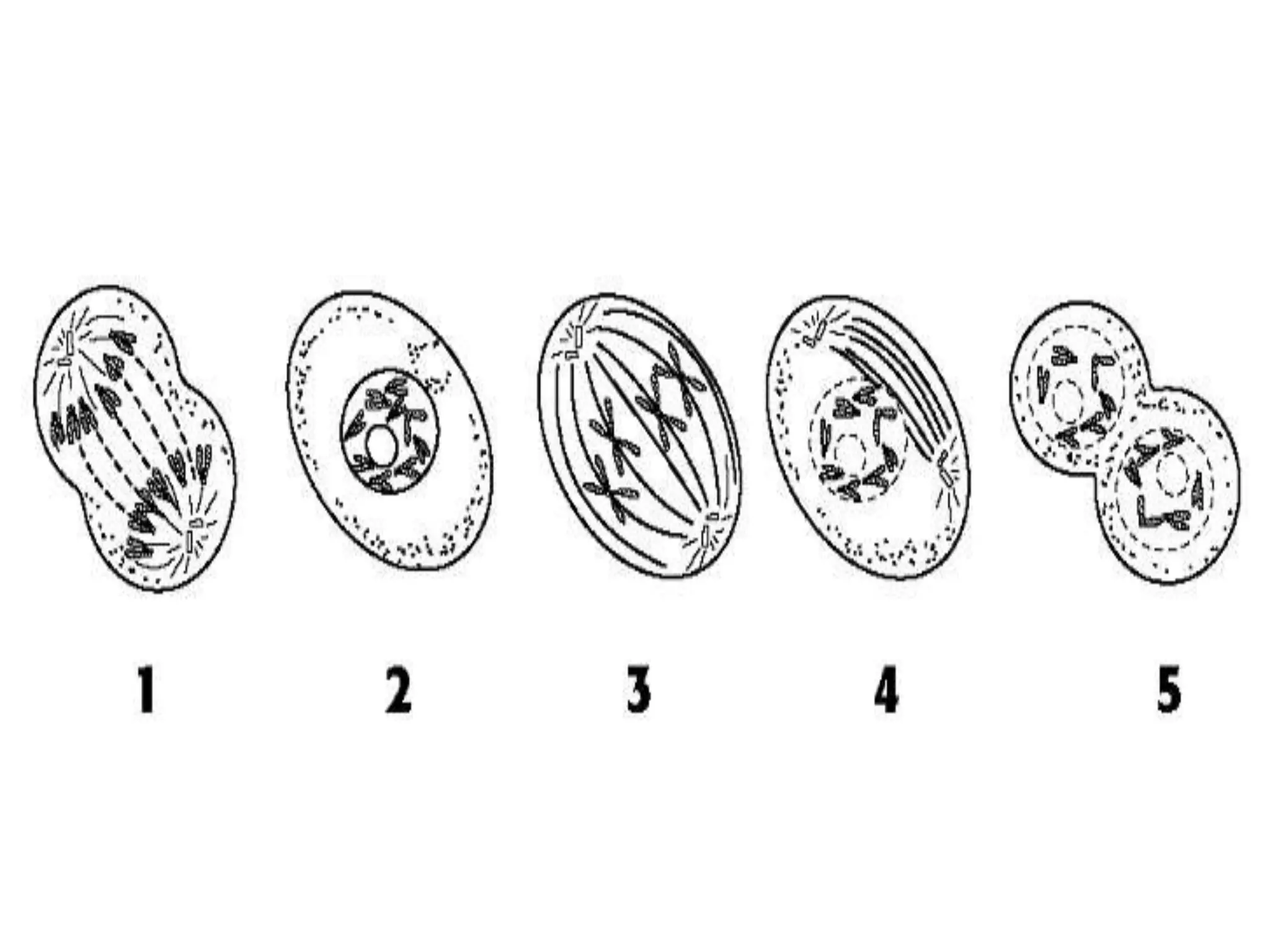
Prophase
– phase of chromosome condensation
Metaphase
– phase of alignment
Anaphase
– phase of separation
Telophase
– phase of nuclear formation
PROPHASE
• Nuclear envelope breaks down
• Nucleolus disappears
• Duplicated centrioles begin to move in
opposite poles and form spindle fibers
between them.
• Chromatin fibers become visible as they
condense, coil, and become shorter and
thicker.
PROPHASE
METAPHASE
• Chromosomes migrate randomly and line up
toward the equator.
METAPHASE (continued)
• Another checkpoint occurs at this stage
• When a chromosome is not properly aligned
at the mitotic spindle, mitosis will be arrested.
• As a result, of this checkpoint, sister
chromatids do not separate until a complete
set of chromosomes will be distributed to
each new individual.
ANAPHASE
• Sister chromatids separate and move towards
the opposite ends.
TELOPHASE
• Nuclei forms in both poles as new nuclear
membrane forms around the new nucleus.
• Nucleus reappears and spindle fibers begin to
disappear.
• Division of cytoplasm (Cytokinesis) begins and
is completed when the cell contents have
been divided equally to the two daughter cells
produced.
TELOPHASE (continued)
QUIZ
1. A phase that is composed of three stages and is mostly
involved in preparing the cell for cell division.
2. A phase where DNA is replicated.
3. A phase that re-checks all the necessary materials
before it proceeds mitotic phase.
4. A mitotic phase wherein chromosomes condensed and
nuclear membrane breaks.

Cell division - SCIENCE 8

  • 1.
    Pre-test 1. What isa cell? 2. Do cells reproduce? Yes or No? If yes, how? 3. What do you think is meant by Rodulf Virchow’s cell theory, “Cells come from pre-existing cells.”? 4. What is your idea about cell division? 5. A skin tissue is damaged, skin cells then divide to renew the damaged skin tissue. What do you call that type of cell division? (Mitosis, Meiosis) 6. Individuals need to maintain the production of egg cells and sperm cells. What type of cell division do you think is involved? (Mitosis, Meiosis)
  • 4.
  • 5.
    Cell Division Cell Division— process by which a cell divides into 2 new cells • Why do cells need to divide? 1.Living things grow by producing more cells, NOT because each cell increases in size 2.Repair of damaged tissue
  • 6.
    • The originalcell is called the parent cell; 2 new cells are called daughter cells • Before cell division occurs , the cell replicates (copies) all of its DNA, so each daughter cell gets complete set of genetic information from parent cell • Each daughter cell is exactly like the parent cell – same kind and number of chromosomes as the original cell Parent Cell 2 Daughter Cells
  • 7.
    •Many organisms, especiallyunicellular organisms, reproduce by means of cell division – called asexual reproduction – Ex: bacteria
  • 8.
  • 9.
    Organelles involved inCell Division 1. NUCLEUS • The control center of the cell and is bound by a nuclear membrane. • It contains the genetic material DNA that is replicated prior to cell division.
  • 12.
    o 2 identical“sister” chromatids attached at an area in the middle called a centromere o When cells divide, “sister” chromatids separate and 1 goes to each new cell
  • 13.
    Chromatin Duplicates itself Coils up into chromosomes •Chromatinto chromosomes illustration: Why does DNA need to change from chromatin to chromosome? More efficient division
  • 14.
    Chromosome number •Every organismhas its own specific number of chromosomes Examples: Human = 46 chromosomes or 23 pairs Dog = 78 chromosomes or 39 pairs Goldfish = 94 chromosomes or 47 pairs Lettuce = 18 chromosomes or 9 pairs
  • 15.
    • All somatic(body) cells in an organism have the same kind and number of chromosomes Examples: Human = 46 chromosomes Human skin cell = 46 chromosomes Human heart cell = 46 chromosomes Human muscle cell = 46 chromosomes Fruit fly = 8 chromosomes Fruit fly skin cell = 8 chromosomes Fruit fly heart cell = 8 chromosomes Fruit fly muscle cell = 8 chromosomes
  • 16.
    Organelles involved inCell Division 2. CENTRIOLES • It is a minute cylindrical organelle arranged near the nucleus in animal cells. They are found in pairs and move towards the poles of the nucleus when it is time for cell division. • They are also involved in the development of spindle fibers in cell division.
  • 18.
    2 types ofCell Division Mitosis • When body cells undergo a cell division. • Somatic cells Meiosis • When sex cells undergo a cell division. • Gametes (egg, sperm)
  • 19.
    Cell Cycle --series of events cells go through as they grow and divide •Cell grows, prepares for division, then divides to form 2 daughter cells – each of which then begins the cycle again
  • 20.
  • 22.
    MITOSIS Prophase – phase ofchromosome condensation Metaphase – phase of alignment Anaphase – phase of separation Telophase – phase of nuclear formation
  • 23.
    PROPHASE • Nuclear envelopebreaks down • Nucleolus disappears • Duplicated centrioles begin to move in opposite poles and form spindle fibers between them. • Chromatin fibers become visible as they condense, coil, and become shorter and thicker.
  • 24.
  • 25.
    METAPHASE • Chromosomes migraterandomly and line up toward the equator.
  • 26.
    METAPHASE (continued) • Anothercheckpoint occurs at this stage • When a chromosome is not properly aligned at the mitotic spindle, mitosis will be arrested. • As a result, of this checkpoint, sister chromatids do not separate until a complete set of chromosomes will be distributed to each new individual.
  • 27.
    ANAPHASE • Sister chromatidsseparate and move towards the opposite ends.
  • 28.
    TELOPHASE • Nuclei formsin both poles as new nuclear membrane forms around the new nucleus. • Nucleus reappears and spindle fibers begin to disappear. • Division of cytoplasm (Cytokinesis) begins and is completed when the cell contents have been divided equally to the two daughter cells produced.
  • 29.
  • 34.
    QUIZ 1. A phasethat is composed of three stages and is mostly involved in preparing the cell for cell division. 2. A phase where DNA is replicated. 3. A phase that re-checks all the necessary materials before it proceeds mitotic phase. 4. A mitotic phase wherein chromosomes condensed and nuclear membrane breaks.

Editor's Notes

  • #4 To understand the process of Cell Cycle And how cells actually divide
  • #6 What is a Cell? Cell is the basic structural unit of life. Levels of Organization Cells – Tissues – Organ – Systems – Organism
  • #9 As the cell divides, there are only specific organelles which are involved in the process..
  • #11 Chromosome - a threadlike structure of nucleic acids and protein found in the nucleus of most living cells, carrying genetic information in the form of genes.
  • #12 Chromosome - a threadlike structure of nucleic acids and protein found in the nucleus of most living cells, carrying genetic information in the form of genes.
  • #19 Even before our cells undergo cell division, it has to be prepared first by completing all the necessary materials required for the said process. These materials are prepared via a series of a cyclic processes called the cell cycle.
  • #21 The first three phases of cell cycle prepares cell for cell division by duplicating its genetic material, and producing organelles and producing cytoplasm for the future daughter cells.
  • #22 G1 phase - 1st growth phase. Cell grows and prepares itself for DNA duplication-Preparation Stage. S phase - the time when the cell replicate its DNA. G2 phase – cell manufactures necessary materials it will need when the cell divides.
  • #23 A parent cell contains two complete set of chromosomes (diploid 2n).
  • #24 -
  • #25 -
  • #27 This is to ensure that a complete set of chromosomes will be distributed to each new individuals.
  • #28 The migration is made possible by the contraction of the spindle fibers which pulls the chromosomes apart towards the opposite ends.