Cell Division—Mitosis Notes
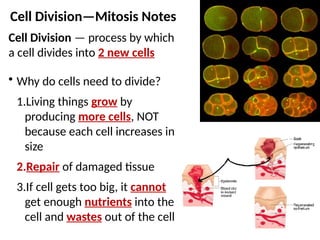
Cell Division — process by which
a cell divides into 2 new cells
• Why do cells need to divide?
1.Living things grow by
producing more cells, NOT
because each cell increases in
size
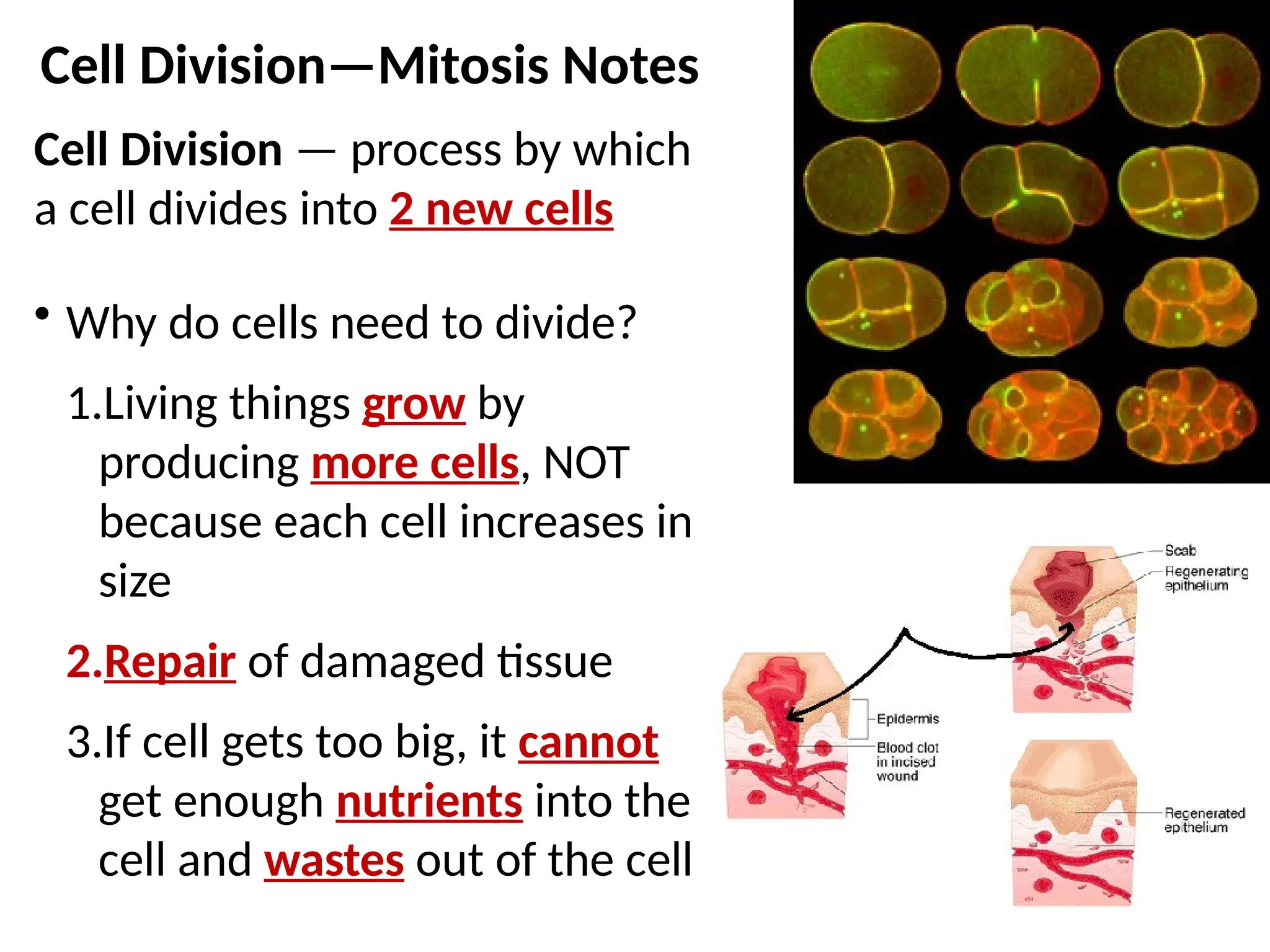
2.Repair of damaged tissue
3.If cell gets too big, it cannot
get enough nutrients into the
cell and wastes out of the cell
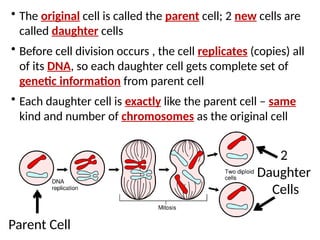
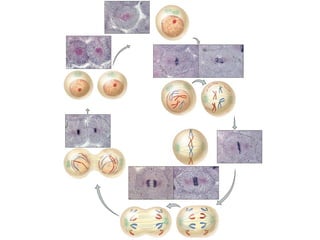
• The original cell is called the parent cell; 2 new cells are
called daughter cells
• Before cell division occurs , the cell replicates (copies) all
of its DNA, so each daughter cell gets complete set of
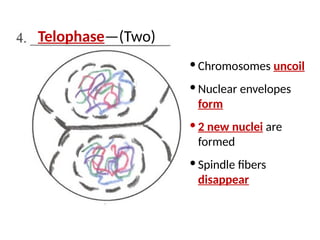
genetic information from parent cell
• Each daughter cell is exactly like the parent cell – same
kind and number of chromosomes as the original cell
Parent Cell
2
Daughter
Cells
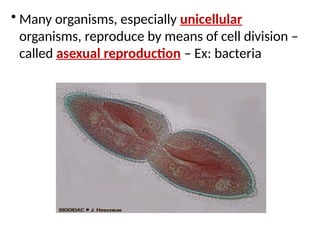
• Many organisms, especially unicellular
organisms, reproduce by means of cell division –
called asexual reproduction – Ex: bacteria
DNA
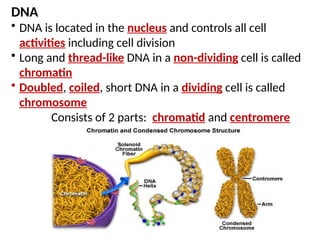
• DNA is located in the nucleus and controls all cell
activities including cell division
• Long and thread-like DNA in a non-dividing cell is called
chromatin
• Doubled, coiled, short DNA in a dividing cell is called
chromosome
Consists of 2 parts: chromatid and centromere
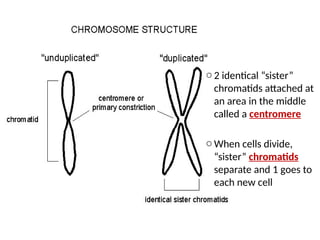
o 2 identical “sister”
chromatids attached at
an area in the middle
called a centromere
o When cells divide,
“sister” chromatids
separate and 1 goes to
each new cell
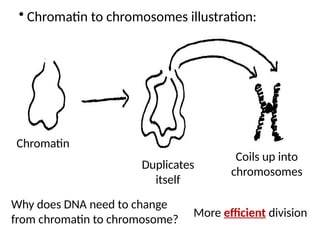
Chromatin
Duplicates
itself
Coils up into
chromosomes
• Chromatin to chromosomes illustration:
Why does DNA need to change
from chromatin to chromosome?
More efficient division
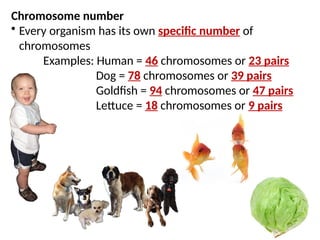
Chromosome number
• Every organism has its own specific number of
chromosomes
Examples: Human = 46 chromosomes or 23 pairs
Dog = 78 chromosomes or 39 pairs
Goldfish = 94 chromosomes or 47 pairs
Lettuce = 18 chromosomes or 9 pairs
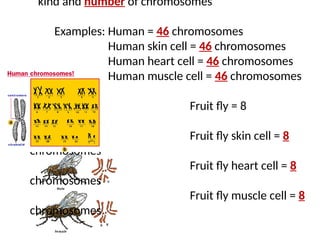
kind and number of chromosomes
Examples: Human = 46 chromosomes
Human skin cell = 46 chromosomes
Human heart cell = 46 chromosomes
Human muscle cell = 46 chromosomes
Fruit fly = 8
chromosomes
Fruit fly skin cell = 8
chromosomes
Fruit fly heart cell = 8
chromosomes
Fruit fly muscle cell = 8
chromosomes
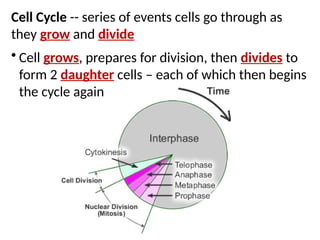
Cell Cycle -- series of events cells go through as
they grow and divide
• Cell grows, prepares for division, then divides to
form 2 daughter cells – each of which then begins
the cycle again
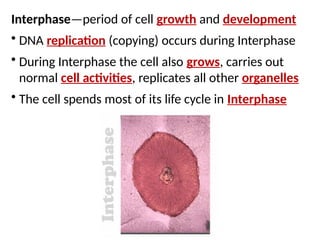
Interphase—period of cell growth and development
• DNA replication (copying) occurs during Interphase
• During Interphase the cell also grows, carries out
normal cell activities, replicates all other organelles
• The cell spends most of its life cycle in Interphase
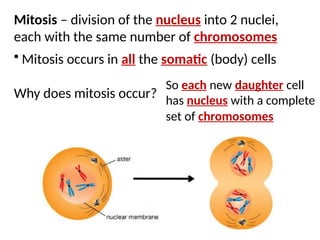
Mitosis – division of the nucleus into 2 nuclei,
each with the same number of chromosomes
• Mitosis occurs in all the somatic (body) cells
Why does mitosis occur?
So each new daughter cell
has nucleus with a complete
set of chromosomes
Anaphase—(Apart)
Prophase Metaphase—(Middle)
Telophase—(Two)
Anaphase—(Apart)
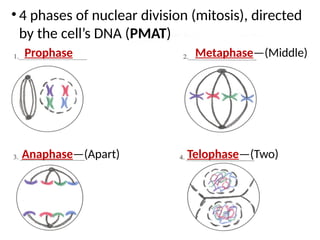
• 4 phases of nuclear division (mitosis), directed
by the cell’s DNA (PMAT)
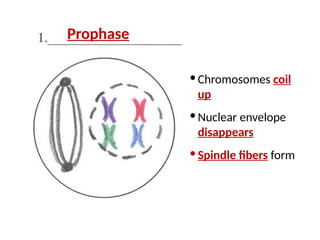
· Chromosomes coil
up
· Nuclear envelope
disappears
· Spindle fibers form
Prophase
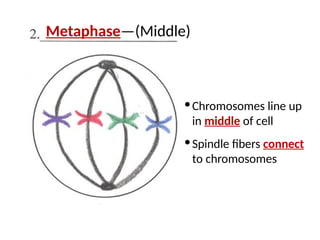
· Chromosomes line up
in middle of cell
· Spindle fibers connect
to chromosomes
Metaphase—(Middle)
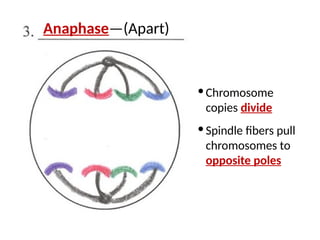
· Chromosome
copies divide
· Spindle fibers pull
chromosomes to
opposite poles
Anaphase—(Apart)
· Chromosomes uncoil
· Nuclear envelopes
form
· 2 new nuclei are
formed
· Spindle fibers
disappear
Telophase—(Two)
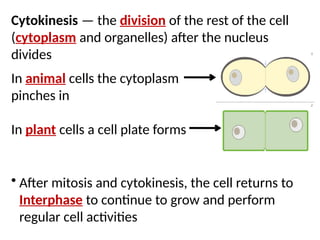
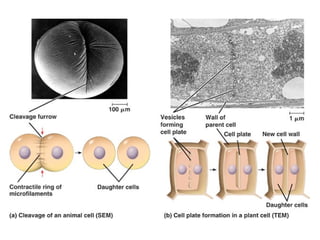
Cytokinesis — the division of the rest of the cell
(cytoplasm and organelles) after the nucleus
divides
In animal cells the cytoplasm
pinches in
In plant cells a cell plate forms
• After mitosis and cytokinesis, the cell returns to
Interphase to continue to grow and perform
regular cell activities
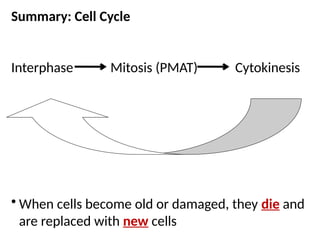
Summary: Cell Cycle
Interphase Mitosis (PMAT) Cytokinesis
• When cells become old or damaged, they die and
are replaced with new cells
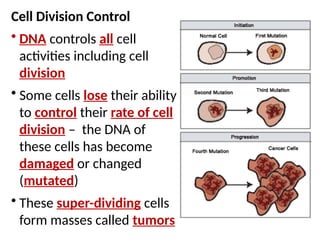
Cell Division Control
• DNA controls all cell
activities including cell
division
• Some cells lose their ability
to control their rate of cell
division – the DNA of
these cells has become
damaged or changed
(mutated)
• These super-dividing cells
form masses called tumors
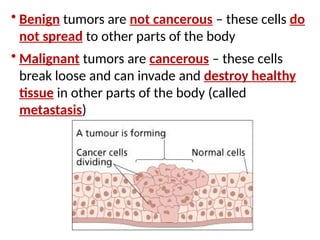
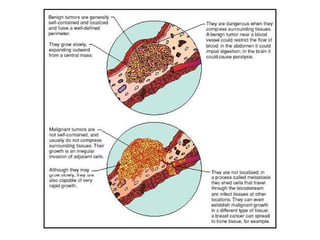
• Benign tumors are not cancerous – these cells do
not spread to other parts of the body
• Malignant tumors are cancerous – these cells
break loose and can invade and destroy healthy
tissue in other parts of the body (called
metastasis)
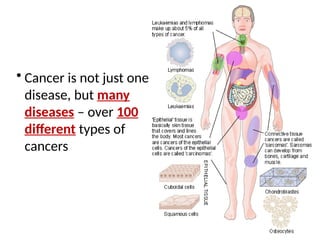
• Cancer is not just one
disease, but many
diseases – over 100
different types of
cancers
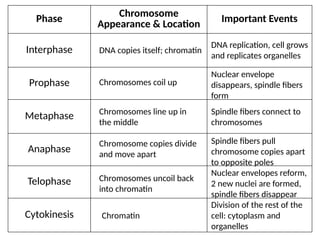
Phase Chromosome
Appearance & Location
Important Events
Interphase
Prophase
Metaphase
Anaphase
Telophase
Cytokinesis
DNA replication, cell grows
and replicates organelles
Nuclear envelope
disappears, spindle fibers
form
DNA copies itself; chromatin
Chromosomes coil up
Chromosomes line up in
the middle
Spindle fibers connect to
chromosomes
Chromosome copies divide
and move apart
Spindle fibers pull
chromosome copies apart
to opposite poles
Chromosomes uncoil back
into chromatin
Nuclear envelopes reform,
2 new nuclei are formed,
spindle fibers disappear
Division of the rest of the
cell: cytoplasm and
organelles
Chromatin

Cell Division — process by which a cell divides into 2 new cells

  • 1.
    Cell Division—Mitosis Notes CellDivision — process by which a cell divides into 2 new cells • Why do cells need to divide? 1.Living things grow by producing more cells, NOT because each cell increases in size 2.Repair of damaged tissue 3.If cell gets too big, it cannot get enough nutrients into the cell and wastes out of the cell
  • 2.
    • The originalcell is called the parent cell; 2 new cells are called daughter cells • Before cell division occurs , the cell replicates (copies) all of its DNA, so each daughter cell gets complete set of genetic information from parent cell • Each daughter cell is exactly like the parent cell – same kind and number of chromosomes as the original cell Parent Cell 2 Daughter Cells
  • 3.
    • Many organisms,especially unicellular organisms, reproduce by means of cell division – called asexual reproduction – Ex: bacteria
  • 4.
    DNA • DNA islocated in the nucleus and controls all cell activities including cell division • Long and thread-like DNA in a non-dividing cell is called chromatin • Doubled, coiled, short DNA in a dividing cell is called chromosome Consists of 2 parts: chromatid and centromere
  • 5.
    o 2 identical“sister” chromatids attached at an area in the middle called a centromere o When cells divide, “sister” chromatids separate and 1 goes to each new cell
  • 6.
    Chromatin Duplicates itself Coils up into chromosomes •Chromatin to chromosomes illustration: Why does DNA need to change from chromatin to chromosome? More efficient division
  • 7.
    Chromosome number • Everyorganism has its own specific number of chromosomes Examples: Human = 46 chromosomes or 23 pairs Dog = 78 chromosomes or 39 pairs Goldfish = 94 chromosomes or 47 pairs Lettuce = 18 chromosomes or 9 pairs
  • 8.
    kind and numberof chromosomes Examples: Human = 46 chromosomes Human skin cell = 46 chromosomes Human heart cell = 46 chromosomes Human muscle cell = 46 chromosomes Fruit fly = 8 chromosomes Fruit fly skin cell = 8 chromosomes Fruit fly heart cell = 8 chromosomes Fruit fly muscle cell = 8 chromosomes
  • 9.
    Cell Cycle --series of events cells go through as they grow and divide • Cell grows, prepares for division, then divides to form 2 daughter cells – each of which then begins the cycle again
  • 10.
    Interphase—period of cellgrowth and development • DNA replication (copying) occurs during Interphase • During Interphase the cell also grows, carries out normal cell activities, replicates all other organelles • The cell spends most of its life cycle in Interphase
  • 11.
    Mitosis – divisionof the nucleus into 2 nuclei, each with the same number of chromosomes • Mitosis occurs in all the somatic (body) cells Why does mitosis occur? So each new daughter cell has nucleus with a complete set of chromosomes
  • 12.
    Anaphase—(Apart) Prophase Metaphase—(Middle) Telophase—(Two) Anaphase—(Apart) • 4phases of nuclear division (mitosis), directed by the cell’s DNA (PMAT)
  • 13.
    · Chromosomes coil up ·Nuclear envelope disappears · Spindle fibers form Prophase
  • 14.
    · Chromosomes lineup in middle of cell · Spindle fibers connect to chromosomes Metaphase—(Middle)
  • 15.
    · Chromosome copies divide ·Spindle fibers pull chromosomes to opposite poles Anaphase—(Apart)
  • 16.
    · Chromosomes uncoil ·Nuclear envelopes form · 2 new nuclei are formed · Spindle fibers disappear Telophase—(Two)
  • 17.
    Cytokinesis — thedivision of the rest of the cell (cytoplasm and organelles) after the nucleus divides In animal cells the cytoplasm pinches in In plant cells a cell plate forms • After mitosis and cytokinesis, the cell returns to Interphase to continue to grow and perform regular cell activities
  • 19.
    Summary: Cell Cycle InterphaseMitosis (PMAT) Cytokinesis • When cells become old or damaged, they die and are replaced with new cells
  • 21.
    Cell Division Control •DNA controls all cell activities including cell division • Some cells lose their ability to control their rate of cell division – the DNA of these cells has become damaged or changed (mutated) • These super-dividing cells form masses called tumors
  • 22.
    • Benign tumorsare not cancerous – these cells do not spread to other parts of the body • Malignant tumors are cancerous – these cells break loose and can invade and destroy healthy tissue in other parts of the body (called metastasis)
  • 24.
    • Cancer isnot just one disease, but many diseases – over 100 different types of cancers
  • 26.
    Phase Chromosome Appearance &Location Important Events Interphase Prophase Metaphase Anaphase Telophase Cytokinesis DNA replication, cell grows and replicates organelles Nuclear envelope disappears, spindle fibers form DNA copies itself; chromatin Chromosomes coil up Chromosomes line up in the middle Spindle fibers connect to chromosomes Chromosome copies divide and move apart Spindle fibers pull chromosome copies apart to opposite poles Chromosomes uncoil back into chromatin Nuclear envelopes reform, 2 new nuclei are formed, spindle fibers disappear Division of the rest of the cell: cytoplasm and organelles Chromatin