Submitted to:
Professor Md.Reazul Haque
University of Dhaka
Submitted by:
MD.MASUD RANA
ID:1501076
DHSM,BUP.
CBDRM
CBDRM is a process of disaster risk management in
which at risk communities are actively engaged in the
identification, analysis, treatment, monitoring and
evaluation of disaster risks in order to reduce their
vulnerabilities and enhance capacities.
COMMUNITY
A community can be defined as people living in one
geographical area, who are exposed to common hazards
due to their location. They may have common
experience in responding to hazards and disasters.
Key Points on the CBDRM Approach
The aim of CBDRM is to reduce vulnerabilities and
to strengthen peoples’ capacity to cope with the
disaster risks they face.
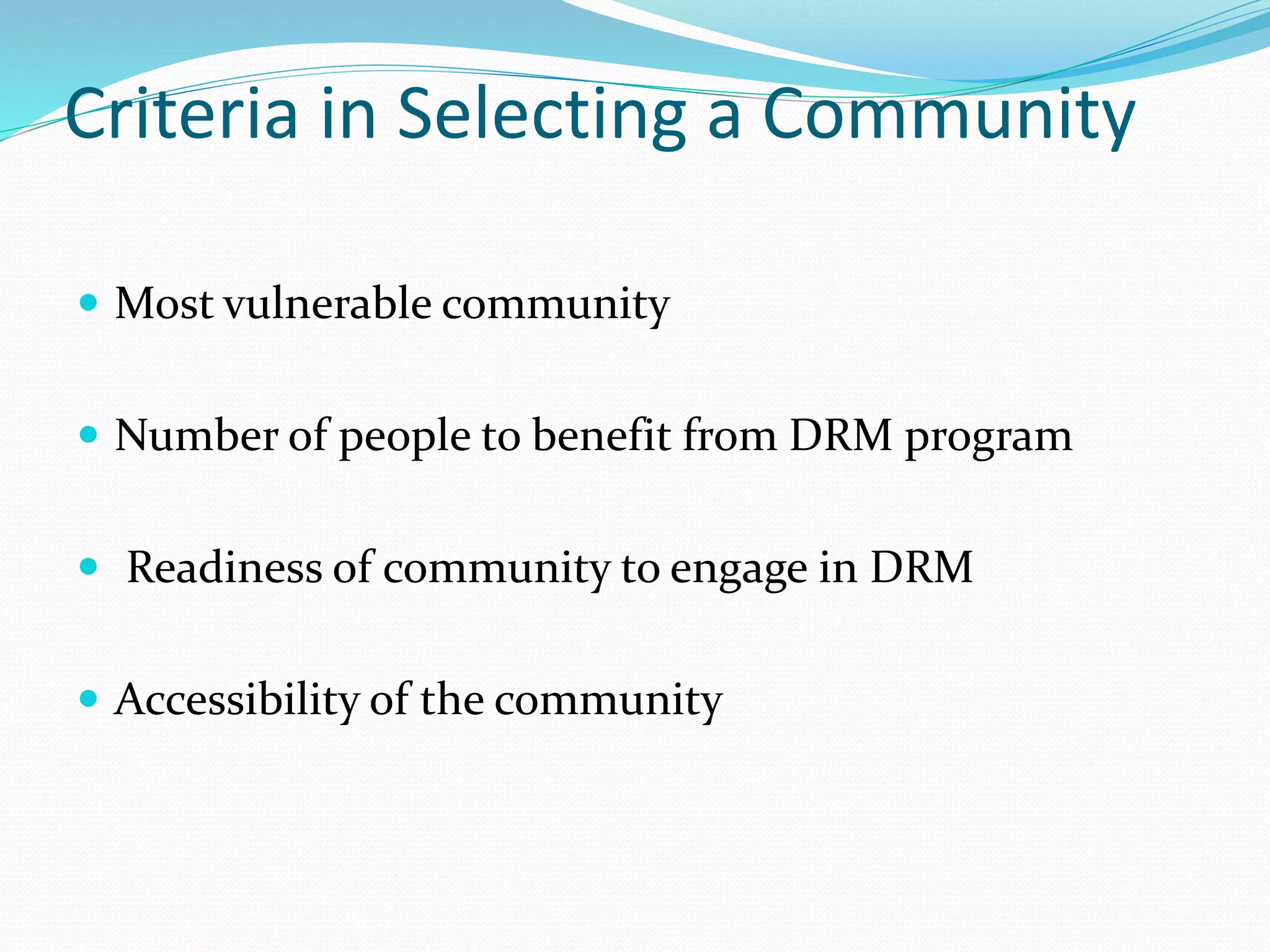
Community-Based Disaster Risk
Management Process
 Selecting the Community.
 Rapport Building and Understanding the Community.
 Participatory Disaster Risk Assessment (PDRA).
 Participatory Disaster Risk Management Planning.
 Building and Training a Community Disaster Risk
Management Organization (CDRMO).
 Community-Managed Implementation.
 Participatory Monitoring and Evaluation.
Selecting the Community.
Criteria in Selecting a Community
 Most vulnerable community
 Number of people to benefit from DRM program
 Readiness of community to engage in DRM
 Accessibility of the community
Considerations in Selecting a
Community
 Communities near roads or town centers are more
often the recipients of projects
 Communities that are in remote areas
 On-going conflicts exist within the community
 Multiple-stakeholders
 Security of staff
Rapport Building and
Understanding the Community
 Living in the community
 Being transparent and open about who they are and
what is being done
 Participating in daily life and cultural events
 Listening to local people about their life, issues and
problems
 Learning new skills from local people
 Performing local tasks
Participatory Disaster Risk
Assessment (PDRA)
 Identify the hazards in the community
 Conduct hazard mapping
 Describe vulnerabilities and capacities of community,
of women and men
 Rank disaster risks
 Decide whether to prevent, reduce, transfer, or live
with the disaster risks
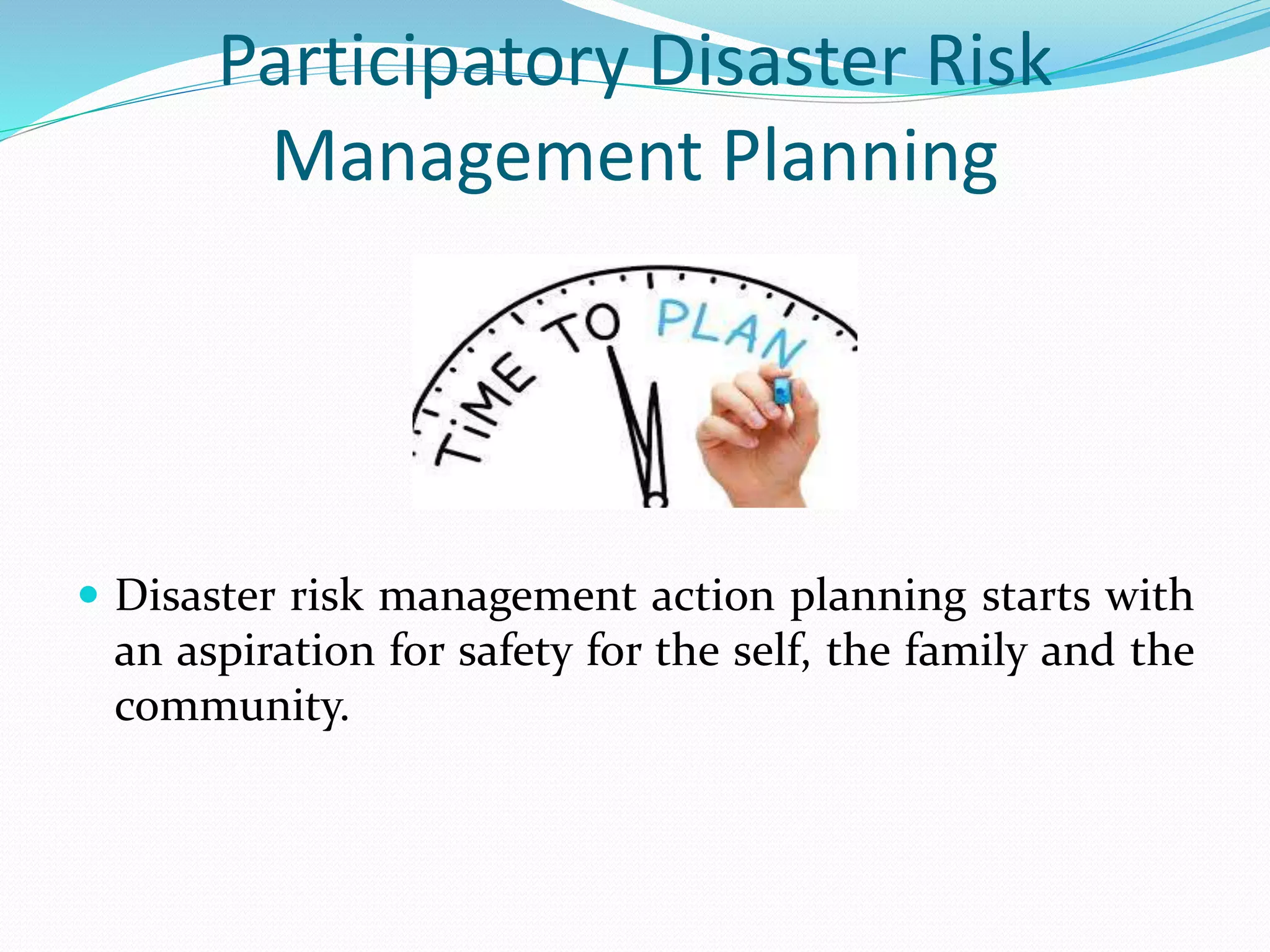
Participatory Disaster Risk
Management Planning
 Disaster risk management action planning starts with
an aspiration for safety for the self, the family and the
community.
Building and Training a Community
Disaster Risk Management
Organization
The following steps are often used in community
organizing:
 site entry and rapport building
 situation analysis
 identification of priority sectors
 natural leaders
 facilitate community planning of risk reduction
measures.
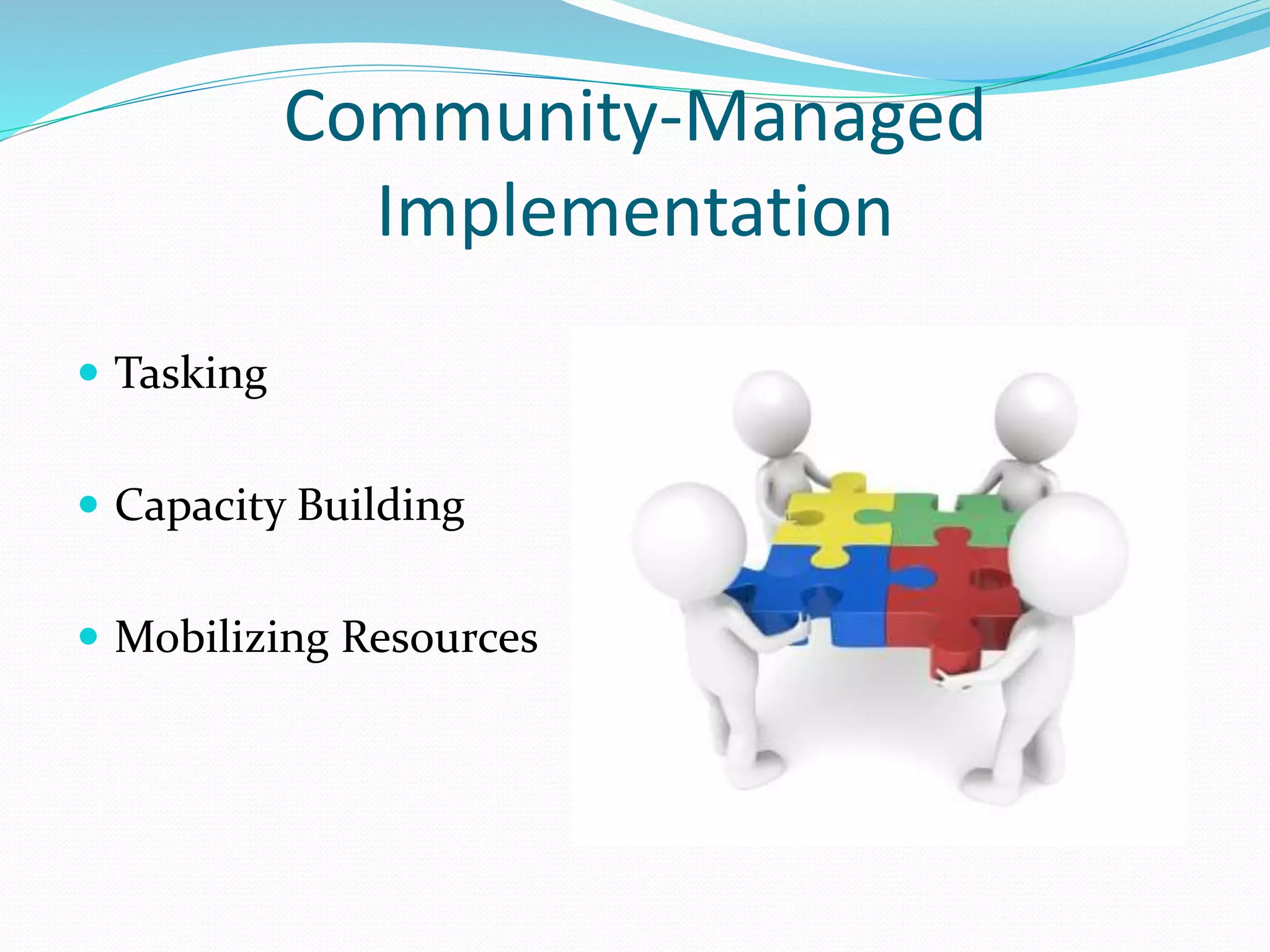
Community-Managed
Implementation
 Tasking
 Capacity Building
 Mobilizing Resources
Principles of Participatory
Implementation Process
 Participation of all stakeholders
 Sequential process
 Systematic analysis
 Cross-cultural sensitivity
 Transparency
 Consensus orientation
Participatory Monitoring and
Evaluation
 Participation
 Learning
 Negotiation
 Flexibility
Outcomes of the CBDRM Process
The CBDRM process should lead to progressive
improvements in public safety and community
disaster resilience. It should contribute to equitable
and sustainable community development in the long
term.
DHSM
Cbdrm

Cbdrm

  • 1.
    Submitted to: Professor Md.ReazulHaque University of Dhaka Submitted by: MD.MASUD RANA ID:1501076 DHSM,BUP.
  • 2.
    CBDRM CBDRM is aprocess of disaster risk management in which at risk communities are actively engaged in the identification, analysis, treatment, monitoring and evaluation of disaster risks in order to reduce their vulnerabilities and enhance capacities.
  • 3.
    COMMUNITY A community canbe defined as people living in one geographical area, who are exposed to common hazards due to their location. They may have common experience in responding to hazards and disasters.
  • 4.
    Key Points onthe CBDRM Approach The aim of CBDRM is to reduce vulnerabilities and to strengthen peoples’ capacity to cope with the disaster risks they face.
  • 5.
    Community-Based Disaster Risk ManagementProcess  Selecting the Community.  Rapport Building and Understanding the Community.  Participatory Disaster Risk Assessment (PDRA).  Participatory Disaster Risk Management Planning.  Building and Training a Community Disaster Risk Management Organization (CDRMO).  Community-Managed Implementation.  Participatory Monitoring and Evaluation.
  • 6.
  • 7.
    Criteria in Selectinga Community  Most vulnerable community  Number of people to benefit from DRM program  Readiness of community to engage in DRM  Accessibility of the community
  • 8.
    Considerations in Selectinga Community  Communities near roads or town centers are more often the recipients of projects  Communities that are in remote areas  On-going conflicts exist within the community  Multiple-stakeholders  Security of staff
  • 9.
    Rapport Building and Understandingthe Community  Living in the community  Being transparent and open about who they are and what is being done  Participating in daily life and cultural events  Listening to local people about their life, issues and problems  Learning new skills from local people  Performing local tasks
  • 10.
    Participatory Disaster Risk Assessment(PDRA)  Identify the hazards in the community  Conduct hazard mapping  Describe vulnerabilities and capacities of community, of women and men  Rank disaster risks  Decide whether to prevent, reduce, transfer, or live with the disaster risks
  • 11.
    Participatory Disaster Risk ManagementPlanning  Disaster risk management action planning starts with an aspiration for safety for the self, the family and the community.
  • 12.
    Building and Traininga Community Disaster Risk Management Organization The following steps are often used in community organizing:  site entry and rapport building  situation analysis  identification of priority sectors  natural leaders  facilitate community planning of risk reduction measures.
  • 13.
  • 14.
    Principles of Participatory ImplementationProcess  Participation of all stakeholders  Sequential process  Systematic analysis  Cross-cultural sensitivity  Transparency  Consensus orientation
  • 15.
    Participatory Monitoring and Evaluation Participation  Learning  Negotiation  Flexibility
  • 16.
    Outcomes of theCBDRM Process The CBDRM process should lead to progressive improvements in public safety and community disaster resilience. It should contribute to equitable and sustainable community development in the long term. DHSM