DISASTER MANAGEMENT
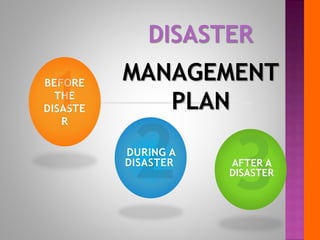
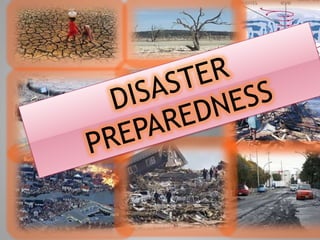
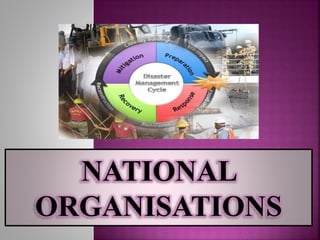
DISASTER
DURING A
DISASTER AFTER A
DISASTER
MANAGEMENT
PLAN
BEFORE
THE
DISASTE
R
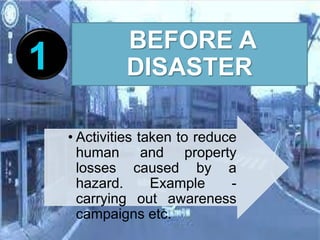
• Activities taken to reduce
human and property
losses caused by a
hazard. Example -
carrying out awareness
campaigns etc.
BEFORE A
DISASTER1
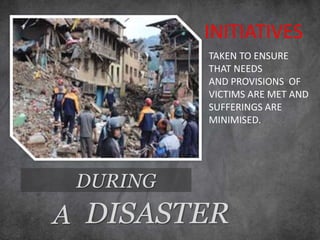
DURING
INITIATIVES
A DISASTER
TAKEN TO ENSURE
THAT NEEDS
AND PROVISIONS OF
VICTIMS ARE MET AND
SUFFERINGS ARE
MINIMISED.
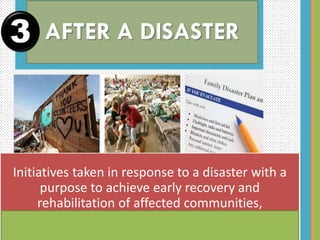
Initiatives taken in response to a disaster with a
purpose to achieve early recovery and
rehabilitation of affected communities,
immediately after a disaster strikes.
3
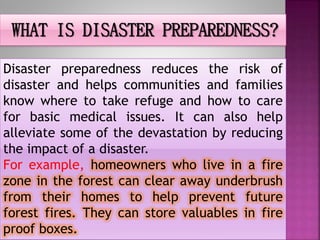
WHAT IS DISASTER PREPAREDNESS?
Disaster preparedness reduces the risk of
disaster and helps communities and families
know where to take refuge and how to care
for basic medical issues. It can also help
alleviate some of the devastation by reducing
the impact of a disaster.
For example, homeowners who live in a fire
zone in the forest can clear away underbrush
from their homes to help prevent future
forest fires. They can store valuables in fire
proof boxes.
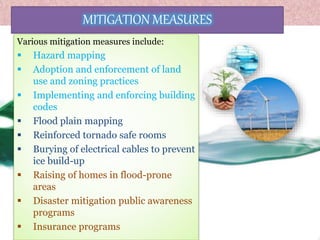
MITIGATION MEASURES
Various mitigation measures include:
 Hazard mapping
 Adoption and enforcement of land
use and zoning practices
 Implementing and enforcing building
codes
 Flood plain mapping
 Reinforced tornado safe rooms
 Burying of electrical cables to prevent
ice build-up
 Raising of homes in flood-prone
areas
 Disaster mitigation public awareness
programs
 Insurance programs
National Disaster Management
Authority, abbreviated as NDMA is an
agency of the Ministry of Home
Affairs whose primary purpose is to
coordinate response to natural or
man-made disasters and for capacity-
building in disaster resiliency and
crisis response. NDMA was
established through the Disaster
Management Act enacted by the
Government of India in December
2005
National Disaster
Response Force (NDRF)
• Lay down policies on disaster
management.
• Approve the National Plan.
• Approve plans prepared by the
Ministries.
• Lay down guidelines to be followed
by the State Authorities.
• Coordinate the enforcement and
implementation of the policy and
plans for disaster management.
INTERNATIONAL
INTERNATIONAL
INTERNATIONAL
RESCUE
COMMITTEE
AUSTRALIA
AID
THE
INTERNATIONAL
FEDERATION OF
RED CROSS AND
RED CRESCENT
SOCIETIES
EUROPE
AID
UK AID
DEPARTMENT FOR
INTERNATIONAL
DEVELOPMENT
(DFID)
US AID
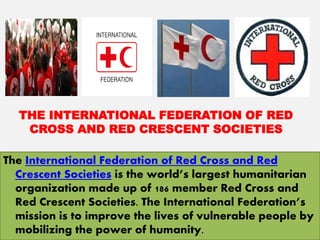
THE INTERNATIONAL FEDERATION OF RED
CROSS AND RED CRESCENT SOCIETIES
The International Federation of Red Cross and Red
Crescent Societies is the world’s largest humanitarian
organization made up of 186 member Red Cross and
Red Crescent Societies. The International Federation’s
mission is to improve the lives of vulnerable people by
mobilizing the power of humanity.
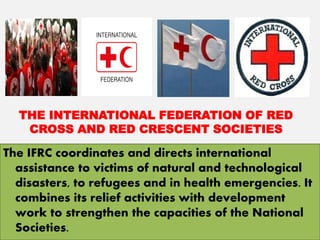
THE INTERNATIONAL FEDERATION OF RED
CROSS AND RED CRESCENT SOCIETIES
The IFRC coordinates and directs international
assistance to victims of natural and technological
disasters, to refugees and in health emergencies. It
combines its relief activities with development
work to strengthen the capacities of the National
Societies.
AUSTRALIA AID
The purpose of the aid program is to
promote Australia's national interests
by contributing to sustainable
economic growth and poverty
reduction. We will pursue this
purpose by focusing on two
development outcomes: supporting
private sector development and
strengthening human development.
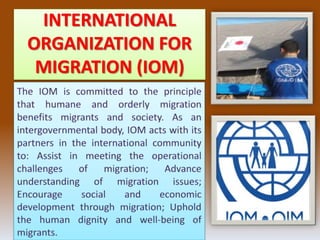
INTERNATIONAL
ORGANIZATION FOR
MIGRATION (IOM)
THAT
THEIN
THE
WANT TO

DISASTER MANAGEMENT

  • 1.
  • 3.
    DISASTER DURING A DISASTER AFTERA DISASTER MANAGEMENT PLAN BEFORE THE DISASTE R
  • 4.
    • Activities takento reduce human and property losses caused by a hazard. Example - carrying out awareness campaigns etc. BEFORE A DISASTER1
  • 5.
    DURING INITIATIVES A DISASTER TAKEN TOENSURE THAT NEEDS AND PROVISIONS OF VICTIMS ARE MET AND SUFFERINGS ARE MINIMISED.
  • 6.
    Initiatives taken inresponse to a disaster with a purpose to achieve early recovery and rehabilitation of affected communities, immediately after a disaster strikes. 3
  • 8.
    WHAT IS DISASTERPREPAREDNESS? Disaster preparedness reduces the risk of disaster and helps communities and families know where to take refuge and how to care for basic medical issues. It can also help alleviate some of the devastation by reducing the impact of a disaster. For example, homeowners who live in a fire zone in the forest can clear away underbrush from their homes to help prevent future forest fires. They can store valuables in fire proof boxes.
  • 9.
    MITIGATION MEASURES Various mitigationmeasures include:  Hazard mapping  Adoption and enforcement of land use and zoning practices  Implementing and enforcing building codes  Flood plain mapping  Reinforced tornado safe rooms  Burying of electrical cables to prevent ice build-up  Raising of homes in flood-prone areas  Disaster mitigation public awareness programs  Insurance programs
  • 11.
    National Disaster Management Authority,abbreviated as NDMA is an agency of the Ministry of Home Affairs whose primary purpose is to coordinate response to natural or man-made disasters and for capacity- building in disaster resiliency and crisis response. NDMA was established through the Disaster Management Act enacted by the Government of India in December 2005 National Disaster Response Force (NDRF)
  • 12.
    • Lay downpolicies on disaster management. • Approve the National Plan. • Approve plans prepared by the Ministries. • Lay down guidelines to be followed by the State Authorities. • Coordinate the enforcement and implementation of the policy and plans for disaster management.
  • 13.
  • 14.
  • 17.
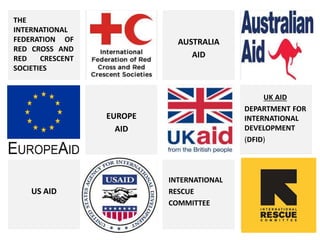
    INTERNATIONAL RESCUE COMMITTEE AUSTRALIA AID THE INTERNATIONAL FEDERATION OF RED CROSSAND RED CRESCENT SOCIETIES EUROPE AID UK AID DEPARTMENT FOR INTERNATIONAL DEVELOPMENT (DFID) US AID
  • 18.
    THE INTERNATIONAL FEDERATIONOF RED CROSS AND RED CRESCENT SOCIETIES The International Federation of Red Cross and Red Crescent Societies is the world’s largest humanitarian organization made up of 186 member Red Cross and Red Crescent Societies. The International Federation’s mission is to improve the lives of vulnerable people by mobilizing the power of humanity.
  • 19.
    THE INTERNATIONAL FEDERATIONOF RED CROSS AND RED CRESCENT SOCIETIES The IFRC coordinates and directs international assistance to victims of natural and technological disasters, to refugees and in health emergencies. It combines its relief activities with development work to strengthen the capacities of the National Societies.
  • 20.
    AUSTRALIA AID The purposeof the aid program is to promote Australia's national interests by contributing to sustainable economic growth and poverty reduction. We will pursue this purpose by focusing on two development outcomes: supporting private sector development and strengthening human development.
  • 22.
  • 24.

Editor's Notes

  • #10 This template can be used as a starter file to give updates for project milestones. Sections Right-click on a slide to add sections. Sections can help to organize your slides or facilitate collaboration between multiple authors. Notes Use the Notes section for delivery notes or to provide additional details for the audience. View these notes in Presentation View during your presentation. Keep in mind the font size (important for accessibility, visibility, videotaping, and online production) Coordinated colors Pay particular attention to the graphs, charts, and text boxes. Consider that attendees will print in black and white or grayscale. Run a test print to make sure your colors work when printed in pure black and white and grayscale. Graphics, tables, and graphs Keep it simple: If possible, use consistent, non-distracting styles and colors. Label all graphs and tables.
  • #14 The last rule is: Cultivate healthy relationships (with your slides and your audience)
  • #15 The last rule is: Cultivate healthy relationships (with your slides and your audience)
  • #16 …global causes.
  • #17 …global causes.
  • #25 Audiences want to know what you can do for them, why they should adopt your view, and the steps they need to follow to take action.