Objective
 Discuss the nature of psychology
 Goals of Psychology
 Importance of Psychology
 Historical Development of Psychology
 Schools of Psychology
 Branches of Psychology
Psychology
 Etymological Definition
 Psyche – mind
 Logos – study
-the study of the mind or cognitive processes that underlie
human behavior.
Wilhelm Wundt
 Psychology is the study of conscious experience.
William James
 Psychology pertains to finding out how psychological
nature helps people adapt themselves to a complex
and changing world.
John Watson
 Asserts that psychology is focused on the study of
covert (unobservable) and overt (observable) behavior
that one can see and can be measured scientifically.
STUDY of BEHAVIOR and MENTAL PROCESSES
 Psychology pertains not just on what people do.
 Thoughts
 Feelings
 Perception
 Reasoning
 Memories
 Biological activities
 Psychology tries to explain, predict, modify,
and ultimately improves the lives of the
people and the world where they live.
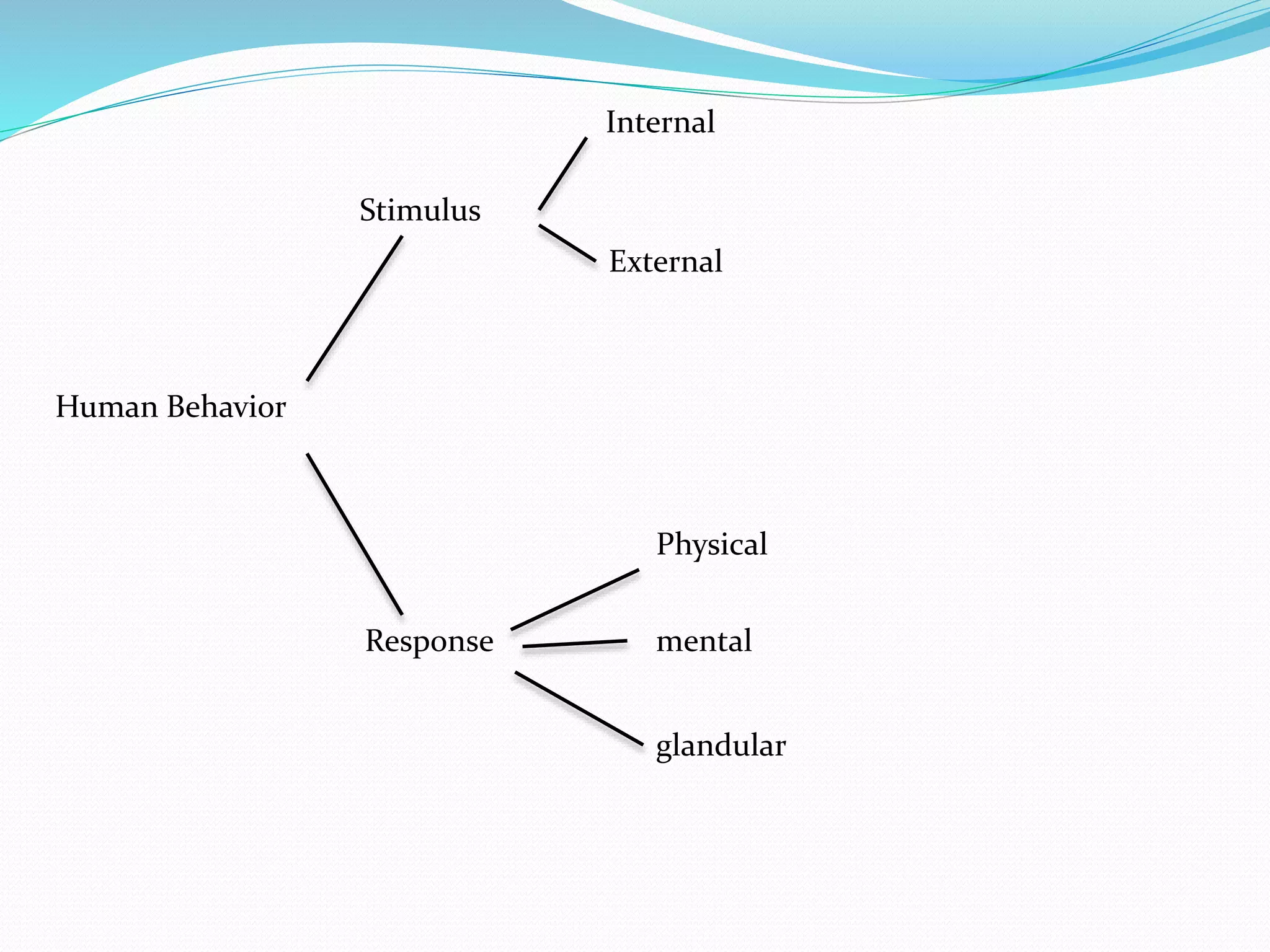
Human Behavior
Stimulus
Response
Internal
External
Physical
mental
glandular
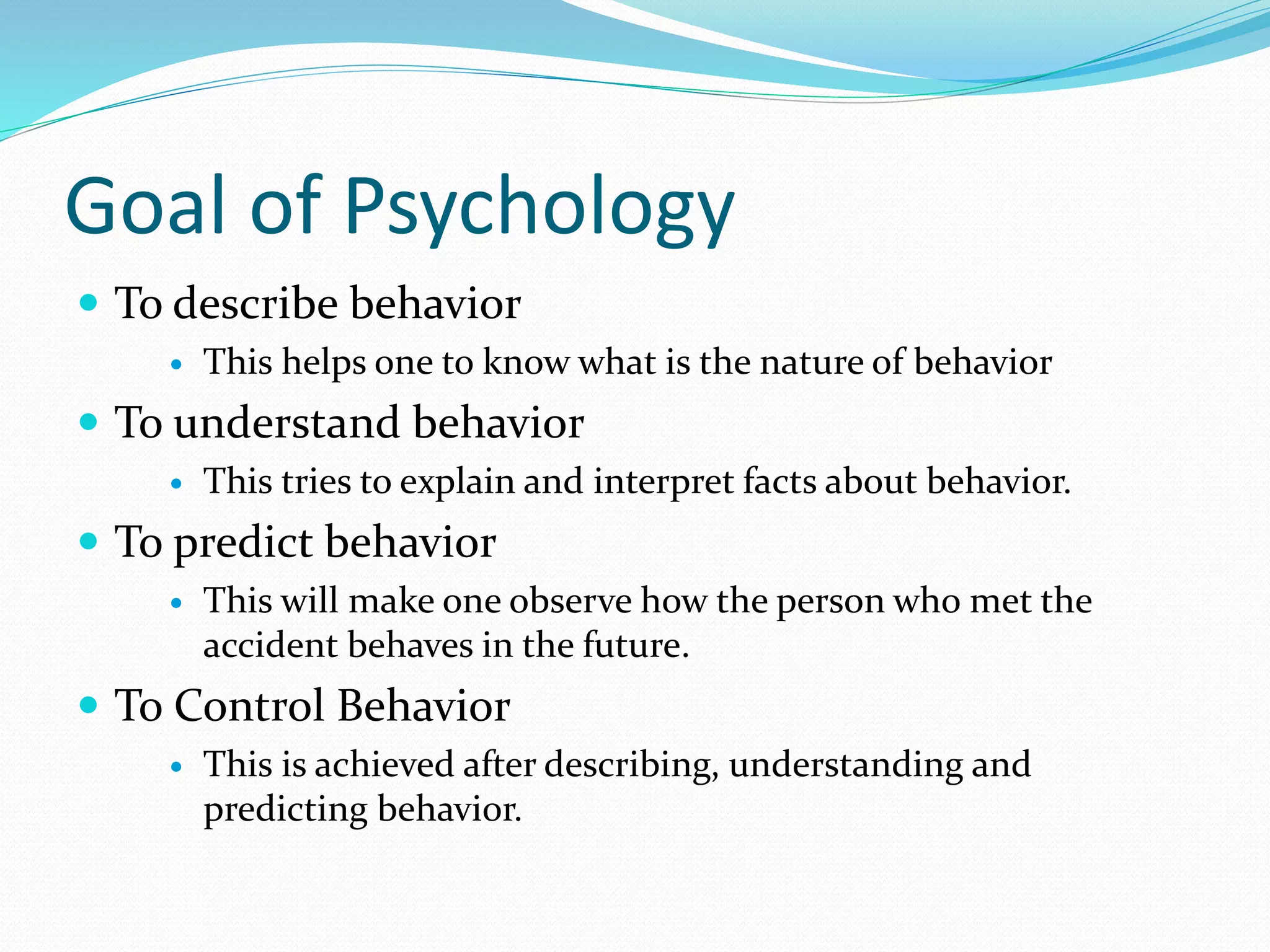
Goal of Psychology
 To describe behavior
 This helps one to know what is the nature of behavior
 To understand behavior
 This tries to explain and interpret facts about behavior.
 To predict behavior
 This will make one observe how the person who met the
accident behaves in the future.
 To Control Behavior
 This is achieved after describing, understanding and
predicting behavior.
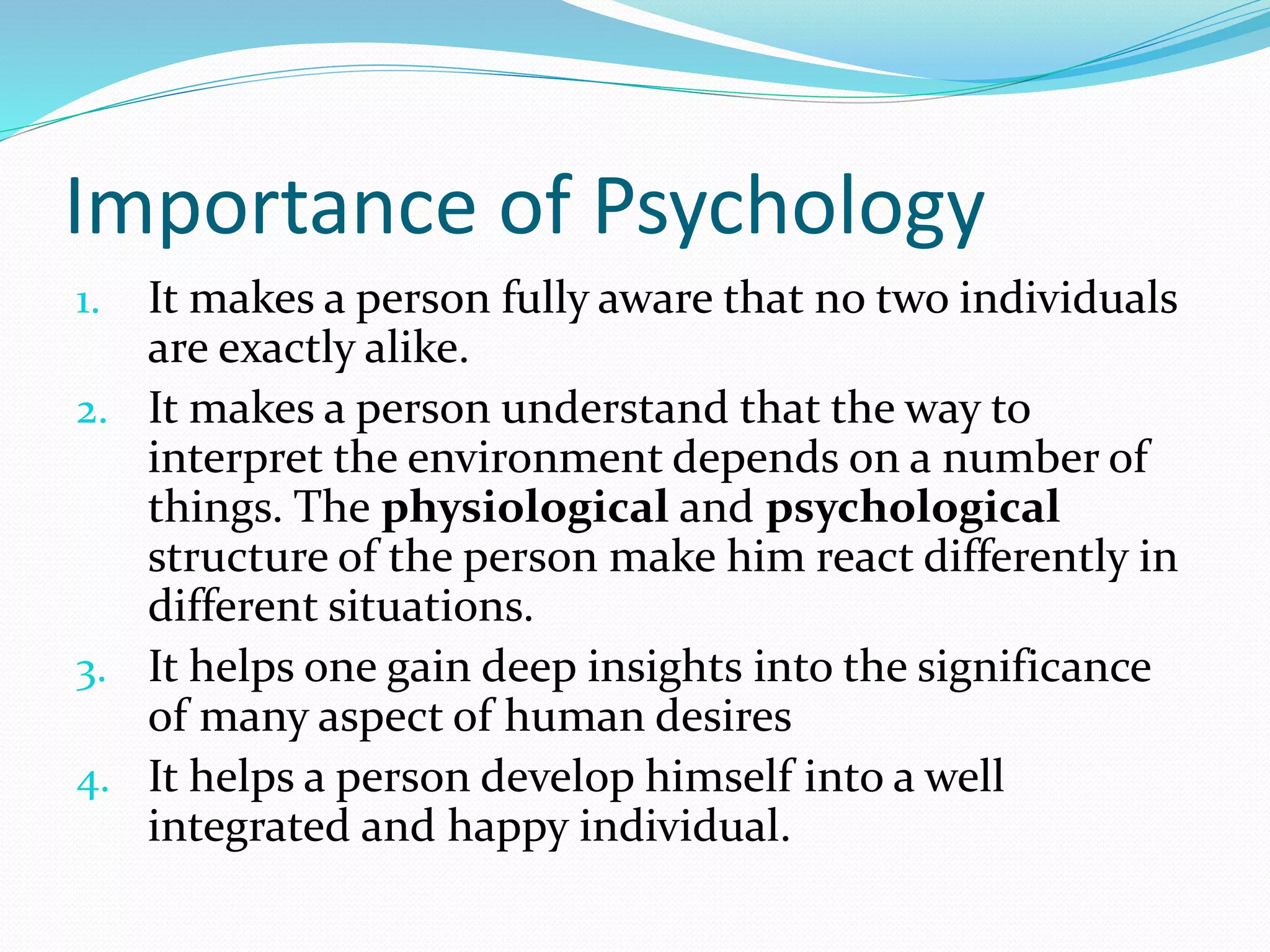
Importance of Psychology
1. It makes a person fully aware that no two individuals
are exactly alike.
2. It makes a person understand that the way to
interpret the environment depends on a number of
things. The physiological and psychological
structure of the person make him react differently in
different situations.
3. It helps one gain deep insights into the significance
of many aspect of human desires
4. It helps a person develop himself into a well
integrated and happy individual.
Historical Development of Psychology
1. Psychology as a Traditional Belief in Philosophy
 During the old days, psychology was based on traditions and
superstition. The earliest view of psychology was speculative
and metaphysical and related to animism.
 ANIMISM - is the belief that everything in the surrounding is
inhabited by supernatural being (spiritual being).
 Thus, the Greek words, psyche (soul) and logos (study): study
of soul.
2. Psychology as Science
 As science, psychology started only in the latter part of 19th
century when German psychologists and physicists used
measurement techniques to study sensation and thus laid the
foundation for scientific psychology.
 Thus, psychology is defined as a “science of human behavior”.
 It is a science because it is systematic and empirical and is
dependent on measurement. It also uses scientific method in
determining behavior.
3. Psychology in Modern Era
 Modern psychology started with the opening of Wilhelm
Wundt’s laboratory at the university of Leipzig, Germany in
1879. This event marked the formal birth of psychology as
science.
 Wilhelm Wundt – Father of Experimental Psychology or
Modern Psychology
 William James
 An American philosopher who brought psychology in
America. This made him the first American Psychologist
who emphasized “functionalism” in the study of
behavior.
 Functionalism – concern with the utility of how conscious
processes function in the adjustment of man to his
environment.
 John B. Watson
 American psychologist who set the direction of modern
experimental psychology .
Schools of Psychology
1. Structuralism
 Headed by Wilhelm Wundt and Eduard Tichener
 According to structuralism, human behavior can be studied
through conscious experience. This conscious experiences
consist of three elements or structure: sensations, feeling, and
images.
 Introspection – is the procedure employed in the study of the
mind. Here, the subjects are required to describe in detail their
experiences while exposed to the stimuli.
2. Functionalism
 William James
 Concern with the utility of how conscious processes function
in the adjustment of man to his environment.
 Functionalists studied how the mind affects what people do.
3. Behaviorism
 John Watson and Edward Thorndike
 Rejected the view of structuralism and functionalism
 Behaviorism stressed the importance of learning the
environment and events that shape the behavior.
 Behavior can be understood in terms of the stimulus-response
formula.
4. Psychoanalysis
 Sigmund Freud
 Freud’s theory stated that much of our behavior is governed
by hidden motives and unconscious desires.
 Human behavior is influenced by his libido. Libido is a sexual
urge (desire) which is hidden or repressed in the unconscious
or subconscious mind of an individual. Such repression,
especially if longer, results to abnormal behavior and
personality disorder and maladjustment.
5. Gestalt
 Max Weithemer
 It maintains that behavior is a whole pattern of organized
experience.
 “the whole is more than the sum of its part”
Branches of Psychology
1. General Psychology
- study the underlying principles of human behavior.
2.Experimental Psychology
- studies the process of sensation, perception, learning
and thinking.
3. Developmental Psychology
- focuses on the various stages of development from
pre – natal to old age, specifically how people grow and
changes throughout the course of life.
4. Educational Psychology
- deals with psychological problems in the field of
education and how educational process affects students.
5. Comparative Psychology
- investigated the behavioral differences of various
organisms and species to discover similarities and differences
between animals and humans.
6. Social Psychology
- centers on all aspects of people’s interpersonal
behavior.
7. Industrial – Organizational Psychology
- study that deals with the psychology of the workplace,
the employees’ motivation and productivity, job satisfaction and
leadership.
8. Environmental psychology
- connected with the relationship of people to the physical
environment.
9. Personality Psychology
- Is founded on sound individual differences,
characteristics or traits, a persons response to vast range of
situation.
10. Clinical Psychology
- involves the application of clinical method of diagnosis
and treatments to persons who are severely disturbed and those
suffering from emotional and adjustment problems.
11. Cognitive Psychology
- study of higher mental processes like thinking, learning,
reasoning, decision making,. Etc.
12. Forensic Psychology
- is a division of applied psychology that studies legal issues
like knowing what criteria determine whether an accused person is
mentally competent to stand trial.
13. Community Psychology
- Focuses on mental health of community.
14. Health Psychology
- examines the relationship of psychological factors
and physical illness ore diseases.
15. Counseling Psychology
- Concerned wit normal problems of everyday living
and guides the individuals in their normal development.
16. Engineering Psychology
- Developing areas in psychology. It is concern with
the development of man – machine system.
17. Consumer Psychology
- concern with the buying habits of consumers and the
effects of advertisement to people.
18. Legal Psychology
- involves the application of psychology in legal
proceedings
19. Sport Psychology
- studies psychological factors in sports and other
exercises.

General Concepts of Psychology

  • 2.
    Objective  Discuss thenature of psychology  Goals of Psychology  Importance of Psychology  Historical Development of Psychology  Schools of Psychology  Branches of Psychology
  • 3.
    Psychology  Etymological Definition Psyche – mind  Logos – study -the study of the mind or cognitive processes that underlie human behavior.
  • 4.
    Wilhelm Wundt  Psychologyis the study of conscious experience.
  • 5.
    William James  Psychologypertains to finding out how psychological nature helps people adapt themselves to a complex and changing world.
  • 6.
    John Watson  Assertsthat psychology is focused on the study of covert (unobservable) and overt (observable) behavior that one can see and can be measured scientifically.
  • 7.
    STUDY of BEHAVIORand MENTAL PROCESSES
  • 8.
     Psychology pertainsnot just on what people do.  Thoughts  Feelings  Perception  Reasoning  Memories  Biological activities
  • 9.
     Psychology triesto explain, predict, modify, and ultimately improves the lives of the people and the world where they live.
  • 10.
  • 11.
    Goal of Psychology To describe behavior  This helps one to know what is the nature of behavior  To understand behavior  This tries to explain and interpret facts about behavior.  To predict behavior  This will make one observe how the person who met the accident behaves in the future.  To Control Behavior  This is achieved after describing, understanding and predicting behavior.
  • 12.
    Importance of Psychology 1.It makes a person fully aware that no two individuals are exactly alike. 2. It makes a person understand that the way to interpret the environment depends on a number of things. The physiological and psychological structure of the person make him react differently in different situations. 3. It helps one gain deep insights into the significance of many aspect of human desires 4. It helps a person develop himself into a well integrated and happy individual.
  • 13.
    Historical Development ofPsychology 1. Psychology as a Traditional Belief in Philosophy  During the old days, psychology was based on traditions and superstition. The earliest view of psychology was speculative and metaphysical and related to animism.  ANIMISM - is the belief that everything in the surrounding is inhabited by supernatural being (spiritual being).  Thus, the Greek words, psyche (soul) and logos (study): study of soul.
  • 14.
    2. Psychology asScience  As science, psychology started only in the latter part of 19th century when German psychologists and physicists used measurement techniques to study sensation and thus laid the foundation for scientific psychology.  Thus, psychology is defined as a “science of human behavior”.  It is a science because it is systematic and empirical and is dependent on measurement. It also uses scientific method in determining behavior.
  • 15.
    3. Psychology inModern Era  Modern psychology started with the opening of Wilhelm Wundt’s laboratory at the university of Leipzig, Germany in 1879. This event marked the formal birth of psychology as science.  Wilhelm Wundt – Father of Experimental Psychology or Modern Psychology
  • 16.
     William James An American philosopher who brought psychology in America. This made him the first American Psychologist who emphasized “functionalism” in the study of behavior.  Functionalism – concern with the utility of how conscious processes function in the adjustment of man to his environment.
  • 17.
     John B.Watson  American psychologist who set the direction of modern experimental psychology .
  • 18.
    Schools of Psychology 1.Structuralism  Headed by Wilhelm Wundt and Eduard Tichener  According to structuralism, human behavior can be studied through conscious experience. This conscious experiences consist of three elements or structure: sensations, feeling, and images.  Introspection – is the procedure employed in the study of the mind. Here, the subjects are required to describe in detail their experiences while exposed to the stimuli.
  • 19.
    2. Functionalism  WilliamJames  Concern with the utility of how conscious processes function in the adjustment of man to his environment.  Functionalists studied how the mind affects what people do.
  • 20.
    3. Behaviorism  JohnWatson and Edward Thorndike  Rejected the view of structuralism and functionalism  Behaviorism stressed the importance of learning the environment and events that shape the behavior.  Behavior can be understood in terms of the stimulus-response formula.
  • 21.
    4. Psychoanalysis  SigmundFreud  Freud’s theory stated that much of our behavior is governed by hidden motives and unconscious desires.  Human behavior is influenced by his libido. Libido is a sexual urge (desire) which is hidden or repressed in the unconscious or subconscious mind of an individual. Such repression, especially if longer, results to abnormal behavior and personality disorder and maladjustment.
  • 22.
    5. Gestalt  MaxWeithemer  It maintains that behavior is a whole pattern of organized experience.  “the whole is more than the sum of its part”
  • 23.
    Branches of Psychology 1.General Psychology - study the underlying principles of human behavior. 2.Experimental Psychology - studies the process of sensation, perception, learning and thinking. 3. Developmental Psychology - focuses on the various stages of development from pre – natal to old age, specifically how people grow and changes throughout the course of life.
  • 24.
    4. Educational Psychology -deals with psychological problems in the field of education and how educational process affects students. 5. Comparative Psychology - investigated the behavioral differences of various organisms and species to discover similarities and differences between animals and humans. 6. Social Psychology - centers on all aspects of people’s interpersonal behavior.
  • 25.
    7. Industrial –Organizational Psychology - study that deals with the psychology of the workplace, the employees’ motivation and productivity, job satisfaction and leadership. 8. Environmental psychology - connected with the relationship of people to the physical environment. 9. Personality Psychology - Is founded on sound individual differences, characteristics or traits, a persons response to vast range of situation.
  • 26.
    10. Clinical Psychology -involves the application of clinical method of diagnosis and treatments to persons who are severely disturbed and those suffering from emotional and adjustment problems. 11. Cognitive Psychology - study of higher mental processes like thinking, learning, reasoning, decision making,. Etc. 12. Forensic Psychology - is a division of applied psychology that studies legal issues like knowing what criteria determine whether an accused person is mentally competent to stand trial.
  • 27.
    13. Community Psychology -Focuses on mental health of community. 14. Health Psychology - examines the relationship of psychological factors and physical illness ore diseases. 15. Counseling Psychology - Concerned wit normal problems of everyday living and guides the individuals in their normal development. 16. Engineering Psychology - Developing areas in psychology. It is concern with the development of man – machine system.
  • 28.
    17. Consumer Psychology -concern with the buying habits of consumers and the effects of advertisement to people. 18. Legal Psychology - involves the application of psychology in legal proceedings 19. Sport Psychology - studies psychological factors in sports and other exercises.

Editor's Notes

  • #4 Psychology is a part of everyday life. In practical sense, it involves a body of information that concerns behavior, experiences and thoughts.
  • #6 Ito ay nakasentro kun paano nakakatulong ang sikolohikal na natura ng tao sa kanyang pang araw araw na gawain.
  • #7 Covert( headache, stomach pain, hunger, feelings, or thoghts) originate within the body Overt ( Noise, prick, pinch) Originate from the environmnet.
  • #8 Regardless of area of specialization, there is a common link between then “the study of behavior and mental processes.”
  • #11 Stimulus – the physical condition which is internal(covert) unobservable behavior or external(overt) observable behavior. Internal Sti. – Comes within the body (Headache, toothache) External Sti. – Comes from the environment. Response – behavior that results from the stimuli. Physical – turning of head Mental – making decisions Glandular – Salivation on smelling delicios food.
  • #12 What is happening Why is it Happening Will it happen again Can it change 2.
  • #13 Knowledge of physical attributes, mental capabilities, emotional soundness help in the understanding of persons behavior. Example: the experience of hunger
  • #16 Within few years, psychology laboratories were put up in some universities in Europe and United States of America which were headed by Wundt’s Students.
  • #17 Functionalists studied how the mind affects what people do. This school is rooted in Charles Darwin's theory of evolution which was popular during that time.
  • #21 There can never be response without a stimulus.