Sajay Lawrence S
English
 Observation is one method for collecting research data. It
involves watching a participant and recording relevant
behaviour for later analysis.
 Albert Bandura, a psychologist and learning theorist who
first proposed social learning theory can be credited for
first having noted observational learning.
 It is a powerful tool of psychological enquiry.
 Deliberate and purposeful.
 Selection: Selecting a particular aspect of observation.
 Recording: To keep an account about the observed
aspect in writing or some other permanent form.
 Analysis: Examining the element or structure of the
observed aspects in detail.
 Interpretation: Explaining the aspects of the
observation or providing measurements.
 Naturalistic.
 Controlled.
 Structured and Unstructured.
 Participant and Non-Participant.
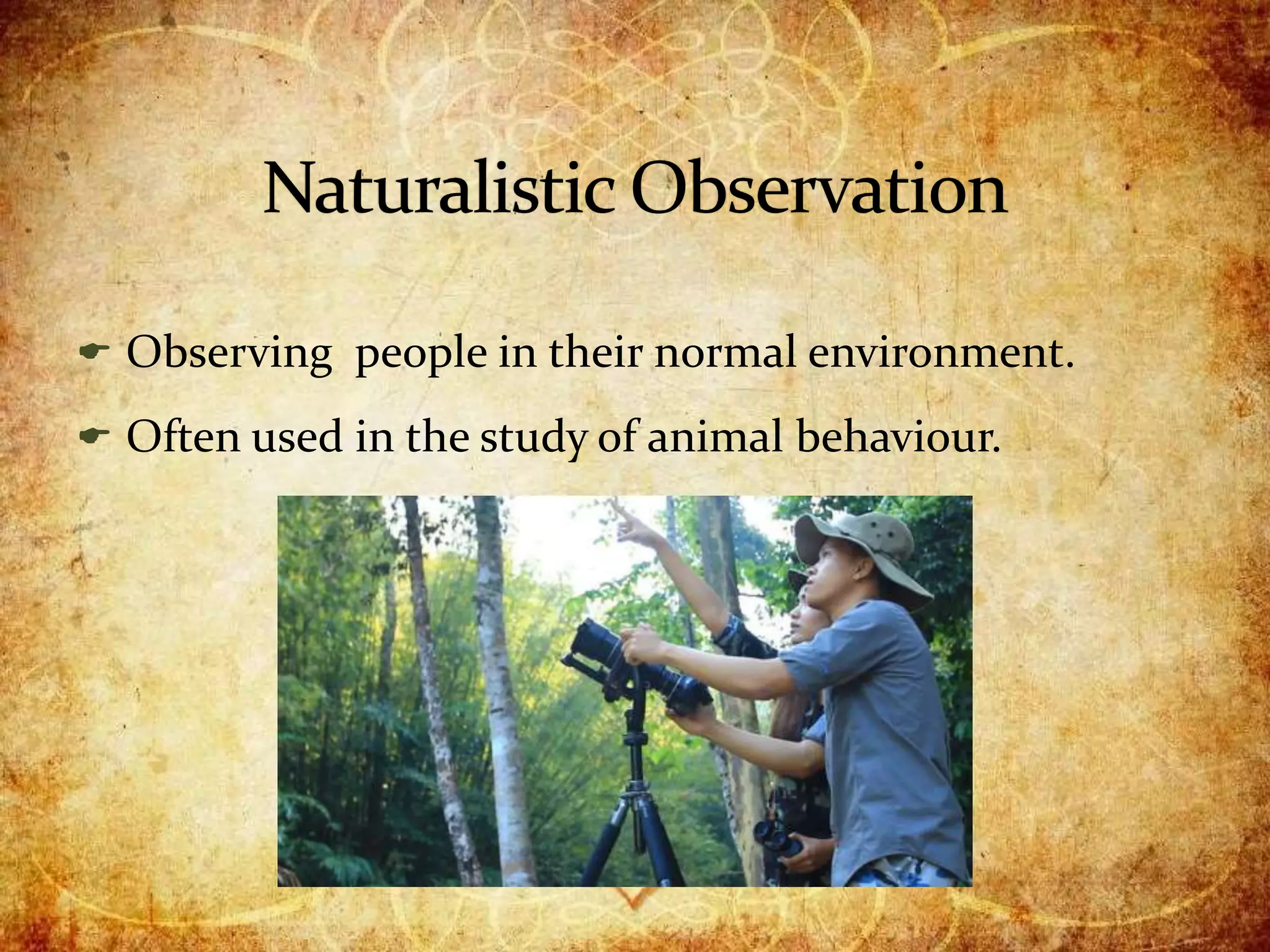
 Observing people in their normal environment.
 Often used in the study of animal behaviour.
 Advantages
. Used to generate new ideas.
. The entire situation can be studied.
. More insight is gained.
 Disadvantages
. Not possible to observe all types of behaviour in a natural
setting.
. Many instances of behaviour do not repeat themselves.
 Carried out in a laboratory.
The observer decides where the observation takes
place, at what time and under what circumstances.
Standardized procedures are used.
Advantages
. Can be easily replicated by other researchers by using
the same observation schedule.
. Observer can have control over variables.
. A less time consuming method compared to naturalistic
observation.
Disadvantages
. Participants behave differently since they know they are
being observed.
 Also called Systematic Observation.
 Coding scheme is used by researchers.
 It is a data collecting method in which researchers
gather data without direct involvement with the
participants.
Advantages
. Greater control of sampling.
. Measurement of error.
. Permits stronger generalization and checks on reliability
and validity.
. Similar to a survey but questions are not asked.
Disadvantages
. Language and cultural barrier.
. People may behave unnaturally as they know that they
are being observed.
 Involves the researchers recording the behaviour they
can see.
Advantage : Provide rich qualitative data.
 Disadvantage: Can be difficult without the use of
recording equipment.
 For example, observing children playing with their
new toys, field observations or suveys.
 Participant observation involves active participation
of the observer.
 Participant observation is of two types, one where the
participants are aware that they are being observed
which is called overt participant observation and the
other where participants are not aware that they are
being observed which is called overt participant
observation.
Advantages
. Researcher able to be honest with the group in overt
participant observation.
. Covert participant observation may be the only way
to gather knowledge on illegal activity.
. Not knowing they are being observed avoids
‘observer effect’.
 Disadvantages
. May lose objectivity and become biased.
. If researcher is ‘undercover’, he has to be very covert
about his research.
. The researcher may influence what happens.
 Non Participant observation involves observing
participants without actively participating.
Advantages
. Participants tend to act more realistically.
. Researcher has no influence over the situation.
Disadvantages
. Observer may not get a feel of what is happening.
. Harder to find or back-up a hypothesis without
influencing the participants.
 Observation is an important method of data
collection.
Different types of observation exist.
 Nevertheless, has limitations that need to be
overcome by complementing with other research
methods like interviews of participants and use of
experiments.
Observation method of psychology

Observation method of psychology

  • 1.
  • 2.
     Observation isone method for collecting research data. It involves watching a participant and recording relevant behaviour for later analysis.  Albert Bandura, a psychologist and learning theorist who first proposed social learning theory can be credited for first having noted observational learning.  It is a powerful tool of psychological enquiry.  Deliberate and purposeful.
  • 3.
     Selection: Selectinga particular aspect of observation.  Recording: To keep an account about the observed aspect in writing or some other permanent form.  Analysis: Examining the element or structure of the observed aspects in detail.  Interpretation: Explaining the aspects of the observation or providing measurements.
  • 4.
     Naturalistic.  Controlled. Structured and Unstructured.  Participant and Non-Participant.
  • 5.
     Observing peoplein their normal environment.  Often used in the study of animal behaviour.
  • 6.
     Advantages . Usedto generate new ideas. . The entire situation can be studied. . More insight is gained.  Disadvantages . Not possible to observe all types of behaviour in a natural setting. . Many instances of behaviour do not repeat themselves.
  • 7.
     Carried outin a laboratory. The observer decides where the observation takes place, at what time and under what circumstances. Standardized procedures are used.
  • 8.
    Advantages . Can beeasily replicated by other researchers by using the same observation schedule. . Observer can have control over variables. . A less time consuming method compared to naturalistic observation. Disadvantages . Participants behave differently since they know they are being observed.
  • 9.
     Also calledSystematic Observation.  Coding scheme is used by researchers.  It is a data collecting method in which researchers gather data without direct involvement with the participants.
  • 11.
    Advantages . Greater controlof sampling. . Measurement of error. . Permits stronger generalization and checks on reliability and validity. . Similar to a survey but questions are not asked. Disadvantages . Language and cultural barrier. . People may behave unnaturally as they know that they are being observed.
  • 12.
     Involves theresearchers recording the behaviour they can see. Advantage : Provide rich qualitative data.  Disadvantage: Can be difficult without the use of recording equipment.  For example, observing children playing with their new toys, field observations or suveys.
  • 13.
     Participant observationinvolves active participation of the observer.  Participant observation is of two types, one where the participants are aware that they are being observed which is called overt participant observation and the other where participants are not aware that they are being observed which is called overt participant observation.
  • 14.
    Advantages . Researcher ableto be honest with the group in overt participant observation. . Covert participant observation may be the only way to gather knowledge on illegal activity. . Not knowing they are being observed avoids ‘observer effect’.  Disadvantages . May lose objectivity and become biased.
  • 15.
    . If researcheris ‘undercover’, he has to be very covert about his research. . The researcher may influence what happens.
  • 16.
     Non Participantobservation involves observing participants without actively participating. Advantages . Participants tend to act more realistically. . Researcher has no influence over the situation. Disadvantages . Observer may not get a feel of what is happening. . Harder to find or back-up a hypothesis without influencing the participants.
  • 17.
     Observation isan important method of data collection. Different types of observation exist.  Nevertheless, has limitations that need to be overcome by complementing with other research methods like interviews of participants and use of experiments.