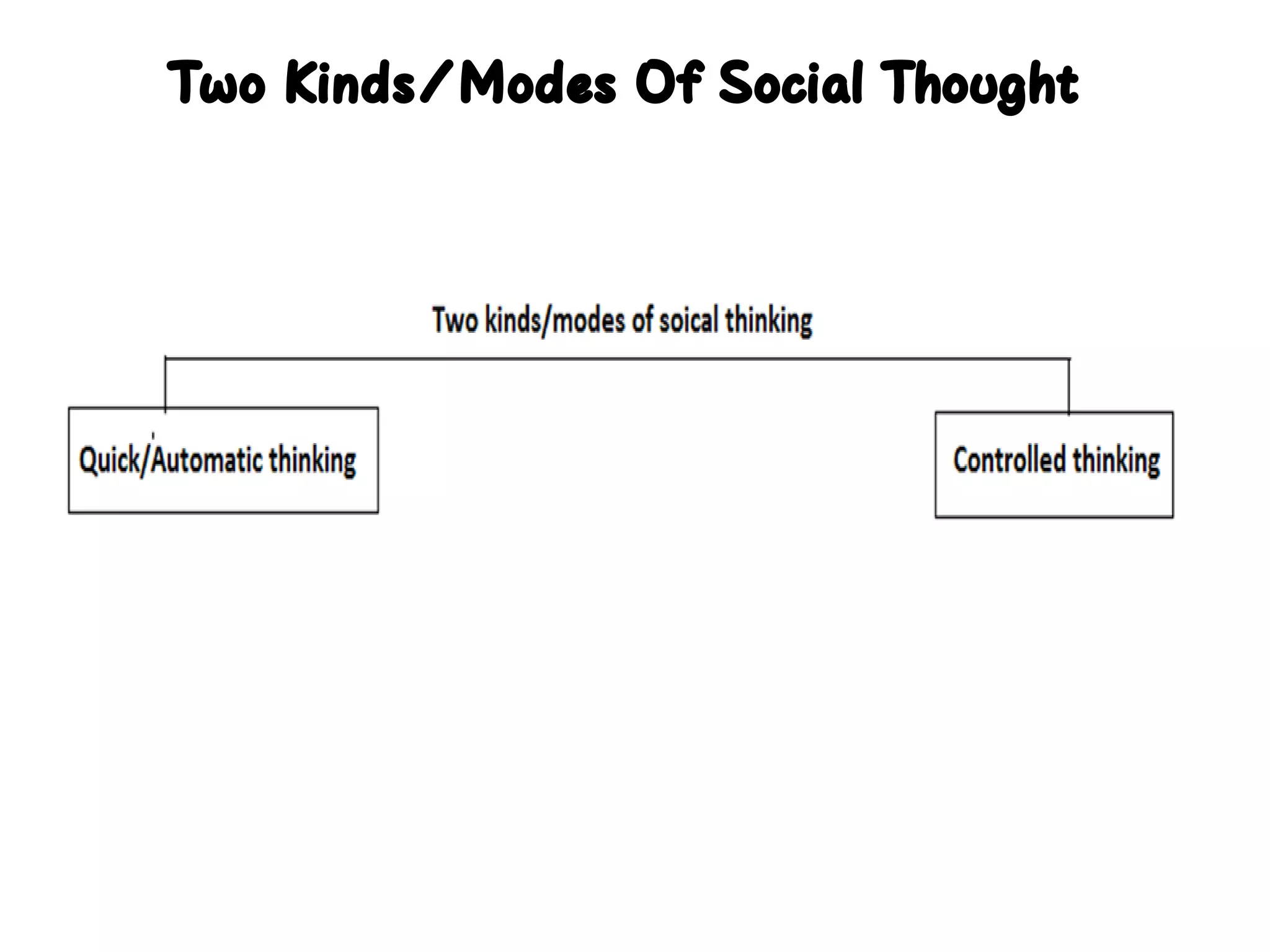
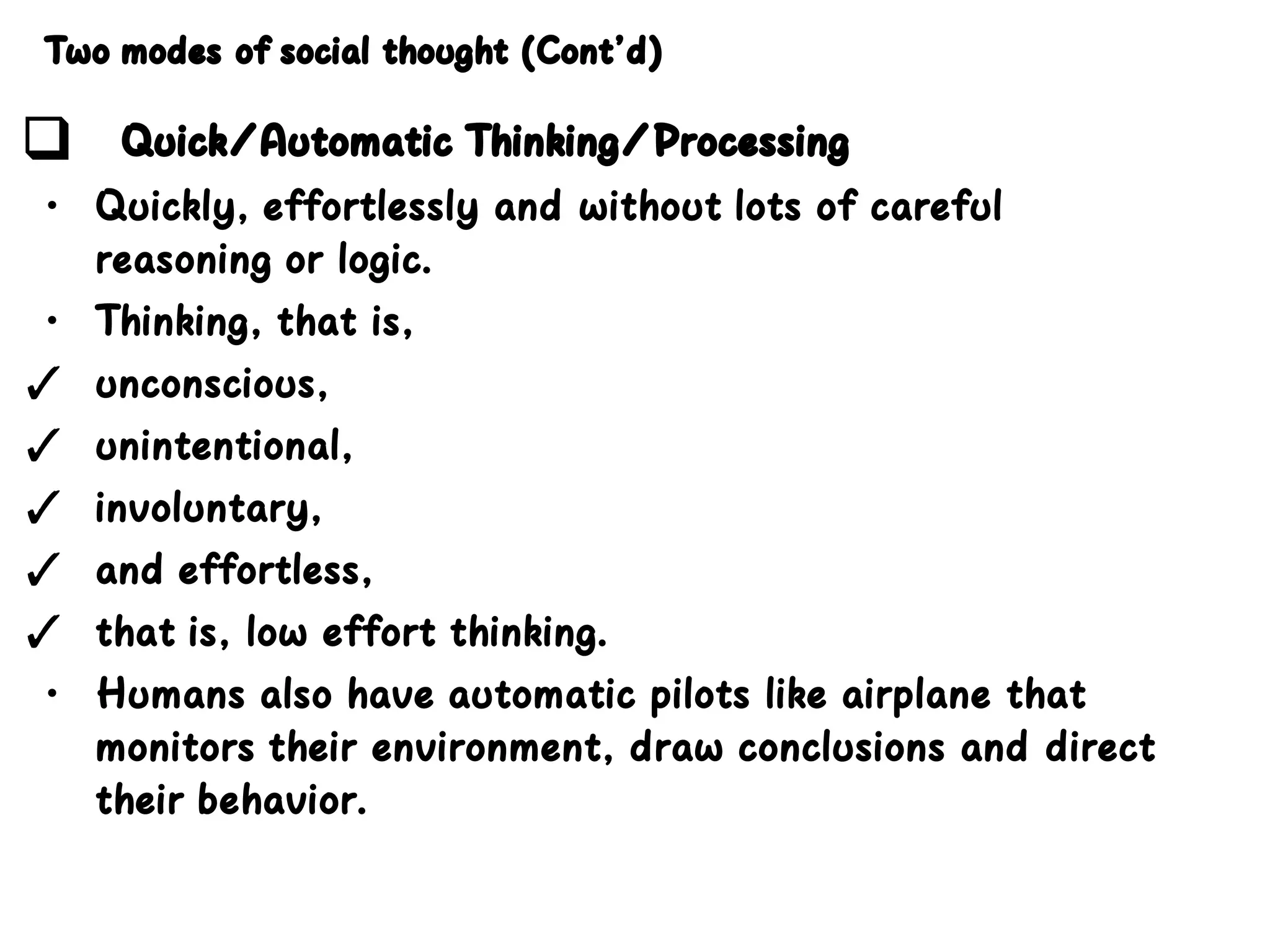
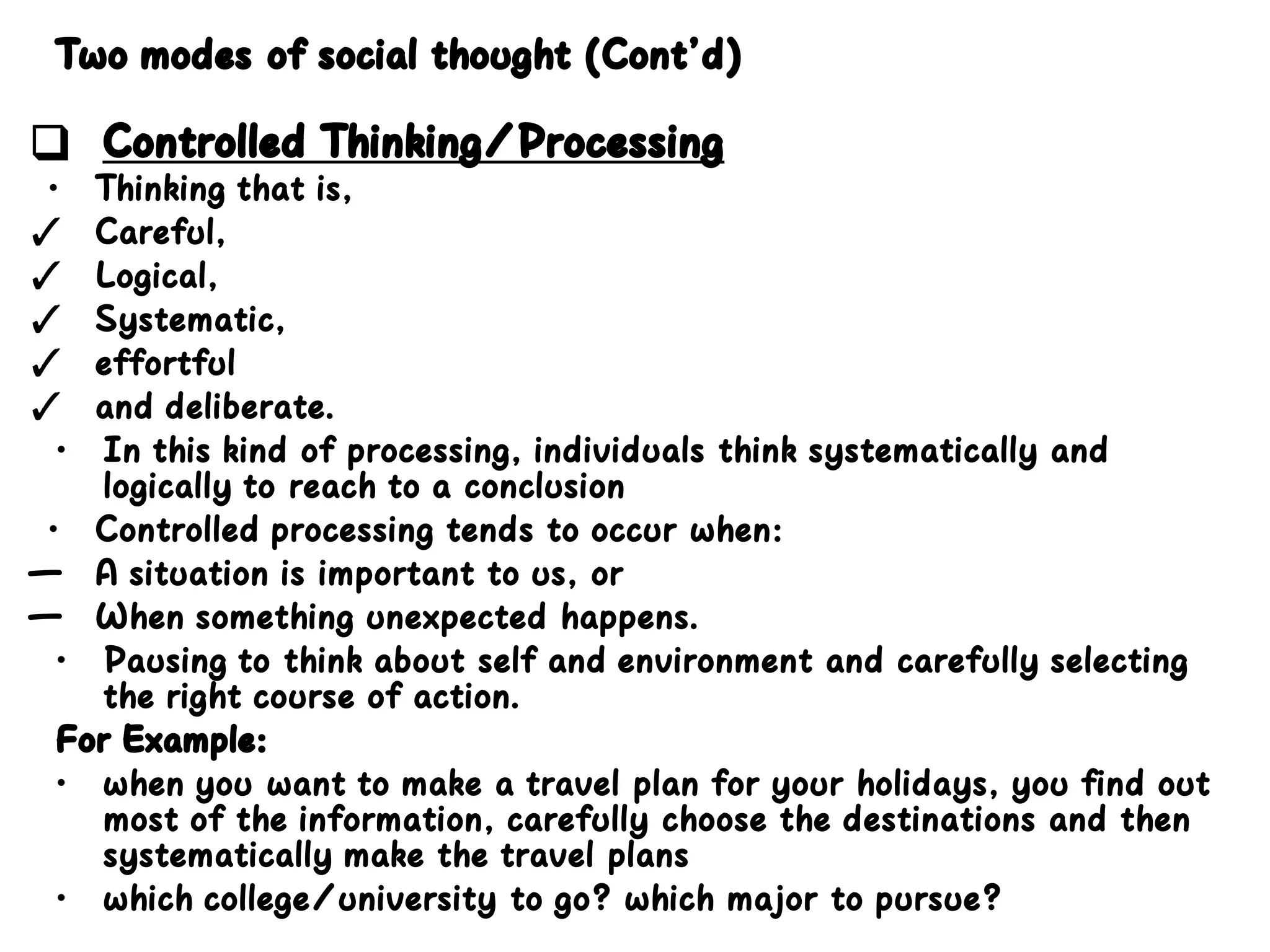
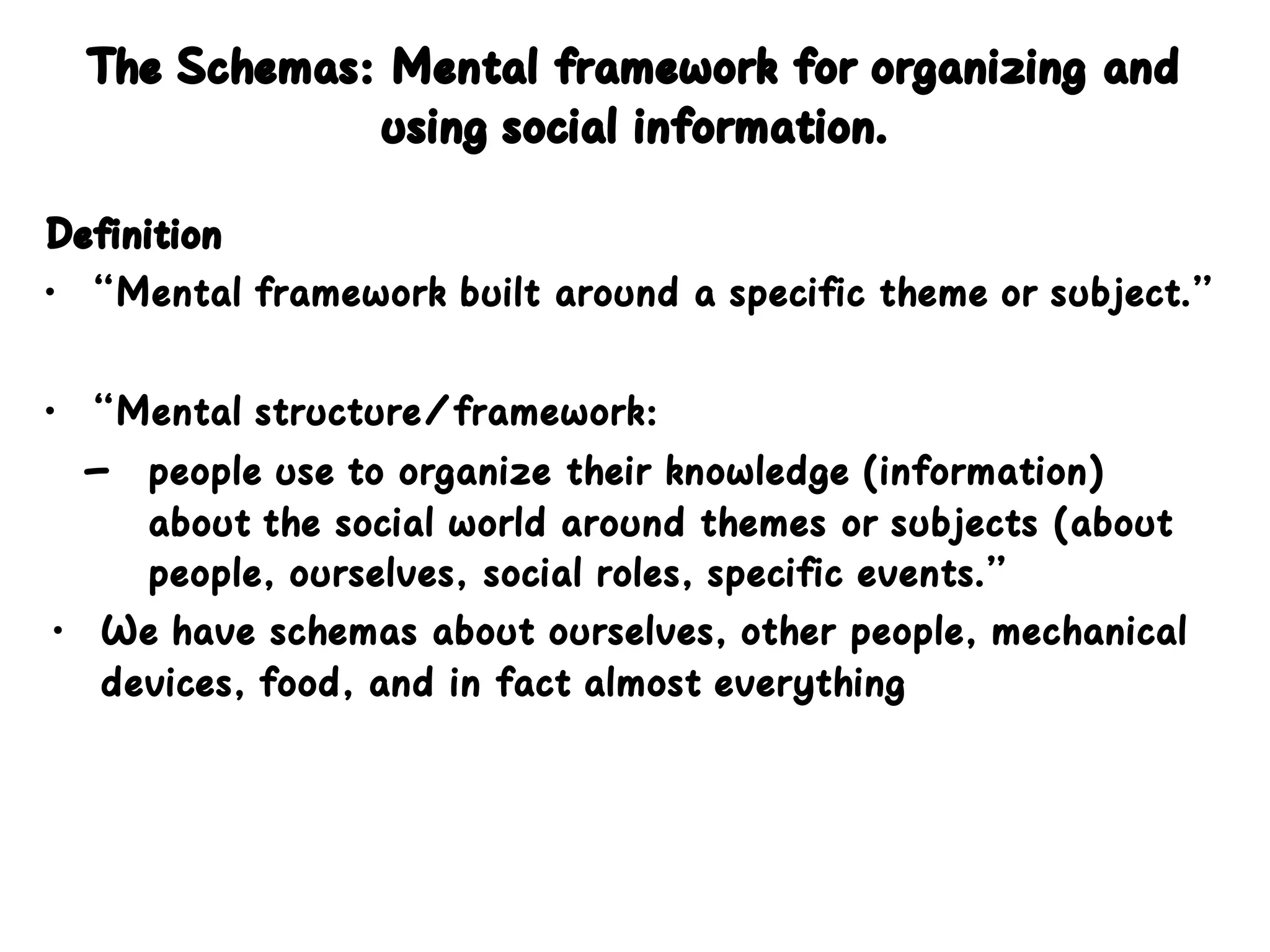
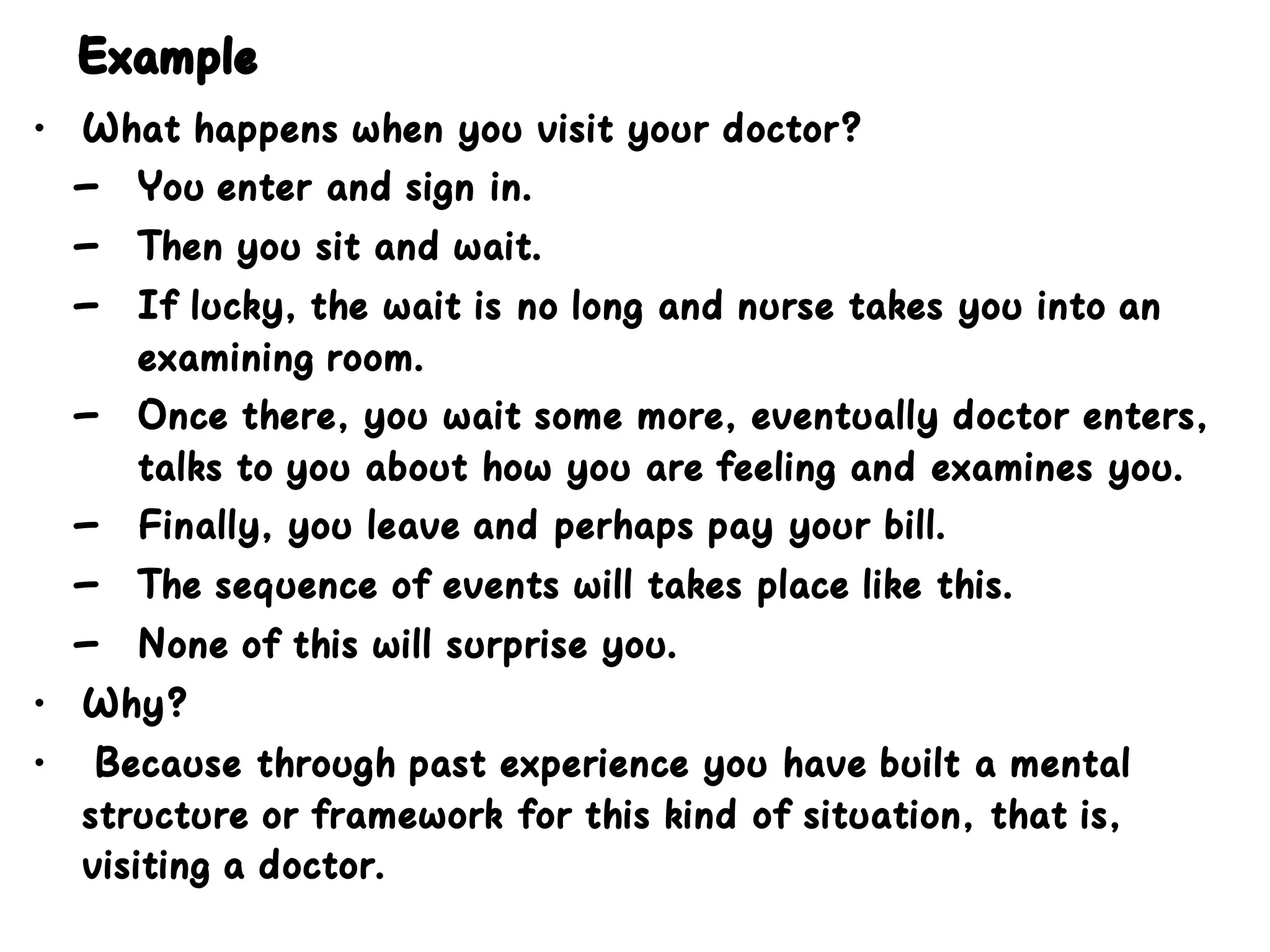
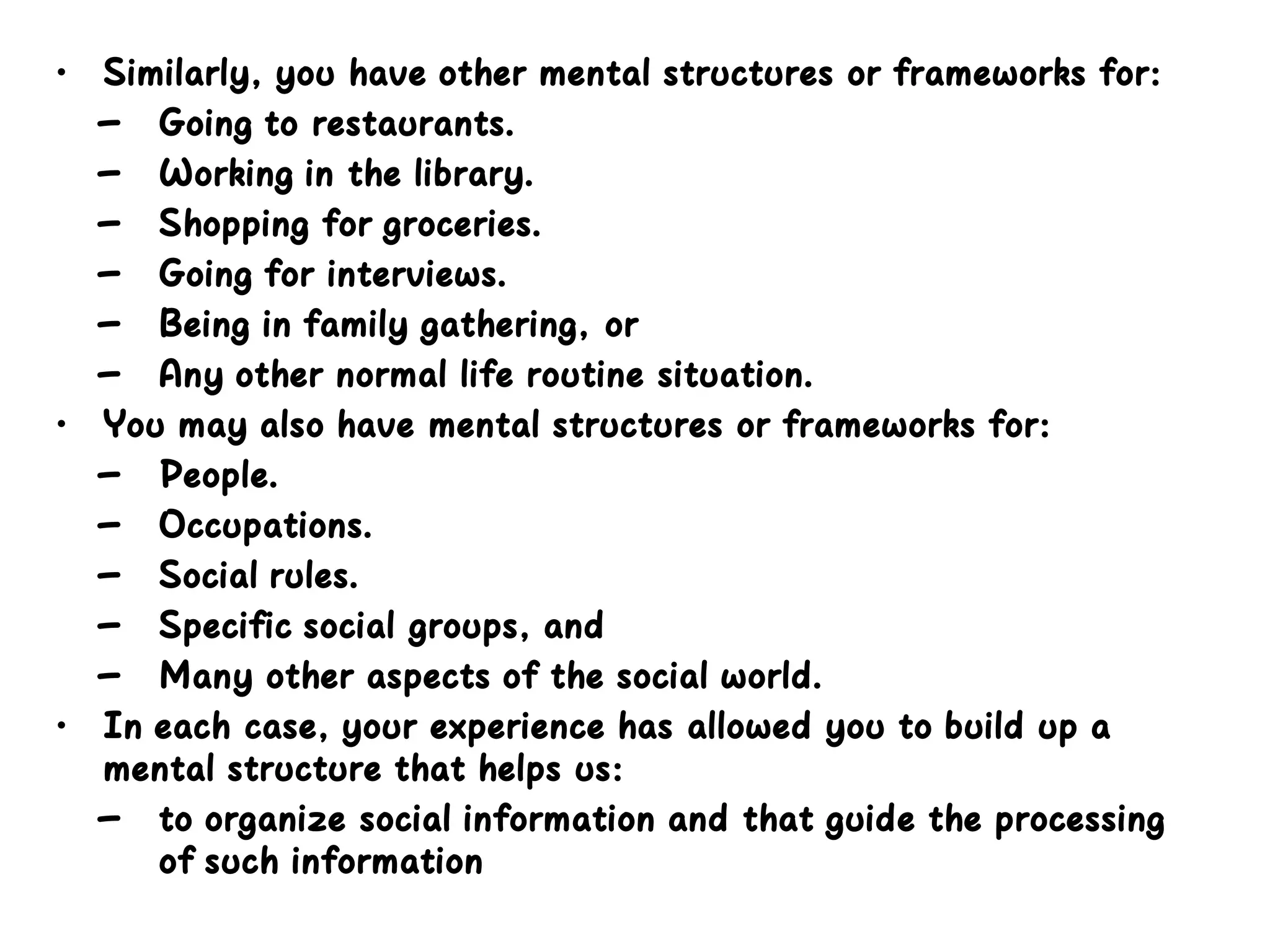
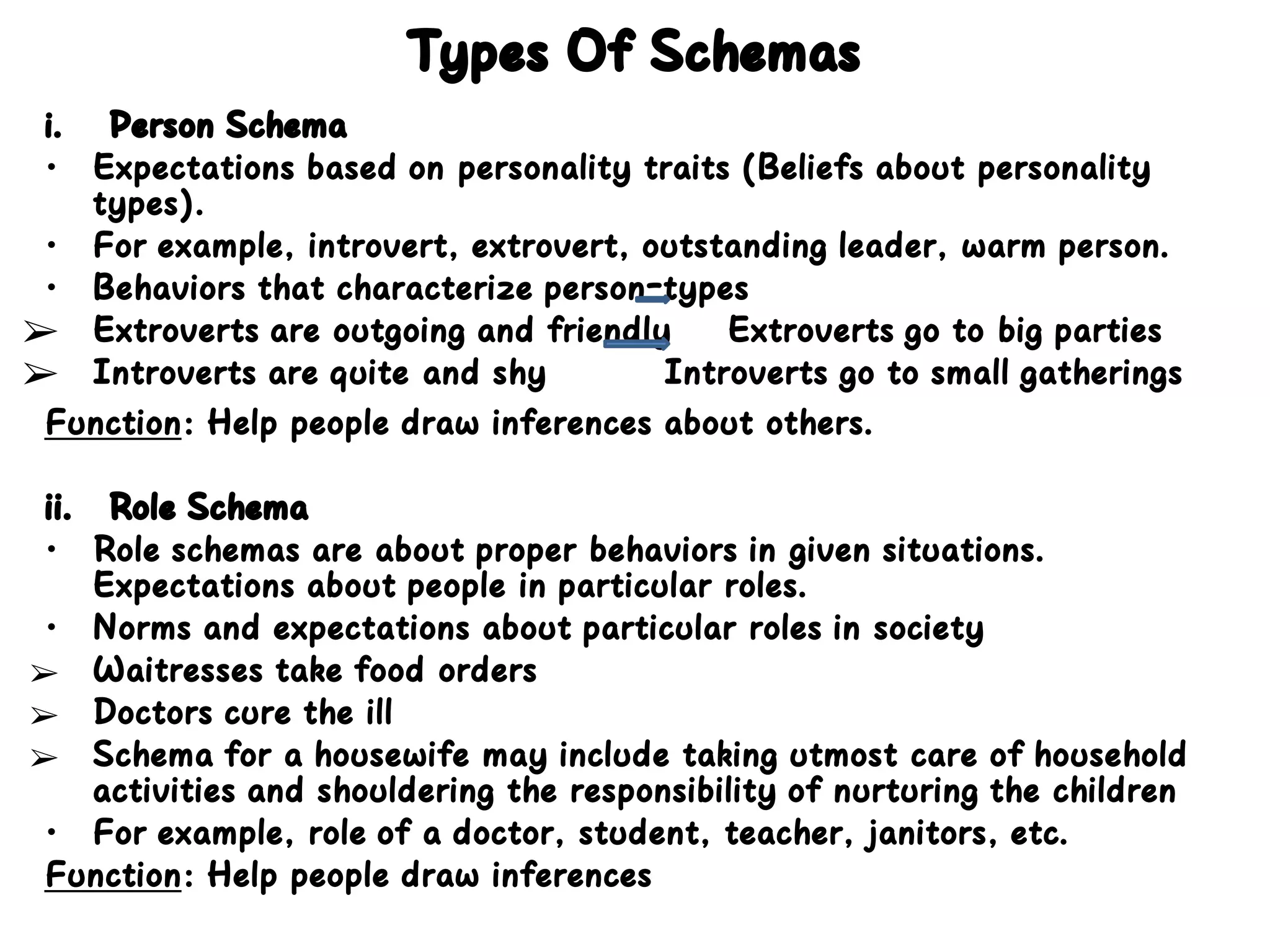
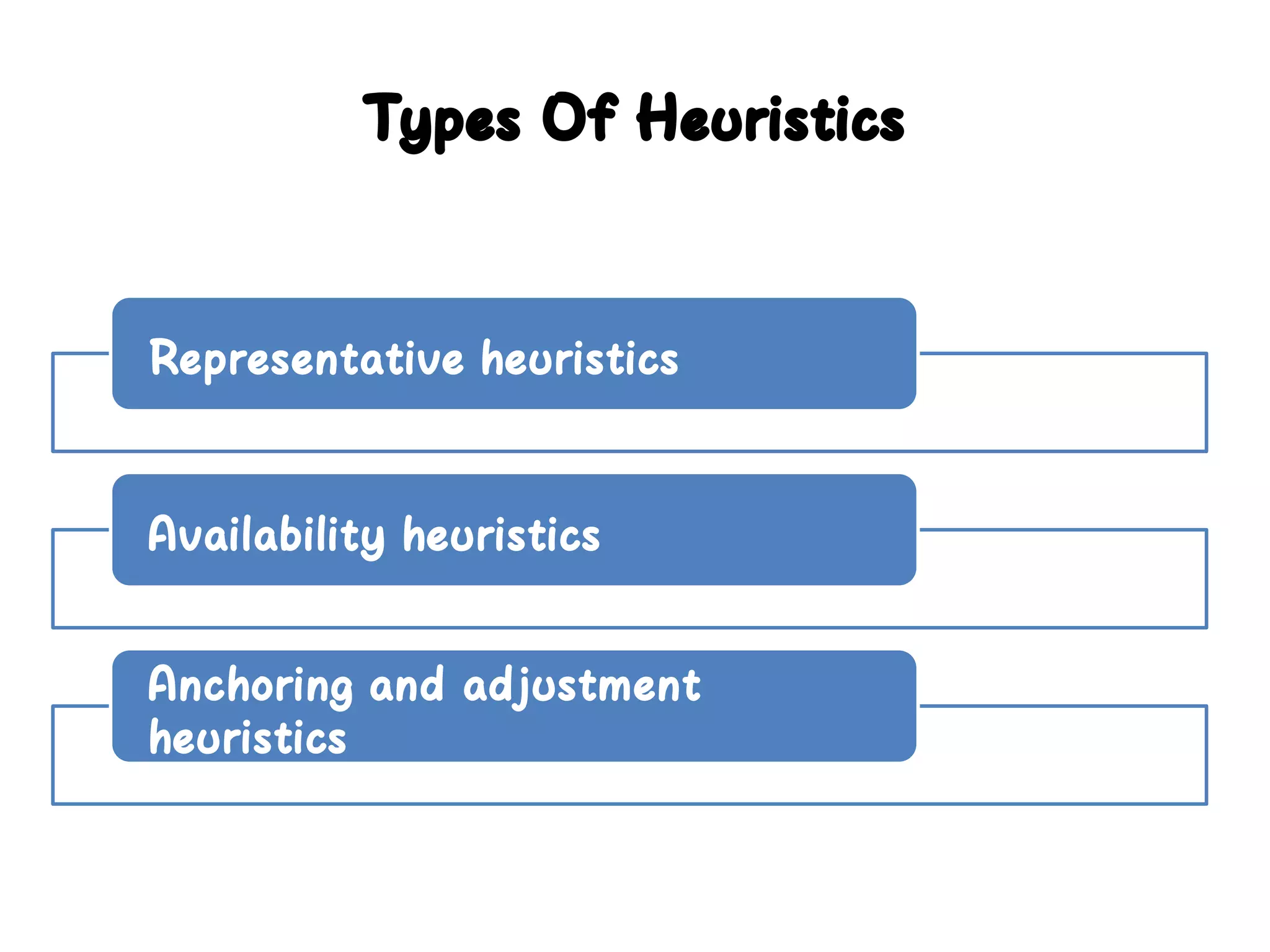
Social cognition focuses on how people think about and interact with the social world. It involves selectively attending to, interpreting, remembering, and using social information to form judgments and make decisions. There are two main modes of social thought: automatic/unconscious thinking and controlled/deliberate thinking. Schemas and heuristics are important components of social cognition that help reduce the cognitive load of processing social information. Schemas are mental frameworks that organize knowledge into themes like people, roles, and events. Heuristics are mental shortcuts that allow for decisions to be made efficiently under conditions of information overload.