Topic:-
Experimental psychology
Presented to:
Mam. TAHSEEN MAHMOOD
Presented by:-
SAIMA YASMEEN
Content
Experimental psychology.
History.
20th
century scenario.
Methodology.
Criticism.
Experimental psychology: A specific methodological approach.
The four canons of science.
Where do experimental psychologist work?
Advantages and disadvantages of experimental psychology.
The Present Status of Experimental Psychology.
Reference.
Experimental psychology
 Experimental psychology is the study of
psychological issues that uses experimental
procedures.
 Experimental psychology is an area of
psychology that utilizes scientific methods to
research the mind and behavior.
Count…..
The phrase “experimental psychology” refers to
a specific methodological approach to the study of
psychology
as well as to several specific areas of research within
psychology which predominantly use experimental
methods
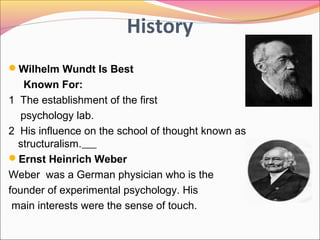
History
Wilhelm Wundt Is Best
Known For:
1 The establishment of the first
psychology lab.
2 His influence on the school of thought known as
structuralism.
Ernst Heinrich Weber
Weber was a German physician who is the
founder of experimental psychology. His
main interests were the sense of touch.
Count….
 Gustav Fechner
Fechner published in 1860 what is
considered to be the first work of
experimental psychology, Weber
was not a psychologist, and it was
Fechner who realized the importance of Weber’s
research to psychology. Fechner was interests establishing a
scientific study of the mind-body relationship, which
became known as
psychophysics. Much of Fechner's research focused on the
measurement of psychophysical method of limits and the
method of adjustment, which are still in use.
20th
century scenario
In the middle of 20th
century, behaviorism become a
dominant paradigram.
Frederic barlett,Kenneth James Williams craik,wiliam
adman hick and Donald Broadbent.
They focus on topic such as
thinking,memory,attention. Experimental psychologist
use a range of methods .
Methodology.
Other methods.
Methodology
 Methodology:-
Experimental
psychologists study human behavior in different
contexts .Human participants are instructed to
perform tasks in an experimental setup and the
measurement of behavior make in liberty
Experimental psychologist use survey
befor,during and after experimental intervention
and observation methods.
Other methods
In other methods we use interview, naturalistic
observation are practiced within fields typically
investigated by experimental psychologists .
Criticism
B.F skinner criticized experimental psychology in a speech at
American psychological association(APA) for becoming
mentalist .He focusing research on internal mental
processes instead of observable behavior
Experimental Psychology: A specific
methodological approach
Those in experimental psychology use a
methodological approach to conduct experiments in
controlled situations in order to examine human
behavior. These psychologists take nothing for
arrange as they study human responses to
sensation, perception, motivation, memory, learning
and physiological psychology.
Experimental Psychologists perform the following duties:
1 Run experiments to study human behaviorism and
mental phenomena.
2 Study behavior processes in animals.
Count….
3 Primarily uses the experimental method to
study behavior.
4 Answers questions about the when, where,
and why of behavior by careful manipulation
and control of relevant variables.
5 Use findings to inform diagnoses and
treatments for various social, behavioral and
emotional disorder.
The Four Canons of Science :-
In order to understand the scientific approach to
experimental psychology as well as other areas of
scientific research, it is useful to know the four
fundamental principles that appear to be accepted by
almost all scientists.
1 Determinism.
2 Empiricism
3 Parsimony
4 Testability
Determinism
One of the first cannons of science is the assumption
of determinism. This canon assumes that all events
have meaningful, systematic causes.
Empiricism:
The canon of empiricism simply means to make
observations. This is the best method of figuring out
orderly principles. This is a favorite tool among
scientist and psychologists because they assume that
the best way to find out about the world is to make
observations.
Parsimony
The third basic assumption of most scientific schools
of thought is parsimony. The canon of parsimony says
that we should be extremely in developing or choosing
between theories by steering away from unnecessary
concepts. Almost all scientist agree that if we are faced
with two competing theories, that both do a great job at
handling a set of empirical observations, we should
prefer the simpler of the two. The central idea behind
parsimony is that as long as we aim to keep simplifying
and organizing, we should continue until we have
made things as simple as possible.
Testability
The final and most important canon of science is the
assumption that scientific theories should be testable using
currently available research techniques. This canon is
closely related to empiricism because the techniques that
scientists typically use to test their theories are empirical
techniques. In addition to being closely related to
empiricism, the concept of testability is even more closely
associated reasonable. The idea of testability is that
scientists go an extra step by actively seeking out tests that
could prove their theory wrong. Among psychologists, the
concepts of testability are extremely important because
many really theories like the work of psychoanalysts were
difficult to put to any kind of objective test.
Where do experimental psychologists
work?
The majority work in universities and colleges
Others find research-related work in
Hospitals
Research Institutes and Centers
Government and Military Organizations
Private Companies and Industry
Advantages and disadvantages of experimental
psychology.
 Advantages:-
1 Experiments are the only means by which cause and
effect can be established.
2 It allows for precise control of variables.
3 Experiments can be replicated.
 Disadvantages:-
1 All the psychological phenomena cannot be studied by
this method.
2 The experimental method is costly in term of money
and time.
The Present Status of Experimental Psychology
 There is now no important university anywhere in the
modern world ' but in some way recognizes the right of
experimental method in psychology to a position in the
scheme of higher education and of scientific
research.
The experimental psychologist has no lack of
problems with which to concern himself. The greatest
success has so far been won in the realm of the study
of the special senses and of perception. But his
methods and results are now extending rapidly. More
and more the higher mental processes are coming
within the experimentalist's purview, so far as
References:-
 ITT Tech - Official Site www
 Degreewww.psychonline.eku.edu
 Intro to Psychologywww.sophia.org
 New Samsung Chromebookgoogle.com/chrome book
 Child Psychology DegreePsychology.CompareTopSchools.com
 Statistics Homework Helpwww.ASAPTutor.com
 2013 Best Skin Tightenerswww.SkinCareSearch.com/Face-lifting
 Child Development Coursewww.PennFoster.edu.
 Chapter 7 & 13 Bankruptcycortezlawoffices.com/bankruptcy attorney

Experimental Psychology

  • 2.
    Topic:- Experimental psychology Presented to: Mam.TAHSEEN MAHMOOD Presented by:- SAIMA YASMEEN
  • 3.
    Content Experimental psychology. History. 20th century scenario. Methodology. Criticism. Experimentalpsychology: A specific methodological approach. The four canons of science. Where do experimental psychologist work? Advantages and disadvantages of experimental psychology. The Present Status of Experimental Psychology. Reference.
  • 4.
    Experimental psychology  Experimentalpsychology is the study of psychological issues that uses experimental procedures.  Experimental psychology is an area of psychology that utilizes scientific methods to research the mind and behavior.
  • 5.
    Count….. The phrase “experimentalpsychology” refers to a specific methodological approach to the study of psychology as well as to several specific areas of research within psychology which predominantly use experimental methods
  • 6.
    History Wilhelm Wundt IsBest Known For: 1 The establishment of the first psychology lab. 2 His influence on the school of thought known as structuralism. Ernst Heinrich Weber Weber was a German physician who is the founder of experimental psychology. His main interests were the sense of touch.
  • 7.
    Count….  Gustav Fechner Fechnerpublished in 1860 what is considered to be the first work of experimental psychology, Weber was not a psychologist, and it was Fechner who realized the importance of Weber’s research to psychology. Fechner was interests establishing a scientific study of the mind-body relationship, which became known as psychophysics. Much of Fechner's research focused on the measurement of psychophysical method of limits and the method of adjustment, which are still in use.
  • 8.
    20th century scenario In themiddle of 20th century, behaviorism become a dominant paradigram. Frederic barlett,Kenneth James Williams craik,wiliam adman hick and Donald Broadbent. They focus on topic such as thinking,memory,attention. Experimental psychologist use a range of methods . Methodology. Other methods.
  • 9.
    Methodology  Methodology:- Experimental psychologists studyhuman behavior in different contexts .Human participants are instructed to perform tasks in an experimental setup and the measurement of behavior make in liberty Experimental psychologist use survey befor,during and after experimental intervention and observation methods.
  • 10.
    Other methods In othermethods we use interview, naturalistic observation are practiced within fields typically investigated by experimental psychologists . Criticism B.F skinner criticized experimental psychology in a speech at American psychological association(APA) for becoming mentalist .He focusing research on internal mental processes instead of observable behavior
  • 11.
    Experimental Psychology: Aspecific methodological approach Those in experimental psychology use a methodological approach to conduct experiments in controlled situations in order to examine human behavior. These psychologists take nothing for arrange as they study human responses to sensation, perception, motivation, memory, learning and physiological psychology. Experimental Psychologists perform the following duties: 1 Run experiments to study human behaviorism and mental phenomena. 2 Study behavior processes in animals.
  • 12.
    Count…. 3 Primarily usesthe experimental method to study behavior. 4 Answers questions about the when, where, and why of behavior by careful manipulation and control of relevant variables. 5 Use findings to inform diagnoses and treatments for various social, behavioral and emotional disorder.
  • 13.
    The Four Canonsof Science :- In order to understand the scientific approach to experimental psychology as well as other areas of scientific research, it is useful to know the four fundamental principles that appear to be accepted by almost all scientists. 1 Determinism. 2 Empiricism 3 Parsimony 4 Testability
  • 14.
    Determinism One of thefirst cannons of science is the assumption of determinism. This canon assumes that all events have meaningful, systematic causes. Empiricism: The canon of empiricism simply means to make observations. This is the best method of figuring out orderly principles. This is a favorite tool among scientist and psychologists because they assume that the best way to find out about the world is to make observations.
  • 15.
    Parsimony The third basicassumption of most scientific schools of thought is parsimony. The canon of parsimony says that we should be extremely in developing or choosing between theories by steering away from unnecessary concepts. Almost all scientist agree that if we are faced with two competing theories, that both do a great job at handling a set of empirical observations, we should prefer the simpler of the two. The central idea behind parsimony is that as long as we aim to keep simplifying and organizing, we should continue until we have made things as simple as possible.
  • 16.
    Testability The final andmost important canon of science is the assumption that scientific theories should be testable using currently available research techniques. This canon is closely related to empiricism because the techniques that scientists typically use to test their theories are empirical techniques. In addition to being closely related to empiricism, the concept of testability is even more closely associated reasonable. The idea of testability is that scientists go an extra step by actively seeking out tests that could prove their theory wrong. Among psychologists, the concepts of testability are extremely important because many really theories like the work of psychoanalysts were difficult to put to any kind of objective test.
  • 17.
    Where do experimentalpsychologists work? The majority work in universities and colleges Others find research-related work in Hospitals Research Institutes and Centers Government and Military Organizations Private Companies and Industry
  • 18.
    Advantages and disadvantagesof experimental psychology.  Advantages:- 1 Experiments are the only means by which cause and effect can be established. 2 It allows for precise control of variables. 3 Experiments can be replicated.  Disadvantages:- 1 All the psychological phenomena cannot be studied by this method. 2 The experimental method is costly in term of money and time.
  • 19.
    The Present Statusof Experimental Psychology  There is now no important university anywhere in the modern world ' but in some way recognizes the right of experimental method in psychology to a position in the scheme of higher education and of scientific research. The experimental psychologist has no lack of problems with which to concern himself. The greatest success has so far been won in the realm of the study of the special senses and of perception. But his methods and results are now extending rapidly. More and more the higher mental processes are coming within the experimentalist's purview, so far as
  • 20.
    References:-  ITT Tech- Official Site www  Degreewww.psychonline.eku.edu  Intro to Psychologywww.sophia.org  New Samsung Chromebookgoogle.com/chrome book  Child Psychology DegreePsychology.CompareTopSchools.com  Statistics Homework Helpwww.ASAPTutor.com  2013 Best Skin Tightenerswww.SkinCareSearch.com/Face-lifting  Child Development Coursewww.PennFoster.edu.  Chapter 7 & 13 Bankruptcycortezlawoffices.com/bankruptcy attorney