CARDIOVASCULAR
HOMEOSTASIS IN EXERCISE
AND POSTURE.
BY.
MRS.WINCY THIRUMURUGAN
CARDIOVASCULAR HOMEOSTASIS
IN EXERCISE AND POSTURE
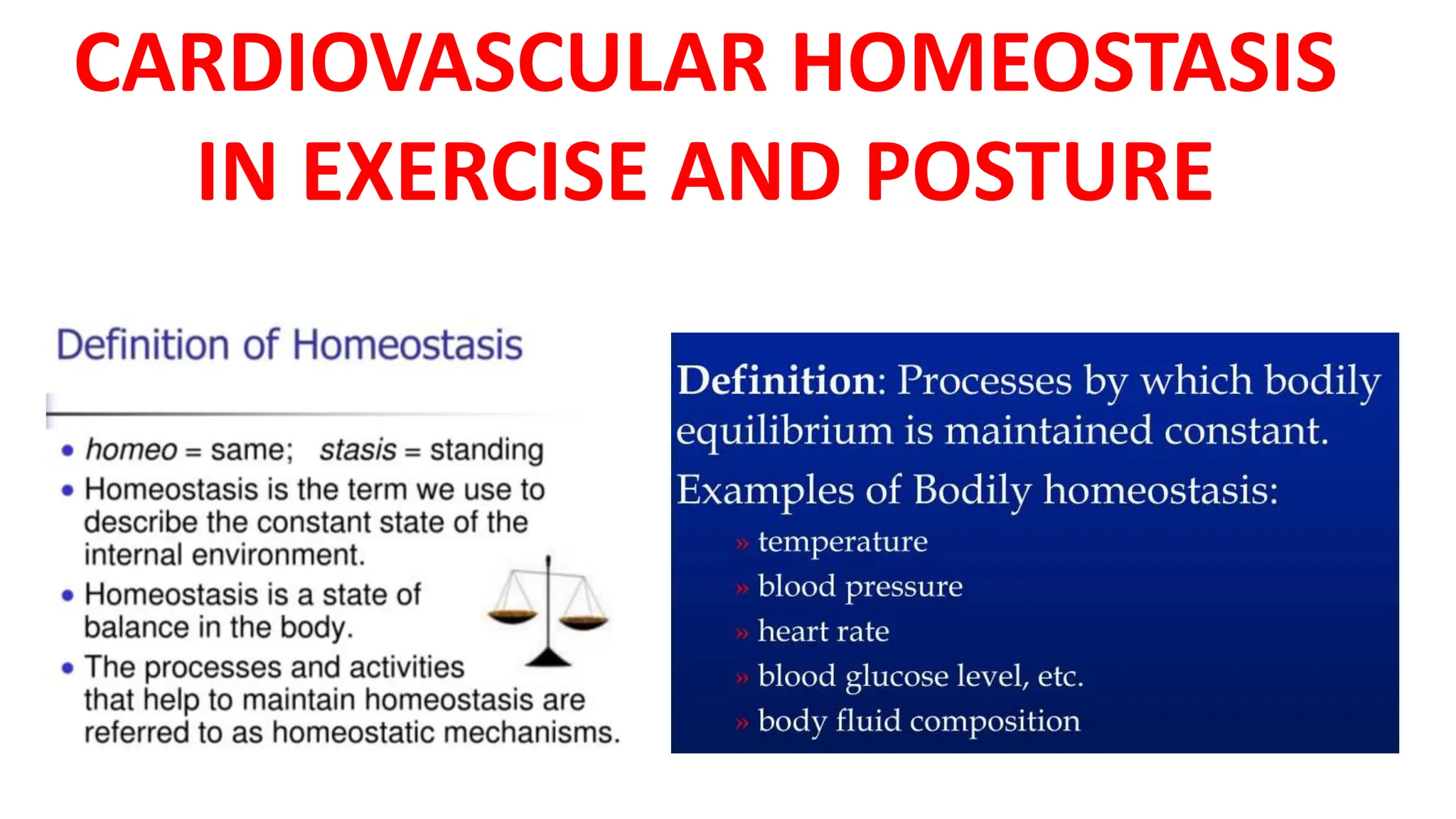
CARDIOVASCULAR HOMEOSTASIS
Cardiovascular homeostasis refers to the ability of the
cardiovascular system to maintain a stable internal environment
despite changes in external conditions.
The cardiovascular system helps maintain homeostasis by continually supplying
the central nervous system--the brain and spinal cord--with oxygen and glucose.
Brain cells start dying after just one minute without oxygen. The brain is the
control center for all of the body's homeostatic processes
The regulation of cardiovascular homeostasis :
• The regulation of cardiovascular homeostasis is a complex process that
involves multiple mechanisms such as neural regulation, endocrine
regulation, and autoregulation of perfusion .
• The neural regulation of vascular homeostasis involves the cardiovascular
centers in the brain, baroreceptor reflexes, and chemoreceptor reflexes .
• The endocrine regulation of vascular homeostasis involves hormones such
as epinephrine and norepinephrine, antidiuretic hormone, renin-angiotensin-
aldosterone mechanism, erythropoietin, and atrial natriuretic hormone .
• Autoregulation of perfusion is another mechanism that helps maintain
vascular homeostasis by regulating blood flow to the tissues
Exercise
It is a body activity that enhances or maintains physical fitness and overall
health and wellness.
Purpose:
It is performed for various reasons, to aid growth and improve strength, develop
muscles and the cardiovascular system, hone athletic skills, weight loss or
maintenance, improve health, or simply for enjoyment
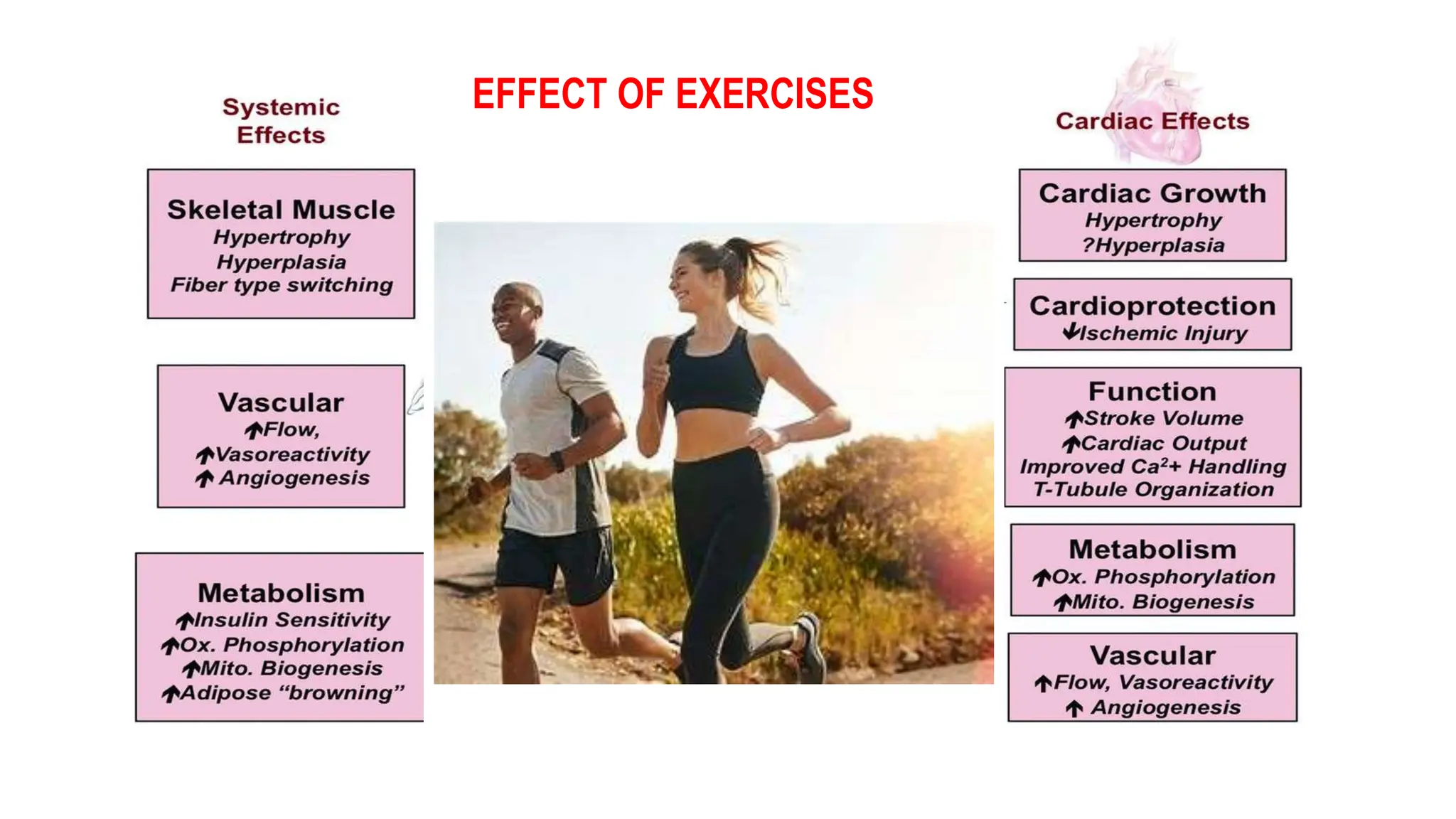
• Exercise allows the heart to pump blood more efficiently
into the circulation as a result of stronger and more
efficient cardiac contractions, greater blood perfusion of
tissues and organs, and higher oxygen delivery.
• Aerobic exercise makes the heart more efficient.
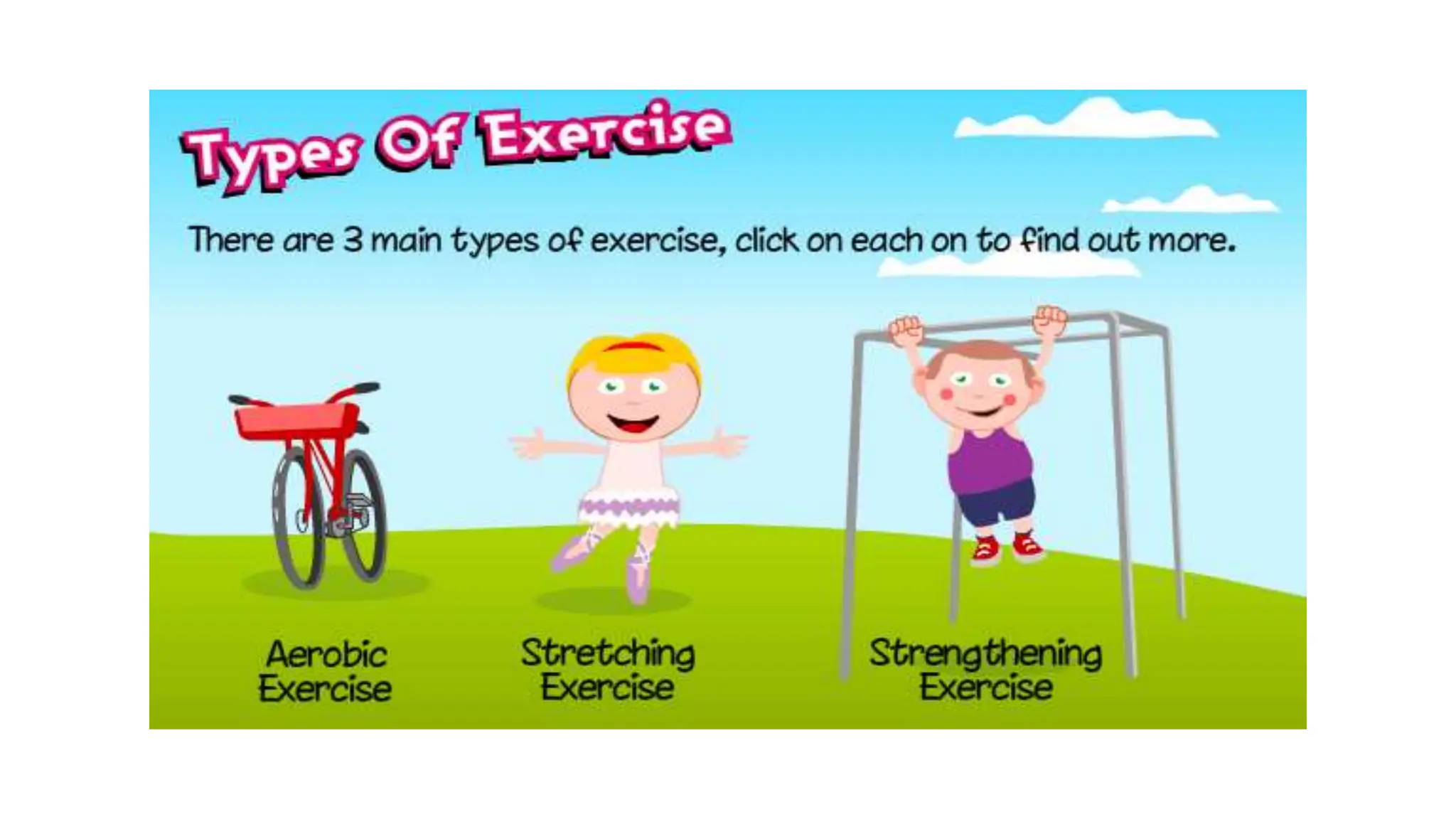
TYPES OF EXERCISE :
There are three basic types of exercise:
•Aerobic Exercise: increases the r heart rate, works the muscles, and makes
breathe faster and harder.
•Flexibility Exercise: may include stretching, foam rolling, yoga, tai chi, and
Pilates.
•Strength/Resistance Exercise: may involve barbells and weight plates or dumb
bells.
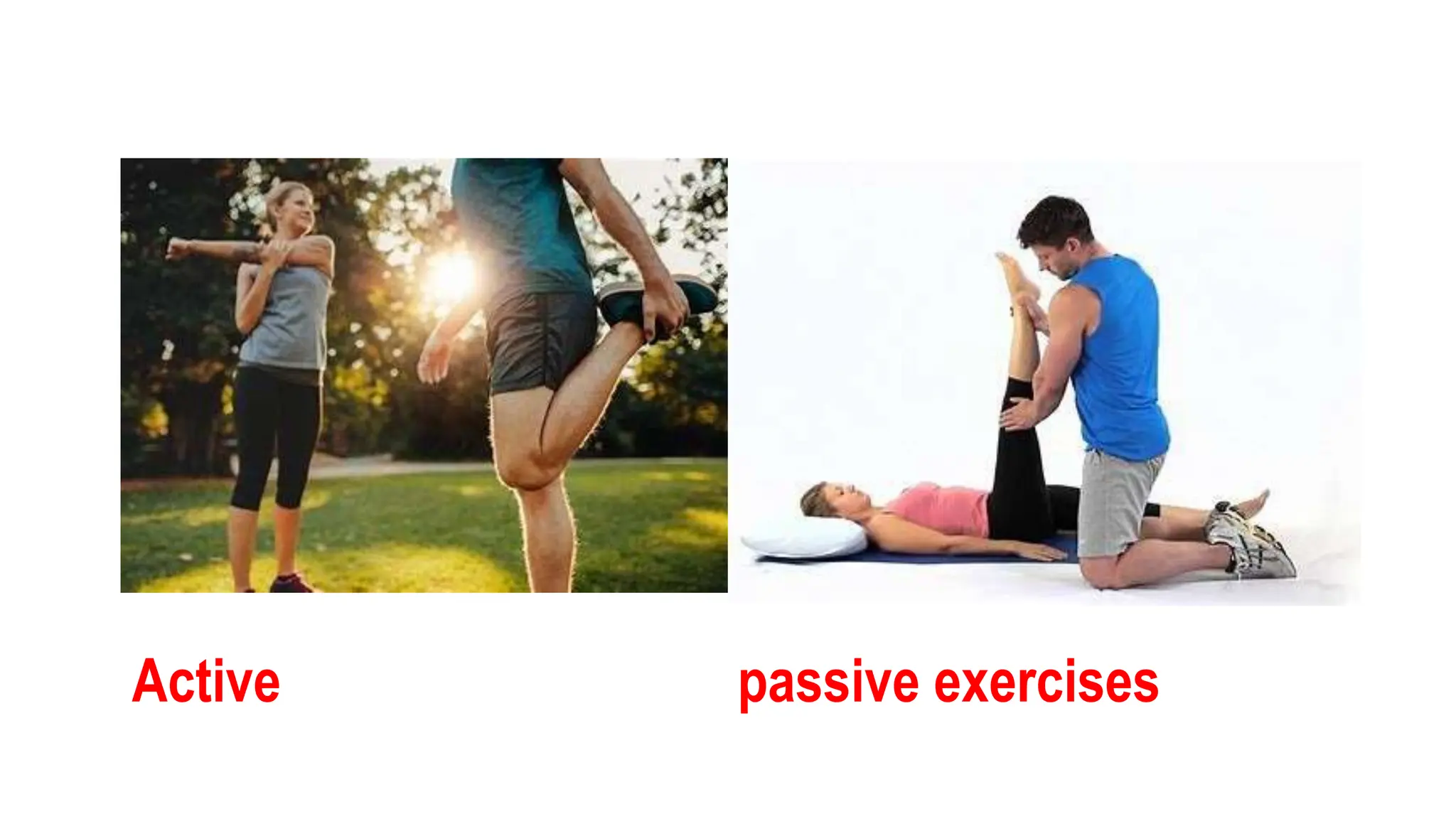
Active and passive exercises :
Active and passive exercises are muscle and joint movements carried
out to assist circulation, maintain muscle tone and prevent the
development of joint contracture.
These exercises can be performed by the patient (active) or by the
nurse or carer helping the patient (passive)
Active passive exercises
EFFECT OF EXERCISES
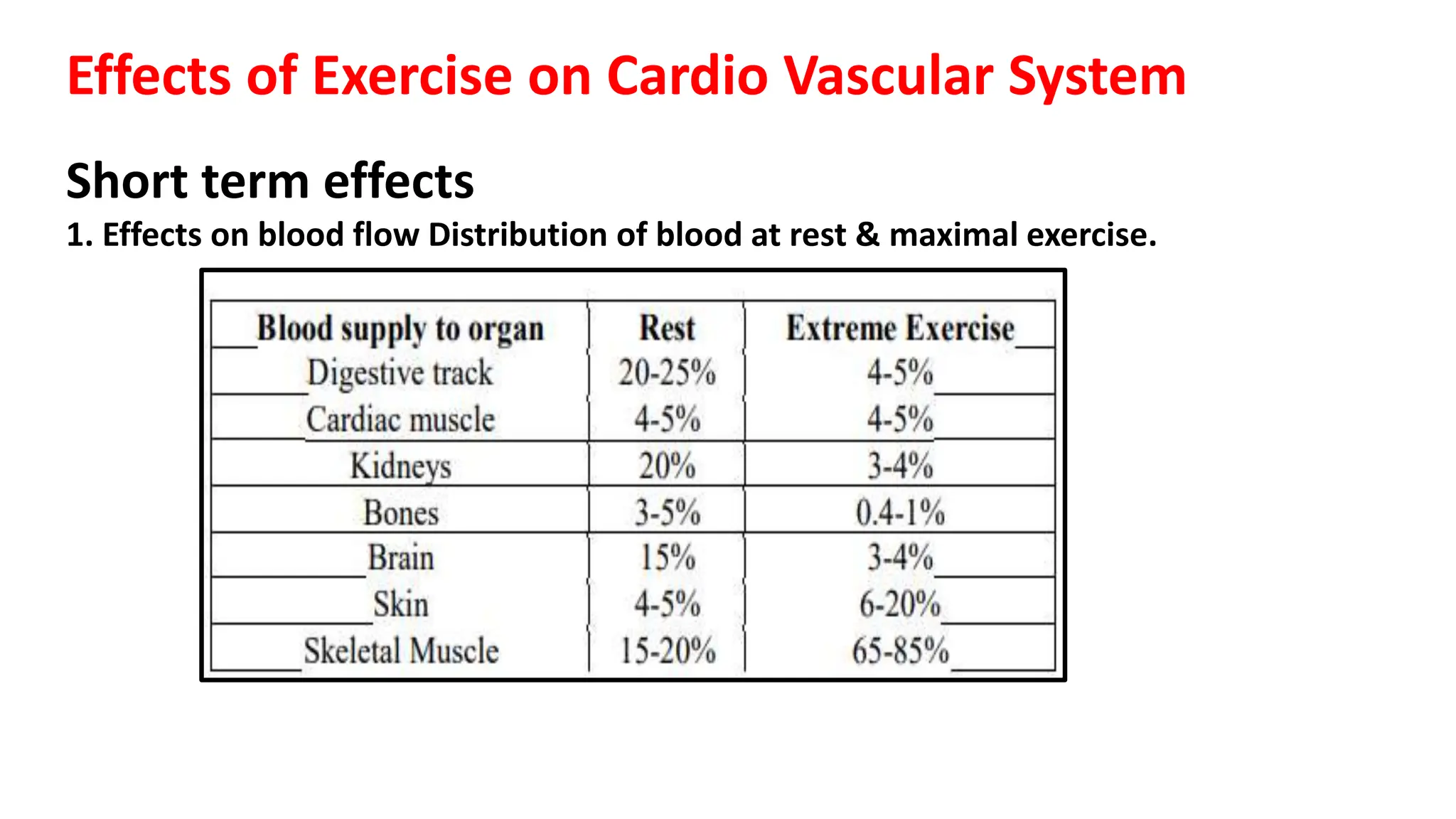
Effects of Exercise on Cardio Vascular System
Short term effects
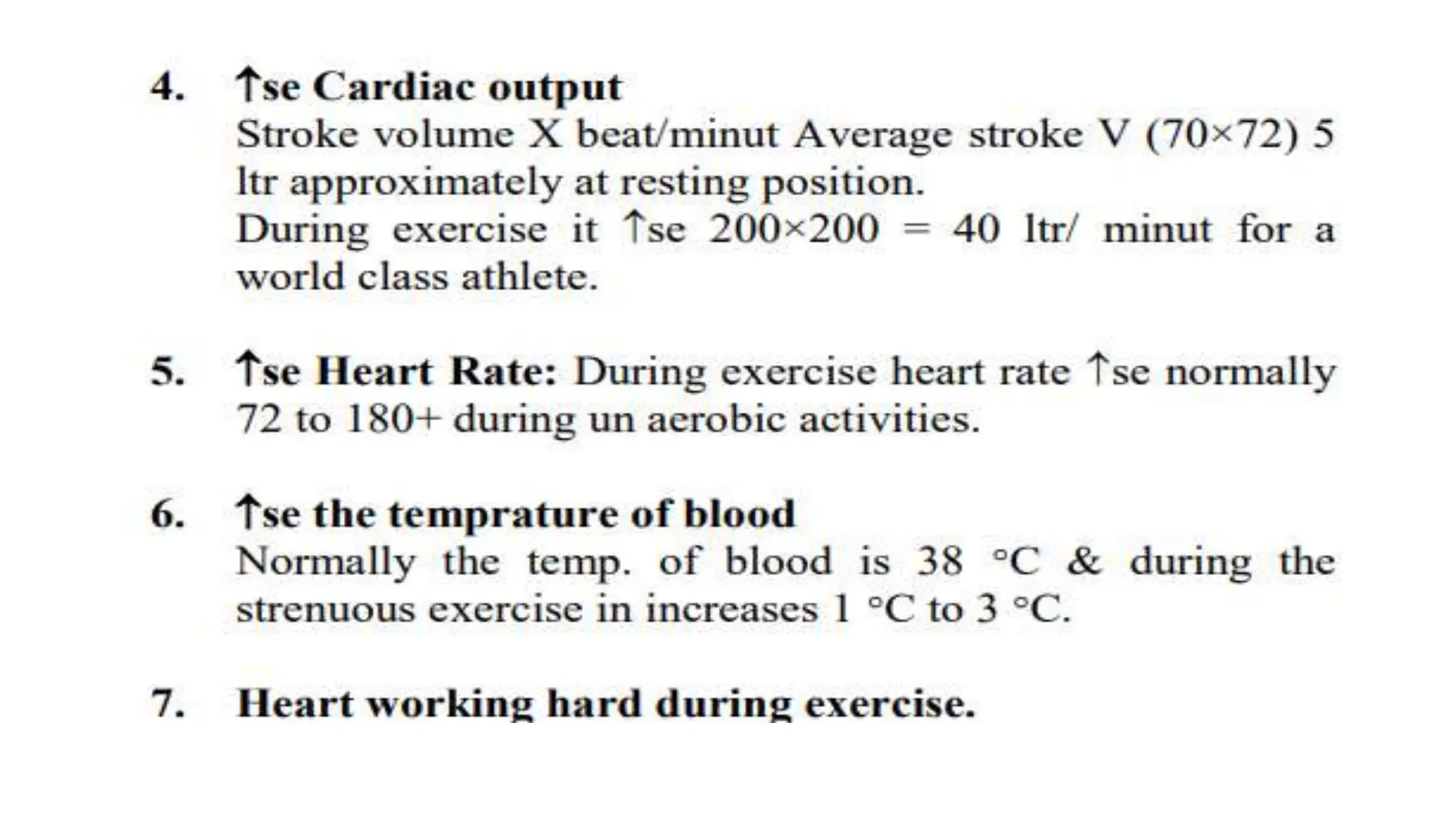
1. Effects on blood flow Distribution of blood at rest & maximal exercise.
POSTURE ON
CARDIAC
FUNCTION
The cardiovascular system is responsible for transporting blood around the
body and supplying oxygen and nutrients to tissues. It is constantly reacting
and adapting to changes in the body’s position.
For example, standing up quickly can result in orthostatic hypotension, a
form of low blood pressure that occurs when standing up from sitting or
lying down. This is due to the effects of gravity on blood flow and the
release of hormones like adrenaline.
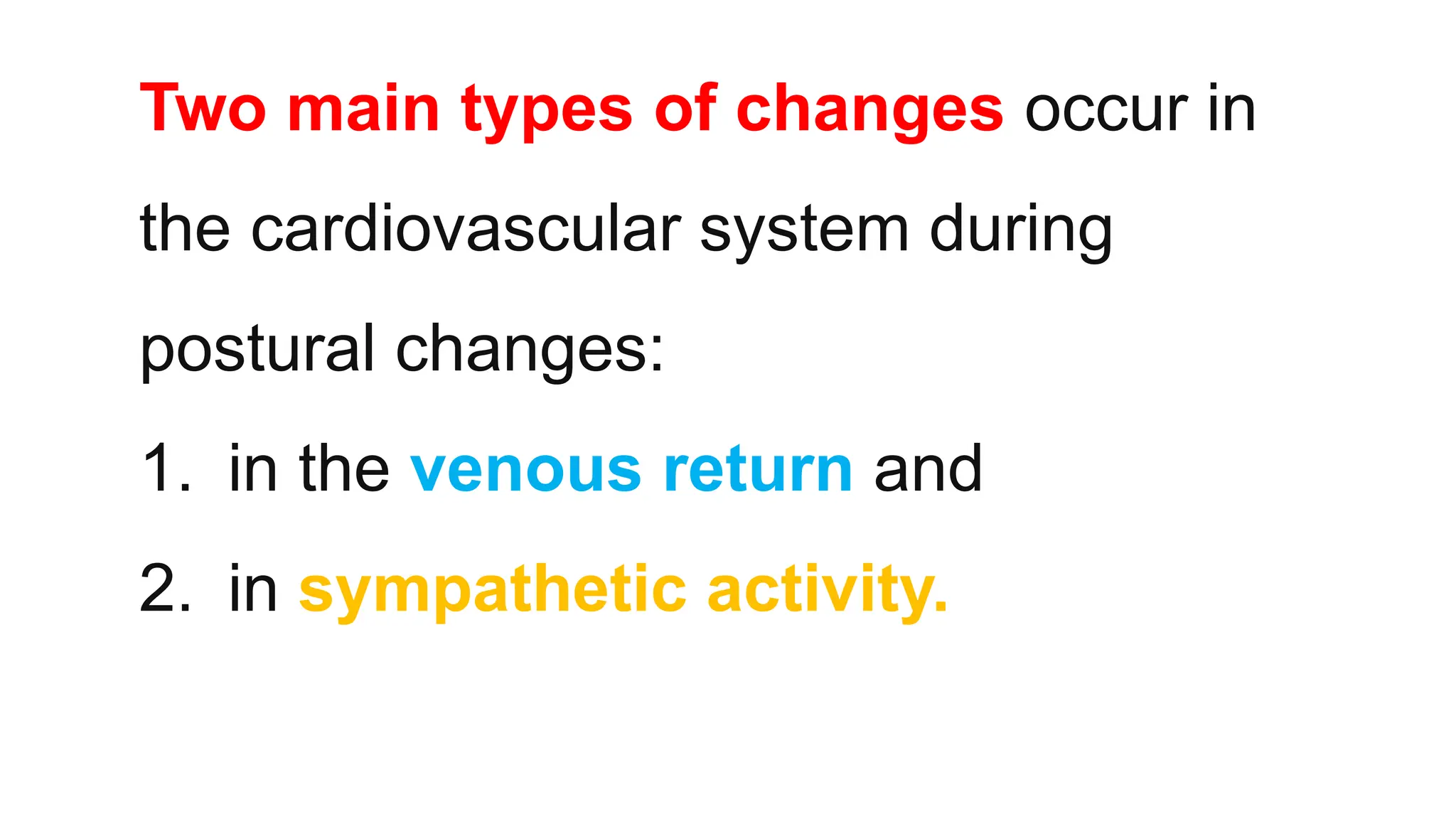
Two main types of changes occur in
the cardiovascular system during
postural changes:
1. in the venous return and
2. in sympathetic activity.
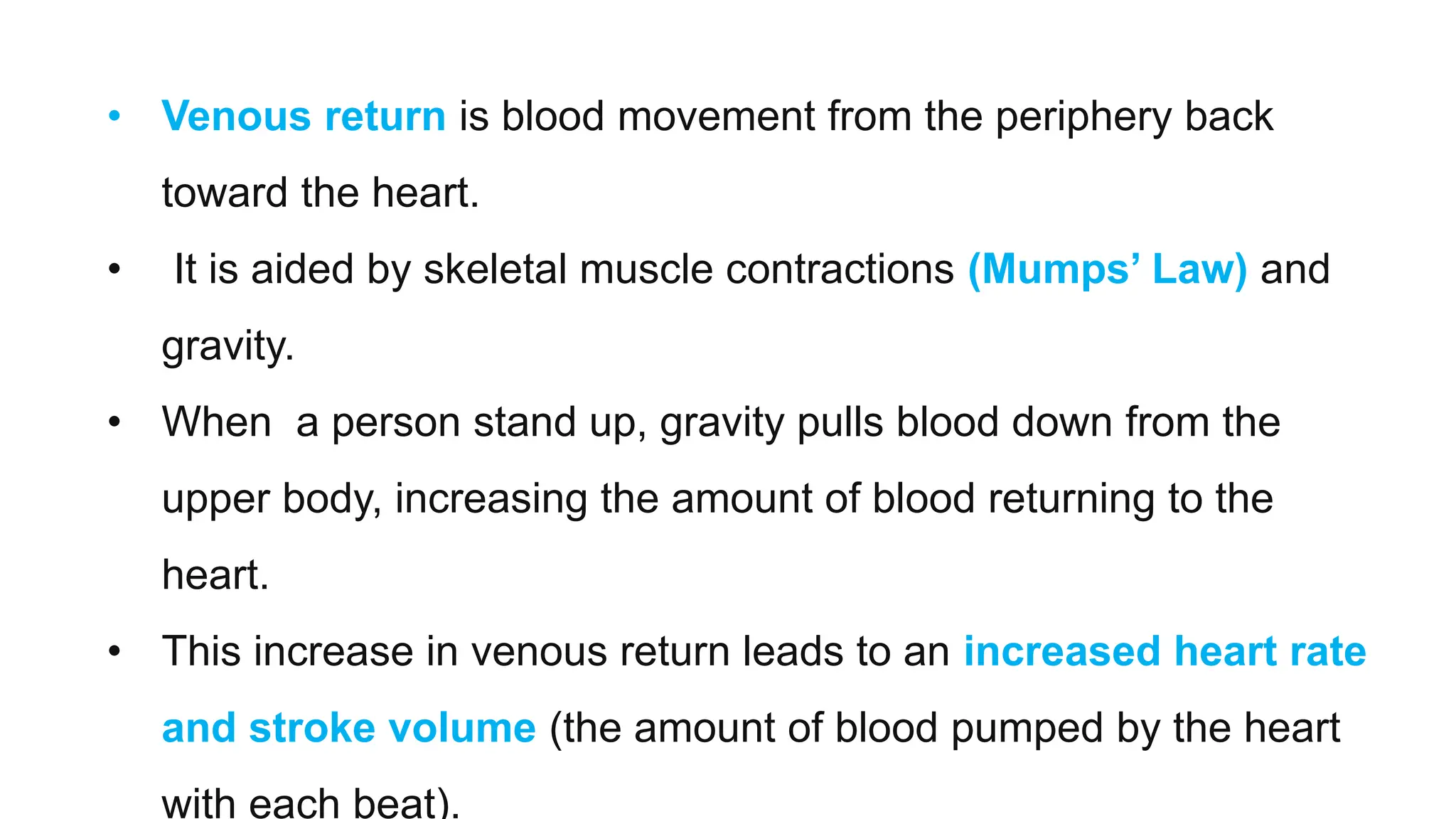
• Venous return is blood movement from the periphery back
toward the heart.
• It is aided by skeletal muscle contractions (Mumps’ Law) and
gravity.
• When a person stand up, gravity pulls blood down from the
upper body, increasing the amount of blood returning to the
heart.
• This increase in venous return leads to an increased heart rate
and stroke volume (the amount of blood pumped by the heart
with each beat).
Changes in Sympathetic activity is the part of the
nervous system that controls the body’s “fight or flight”
response.
When a person stand up, sympathetic activity increases to
prepare the body for any potential danger.
This increase in sympathetic activity leads to an increase
in heart rate and blood pressure.
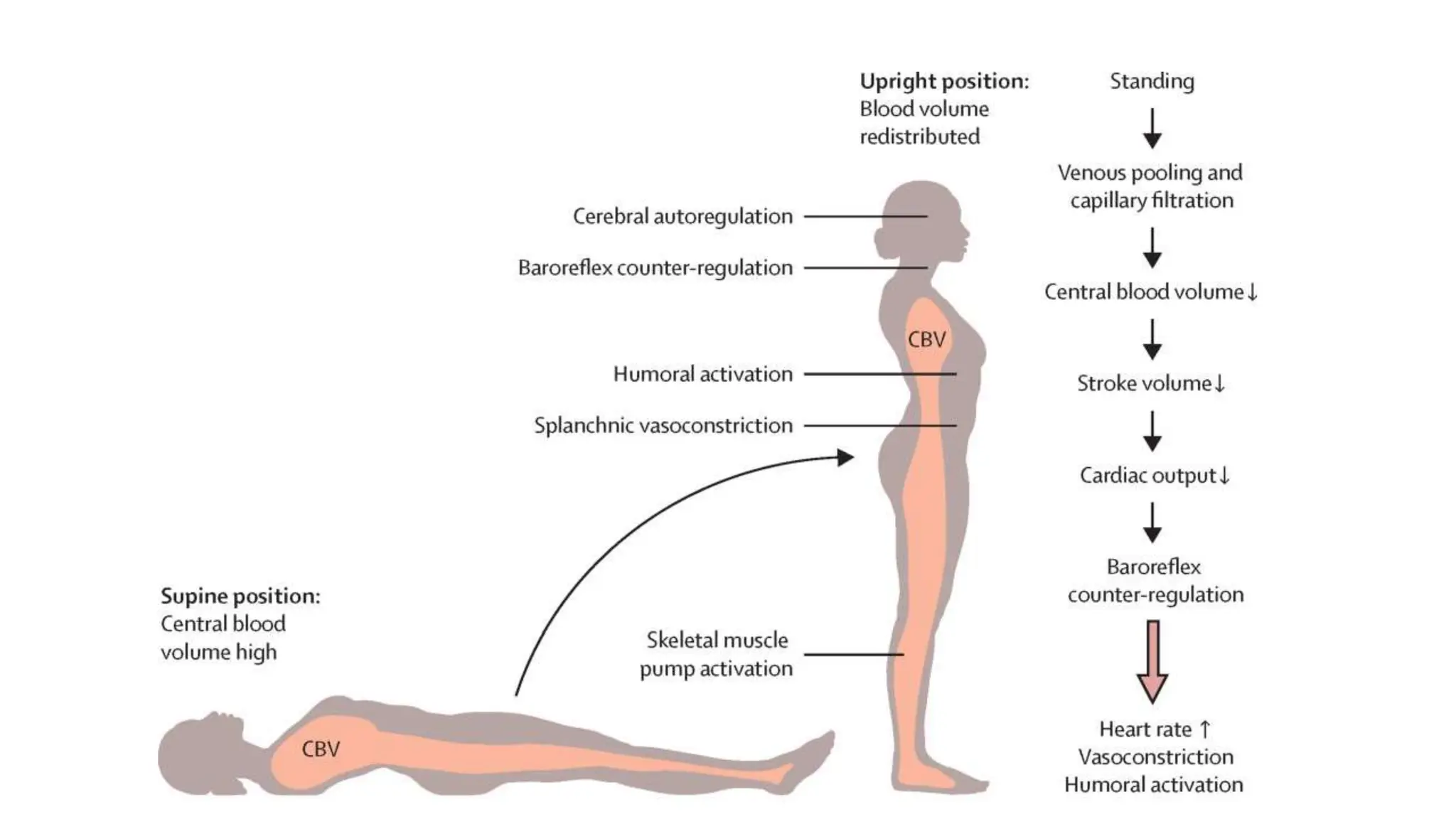
Cardiovascular homeostasis in posture
•Effects of standing from supine position to upright position
• Venous return decreases, thus RV and LV stroke volume is decreased
• Decreased cardiac output
• Baroreceptor reflex is activated,
• Cerebral perfusion pressure also decreases;
• Cerebral vessels vasodilate to preserves blood flow
• In an awake patient standing up voluntarily, lower limb muscle pump
activity ameliorates the decrease in venous return
CARDIOVASCULAR HOMEOSTASIS IN EXERCISE AND POSTURE.pptx

CARDIOVASCULAR HOMEOSTASIS IN EXERCISE AND POSTURE.pptx

  • 1.
    CARDIOVASCULAR HOMEOSTASIS IN EXERCISE ANDPOSTURE. BY. MRS.WINCY THIRUMURUGAN
  • 2.
  • 3.
    CARDIOVASCULAR HOMEOSTASIS Cardiovascular homeostasisrefers to the ability of the cardiovascular system to maintain a stable internal environment despite changes in external conditions. The cardiovascular system helps maintain homeostasis by continually supplying the central nervous system--the brain and spinal cord--with oxygen and glucose. Brain cells start dying after just one minute without oxygen. The brain is the control center for all of the body's homeostatic processes
  • 4.
    The regulation ofcardiovascular homeostasis : • The regulation of cardiovascular homeostasis is a complex process that involves multiple mechanisms such as neural regulation, endocrine regulation, and autoregulation of perfusion . • The neural regulation of vascular homeostasis involves the cardiovascular centers in the brain, baroreceptor reflexes, and chemoreceptor reflexes . • The endocrine regulation of vascular homeostasis involves hormones such as epinephrine and norepinephrine, antidiuretic hormone, renin-angiotensin- aldosterone mechanism, erythropoietin, and atrial natriuretic hormone . • Autoregulation of perfusion is another mechanism that helps maintain vascular homeostasis by regulating blood flow to the tissues
  • 6.
    Exercise It is abody activity that enhances or maintains physical fitness and overall health and wellness. Purpose: It is performed for various reasons, to aid growth and improve strength, develop muscles and the cardiovascular system, hone athletic skills, weight loss or maintenance, improve health, or simply for enjoyment
  • 7.
    • Exercise allowsthe heart to pump blood more efficiently into the circulation as a result of stronger and more efficient cardiac contractions, greater blood perfusion of tissues and organs, and higher oxygen delivery. • Aerobic exercise makes the heart more efficient.
  • 8.
    TYPES OF EXERCISE: There are three basic types of exercise: •Aerobic Exercise: increases the r heart rate, works the muscles, and makes breathe faster and harder. •Flexibility Exercise: may include stretching, foam rolling, yoga, tai chi, and Pilates. •Strength/Resistance Exercise: may involve barbells and weight plates or dumb bells.
  • 10.
    Active and passiveexercises : Active and passive exercises are muscle and joint movements carried out to assist circulation, maintain muscle tone and prevent the development of joint contracture. These exercises can be performed by the patient (active) or by the nurse or carer helping the patient (passive)
  • 11.
  • 12.
  • 13.
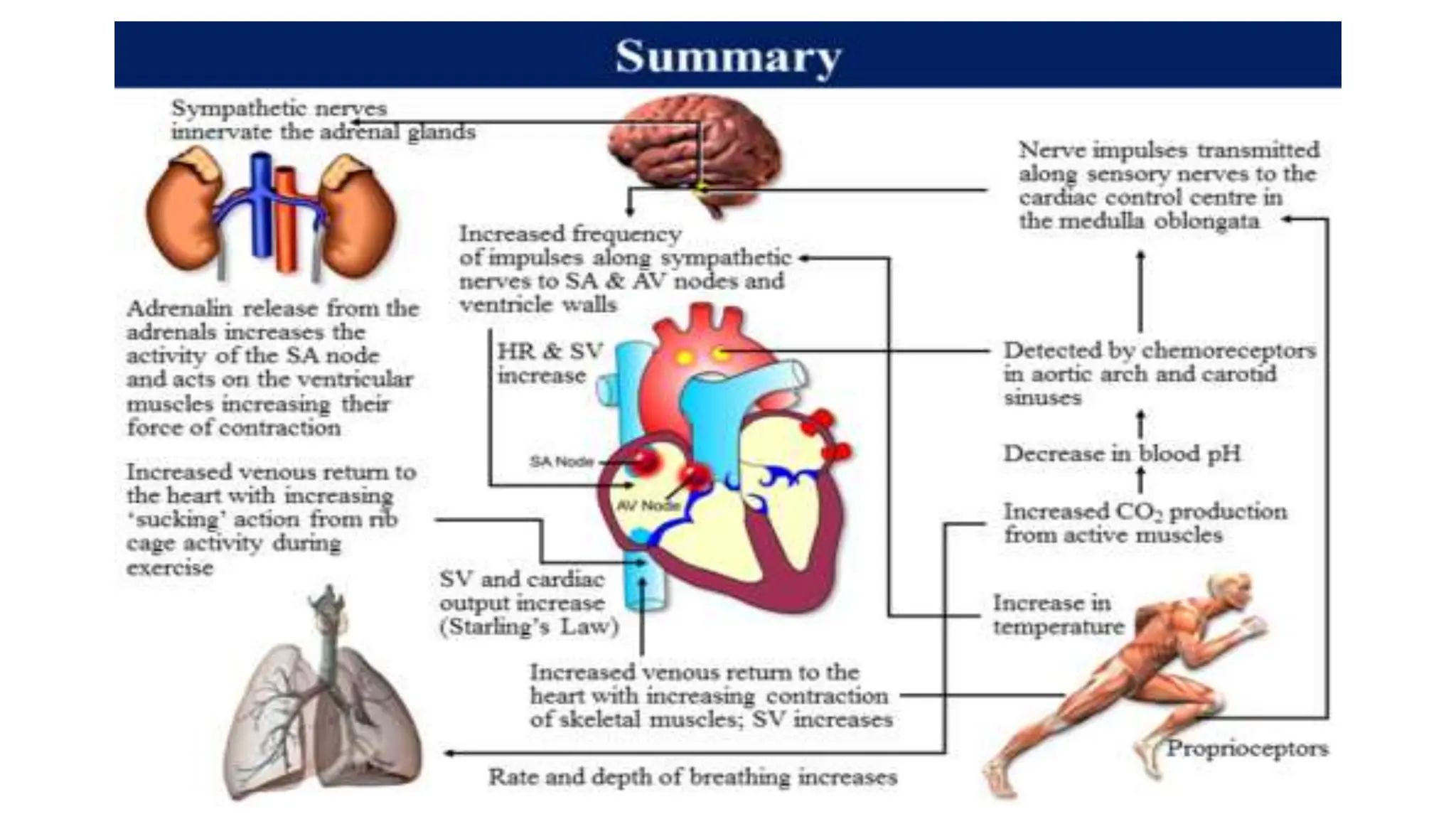
    Effects of Exerciseon Cardio Vascular System Short term effects 1. Effects on blood flow Distribution of blood at rest & maximal exercise.
  • 18.
  • 19.
    The cardiovascular systemis responsible for transporting blood around the body and supplying oxygen and nutrients to tissues. It is constantly reacting and adapting to changes in the body’s position. For example, standing up quickly can result in orthostatic hypotension, a form of low blood pressure that occurs when standing up from sitting or lying down. This is due to the effects of gravity on blood flow and the release of hormones like adrenaline.
  • 22.
    Two main typesof changes occur in the cardiovascular system during postural changes: 1. in the venous return and 2. in sympathetic activity.
  • 23.
    • Venous returnis blood movement from the periphery back toward the heart. • It is aided by skeletal muscle contractions (Mumps’ Law) and gravity. • When a person stand up, gravity pulls blood down from the upper body, increasing the amount of blood returning to the heart. • This increase in venous return leads to an increased heart rate and stroke volume (the amount of blood pumped by the heart with each beat).
  • 24.
    Changes in Sympatheticactivity is the part of the nervous system that controls the body’s “fight or flight” response. When a person stand up, sympathetic activity increases to prepare the body for any potential danger. This increase in sympathetic activity leads to an increase in heart rate and blood pressure.
  • 25.
    Cardiovascular homeostasis inposture •Effects of standing from supine position to upright position • Venous return decreases, thus RV and LV stroke volume is decreased • Decreased cardiac output • Baroreceptor reflex is activated, • Cerebral perfusion pressure also decreases; • Cerebral vessels vasodilate to preserves blood flow • In an awake patient standing up voluntarily, lower limb muscle pump activity ameliorates the decrease in venous return