Factors That Affect Blood Pressure
Dr. G. D. HANDE
Assistant Professor
Shri. Shivaji Science College
Amravati.
Sem IV Unit V
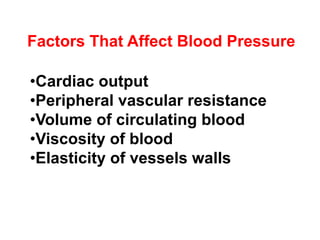
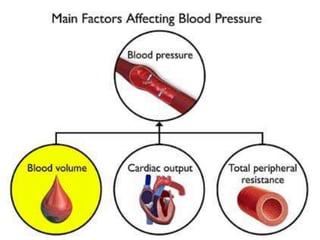
•Cardiac output
•Peripheral vascular resistance
•Volume of circulating blood
•Viscosity of blood
•Elasticity of vessels walls
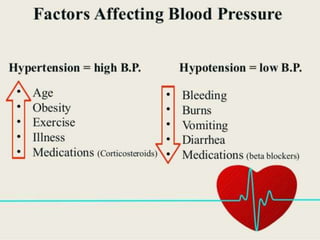
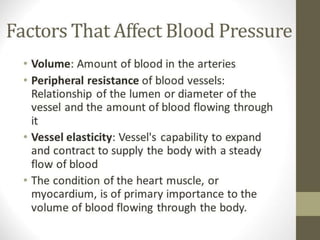
Factors That Affect Blood Pressure
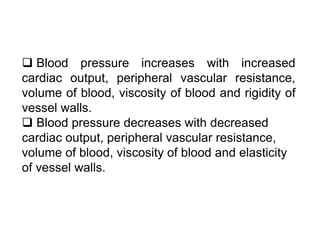
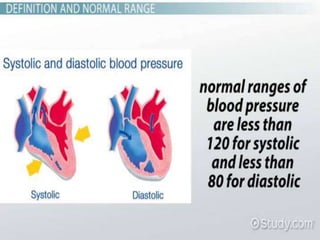
 Blood pressure increases with increased
cardiac output, peripheral vascular resistance,
volume of blood, viscosity of blood and rigidity of
vessel walls.
 Blood pressure decreases with decreased
cardiac output, peripheral vascular resistance,
volume of blood, viscosity of blood and elasticity
of vessel walls.
Cardiac Output
Cardiac output is the volume of blood flow from
the heart through the ventricles, and is usually
measured in litres per minute (L/min).
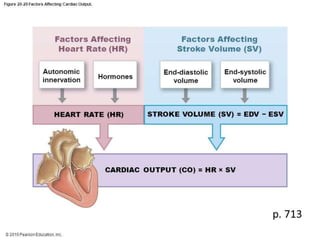
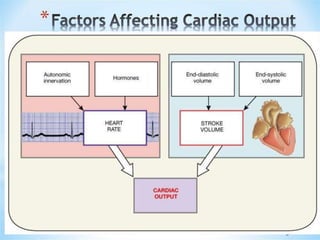
Cardiac output can be calculated by the stroke
volume multiplied by the heart rate.
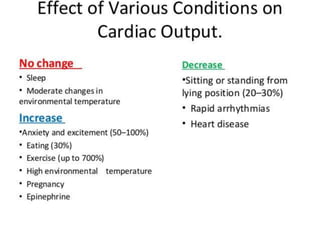
Any factor that causes cardiac output to
increase, by elevating heart rate or stroke
volume or both, will elevate blood pressure
and promote blood flow.
These factors include sympathetic stimulation,
the catecholamine epinephrine and nor
epinephrine, thyroid hormones, and increased
calcium ion levels.
Conversely, any factor that decreases cardiac
output, by decreasing heart rate or stroke
volume or both, will decrease arterial pressure
and blood flow.
These factors include parasympathetic
stimulation, elevated or decreased potassium
ion levels, decreased calcium levels, anoxia,
and acidosis.
Peripheral Vascular Resistance
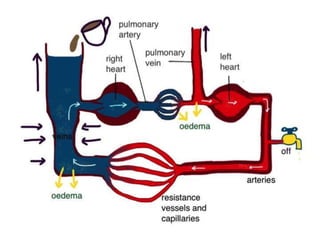
Peripheral vascular resistance refers to
compliance, which is the ability of any
compartment to expand to
accommodate increased content.
The greater the compliance of an artery,
the more effectively it is able to expand
to accommodate surges in blood flow
without increased resistance or blood
pressure.
Veins are more compliant than arteries
and can expand to hold more blood.
When vascular disease causes
stiffening of arteries (e.g.,
atherosclerosis or arteriosclerosis),
compliance is reduced and resistance
to blood flow is increased.
The result is more turbulence, higher
pressure within the vessel, and reduced
blood flow. This increases the work of
the heart.
Volume of Circulating Blood
Volume of circulating blood is the amount of
blood moving through the body.
Increased venous return stretches the walls
of the atria where specialized baroreceptors
are located.
As the atrial baroreceptors increase their
rate of firing and as they stretch due to the
increased blood pressure, the cardiac centre
responds by increasing sympathetic
stimulation.
Viscosity of Blood
Viscosity of blood is a measure of the
blood’s thickness and is influenced by the
presence of plasma proteins and formed
elements in the blood.
Blood is viscous and somewhat sticky to the
touch. It has a viscosity approximately five
times greater than water.
Viscosity is a measure of a fluid’s thickness
or resistance to flow, and is influenced by
the presence of the plasma proteins and
formed elements within the blood.
The viscosity of blood has a dramatic effect on
blood pressure and flow.
Consider the difference in flow between
water and honey.
The more viscous honey would demonstrate a
greater resistance to flow than the less
viscous water.
The same principle applies to blood.
Elasticity of Vessel Walls
Elasticity of vessel walls refers to the capacity to
resume its normal shape after stretching and
compressing.
Vessels larger than 10 mm in diameter are typically
elastic.
Their abundant elastic fibres allow them to expand as
blood pumped from the ventricles passes through them,
and then to recoil after the surge has passed.
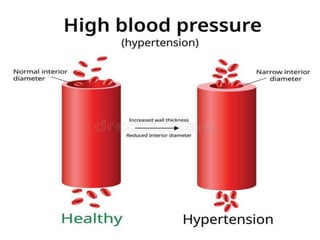
If artery walls were rigid and unable to expand
and recoil, their resistance to blood flow would
greatly increase and blood pressure would rise to
even higher levels, which would in turn require the
heart to pump harder to increase the volume of
blood expelled by each pump (the stroke volume)
and maintain adequate pressure and flow.
Artery walls would have to become even thicker in
response to this increased pressure.
Factors affect BP  4.pptx

Factors affect BP 4.pptx

  • 1.
    Factors That AffectBlood Pressure Dr. G. D. HANDE Assistant Professor Shri. Shivaji Science College Amravati. Sem IV Unit V
  • 2.
    •Cardiac output •Peripheral vascularresistance •Volume of circulating blood •Viscosity of blood •Elasticity of vessels walls Factors That Affect Blood Pressure
  • 4.
     Blood pressureincreases with increased cardiac output, peripheral vascular resistance, volume of blood, viscosity of blood and rigidity of vessel walls.  Blood pressure decreases with decreased cardiac output, peripheral vascular resistance, volume of blood, viscosity of blood and elasticity of vessel walls.
  • 6.
    Cardiac Output Cardiac outputis the volume of blood flow from the heart through the ventricles, and is usually measured in litres per minute (L/min). Cardiac output can be calculated by the stroke volume multiplied by the heart rate. Any factor that causes cardiac output to increase, by elevating heart rate or stroke volume or both, will elevate blood pressure and promote blood flow.
  • 8.
    These factors includesympathetic stimulation, the catecholamine epinephrine and nor epinephrine, thyroid hormones, and increased calcium ion levels. Conversely, any factor that decreases cardiac output, by decreasing heart rate or stroke volume or both, will decrease arterial pressure and blood flow. These factors include parasympathetic stimulation, elevated or decreased potassium ion levels, decreased calcium levels, anoxia, and acidosis.
  • 14.
    Peripheral Vascular Resistance Peripheralvascular resistance refers to compliance, which is the ability of any compartment to expand to accommodate increased content. The greater the compliance of an artery, the more effectively it is able to expand to accommodate surges in blood flow without increased resistance or blood pressure.
  • 15.
    Veins are morecompliant than arteries and can expand to hold more blood. When vascular disease causes stiffening of arteries (e.g., atherosclerosis or arteriosclerosis), compliance is reduced and resistance to blood flow is increased. The result is more turbulence, higher pressure within the vessel, and reduced blood flow. This increases the work of the heart.
  • 16.
    Volume of CirculatingBlood Volume of circulating blood is the amount of blood moving through the body. Increased venous return stretches the walls of the atria where specialized baroreceptors are located. As the atrial baroreceptors increase their rate of firing and as they stretch due to the increased blood pressure, the cardiac centre responds by increasing sympathetic stimulation.
  • 17.
    Viscosity of Blood Viscosityof blood is a measure of the blood’s thickness and is influenced by the presence of plasma proteins and formed elements in the blood. Blood is viscous and somewhat sticky to the touch. It has a viscosity approximately five times greater than water. Viscosity is a measure of a fluid’s thickness or resistance to flow, and is influenced by the presence of the plasma proteins and formed elements within the blood.
  • 18.
    The viscosity ofblood has a dramatic effect on blood pressure and flow. Consider the difference in flow between water and honey. The more viscous honey would demonstrate a greater resistance to flow than the less viscous water. The same principle applies to blood.
  • 19.
    Elasticity of VesselWalls Elasticity of vessel walls refers to the capacity to resume its normal shape after stretching and compressing. Vessels larger than 10 mm in diameter are typically elastic. Their abundant elastic fibres allow them to expand as blood pumped from the ventricles passes through them, and then to recoil after the surge has passed.
  • 20.
    If artery wallswere rigid and unable to expand and recoil, their resistance to blood flow would greatly increase and blood pressure would rise to even higher levels, which would in turn require the heart to pump harder to increase the volume of blood expelled by each pump (the stroke volume) and maintain adequate pressure and flow. Artery walls would have to become even thicker in response to this increased pressure.