WHAT IS CARDIOVASCULARSYSTEM?
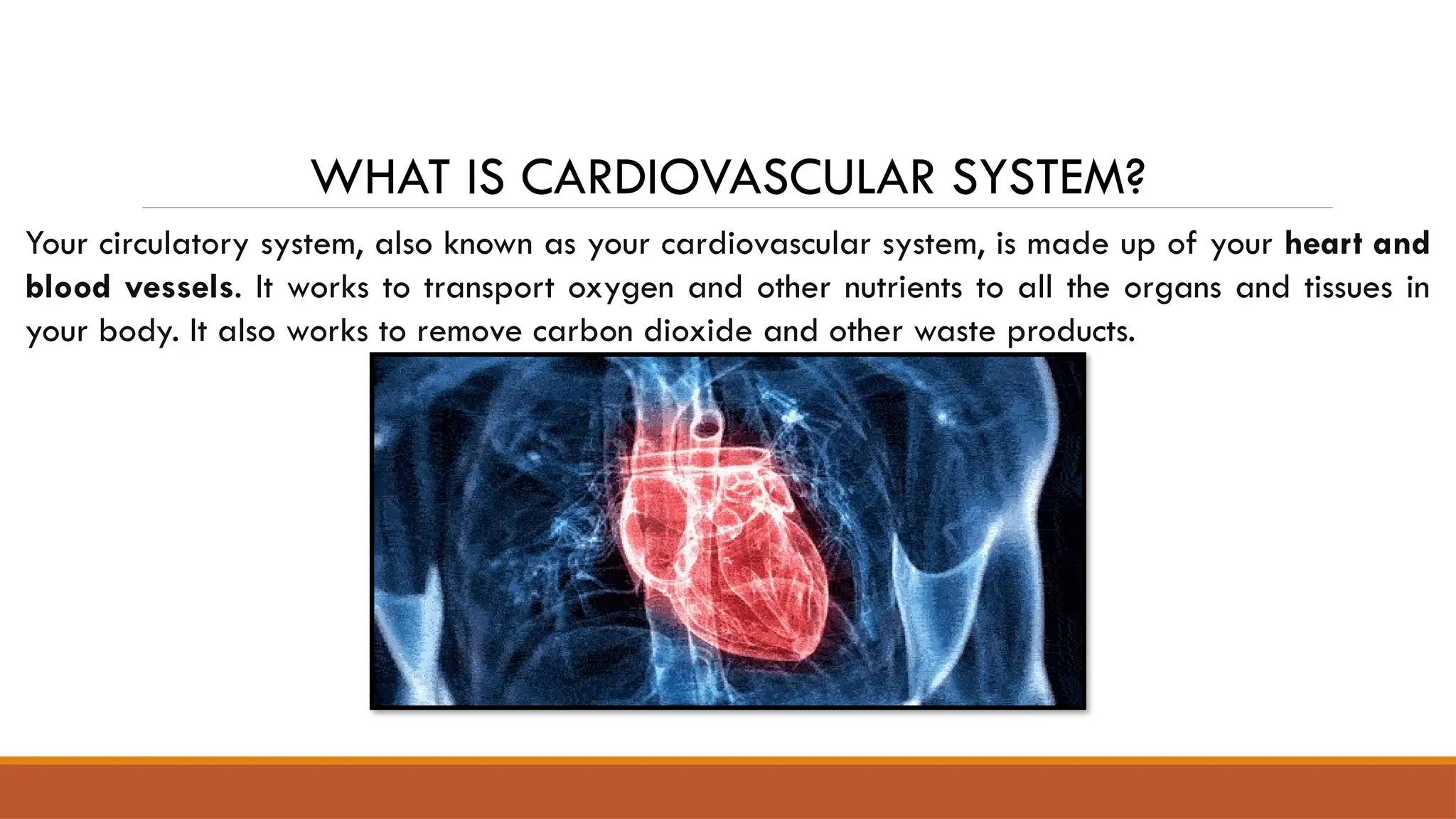
Your circulatory system, also known as your cardiovascular system, is made up of your heart and
blood vessels. It works to transport oxygen and other nutrients to all the organs and tissues in
your body. It also works to remove carbon dioxide and other waste products.
3.
BLOOD VESSELS: ARTERIES,VEINS, AND CAPILLARIES
ARTERIES VEINS CAPILARIES
Carry oxygenated blood
away from the heart.
Return deoxygenated
blood back to the heart.
Enable nutrient and
waste exchange at
tissues.
4.
THE CARDIAC CYCLE:HOW THE HEART BEATS
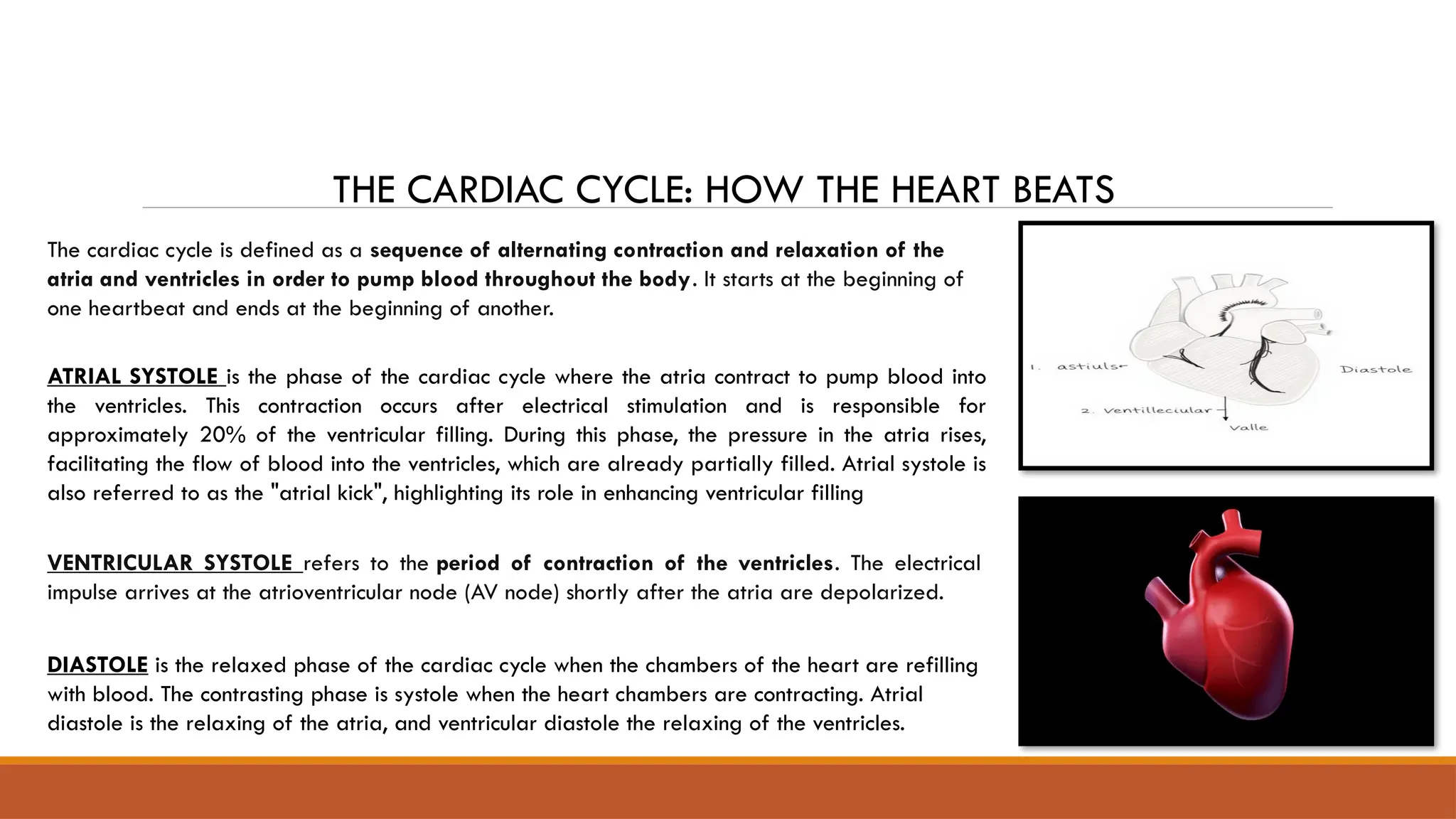
ATRIAL SYSTOLE is the phase of the cardiac cycle where the atria contract to pump blood into
the ventricles. This contraction occurs after electrical stimulation and is responsible for
approximately 20% of the ventricular filling. During this phase, the pressure in the atria rises,
facilitating the flow of blood into the ventricles, which are already partially filled. Atrial systole is
also referred to as the "atrial kick", highlighting its role in enhancing ventricular filling
VENTRICULAR SYSTOLE refers to the period of contraction of the ventricles. The electrical
impulse arrives at the atrioventricular node (AV node) shortly after the atria are depolarized.
DIASTOLE is the relaxed phase of the cardiac cycle when the chambers of the heart are refilling
with blood. The contrasting phase is systole when the heart chambers are contracting. Atrial
diastole is the relaxing of the atria, and ventricular diastole the relaxing of the ventricles.
The cardiac cycle is defined as a sequence of alternating contraction and relaxation of the
atria and ventricles in order to pump blood throughout the body. It starts at the beginning of
one heartbeat and ends at the beginning of another.
5.
BLOOD COMPOSITION
RED BLOODCELL - A type of blood cell that is made in the bone marrow and found in the blood. Red blood
cells contain a protein called hemoglobin, which carries oxygen from the lungs to all parts of the body.
Checking the number of red blood cells in the blood is usually part of a complete blood cell (CBC) test.
WHITE BLOOD CELLS - are a part of your immune system that protects your body from infection. These cells
circulate through your bloodstream and tissues to respond to injury or illness by attacking any unknown
organisms that enter your body.
PLATELETS - or thrombocytes, are small, colorless cell fragments in our blood that form clots and stop or
prevent bleeding. Platelets are made in our bone marrow, the sponge-like tissue inside our bones. Bone
marrow contains stem cells that develop into red blood cells, white blood cells, and platelets.
PLASMA - is the part of your blood that carries platelets, red blood cells and white blood cells around the
body. It contains antibodies, known as immunoglobulins, which fight infection. Plasma makes up approximately
55% of your blood. Antibodies are made into live-saving medicines to save and transform lives.
It has four main components: plasma, red blood cells, white blood cells, and platelets. Blood has
many different functions, including: transporting oxygen and nutrients to the lungs and tissues.
6.
FUNCTION OF THECARDIOVASCULAR SYSTEM
TRANSPORTATION
Delivers oxygen from the lungs to the body's tissues.
Carries nutrients (e.g., glucose, amino acids) from the digestive system to cells.
Removes waste products like carbon dioxide and urea for excretion.
REGULATION
Helps maintain body temperature by distributing heat through blood flow.
Balances pH levels to keep the body’s environment stable.
Regulates fluid levels to prevent dehydration or excess fluid retention.
PROTECTION
White blood cells defend against infections and harmful pathogens.
Clotting mechanisms (platelets and fibrin) help stop bleeding from injuries.
Antibodies and other immune factors circulate to protect the body from disease.
7.
COMMON CARDIOVASCULAR DISEASES
HYPERTENSION
Highblood pressure (hypertension) has no symptoms and can be dangerous if not treated.
Hypertension puts you at risk for stroke, heart attack and other problems. Nearly half of adults
who have hypertension don’t realize it. So, checkups are crucial. Dietary changes, exercise and
medicine can help you keep your blood pressure where it should be.
( Symptoms of hypertension )
- Headaches -
- Shortness of breath -
- Fatigue -
- Chest pain -
- Vertigo -
- Vision changes -
- Nosebleeds (if blood pressure is extremely high) -
- Confusion (if blood pressure is extremely high) -
8.
COMMON CARDIOVASCULAR DISEASES
ATHEROSCLEROSIS
Atherosclerosisis a gradual buildup of plaque in the walls of arteries. Plaque is a sticky substance
made of fats, cholesterol, calcium and other substances. The buildup of plaque can cause arteries
to narrow, blocking blood flow. The plaque can also burst, leading to a blood clot. Arteriosclerosis
is a related term that refers to the hardening of the normally flexible artery walls.
( Symptoms of atherosclerosis )
- Chest pain (stable angina) -
- Pain in your leg, arm, and other regions supplied by the blocked artery -
- Burning or aching pain in your feet at rest -
- Changes in how often you urinate -
- Heart palpitations (feeling that your heart is racing) -
- Shortness of breath -
- Cold sweats -
- Dizziness -
- Extreme tiredness and weakness -
- Nausea -
9.
COMMON CARDIOVASCULAR DISEASES
HEARTFAILURE
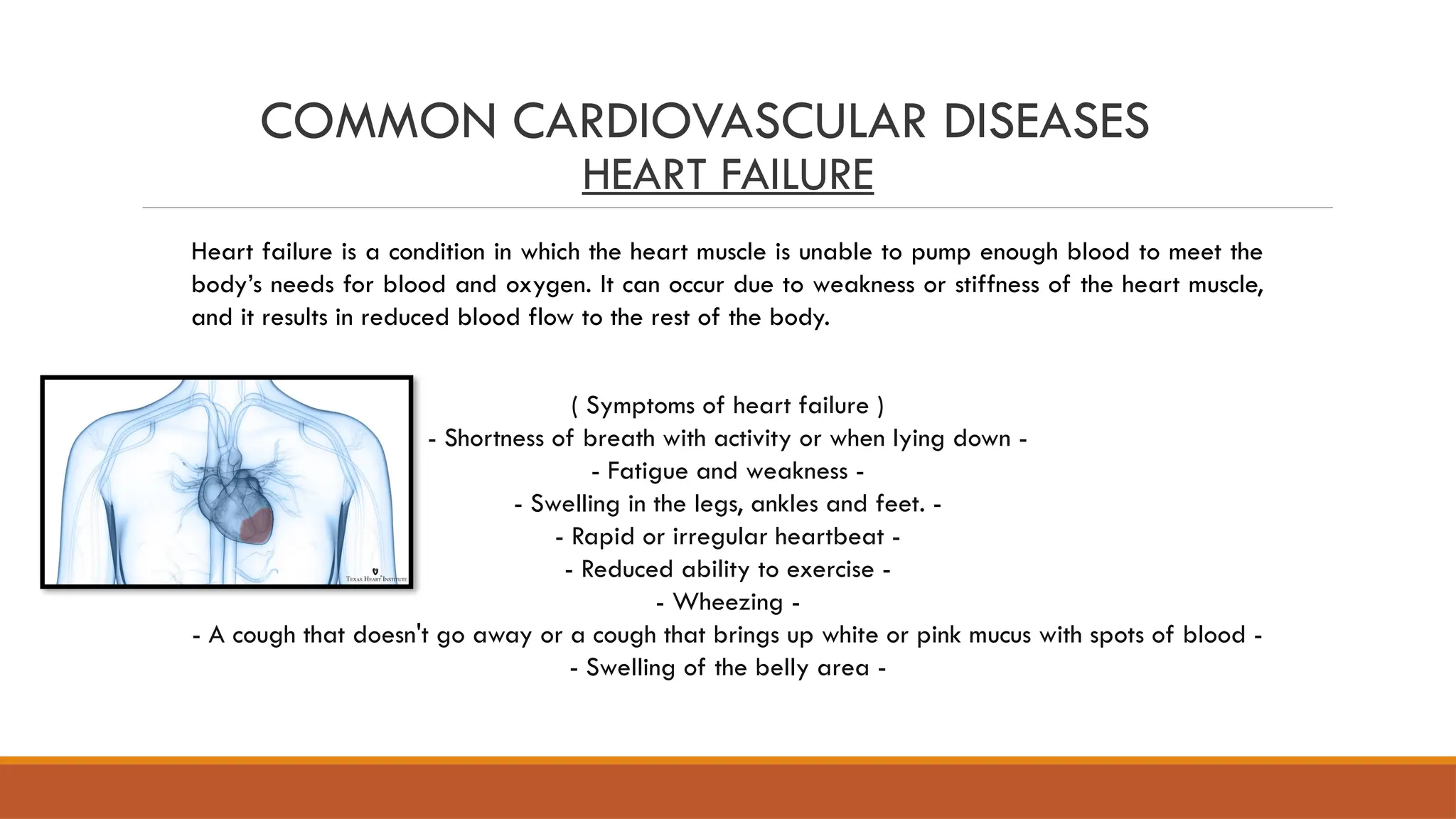
Heart failure is a condition in which the heart muscle is unable to pump enough blood to meet the
body’s needs for blood and oxygen. It can occur due to weakness or stiffness of the heart muscle,
and it results in reduced blood flow to the rest of the body.
( Symptoms of heart failure )
- Shortness of breath with activity or when lying down -
- Fatigue and weakness -
- Swelling in the legs, ankles and feet. -
- Rapid or irregular heartbeat -
- Reduced ability to exercise -
- Wheezing -
- A cough that doesn't go away or a cough that brings up white or pink mucus with spots of blood -
- Swelling of the belly area -
10.
MAINTAINING A HEALTHYCARDIOVASCULAR SYSTEM
• EAT A HEART-HEALTHY DIET – Consume nutritious foods like fruits, vegetables, whole grains, lean proteins, and healthy
fats while avoiding processed foods, excessive sugar, and unhealthy fats.
• GET ACTIVE – Engage in regular physical activity, such as walking, jogging, cycling, or strength training, to keep your heart
and body healthy.
• STAY AT A HEALTHY WEIGHT – Maintain a balanced weight to reduce the risk of heart disease, diabetes, and other
health issues.
• QUIT SMOKING AND STAY AWAY FROM SECONDHAND SMOKE – Avoid tobacco use and exposure to smoke, as it
damages the lungs and increases the risk of heart disease and cancer.
• CONTROL YOUR CHOLESTEROL, BLOOD GLUCOSE (SUGAR), AND BLOOD PRESSURE – Keep these levels in check
through a healthy lifestyle and, if needed, medication to prevent serious health conditions like heart disease and diabetes.
• DRINK ALCOHOL ONLY IN MODERATION – Limit alcohol intake (one drink per day for women, two for men) to prevent
liver damage, high blood pressure, and other health problems.
• MANAGE STRESS – Practice relaxation techniques like meditation, deep breathing, or hobbies to reduce stress, which can
affect mental and physical health.
• GET ENOUGH SLEEP – Aim for 7–9 hours of quality sleep each night to help your body recover, improve brain function,
and lower the risk of health issues.
11.
CONCLUSION
The cardiovascular systemis essential for maintaining life by delivering oxygen and nutrients to tissues while removing waste
products. Composed of the heart, blood vessels, and blood, it plays a crucial role in regulating body temperature,
maintaining blood pressure, and supporting immune function. Proper functioning of the cardiovascular system is vital for
overall health, and any disruptions, such as heart disease or poor circulation, can lead to serious health problems. Therefore,
maintaining a healthy lifestyle through proper diet, exercise, and stress management is key to ensuring cardiovascular health.






![Human systems process_in_living_organisms[1][1]](https://cdn.slidesharecdn.com/ss_thumbnails/humansystemsprocessinlivingorganisms11-101211104609-phpapp01-thumbnail.jpg?width=640&height=640&fit=bounds)


