 Shock is a serious, life-threatening medical
emergency and one of the most common causes of
death for critically ill people.
 The process of blood entering the tissues is called
perfusion, so when perfusion is not occurring
properly this is called a hypoperfusional.
Shock is defined as inadequate tissue perfusion can be
caused by various disease that result in decreased
oxygenation at the cellular level.
1. Initial stage / early shock
2. Compensatory stage / non progressive stage
3. Progressive stage / intermediate stage
4. Irreversible stage / refractory stage
 Hypovolemic Shock
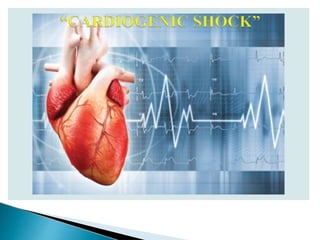
 Cardiogenic Shock
 Distributive Shock,
◦ Septic Shock,
◦ Anaphylactic Shock,
◦ Neurogenic Shock.
Cardiogenic shock is a condition in which your heart
suddenly can't pump enough blood to meet the body's
needs.
 Cardiogenic shock occurs as a serious complication in
5% to 10% of patients hospitalized with acute
myocardial infarction.
 Historically, mortality for cardiogenic shock had been
80% to 90%, but recent studies indicate that the rate
has dropped to 56% to 67% due to the advent of
thrombolytics, improved interventional procedures,
and better therapies.
Incidence of cardiogenic shock is more common in
men than in women because of their higher incidence
of coronary artery disease.
 Old age
 Have a history of heart failure or heart attack
 Have blockages (coronary artery disease) in several
of the heart's main arteries.
 Have diabetes or high blood pressure
 Existing cardiac diseases.
 Myocardial ischemia: Compensatory mechanisms
may initially stabilize the patient but later on would
cause deterioration with the rising demands of
oxygen of the already compromised myocardium.
 Myocardial infarction(MI): Regardless of the
underlying cause, left ventricular dysfunction sets in
motion a series of compensatory mechanisms that
attempt to increase cardiac output, but later on leads
to deterioration.
 Inflammation of the heart muscle (myocarditis)
 Infection of the heart valves (endocarditis)
 Weakened heart from any cause.
 Drug overdoses or poisoning with substances that can
affect your heart's pumping ability.
Coronary: Coronary cardiogenic shock is more
common than non-coronary cardiogenic shock and is
seen most often in patients with acute myocardial
infarction.
Non-coronary:
Non-coronary cardiogenic shock is
related to conditions that stress
the myocardium
conditions that
as
result
well as
in an
ineffective myocardial function.
 Clammy skin.
 Decreased systolic blood pressure
 Tachycardia
 Rapid respirations
 Oliguria.
 Cyanosis.
 Mental confusion
 Rapid breathing
 Severe shortness of breath
 Sudden, rapid heartbeat (tachycardia)
 Loss of consciousness
 Weak pulse
 Low blood pressure (hypotension)
 Sweating
 Pale skin
 Cold hands or feet
 Urinating less than normal or not at all
 Physical examination
 History collection
 Chest X-ray.
 Don't smoke and avoid secondhand smoke
 Maintain a healthy weight.
 Eat less cholesterol
 Limit added sugar and alcohol.
 Exercise regularly
 Emergency life support:
 Vasodilators (These drugs acts as
blood vessel dilator):
• Nitrates
 Beta-Blockers (Decrease work load in
heart):
• Propranolol 20-40 mg
 Calcium channel blocker (They
improve coronary blood flow):
• Nifedipine
• Verapamil
Thrombolytic Drugs:
Thrombolytic drugs are a group of
drugs used to dissolve certain types
of blood clots.
Ex. Streptokinase, Urokinase
These drugs similar to aspirin to help prevent new clots
from forming.
Angioplasty and stenting. If a blockage is found
during a cardiac catheterization, the doctor can insert a
long, thin tube (catheter) equipped with a special
balloon through an artery, usually in your leg, to a
blocked artery in the heart. Once in position, the
balloon is briefly inflated to open the blockage.
Balloon pump. The doctor inserts a balloon pump in the
main artery off of the heart (aorta). The pump inflates
and deflates within the aorta, helping blood flow and
taking some of the workload off the heart.
 Coronary artery bypass surgery.
A mechanical device can be implanted into the
abdomen and attached to the heart to help it pump. This
might extend and improve the lives of some people
with end-stage heart failure.
 Impaired gas exchange related to decreased blood flow
as evidenced by breathlessness
 Acute pain related to disease condition as evidenced by
patient verbalization
 Impaired physical mobility related to weakness as
evidenced by patient is unable to perform daily activity.
 Imbalanced nutrition less than body requirement related
to less intake of food as evidenced by weight loss
 Disturbed sleep pattern related to hospitalization as
evidenced by patient verbalization
NursingAssessment:
 Vital signs. Assess the patient’s vital signs, especially
the blood pressure.
 Fluid overload. The ventricles of the heart cannot
fully eject the volume of blood at systole, so fluid
may accumulate in the lungs.
CARDIOGENIC SHOCK.pptx

CARDIOGENIC SHOCK.pptx

  • 2.
     Shock isa serious, life-threatening medical emergency and one of the most common causes of death for critically ill people.  The process of blood entering the tissues is called perfusion, so when perfusion is not occurring properly this is called a hypoperfusional.
  • 3.
    Shock is definedas inadequate tissue perfusion can be caused by various disease that result in decreased oxygenation at the cellular level.
  • 4.
    1. Initial stage/ early shock 2. Compensatory stage / non progressive stage 3. Progressive stage / intermediate stage 4. Irreversible stage / refractory stage
  • 5.
     Hypovolemic Shock Cardiogenic Shock  Distributive Shock, ◦ Septic Shock, ◦ Anaphylactic Shock, ◦ Neurogenic Shock.
  • 7.
    Cardiogenic shock isa condition in which your heart suddenly can't pump enough blood to meet the body's needs.
  • 8.
     Cardiogenic shockoccurs as a serious complication in 5% to 10% of patients hospitalized with acute myocardial infarction.  Historically, mortality for cardiogenic shock had been 80% to 90%, but recent studies indicate that the rate has dropped to 56% to 67% due to the advent of thrombolytics, improved interventional procedures, and better therapies.
  • 9.
    Incidence of cardiogenicshock is more common in men than in women because of their higher incidence of coronary artery disease.
  • 10.
     Old age Have a history of heart failure or heart attack  Have blockages (coronary artery disease) in several of the heart's main arteries.  Have diabetes or high blood pressure  Existing cardiac diseases.
  • 11.
     Myocardial ischemia:Compensatory mechanisms may initially stabilize the patient but later on would cause deterioration with the rising demands of oxygen of the already compromised myocardium.  Myocardial infarction(MI): Regardless of the underlying cause, left ventricular dysfunction sets in motion a series of compensatory mechanisms that attempt to increase cardiac output, but later on leads to deterioration.
  • 12.
     Inflammation ofthe heart muscle (myocarditis)  Infection of the heart valves (endocarditis)  Weakened heart from any cause.  Drug overdoses or poisoning with substances that can affect your heart's pumping ability.
  • 13.
    Coronary: Coronary cardiogenicshock is more common than non-coronary cardiogenic shock and is seen most often in patients with acute myocardial infarction.
  • 14.
    Non-coronary: Non-coronary cardiogenic shockis related to conditions that stress the myocardium conditions that as result well as in an ineffective myocardial function.
  • 15.
     Clammy skin. Decreased systolic blood pressure  Tachycardia  Rapid respirations  Oliguria.  Cyanosis.  Mental confusion
  • 16.
     Rapid breathing Severe shortness of breath  Sudden, rapid heartbeat (tachycardia)  Loss of consciousness  Weak pulse  Low blood pressure (hypotension)  Sweating  Pale skin  Cold hands or feet  Urinating less than normal or not at all
  • 18.
     Physical examination History collection  Chest X-ray.
  • 22.
     Don't smokeand avoid secondhand smoke  Maintain a healthy weight.  Eat less cholesterol  Limit added sugar and alcohol.  Exercise regularly
  • 23.
  • 24.
     Vasodilators (Thesedrugs acts as blood vessel dilator): • Nitrates  Beta-Blockers (Decrease work load in heart): • Propranolol 20-40 mg  Calcium channel blocker (They improve coronary blood flow): • Nifedipine • Verapamil
  • 25.
    Thrombolytic Drugs: Thrombolytic drugsare a group of drugs used to dissolve certain types of blood clots. Ex. Streptokinase, Urokinase
  • 26.
    These drugs similarto aspirin to help prevent new clots from forming.
  • 27.
    Angioplasty and stenting.If a blockage is found during a cardiac catheterization, the doctor can insert a long, thin tube (catheter) equipped with a special balloon through an artery, usually in your leg, to a blocked artery in the heart. Once in position, the balloon is briefly inflated to open the blockage.
  • 29.
    Balloon pump. Thedoctor inserts a balloon pump in the main artery off of the heart (aorta). The pump inflates and deflates within the aorta, helping blood flow and taking some of the workload off the heart.
  • 31.
     Coronary arterybypass surgery.
  • 33.
    A mechanical devicecan be implanted into the abdomen and attached to the heart to help it pump. This might extend and improve the lives of some people with end-stage heart failure.
  • 36.
     Impaired gasexchange related to decreased blood flow as evidenced by breathlessness  Acute pain related to disease condition as evidenced by patient verbalization  Impaired physical mobility related to weakness as evidenced by patient is unable to perform daily activity.  Imbalanced nutrition less than body requirement related to less intake of food as evidenced by weight loss  Disturbed sleep pattern related to hospitalization as evidenced by patient verbalization
  • 37.
    NursingAssessment:  Vital signs.Assess the patient’s vital signs, especially the blood pressure.  Fluid overload. The ventricles of the heart cannot fully eject the volume of blood at systole, so fluid may accumulate in the lungs.