HEART FAILURE
UPDATE
Dr. Nagula Praveen
MD,DM (Cardiology)
Introduction
Heart Failure is increasing in epidemic proportions across the world
including the developing countries like India.
Prevalence of HF to be increased by 46% globally by 2030 as per
ACC/AHA 2021 statistics.
The incidence of HF in patients more than 45 years is 6.0-7.9/1000
person years, while in >65 it is 20/1000 person years
One in 6 patients with HFREF develop worsening HF within 18 months of
the diagnosis.
The 30- day admission rate is approximately 56%.
Heart Disease and Stroke Statistics—2021 Update: Chapter 21
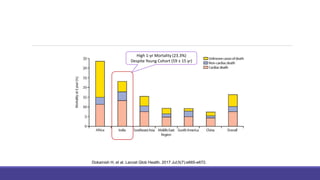
INTER-CHF Study: India has one of the highest mortality rates at 1 year
for HF
Dokainish H, et al. Lancet Glob Health. 2017 Jul;5(7):e665-e672.
High 1-yr Mortality (23.3%)
Despite Young Cohort (59 ± 15 yr)
Epidemiology of Heart Failure
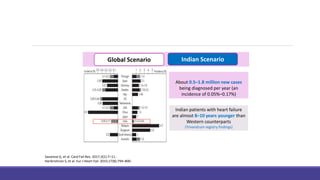
Global Scenario Indian Scenario
Indian patients with heart failure
are almost 8–10 years younger than
Western counterparts
(Trivandrum registry findings)
About 0.5–1.8 million new cases
being diagnosed per year (an
incidence of 0.05%–0.17%)
Savarese G, et al. Card Fail Rev. 2017;3(1):7–11..
Harikrishnan S, et al. Eur J Heart Fail. 2015;17(8):794–800.
In India
TRIVANDRUM HF Registry
2013
1025 PATIENTS were enrolled
Mean age of patients was 61.2 years
In hospital mortality of HFrEF was 9.7% vs HFpEF 4.7%
Mortality at 3 years was 44.8%.
Older age, NYHA IV, Serum creatinine – causes of increased mortality
ICC HF registry
Enrollment from 2019.
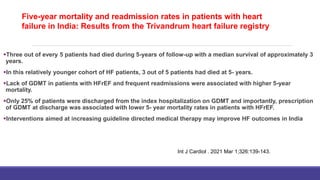
Five-year mortality and readmission rates in patients with heart
failure in India: Results from the Trivandrum heart failure
registry
Three out of every 5 patients had died during 5-years of follow-up with a median survival of approximately 3
years.
In this relatively younger cohort of HF patients, 3 out of 5 patients had died at 5- years.
Lack of GDMT in patients with HFrEF and frequent readmissions were associated with higher 5-year
mortality.
Only 25% of patients were discharged from the index hospitalization on GDMT and importantly, prescription
of GDMT at discharge was associated with lower 5- year mortality rates in patients with HFrEF.
Interventions aimed at increasing guideline directed medical therapy may improve HF outcomes in India
Int J Cardiol . 2021 Mar 1;326:139-143.
Five-year mortality and readmission rates in patients with heart
failure in India: Results from the Trivandrum heart failure registry
Definition of HF
Timeline of definitions of HF
“A condition in which the heart fails to discharge its contents adequately” (Thomas Lewis, 1933)
“A state in which the heart fails to maintain an adequate circulation for the needs of the body despite a
satisfactory filling pressure” (Paul Wood, 1950)
“A pathophysiological state in which an abnormality of cardiac function is responsible for the failure of
the heart to pump blood at a rate commensurate with the requirements of the metabolising tissues”
(E Braunwald, 1980)
“Heart failure is the state of any heart disease in which, despite adequate ventricular filling, the
heart’s output is decreased or in which the heart is unable to pump blood at a rate adequate for
satisfying the requirements of the tissues with function parameters remaining within normal limits”
(H Denolin, H Kuhn, H P Krayenbuehl, F Loogen, A Reale, 1983)
“A clinical syndrome caused by an abnormality of the heart and recognised by a characteristic pattern
of haemodynamic, renal, neural and hormonal responses” (Philip Poole-Wilson, 1985)
“[A] syndrome . . . which arises when the heart is chronically unable to maintain an appropriate blood
pressure without support” (Peter Harris, 1987)
“A syndrome in which cardiac dysfunction is associated with reduced exercise tolerance, a high
incidence of ventricular arrhythmias and shortened life expectancy” (Jay Cohn, 1988)
“Abnormal function of the heart causing a limitation of exercise capacity” or “ventricular dysfunction
with symptoms” (anonymous and pragmatic)
“Symptoms of heart failure, objective evidence of cardiac dysfunction and response to treatment
directed towards heart failure” (Task Force of the European Society of Cardiology, 1995)
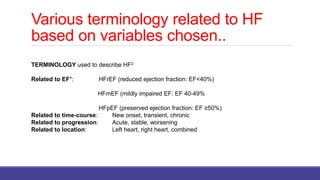
Various terminology related to HF
based on variables chosen..
TERMINOLOGY used to describe HF2
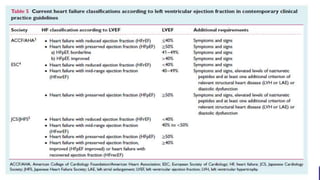
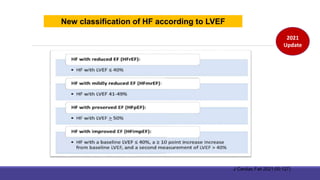
Related to EF*: HFrEF (reduced ejection fraction: EF<40%)
HFmEF (mildly impaired EF: EF 40-49%
HFpEF (preserved ejection fraction: EF ≥50%)
Related to time-course: New onset, transient, chronic
Related to progression: Acute, stable, worsening
Related to location: Left heart, right heart, combined
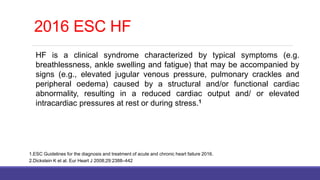
HF is a clinical syndrome characterized by typical symptoms (e.g.
breathlessness, ankle swelling and fatigue) that may be accompanied by
signs (e.g., elevated jugular venous pressure, pulmonary crackles and
peripheral oedema) caused by a structural and/or functional cardiac
abnormality, resulting in a reduced cardiac output and/ or elevated
intracardiac pressures at rest or during stress.1
1.ESC Guidelines for the diagnosis and treatment of acute and chronic heart failure 2016.
2.Dickstein K et al. Eur Heart J 2008;29:2388–442
2016 ESC HF
Why the consensus
document?
HF definitions are ambiguous and lack
standardization.
Some focus on the diagnostic features of
clinical syndrome.
Characterization of the hemodynamic and
physiological aspects.
The existing definitions of HF
comprise three elements
Evidence of structural heart disease
Symptoms
Signs of HF
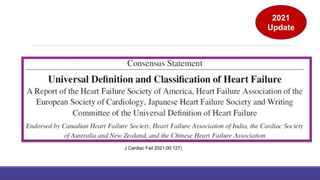
2021
Update
J Cardiac Fail 2021;00:127)
Universal Definition and Classification of Heart
Failure
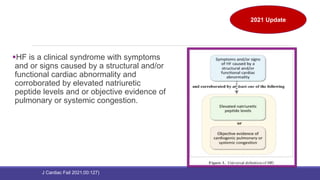
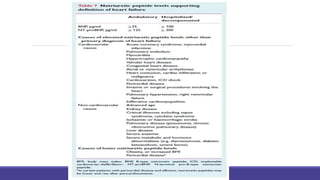
HF is a clinical syndrome with symptoms
and or signs caused by a structural and/or
functional cardiac abnormality and
corroborated by elevated natriuretic
peptide levels and or objective evidence of
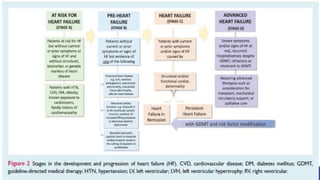
pulmonary or systemic congestion.
2021 Update
J Cardiac Fail 2021;00:127)
Universal Definition and Classification of Heart
Failure
2021
Update
New classification of HF according to LVEF
J Cardiac Fail 2021;00:127)
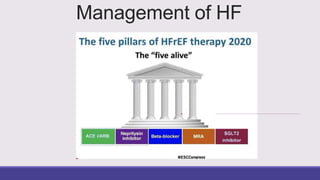
Management of HF
Need for Newer strategies in HF management
1. McMurray et al. Eur Heart J 2012;33:1787–847; 2. SOLVD Investigators. N Engl J Med 1991;325:293–302; 3. CIBIS-II Investigators. Lancet 1999;353:9–13; 4. Pitt et al. N Engl J Med 1999;341:709-17; 5. Granger et al.
Lancet 2003;362:772–66. 6. Go et al. Circulation 2014;129:e28-e292; 7. Yancy et al. Circulation 2013;128:e240–327; 8. Levy et al. N Engl J Med 2002;347:1397–402
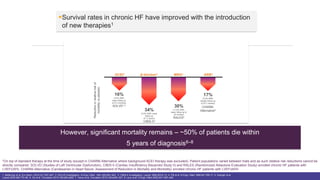
Survival rates in chronic HF have improved with the introduction
of new therapies1
*On top of standard therapy at the time of study (except in CHARM-Alternative where background ACEI therapy was excluded). Patient populations varied between trials and as such relative risk reductions cannot be
directly compared. SOLVD (Studies of Left Ventricular Dysfunction), CIBIS-II (Cardiac Insufficiency Bisoprolol Study II) and RALES (Randomized Aldactone Evaluation Study) enrolled chronic HF patients with
LVEF≤35%. CHARM-Alternative (Candesartan in Heart failure: Assessment of Reduction in Mortality and Morbidity) enrolled chronic HF patients with LVEF≤40%
However, significant mortality remains – ~50% of patients die within
5 years of diagnosis6–8
16%
(4.5% ARR;
mean follow up
of 41.4 months)
SOLVD1,2
34%
(5.5% ARR; mean
follow up
of 1.3 years)
CIBIS-II3
Reduction
in
relative
risk
of
mortality
vs
placebo
30%
(11.0% ARR;
mean follow up of
24 months)
RALES4
17%
(3.0% ARR;
median follow up
of 33.7 months)
CHARM-
Alternative5
ACEI* β-blocker* MRA* ARB*
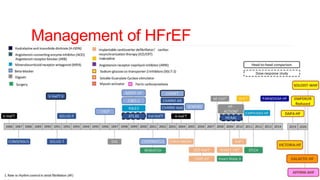
Management of HFrEF
Improving GDMT
Utilization across the
patient journey in HFrEF
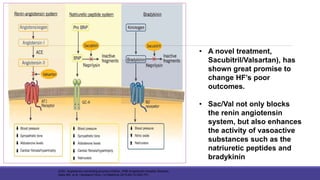
ARNI– A paradigm shift in the management of HF
ACEI- Angiotensin-converting enzyme inhibitor, ARB-Angiotensin receptor blockers
Sabe MA, et al. Cleveland Clinic J of Medicine 2015;82(10):693-701.
• A novel treatment,
Sacubitril/Valsartan), has
shown great promise to
change HF’s poor
outcomes.
• Sac/Val not only blocks
the renin angiotensin
system, but also enhances
the activity of vasoactive
substances such as the
natriuretic peptides and
bradykinin
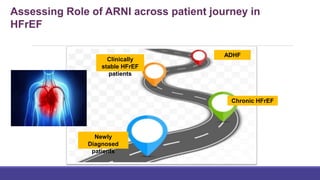
Assessing Role of ARNI across patient journey in
HFrEF
Newly
Diagnosed
patients
Chronic HFrEF
Clinically
stable HFrEF
patients
ADHF
CHRONIC HF
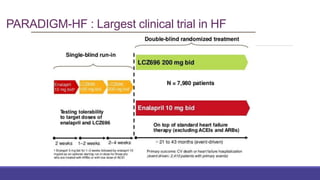
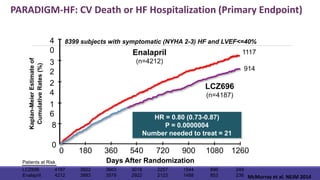
PARADIGM-HF : Largest clinical trial in HF
0
1
6
3
2
4
0
2
4
8
Enalapril
(n=4212)
360 720 1080
0 180 540 900 1260
Days After Randomization
4187
4212
3922
3883
3663
3579
3018
2922
2257
2123
1544
1488
896
853
249
236
LCZ696
Enalapril
Patients at Risk
1117
Kaplan-Meier
Estimate
of
Cumulative
Rates
(%)
914
LCZ696
(n=4187)
HR = 0.80 (0.73-0.87)
P = 0.0000004
Number needed to treat = 21
PARADIGM-HF: CV Death or HF Hospitalization (Primary Endpoint)
McMurray et al. NEJM 2014
8399 subjects with symptomatic (NYHA 2-3) HF and LVEF<=40%
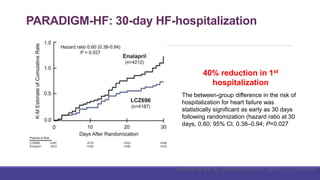
PARADIGM-HF: 30-day HF-hospitalization
The between-group difference in the risk of
hospitalization for heart failure was
statistically significant as early as 30 days
following randomization (hazard ratio at 30
days, 0.60; 95% CI, 0.38–0.94; P=0.027
40% reduction in 1st
hospitalization
Packer M eat al, Circulation 2015 Jan 6;131(1):54-61
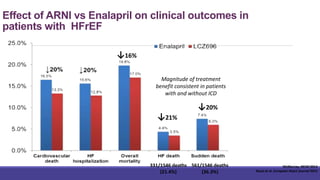
Effect of ARNI vs Enalapril on clinical outcomes in
patients with HFrEF
McMurray, NEJM 2014
Desai et al. European Heart Journal 2015
↓16%
↓21%
↓20%
331/1546 deaths
(21.4%)
561/1546 deaths
(36.3%)
Magnitude of treatment
benefit consistent in patients
with and without ICD
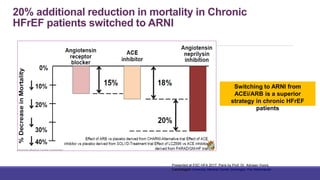
20% additional reduction in mortality in Chronic
HFrEF patients switched to ARNI
Presented at ESC HFA 2017, Paris by Prof. Dr. Adriaan Voors,
Cardiologist University Medical Center Groningen The Netherlands
Switching to ARNI from
ACEi/ARB is a superior
strategy in chronic HFrEF
patients
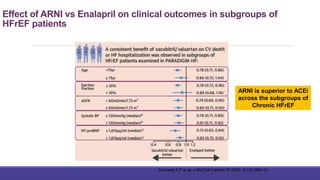
Effect of ARNI vs Enalapril on clinical outcomes in subgroups of
HFrEF patients
ARNI is superior to ACEi
across the subgroups of
Chronic HFrEF
Docherty K F et al, J AM Coll Cardiol HF 2020 ; 8 (10):800-10
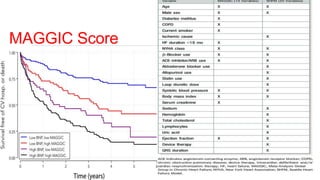
MAGGIC Score
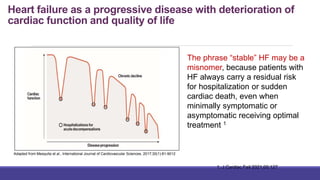
Heart failure as a progressive disease with deterioration of
cardiac function and quality of life
Adapted from Mesquita et al., International Journal of Cardiovascular Sciences. 2017;30(1):81-9012
The phrase “stable” HF may be a
misnomer, because patients with
HF always carry a residual risk
for hospitalization or sudden
cardiac death, even when
minimally symptomatic or
asymptomatic receiving optimal
treatment 1
1. J Cardiac Fail 2021;00:127
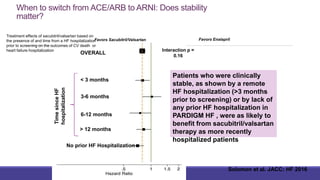
When to switch from ACE/ARB to ARNI: Does stability
matter?
< 3 months
3-6 months
6-12 months
> 12 months
No prior HF Hospitalization
Interaction p =
0.16
Favors Sacubitril/Valsartan
Time
since
HF
hospitalization
Favors Enalapril
OVERALL
Solomon et al. JACC: HF 2016
Patients who were clinically
stable, as shown by a remote
HF hospitalization (>3 months
prior to screening) or by lack of
any prior HF hospitalization in
PARDIGM HF , were as likely to
benefit from sacubitril/valsartan
therapy as more recently
hospitalized patients
Treatment effects of sacubitril/valsartan based on
the presence of and time from a HF hospitalization
prior to screening on the outcomes of CV death or
heart failure hospitalization
Emerging Evidences of ARNI in newly diagnosed HFrEF
patients
NEWLY DIAGNOSED HFREF
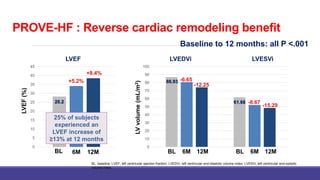
PROVE-HF : Reverse cardiac remodeling benefit
0
5
10
15
20
25
30
35
40
45
LVEF
0
10
20
30
40
50
60
70
80
90
100
LVEDVi LVESVi
BL 6M 12M
LVEF
(%)

LV
volume
(mL/m
2
)
+5.2%
+9.4%
-6.65
-12.25
-8.67
-15.29
BL 6M 12M BL 6M 12M
Baseline to 12 months: all P <.001
28.2
86.93
61.68
25% of subjects
experienced an
LVEF increase of
≥13% at 12 months
BL, baseline; LVEF, left ventricular ejection fraction; LVEDVi, left ventricular end-diastolic volume index; LVESVi, left ventricular end-systolic
volume index
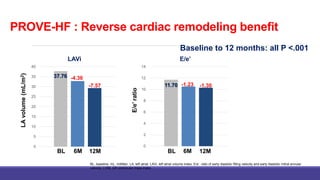
PROVE-HF : Reverse cardiac remodeling benefit
0
5
10
15
20
25
30
35
40
LAVi
0
2
4
6
8
10
12
14
E/e’
BL 6M 12M BL 6M 12M
-4.36
-7.57 -1.23 -1.30
LA
volume
(mL/m
2
)
E/e’
ratio
37.76
11.70
BL, baseline; mL, milliliter; LA, left atrial; LAVi, left atrial volume index; E/e’, ratio of early diastolic filling velocity and early diastolic mitral annular
velocity; LVMi, left ventricular mass index.
Baseline to 12 months: all P <.001
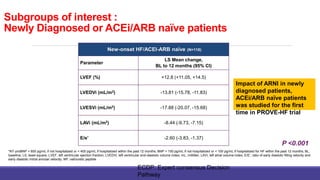
Subgroups of interest :
Newly Diagnosed or ACEi/ARB naïve patients
New-onset HF/ACEI-ARB naïve (N=118)
Parameter
LS Mean change,
BL to 12 months (95% CI)
LVEF (%) +12.8 (+11.05, +14.5)
LVEDVi (mL/m2) -13.81 (-15.78, -11.83)
LVESVi (mL/m2) -17.88 (-20.07, -15.68)
LAVi (mL/m2) -8.44 (-9.73, -7.15)
E/e’ -2.60 (-3.83, -1.37)
P <0.001
*NT-proBNP < 600 pg/mL if not hospitalized or < 400 pg/mL if hospitalized within the past 12 months; BNP < 150 pg/mL if not hospitalized or < 100 pg/mL if hospitalized for HF within the past 12 months; BL,
baseline; LS, least-square; LVEF, left ventricular ejection fraction; LVEDVi, left ventricular end-diastolic volume index; mL, milliliter; LAVi, left atrial volume index; E/E’, ratio of early diastolic filling velocity and
early diastolic mitral annular velocity; NP, natriuretic peptide.
Impact of ARNI in newly
diagnosed patients,
ACEi/ARB naïve patients
was studied for the first
time in PROVE-HF trial
ECDP: Expert consensus Decision
Pathway
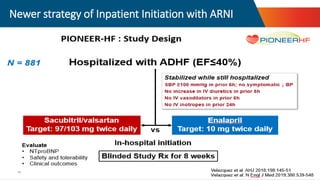
INPATIENT HF
Newer strategy of Inpatient Initiation with ARNI
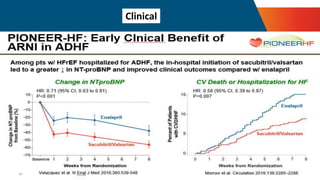
Clinical
Early clinical benefits with ARNI
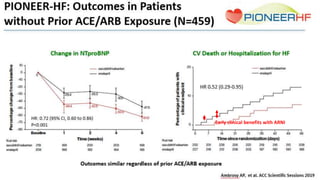
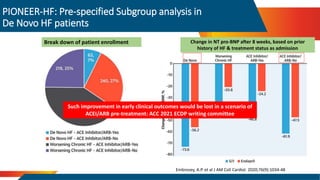
PIONEER-HF: Pre-specified Subgroup analysis in
De Novo HF patients
Embrosey, A.P. et al J AM Coll Cardiol. 2020;76(9):1034-48
Break down of patient enrollment Change in NT pro-BNP after 8 weeks, based on prior
history of HF & treatment status as admission
Such improvement in early clinical outcomes would be lost in a scenario of
ACEI/ARB pre-treatment: ACC 2021 ECDP writing committee
ADHF
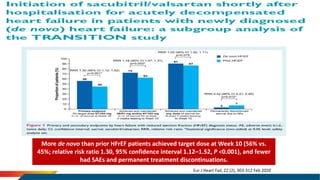
More de novo than prior HFrEF patients achieved target dose at Week 10 (56% vs.
45%; relative risk ratio 1.30, 95% confidence interval 1.12–1.52, P <0.001), and fewer
had SAEs and permanent treatment discontinuations.
Eur J Heart Fail, 22 (2), 303-312 Feb 2020
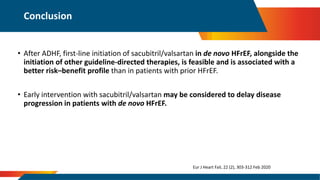
• After ADHF, first-line initiation of sacubitril/valsartan in de novo HFrEF, alongside the
initiation of other guideline-directed therapies, is feasible and is associated with a
better risk–benefit profile than in patients with prior HFrEF.
• Early intervention with sacubitril/valsartan may be considered to delay disease
progression in patients with de novo HFrEF.
Conclusion
Eur J Heart Fail, 22 (2), 303-312 Feb 2020
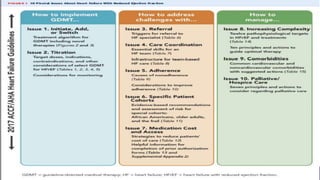
Guidelines continue to evolve with
increasing evidences in HFrEF
2021 Update to the 2017 ACC Expert
Consensus Decision Pathway for
Optimization of Heart Failure
Treatment
PUBLISHED IN JACC ON 11TH JAN 2021
Maddox T et al, J Am Coll Cardiol. Jan 11, 2021
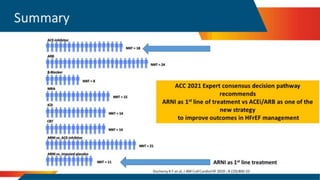
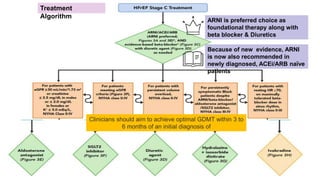
ARNI is preferred choice as
foundational therapy along with
beta blocker & Diuretics
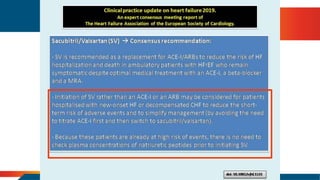
Because of new evidence, ARNI
is now also recommended in
newly diagnosed, ACEi/ARB naïve
patients
Clinicians should aim to achieve optimal GDMT within 3 to
6 months of an initial diagnosis of
Treatment
Algorithm
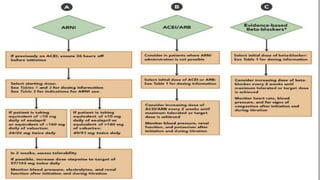
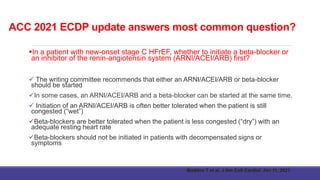
ACC 2021 ECDP update answers most common question?
In a patient with new-onset stage C HFrEF, whether to initiate a beta-blocker or
an inhibitor of the renin-angiotensin system (ARNI/ACEI/ARB) first?
 The writing committee recommends that either an ARNI/ACEI/ARB or beta-blocker
should be started
In some cases, an ARNI/ACEI/ARB and a beta-blocker can be started at the same time.
 Initiation of an ARNI/ACEI/ARB is often better tolerated when the patient is still
congested (“wet”)
Beta-blockers are better tolerated when the patient is less congested (“dry”) with an
adequate resting heart rate
Beta-blockers should not be initiated in patients with decompensated signs or
symptoms
Maddox T et al, J Am Coll Cardiol. Jan 11, 2021
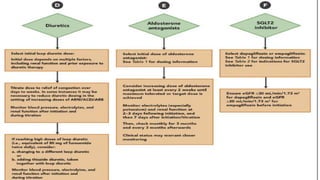
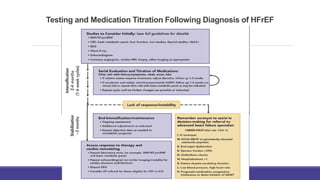
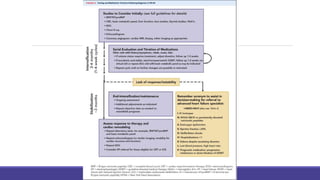
Testing and Medication Titration Following Diagnosis of HFrEF
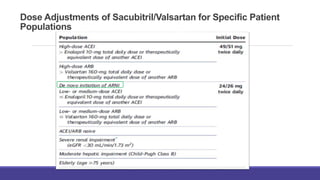
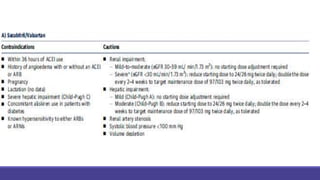
Dose Adjustments of Sacubitril/Valsartan for Specific Patient
Populations
Take home message
Early recognition of HF is essential.
GDMT to be initiated at the earliest in patients at risk of HF.
There is no stable HF or improved HF – instead persistent HF, HF in remission to be
used.
HF definition should be uniform for effective implementation of services in patient
care, trial evidence.
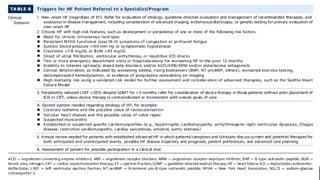
Referral to HF specialist to be encouraged in case of special scenarios.
 ARNI, SGLT2 inhibitors are the drugs with pleomorphic effects in HF management.
HF team approach for effective management of patients to be encouraged.
THANK YOU

HF update 2021

  • 1.
    HEART FAILURE UPDATE Dr. NagulaPraveen MD,DM (Cardiology)
  • 2.
    Introduction Heart Failure isincreasing in epidemic proportions across the world including the developing countries like India. Prevalence of HF to be increased by 46% globally by 2030 as per ACC/AHA 2021 statistics. The incidence of HF in patients more than 45 years is 6.0-7.9/1000 person years, while in >65 it is 20/1000 person years One in 6 patients with HFREF develop worsening HF within 18 months of the diagnosis. The 30- day admission rate is approximately 56%. Heart Disease and Stroke Statistics—2021 Update: Chapter 21
  • 3.
    INTER-CHF Study: Indiahas one of the highest mortality rates at 1 year for HF Dokainish H, et al. Lancet Glob Health. 2017 Jul;5(7):e665-e672. High 1-yr Mortality (23.3%) Despite Young Cohort (59 ± 15 yr)
  • 4.
    Epidemiology of HeartFailure Global Scenario Indian Scenario Indian patients with heart failure are almost 8–10 years younger than Western counterparts (Trivandrum registry findings) About 0.5–1.8 million new cases being diagnosed per year (an incidence of 0.05%–0.17%) Savarese G, et al. Card Fail Rev. 2017;3(1):7–11.. Harikrishnan S, et al. Eur J Heart Fail. 2015;17(8):794–800.
  • 5.
    In India TRIVANDRUM HFRegistry 2013 1025 PATIENTS were enrolled Mean age of patients was 61.2 years In hospital mortality of HFrEF was 9.7% vs HFpEF 4.7% Mortality at 3 years was 44.8%. Older age, NYHA IV, Serum creatinine – causes of increased mortality ICC HF registry Enrollment from 2019.
  • 6.
    Five-year mortality andreadmission rates in patients with heart failure in India: Results from the Trivandrum heart failure registry Three out of every 5 patients had died during 5-years of follow-up with a median survival of approximately 3 years. In this relatively younger cohort of HF patients, 3 out of 5 patients had died at 5- years. Lack of GDMT in patients with HFrEF and frequent readmissions were associated with higher 5-year mortality. Only 25% of patients were discharged from the index hospitalization on GDMT and importantly, prescription of GDMT at discharge was associated with lower 5- year mortality rates in patients with HFrEF. Interventions aimed at increasing guideline directed medical therapy may improve HF outcomes in India Int J Cardiol . 2021 Mar 1;326:139-143. Five-year mortality and readmission rates in patients with heart failure in India: Results from the Trivandrum heart failure registry
  • 7.
  • 8.
    Timeline of definitionsof HF “A condition in which the heart fails to discharge its contents adequately” (Thomas Lewis, 1933) “A state in which the heart fails to maintain an adequate circulation for the needs of the body despite a satisfactory filling pressure” (Paul Wood, 1950) “A pathophysiological state in which an abnormality of cardiac function is responsible for the failure of the heart to pump blood at a rate commensurate with the requirements of the metabolising tissues” (E Braunwald, 1980) “Heart failure is the state of any heart disease in which, despite adequate ventricular filling, the heart’s output is decreased or in which the heart is unable to pump blood at a rate adequate for satisfying the requirements of the tissues with function parameters remaining within normal limits” (H Denolin, H Kuhn, H P Krayenbuehl, F Loogen, A Reale, 1983) “A clinical syndrome caused by an abnormality of the heart and recognised by a characteristic pattern of haemodynamic, renal, neural and hormonal responses” (Philip Poole-Wilson, 1985) “[A] syndrome . . . which arises when the heart is chronically unable to maintain an appropriate blood pressure without support” (Peter Harris, 1987) “A syndrome in which cardiac dysfunction is associated with reduced exercise tolerance, a high incidence of ventricular arrhythmias and shortened life expectancy” (Jay Cohn, 1988) “Abnormal function of the heart causing a limitation of exercise capacity” or “ventricular dysfunction with symptoms” (anonymous and pragmatic) “Symptoms of heart failure, objective evidence of cardiac dysfunction and response to treatment directed towards heart failure” (Task Force of the European Society of Cardiology, 1995)
  • 9.
    Various terminology relatedto HF based on variables chosen.. TERMINOLOGY used to describe HF2 Related to EF*: HFrEF (reduced ejection fraction: EF<40%) HFmEF (mildly impaired EF: EF 40-49% HFpEF (preserved ejection fraction: EF ≥50%) Related to time-course: New onset, transient, chronic Related to progression: Acute, stable, worsening Related to location: Left heart, right heart, combined
  • 10.
    HF is aclinical syndrome characterized by typical symptoms (e.g. breathlessness, ankle swelling and fatigue) that may be accompanied by signs (e.g., elevated jugular venous pressure, pulmonary crackles and peripheral oedema) caused by a structural and/or functional cardiac abnormality, resulting in a reduced cardiac output and/ or elevated intracardiac pressures at rest or during stress.1 1.ESC Guidelines for the diagnosis and treatment of acute and chronic heart failure 2016. 2.Dickstein K et al. Eur Heart J 2008;29:2388–442 2016 ESC HF
  • 15.
    Why the consensus document? HFdefinitions are ambiguous and lack standardization. Some focus on the diagnostic features of clinical syndrome. Characterization of the hemodynamic and physiological aspects.
  • 16.
    The existing definitionsof HF comprise three elements Evidence of structural heart disease Symptoms Signs of HF
  • 17.
  • 18.
    Universal Definition andClassification of Heart Failure HF is a clinical syndrome with symptoms and or signs caused by a structural and/or functional cardiac abnormality and corroborated by elevated natriuretic peptide levels and or objective evidence of pulmonary or systemic congestion. 2021 Update J Cardiac Fail 2021;00:127)
  • 21.
    Universal Definition andClassification of Heart Failure 2021 Update New classification of HF according to LVEF J Cardiac Fail 2021;00:127)
  • 22.
  • 23.
    Need for Newerstrategies in HF management 1. McMurray et al. Eur Heart J 2012;33:1787–847; 2. SOLVD Investigators. N Engl J Med 1991;325:293–302; 3. CIBIS-II Investigators. Lancet 1999;353:9–13; 4. Pitt et al. N Engl J Med 1999;341:709-17; 5. Granger et al. Lancet 2003;362:772–66. 6. Go et al. Circulation 2014;129:e28-e292; 7. Yancy et al. Circulation 2013;128:e240–327; 8. Levy et al. N Engl J Med 2002;347:1397–402 Survival rates in chronic HF have improved with the introduction of new therapies1 *On top of standard therapy at the time of study (except in CHARM-Alternative where background ACEI therapy was excluded). Patient populations varied between trials and as such relative risk reductions cannot be directly compared. SOLVD (Studies of Left Ventricular Dysfunction), CIBIS-II (Cardiac Insufficiency Bisoprolol Study II) and RALES (Randomized Aldactone Evaluation Study) enrolled chronic HF patients with LVEF≤35%. CHARM-Alternative (Candesartan in Heart failure: Assessment of Reduction in Mortality and Morbidity) enrolled chronic HF patients with LVEF≤40% However, significant mortality remains – ~50% of patients die within 5 years of diagnosis6–8 16% (4.5% ARR; mean follow up of 41.4 months) SOLVD1,2 34% (5.5% ARR; mean follow up of 1.3 years) CIBIS-II3 Reduction in relative risk of mortality vs placebo 30% (11.0% ARR; mean follow up of 24 months) RALES4 17% (3.0% ARR; median follow up of 33.7 months) CHARM- Alternative5 ACEI* β-blocker* MRA* ARB*
  • 24.
  • 25.
    Improving GDMT Utilization acrossthe patient journey in HFrEF
  • 26.
    ARNI– A paradigmshift in the management of HF ACEI- Angiotensin-converting enzyme inhibitor, ARB-Angiotensin receptor blockers Sabe MA, et al. Cleveland Clinic J of Medicine 2015;82(10):693-701. • A novel treatment, Sacubitril/Valsartan), has shown great promise to change HF’s poor outcomes. • Sac/Val not only blocks the renin angiotensin system, but also enhances the activity of vasoactive substances such as the natriuretic peptides and bradykinin
  • 27.
    Assessing Role ofARNI across patient journey in HFrEF Newly Diagnosed patients Chronic HFrEF Clinically stable HFrEF patients ADHF
  • 28.
  • 29.
    PARADIGM-HF : Largestclinical trial in HF
  • 30.
    0 1 6 3 2 4 0 2 4 8 Enalapril (n=4212) 360 720 1080 0180 540 900 1260 Days After Randomization 4187 4212 3922 3883 3663 3579 3018 2922 2257 2123 1544 1488 896 853 249 236 LCZ696 Enalapril Patients at Risk 1117 Kaplan-Meier Estimate of Cumulative Rates (%) 914 LCZ696 (n=4187) HR = 0.80 (0.73-0.87) P = 0.0000004 Number needed to treat = 21 PARADIGM-HF: CV Death or HF Hospitalization (Primary Endpoint) McMurray et al. NEJM 2014 8399 subjects with symptomatic (NYHA 2-3) HF and LVEF<=40%
  • 31.
    PARADIGM-HF: 30-day HF-hospitalization Thebetween-group difference in the risk of hospitalization for heart failure was statistically significant as early as 30 days following randomization (hazard ratio at 30 days, 0.60; 95% CI, 0.38–0.94; P=0.027 40% reduction in 1st hospitalization Packer M eat al, Circulation 2015 Jan 6;131(1):54-61
  • 32.
    Effect of ARNIvs Enalapril on clinical outcomes in patients with HFrEF McMurray, NEJM 2014 Desai et al. European Heart Journal 2015 ↓16% ↓21% ↓20% 331/1546 deaths (21.4%) 561/1546 deaths (36.3%) Magnitude of treatment benefit consistent in patients with and without ICD
  • 33.
    20% additional reductionin mortality in Chronic HFrEF patients switched to ARNI Presented at ESC HFA 2017, Paris by Prof. Dr. Adriaan Voors, Cardiologist University Medical Center Groningen The Netherlands Switching to ARNI from ACEi/ARB is a superior strategy in chronic HFrEF patients
  • 34.
    Effect of ARNIvs Enalapril on clinical outcomes in subgroups of HFrEF patients ARNI is superior to ACEi across the subgroups of Chronic HFrEF Docherty K F et al, J AM Coll Cardiol HF 2020 ; 8 (10):800-10
  • 35.
  • 36.
    Heart failure asa progressive disease with deterioration of cardiac function and quality of life Adapted from Mesquita et al., International Journal of Cardiovascular Sciences. 2017;30(1):81-9012 The phrase “stable” HF may be a misnomer, because patients with HF always carry a residual risk for hospitalization or sudden cardiac death, even when minimally symptomatic or asymptomatic receiving optimal treatment 1 1. J Cardiac Fail 2021;00:127
  • 37.
    When to switchfrom ACE/ARB to ARNI: Does stability matter? < 3 months 3-6 months 6-12 months > 12 months No prior HF Hospitalization Interaction p = 0.16 Favors Sacubitril/Valsartan Time since HF hospitalization Favors Enalapril OVERALL Solomon et al. JACC: HF 2016 Patients who were clinically stable, as shown by a remote HF hospitalization (>3 months prior to screening) or by lack of any prior HF hospitalization in PARDIGM HF , were as likely to benefit from sacubitril/valsartan therapy as more recently hospitalized patients Treatment effects of sacubitril/valsartan based on the presence of and time from a HF hospitalization prior to screening on the outcomes of CV death or heart failure hospitalization
  • 38.
    Emerging Evidences ofARNI in newly diagnosed HFrEF patients NEWLY DIAGNOSED HFREF
  • 39.
    PROVE-HF : Reversecardiac remodeling benefit 0 5 10 15 20 25 30 35 40 45 LVEF 0 10 20 30 40 50 60 70 80 90 100 LVEDVi LVESVi BL 6M 12M LVEF (%) LV volume (mL/m 2 ) +5.2% +9.4% -6.65 -12.25 -8.67 -15.29 BL 6M 12M BL 6M 12M Baseline to 12 months: all P <.001 28.2 86.93 61.68 25% of subjects experienced an LVEF increase of ≥13% at 12 months BL, baseline; LVEF, left ventricular ejection fraction; LVEDVi, left ventricular end-diastolic volume index; LVESVi, left ventricular end-systolic volume index
  • 40.
    PROVE-HF : Reversecardiac remodeling benefit 0 5 10 15 20 25 30 35 40 LAVi 0 2 4 6 8 10 12 14 E/e’ BL 6M 12M BL 6M 12M -4.36 -7.57 -1.23 -1.30 LA volume (mL/m 2 ) E/e’ ratio 37.76 11.70 BL, baseline; mL, milliliter; LA, left atrial; LAVi, left atrial volume index; E/e’, ratio of early diastolic filling velocity and early diastolic mitral annular velocity; LVMi, left ventricular mass index. Baseline to 12 months: all P <.001
  • 41.
    Subgroups of interest: Newly Diagnosed or ACEi/ARB naïve patients New-onset HF/ACEI-ARB naïve (N=118) Parameter LS Mean change, BL to 12 months (95% CI) LVEF (%) +12.8 (+11.05, +14.5) LVEDVi (mL/m2) -13.81 (-15.78, -11.83) LVESVi (mL/m2) -17.88 (-20.07, -15.68) LAVi (mL/m2) -8.44 (-9.73, -7.15) E/e’ -2.60 (-3.83, -1.37) P <0.001 *NT-proBNP < 600 pg/mL if not hospitalized or < 400 pg/mL if hospitalized within the past 12 months; BNP < 150 pg/mL if not hospitalized or < 100 pg/mL if hospitalized for HF within the past 12 months; BL, baseline; LS, least-square; LVEF, left ventricular ejection fraction; LVEDVi, left ventricular end-diastolic volume index; mL, milliliter; LAVi, left atrial volume index; E/E’, ratio of early diastolic filling velocity and early diastolic mitral annular velocity; NP, natriuretic peptide. Impact of ARNI in newly diagnosed patients, ACEi/ARB naïve patients was studied for the first time in PROVE-HF trial ECDP: Expert consensus Decision Pathway
  • 42.
  • 43.
    Newer strategy ofInpatient Initiation with ARNI
  • 44.
  • 45.
  • 46.
    PIONEER-HF: Pre-specified Subgroupanalysis in De Novo HF patients Embrosey, A.P. et al J AM Coll Cardiol. 2020;76(9):1034-48 Break down of patient enrollment Change in NT pro-BNP after 8 weeks, based on prior history of HF & treatment status as admission Such improvement in early clinical outcomes would be lost in a scenario of ACEI/ARB pre-treatment: ACC 2021 ECDP writing committee
  • 47.
  • 48.
    More de novothan prior HFrEF patients achieved target dose at Week 10 (56% vs. 45%; relative risk ratio 1.30, 95% confidence interval 1.12–1.52, P <0.001), and fewer had SAEs and permanent treatment discontinuations. Eur J Heart Fail, 22 (2), 303-312 Feb 2020
  • 49.
    • After ADHF,first-line initiation of sacubitril/valsartan in de novo HFrEF, alongside the initiation of other guideline-directed therapies, is feasible and is associated with a better risk–benefit profile than in patients with prior HFrEF. • Early intervention with sacubitril/valsartan may be considered to delay disease progression in patients with de novo HFrEF. Conclusion Eur J Heart Fail, 22 (2), 303-312 Feb 2020
  • 50.
    Guidelines continue toevolve with increasing evidences in HFrEF
  • 54.
    2021 Update tothe 2017 ACC Expert Consensus Decision Pathway for Optimization of Heart Failure Treatment PUBLISHED IN JACC ON 11TH JAN 2021 Maddox T et al, J Am Coll Cardiol. Jan 11, 2021
  • 56.
    ARNI is preferredchoice as foundational therapy along with beta blocker & Diuretics Because of new evidence, ARNI is now also recommended in newly diagnosed, ACEi/ARB naïve patients Clinicians should aim to achieve optimal GDMT within 3 to 6 months of an initial diagnosis of Treatment Algorithm
  • 59.
    ACC 2021 ECDPupdate answers most common question? In a patient with new-onset stage C HFrEF, whether to initiate a beta-blocker or an inhibitor of the renin-angiotensin system (ARNI/ACEI/ARB) first?  The writing committee recommends that either an ARNI/ACEI/ARB or beta-blocker should be started In some cases, an ARNI/ACEI/ARB and a beta-blocker can be started at the same time.  Initiation of an ARNI/ACEI/ARB is often better tolerated when the patient is still congested (“wet”) Beta-blockers are better tolerated when the patient is less congested (“dry”) with an adequate resting heart rate Beta-blockers should not be initiated in patients with decompensated signs or symptoms Maddox T et al, J Am Coll Cardiol. Jan 11, 2021
  • 60.
    Testing and MedicationTitration Following Diagnosis of HFrEF
  • 61.
    Dose Adjustments ofSacubitril/Valsartan for Specific Patient Populations
  • 67.
    Take home message Earlyrecognition of HF is essential. GDMT to be initiated at the earliest in patients at risk of HF. There is no stable HF or improved HF – instead persistent HF, HF in remission to be used. HF definition should be uniform for effective implementation of services in patient care, trial evidence. Referral to HF specialist to be encouraged in case of special scenarios.  ARNI, SGLT2 inhibitors are the drugs with pleomorphic effects in HF management. HF team approach for effective management of patients to be encouraged.
  • 68.