The Carbon Cycle
What is carbon cycle?
• Nutrient cycle in which CARBON ATOMS are
RECYCLED through the ABIOTIC and BIOTIC
parts of an environment.
What is carbon cycle?
• Consists of the processes in the BIOTIC
environment:
PHOTOSYNTHESIS (in AUTHOTROPHS)
CERLLULAR RESPIRATION (in HETEROTROPHS
& AUTOTROPHS)
AUTOTROPHS
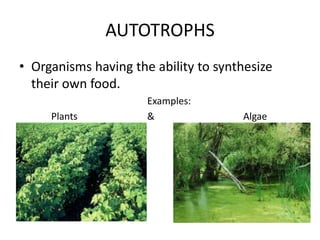
• Organisms having the ability to synthesize
their own food.
Plants

Examples:
&

Algae
AUTOTROPHS
• Organisms that can make their own food, such
us plants which make their food from
INORGANIC substances
why are autotrophs important?
Called producers because they produce
chemical energy for an entire ecosytem
Convert inorganic substances & light into
organic substances containing CHEMICAL
ENERGY (i.e. Food)
HETEROTROPHS
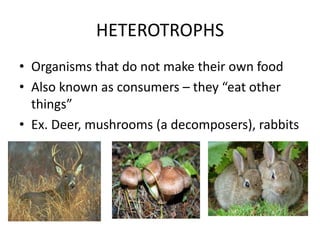
• Organisms that do not make their own food
• Also known as consumers – they “eat other
things”
• Ex. Deer, mushrooms (a decomposers), rabbits
HETEROTROPHS
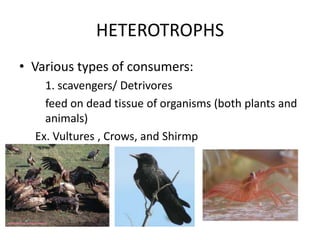
• Various types of consumers:
1. scavengers/ Detrivores
feed on dead tissue of organisms (both plants and
animals)
Ex. Vultures , Crows, and Shirmp
HETEROTROPHS
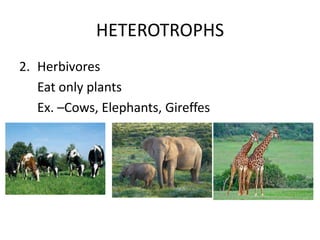
2. Herbivores
Eat only plants
Ex. –Cows, Elephants, Gireffes
HETEROTROPHS
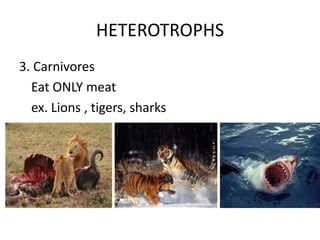
3. Carnivores
Eat ONLY meat
ex. Lions , tigers, sharks
HETEROTROPHS
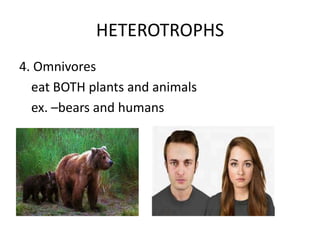
4. Omnivores
eat BOTH plants and animals
ex. –bears and humans
HETEROTROPHS
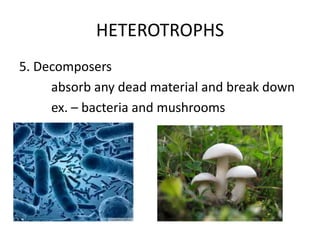
5. Decomposers
absorb any dead material and break down
ex. – bacteria and mushrooms
photosynthesis
• Takes place in autotrophs, specially in the
leaves of green plants
• In photosynthesis, plants trap sunlight (energy
from the sun) and use it to create food (sugar
called glucose)
• Key- plants turn light energy into chemical
energy
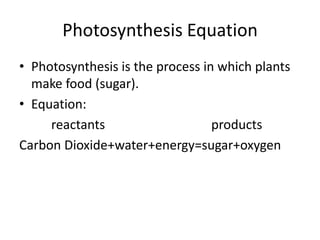
Photosynthesis Equation
• Photosynthesis is the process in which plants
make food (sugar).
• Equation:
reactants
products
Carbon Dioxide+water+energy=sugar+oxygen
Photosynthesis
• Plants can’t use light energy directly, instead
they must convert it to chemical energy in the
process of photosynthesis
• This chemical energy is either
Used to survive (energy to live)
Stored as physical part of the plant (called starch)
Heterotrophs consume the plant material for this
stored chemical energy
Cellular Respiration
• Cellular Respiration is when food (chemical
energy) is broken down to release energy
• This is called catabolism or “digestion”
• Sugar (food) made by plants in photosynthesis
is broken down through Cellular Respiration
into an “energy form” which can be used
Cellular Respiration
• Cellular Respiration takes place in the
mitochondria of plants and animals cells
• In respiration, OXYGEN is combined with
SUGAR to produce ENERGY, CARBON DIOXIDE
, and WATER
Cellular Respiration
• The chemical equation for respiration, is
essentially the opposite of photosynthesis
• Chemical Equation:
Reactants
Products
Sugar + Oxygen = Energy + Carbon Dioxide+ Water
Cellular Respiration & Photosynthesis are
COMPLEMENTARY PROCESSES
Carbon storage
• Carbon is continually recycled in living
ecosystems, but it can also be destroyed
• Ways of storing carbon:
1. Inorganic Carbon Storage (non-living)
2. Organic Carbon Storage (living)
Inorganic Carbon Storage
• Storage of carbon atoms in non-living things
occurs in 3 ways:
1. ATMOSPHERE
carbon dioxide in the air
contains least stored carbon (0.03%)
Inorganic Carbon Storage
2. OCEANS
carbon dioxide dissolved in water
used by water plants for photosynthesis
3. SOIL
carbon stored in rocks such as limestone
most carbon is stored in soil/ rock
can be released when rocks are disturbed
(volcanoes, acid rain)
Organic Carbon Storage
• Carbon is stored in the bodies of living things
• Carbon is stored in living bodies is released
when then organisms dies and decomposes.
• Carbon is continually being recycled
• Carbon stored in a body can be turned into
fossil fuels (gas, coal, etc.)
• Peat (dead plant material) which get buried
can turn into Coal

Carbon cycle ppt

  • 1.
  • 2.
    What is carboncycle? • Nutrient cycle in which CARBON ATOMS are RECYCLED through the ABIOTIC and BIOTIC parts of an environment.
  • 3.
    What is carboncycle? • Consists of the processes in the BIOTIC environment: PHOTOSYNTHESIS (in AUTHOTROPHS) CERLLULAR RESPIRATION (in HETEROTROPHS & AUTOTROPHS)
  • 4.
    AUTOTROPHS • Organisms havingthe ability to synthesize their own food. Plants Examples: & Algae
  • 5.
    AUTOTROPHS • Organisms thatcan make their own food, such us plants which make their food from INORGANIC substances why are autotrophs important? Called producers because they produce chemical energy for an entire ecosytem Convert inorganic substances & light into organic substances containing CHEMICAL ENERGY (i.e. Food)
  • 6.
    HETEROTROPHS • Organisms thatdo not make their own food • Also known as consumers – they “eat other things” • Ex. Deer, mushrooms (a decomposers), rabbits
  • 7.
    HETEROTROPHS • Various typesof consumers: 1. scavengers/ Detrivores feed on dead tissue of organisms (both plants and animals) Ex. Vultures , Crows, and Shirmp
  • 8.
    HETEROTROPHS 2. Herbivores Eat onlyplants Ex. –Cows, Elephants, Gireffes
  • 9.
    HETEROTROPHS 3. Carnivores Eat ONLYmeat ex. Lions , tigers, sharks
  • 10.
    HETEROTROPHS 4. Omnivores eat BOTHplants and animals ex. –bears and humans
  • 11.
    HETEROTROPHS 5. Decomposers absorb anydead material and break down ex. – bacteria and mushrooms
  • 12.
    photosynthesis • Takes placein autotrophs, specially in the leaves of green plants • In photosynthesis, plants trap sunlight (energy from the sun) and use it to create food (sugar called glucose) • Key- plants turn light energy into chemical energy
  • 13.
    Photosynthesis Equation • Photosynthesisis the process in which plants make food (sugar). • Equation: reactants products Carbon Dioxide+water+energy=sugar+oxygen
  • 14.
    Photosynthesis • Plants can’tuse light energy directly, instead they must convert it to chemical energy in the process of photosynthesis • This chemical energy is either Used to survive (energy to live) Stored as physical part of the plant (called starch) Heterotrophs consume the plant material for this stored chemical energy
  • 15.
    Cellular Respiration • CellularRespiration is when food (chemical energy) is broken down to release energy • This is called catabolism or “digestion” • Sugar (food) made by plants in photosynthesis is broken down through Cellular Respiration into an “energy form” which can be used
  • 16.
    Cellular Respiration • CellularRespiration takes place in the mitochondria of plants and animals cells • In respiration, OXYGEN is combined with SUGAR to produce ENERGY, CARBON DIOXIDE , and WATER
  • 17.
    Cellular Respiration • Thechemical equation for respiration, is essentially the opposite of photosynthesis • Chemical Equation: Reactants Products Sugar + Oxygen = Energy + Carbon Dioxide+ Water Cellular Respiration & Photosynthesis are COMPLEMENTARY PROCESSES
  • 18.
    Carbon storage • Carbonis continually recycled in living ecosystems, but it can also be destroyed • Ways of storing carbon: 1. Inorganic Carbon Storage (non-living) 2. Organic Carbon Storage (living)
  • 19.
    Inorganic Carbon Storage •Storage of carbon atoms in non-living things occurs in 3 ways: 1. ATMOSPHERE carbon dioxide in the air contains least stored carbon (0.03%)
  • 20.
    Inorganic Carbon Storage 2.OCEANS carbon dioxide dissolved in water used by water plants for photosynthesis 3. SOIL carbon stored in rocks such as limestone most carbon is stored in soil/ rock can be released when rocks are disturbed (volcanoes, acid rain)
  • 21.
    Organic Carbon Storage •Carbon is stored in the bodies of living things • Carbon is stored in living bodies is released when then organisms dies and decomposes. • Carbon is continually being recycled • Carbon stored in a body can be turned into fossil fuels (gas, coal, etc.) • Peat (dead plant material) which get buried can turn into Coal