Welcome to our Presentation
Nitrogen and carbon cycle nutrition
• Mohammad Ariful Islam
ASH181933M
• Tasnim Sultana
MUH1819034F
• Wahida Nusrat
BKH1819037M
• Rashed Iqbal
ASH1819027M
INTRODUCTION
Nitrogen Cycle: The nitrogen cycle is the process by which Nitrogen is converted between
its various chemical forms. This transformation can be carried out through both biological and
physical processes.
The nitrogen cycle is of particular interest to ecologists because nitrogen availability can affect
the rate of key ecosystem processes, including primary production and decomposition. Human
activities such as fossil fuel combustion, use of artificial nitrogen fertilizers, and release of
nitrogen in wastewater have dramatically altered the global nitrogen cycle.
Carbon cycle: The global moment of carbon between the abiotic environment, including the
atmosphere and ocean, and organisms is known as the carbon Cycle.
Along with the nitrogen cycle and the water cycle, the carbon cycle comprises a sequence of
events that are key to make Earth capable of sustaining life.
CARBON CYCLE VS NITROGEN CYCLE
1. Carbon cycle is a series of processes by
which compounds of carbon are
interconverted in ecosystems.
2. Involved in recycling carbon in
ecosystems.
3. Photosynthesis, deposition and
decomposition are important processes.
4. Increased release of carbon dioxide to the
atmosphere may cause global warming.
5. Animals and plants are involved in these
processes.
1. Nitrogen cycle is the series of processes
by which nitrogen and its compounds are
interconverted in ecosystems.
2. Involved in recycling nitrogen in
ecosystems.
3. Fixation, mineralization, nutrition and
denitrification are important processes.
4. Human should interfere in the addition of
nitrogen sources into plants.
5. Microorganisms are involved in the
processes.
SOURCES
Carbon
• Fossil fuel combustion/use
• Transportation sector
• Industrial sector
• Ocean-atmosphere exchange
• Plant and animal respiration
• Soil respiration and decomposition
Nitrogen
• Uptake of nitrogen by plants from
the atmosphere
• Uptake of ammonium and nitrate
by plants from soil and water
• Ammonification
• Nitrification
• Denitrification
• Release of ammonia
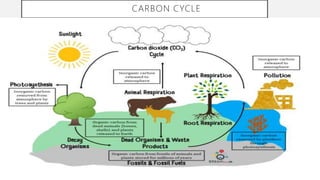
CARBON CYCLE
DEFICIENCY SYMPTOMS OF NITROGEN
• Chlorosis(yellowing of leaves)
• Suppressed or late flowering
• Increase in starch but decrease in protein content
• Older leaves turn completely yellow
DEFICIENCY SYMPTOMS OF CARBON
No deficiency symptoms of carbon have been determined. Root exposure
during six days 10,000 ppm CO2 or near zero CO2 had no visible effect,
and plants develop normally.
ROLE OF NITROGEN
1. The nitrogen cycle helps bring in the inert nitrogen from the air into the biochemical process
in plants and then to animals.
2. Plant need nitrogen to synthesis chlorophyll and so the nitrogen cycle is absolutely essential
for them
3. Due to the nitrogen cycle nitrates and nitrites are released into the soil with nutrients needed
for cultivation.
4. Plant use nitrogen for their biochemical processes, animals obtain the nitrogen and nitrogen
compounds from plants. Nitrogen is needed as is an integral part of the cell composition. It
is due to the nitrogen cycle that animals are also able to utilize the nitrogen present in the
air.
ROLE OF CARBON
1. Carbon is an essential element for all life, so understanding how it moves helps us to
understand biological processes and factors that influence them.
2. Photosynthesis
3. Global warming
4. Climate change
5. decomposition
REFERENCES
1. https://en.m.wikipedia.org/wiki/Nitrogen_deficiency?fbclid=IwAR3zNCSV1xnRk1GoAa1ubJop7z0a
ecpWJJMN1sBq368CRvg45C2Bsvly1N0
2. http://www.preservearticles.com/environment/role-of-carbon-a-nitrogen-cycles-in-the-
environment/21659?fbclid=IwAR0zImZ08G93PLm_tvQhL1jErDQn7HN0as48nBwbSJMJrC9CLL
WbKdZLou4
3. https://www.slideshare.net/saramssantos/carbon-and-nitrogen-cycle-14932178?qid=75404bba-6d63-
41dd-a980-
03540f46f094&v=&b=&from_search=4&fbclid=IwAR0zImZ08G93PLm_tvQhL1jErDQn7HN0as48
nBwbSJMJrC9CLLWbKdZLou4
4. https://en.m.wikipedia.org/wiki/Nitrogen_cycle

Nitrogen and carbon cycle

  • 1.
    Welcome to ourPresentation
  • 2.
    Nitrogen and carboncycle nutrition • Mohammad Ariful Islam ASH181933M • Tasnim Sultana MUH1819034F • Wahida Nusrat BKH1819037M • Rashed Iqbal ASH1819027M
  • 3.
    INTRODUCTION Nitrogen Cycle: Thenitrogen cycle is the process by which Nitrogen is converted between its various chemical forms. This transformation can be carried out through both biological and physical processes. The nitrogen cycle is of particular interest to ecologists because nitrogen availability can affect the rate of key ecosystem processes, including primary production and decomposition. Human activities such as fossil fuel combustion, use of artificial nitrogen fertilizers, and release of nitrogen in wastewater have dramatically altered the global nitrogen cycle. Carbon cycle: The global moment of carbon between the abiotic environment, including the atmosphere and ocean, and organisms is known as the carbon Cycle. Along with the nitrogen cycle and the water cycle, the carbon cycle comprises a sequence of events that are key to make Earth capable of sustaining life.
  • 4.
    CARBON CYCLE VSNITROGEN CYCLE 1. Carbon cycle is a series of processes by which compounds of carbon are interconverted in ecosystems. 2. Involved in recycling carbon in ecosystems. 3. Photosynthesis, deposition and decomposition are important processes. 4. Increased release of carbon dioxide to the atmosphere may cause global warming. 5. Animals and plants are involved in these processes. 1. Nitrogen cycle is the series of processes by which nitrogen and its compounds are interconverted in ecosystems. 2. Involved in recycling nitrogen in ecosystems. 3. Fixation, mineralization, nutrition and denitrification are important processes. 4. Human should interfere in the addition of nitrogen sources into plants. 5. Microorganisms are involved in the processes.
  • 5.
    SOURCES Carbon • Fossil fuelcombustion/use • Transportation sector • Industrial sector • Ocean-atmosphere exchange • Plant and animal respiration • Soil respiration and decomposition Nitrogen • Uptake of nitrogen by plants from the atmosphere • Uptake of ammonium and nitrate by plants from soil and water • Ammonification • Nitrification • Denitrification • Release of ammonia
  • 7.
  • 8.
    DEFICIENCY SYMPTOMS OFNITROGEN • Chlorosis(yellowing of leaves) • Suppressed or late flowering • Increase in starch but decrease in protein content • Older leaves turn completely yellow
  • 9.
    DEFICIENCY SYMPTOMS OFCARBON No deficiency symptoms of carbon have been determined. Root exposure during six days 10,000 ppm CO2 or near zero CO2 had no visible effect, and plants develop normally.
  • 10.
    ROLE OF NITROGEN 1.The nitrogen cycle helps bring in the inert nitrogen from the air into the biochemical process in plants and then to animals. 2. Plant need nitrogen to synthesis chlorophyll and so the nitrogen cycle is absolutely essential for them 3. Due to the nitrogen cycle nitrates and nitrites are released into the soil with nutrients needed for cultivation. 4. Plant use nitrogen for their biochemical processes, animals obtain the nitrogen and nitrogen compounds from plants. Nitrogen is needed as is an integral part of the cell composition. It is due to the nitrogen cycle that animals are also able to utilize the nitrogen present in the air.
  • 11.
    ROLE OF CARBON 1.Carbon is an essential element for all life, so understanding how it moves helps us to understand biological processes and factors that influence them. 2. Photosynthesis 3. Global warming 4. Climate change 5. decomposition
  • 14.
    REFERENCES 1. https://en.m.wikipedia.org/wiki/Nitrogen_deficiency?fbclid=IwAR3zNCSV1xnRk1GoAa1ubJop7z0a ecpWJJMN1sBq368CRvg45C2Bsvly1N0 2. http://www.preservearticles.com/environment/role-of-carbon-a-nitrogen-cycles-in-the- environment/21659?fbclid=IwAR0zImZ08G93PLm_tvQhL1jErDQn7HN0as48nBwbSJMJrC9CLL WbKdZLou4 3.https://www.slideshare.net/saramssantos/carbon-and-nitrogen-cycle-14932178?qid=75404bba-6d63- 41dd-a980- 03540f46f094&v=&b=&from_search=4&fbclid=IwAR0zImZ08G93PLm_tvQhL1jErDQn7HN0as48 nBwbSJMJrC9CLLWbKdZLou4 4. https://en.m.wikipedia.org/wiki/Nitrogen_cycle