THE CARBON CYCLE
What Is Carbon?
An element (C)
The basis of life of earth
Found in rocks, oceans, atmosphere
Carbon Cycle
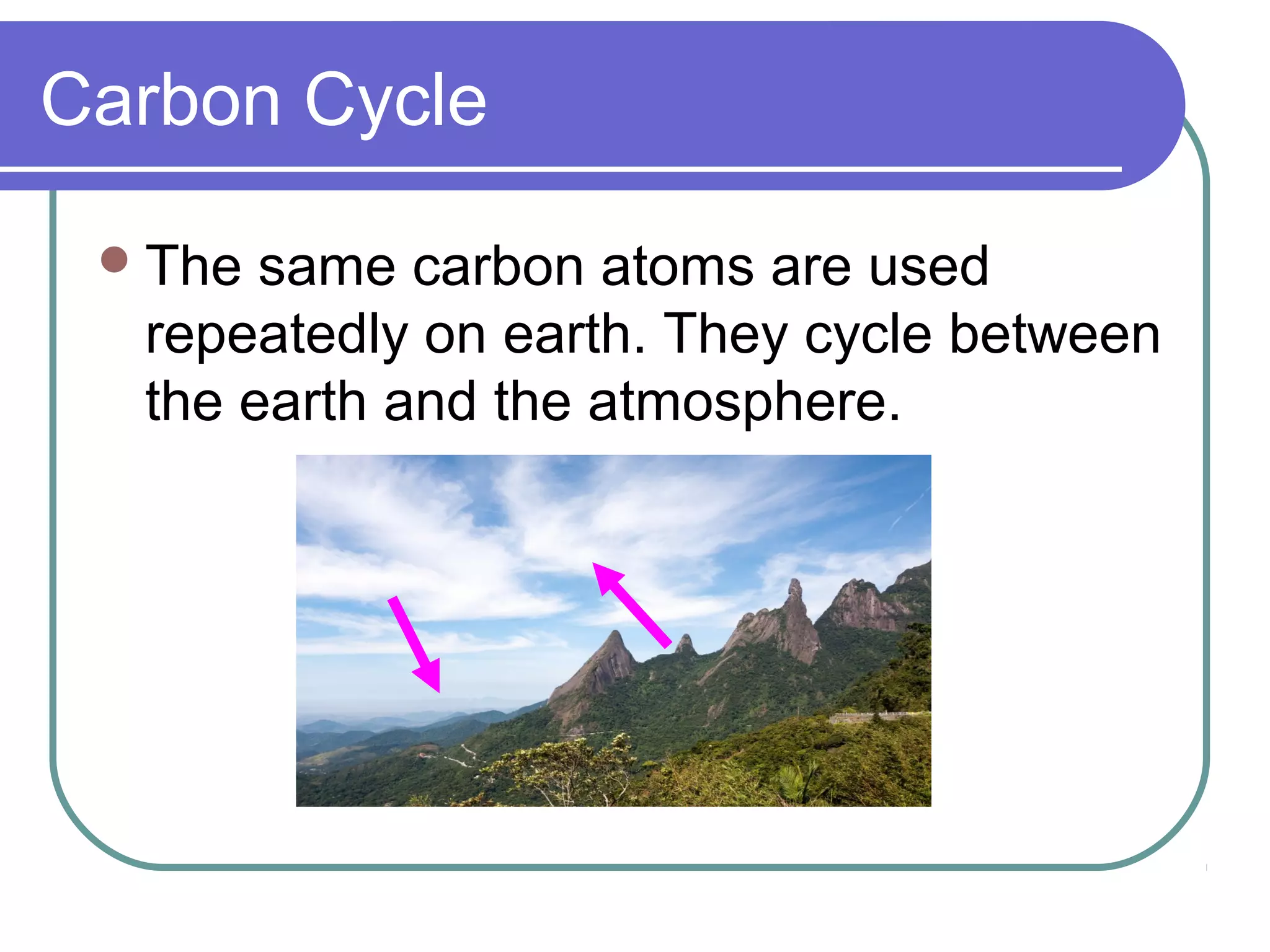
The same carbon atoms are used
repeatedly on earth. They cycle between
the earth and the atmosphere.
Plants Use Carbon Dioxide
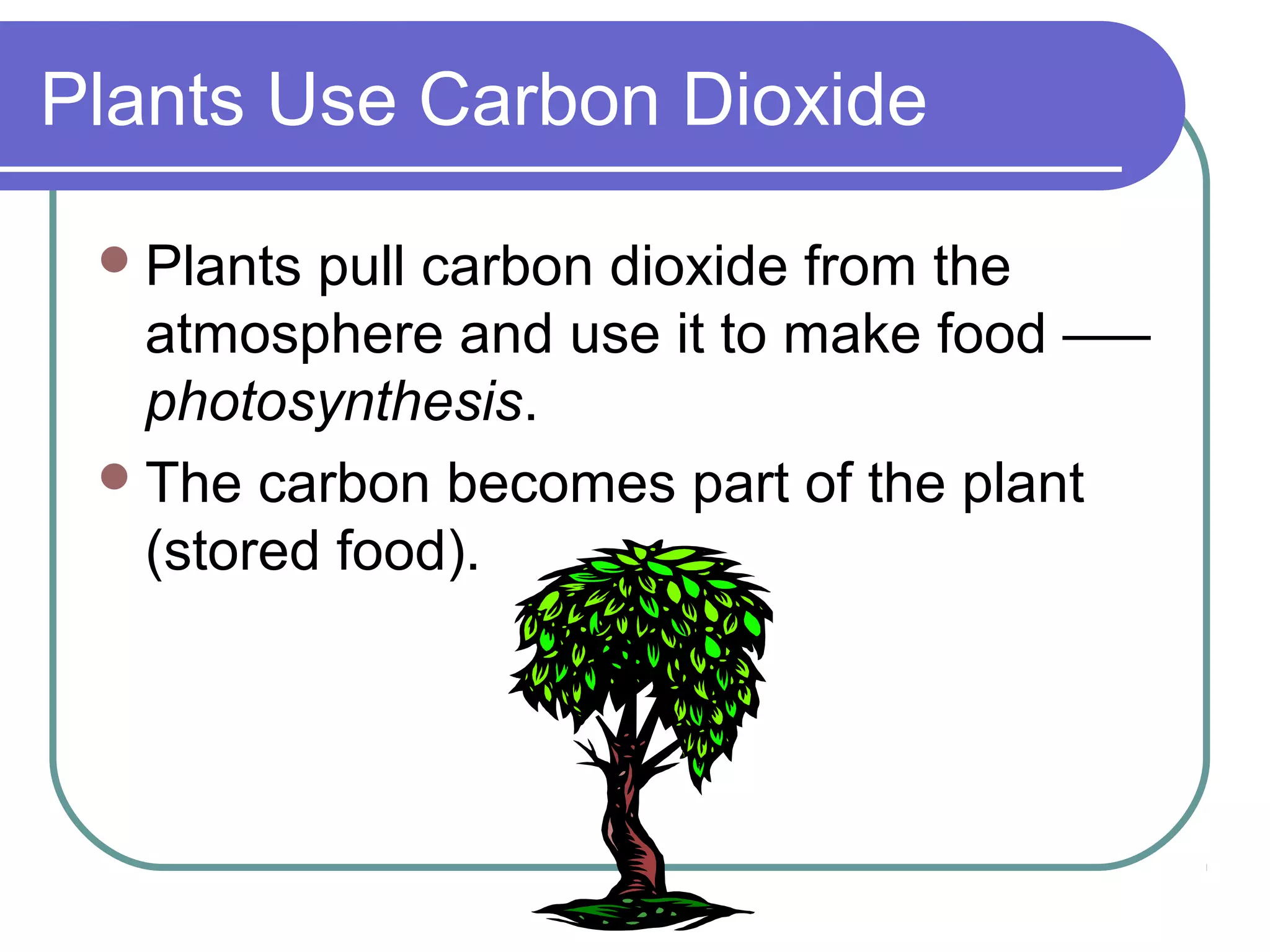
Plants pull carbon dioxide from the
atmosphere and use it to make food –—
photosynthesis.
The carbon becomes part of the plant
(stored food).
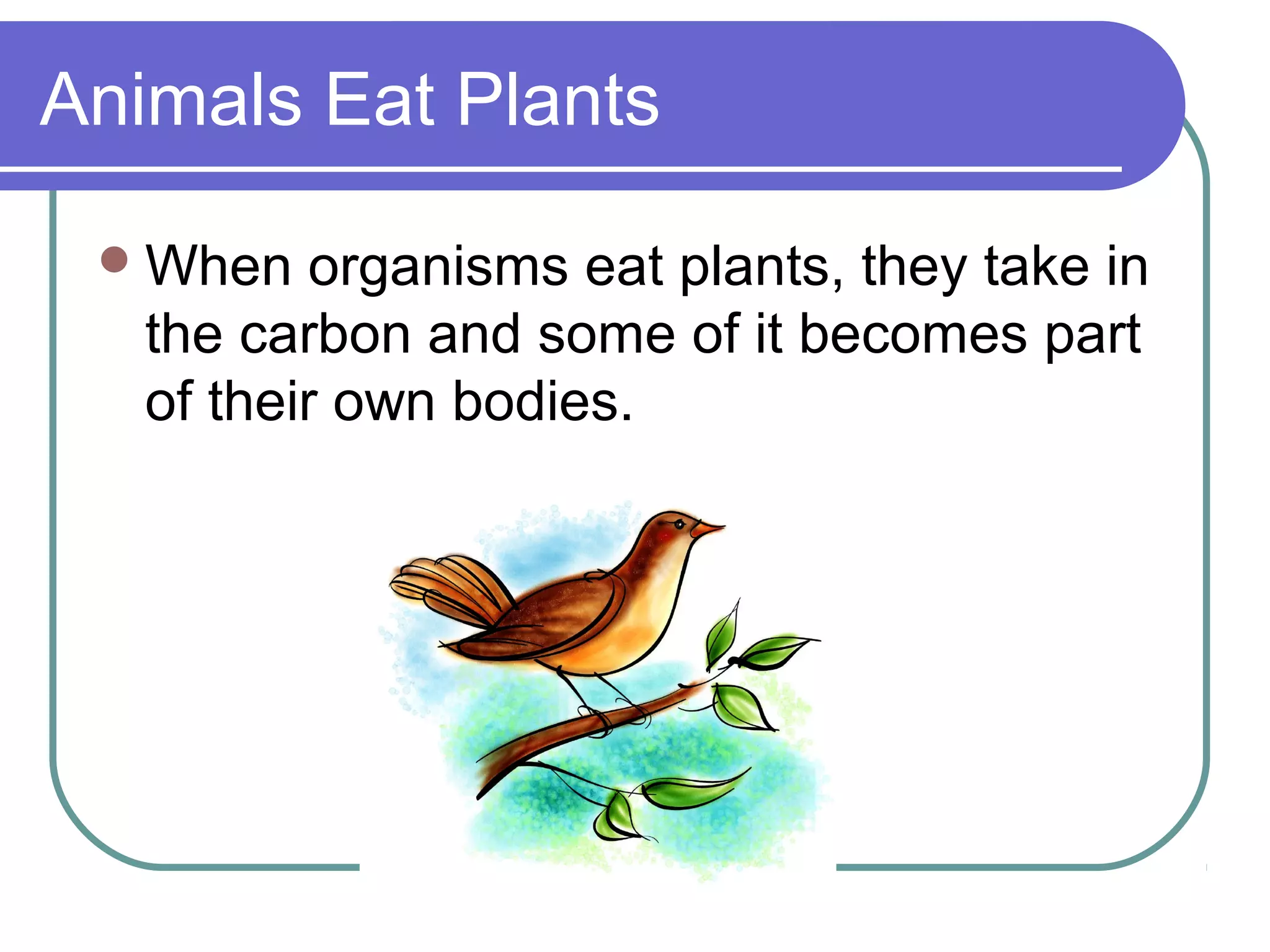
Animals Eat Plants
When organisms eat plants, they take in
the carbon and some of it becomes part
of their own bodies.
Plants and Animal Die
When plants and animals die, most of
their bodies are decomposed and
carbon atoms are returned to the
atmosphere.
Some are not decomposed fully and end
up in deposits underground (oil, coal,
etc.).
Carbon Slowly Returns to Atmosphere
Carbon in rocks and underground
deposits is released very slowly into the
atmosphere.
This process takes many years.
Cycle – Repeats Over and
Over and Over and Over …
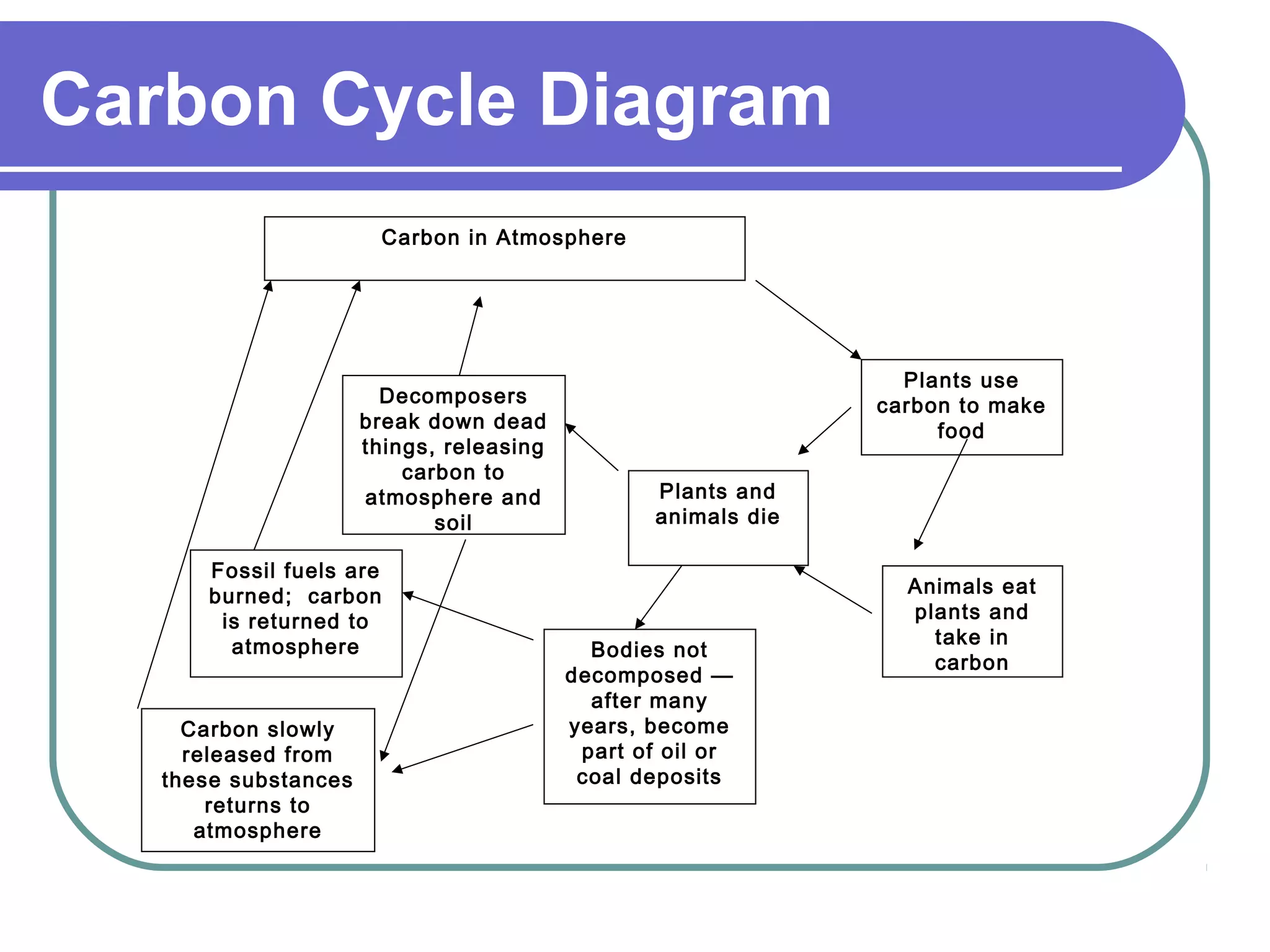
Carbon Cycle Diagram
Carbon in Atmosphere
Plants use
carbon to make
food
Animals eat
plants and
take in
carbon
Plants and
animals die
Decomposers
break down dead
things, releasing
carbon to
atmosphere and
soil
Bodies not
decomposed —
after many
years, become
part of oil or
coal deposits
Fossil fuels are
burned; carbon
is returned to
atmosphere
Carbon slowly
released from
these substances
returns to
atmosphere
Carbon in Oceans
 Additional carbon is stored in the ocean.
 Many animals pull carbon from water to use in
shells, etc.
 Animals die and carbon substances are
deposited at the bottom of the ocean.
 Oceans contain earth’s largest store of carbon.
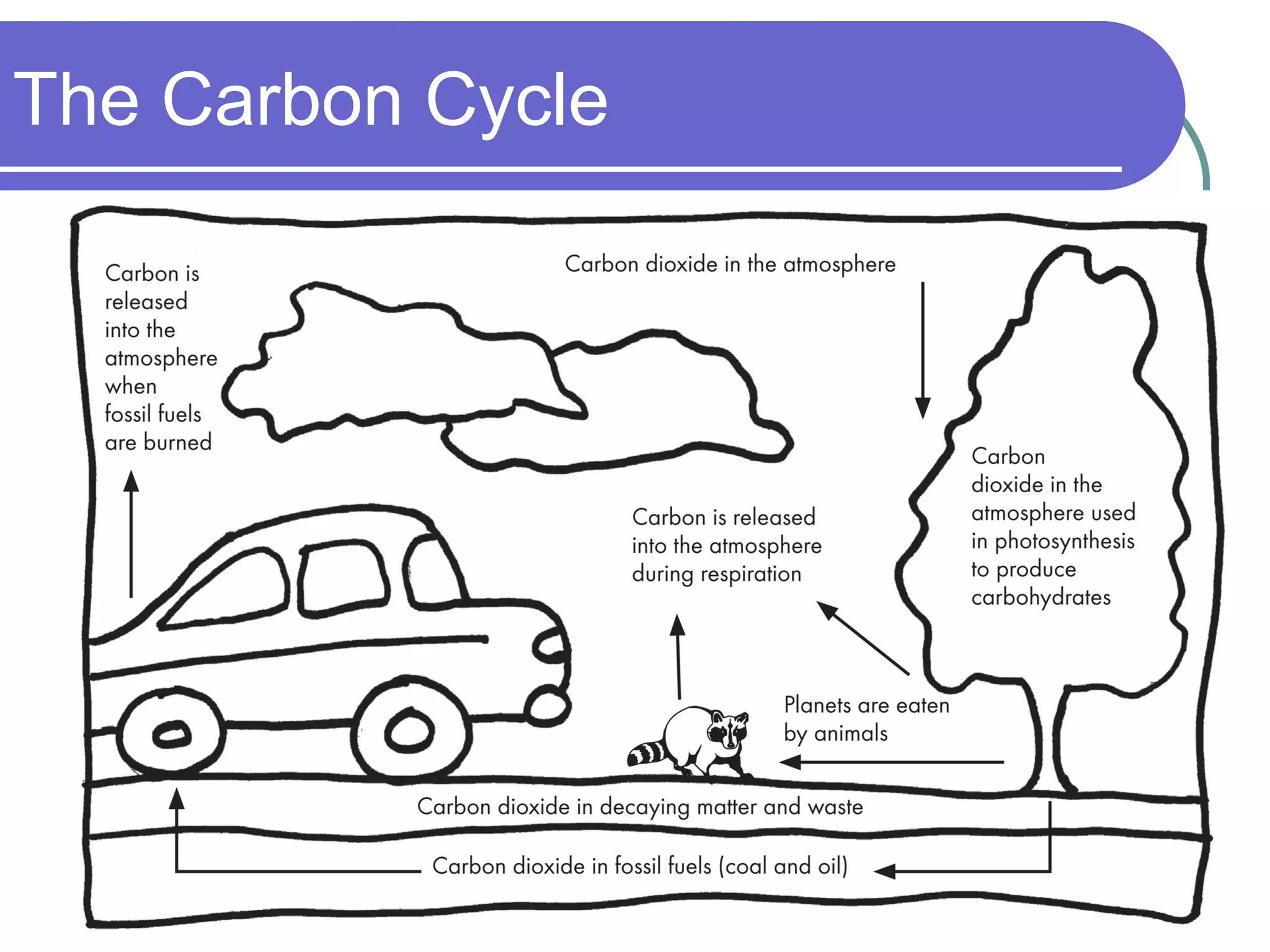
The Carbon Cycle
Human Impact
Fossil fuels release carbon stores very
slowly
Burning anything releases more carbon
into atmosphere — especially fossil fuels
Increased carbon dioxide in atmosphere
increases global warming
Fewer plants mean less CO2 removed
from atmosphere
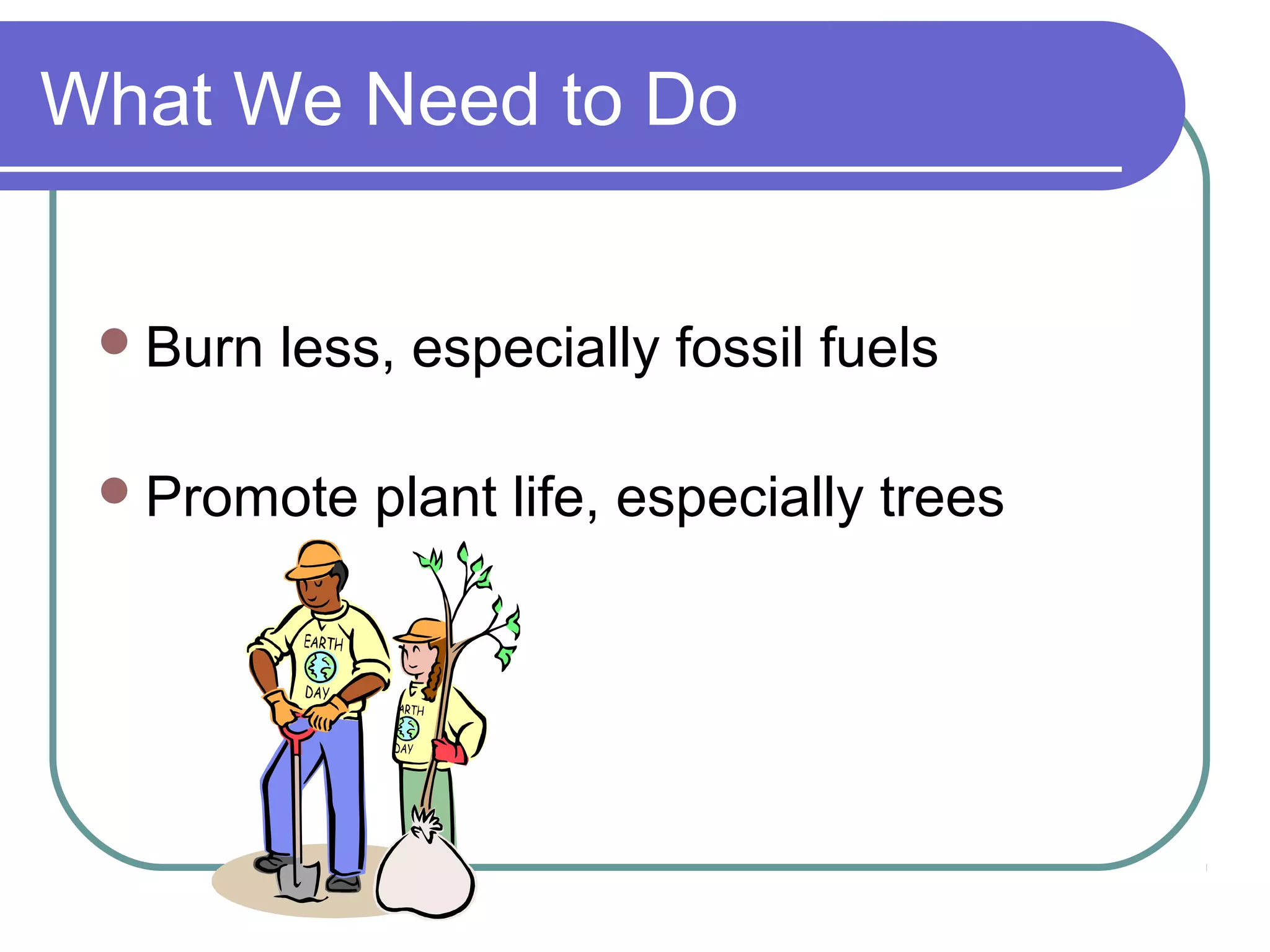
What We Need to Do
Burn less, especially fossil fuels
Promote plant life, especially trees
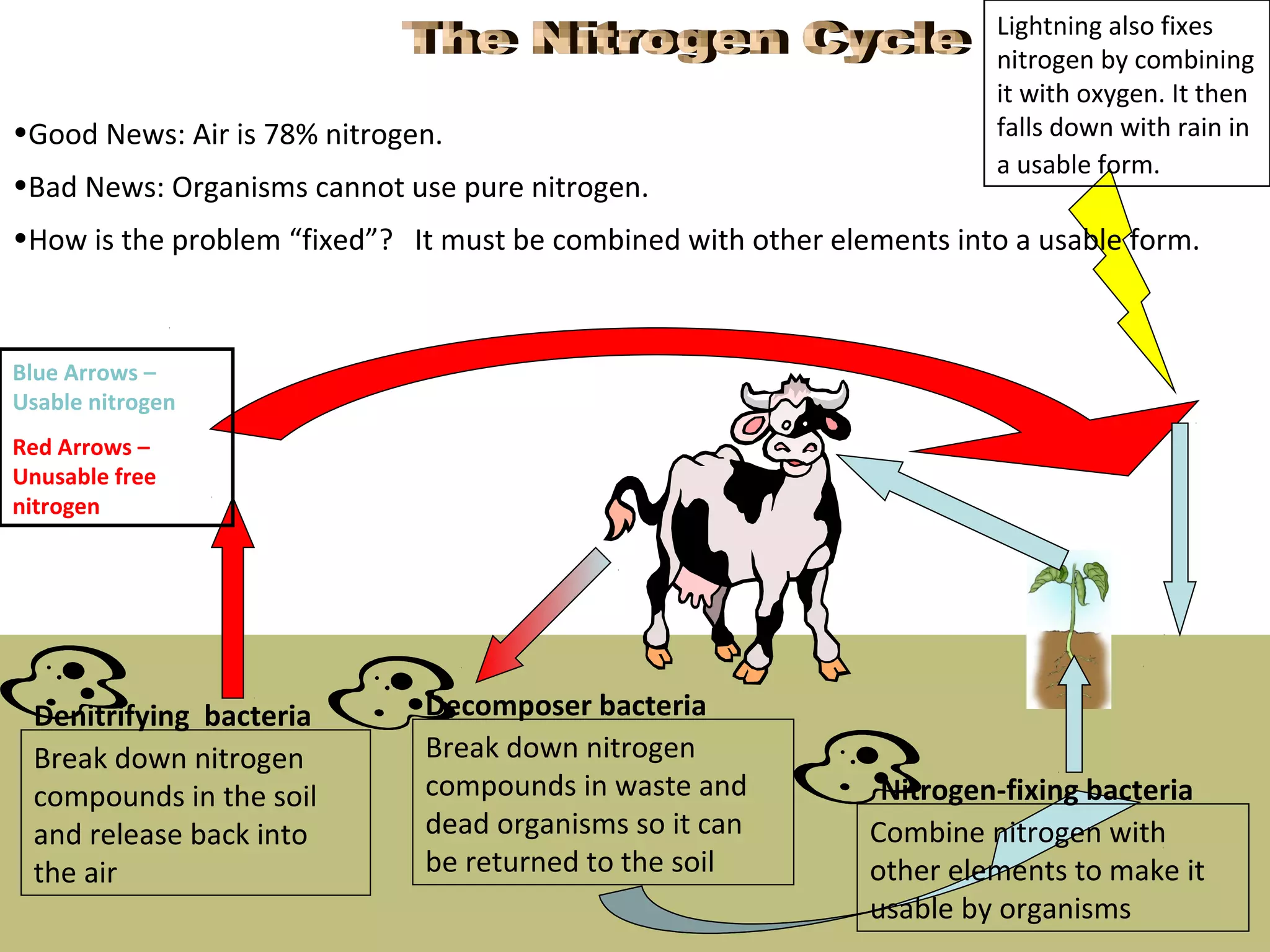
•Good News: Air is 78% nitrogen.
•Bad News: Organisms cannot use pure nitrogen.
•How is the problem “fixed”? It must be combined with other elements into a usable form.
Nitrogen-fixing bacteria
Combine nitrogen with
other elements to make it
usable by organisms
Decomposer bacteria
Break down nitrogen
compounds in waste and
dead organisms so it can
be returned to the soil
Denitrifying bacteria
Break down nitrogen
compounds in the soil
and release back into
the air
Lightning also fixes
nitrogen by combining
it with oxygen. It then
falls down with rain in
a usable form.
Blue Arrows –
Usable nitrogen
Red Arrows –
Unusable free
nitrogen

Carbon cycle

  • 1.
  • 2.
    What Is Carbon? Anelement (C) The basis of life of earth Found in rocks, oceans, atmosphere
  • 3.
    Carbon Cycle The samecarbon atoms are used repeatedly on earth. They cycle between the earth and the atmosphere.
  • 4.
    Plants Use CarbonDioxide Plants pull carbon dioxide from the atmosphere and use it to make food –— photosynthesis. The carbon becomes part of the plant (stored food).
  • 5.
    Animals Eat Plants Whenorganisms eat plants, they take in the carbon and some of it becomes part of their own bodies.
  • 6.
    Plants and AnimalDie When plants and animals die, most of their bodies are decomposed and carbon atoms are returned to the atmosphere. Some are not decomposed fully and end up in deposits underground (oil, coal, etc.).
  • 7.
    Carbon Slowly Returnsto Atmosphere Carbon in rocks and underground deposits is released very slowly into the atmosphere. This process takes many years.
  • 8.
    Cycle – RepeatsOver and Over and Over and Over …
  • 9.
    Carbon Cycle Diagram Carbonin Atmosphere Plants use carbon to make food Animals eat plants and take in carbon Plants and animals die Decomposers break down dead things, releasing carbon to atmosphere and soil Bodies not decomposed — after many years, become part of oil or coal deposits Fossil fuels are burned; carbon is returned to atmosphere Carbon slowly released from these substances returns to atmosphere
  • 10.
    Carbon in Oceans Additional carbon is stored in the ocean.  Many animals pull carbon from water to use in shells, etc.  Animals die and carbon substances are deposited at the bottom of the ocean.  Oceans contain earth’s largest store of carbon.
  • 11.
  • 12.
    Human Impact Fossil fuelsrelease carbon stores very slowly Burning anything releases more carbon into atmosphere — especially fossil fuels Increased carbon dioxide in atmosphere increases global warming Fewer plants mean less CO2 removed from atmosphere
  • 13.
    What We Needto Do Burn less, especially fossil fuels Promote plant life, especially trees
  • 14.
    •Good News: Airis 78% nitrogen. •Bad News: Organisms cannot use pure nitrogen. •How is the problem “fixed”? It must be combined with other elements into a usable form. Nitrogen-fixing bacteria Combine nitrogen with other elements to make it usable by organisms Decomposer bacteria Break down nitrogen compounds in waste and dead organisms so it can be returned to the soil Denitrifying bacteria Break down nitrogen compounds in the soil and release back into the air Lightning also fixes nitrogen by combining it with oxygen. It then falls down with rain in a usable form. Blue Arrows – Usable nitrogen Red Arrows – Unusable free nitrogen