OBJECTIVE:
DESCRIBE THE BONDING OF ETHANE,
ETHENE (ETHYLENE) AND
ETHYNE(ACETYLENE) AND EXPLAIN
THEIR GEOMETRY IN TERMS OF
HYBRIDIZATION AND σ AND 
CARBON-CARBON BONDS.
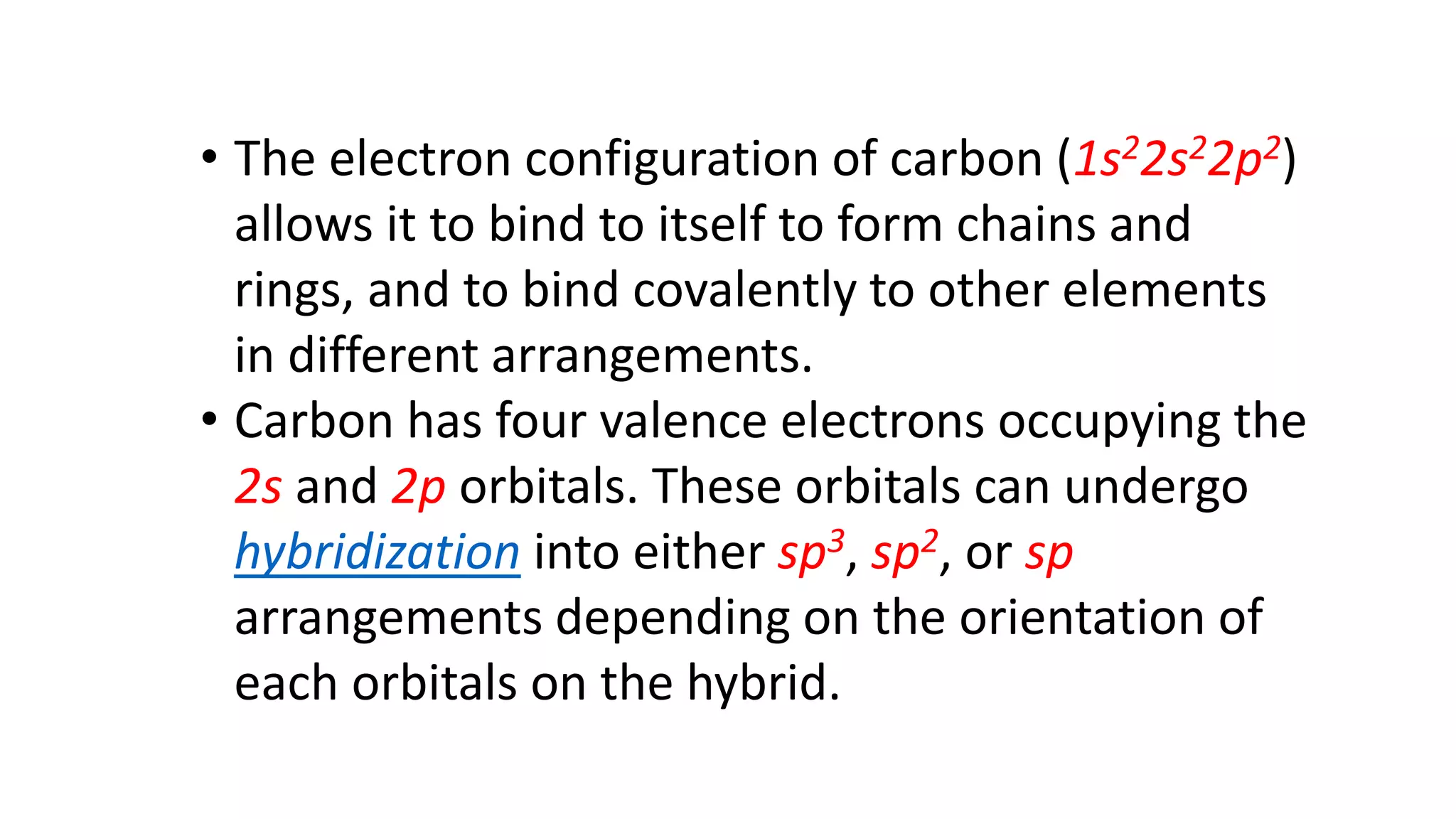
• The electron configuration of carbon (1s22s22p2)
allows it to bind to itself to form chains and
rings, and to bind covalently to other elements
in different arrangements.
• Carbon has four valence electrons occupying the
2s and 2p orbitals. These orbitals can undergo
hybridization into either sp3, sp2, or sp
arrangements depending on the orientation of
each orbitals on the hybrid.
What is hybridization?
Hybridisation (or hybridization) is the
concept of mixing (with different
energies, shapes, etc., than the
component atomic orbitals) suitable for
the pairing of electron to form chemical
bond is valence bond theory.
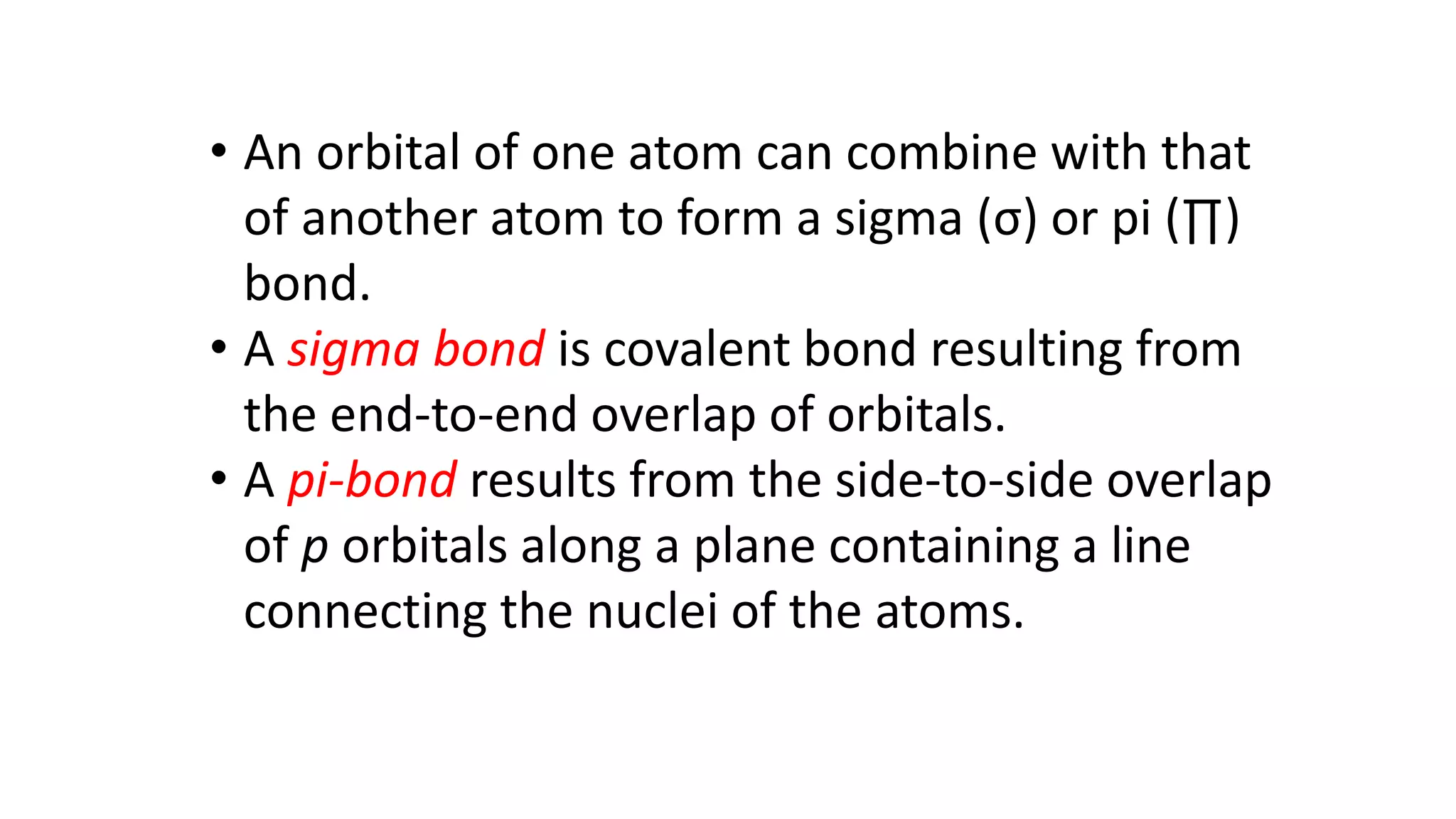
• An orbital of one atom can combine with that
of another atom to form a sigma (σ) or pi (∏)
bond.
• A sigma bond is covalent bond resulting from
the end-to-end overlap of orbitals.
• A pi-bond results from the side-to-side overlap
of p orbitals along a plane containing a line
connecting the nuclei of the atoms.
Sigma bond forms from the end-to-end overlap of s-s,
p-p, and s-p orbitals.
s orbital s orbital s-s overlap
+
+
p orbital p orbital p-p overlap
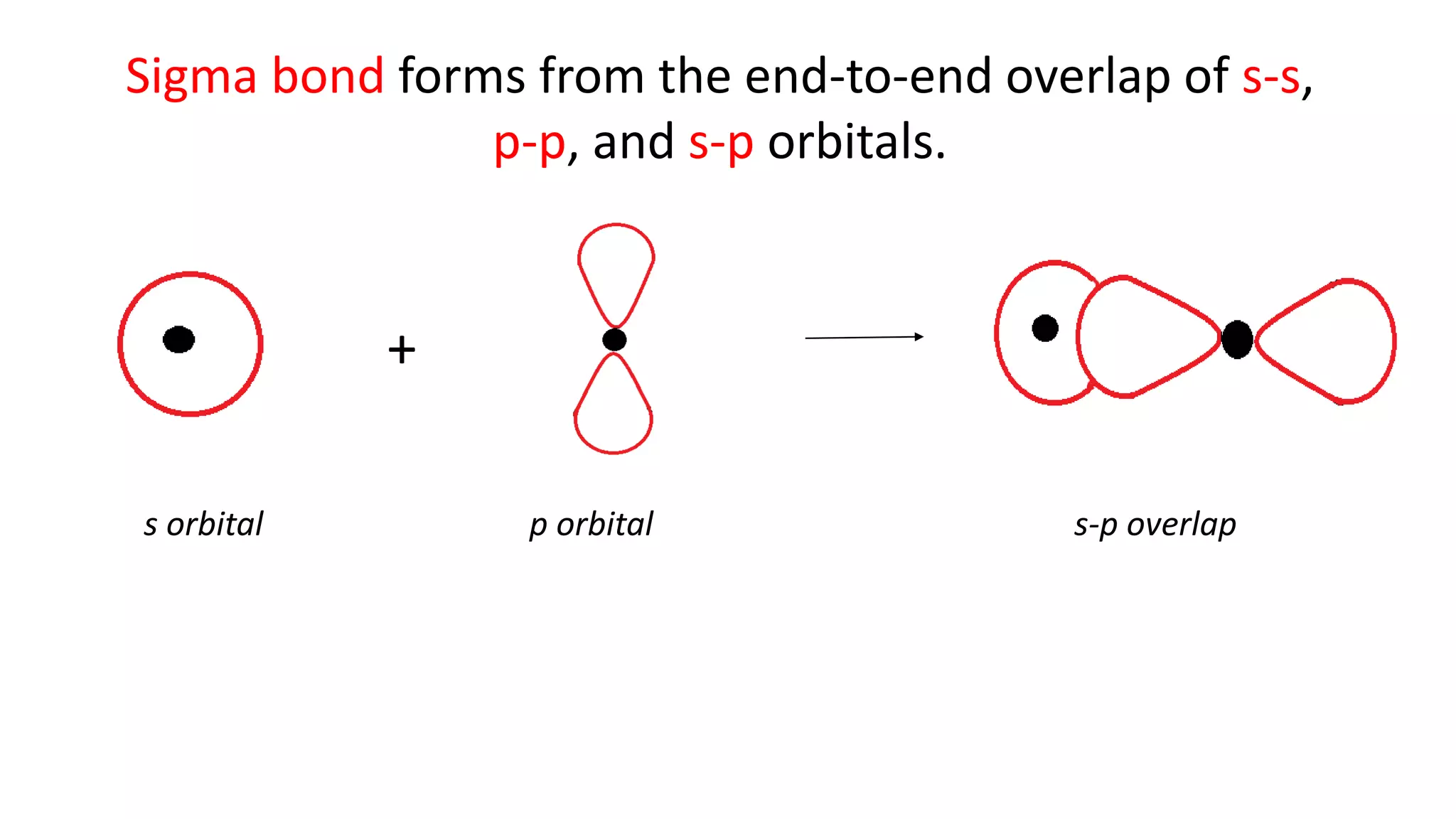
Sigma bond forms from the end-to-end overlap of s-s,
p-p, and s-p orbitals.
s orbital
+
p orbital s-p overlap
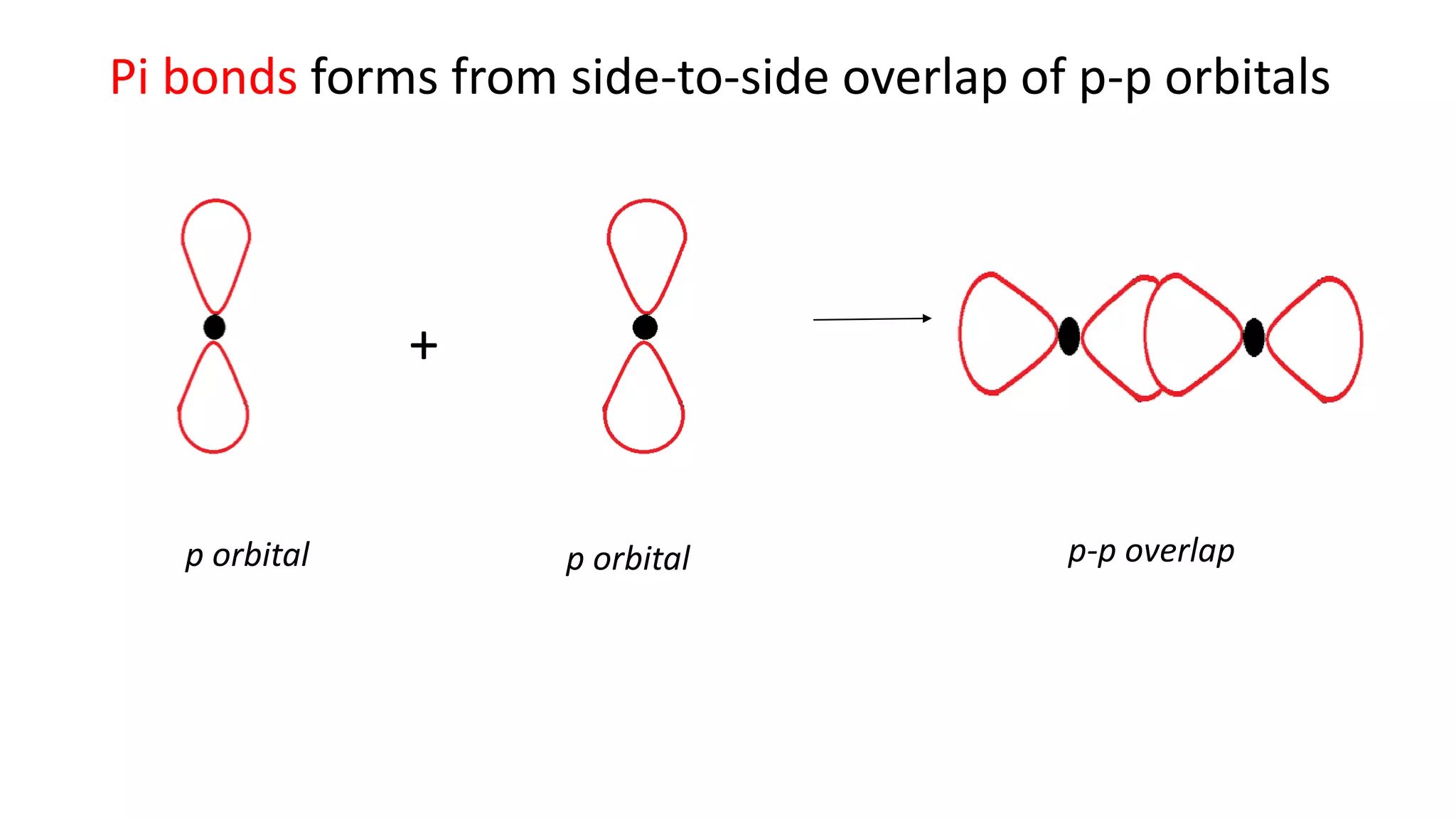
Pi bonds forms from side-to-side overlap of p-p orbitals
+
p orbital p orbital p-p overlap
Bond formation from hybridization
• Single bond
- Sigma bond
• Double bond
- Sigma bond + pi bond
• Triple bond
- Sigma bond + pi bond + pi bond
end-to-end
side-to-side
The valence electrons of
carbon can form both types of
bonds, which results in the
existence of a single, double,
or triple covalent bonds.
In carbon atom, four sp3 hybrid
orbitals arise from a combination
of one s orbital with three p
orbital to form four single bonds
with a tetrahedral geometry such
as the case of ethane.
sp3 C
ethane
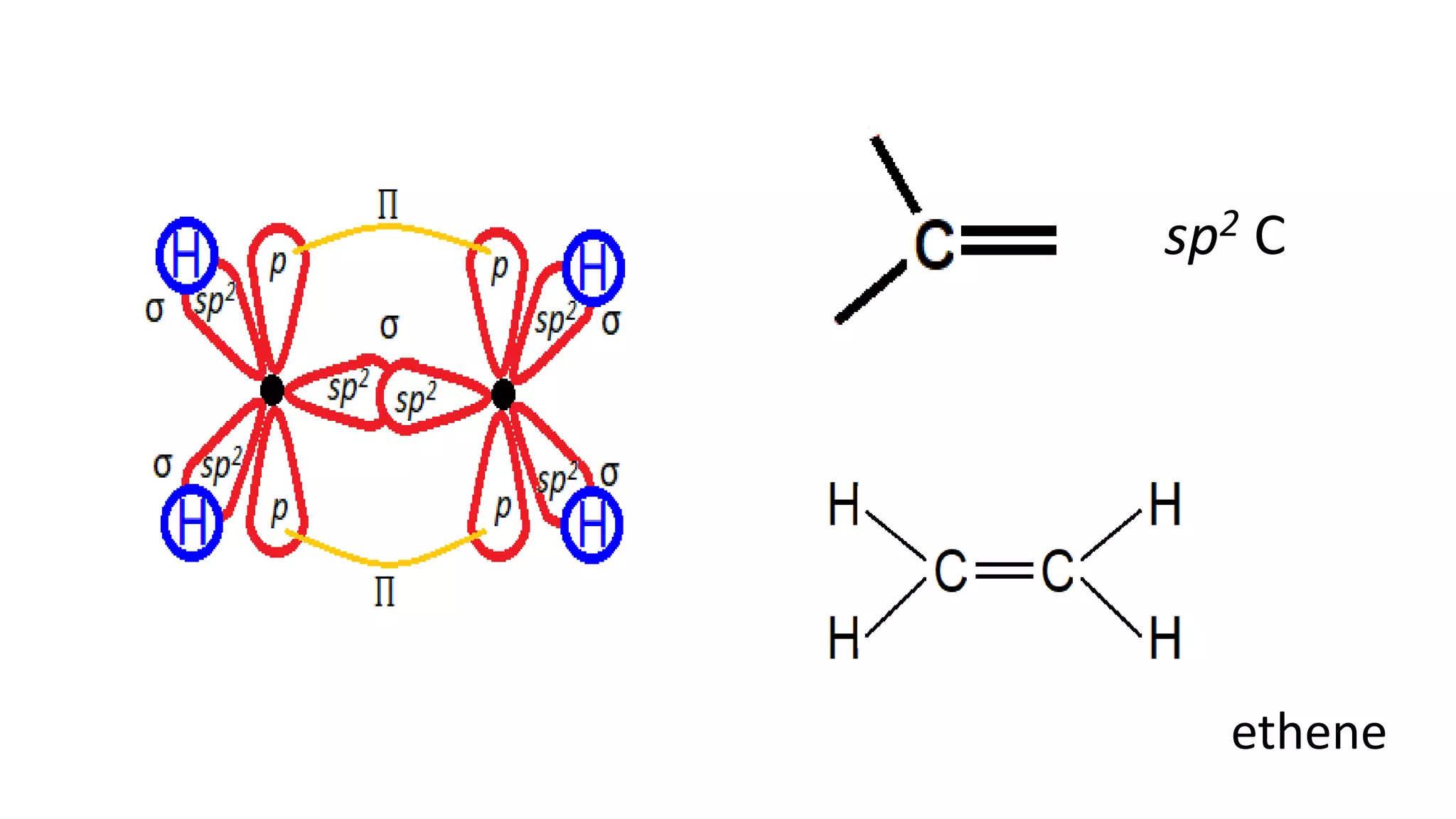
Another carbon hybridization can
result in three sp2 hybrid orbitals and
one unhybridized 2p orbital forming
one double bond and two single
bonds with a trigonal planar
geometry. This is observed for the
bonding in ethane.
sp2 C
ethene
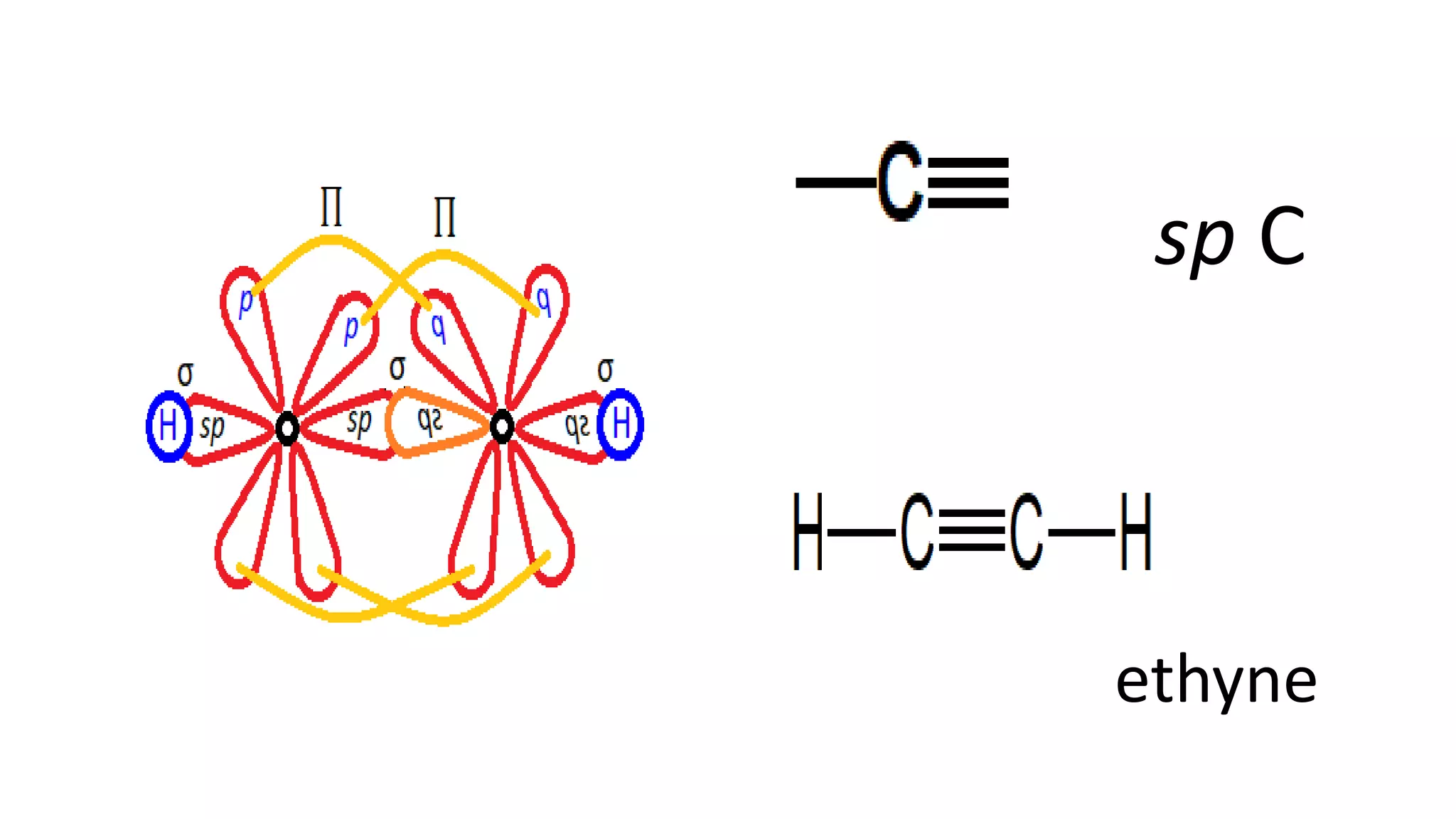
The third hybridization scheme results
in two sp hybrid orbitals and two
unhybridization 2p orbitals that can
form one single bond and one triple
bond with a linear geometry. This
explains the triple covalent bond
between the carbon atoms of ethyne.
sp C
ethyne

Carbon Bonds

  • 1.
    OBJECTIVE: DESCRIBE THE BONDINGOF ETHANE, ETHENE (ETHYLENE) AND ETHYNE(ACETYLENE) AND EXPLAIN THEIR GEOMETRY IN TERMS OF HYBRIDIZATION AND σ AND ¶ CARBON-CARBON BONDS.
  • 2.
    • The electronconfiguration of carbon (1s22s22p2) allows it to bind to itself to form chains and rings, and to bind covalently to other elements in different arrangements. • Carbon has four valence electrons occupying the 2s and 2p orbitals. These orbitals can undergo hybridization into either sp3, sp2, or sp arrangements depending on the orientation of each orbitals on the hybrid.
  • 3.
    What is hybridization? Hybridisation(or hybridization) is the concept of mixing (with different energies, shapes, etc., than the component atomic orbitals) suitable for the pairing of electron to form chemical bond is valence bond theory.
  • 4.
    • An orbitalof one atom can combine with that of another atom to form a sigma (σ) or pi (∏) bond. • A sigma bond is covalent bond resulting from the end-to-end overlap of orbitals. • A pi-bond results from the side-to-side overlap of p orbitals along a plane containing a line connecting the nuclei of the atoms.
  • 5.
    Sigma bond formsfrom the end-to-end overlap of s-s, p-p, and s-p orbitals. s orbital s orbital s-s overlap + + p orbital p orbital p-p overlap
  • 6.
    Sigma bond formsfrom the end-to-end overlap of s-s, p-p, and s-p orbitals. s orbital + p orbital s-p overlap
  • 7.
    Pi bonds formsfrom side-to-side overlap of p-p orbitals + p orbital p orbital p-p overlap
  • 8.
    Bond formation fromhybridization • Single bond - Sigma bond • Double bond - Sigma bond + pi bond • Triple bond - Sigma bond + pi bond + pi bond end-to-end side-to-side
  • 9.
    The valence electronsof carbon can form both types of bonds, which results in the existence of a single, double, or triple covalent bonds.
  • 10.
    In carbon atom,four sp3 hybrid orbitals arise from a combination of one s orbital with three p orbital to form four single bonds with a tetrahedral geometry such as the case of ethane.
  • 12.
  • 13.
    Another carbon hybridizationcan result in three sp2 hybrid orbitals and one unhybridized 2p orbital forming one double bond and two single bonds with a trigonal planar geometry. This is observed for the bonding in ethane.
  • 15.
  • 16.
    The third hybridizationscheme results in two sp hybrid orbitals and two unhybridization 2p orbitals that can form one single bond and one triple bond with a linear geometry. This explains the triple covalent bond between the carbon atoms of ethyne.
  • 18.