IB Chemistry Power Points

                                    Topic 14 (AHL)
                                         Bonding
www.pedagogics.ca


                         LESSON
                    Hybridization
                     (video tutorial links included)
Recall : methane, CH4 – tetrahedral
shape (4 equal covalent bonds)


                              Carbon has an electron
                              arrangement 1s22s22p2

                              There is a contradiction
                              here . . . . . .
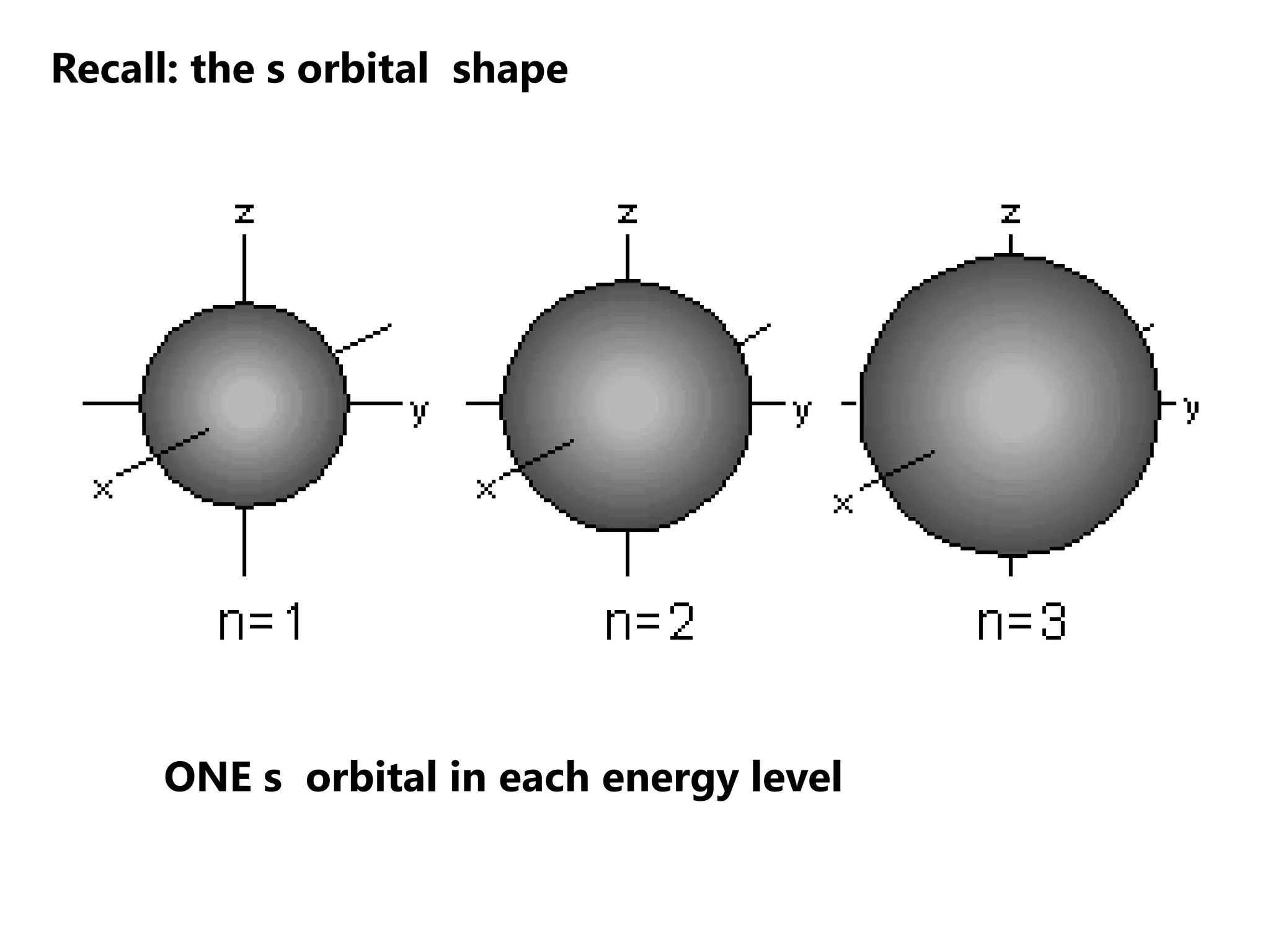
Recall: the s orbital shape


     ONE s orbital in each energy level
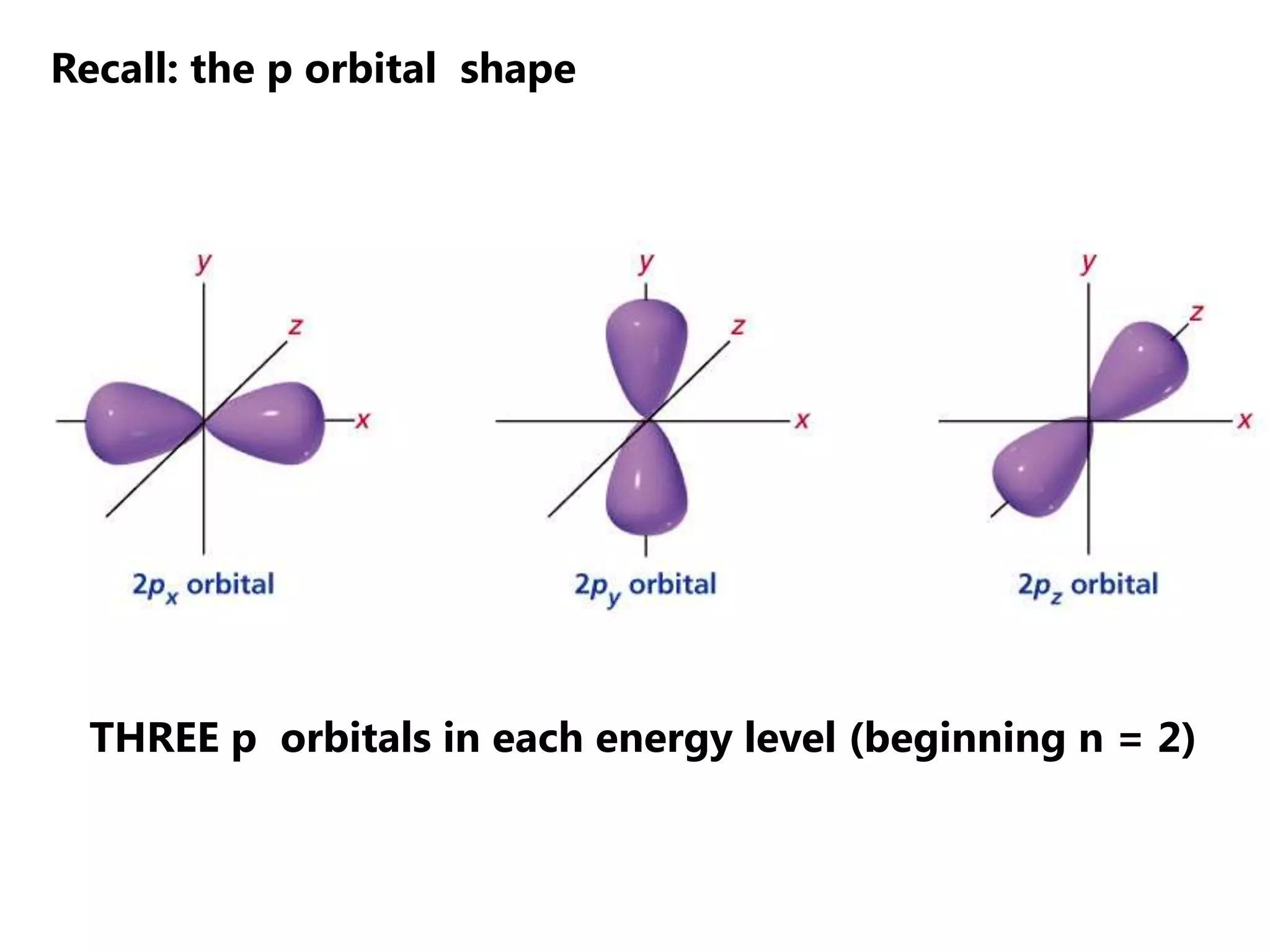
Recall: the p orbital shape


  THREE p orbitals in each energy level (beginning n = 2)
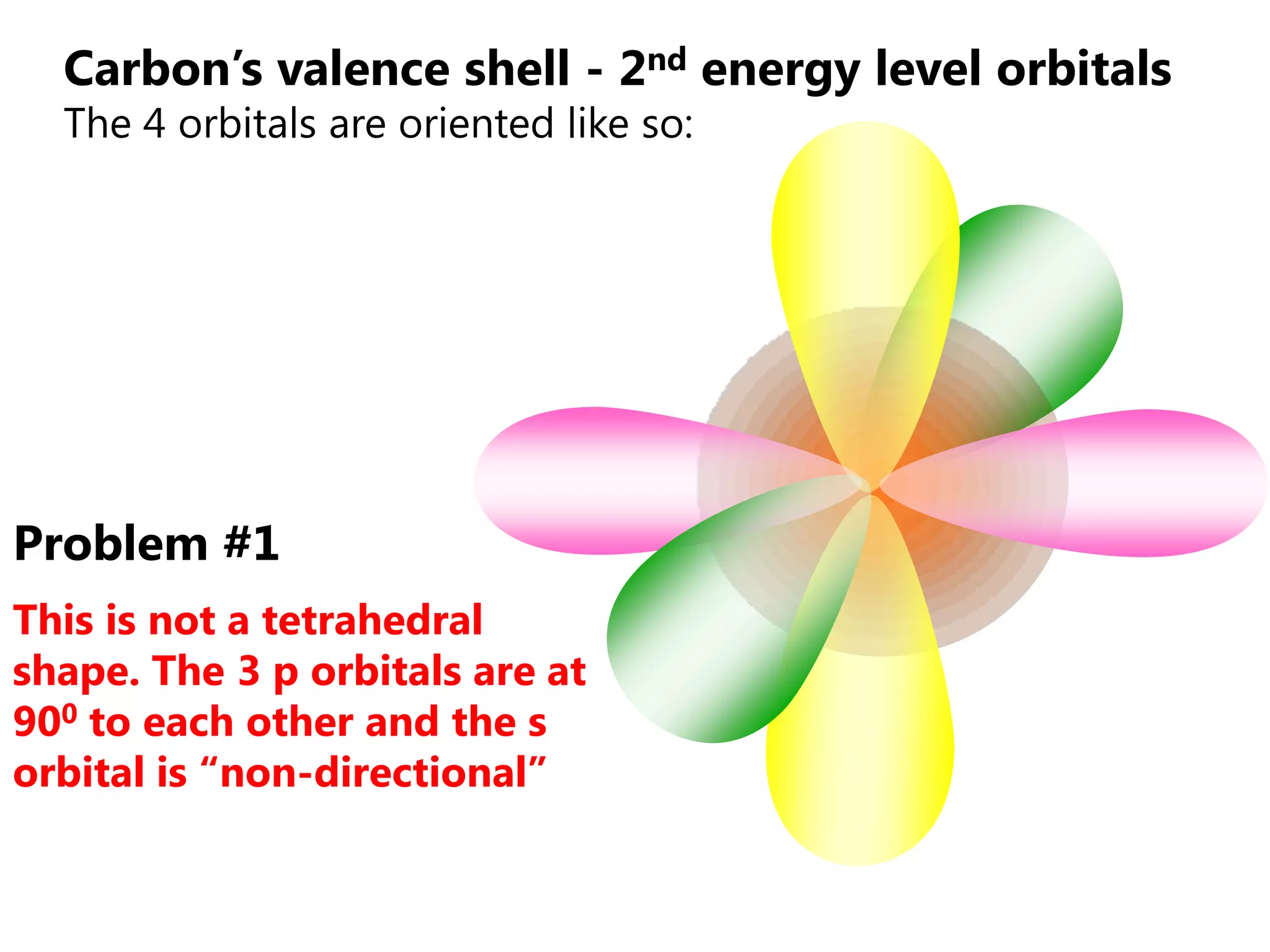
Carbon’s valence shell - 2nd energy level orbitals
  The 4 orbitals are oriented like so:


Problem #1
This is not a tetrahedral
shape. The 3 p orbitals are at
900 to each other and the s
orbital is “non-directional”
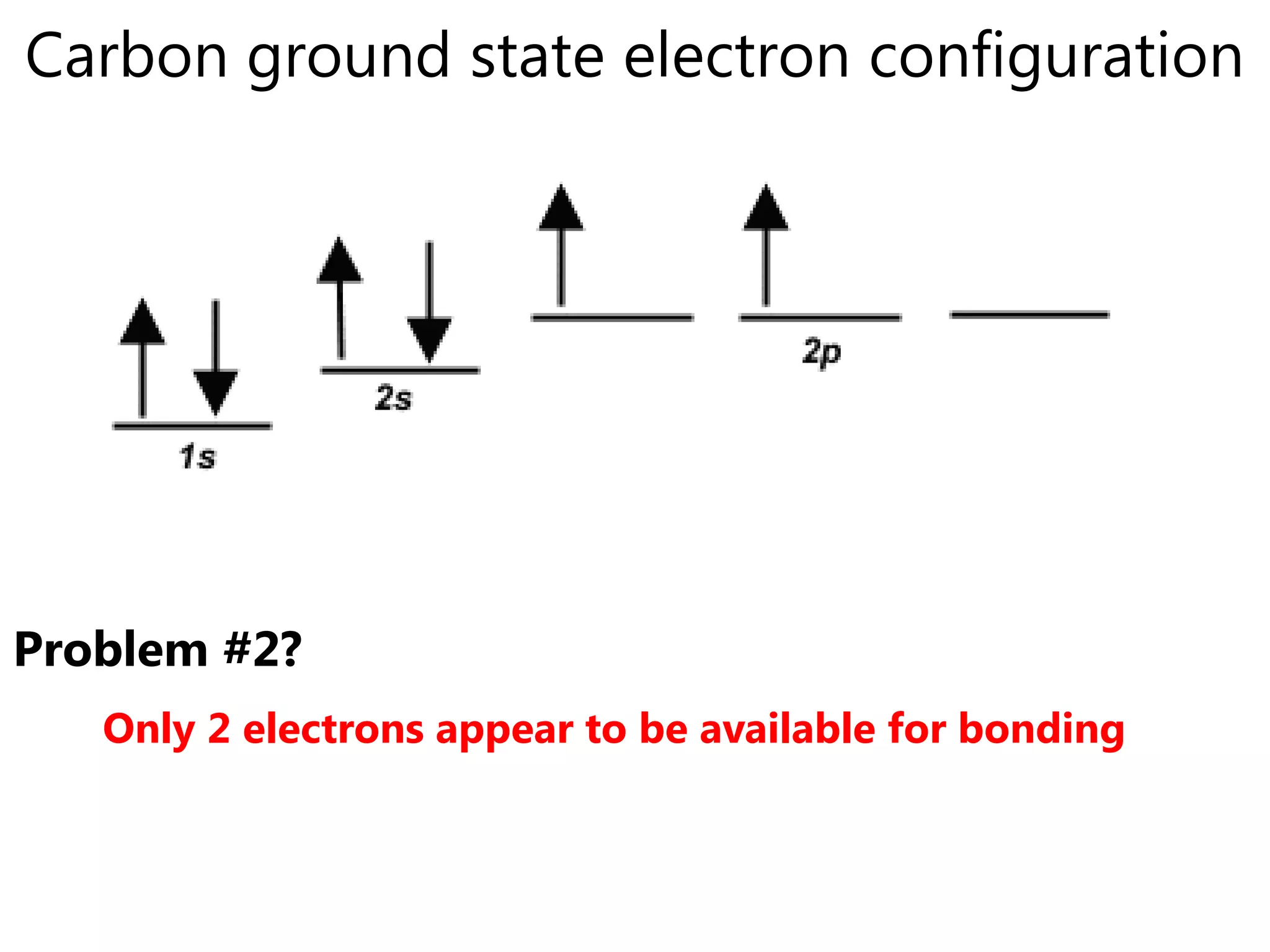
Carbon ground state electron configuration
   What is the expected orbital notation of carbon
   in its ground state?


Problem #2?
   Only 2 electrons appear to be available for bonding
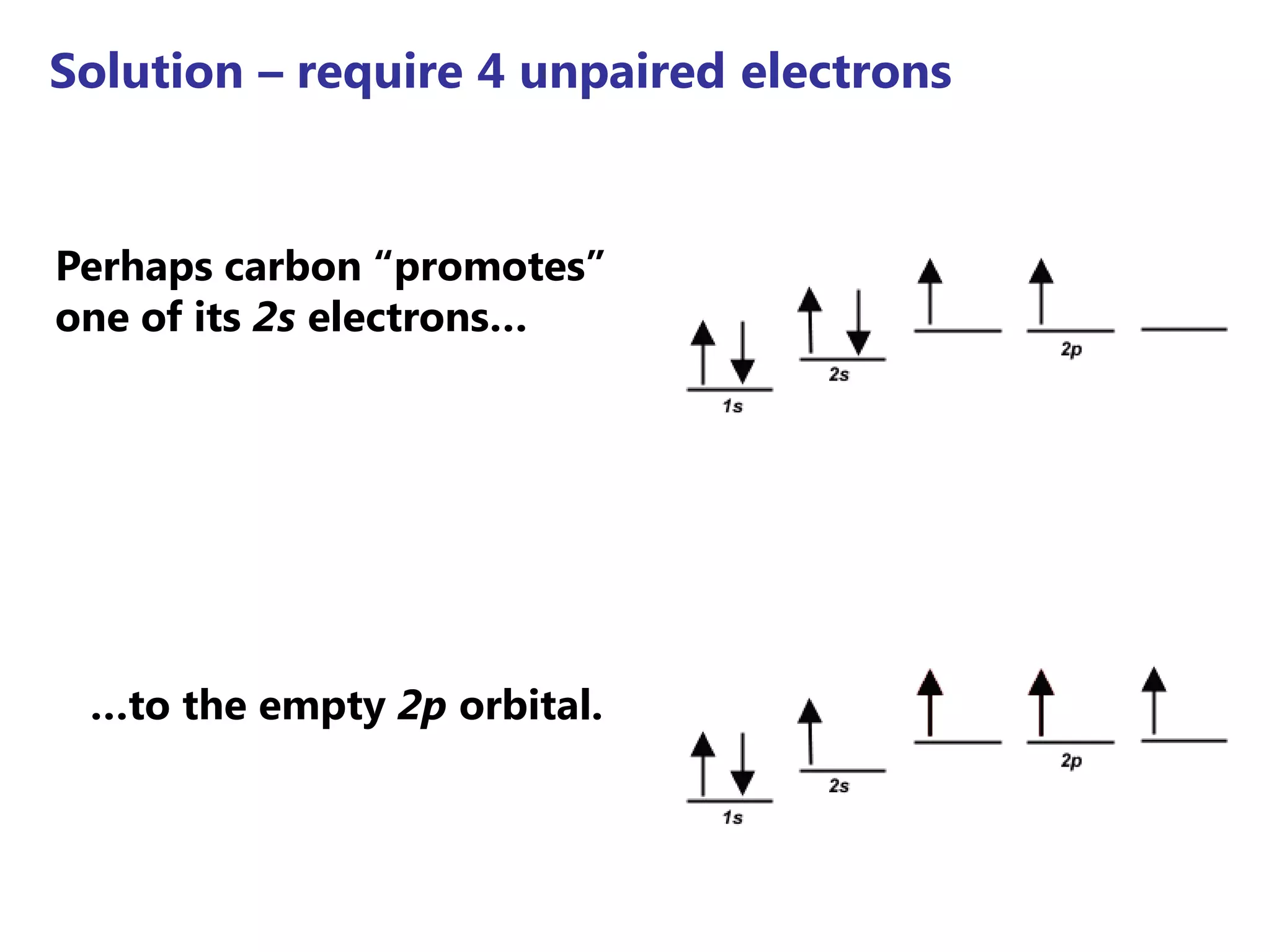
Solution – require 4 unpaired electrons


Perhaps carbon “promotes”
one of its 2s electrons…


 …to the empty 2p orbital.
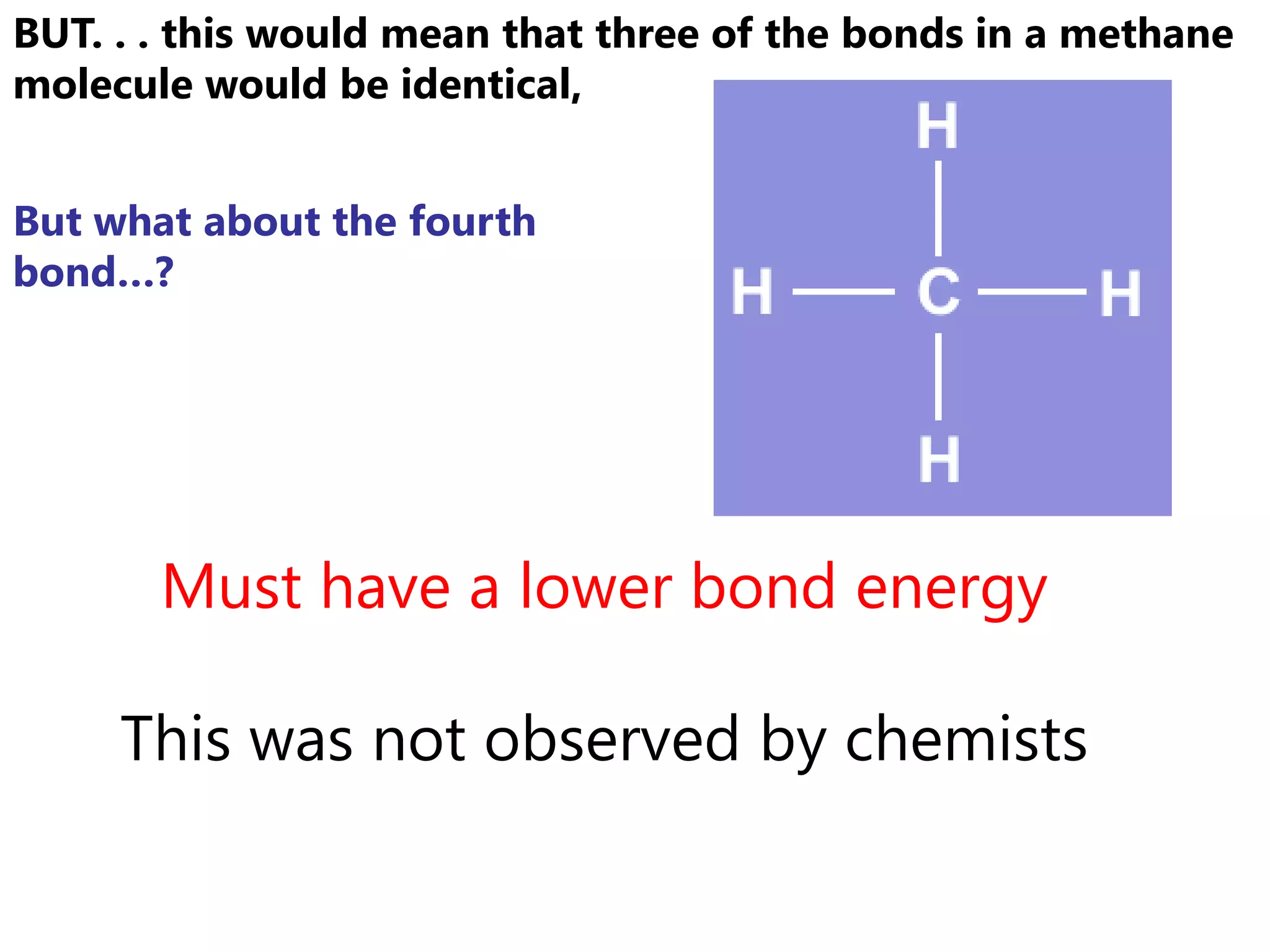
BUT. . . this would mean that three of the bonds in a methane
molecule would be identical,


But what about the fourth
bond…?


       Must have a lower bond energy

     This was not observed by chemists
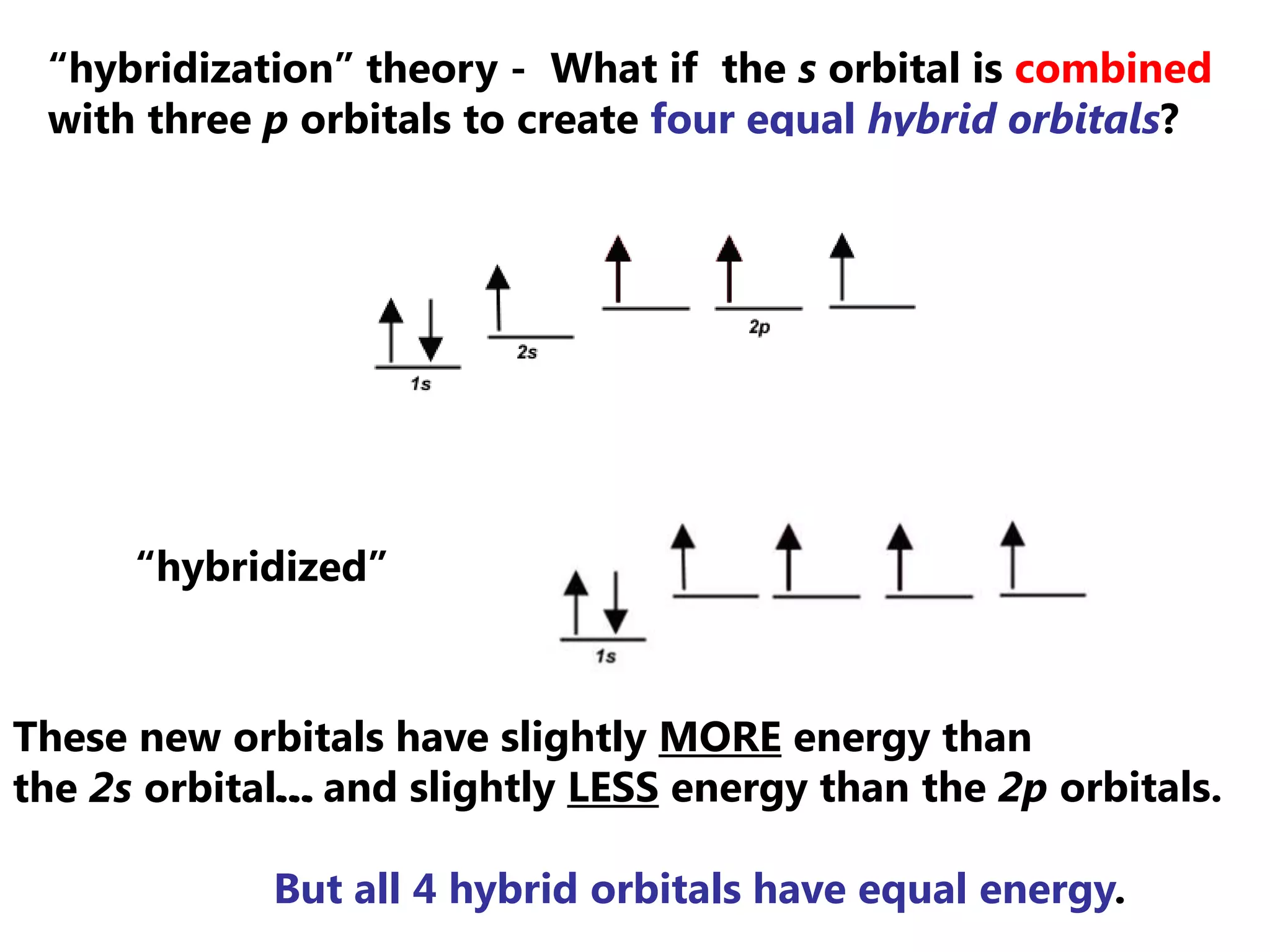
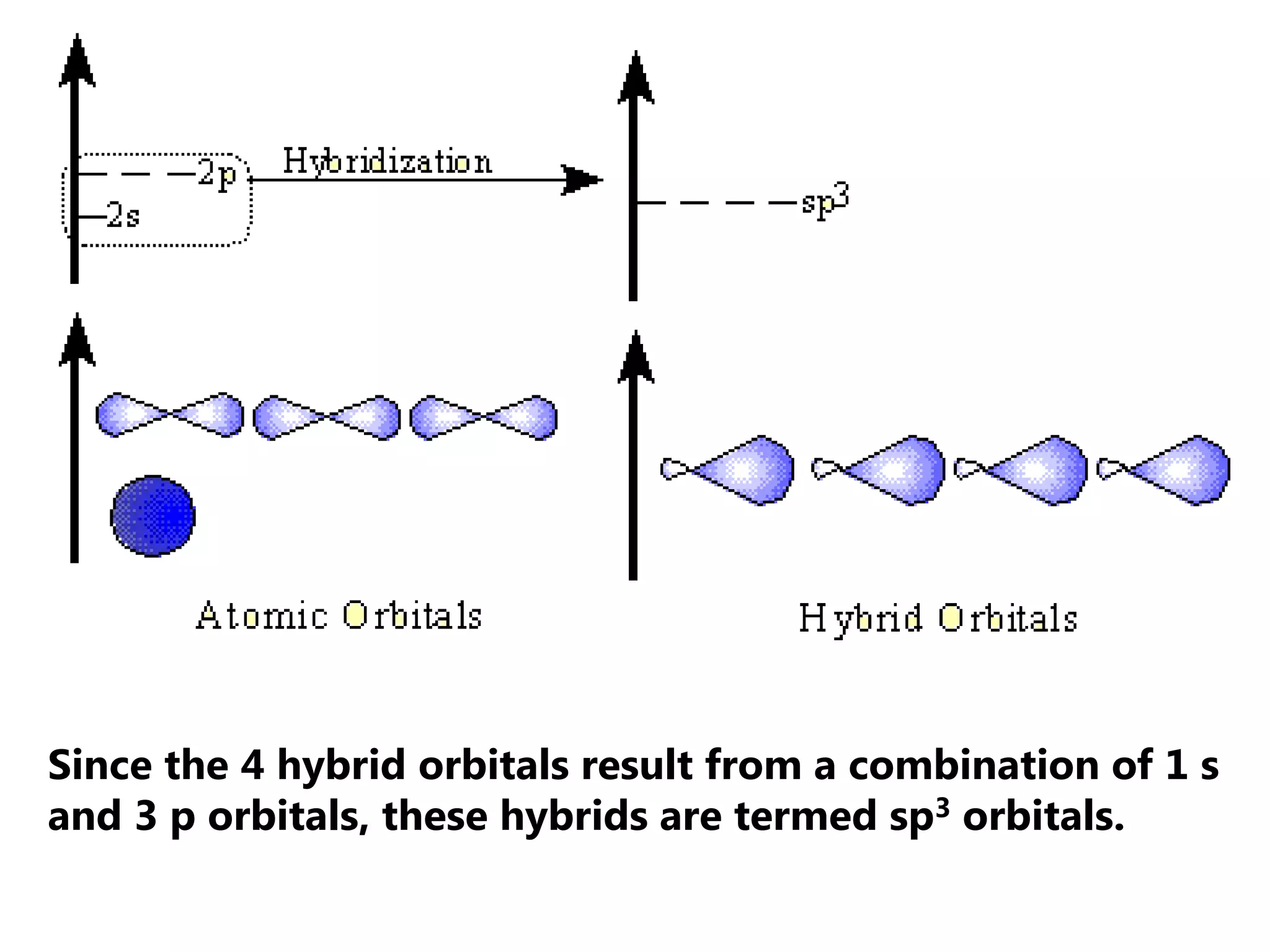
“hybridization” theory - What if the s orbital is combined
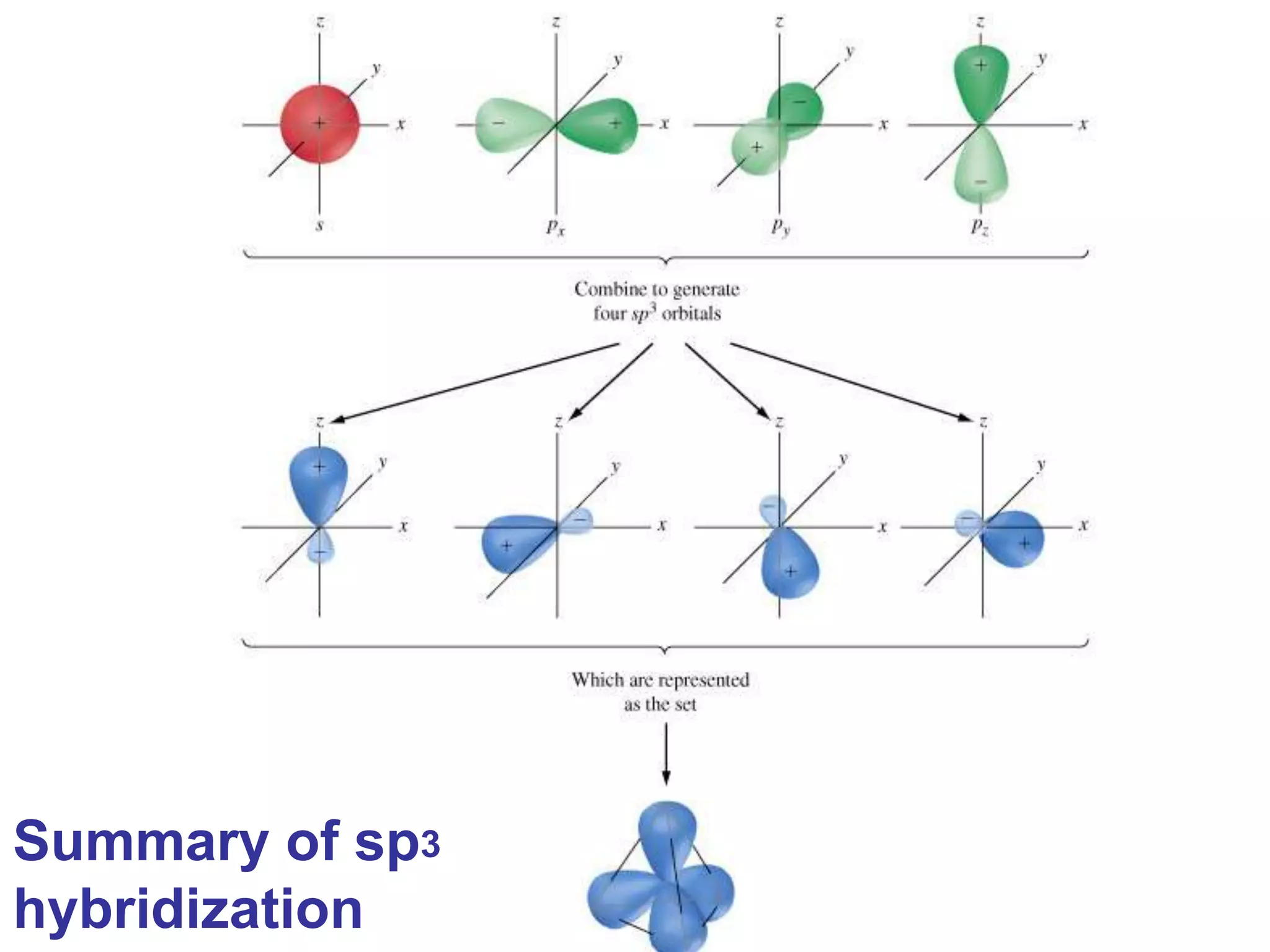
 with three p orbitals to create four equal hybrid orbitals?


      “hybridized”


These new orbitals have slightly MORE energy than
the 2s orbital… and slightly LESS energy than the 2p orbitals.
              …

             But all 4 hybrid orbitals have equal energy.
Since the 4 hybrid orbitals result from a combination of 1 s
and 3 p orbitals, these hybrids are termed sp3 orbitals.
3    3        3   3
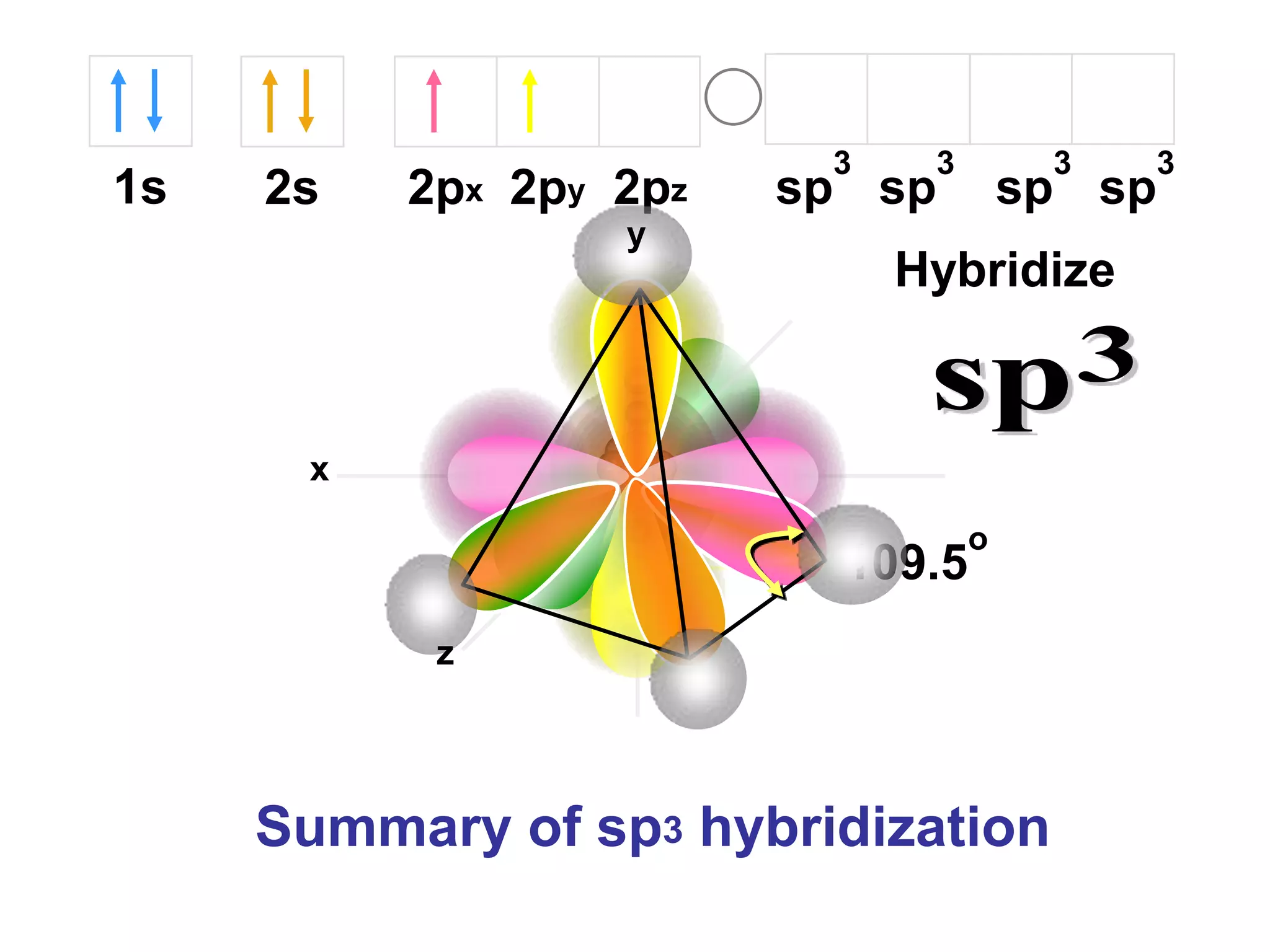
1s   2s   2px 2py 2pz   sp sp         sp sp
                  y
                             Hybridize


      x
                                  o
                          109.5
           z


     Summary of sp3 hybridization
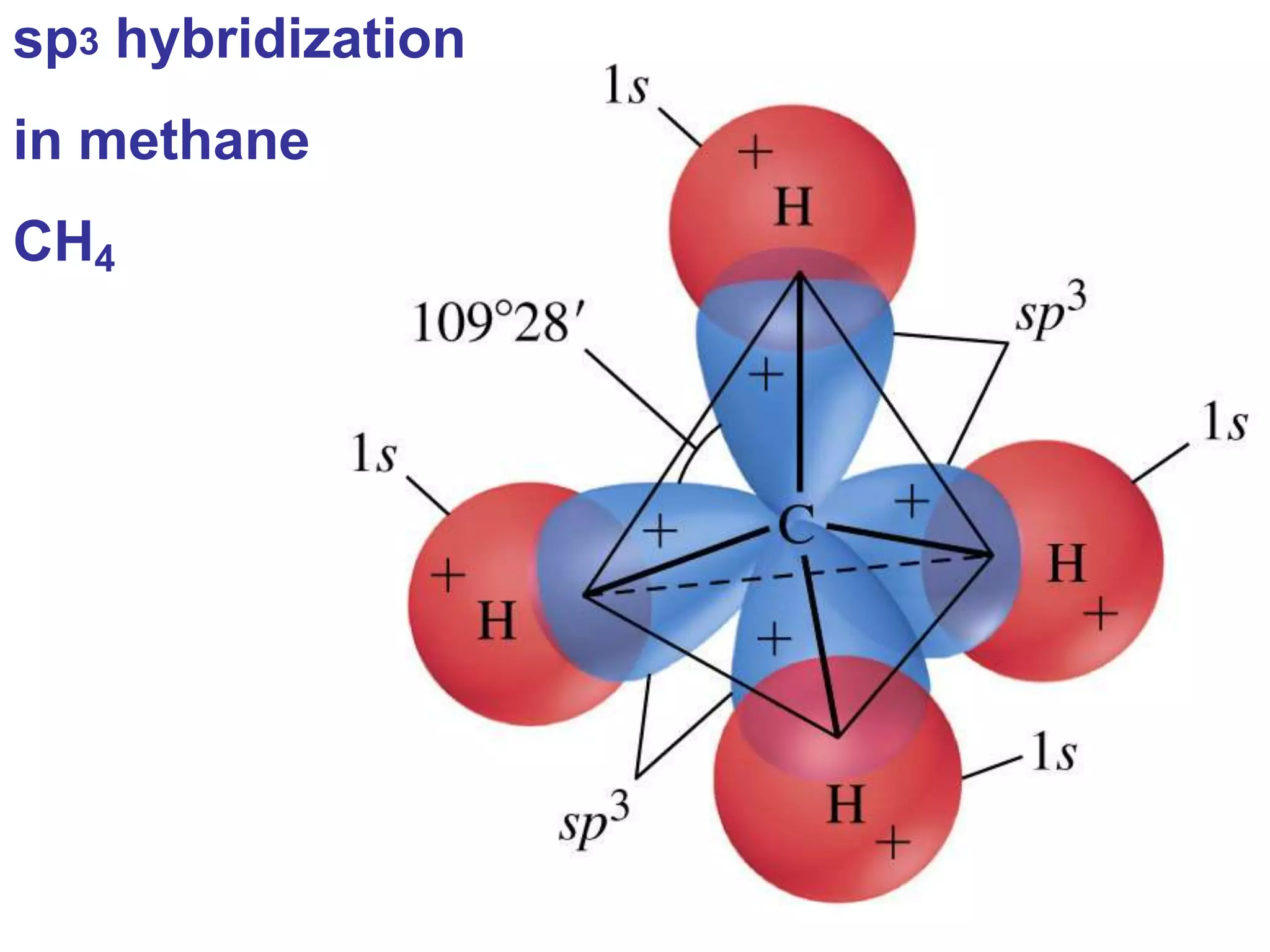
sp3 hybridization
in methane
CH4
Summary of sp3
hybridization
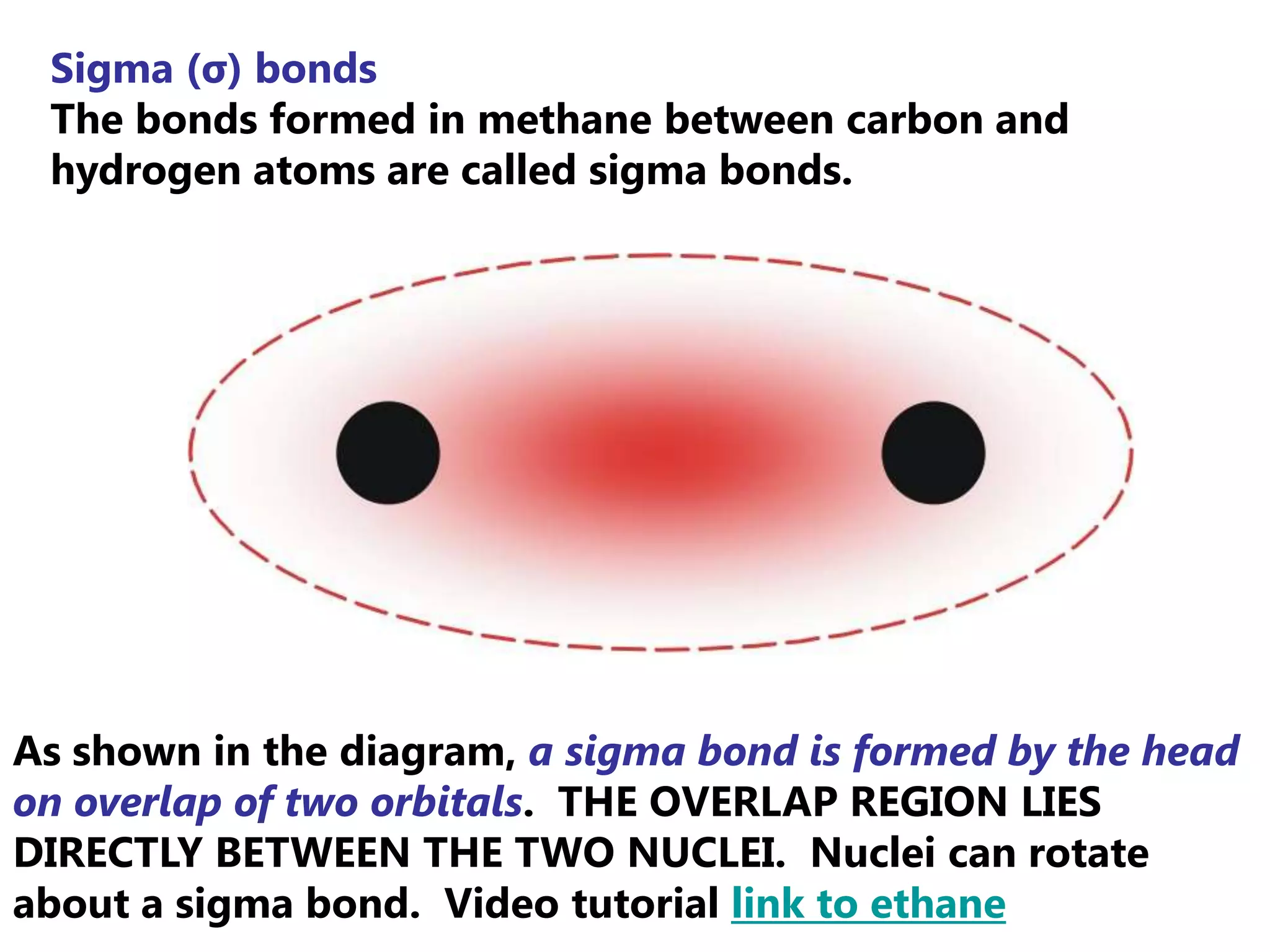
Sigma (σ) bonds
 The bonds formed in methane between carbon and
 hydrogen atoms are called sigma bonds.


As shown in the diagram, a sigma bond is formed by the head
on overlap of two orbitals. THE OVERLAP REGION LIES
DIRECTLY BETWEEN THE TWO NUCLEI. Nuclei can rotate
about a sigma bond. Video tutorial link to ethane
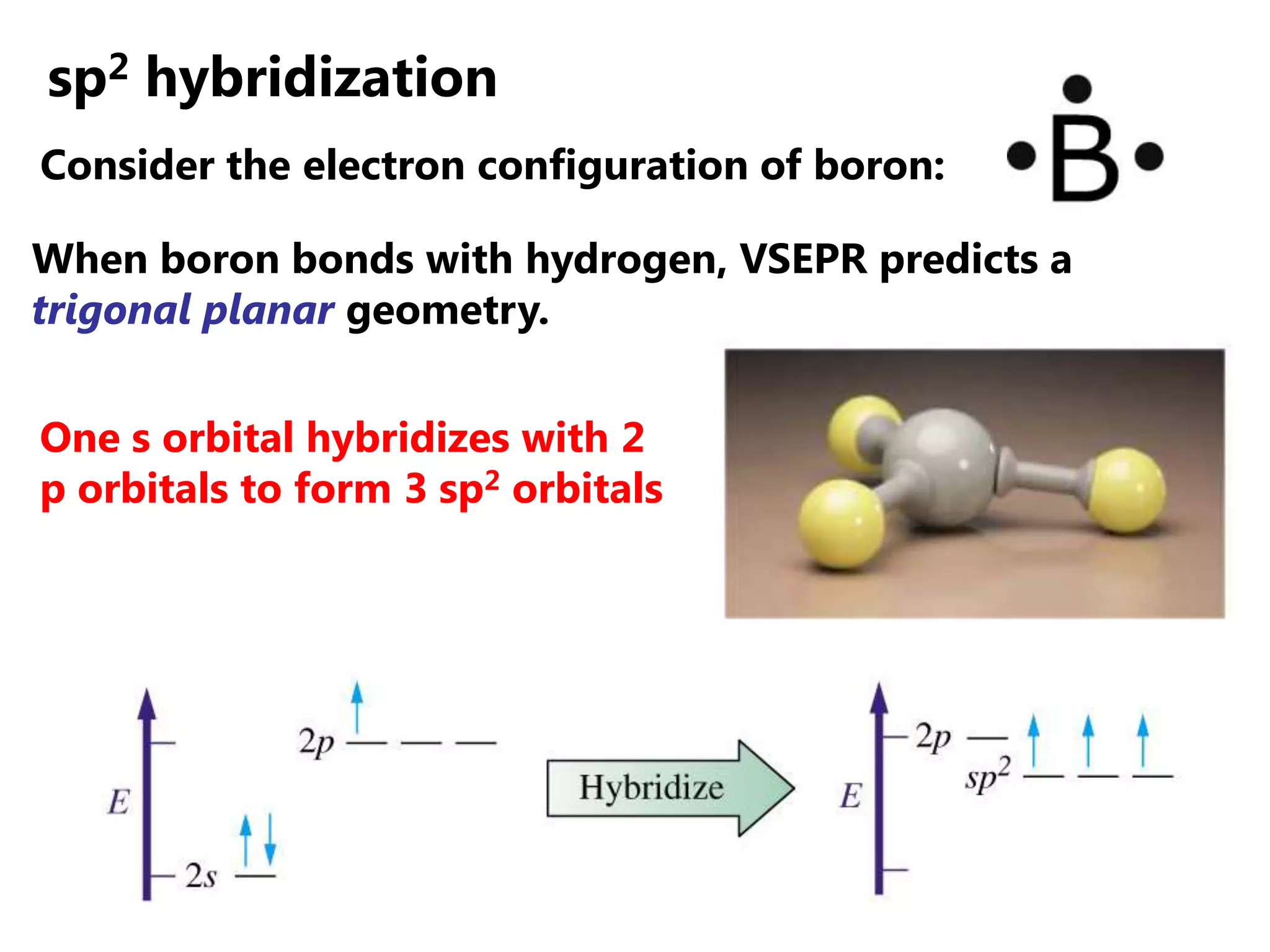
sp2 hybridization
Consider the electron configuration of boron:

When boron bonds with hydrogen, VSEPR predicts a
trigonal planar geometry.


One s orbital hybridizes with 2
p orbitals to form 3 sp2 orbitals
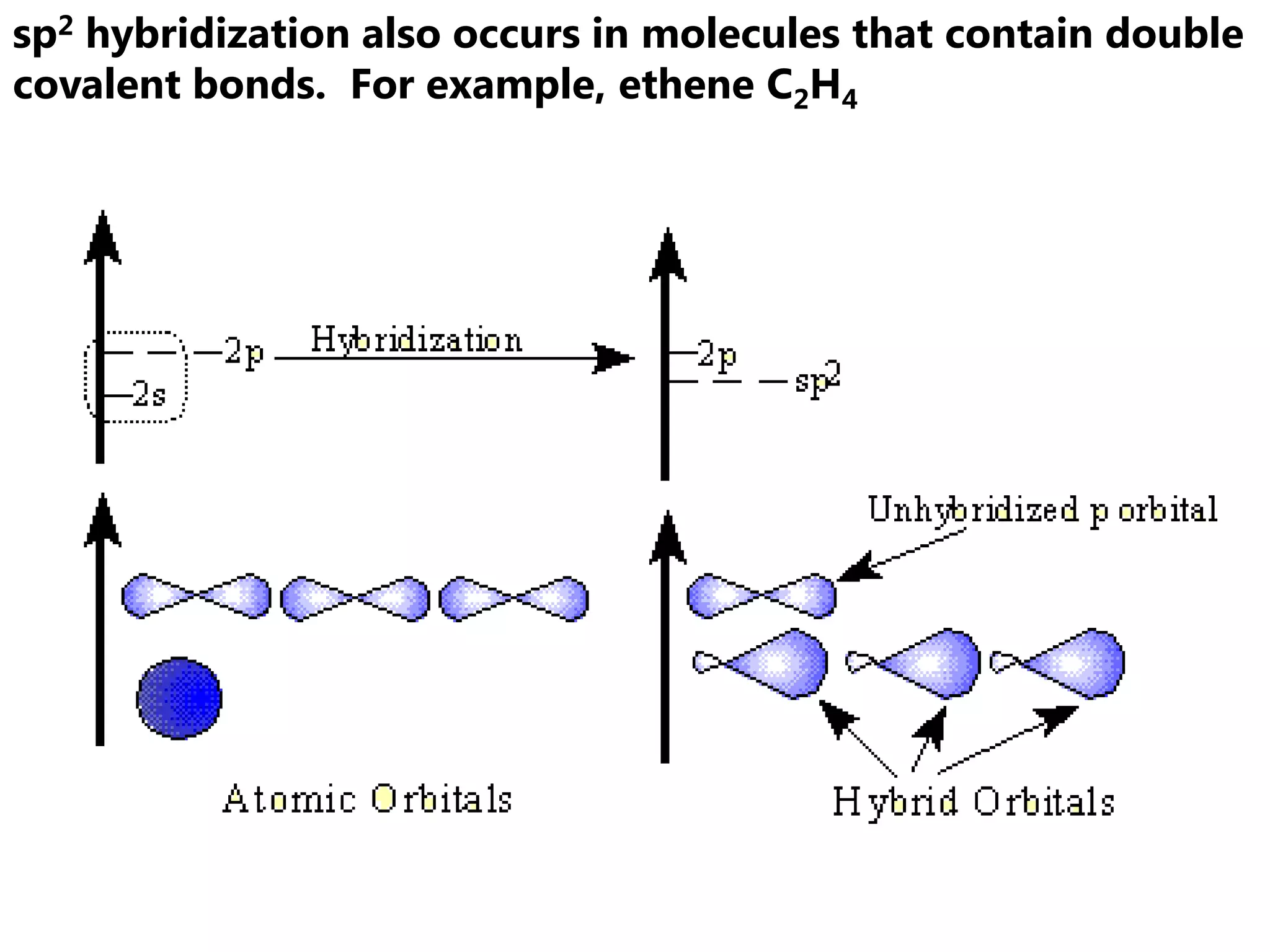
sp2 hybridization also occurs in molecules that contain double
covalent bonds. For example, ethene C2H4
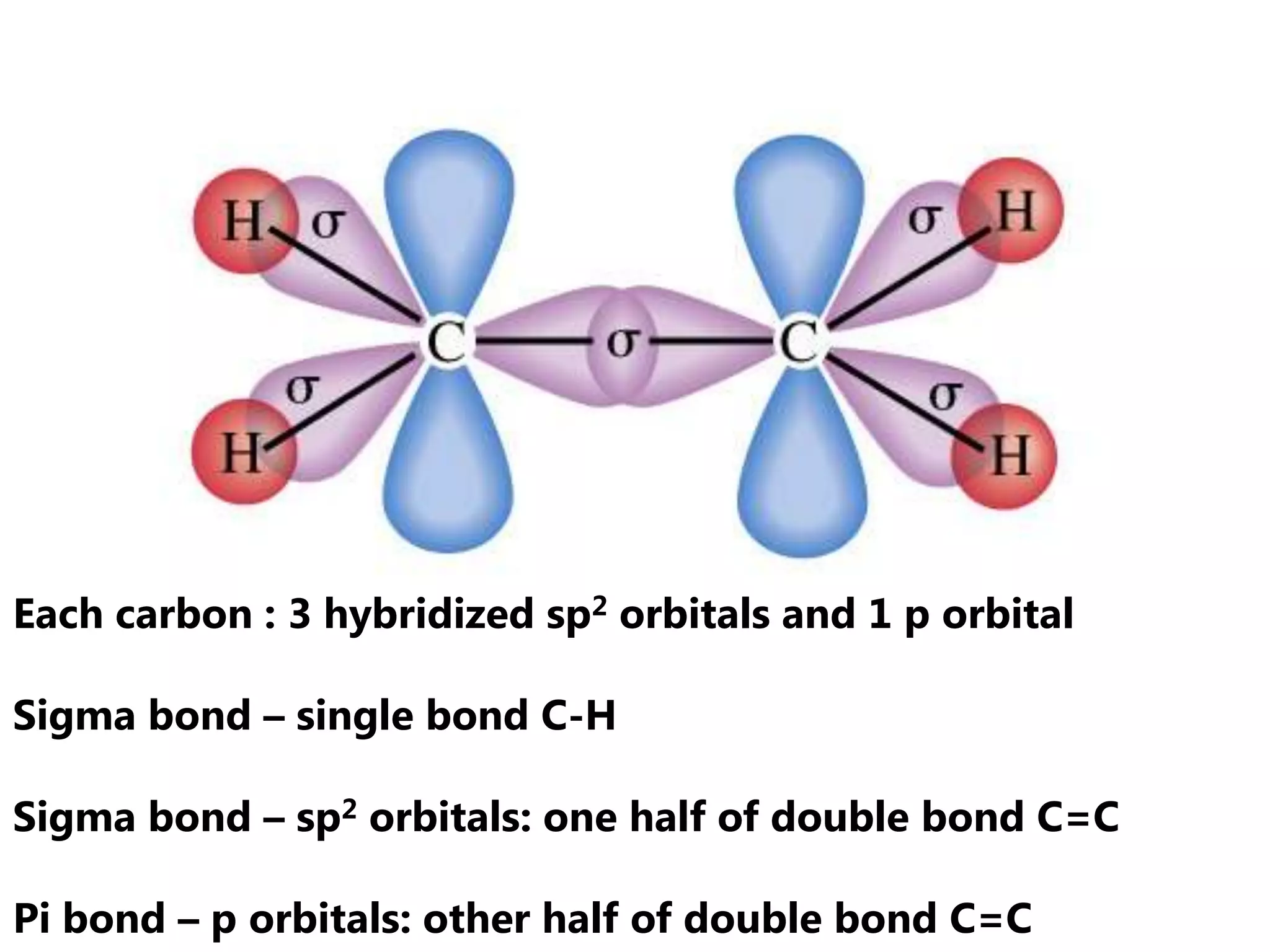
Each carbon : 3 hybridized sp2 orbitals and 1 p orbital

Sigma bond – single bond C-H

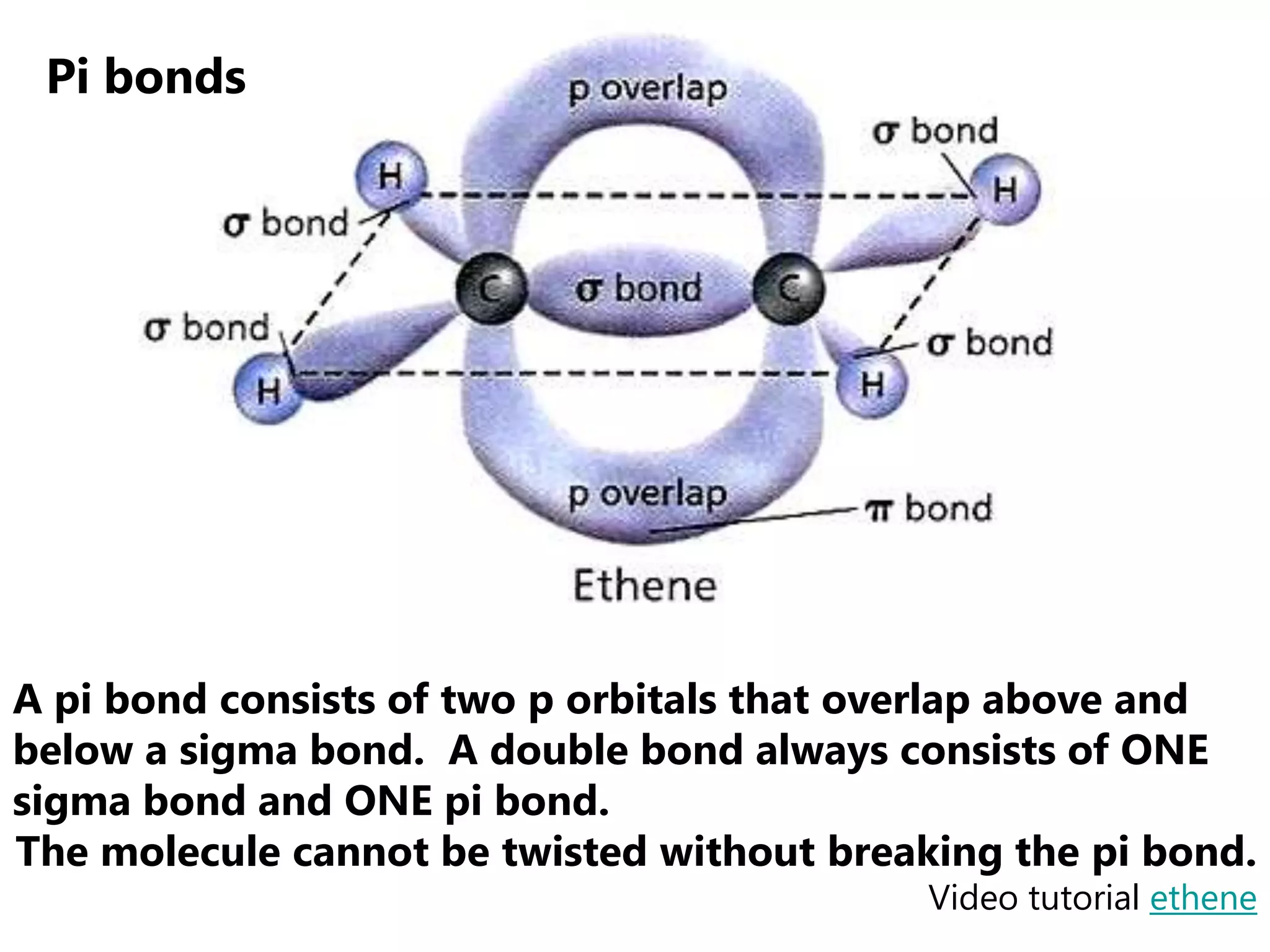
Sigma bond – sp2 orbitals: one half of double bond C=C

Pi bond – p orbitals: other half of double bond C=C
Pi bonds


A pi bond consists of two p orbitals that overlap above and
below a sigma bond. A double bond always consists of ONE
sigma bond and ONE pi bond.
The molecule cannot be twisted without breaking the pi bond.
                                            Video tutorial ethene
Practice

Draw a diagram to show the orbital overlap in the sigma and pi
bonds in a molecule of formaldehyde CH2O. State the shape of
the molecule and the arrangement of negative charge centers
around the central atom.
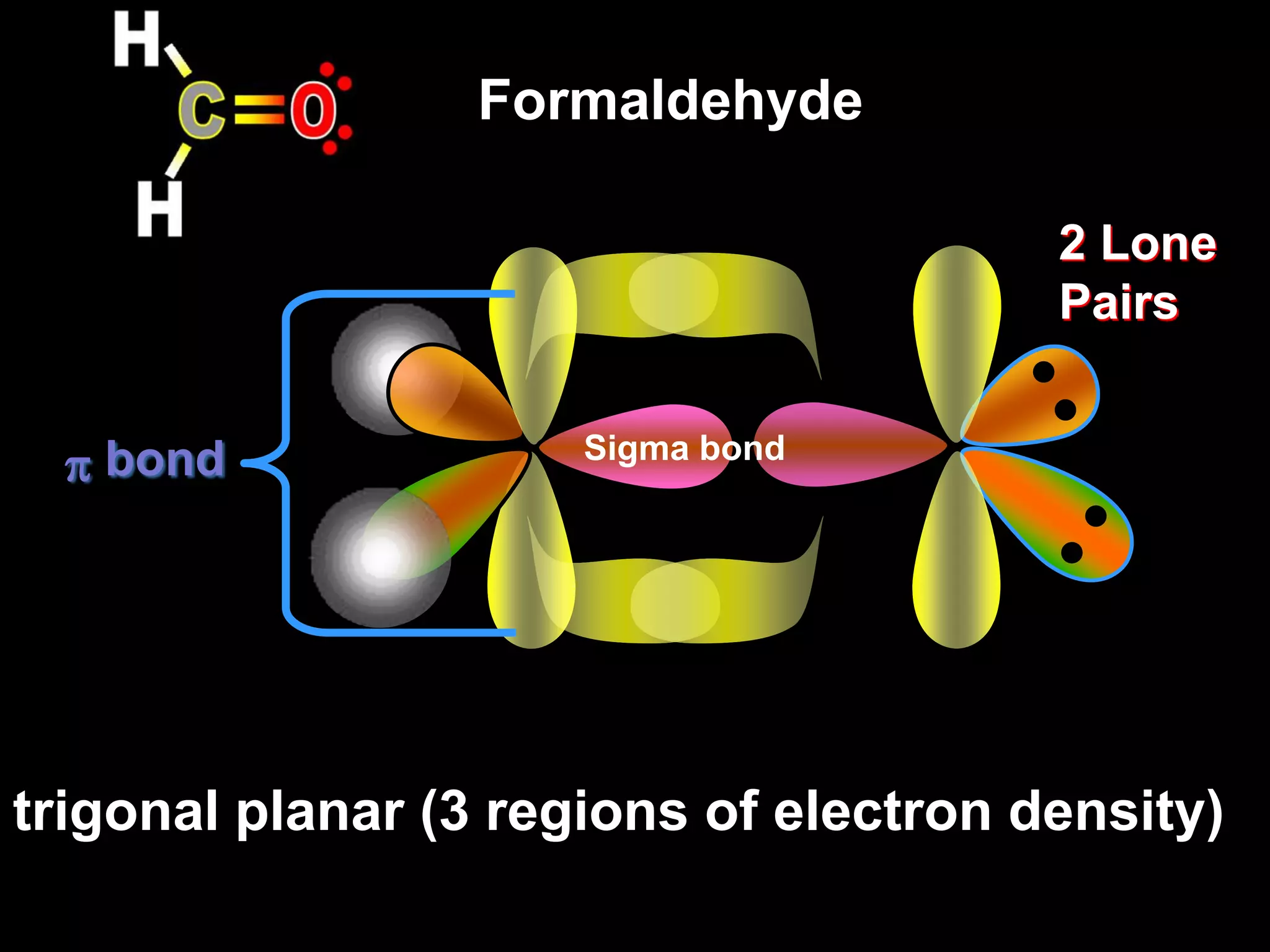
Formaldehyde

                                        2 Lone
                                        Pairs


  bond               Sigma bond


trigonal planar (3 regions of electron density)
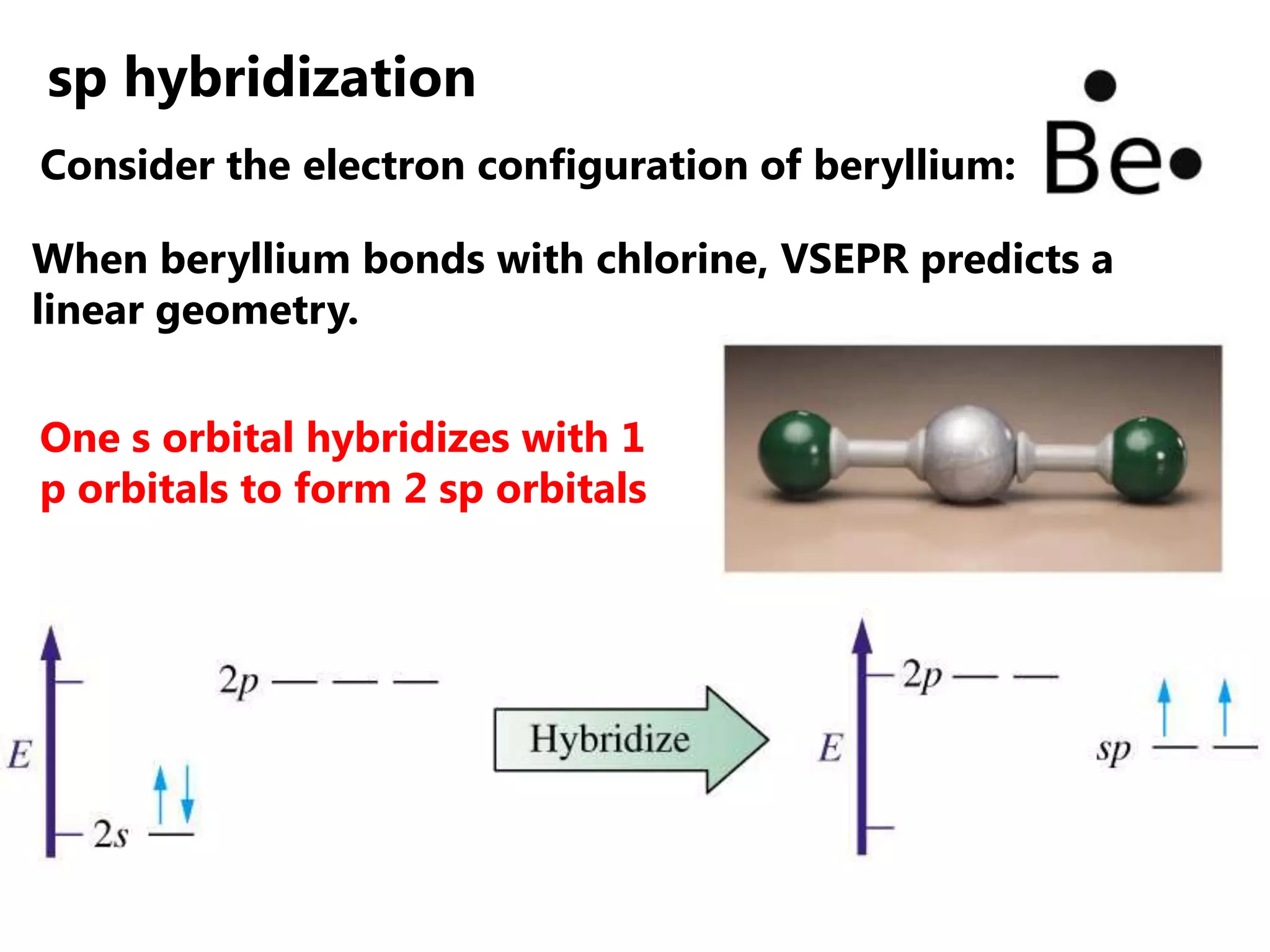
sp hybridization
Consider the electron configuration of beryllium:

When beryllium bonds with chlorine, VSEPR predicts a
linear geometry.


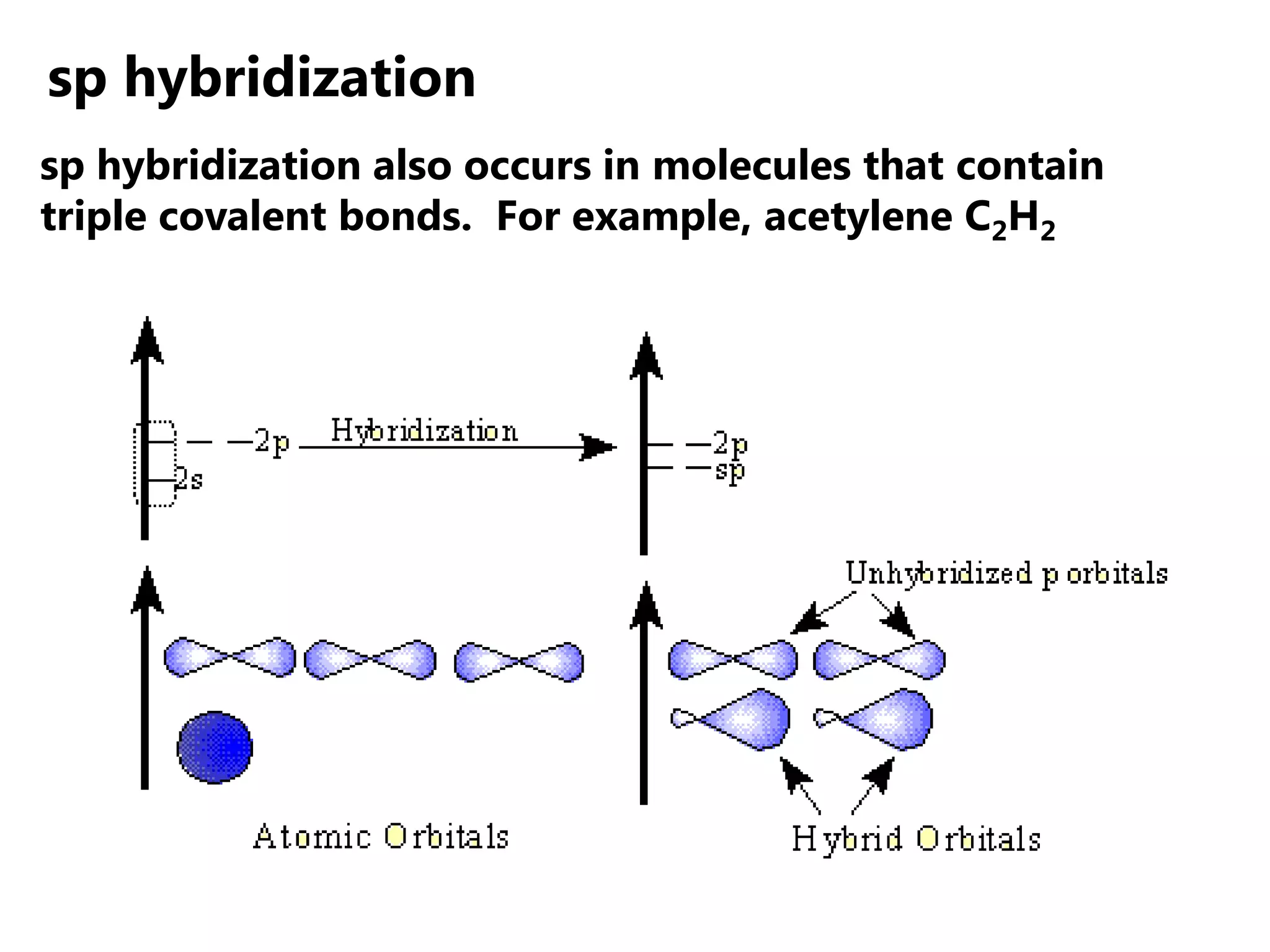
One s orbital hybridizes with 1
p orbitals to form 2 sp orbitals
sp hybridization
sp hybridization also occurs in molecules that contain
triple covalent bonds. For example, acetylene C2H2
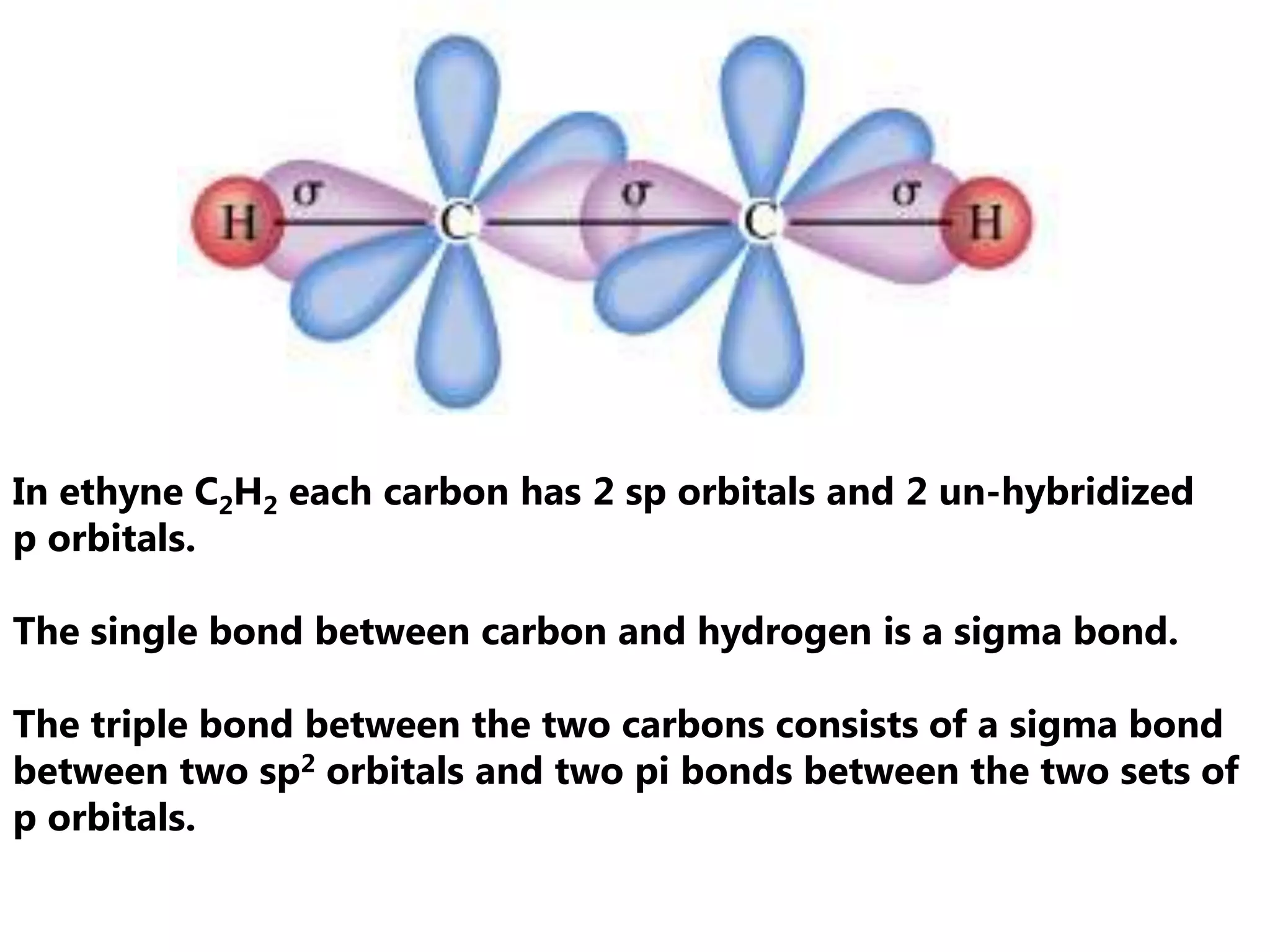
In ethyne C2H2 each carbon has 2 sp orbitals and 2 un-hybridized
p orbitals.

The single bond between carbon and hydrogen is a sigma bond.

The triple bond between the two carbons consists of a sigma bond
between two sp2 orbitals and two pi bonds between the two sets of
p orbitals.
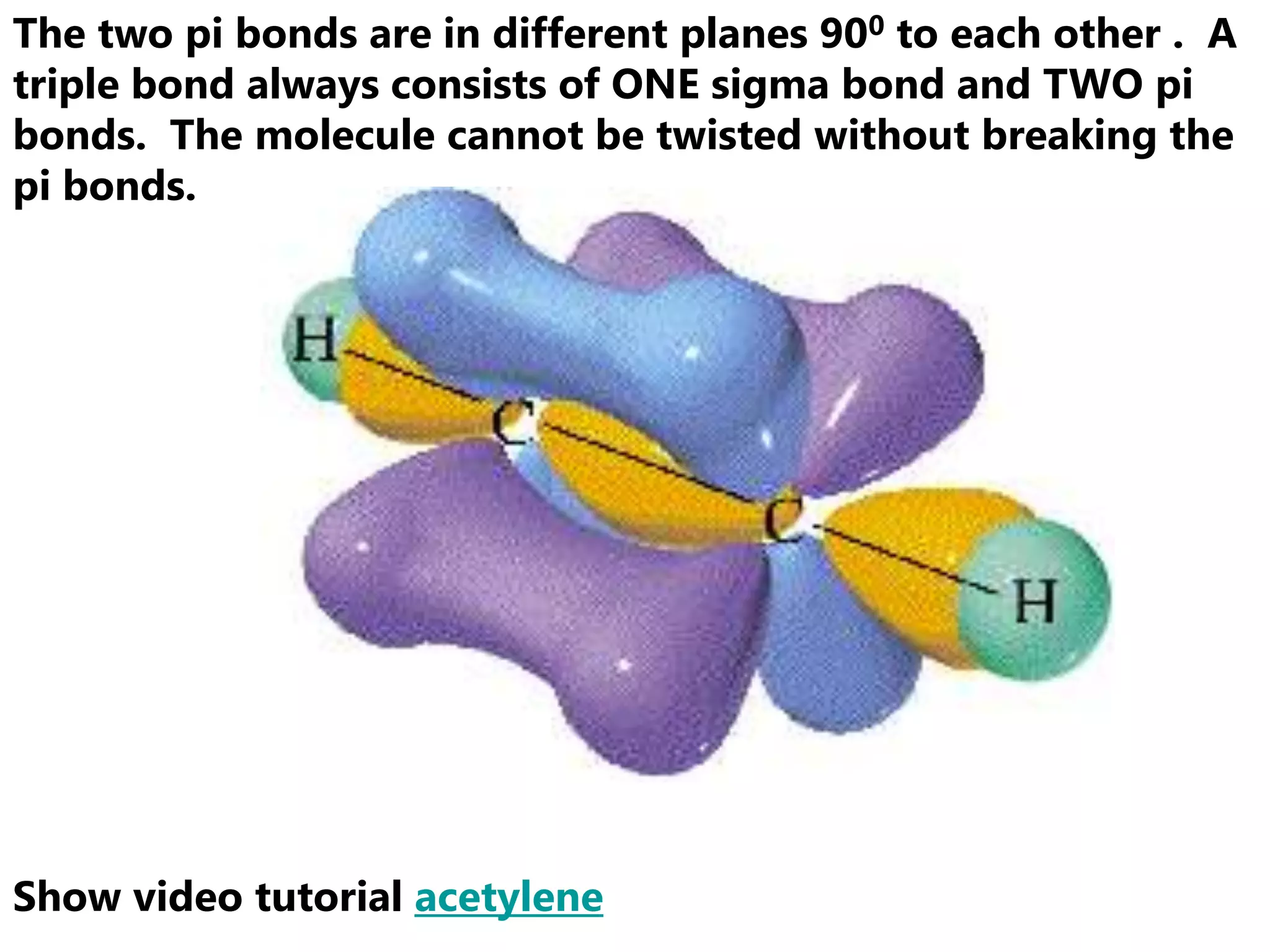
The two pi bonds are in different planes 900 to each other . A
triple bond always consists of ONE sigma bond and TWO pi
bonds. The molecule cannot be twisted without breaking the
pi bonds.


Show video tutorial acetylene
2012 Orbital Hybrization, Sigma and Pi Bonds

2012 Orbital Hybrization, Sigma and Pi Bonds

  • 1.
    IB Chemistry PowerPoints Topic 14 (AHL) Bonding www.pedagogics.ca LESSON Hybridization (video tutorial links included)
  • 2.
    Recall : methane,CH4 – tetrahedral shape (4 equal covalent bonds) Carbon has an electron arrangement 1s22s22p2 There is a contradiction here . . . . . .
  • 3.
    Recall: the sorbital shape ONE s orbital in each energy level
  • 4.
    Recall: the porbital shape THREE p orbitals in each energy level (beginning n = 2)
  • 5.
    Carbon’s valence shell- 2nd energy level orbitals The 4 orbitals are oriented like so: Problem #1 This is not a tetrahedral shape. The 3 p orbitals are at 900 to each other and the s orbital is “non-directional”
  • 6.
    Carbon ground stateelectron configuration What is the expected orbital notation of carbon in its ground state? Problem #2? Only 2 electrons appear to be available for bonding
  • 7.
    Solution – require4 unpaired electrons Perhaps carbon “promotes” one of its 2s electrons… …to the empty 2p orbital.
  • 8.
    BUT. . .this would mean that three of the bonds in a methane molecule would be identical, But what about the fourth bond…? Must have a lower bond energy This was not observed by chemists
  • 9.
    “hybridization” theory -What if the s orbital is combined with three p orbitals to create four equal hybrid orbitals? “hybridized” These new orbitals have slightly MORE energy than the 2s orbital… and slightly LESS energy than the 2p orbitals. … But all 4 hybrid orbitals have equal energy.
  • 10.
    Since the 4hybrid orbitals result from a combination of 1 s and 3 p orbitals, these hybrids are termed sp3 orbitals.
  • 11.
    3 3 3 3 1s 2s 2px 2py 2pz sp sp sp sp y Hybridize x o 109.5 z Summary of sp3 hybridization
  • 12.
  • 13.
  • 14.
    Sigma (σ) bonds The bonds formed in methane between carbon and hydrogen atoms are called sigma bonds. As shown in the diagram, a sigma bond is formed by the head on overlap of two orbitals. THE OVERLAP REGION LIES DIRECTLY BETWEEN THE TWO NUCLEI. Nuclei can rotate about a sigma bond. Video tutorial link to ethane
  • 15.
    sp2 hybridization Consider theelectron configuration of boron: When boron bonds with hydrogen, VSEPR predicts a trigonal planar geometry. One s orbital hybridizes with 2 p orbitals to form 3 sp2 orbitals
  • 16.
    sp2 hybridization alsooccurs in molecules that contain double covalent bonds. For example, ethene C2H4
  • 17.
    Each carbon :3 hybridized sp2 orbitals and 1 p orbital Sigma bond – single bond C-H Sigma bond – sp2 orbitals: one half of double bond C=C Pi bond – p orbitals: other half of double bond C=C
  • 18.
    Pi bonds A pibond consists of two p orbitals that overlap above and below a sigma bond. A double bond always consists of ONE sigma bond and ONE pi bond. The molecule cannot be twisted without breaking the pi bond. Video tutorial ethene
  • 19.
    Practice Draw a diagramto show the orbital overlap in the sigma and pi bonds in a molecule of formaldehyde CH2O. State the shape of the molecule and the arrangement of negative charge centers around the central atom.
  • 20.
    Formaldehyde 2 Lone Pairs  bond Sigma bond trigonal planar (3 regions of electron density)
  • 21.
    sp hybridization Consider theelectron configuration of beryllium: When beryllium bonds with chlorine, VSEPR predicts a linear geometry. One s orbital hybridizes with 1 p orbitals to form 2 sp orbitals
  • 22.
    sp hybridization sp hybridizationalso occurs in molecules that contain triple covalent bonds. For example, acetylene C2H2
  • 23.
    In ethyne C2H2each carbon has 2 sp orbitals and 2 un-hybridized p orbitals. The single bond between carbon and hydrogen is a sigma bond. The triple bond between the two carbons consists of a sigma bond between two sp2 orbitals and two pi bonds between the two sets of p orbitals.
  • 24.
    The two pibonds are in different planes 900 to each other . A triple bond always consists of ONE sigma bond and TWO pi bonds. The molecule cannot be twisted without breaking the pi bonds. Show video tutorial acetylene