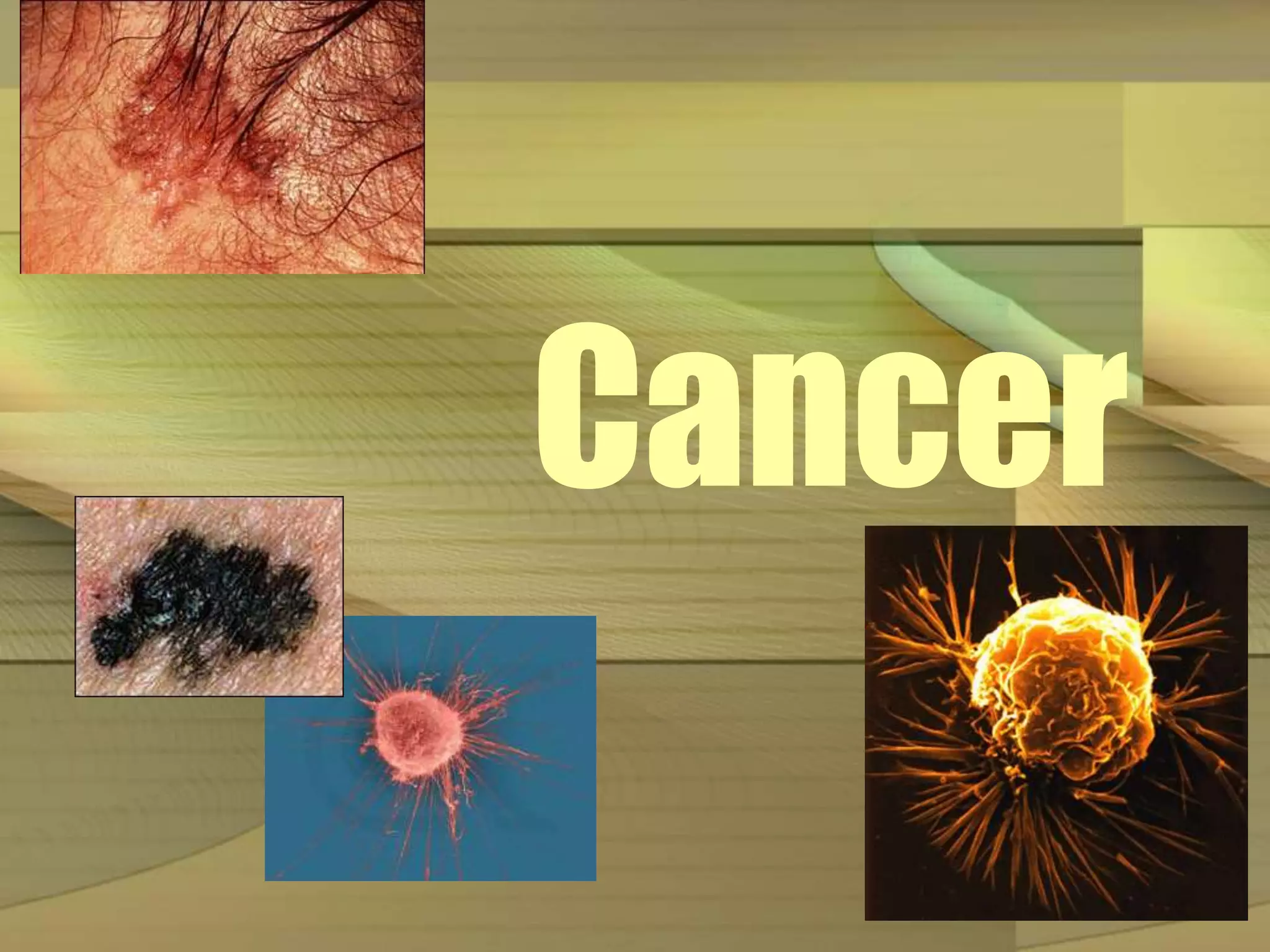
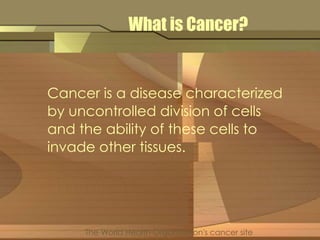
Cancer
What is Cancer? 
Cancer is a disease characterized 
by uncontrolled division of cells 
and the ability of these cells to 
invade other tissues. 
The World Health Organization's cancer site
Normal Vs. Cancer Cells 
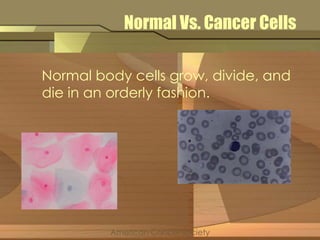
Normal body cells grow, divide, and 
die in an orderly fashion. 
American Cancer society
… Normal Vs. Cancer Cells 
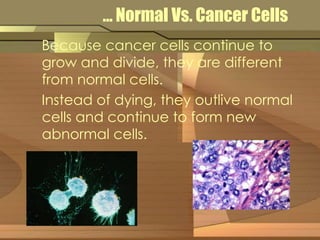
Because cancer cells continue to 
grow and divide, they are different 
from normal cells. 
Instead of dying, they outlive normal 
cells and continue to form new 
abnormal cells.
Why do Cancer Cells Develop? 
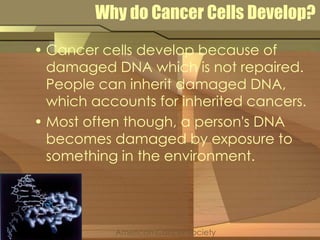
• Cancer cells develop because of 
damaged DNA which is not repaired. 
People can inherit damaged DNA, 
which accounts for inherited cancers. 
• Most often though, a person's DNA 
becomes damaged by exposure to 
something in the environment. 
American Cancer Society
Warning Signals for Cancer 
1. A change in bowel or bladder habits 
2. A sore that does not heal 
3. Unusual bleeding or discharge 
4. Thickening or a lump in the breast or 
elsewhere 
5. Indigestion or difficulty swallowing 
6. Obvious change in a wart or mole 
7. Nagging cough or hoarseness 
American Cancer Society, Inc. 1-800-ACS-2345
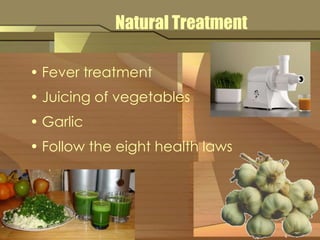
Cancer and the USA 
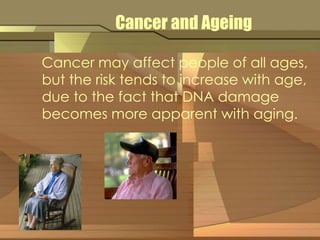
• Cancer is the second leading cause of 
death in the United States. 
• 1/2 of all men and 1/3 of all women 
will develop cancer during their 
lifetimes. 
Millions of people are living with 
cancer. 
• The risk of developing most types of 
cancer can be reduced by changes 
in a person's lifestyle.
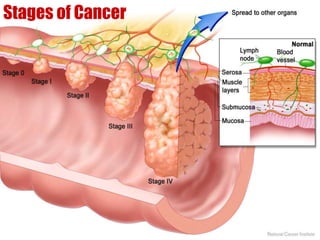
Stages of Cancer
Stages of Cancer 
1. Is small and contained within the 
organ it started in. 
2. Is localized, but the tumor is getting 
larger. 
3. Is found in the lymph nodes in the 
affected area. 
4. Has spread from where it started to 
another body organ. 
Cancer Research UK
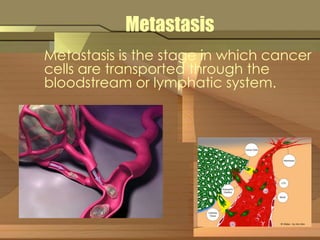
Metastasis 
Metastasis is the stage in which cancer 
cells are transported through the 
bloodstream or lymphatic system.
Pollution
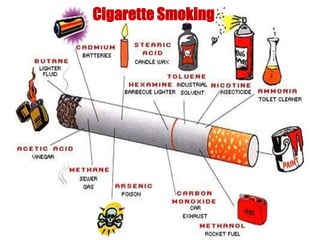
Cigarette Smoking
About 90% of all lung 
cancers are caused by 
smoking. 
Tobacco smoke and involuntary smoking. IARC Monographs on the evaluation of carcinogenic risks 
to humans. Volume 83. IARC 2004 Lung cancer and smoking – UK. Cancer Stats. Cancer Research 
UK, April 2004 ,
Second Hand Smoking 
• Secondhand smoke causes 
approximately 3,400 lung cancer 
deaths in the United States each year 
• non-smokers who are exposed to 
second-hand smoke are 20% to 30% 
more likely to develop lung cancer. 
California Environmental Protection Agency. 
Health Effects of Exposure to Environmental 
Tobacco Smoke. June 2005. BBC
Cancers Linked to Tobacco 
• Lung 
• Lip 
• Mouth (oral cavity) 
• Throat (pharynx) 
• Voice Box (larynx) 
• Trachea (wind 
pipe) 
• Esophagus 
• Stomach 
•Pancreas 
•Bladder 
•Kidney 
•Cervix 
•Leukemia 
•Colon 
•Skin 
•Penis 
•Liver
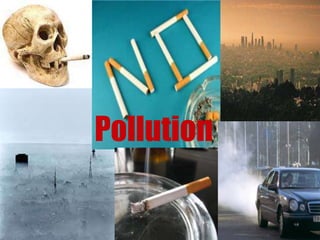
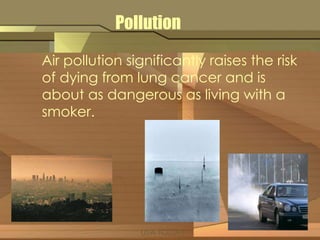
Pollution 
Air pollution significantly raises the risk 
of dying from lung cancer and is 
about as dangerous as living with a 
smoker. 
USA TODAY
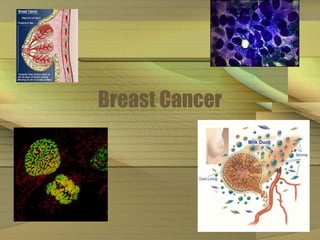
Breast Cancer
Breast Cancer 
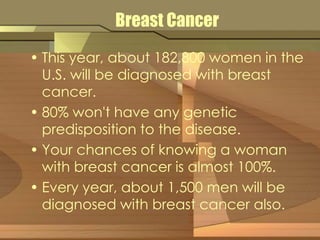
• This year, about 182,800 women in the 
U.S. will be diagnosed with breast 
cancer. 
• 80% won't have any genetic 
predisposition to the disease. 
• Your chances of knowing a woman 
with breast cancer is almost 100%. 
• Every year, about 1,500 men will be 
diagnosed with breast cancer also.
Causes of Breast Cancer 
• Alcohol 
• Caffeine 
• Meat eating 
Thomas DB. Cancer. In: Last JM, Wallace RB, editors. Reventive 
Medicine - 13th edition. Norwalk, CT: Appleton & Lange, 1992 p. 816. 
Craig WJ. Caffeine Update: What’s Brewing? In: Nutrition for the 
Nineties… Equ Claire, MI: Golden Harvest Books, 1992 p. 286 
Hirayama T. Epidemiology of breast cancer with special reference to 
the role of diet. Prev. Med 1987 Jun
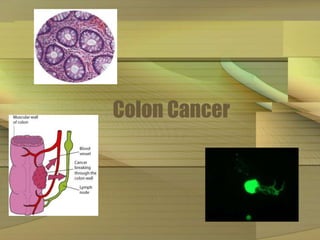
Colon Cancer
Colon Cancer 
• Diets high in fat predispose humans to 
colorectal cancer. 
• In countries with high colorectal 
cancer rates, the fat intake by the 
population is much higher than in 
countries with low cancer rates. 
©1996-2006 Medicine Net, Inc.
• The breakdown products of fat 
metabolism lead to the formation 
of cancer-causing chemicals 
(carcinogens). 
• Diets high in vegetables and high-fiber 
foods such as whole-grain 
breads and cereals rid the bowel 
of these carcinogens and help 
reduce the risk of cancer.
Colon Cancer 
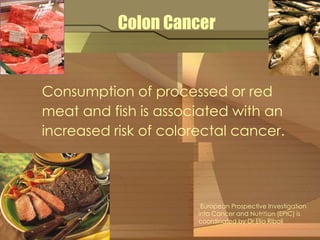
Consumption of processed or red 
meat and fish is associated with an 
increased risk of colorectal cancer. 
European Prospective Investigation 
into Cancer and Nutrition (EPIC) is 
coordinated by Dr Elio Riboli
Colon Cancer 
A study published in the Journal of the 
National Cancer Institute found a clear 
and straightforward association 
between high-glycemic foods and 
colorectal cancer. 
Higginbotham, S. and Zhang, Z. “Dietary Glycemic Load and Risk of 
Colorectal Cancer in the Women’s Health Study." Journal of the 
National Cancer Institute 96.3
Colon Cancer 
Researchers at Harvard and UCLA 
found that women who ate the most 
high-glycemic load foods were almost 
three times more likely to develop 
colorectal cancer 
Higginbotham, S. and Zhang, Z. “Dietary Glycemic Load and Risk of 
Colorectal Cancer in the Women’s Health Study." Journal of the 
National Cancer Institute 96.3
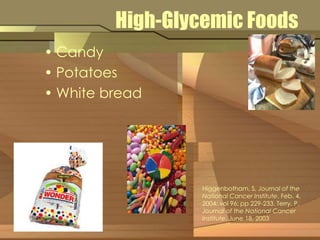
High-Glycemic Foods 
• Candy 
• Potatoes 
• White bread 
Higgenbotham, S, Journal of the 
National Cancer Institute, Feb. 4, 
2004; vol 96: pp 229-233. Terry, P. 
Journal of the National Cancer 
Institute, June 18, 2003
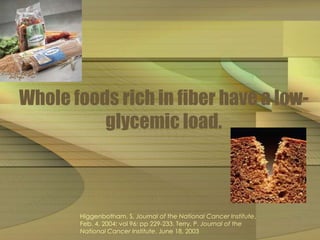
Whole foods rich in fiber have a low-glycemic 
load. 
Higgenbotham, S, Journal of the National Cancer Institute, 
Feb. 4, 2004; vol 96: pp 229-233. Terry, P. Journal of the 
National Cancer Institute, June 18, 2003
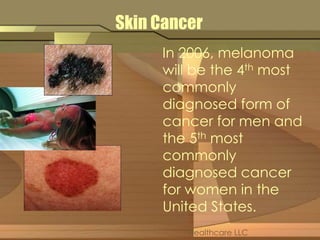
Skin Cancer 
In 2006, melanoma 
will be the 4th most 
commonly 
diagnosed form of 
cancer for men and 
the 5th most 
commonly 
diagnosed cancer 
for women in the 
United States. 
Healthcare LLC
… Skin Cancer 
• Ultraviolet radiation from the sun is the 
major cause of skin cancer. 
• Babies under 6 months old should be 
kept out of the sun completely. 
Their skin can't produce enough 
melanin to protect them from UV light. 
• There is a link between childhood 
sunburn and malignant melanoma 
later in life.
Permanent Damage 
• When our skin gets tanned or burned, 
damage is done to individual skin cells and 
DNA. 
• Some cells die and some repair themselves 
by getting rid of the damaged DNA. 
• Ultraviolet light contained within sunlight 
lowers the body’s immune system, and 
makes it difficult to destroy defective cells. 
• Cells that cannot repair themselves, 
become cancerous. 
• Melanoma begins as a formation of dark-pigmented 
malignant moles or tumors.
… Permanent Damage … 
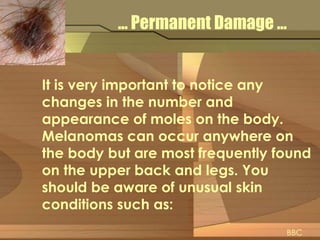
It is very important to notice any 
changes in the number and 
appearance of moles on the body. 
Melanomas can occur anywhere on 
the body but are most frequently found 
on the upper back and legs. You 
should be aware of unusual skin 
conditions such as: 
BBC
… Permanent Damage 
 Change in size or color of moles or 
birthmarks 
 Bleeding around current birthmarks 
Appearance of dark or irregular growths or 
spots 
 The spread of pigment into the surrounding 
skin 
 Itchiness, tenderness or pain in the 
surrounding area 
BBC
Cancer Treatments
Chemotherapy 
• Chemotherapy interferes with: 
• Cell division 
• The duplication of DNA 
• The separation of newly formed 
chromosomes 
• Most forms of chemotherapy target all 
rapidly dividing cells and are not specific for 
cancer cells. 
• Chemotherapy harms healthy tissue, 
especially tissues that have a high 
replacement rate such as intestinal lining.
Side Effects of Chemo 
• A sore mouth 
• Mouth ulcers 
• Sickness (nausea and vomiting) 
• Loss of appetite 
• Diarrhea 
• Constipation 
• Hair loss 
• Skin and Nails (dry and discolored) 
Cancer Research UK 2002
Radiation 
• Radiation works by damaging the DNA 
within the tumor cells, making them unable 
to divide and grow. 
• Although radiation is directed at the 
tumor, non-cancerous tissues surrounding 
the tumor will also be affected by the 
radiation and therefore be damaged. 
1995-2006 Life Extension Foundation
Natural Treatment 
• Fever treatment 
• Juicing of vegetables 
• Garlic 
• Follow the eight health laws
Cancer and Ageing 
Cancer may affect people of all ages, 
but the risk tends to increase with age, 
due to the fact that DNA damage 
becomes more apparent with aging.
Cancer and the 
Immune System
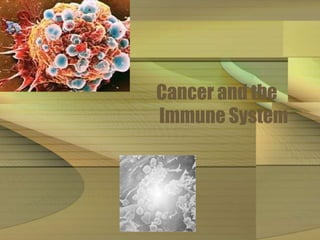
Cancer and the Immune System 
• All cancer is the result of an immune 
system that didn't destroy mutant cells. 
• The immune system of a healthy 
person destroys 10,000 cancer cells 
every day. 
• When this defense ceases, the cancer 
can multiply and become a clinical 
case of cancer. 
© 2006 breastcancer.org™ breastcancer.org
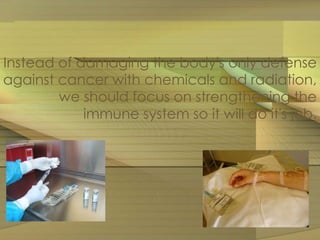
Instead of damaging the body's only defense 
against cancer with chemicals and radiation, 
we should focus on strengthening the 
immune system so it will do it's job.
Prevention is the Key
Plant-Based Diet 
• Foods that come from the plant 
kingdom rather than the animal 
kingdom have many protective 
factors. 
• Antioxidants, anticarcinogens and 
bioflavonoids are some of the terms 
used to describe the actions of 
phytonutrients. 
• Foods rich in plant derived nutrients 
include berries, dark green leafy 
vegetables, citrus fruits, legumes and 
whole grains.
80% of cancer is preventable by 
simple lifestyle choices. 
. 
Doctors have concluded that 90% 
of cancer is due to environmental 
factors 
Wynder EL, Gori GB. Contribution of the environment to cancer 
incidence an epidemiologic exercise. J Natl Cancer Inst 1977 Higginson 
J. Present trends in cancer epidemiology. Can Cancer Conf 1969
6 Steps to Prevent Cancer 
1. Don’t use tobacco 
2. Eat a variety of healthy foods 
3. Stay active and maintain a healthy 
weight 
4. Protect yourself from the sun 
5. Get screened 
6. Consider other possible cancer-fighting 
strategies 
1998-2006 Mayo Foundation for Medical Education and Research
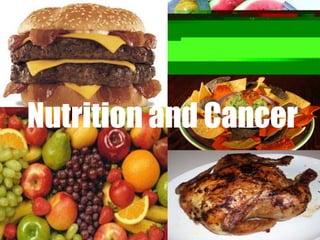
Nutrition and Cancer
Does What We Eat Affect us? 
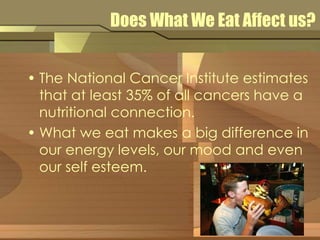
• The National Cancer Institute estimates 
that at least 35% of all cancers have a 
nutritional connection. 
• What we eat makes a big difference in 
our energy levels, our mood and even 
our self esteem.
Excess weight and eating too much 
cholesterol and other fats are risk 
factors for cancer. 
Researcher say that fat appears to 
reduce white blood cell production, 
affecting T-cell and macrophage 
activity. 
Further, obesity and a poor diet 
compromise the lymphatic system, 
making the body more vulnerable to 
infection and disease. 
Conference on food choices for cancer recovery.
Free Radicals
Free Radicals 
• Free radicals are cells that have lost an 
electron, thus are unstable cells. 
• They steal electrons from other cells in 
effort to heal themselves, creating new 
free radicals in the process. 
• By stealing electrons, it can cause 
damage to DNA, leading to the 
possible development of cancer. 
The New York Times Company
… Free Radicals 
• Antioxidants search for free radicals 
and lend them an electron. 
• This stabilizes the molecule, thus 
preventing damage to other cells. 
• Antioxidants also turn free radicals into 
waste by products, and they get 
eliminated from the body. 
• Antioxidants also have the ability to 
repair previous damage to cells. 
The New York Times Company
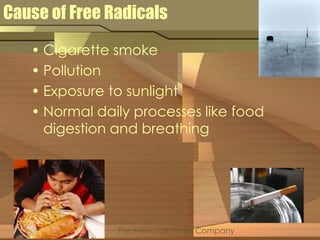
Cause of Free Radicals 
• Cigarette smoke 
• Pollution 
• Exposure to sunlight 
• Normal daily processes like food 
digestion and breathing 
The New York Times Company
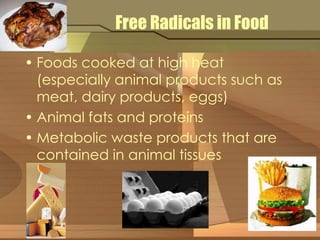
Free Radicals in Food 
• Foods cooked at high heat 
(especially animal products such as 
meat, dairy products, eggs) 
• Animal fats and proteins 
• Metabolic waste products that are 
contained in animal tissues
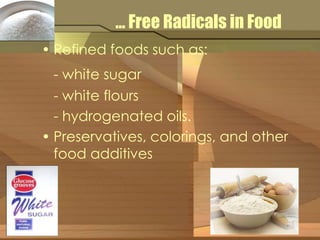
… Free Radicals in Food 
• Refined foods such as: 
- white sugar 
- white flours 
- hydrogenated oils. 
• Preservatives, colorings, and other 
food additives
Antioxidants 
• Antioxidants are substances that 
prevent damage to cells caused by 
free radicals. 
• Antioxidants interact with and 
stabilize free radicals and may 
prevent some of the damage free 
radicals might otherwise cause. 
Blot WJ, Li JY, Taylor PR, et al. Nutrition intervention trials in Linxian, China: 
supplementation with specific vitamin/mineral combinations, cancer incidence, and 
disease-specific mortality in the general population. J Natl Cancer Inst 1993;85:1483- 
91.2)The Alpha-Tocopherol, Beta Carotene Cancer Prevention Study Group.
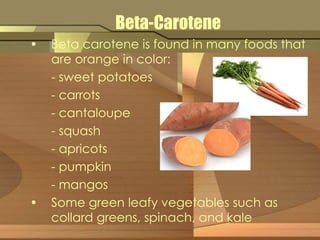
Beta-Carotene 
• Beta carotene is found in many foods that 
are orange in color: 
- sweet potatoes 
- carrots 
- cantaloupe 
- squash 
- apricots 
- pumpkin 
- mangos 
• Some green leafy vegetables such as 
collard greens, spinach, and kale
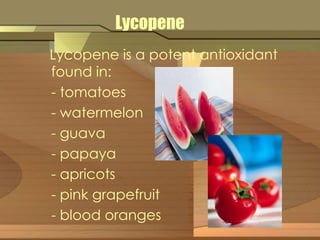
Lycopene 
Lycopene is a potent antioxidant 
found in: 
- tomatoes 
- watermelon 
- guava 
- papaya 
- apricots 
- pink grapefruit 
- blood oranges
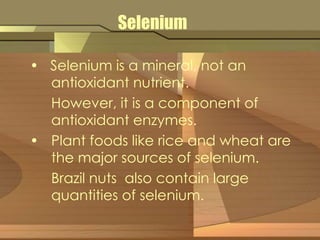
Selenium 
• Selenium is a mineral, not an 
antioxidant nutrient. 
However, it is a component of 
antioxidant enzymes. 
• Plant foods like rice and wheat are 
the major sources of selenium. 
Brazil nuts also contain large 
quantities of selenium.
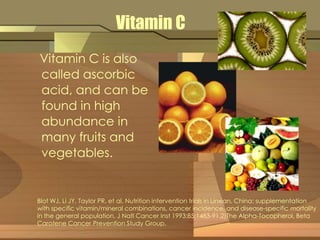
Vitamin C 
Vitamin C is also 
called ascorbic 
acid, and can be 
found in high 
abundance in 
many fruits and 
vegetables. 
Blot WJ, Li JY, Taylor PR, et al. Nutrition intervention trials in Linxian, China: supplementation 
with specific vitamin/mineral combinations, cancer incidence, and disease-specific mortality 
in the general population. J Natl Cancer Inst 1993;85:1483-91.2)The Alpha-Tocopherol, Beta 
Carotene Cancer Prevention Study Group.
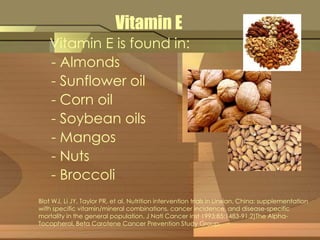
Vitamin E 
Vitamin E is found in: 
- Almonds 
- Sunflower oil 
- Corn oil 
- Soybean oils 
- Mangos 
- Nuts 
- Broccoli 
Blot WJ, Li JY, Taylor PR, et al. Nutrition intervention trials in Linxian, China: supplementation 
with specific vitamin/mineral combinations, cancer incidence, and disease-specific 
mortality in the general population. J Natl Cancer Inst 1993;85:1483-91.2)The Alpha- 
Tocopherol, Beta Carotene Cancer Prevention Study Group.
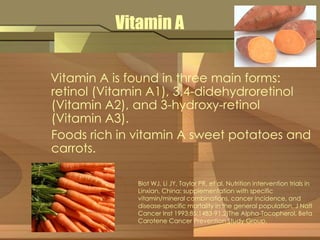
Vitamin A 
Vitamin A is found in three main forms: 
retinol (Vitamin A1), 3,4-didehydroretinol 
(Vitamin A2), and 3-hydroxy-retinol 
(Vitamin A3). 
Foods rich in vitamin A sweet potatoes and 
carrots. 
Blot WJ, Li JY, Taylor PR, et al. Nutrition intervention trials in 
Linxian, China: supplementation with specific 
vitamin/mineral combinations, cancer incidence, and 
disease-specific mortality in the general population. J Natl 
Cancer Inst 1993;85:1483-91.2)The Alpha-Tocopherol, Beta 
Carotene Cancer Prevention Study Group.
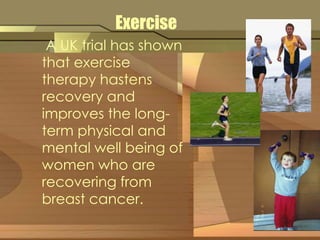
Exercise 
A UK trial has shown 
that exercise 
therapy hastens 
recovery and 
improves the long-term 
physical and 
mental well being of 
women who are 
recovering from 
breast cancer.
… Exercise 
Researchers at The University of Texas 
M. D. Anderson Cancer Center have 
found that exercise decreases pain 
and helps breast cancer survivors feel 
healthier and increase participation in 
daily activities. 
The Active for Life after Breast Cancer Study, published Friday in the journal, Patient 
Education and Counseling, evaluated the effect of exercise on former cancer patients' 
physical well-being
Exercise 
In one small study, researchers found 
that moderate exercise (three or more 
times a week) increased the immune 
cell counts of women undergoing 
breast cancer treatment back to 
normal levels. 
Exercise was also found to improve the 
women's mood and ability to handle 
their feelings comfortably. 
© 2006 breastcancer.org™
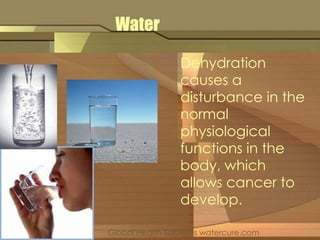
Water 
Dehydration 
causes a 
disturbance in the 
normal 
physiological 
functions in the 
body, which 
allows cancer to 
develop. 
Global Health Solutions watercure.com
Sunshine
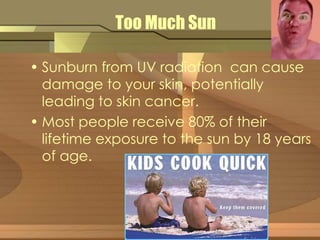
Too Much Sun 
• Sunburn from UV radiation can cause 
damage to your skin, potentially 
leading to skin cancer. 
• Most people receive 80% of their 
lifetime exposure to the sun by 18 years 
of age.
The Benefits of Sunlight 
• Research suggests that sunshine 
actually does bathe us in a favorable 
light. 
• Recent studies have found that 
sunlight can help protect you from 
cancer of the: 
 Breast 
 Colon 
 Ovary
The Benefits of Sunlight 
 Bladder 
 Womb 
 Stomach 
 Prostate gland 
BBC
Temperance
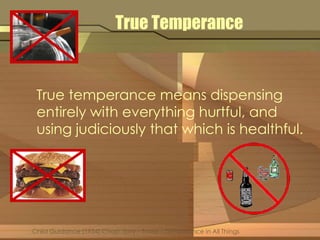
True Temperance 
True temperance means dispensing 
entirely with everything hurtful, and 
using judiciously that which is healthful. 
Child Guidance (1954) Chap. Sixty – Three – Temperance in All Things
… True Temperance 
Few realize how much their habits of 
diet have to do with their health, their 
character, their usefulness in this world, 
and their eternal destiny. 
The appetite should ever be in 
subjection to the moral and 
intellectual powers. 
The body should be servant to the 
mind, and not the mind to the body. 
Child Guidance (1954) Chap. Sixty – Three – Temperance in All Things
Air
Study on Rats 
A group of rats with cancer were 
allowed to breathe negatively 
charged air, while an equal number 
breathed common indoor air. After 
one month the cancer in the rats 
breathing the indoor air was twice the 
size of the cancer in the rats breathing 
the negatively charged air.
Rest
Sleep Deprivation 
Sleep deprivation weakens the immune 
system leaving us more susceptible to 
the common cold and even more 
serious diseases and disorders such as 
diabetes and cancer. 
©2006 About, Inc., A part of The New York Times Company
Rest 
Tissue growth and repair takes place 
during hours of darkness and while 
the person is asleep. A person with 
cancer needs this healing and 
rebuilding time of the night.
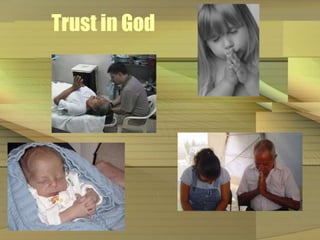
Trust in God
…Trust in God 
In an Australian study, researchers 
found that patients who saw 
themselves as most religious were less 
likely to have cancer than those who 
were not as religious.
… Trust in God 
Researchers at the University of Texas 
did a study about the impact of deep 
faith on the condition of women with 
breast cancer. 
They found in a group of patients that 
"intrinsic religiousness" was a strong 
predictor of spiritual well-being and 
hope – both of which are important 
factors for successfully coping with 
cancer. 
Source: November 1993 issue of the Journal of the Royal Society of Medicine
If thou wilt diligently hearken to the voice of the 
Lord they God, and wilt do that which is right in 
his sight, and wilt give ear to his commandments, 
and keep all his statutes, I will put none of these 
diseases upon thee, which I have brought upon the 
Egyptians: for I am the Lord that healeth thee. 
Exodus 15:26

Cancer mm

  • 1.
  • 2.
    What is Cancer? Cancer is a disease characterized by uncontrolled division of cells and the ability of these cells to invade other tissues. The World Health Organization's cancer site
  • 3.
    Normal Vs. CancerCells Normal body cells grow, divide, and die in an orderly fashion. American Cancer society
  • 4.
    … Normal Vs.Cancer Cells Because cancer cells continue to grow and divide, they are different from normal cells. Instead of dying, they outlive normal cells and continue to form new abnormal cells.
  • 5.
    Why do CancerCells Develop? • Cancer cells develop because of damaged DNA which is not repaired. People can inherit damaged DNA, which accounts for inherited cancers. • Most often though, a person's DNA becomes damaged by exposure to something in the environment. American Cancer Society
  • 6.
    Warning Signals forCancer 1. A change in bowel or bladder habits 2. A sore that does not heal 3. Unusual bleeding or discharge 4. Thickening or a lump in the breast or elsewhere 5. Indigestion or difficulty swallowing 6. Obvious change in a wart or mole 7. Nagging cough or hoarseness American Cancer Society, Inc. 1-800-ACS-2345
  • 7.
    Cancer and theUSA • Cancer is the second leading cause of death in the United States. • 1/2 of all men and 1/3 of all women will develop cancer during their lifetimes. Millions of people are living with cancer. • The risk of developing most types of cancer can be reduced by changes in a person's lifestyle.
  • 8.
  • 9.
    Stages of Cancer 1. Is small and contained within the organ it started in. 2. Is localized, but the tumor is getting larger. 3. Is found in the lymph nodes in the affected area. 4. Has spread from where it started to another body organ. Cancer Research UK
  • 10.
    Metastasis Metastasis isthe stage in which cancer cells are transported through the bloodstream or lymphatic system.
  • 11.
  • 12.
  • 13.
    About 90% ofall lung cancers are caused by smoking. Tobacco smoke and involuntary smoking. IARC Monographs on the evaluation of carcinogenic risks to humans. Volume 83. IARC 2004 Lung cancer and smoking – UK. Cancer Stats. Cancer Research UK, April 2004 ,
  • 14.
    Second Hand Smoking • Secondhand smoke causes approximately 3,400 lung cancer deaths in the United States each year • non-smokers who are exposed to second-hand smoke are 20% to 30% more likely to develop lung cancer. California Environmental Protection Agency. Health Effects of Exposure to Environmental Tobacco Smoke. June 2005. BBC
  • 15.
    Cancers Linked toTobacco • Lung • Lip • Mouth (oral cavity) • Throat (pharynx) • Voice Box (larynx) • Trachea (wind pipe) • Esophagus • Stomach •Pancreas •Bladder •Kidney •Cervix •Leukemia •Colon •Skin •Penis •Liver
  • 16.
    Pollution Air pollutionsignificantly raises the risk of dying from lung cancer and is about as dangerous as living with a smoker. USA TODAY
  • 17.
  • 18.
    Breast Cancer •This year, about 182,800 women in the U.S. will be diagnosed with breast cancer. • 80% won't have any genetic predisposition to the disease. • Your chances of knowing a woman with breast cancer is almost 100%. • Every year, about 1,500 men will be diagnosed with breast cancer also.
  • 19.
    Causes of BreastCancer • Alcohol • Caffeine • Meat eating Thomas DB. Cancer. In: Last JM, Wallace RB, editors. Reventive Medicine - 13th edition. Norwalk, CT: Appleton & Lange, 1992 p. 816. Craig WJ. Caffeine Update: What’s Brewing? In: Nutrition for the Nineties… Equ Claire, MI: Golden Harvest Books, 1992 p. 286 Hirayama T. Epidemiology of breast cancer with special reference to the role of diet. Prev. Med 1987 Jun
  • 20.
  • 21.
    Colon Cancer •Diets high in fat predispose humans to colorectal cancer. • In countries with high colorectal cancer rates, the fat intake by the population is much higher than in countries with low cancer rates. ©1996-2006 Medicine Net, Inc.
  • 22.
    • The breakdownproducts of fat metabolism lead to the formation of cancer-causing chemicals (carcinogens). • Diets high in vegetables and high-fiber foods such as whole-grain breads and cereals rid the bowel of these carcinogens and help reduce the risk of cancer.
  • 23.
    Colon Cancer Consumptionof processed or red meat and fish is associated with an increased risk of colorectal cancer. European Prospective Investigation into Cancer and Nutrition (EPIC) is coordinated by Dr Elio Riboli
  • 24.
    Colon Cancer Astudy published in the Journal of the National Cancer Institute found a clear and straightforward association between high-glycemic foods and colorectal cancer. Higginbotham, S. and Zhang, Z. “Dietary Glycemic Load and Risk of Colorectal Cancer in the Women’s Health Study." Journal of the National Cancer Institute 96.3
  • 25.
    Colon Cancer Researchersat Harvard and UCLA found that women who ate the most high-glycemic load foods were almost three times more likely to develop colorectal cancer Higginbotham, S. and Zhang, Z. “Dietary Glycemic Load and Risk of Colorectal Cancer in the Women’s Health Study." Journal of the National Cancer Institute 96.3
  • 26.
    High-Glycemic Foods •Candy • Potatoes • White bread Higgenbotham, S, Journal of the National Cancer Institute, Feb. 4, 2004; vol 96: pp 229-233. Terry, P. Journal of the National Cancer Institute, June 18, 2003
  • 27.
    Whole foods richin fiber have a low-glycemic load. Higgenbotham, S, Journal of the National Cancer Institute, Feb. 4, 2004; vol 96: pp 229-233. Terry, P. Journal of the National Cancer Institute, June 18, 2003
  • 28.
    Skin Cancer In2006, melanoma will be the 4th most commonly diagnosed form of cancer for men and the 5th most commonly diagnosed cancer for women in the United States. Healthcare LLC
  • 29.
    … Skin Cancer • Ultraviolet radiation from the sun is the major cause of skin cancer. • Babies under 6 months old should be kept out of the sun completely. Their skin can't produce enough melanin to protect them from UV light. • There is a link between childhood sunburn and malignant melanoma later in life.
  • 30.
    Permanent Damage •When our skin gets tanned or burned, damage is done to individual skin cells and DNA. • Some cells die and some repair themselves by getting rid of the damaged DNA. • Ultraviolet light contained within sunlight lowers the body’s immune system, and makes it difficult to destroy defective cells. • Cells that cannot repair themselves, become cancerous. • Melanoma begins as a formation of dark-pigmented malignant moles or tumors.
  • 31.
    … Permanent Damage… It is very important to notice any changes in the number and appearance of moles on the body. Melanomas can occur anywhere on the body but are most frequently found on the upper back and legs. You should be aware of unusual skin conditions such as: BBC
  • 32.
    … Permanent Damage  Change in size or color of moles or birthmarks  Bleeding around current birthmarks Appearance of dark or irregular growths or spots  The spread of pigment into the surrounding skin  Itchiness, tenderness or pain in the surrounding area BBC
  • 33.
  • 34.
    Chemotherapy • Chemotherapyinterferes with: • Cell division • The duplication of DNA • The separation of newly formed chromosomes • Most forms of chemotherapy target all rapidly dividing cells and are not specific for cancer cells. • Chemotherapy harms healthy tissue, especially tissues that have a high replacement rate such as intestinal lining.
  • 35.
    Side Effects ofChemo • A sore mouth • Mouth ulcers • Sickness (nausea and vomiting) • Loss of appetite • Diarrhea • Constipation • Hair loss • Skin and Nails (dry and discolored) Cancer Research UK 2002
  • 36.
    Radiation • Radiationworks by damaging the DNA within the tumor cells, making them unable to divide and grow. • Although radiation is directed at the tumor, non-cancerous tissues surrounding the tumor will also be affected by the radiation and therefore be damaged. 1995-2006 Life Extension Foundation
  • 37.
    Natural Treatment •Fever treatment • Juicing of vegetables • Garlic • Follow the eight health laws
  • 38.
    Cancer and Ageing Cancer may affect people of all ages, but the risk tends to increase with age, due to the fact that DNA damage becomes more apparent with aging.
  • 39.
    Cancer and the Immune System
  • 40.
    Cancer and theImmune System • All cancer is the result of an immune system that didn't destroy mutant cells. • The immune system of a healthy person destroys 10,000 cancer cells every day. • When this defense ceases, the cancer can multiply and become a clinical case of cancer. © 2006 breastcancer.org™ breastcancer.org
  • 41.
    Instead of damagingthe body's only defense against cancer with chemicals and radiation, we should focus on strengthening the immune system so it will do it's job.
  • 42.
  • 43.
    Plant-Based Diet •Foods that come from the plant kingdom rather than the animal kingdom have many protective factors. • Antioxidants, anticarcinogens and bioflavonoids are some of the terms used to describe the actions of phytonutrients. • Foods rich in plant derived nutrients include berries, dark green leafy vegetables, citrus fruits, legumes and whole grains.
  • 44.
    80% of canceris preventable by simple lifestyle choices. . Doctors have concluded that 90% of cancer is due to environmental factors Wynder EL, Gori GB. Contribution of the environment to cancer incidence an epidemiologic exercise. J Natl Cancer Inst 1977 Higginson J. Present trends in cancer epidemiology. Can Cancer Conf 1969
  • 45.
    6 Steps toPrevent Cancer 1. Don’t use tobacco 2. Eat a variety of healthy foods 3. Stay active and maintain a healthy weight 4. Protect yourself from the sun 5. Get screened 6. Consider other possible cancer-fighting strategies 1998-2006 Mayo Foundation for Medical Education and Research
  • 46.
  • 47.
    Does What WeEat Affect us? • The National Cancer Institute estimates that at least 35% of all cancers have a nutritional connection. • What we eat makes a big difference in our energy levels, our mood and even our self esteem.
  • 48.
    Excess weight andeating too much cholesterol and other fats are risk factors for cancer. Researcher say that fat appears to reduce white blood cell production, affecting T-cell and macrophage activity. Further, obesity and a poor diet compromise the lymphatic system, making the body more vulnerable to infection and disease. Conference on food choices for cancer recovery.
  • 49.
  • 50.
    Free Radicals •Free radicals are cells that have lost an electron, thus are unstable cells. • They steal electrons from other cells in effort to heal themselves, creating new free radicals in the process. • By stealing electrons, it can cause damage to DNA, leading to the possible development of cancer. The New York Times Company
  • 51.
    … Free Radicals • Antioxidants search for free radicals and lend them an electron. • This stabilizes the molecule, thus preventing damage to other cells. • Antioxidants also turn free radicals into waste by products, and they get eliminated from the body. • Antioxidants also have the ability to repair previous damage to cells. The New York Times Company
  • 52.
    Cause of FreeRadicals • Cigarette smoke • Pollution • Exposure to sunlight • Normal daily processes like food digestion and breathing The New York Times Company
  • 53.
    Free Radicals inFood • Foods cooked at high heat (especially animal products such as meat, dairy products, eggs) • Animal fats and proteins • Metabolic waste products that are contained in animal tissues
  • 54.
    … Free Radicalsin Food • Refined foods such as: - white sugar - white flours - hydrogenated oils. • Preservatives, colorings, and other food additives
  • 55.
    Antioxidants • Antioxidantsare substances that prevent damage to cells caused by free radicals. • Antioxidants interact with and stabilize free radicals and may prevent some of the damage free radicals might otherwise cause. Blot WJ, Li JY, Taylor PR, et al. Nutrition intervention trials in Linxian, China: supplementation with specific vitamin/mineral combinations, cancer incidence, and disease-specific mortality in the general population. J Natl Cancer Inst 1993;85:1483- 91.2)The Alpha-Tocopherol, Beta Carotene Cancer Prevention Study Group.
  • 56.
    Beta-Carotene • Betacarotene is found in many foods that are orange in color: - sweet potatoes - carrots - cantaloupe - squash - apricots - pumpkin - mangos • Some green leafy vegetables such as collard greens, spinach, and kale
  • 57.
    Lycopene Lycopene isa potent antioxidant found in: - tomatoes - watermelon - guava - papaya - apricots - pink grapefruit - blood oranges
  • 58.
    Selenium • Seleniumis a mineral, not an antioxidant nutrient. However, it is a component of antioxidant enzymes. • Plant foods like rice and wheat are the major sources of selenium. Brazil nuts also contain large quantities of selenium.
  • 59.
    Vitamin C VitaminC is also called ascorbic acid, and can be found in high abundance in many fruits and vegetables. Blot WJ, Li JY, Taylor PR, et al. Nutrition intervention trials in Linxian, China: supplementation with specific vitamin/mineral combinations, cancer incidence, and disease-specific mortality in the general population. J Natl Cancer Inst 1993;85:1483-91.2)The Alpha-Tocopherol, Beta Carotene Cancer Prevention Study Group.
  • 60.
    Vitamin E VitaminE is found in: - Almonds - Sunflower oil - Corn oil - Soybean oils - Mangos - Nuts - Broccoli Blot WJ, Li JY, Taylor PR, et al. Nutrition intervention trials in Linxian, China: supplementation with specific vitamin/mineral combinations, cancer incidence, and disease-specific mortality in the general population. J Natl Cancer Inst 1993;85:1483-91.2)The Alpha- Tocopherol, Beta Carotene Cancer Prevention Study Group.
  • 61.
    Vitamin A VitaminA is found in three main forms: retinol (Vitamin A1), 3,4-didehydroretinol (Vitamin A2), and 3-hydroxy-retinol (Vitamin A3). Foods rich in vitamin A sweet potatoes and carrots. Blot WJ, Li JY, Taylor PR, et al. Nutrition intervention trials in Linxian, China: supplementation with specific vitamin/mineral combinations, cancer incidence, and disease-specific mortality in the general population. J Natl Cancer Inst 1993;85:1483-91.2)The Alpha-Tocopherol, Beta Carotene Cancer Prevention Study Group.
  • 62.
    Exercise A UKtrial has shown that exercise therapy hastens recovery and improves the long-term physical and mental well being of women who are recovering from breast cancer.
  • 63.
    … Exercise Researchersat The University of Texas M. D. Anderson Cancer Center have found that exercise decreases pain and helps breast cancer survivors feel healthier and increase participation in daily activities. The Active for Life after Breast Cancer Study, published Friday in the journal, Patient Education and Counseling, evaluated the effect of exercise on former cancer patients' physical well-being
  • 64.
    Exercise In onesmall study, researchers found that moderate exercise (three or more times a week) increased the immune cell counts of women undergoing breast cancer treatment back to normal levels. Exercise was also found to improve the women's mood and ability to handle their feelings comfortably. © 2006 breastcancer.org™
  • 65.
    Water Dehydration causesa disturbance in the normal physiological functions in the body, which allows cancer to develop. Global Health Solutions watercure.com
  • 66.
  • 67.
    Too Much Sun • Sunburn from UV radiation can cause damage to your skin, potentially leading to skin cancer. • Most people receive 80% of their lifetime exposure to the sun by 18 years of age.
  • 68.
    The Benefits ofSunlight • Research suggests that sunshine actually does bathe us in a favorable light. • Recent studies have found that sunlight can help protect you from cancer of the:  Breast  Colon  Ovary
  • 69.
    The Benefits ofSunlight  Bladder  Womb  Stomach  Prostate gland BBC
  • 70.
  • 71.
    True Temperance Truetemperance means dispensing entirely with everything hurtful, and using judiciously that which is healthful. Child Guidance (1954) Chap. Sixty – Three – Temperance in All Things
  • 72.
    … True Temperance Few realize how much their habits of diet have to do with their health, their character, their usefulness in this world, and their eternal destiny. The appetite should ever be in subjection to the moral and intellectual powers. The body should be servant to the mind, and not the mind to the body. Child Guidance (1954) Chap. Sixty – Three – Temperance in All Things
  • 73.
  • 74.
    Study on Rats A group of rats with cancer were allowed to breathe negatively charged air, while an equal number breathed common indoor air. After one month the cancer in the rats breathing the indoor air was twice the size of the cancer in the rats breathing the negatively charged air.
  • 75.
  • 76.
    Sleep Deprivation Sleepdeprivation weakens the immune system leaving us more susceptible to the common cold and even more serious diseases and disorders such as diabetes and cancer. ©2006 About, Inc., A part of The New York Times Company
  • 77.
    Rest Tissue growthand repair takes place during hours of darkness and while the person is asleep. A person with cancer needs this healing and rebuilding time of the night.
  • 78.
  • 79.
    …Trust in God In an Australian study, researchers found that patients who saw themselves as most religious were less likely to have cancer than those who were not as religious.
  • 80.
    … Trust inGod Researchers at the University of Texas did a study about the impact of deep faith on the condition of women with breast cancer. They found in a group of patients that "intrinsic religiousness" was a strong predictor of spiritual well-being and hope – both of which are important factors for successfully coping with cancer. Source: November 1993 issue of the Journal of the Royal Society of Medicine
  • 81.
    If thou wiltdiligently hearken to the voice of the Lord they God, and wilt do that which is right in his sight, and wilt give ear to his commandments, and keep all his statutes, I will put none of these diseases upon thee, which I have brought upon the Egyptians: for I am the Lord that healeth thee. Exodus 15:26