How Do We Get Cholesterol?How Do We Get Cholesterol?
 
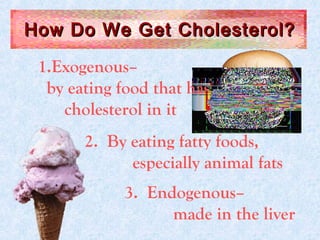
1.Exogenous–
by eating food that has
cholesterol in it
2. By eating fatty foods,
especially animal fats
3. Endogenous–
made in the liver
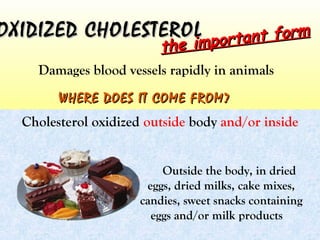
Outside the body, in dried
eggs, dried milks, cake mixes,
candies, sweet snacks containing
eggs and/or milk products
Cholesterol oxidized outside body and/or inside
OXIDIZED CHOLESTEROLOXIDIZED CHOLESTEROL
the important form
the important form
Damages blood vessels rapidly in animals
WHERE DOES IT COME FROM?WHERE DOES IT COME FROM?
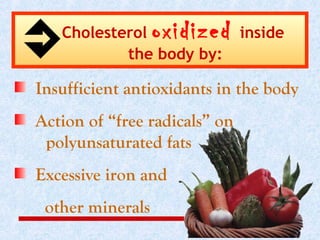
Cholesterol oxidized inside
the body by:
Insufficient antioxidants in the body
Action of “free radicals” on
polyunsaturated fats
Excessive iron and
other minerals
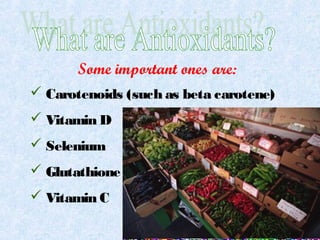
 Carotenoids (such as beta carotene)
 Vitamin D
 Selenium
 Glutathione
 Vitamin C
Some important ones are:
What about excessive iron in the body?
Several large studies suggest it increases
risk of heart attacks. Could this be the
reason that premenopausal women
seldom have coronary heart disease?
But the research is not yet clear on
this matter.
Must await better studies.
What is it?What is it?
A metabolite of the
amino acidmethionine
•At higher levels in the blood, get damage to
blood vessels, and plaque formation.
•Ideal levels under 12.
•Can also impair endothelial function,
leading to spasm of vessels and poor
relaxation.
•Also associated with cancer, & Alzheimer’s
Some are born with a rare
genetic defect of elevated
homocysteine and usually
die of heart attacks or
strokes early in life.
Deficiency of any of 3
vitamins can cause a
buildup in the blood:
1. Folic acid
2. Vitamin B-6
3. Vitamin B-12
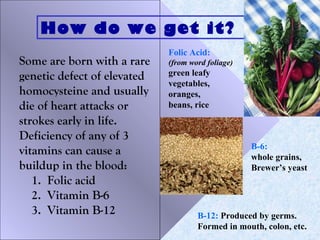
How do we get it?
Folic Acid:
(from word foliage)
green leafy
vegetables,
oranges,
beans, rice
B-6:
whole grains,
Brewer’s yeast
B-12: Produced by germs.
Formed in mouth, colon, etc.
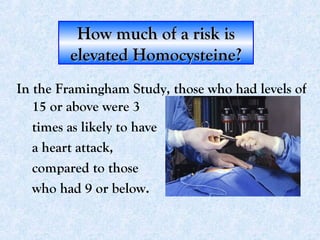
How much of a risk isHow much of a risk is
elevated Homocysteine?elevated Homocysteine?
15 or above were 3
times as likely to have
a heart attack,
compared to those
who had 9 or below.
In the Framingham Study, those who had levels of
Avoid Caffeine
One cup of coffee, tea, or cola may
raise the diastolic and systolic blood
pressure five to six points, raise
homocysteine, cholesterol, stress.
Avoid Caffeine
One cup of coffee, tea, or cola may
raise the diastolic and systolic blood
pressure five to six points, raise
homocysteine, cholesterol, stress.

2. cholesterol slides

  • 1.
    How Do WeGet Cholesterol?How Do We Get Cholesterol?   1.Exogenous– by eating food that has cholesterol in it 2. By eating fatty foods, especially animal fats 3. Endogenous– made in the liver
  • 2.
    Outside the body,in dried eggs, dried milks, cake mixes, candies, sweet snacks containing eggs and/or milk products Cholesterol oxidized outside body and/or inside OXIDIZED CHOLESTEROLOXIDIZED CHOLESTEROL the important form the important form Damages blood vessels rapidly in animals WHERE DOES IT COME FROM?WHERE DOES IT COME FROM?
  • 3.
    Cholesterol oxidized inside thebody by: Insufficient antioxidants in the body Action of “free radicals” on polyunsaturated fats Excessive iron and other minerals
  • 4.
     Carotenoids (suchas beta carotene)  Vitamin D  Selenium  Glutathione  Vitamin C Some important ones are:
  • 5.
    What about excessiveiron in the body? Several large studies suggest it increases risk of heart attacks. Could this be the reason that premenopausal women seldom have coronary heart disease? But the research is not yet clear on this matter. Must await better studies.
  • 6.
    What is it?Whatis it? A metabolite of the amino acidmethionine •At higher levels in the blood, get damage to blood vessels, and plaque formation. •Ideal levels under 12. •Can also impair endothelial function, leading to spasm of vessels and poor relaxation. •Also associated with cancer, & Alzheimer’s
  • 7.
    Some are bornwith a rare genetic defect of elevated homocysteine and usually die of heart attacks or strokes early in life. Deficiency of any of 3 vitamins can cause a buildup in the blood: 1. Folic acid 2. Vitamin B-6 3. Vitamin B-12 How do we get it? Folic Acid: (from word foliage) green leafy vegetables, oranges, beans, rice B-6: whole grains, Brewer’s yeast B-12: Produced by germs. Formed in mouth, colon, etc.
  • 8.
    How much ofa risk isHow much of a risk is elevated Homocysteine?elevated Homocysteine? 15 or above were 3 times as likely to have a heart attack, compared to those who had 9 or below. In the Framingham Study, those who had levels of
  • 9.
    Avoid Caffeine One cupof coffee, tea, or cola may raise the diastolic and systolic blood pressure five to six points, raise homocysteine, cholesterol, stress.
  • 10.
    Avoid Caffeine One cupof coffee, tea, or cola may raise the diastolic and systolic blood pressure five to six points, raise homocysteine, cholesterol, stress.