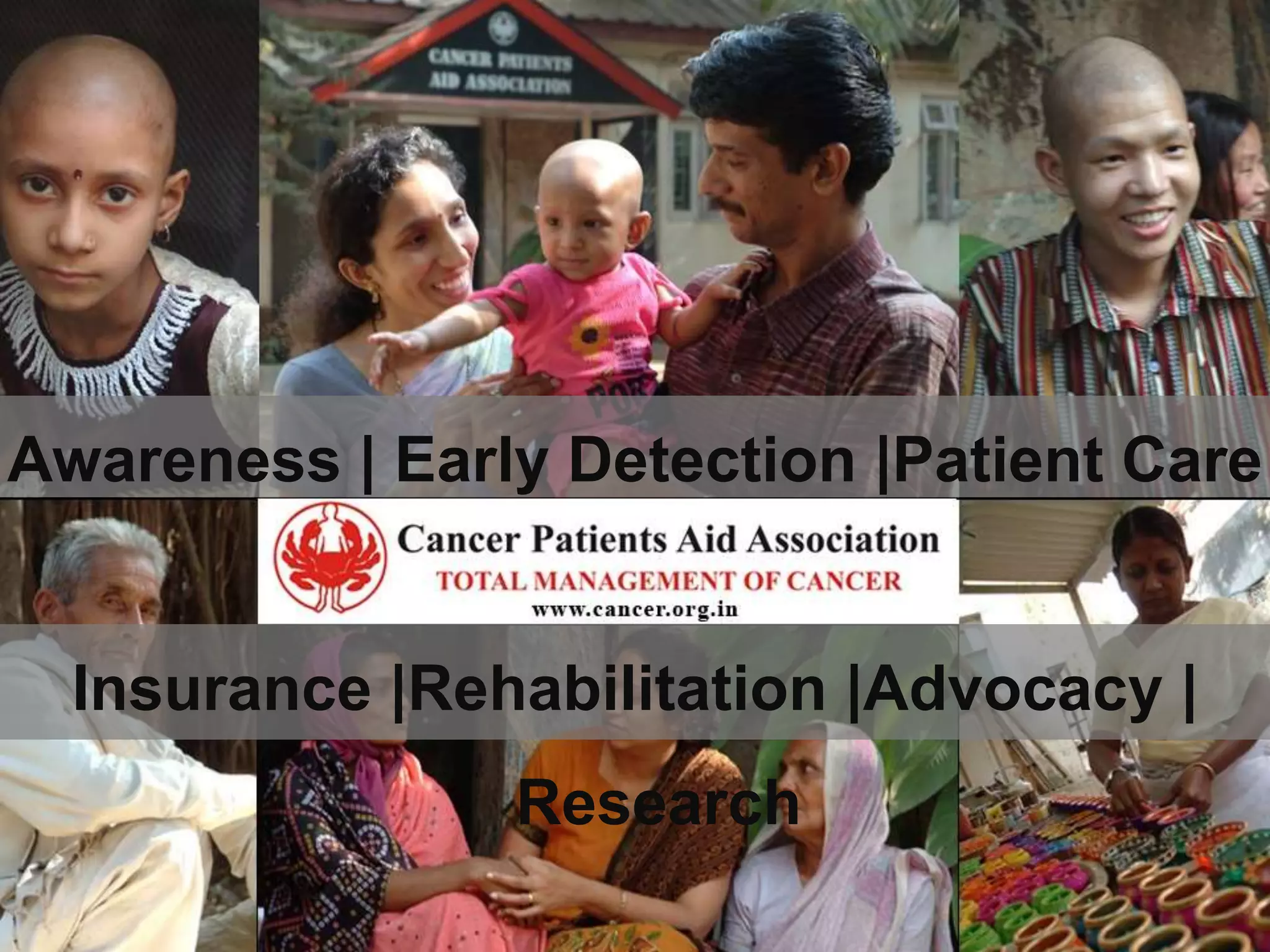
Awareness | Early Detection |Patient Care
Insurance |Rehabilitation |Advocacy |
Research
CPAA’S PHILOSOPHY
• Awareness & Education
• Early Detection
• Insurance
• Patient Care
• Rehabilitation
• Research
• Advocacy
Total Management of Cancer
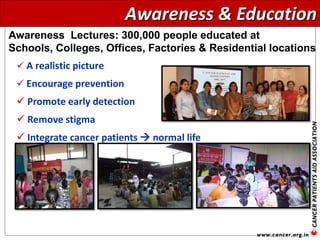
 A realistic picture
 Encourage prevention
 Promote early detection
 Remove stigma
 Integrate cancer patients  normal life
Awareness Lectures: 300,000 people educated at
Schools, Colleges, Offices, Factories & Residential locations
Awareness & Education
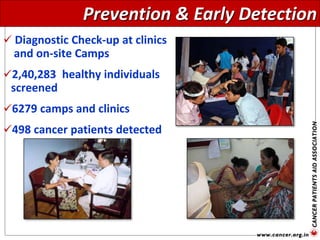
 Diagnostic Check-up at clinics
and on-site Camps
2,40,283 healthy individuals
screened
6279 camps and clinics
498 cancer patients detected
Prevention & Early Detection
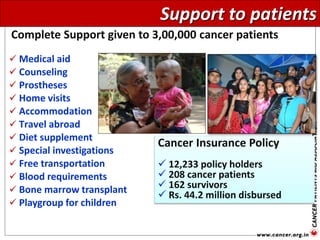
 Medical aid
 Counseling
 Prostheses
 Home visits
 Accommodation
 Travel abroad
 Diet supplement
 Special investigations
 Free transportation
 Blood requirements
 Bone marrow transplant
 Playgroup for children
Support to patients
Cancer Insurance Policy
 12,233 policy holders
 208 cancer patients
 162 survivors
 Rs. 44.2 million disbursed
Complete Support given to 3,00,000 cancer patients
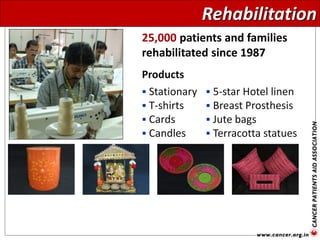
Rehabilitation
25,000 patients and families
rehabilitated since 1987
Products
 Stationary
 T-shirts
 Cards
 Candles
 5-star Hotel linen
 Breast Prosthesis
 Jute bags
 Terracotta statues
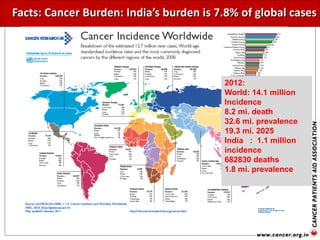
Facts: Cancer Burden: India’s burden is 7.8% of global cases
2012:
World: 14.1 million
Incidence
8.2 mi. death
32.6 mi. prevalence
19.3 mi. 2025
India : 1.1 million
incidence
682830 deaths
1.8 mi. prevalence
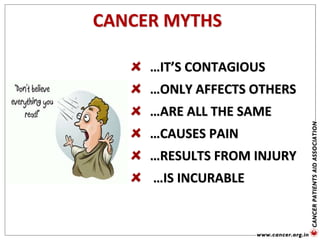
CANCER MYTHS
…IT’S CONTAGIOUS
…ONLY AFFECTS OTHERS
…ARE ALL THE SAME
…CAUSES PAIN
…RESULTS FROM INJURY
…IS INCURABLE
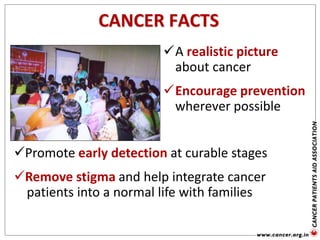
CANCER FACTS
A realistic picture
about cancer
Encourage prevention
wherever possible
Promote early detection at curable stages
Remove stigma and help integrate cancer
patients into a normal life with families
CANCER IS…
Uncontrolled Autonomous
division of cells 
Resulting in an abnormal
growth
Curable  if detected early
and treated in time
What Increases Risk of Cancer?
You can’t help it !
 Age
 Sex
 Race
 Family History
You can !!
Tobacco/ Smoking
Alcohol
Sedentary Lifestyle
Unhealthy diet
Obesity
Infections
Sun Exposure
CANCER CAUSATIVE FACTORS
» Tobacco Smoking, Smokeless Tobacco
lung, oral cavity, larynx, pharynx, stomach
» Alcohol  mouth, throat, larynx, breast, bowel, liver,
upper digestive system
» Infections - liver, cervical, stomach cancer, lymph/leuk
» UV Rays - skin
» Diet - bowel & stomach cancer
» Obesity - uterus, kidney, oesophagus, stomach, colon,
breast, prostate, gall bladder and pancreas cancer
» Lack of exercise – breast, colon
» Continuous irritation at the same spot ?? Kangri Cancer
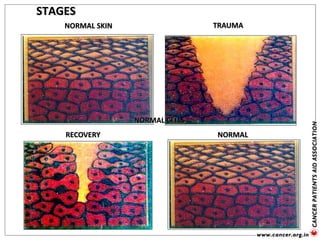
STAGES
NORMAL SKIN TRAUMA
NORMAL
NORMAL CELLS
RECOVERY
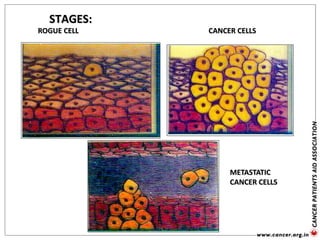
STAGES:
ROGUE CELL CANCER CELLS
METASTATIC
CANCER CELLS
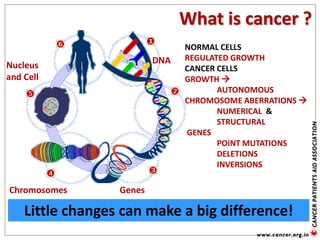
GenesChromosomes
Nucleus
and Cell
What is cancer ?
Little changes can make a big difference!
DNA
NORMAL CELLS
REGULATED GROWTH
CANCER CELLS
GROWTH 
AUTONOMOUS
CHROMOSOME ABERRATIONS 
NUMERICAL &
STRUCTURAL
GENES
POINT MUTATIONS
DELETIONS
INVERSIONS
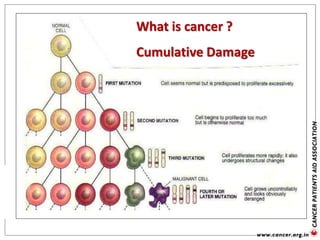
CANCER CELLS
What is cancer ?
Cumulative Damage
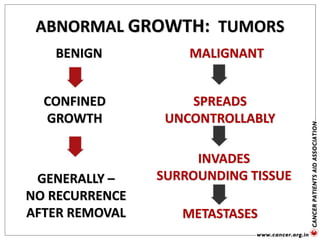
ABNORMAL GROWTH: TUMORS
CONFINED
GROWTH
BENIGN MALIGNANT
SPREADS
UNCONTROLLABLY
INVADES
SURROUNDING TISSUE
METASTASES
GENERALLY –
NO RECURRENCE
AFTER REMOVAL
… Does it really make a
difference?
Why all the fuss about…
Early Detection of Cancer
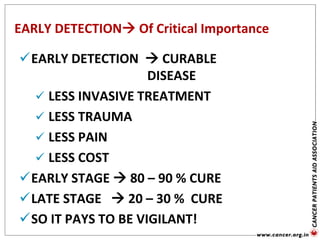
EARLY DETECTION Of Critical Importance
EARLY DETECTION  CURABLE
DISEASE
 LESS INVASIVE TREATMENT
 LESS TRAUMA
 LESS PAIN
 LESS COST
EARLY STAGE  80 – 90 % CURE
LATE STAGE  20 – 30 % CURE
SO IT PAYS TO BE VIGILANT!
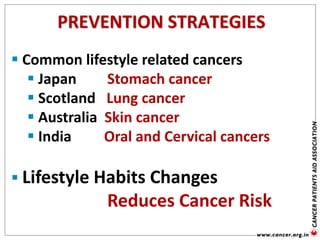
PREVENTION STRATEGIES
 Common lifestyle related cancers
 Japan Stomach cancer
 Scotland Lung cancer
 Australia Skin cancer
 India Oral and Cervical cancers
 Lifestyle Habits Changes
Reduces Cancer Risk
 Common cancers in India
 Breast cancer
 Cervical cancer
 Oral cancer
 Lung Cancer
 Prostate cancer
 These are also the cancers with
Early Warning Signs
EARLY DETECTION STRATEGIES
ORAL
CANCER
ORAL CANCER
• 90% of oral cancers are lifestyle induced
•~10% Virus (HPV) induced
• No tobacco habit and tobacco cessation
reduces risk of contracting oral cancer
• Unfortunately the habit is rampant in
India and finds social sanction
Early warning signs:
• Red, White or Black patches
• Difficulty in opening the mouth or
swallowing
• Persistent sore throat
• Change in voice
ORAL CANCER
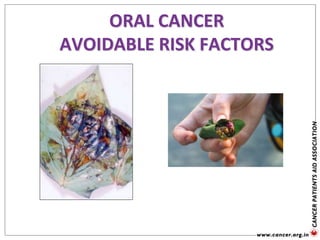
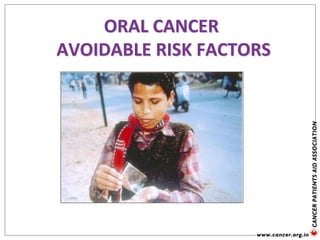
ORAL CANCER
AVOIDABLE RISK FACTORS
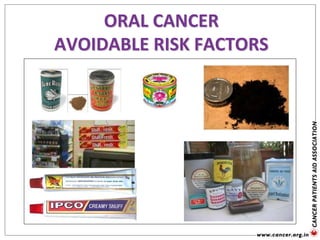
ORAL CANCER
AVOIDABLE RISK FACTORS
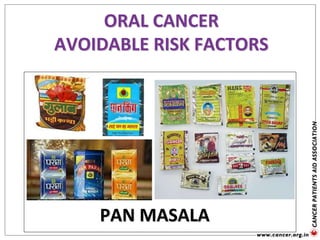
PAN MASALA
ORAL CANCER
AVOIDABLE RISK FACTORS
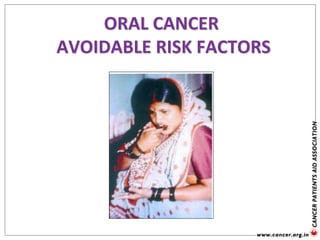
SOCIO CULTURAL PRACTICES
ORAL CANCER
AVOIDABLE RISK FACTORS
ORAL CANCER
AVOIDABLE RISK FACTORS
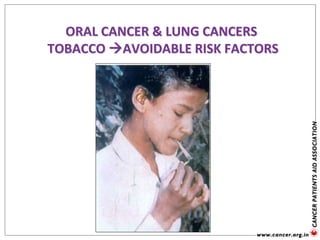
ORAL CANCER & LUNG CANCERS
TOBACCO AVOIDABLE RISK FACTORS
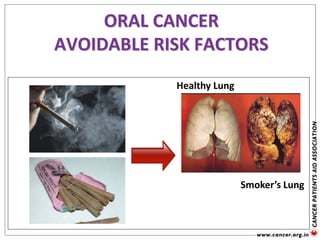
Healthy Lung
Smoker’s Lung
ORAL CANCER
AVOIDABLE RISK FACTORS
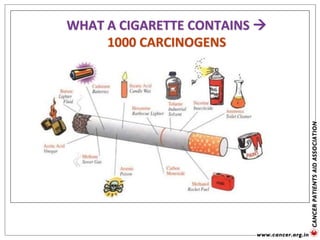
WHAT A CIGARETTE CONTAINS 
1000 CARCINOGENS
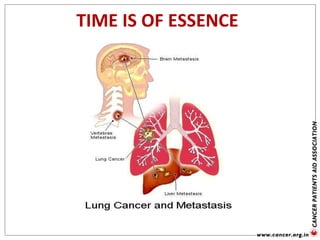
TIME IS OF ESSENCE
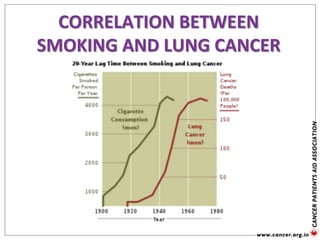
CORRELATION BETWEEN
SMOKING AND LUNG CANCER
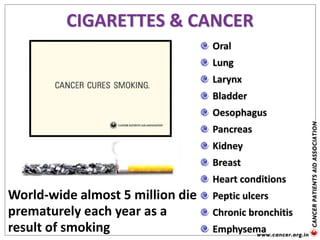
CIGARETTES & CANCER
Oral
Lung
Larynx
Bladder
Oesophagus
Pancreas
Kidney
Breast
Heart conditions
Peptic ulcers
Chronic bronchitis
Emphysema
World-wide almost 5 million die
prematurely each year as a
result of smoking
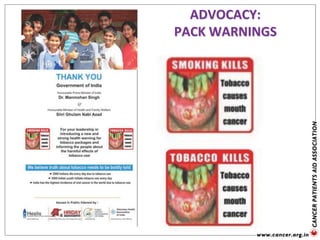
ADVOCACY:
PACK WARNINGS
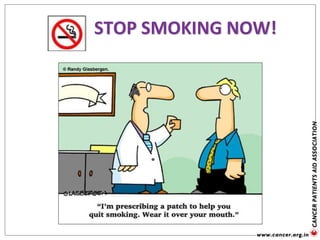
STOP SMOKING NOW!
BREAST
CANCER
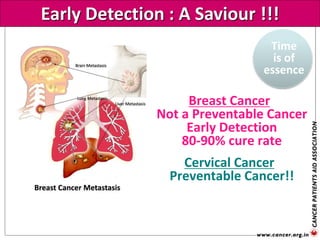
Early Detection : A Saviour !!!
Breast Cancer
Not a Preventable Cancer
Early Detection
80-90% cure rate
Cervical Cancer
Preventable Cancer!!
Time
is of
essence
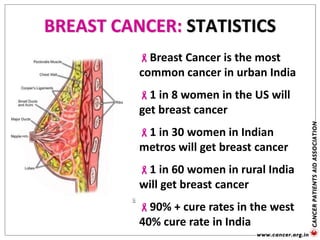
Breast Cancer is the most
common cancer in urban India
1 in 8 women in the US will
get breast cancer
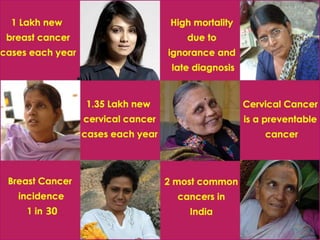
1 in 30 women in Indian
metros will get breast cancer
1 in 60 women in rural India
will get breast cancer
90% + cure rates in the west
40% cure rate in India
BREAST CANCER: STATISTICS
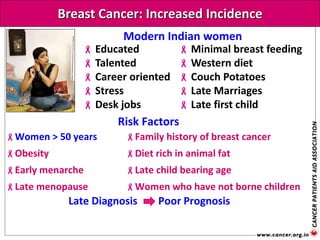
Breast Cancer: Increased Incidence
Women > 50 years
Obesity
Early menarche
Late menopause
Late Diagnosis Poor Prognosis
Family history of breast cancer
Diet rich in animal fat
Late child bearing age
Women who have not borne children
 Educated
 Talented
 Career oriented
 Stress
 Desk jobs
 Minimal breast feeding
 Western diet
 Couch Potatoes
 Late Marriages
 Late first child
Risk Factors
Modern Indian women
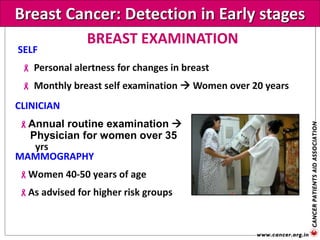
Breast Cancer: Detection in Early stages
SELF
 Personal alertness for changes in breast
 Monthly breast self examination  Women over 20 years
CLINICIAN
Annual routine examination 
Physician for women over 35
yrs
MAMMOGRAPHY
Women 40-50 years of age
As advised for higher risk groups
BREAST EXAMINATION
Early Onset Breast Cancer: < 45 years
5 – 12 % breast cancers: women below 45 years
Increased risk for Ovarian Cancer: Hereditary
Hereditary Breast and Ovarian Cancer
• Genes  BRCA1 / BRCA2
Mutation in BRCA1 / BRCA2 genes
• 85% lifetime risk Breast Cancer
• 67% lifetime risk Ovarian cancer
Ovarian Cancer:
Silent Killer
• A lethal cancer
in females
• 80% cases: late
presentation
• 20% - 5 yr
survival rate
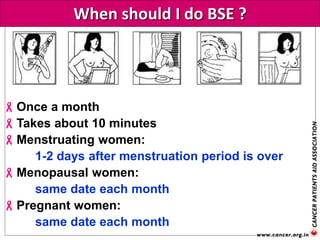
When should I do BSE ?
Once a month
Takes about 10 minutes
Menstruating women:
1-2 days after menstruation period is over
Menopausal women:
same date each month
Pregnant women:
same date each month
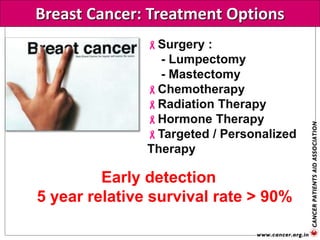
Breast Cancer: Treatment Options
Early detection
5 year relative survival rate > 90%
Surgery :
- Lumpectomy
- Mastectomy
Chemotherapy
Radiation Therapy
Hormone Therapy
Targeted / Personalized
Therapy
CERVICAL
CANCER
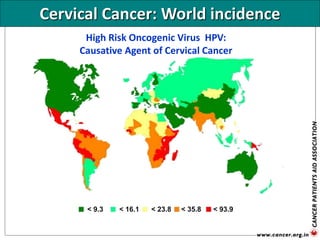
Cervical Cancer: World incidence
< 9.3 < 16.1 < 23.8 < 35.8 < 93.9
High Risk Oncogenic Virus HPV:
Causative Agent of Cervical Cancer
CERVICAL CANCER
Most common cancer in Indian
women
Caused 
Human Papilloma virus (HPV)
infection
Preventable by simple means
Earlier PAP test 
Cervical Cancer Risk Screening
HPV DNA PCR Testing
Preventable Cancer
High Cure Rates with Early Detection
Screening: Why not just Do PAPs ?
PAP smears / HPV detection
Pap smears are not sensitive (52% Sensitivity)
Pap smears: Poor reproducibility
Most women with an abnormal PAP only:
No cancer indication
HPV detection  99.7 % cervical cancer
HPV Indicates Risk
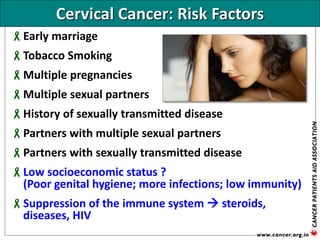
Cervical Cancer: Risk Factors
Early marriage
Tobacco Smoking
Multiple pregnancies
Multiple sexual partners
History of sexually transmitted disease
Partners with multiple sexual partners
Partners with sexually transmitted disease
Low socioeconomic status ?
(Poor genital hygiene; more infections; low immunity)
Suppression of the immune system  steroids,
diseases, HIV
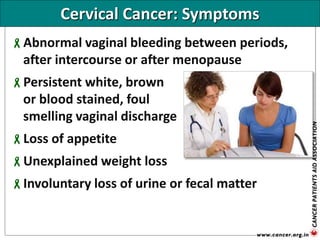
Cervical Cancer: Symptoms
Abnormal vaginal bleeding between periods,
after intercourse or after menopause
Persistent white, brown
or blood stained, foul
smelling vaginal discharge
Loss of appetite
Unexplained weight loss
Involuntary loss of urine or fecal matter
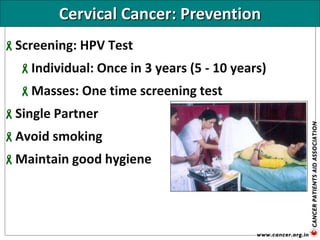
Cervical Cancer: Prevention
Screening: HPV Test
Individual: Once in 3 years (5 - 10 years)
Masses: One time screening test
Single Partner
Avoid smoking
Maintain good hygiene
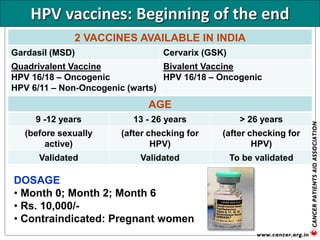
HPV vaccines: Beginning of the end
2 VACCINES AVAILABLE IN INDIA
Gardasil (MSD) Cervarix (GSK)
Quadrivalent Vaccine
HPV 16/18 – Oncogenic
HPV 6/11 – Non-Oncogenic (warts)
Bivalent Vaccine
HPV 16/18 – Oncogenic
AGE
9 -12 years 13 - 26 years > 26 years
(before sexually
active)
(after checking for
HPV)
(after checking for
HPV)
Validated Validated To be validated
DOSAGE
• Month 0; Month 2; Month 6
• Rs. 10,000/-
• Contraindicated: Pregnant women
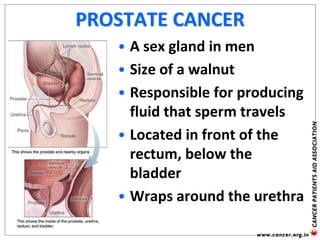
PROSTATE CANCER
PROSTATE CANCER
• A sex gland in men
• Size of a walnut
• Responsible for producing
fluid that sperm travels
• Located in front of the
rectum, below the
bladder
• Wraps around the urethra
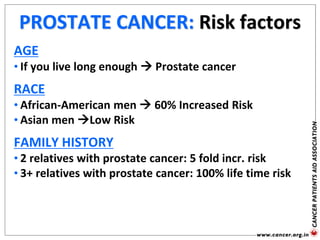
PROSTATE CANCER: Risk factors
AGE
• If you live long enough  Prostate cancer
RACE
• African-American men  60% Increased Risk
• Asian men Low Risk
FAMILY HISTORY
• 2 relatives with prostate cancer: 5 fold incr. risk
• 3+ relatives with prostate cancer: 100% life time risk
PROSTATE CANCER: Symptoms
Early Stages: CAN BE ASYMPTOMATIC
• Aching pains in genitals, lower abdomen, lower back
• Problems with sexual function
• Painful, frequent, urgent urination
• Slow urine stream and retention
• Blood in the urine
Advanced Stages:
• Loss of energy
• Persistent swelling in legs
• Pain in the back, spine, rib or hip
• Hard growth on prostate
• Enlarged lymph nodes
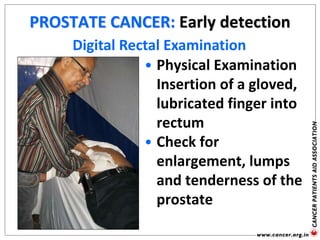
PROSTATE CANCER: Early detection
• Physical Examination
Insertion of a gloved,
lubricated finger into
rectum
• Check for
enlargement, lumps
and tenderness of the
prostate
Digital Rectal Examination
PROSTATE CANCER:
Screening / Early detection
Prostate Specific Antigen (PSA) Testing
• Higher than average PSA levels in the
bloodstream is a sign of abnormal cell
multiplication in the prostate?
• Is an Indication – Hyperplastic Prostate?
PROSTATE CANCER: Prevention
Lifestyle Choice
•Obesity
•Little physical activity
•Smoking
•High intake of fatty foods
WARNING SIGNS OF CANCER
Change in bowel habits
A sore that does not heal, particularly in the mouth
Unusual bleeding or discharge, especially in the
women after menopause
Thickening or lump in the breast or any part of the
body
Indigestion or difficulty in swallowing
Obvious change in size and color of a mole or a wart
Nagging cough or persistent hoarseness
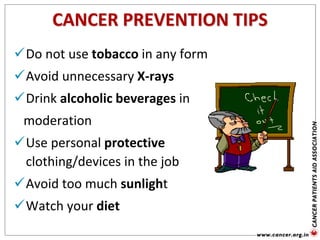
CANCER PREVENTION TIPS
Do not use tobacco in any form
Avoid unnecessary X-rays
Drink alcoholic beverages in
moderation
Use personal protective
clothing/devices in the job
Avoid too much sunlight
Watch your diet
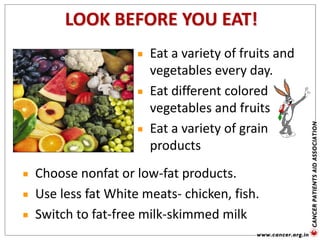
Eat a variety of fruits and
vegetables every day.
Eat different colored
vegetables and fruits
Eat a variety of grain
products
LOOK BEFORE YOU EAT!
Choose nonfat or low-fat products.
Use less fat White meats- chicken, fish.
Switch to fat-free milk-skimmed milk
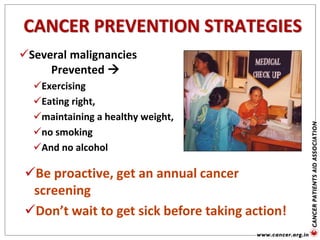
Several malignancies
Prevented 
Exercising
Eating right,
maintaining a healthy weight,
no smoking
And no alcohol
CANCER PREVENTION STRATEGIES
Be proactive, get an annual cancer
screening
Don’t wait to get sick before taking action!
CREATIVE STRATEGIES
- DO NOT WORK!
Never had a test!
Never been to Doctor! I hate them!
Never take medicines!
Now all is normal, so stopped medicines!
Miracle men and Miracle Medicines! So
many of them!
I am my own doctor! No fees too!
Genetic Cancer Etiology
Sporadic [70-75%
]
Strong hereditary
component [5-
10% ]
Familial or
Multifactorial [15-20%
]
One of the major
barriers to
diagnosis and
treatment is
STIGMA
STIGMA
• Global Issue
• Cancer = death great social
costs
• Not go for diagnosis or talk about it
• Ashamed and humiliated
• Malignant offensive
STIGMA
Fears of being blamed for the diagnosis
Ostracized by friends
Fear being left by a loved one
Society labels someone as
tainted
less desirable
handicapped
STIGMA
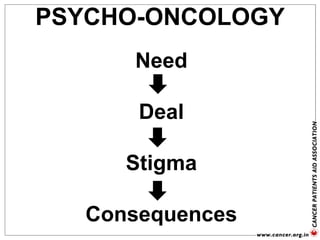
PSYCHO-ONCOLOGY
Need
Deal
Stigma
Consequences
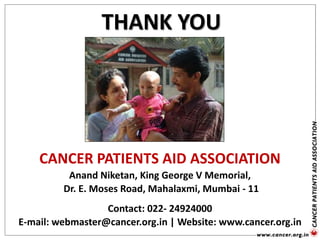
THANK YOU
CANCER PATIENTS AID ASSOCIATION
Anand Niketan, King George V Memorial,
Dr. E. Moses Road, Mahalaxmi, Mumbai - 11
Contact: 022- 24924000
E-mail: webmaster@cancer.org.in | Website: www.cancer.org.in
CANCER TREATMENT OPTIONS
•Surgery
•Chemotherapy
•Radiation Therapy
•Biologic or Targeted Therapy
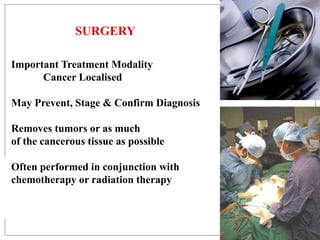
SURGERY
Important Treatment Modality
Cancer Localised
May Prevent, Stage & Confirm Diagnosis
Removes tumors or as much
of the cancerous tissue as possible
Often performed in conjunction with
chemotherapy or radiation therapy
CHEMOTHERAPY
Use of drugs to eliminate cancer cells
Unlike surgery, chemotherapy affects the entire body
Targets rapidly multiplying cancer cells and other types
of cells like hair follicle cells, Gastero-intestinal lining,
Bone marrow
Side effects include hair loss, Vomiting, Diarrhea
Single modality chemotherapy
Neoadjuvant – Before Surgery
Adjuvant - in conjunction with radiation therapy or
biologic therapy
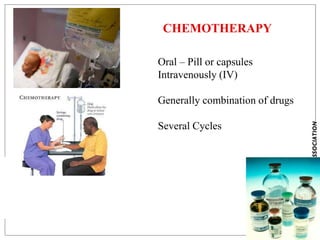
CHEMOTHERAPY
Oral – Pill or capsules
Intravenously (IV)
Generally combination of drugs
Several Cycles
RADIATION THERAPY
High-energy x-rays kill cancer cells and shrink tumors
Local therapy- only affects cancer cells in the treated area
It works by damaging a cancer cell's DNA, making it
unable to multiply. Cancer cells are highly sensitive to
radiation and typically die when treated. Nearby healthy
cells can be damaged as well, but are resilient and are able
to fully recover.
Radiation therapy may be given alone, along with
chemotherapy, and/or with surgery.
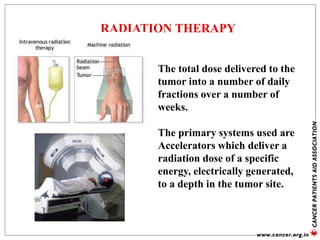
RADIATION THERAPY
The total dose delivered to the
tumor into a number of daily
fractions over a number of
weeks.
The primary systems used are
Accelerators which deliver a
radiation dose of a specific
energy, electrically generated,
to a depth in the tumor site.
BIOLOGIC / TARGETED THERAPY
Drugs that target characteristics of cancerous tumors
Some work by blocking the biological processes of
tumors that allow tumors to thrive and grow
Others cut off the blood supply to the tumor, causing it
to basically starve and die because of a lack of blood
Used in select cancers and not applicable for everyone
Given in conjunction with other cancer treatments
BIOLOGIC / TARGETED THERAPY
Glivec (imatinib mesylate – VEENAT) for CML
Rituxan or Rituximab treats non-Hodgkin's lymphoma
Herceptin or Trastuzumab treats breast cancer
IL-2 or Interleukin-2 treats certain types of cancer
Interferon alpha treats certain types of cancer
Thank You

Cancer Awareness

  • 1.
    Awareness | EarlyDetection |Patient Care Insurance |Rehabilitation |Advocacy | Research
  • 2.
    CPAA’S PHILOSOPHY • Awareness& Education • Early Detection • Insurance • Patient Care • Rehabilitation • Research • Advocacy Total Management of Cancer
  • 3.
     A realisticpicture  Encourage prevention  Promote early detection  Remove stigma  Integrate cancer patients  normal life Awareness Lectures: 300,000 people educated at Schools, Colleges, Offices, Factories & Residential locations Awareness & Education
  • 4.
     Diagnostic Check-upat clinics and on-site Camps 2,40,283 healthy individuals screened 6279 camps and clinics 498 cancer patients detected Prevention & Early Detection
  • 5.
     Medical aid Counseling  Prostheses  Home visits  Accommodation  Travel abroad  Diet supplement  Special investigations  Free transportation  Blood requirements  Bone marrow transplant  Playgroup for children Support to patients Cancer Insurance Policy  12,233 policy holders  208 cancer patients  162 survivors  Rs. 44.2 million disbursed Complete Support given to 3,00,000 cancer patients
  • 6.
    Rehabilitation 25,000 patients andfamilies rehabilitated since 1987 Products  Stationary  T-shirts  Cards  Candles  5-star Hotel linen  Breast Prosthesis  Jute bags  Terracotta statues
  • 7.
    Facts: Cancer Burden:India’s burden is 7.8% of global cases 2012: World: 14.1 million Incidence 8.2 mi. death 32.6 mi. prevalence 19.3 mi. 2025 India : 1.1 million incidence 682830 deaths 1.8 mi. prevalence
  • 8.
    CANCER MYTHS …IT’S CONTAGIOUS …ONLYAFFECTS OTHERS …ARE ALL THE SAME …CAUSES PAIN …RESULTS FROM INJURY …IS INCURABLE
  • 9.
    CANCER FACTS A realisticpicture about cancer Encourage prevention wherever possible Promote early detection at curable stages Remove stigma and help integrate cancer patients into a normal life with families
  • 10.
    CANCER IS… Uncontrolled Autonomous divisionof cells  Resulting in an abnormal growth Curable  if detected early and treated in time
  • 11.
    What Increases Riskof Cancer? You can’t help it !  Age  Sex  Race  Family History You can !! Tobacco/ Smoking Alcohol Sedentary Lifestyle Unhealthy diet Obesity Infections Sun Exposure
  • 12.
    CANCER CAUSATIVE FACTORS »Tobacco Smoking, Smokeless Tobacco lung, oral cavity, larynx, pharynx, stomach » Alcohol  mouth, throat, larynx, breast, bowel, liver, upper digestive system » Infections - liver, cervical, stomach cancer, lymph/leuk » UV Rays - skin » Diet - bowel & stomach cancer » Obesity - uterus, kidney, oesophagus, stomach, colon, breast, prostate, gall bladder and pancreas cancer » Lack of exercise – breast, colon » Continuous irritation at the same spot ?? Kangri Cancer
  • 13.
  • 14.
    STAGES: ROGUE CELL CANCERCELLS METASTATIC CANCER CELLS
  • 15.
    GenesChromosomes Nucleus and Cell What iscancer ? Little changes can make a big difference! DNA NORMAL CELLS REGULATED GROWTH CANCER CELLS GROWTH  AUTONOMOUS CHROMOSOME ABERRATIONS  NUMERICAL & STRUCTURAL GENES POINT MUTATIONS DELETIONS INVERSIONS
  • 16.
    CANCER CELLS What iscancer ? Cumulative Damage
  • 17.
    ABNORMAL GROWTH: TUMORS CONFINED GROWTH BENIGNMALIGNANT SPREADS UNCONTROLLABLY INVADES SURROUNDING TISSUE METASTASES GENERALLY – NO RECURRENCE AFTER REMOVAL
  • 18.
    … Does itreally make a difference? Why all the fuss about… Early Detection of Cancer
  • 19.
    EARLY DETECTION OfCritical Importance EARLY DETECTION  CURABLE DISEASE  LESS INVASIVE TREATMENT  LESS TRAUMA  LESS PAIN  LESS COST EARLY STAGE  80 – 90 % CURE LATE STAGE  20 – 30 % CURE SO IT PAYS TO BE VIGILANT!
  • 20.
    PREVENTION STRATEGIES  Commonlifestyle related cancers  Japan Stomach cancer  Scotland Lung cancer  Australia Skin cancer  India Oral and Cervical cancers  Lifestyle Habits Changes Reduces Cancer Risk
  • 21.
     Common cancersin India  Breast cancer  Cervical cancer  Oral cancer  Lung Cancer  Prostate cancer  These are also the cancers with Early Warning Signs EARLY DETECTION STRATEGIES
  • 22.
  • 23.
    ORAL CANCER • 90%of oral cancers are lifestyle induced •~10% Virus (HPV) induced • No tobacco habit and tobacco cessation reduces risk of contracting oral cancer • Unfortunately the habit is rampant in India and finds social sanction
  • 24.
    Early warning signs: •Red, White or Black patches • Difficulty in opening the mouth or swallowing • Persistent sore throat • Change in voice ORAL CANCER
  • 25.
  • 26.
  • 27.
  • 28.
  • 29.
  • 30.
  • 31.
    ORAL CANCER &LUNG CANCERS TOBACCO AVOIDABLE RISK FACTORS
  • 32.
    Healthy Lung Smoker’s Lung ORALCANCER AVOIDABLE RISK FACTORS
  • 33.
    WHAT A CIGARETTECONTAINS  1000 CARCINOGENS
  • 34.
    TIME IS OFESSENCE
  • 35.
  • 36.
    CIGARETTES & CANCER Oral Lung Larynx Bladder Oesophagus Pancreas Kidney Breast Heartconditions Peptic ulcers Chronic bronchitis Emphysema World-wide almost 5 million die prematurely each year as a result of smoking
  • 37.
  • 38.
  • 39.
  • 41.
    Early Detection :A Saviour !!! Breast Cancer Not a Preventable Cancer Early Detection 80-90% cure rate Cervical Cancer Preventable Cancer!! Time is of essence
  • 42.
    Breast Cancer isthe most common cancer in urban India 1 in 8 women in the US will get breast cancer 1 in 30 women in Indian metros will get breast cancer 1 in 60 women in rural India will get breast cancer 90% + cure rates in the west 40% cure rate in India BREAST CANCER: STATISTICS
  • 43.
    Breast Cancer: IncreasedIncidence Women > 50 years Obesity Early menarche Late menopause Late Diagnosis Poor Prognosis Family history of breast cancer Diet rich in animal fat Late child bearing age Women who have not borne children  Educated  Talented  Career oriented  Stress  Desk jobs  Minimal breast feeding  Western diet  Couch Potatoes  Late Marriages  Late first child Risk Factors Modern Indian women
  • 44.
    Breast Cancer: Detectionin Early stages SELF  Personal alertness for changes in breast  Monthly breast self examination  Women over 20 years CLINICIAN Annual routine examination  Physician for women over 35 yrs MAMMOGRAPHY Women 40-50 years of age As advised for higher risk groups BREAST EXAMINATION
  • 45.
    Early Onset BreastCancer: < 45 years 5 – 12 % breast cancers: women below 45 years Increased risk for Ovarian Cancer: Hereditary Hereditary Breast and Ovarian Cancer • Genes  BRCA1 / BRCA2 Mutation in BRCA1 / BRCA2 genes • 85% lifetime risk Breast Cancer • 67% lifetime risk Ovarian cancer Ovarian Cancer: Silent Killer • A lethal cancer in females • 80% cases: late presentation • 20% - 5 yr survival rate
  • 46.
    When should Ido BSE ? Once a month Takes about 10 minutes Menstruating women: 1-2 days after menstruation period is over Menopausal women: same date each month Pregnant women: same date each month
  • 47.
    Breast Cancer: TreatmentOptions Early detection 5 year relative survival rate > 90% Surgery : - Lumpectomy - Mastectomy Chemotherapy Radiation Therapy Hormone Therapy Targeted / Personalized Therapy
  • 48.
  • 49.
    Cervical Cancer: Worldincidence < 9.3 < 16.1 < 23.8 < 35.8 < 93.9 High Risk Oncogenic Virus HPV: Causative Agent of Cervical Cancer
  • 50.
    CERVICAL CANCER Most commoncancer in Indian women Caused  Human Papilloma virus (HPV) infection Preventable by simple means Earlier PAP test  Cervical Cancer Risk Screening HPV DNA PCR Testing Preventable Cancer High Cure Rates with Early Detection
  • 51.
    Screening: Why notjust Do PAPs ? PAP smears / HPV detection Pap smears are not sensitive (52% Sensitivity) Pap smears: Poor reproducibility Most women with an abnormal PAP only: No cancer indication HPV detection  99.7 % cervical cancer HPV Indicates Risk
  • 52.
    Cervical Cancer: RiskFactors Early marriage Tobacco Smoking Multiple pregnancies Multiple sexual partners History of sexually transmitted disease Partners with multiple sexual partners Partners with sexually transmitted disease Low socioeconomic status ? (Poor genital hygiene; more infections; low immunity) Suppression of the immune system  steroids, diseases, HIV
  • 53.
    Cervical Cancer: Symptoms Abnormalvaginal bleeding between periods, after intercourse or after menopause Persistent white, brown or blood stained, foul smelling vaginal discharge Loss of appetite Unexplained weight loss Involuntary loss of urine or fecal matter
  • 54.
    Cervical Cancer: Prevention Screening:HPV Test Individual: Once in 3 years (5 - 10 years) Masses: One time screening test Single Partner Avoid smoking Maintain good hygiene
  • 55.
    HPV vaccines: Beginningof the end 2 VACCINES AVAILABLE IN INDIA Gardasil (MSD) Cervarix (GSK) Quadrivalent Vaccine HPV 16/18 – Oncogenic HPV 6/11 – Non-Oncogenic (warts) Bivalent Vaccine HPV 16/18 – Oncogenic AGE 9 -12 years 13 - 26 years > 26 years (before sexually active) (after checking for HPV) (after checking for HPV) Validated Validated To be validated DOSAGE • Month 0; Month 2; Month 6 • Rs. 10,000/- • Contraindicated: Pregnant women
  • 56.
  • 57.
    PROSTATE CANCER • Asex gland in men • Size of a walnut • Responsible for producing fluid that sperm travels • Located in front of the rectum, below the bladder • Wraps around the urethra
  • 58.
    PROSTATE CANCER: Riskfactors AGE • If you live long enough  Prostate cancer RACE • African-American men  60% Increased Risk • Asian men Low Risk FAMILY HISTORY • 2 relatives with prostate cancer: 5 fold incr. risk • 3+ relatives with prostate cancer: 100% life time risk
  • 59.
    PROSTATE CANCER: Symptoms EarlyStages: CAN BE ASYMPTOMATIC • Aching pains in genitals, lower abdomen, lower back • Problems with sexual function • Painful, frequent, urgent urination • Slow urine stream and retention • Blood in the urine Advanced Stages: • Loss of energy • Persistent swelling in legs • Pain in the back, spine, rib or hip • Hard growth on prostate • Enlarged lymph nodes
  • 60.
    PROSTATE CANCER: Earlydetection • Physical Examination Insertion of a gloved, lubricated finger into rectum • Check for enlargement, lumps and tenderness of the prostate Digital Rectal Examination
  • 61.
    PROSTATE CANCER: Screening /Early detection Prostate Specific Antigen (PSA) Testing • Higher than average PSA levels in the bloodstream is a sign of abnormal cell multiplication in the prostate? • Is an Indication – Hyperplastic Prostate?
  • 62.
    PROSTATE CANCER: Prevention LifestyleChoice •Obesity •Little physical activity •Smoking •High intake of fatty foods
  • 63.
    WARNING SIGNS OFCANCER Change in bowel habits A sore that does not heal, particularly in the mouth Unusual bleeding or discharge, especially in the women after menopause Thickening or lump in the breast or any part of the body Indigestion or difficulty in swallowing Obvious change in size and color of a mole or a wart Nagging cough or persistent hoarseness
  • 64.
    CANCER PREVENTION TIPS Donot use tobacco in any form Avoid unnecessary X-rays Drink alcoholic beverages in moderation Use personal protective clothing/devices in the job Avoid too much sunlight Watch your diet
  • 65.
    Eat a varietyof fruits and vegetables every day. Eat different colored vegetables and fruits Eat a variety of grain products LOOK BEFORE YOU EAT! Choose nonfat or low-fat products. Use less fat White meats- chicken, fish. Switch to fat-free milk-skimmed milk
  • 66.
    Several malignancies Prevented  Exercising Eatingright, maintaining a healthy weight, no smoking And no alcohol CANCER PREVENTION STRATEGIES Be proactive, get an annual cancer screening Don’t wait to get sick before taking action!
  • 67.
    CREATIVE STRATEGIES - DONOT WORK! Never had a test! Never been to Doctor! I hate them! Never take medicines! Now all is normal, so stopped medicines! Miracle men and Miracle Medicines! So many of them! I am my own doctor! No fees too!
  • 68.
    Genetic Cancer Etiology Sporadic[70-75% ] Strong hereditary component [5- 10% ] Familial or Multifactorial [15-20% ]
  • 69.
    One of themajor barriers to diagnosis and treatment is STIGMA STIGMA
  • 70.
    • Global Issue •Cancer = death great social costs • Not go for diagnosis or talk about it • Ashamed and humiliated • Malignant offensive STIGMA
  • 71.
    Fears of beingblamed for the diagnosis Ostracized by friends Fear being left by a loved one Society labels someone as tainted less desirable handicapped STIGMA
  • 72.
  • 73.
    THANK YOU CANCER PATIENTSAID ASSOCIATION Anand Niketan, King George V Memorial, Dr. E. Moses Road, Mahalaxmi, Mumbai - 11 Contact: 022- 24924000 E-mail: webmaster@cancer.org.in | Website: www.cancer.org.in
  • 74.
  • 75.
    SURGERY Important Treatment Modality CancerLocalised May Prevent, Stage & Confirm Diagnosis Removes tumors or as much of the cancerous tissue as possible Often performed in conjunction with chemotherapy or radiation therapy
  • 76.
    CHEMOTHERAPY Use of drugsto eliminate cancer cells Unlike surgery, chemotherapy affects the entire body Targets rapidly multiplying cancer cells and other types of cells like hair follicle cells, Gastero-intestinal lining, Bone marrow Side effects include hair loss, Vomiting, Diarrhea Single modality chemotherapy Neoadjuvant – Before Surgery Adjuvant - in conjunction with radiation therapy or biologic therapy
  • 77.
    CHEMOTHERAPY Oral – Pillor capsules Intravenously (IV) Generally combination of drugs Several Cycles
  • 78.
    RADIATION THERAPY High-energy x-rayskill cancer cells and shrink tumors Local therapy- only affects cancer cells in the treated area It works by damaging a cancer cell's DNA, making it unable to multiply. Cancer cells are highly sensitive to radiation and typically die when treated. Nearby healthy cells can be damaged as well, but are resilient and are able to fully recover. Radiation therapy may be given alone, along with chemotherapy, and/or with surgery.
  • 79.
    RADIATION THERAPY The totaldose delivered to the tumor into a number of daily fractions over a number of weeks. The primary systems used are Accelerators which deliver a radiation dose of a specific energy, electrically generated, to a depth in the tumor site.
  • 80.
    BIOLOGIC / TARGETEDTHERAPY Drugs that target characteristics of cancerous tumors Some work by blocking the biological processes of tumors that allow tumors to thrive and grow Others cut off the blood supply to the tumor, causing it to basically starve and die because of a lack of blood Used in select cancers and not applicable for everyone Given in conjunction with other cancer treatments
  • 81.
    BIOLOGIC / TARGETEDTHERAPY Glivec (imatinib mesylate – VEENAT) for CML Rituxan or Rituximab treats non-Hodgkin's lymphoma Herceptin or Trastuzumab treats breast cancer IL-2 or Interleukin-2 treats certain types of cancer Interferon alpha treats certain types of cancer
  • 82.