CAMERA ANGLES AND
SHOTS
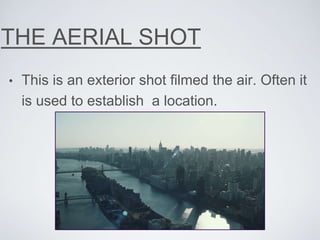
THE AERIAL SHOT
• This is an exterior shot filmed the air. Often it
is used to establish a location.
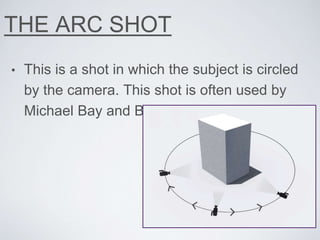
THE ARC SHOT
• This is a shot in which the subject is circled
by the camera. This shot is often used by
Michael Bay and Brian De Palma.
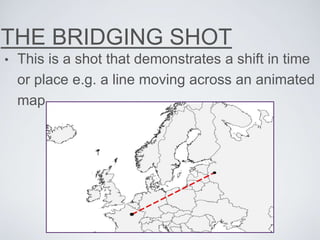
THE BRIDGING SHOT
• This is a shot that demonstrates a shift in time
or place e.g. a line moving across an animated
map.
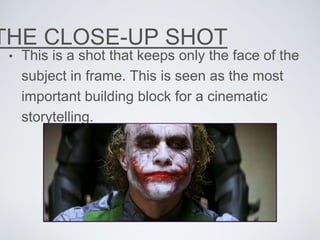
THE CLOSE-UP SHOT
• This is a shot that keeps only the face of the
subject in frame. This is seen as the most
important building block for a cinematic
storytelling.
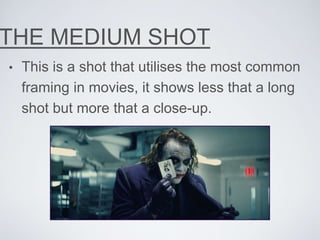
THE MEDIUM SHOT
• This is a shot that utilises the most common
framing in movies, it shows less that a long
shot but more that a close-up.
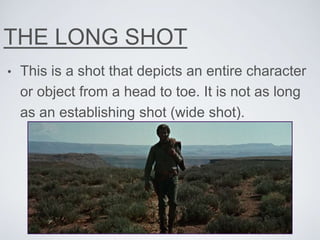
THE LONG SHOT
• This is a shot that depicts an entire character
or object from a head to toe. It is not as long
as an establishing shot (wide shot).
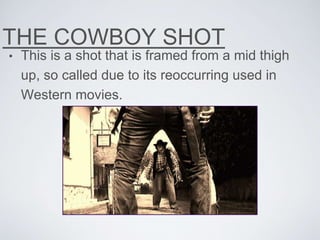
THE COWBOY SHOT
• This is a shot that is framed from a mid thigh
up, so called due to its reoccurring used in
Western movies.
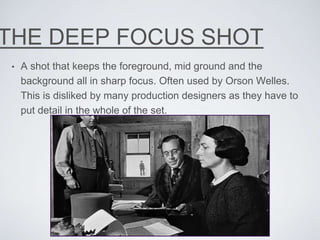
THE DEEP FOCUS SHOT
• A shot that keeps the foreground, mid ground and the
background all in sharp focus. Often used by Orson Welles.
This is disliked by many production designers as they have to
put detail in the whole of the set.
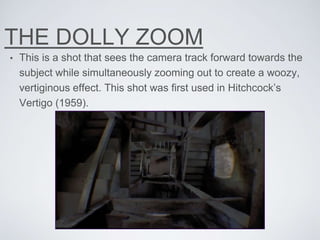
THE DOLLY ZOOM
• This is a shot that sees the camera track forward towards the
subject while simultaneously zooming out to create a woozy,
vertiginous effect. This shot was first used in Hitchcock’s
Vertigo (1959).
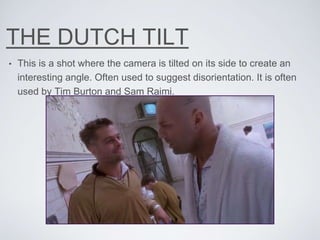
THE DUTCH TILT
• This is a shot where the camera is tilted on its side to create an
interesting angle. Often used to suggest disorientation. It is often
used by Tim Burton and Sam Raimi.
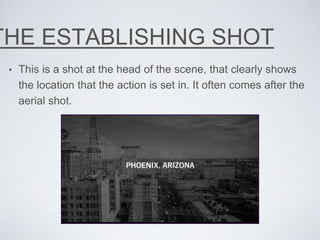
THE ESTABLISHING SHOT
• This is a shot at the head of the scene, that clearly shows
the location that the action is set in. It often comes after the
aerial shot.
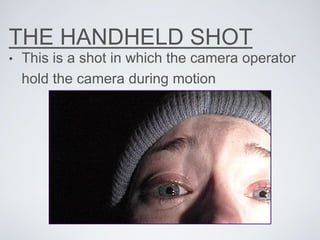
THE HANDHELD SHOT
• This is a shot in which the camera operator
hold the camera during motion
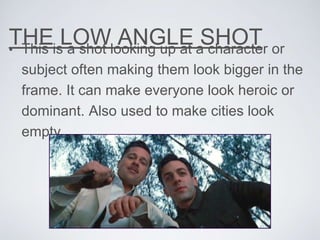
THE LOW ANGLE SHOT• This is a shot looking up at a character or
subject often making them look bigger in the
frame. It can make everyone look heroic or
dominant. Also used to make cities look
empty
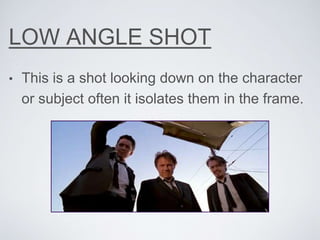
LOW ANGLE SHOT
• This is a shot looking down on the character
or subject often it isolates them in the frame.
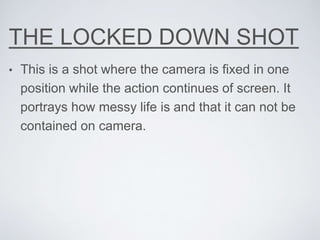
THE LOCKED DOWN SHOT
• This is a shot where the camera is fixed in one
position while the action continues of screen. It
portrays how messy life is and that it can not be
contained on camera.
THE LIBARY SHOT
• This a pre-existing shot of a location.
Typically a wild animal that is taken from a
library. mThis tells the viewer that the film is
older.
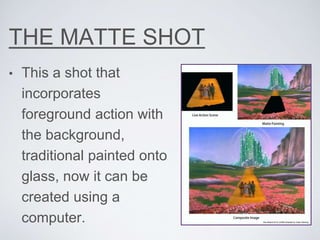
THE MATTE SHOT
• This a shot that
incorporates
foreground action with
the background,
traditional painted onto
glass, now it can be
created using a
computer.
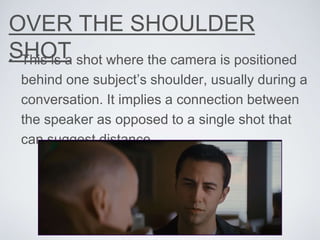
OVER THE SHOULDER
SHOT• This is a shot where the camera is positioned
behind one subject’s shoulder, usually during a
conversation. It implies a connection between
the speaker as opposed to a single shot that
can suggest distance.
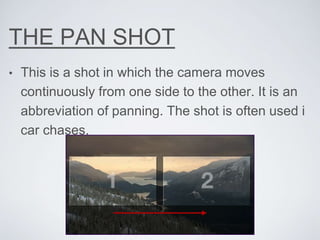
THE PAN SHOT
• This is a shot in which the camera moves
continuously from one side to the other. It is an
abbreviation of panning. The shot is often used i
car chases.
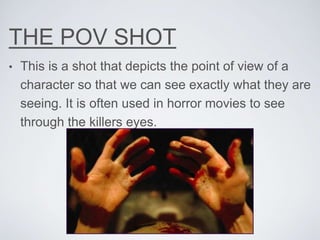
THE POV SHOT
• This is a shot that depicts the point of view of a
character so that we can see exactly what they are
seeing. It is often used in horror movies to see
through the killers eyes.
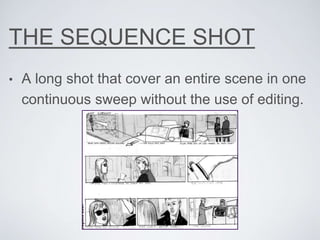
THE SEQUENCE SHOT
• A long shot that cover an entire scene in one
continuous sweep without the use of editing.
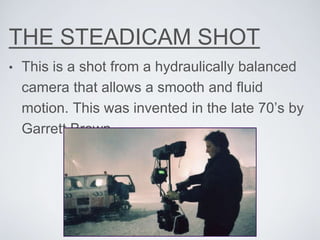
THE STEADICAM SHOT
• This is a shot from a hydraulically balanced
camera that allows a smooth and fluid
motion. This was invented in the late 70’s by
Garrett Brown.
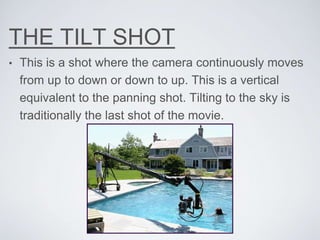
THE TILT SHOT
• This is a shot where the camera continuously moves
from up to down or down to up. This is a vertical
equivalent to the panning shot. Tilting to the sky is
traditionally the last shot of the movie.
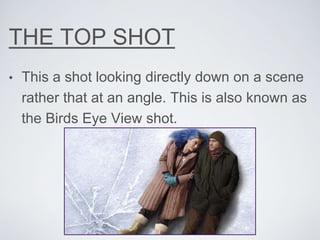
THE TOP SHOT
• This a shot looking directly down on a scene
rather that at an angle. This is also known as
the Birds Eye View shot.
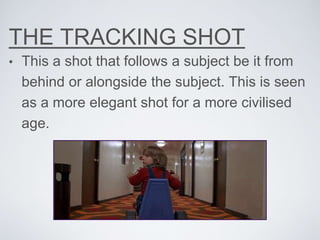
THE TRACKING SHOT
• This a shot that follows a subject be it from
behind or alongside the subject. This is seen
as a more elegant shot for a more civilised
age.
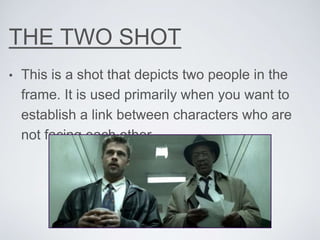
THE TWO SHOT
• This is a shot that depicts two people in the
frame. It is used primarily when you want to
establish a link between characters who are
not facing each other.
THE WHIP PAN
• This is a shot that is the same as the pan
shot but is so fast that the picture blurs
beyond recognition. Usually companied by a
whoosh sound.
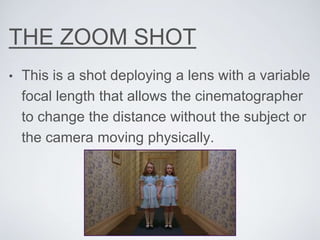
THE ZOOM SHOT
• This is a shot deploying a lens with a variable
focal length that allows the cinematographer
to change the distance without the subject or
the camera moving physically.
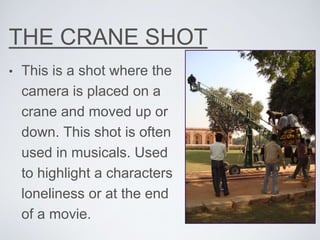
THE CRANE SHOT
• This is a shot where the
camera is placed on a
crane and moved up or
down. This shot is often
used in musicals. Used
to highlight a characters
loneliness or at the end
of a movie.

Camera angles and shots

  • 1.
  • 2.
    THE AERIAL SHOT •This is an exterior shot filmed the air. Often it is used to establish a location.
  • 3.
    THE ARC SHOT •This is a shot in which the subject is circled by the camera. This shot is often used by Michael Bay and Brian De Palma.
  • 4.
    THE BRIDGING SHOT •This is a shot that demonstrates a shift in time or place e.g. a line moving across an animated map.
  • 5.
    THE CLOSE-UP SHOT •This is a shot that keeps only the face of the subject in frame. This is seen as the most important building block for a cinematic storytelling.
  • 6.
    THE MEDIUM SHOT •This is a shot that utilises the most common framing in movies, it shows less that a long shot but more that a close-up.
  • 7.
    THE LONG SHOT •This is a shot that depicts an entire character or object from a head to toe. It is not as long as an establishing shot (wide shot).
  • 8.
    THE COWBOY SHOT •This is a shot that is framed from a mid thigh up, so called due to its reoccurring used in Western movies.
  • 9.
    THE DEEP FOCUSSHOT • A shot that keeps the foreground, mid ground and the background all in sharp focus. Often used by Orson Welles. This is disliked by many production designers as they have to put detail in the whole of the set.
  • 10.
    THE DOLLY ZOOM •This is a shot that sees the camera track forward towards the subject while simultaneously zooming out to create a woozy, vertiginous effect. This shot was first used in Hitchcock’s Vertigo (1959).
  • 11.
    THE DUTCH TILT •This is a shot where the camera is tilted on its side to create an interesting angle. Often used to suggest disorientation. It is often used by Tim Burton and Sam Raimi.
  • 12.
    THE ESTABLISHING SHOT •This is a shot at the head of the scene, that clearly shows the location that the action is set in. It often comes after the aerial shot.
  • 13.
    THE HANDHELD SHOT •This is a shot in which the camera operator hold the camera during motion
  • 14.
    THE LOW ANGLESHOT• This is a shot looking up at a character or subject often making them look bigger in the frame. It can make everyone look heroic or dominant. Also used to make cities look empty
  • 15.
    LOW ANGLE SHOT •This is a shot looking down on the character or subject often it isolates them in the frame.
  • 16.
    THE LOCKED DOWNSHOT • This is a shot where the camera is fixed in one position while the action continues of screen. It portrays how messy life is and that it can not be contained on camera.
  • 17.
    THE LIBARY SHOT •This a pre-existing shot of a location. Typically a wild animal that is taken from a library. mThis tells the viewer that the film is older.
  • 18.
    THE MATTE SHOT •This a shot that incorporates foreground action with the background, traditional painted onto glass, now it can be created using a computer.
  • 19.
    OVER THE SHOULDER SHOT•This is a shot where the camera is positioned behind one subject’s shoulder, usually during a conversation. It implies a connection between the speaker as opposed to a single shot that can suggest distance.
  • 20.
    THE PAN SHOT •This is a shot in which the camera moves continuously from one side to the other. It is an abbreviation of panning. The shot is often used i car chases.
  • 21.
    THE POV SHOT •This is a shot that depicts the point of view of a character so that we can see exactly what they are seeing. It is often used in horror movies to see through the killers eyes.
  • 22.
    THE SEQUENCE SHOT •A long shot that cover an entire scene in one continuous sweep without the use of editing.
  • 23.
    THE STEADICAM SHOT •This is a shot from a hydraulically balanced camera that allows a smooth and fluid motion. This was invented in the late 70’s by Garrett Brown.
  • 24.
    THE TILT SHOT •This is a shot where the camera continuously moves from up to down or down to up. This is a vertical equivalent to the panning shot. Tilting to the sky is traditionally the last shot of the movie.
  • 25.
    THE TOP SHOT •This a shot looking directly down on a scene rather that at an angle. This is also known as the Birds Eye View shot.
  • 26.
    THE TRACKING SHOT •This a shot that follows a subject be it from behind or alongside the subject. This is seen as a more elegant shot for a more civilised age.
  • 27.
    THE TWO SHOT •This is a shot that depicts two people in the frame. It is used primarily when you want to establish a link between characters who are not facing each other.
  • 28.
    THE WHIP PAN •This is a shot that is the same as the pan shot but is so fast that the picture blurs beyond recognition. Usually companied by a whoosh sound.
  • 29.
    THE ZOOM SHOT •This is a shot deploying a lens with a variable focal length that allows the cinematographer to change the distance without the subject or the camera moving physically.
  • 30.
    THE CRANE SHOT •This is a shot where the camera is placed on a crane and moved up or down. This shot is often used in musicals. Used to highlight a characters loneliness or at the end of a movie.