



A Lecture by Prof. Dr. Arminda V. Santiago 
SCIM 2103 2nd Semester 2014/2015 (A141) 
October 9, 2014
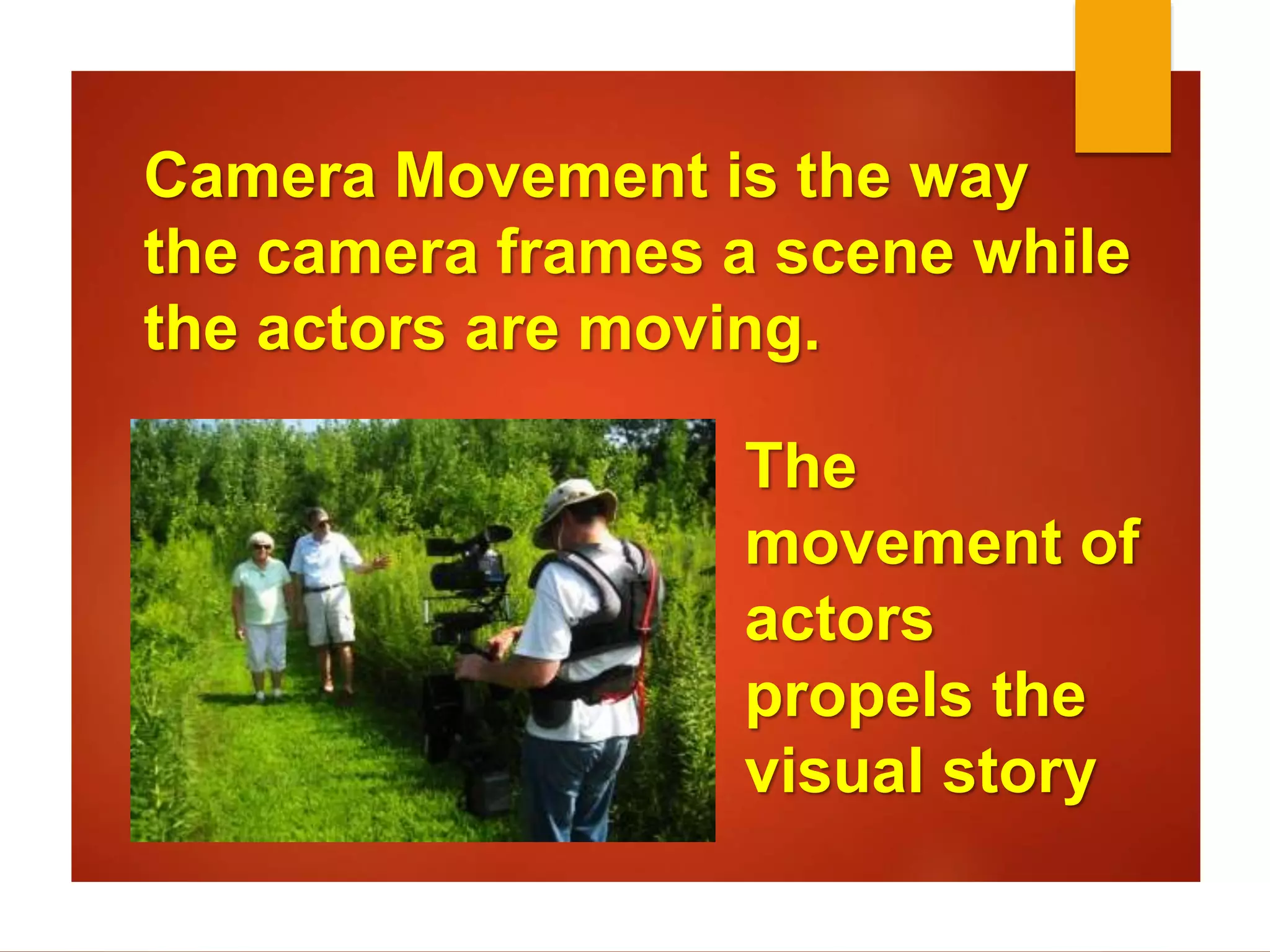
Camera Movement is the way 
the camera frames a scene while 
the actors are moving. 
The 
movement of 
actors 
propels the 
visual story
Camera movement is the same 
in context as MOBILE 
FRAMING 
The mobile frame means that 
parameters such as camera 
height, camera angle, camera 
level and distance may all change 
during the course of a shot.
The camera’s perspective 
not only changes from shot 
to shot but it can also shift 
and move within the shot 
Camera movement shifts the 
boundaries and coordinates of 
the frame
The Pan and Tilt 
The Dolly or Tracking 
The Boom or Crane 
Steadicam
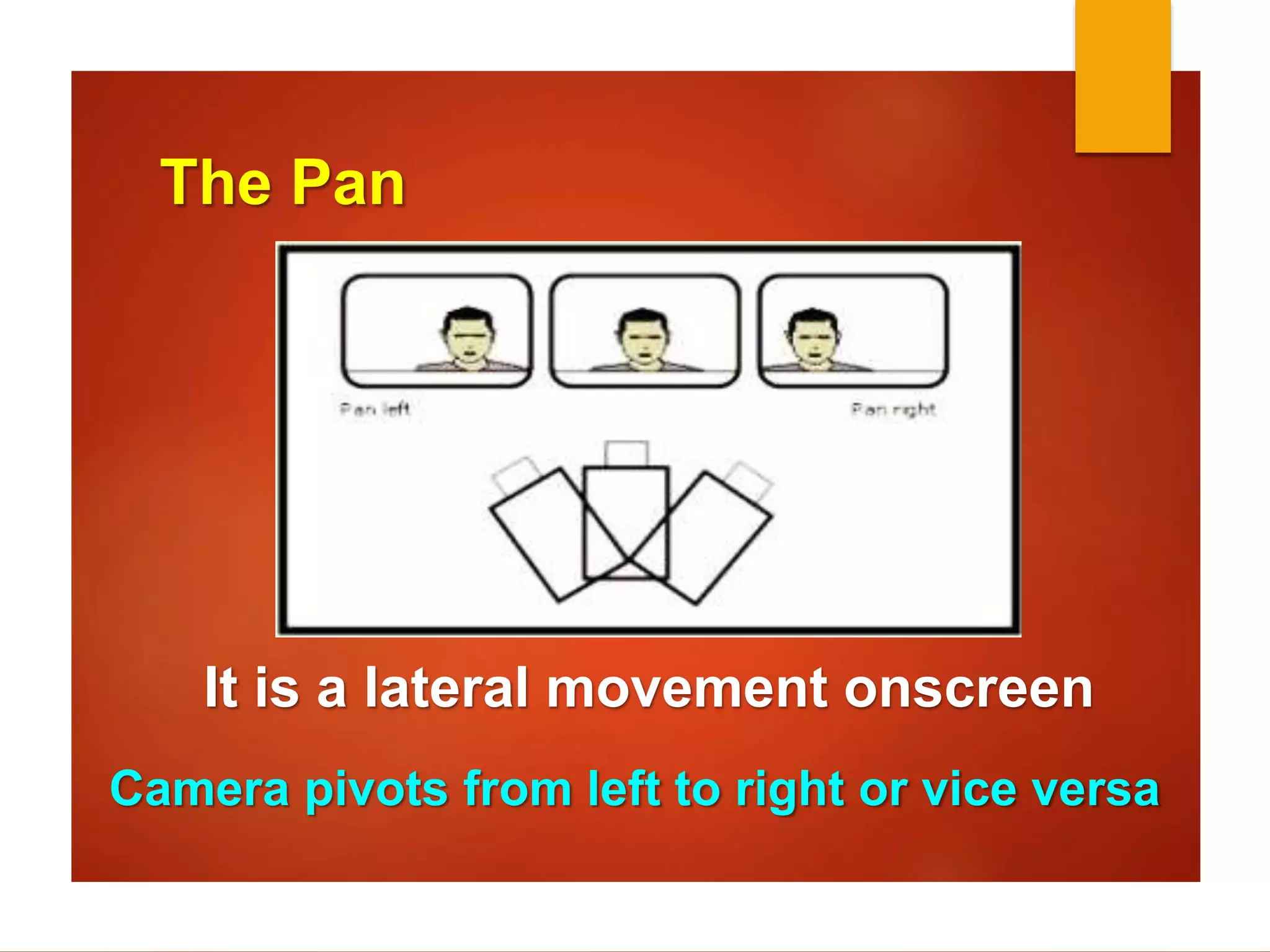
The Pan 
It is a lateral movement onscreen 
Camera pivots from left to right or vice versa
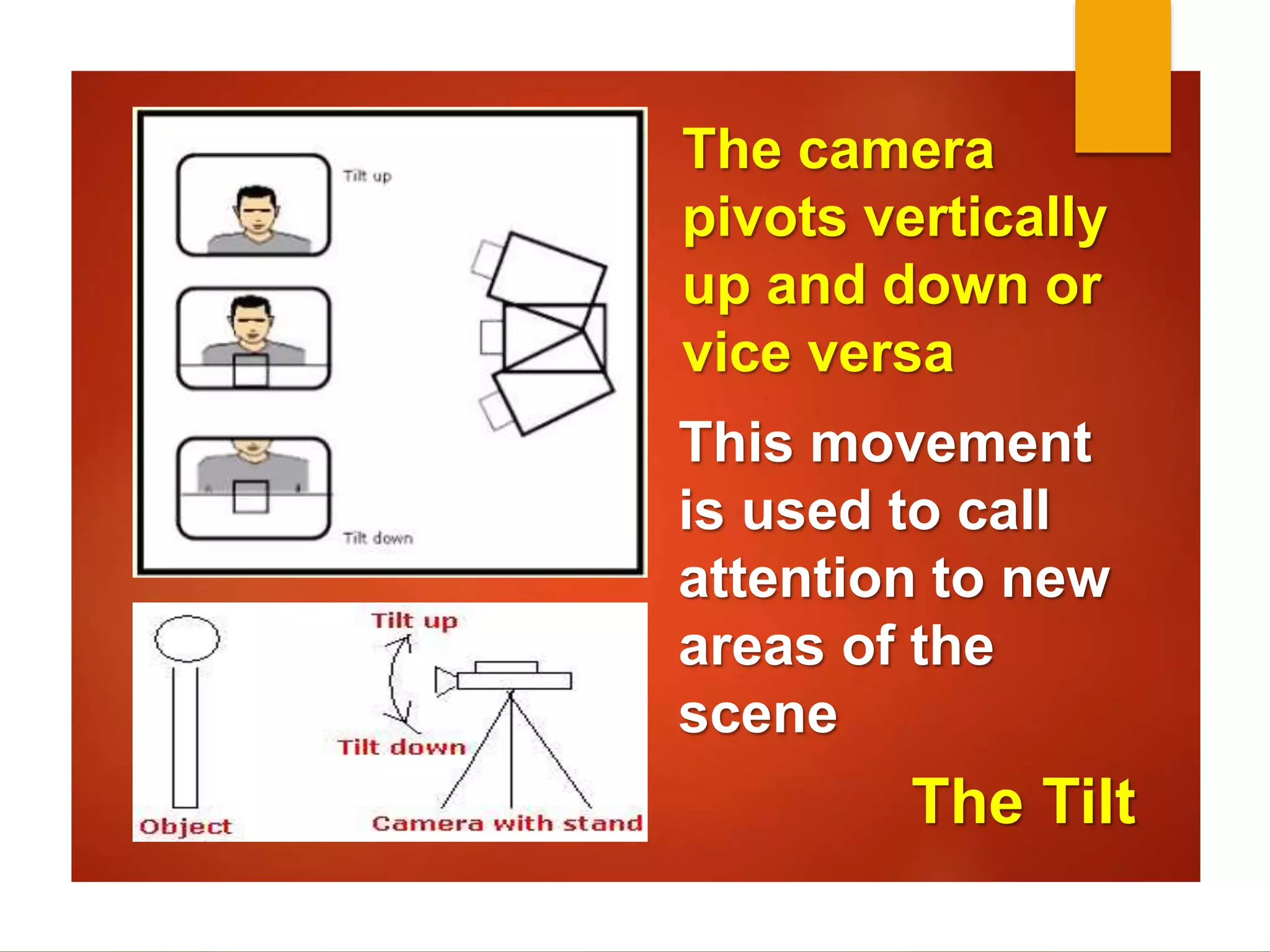
The camera 
pivots vertically 
up and down or 
vice versa 
This movement 
is used to call 
attention to new 
areas of the 
scene 
The Tilt
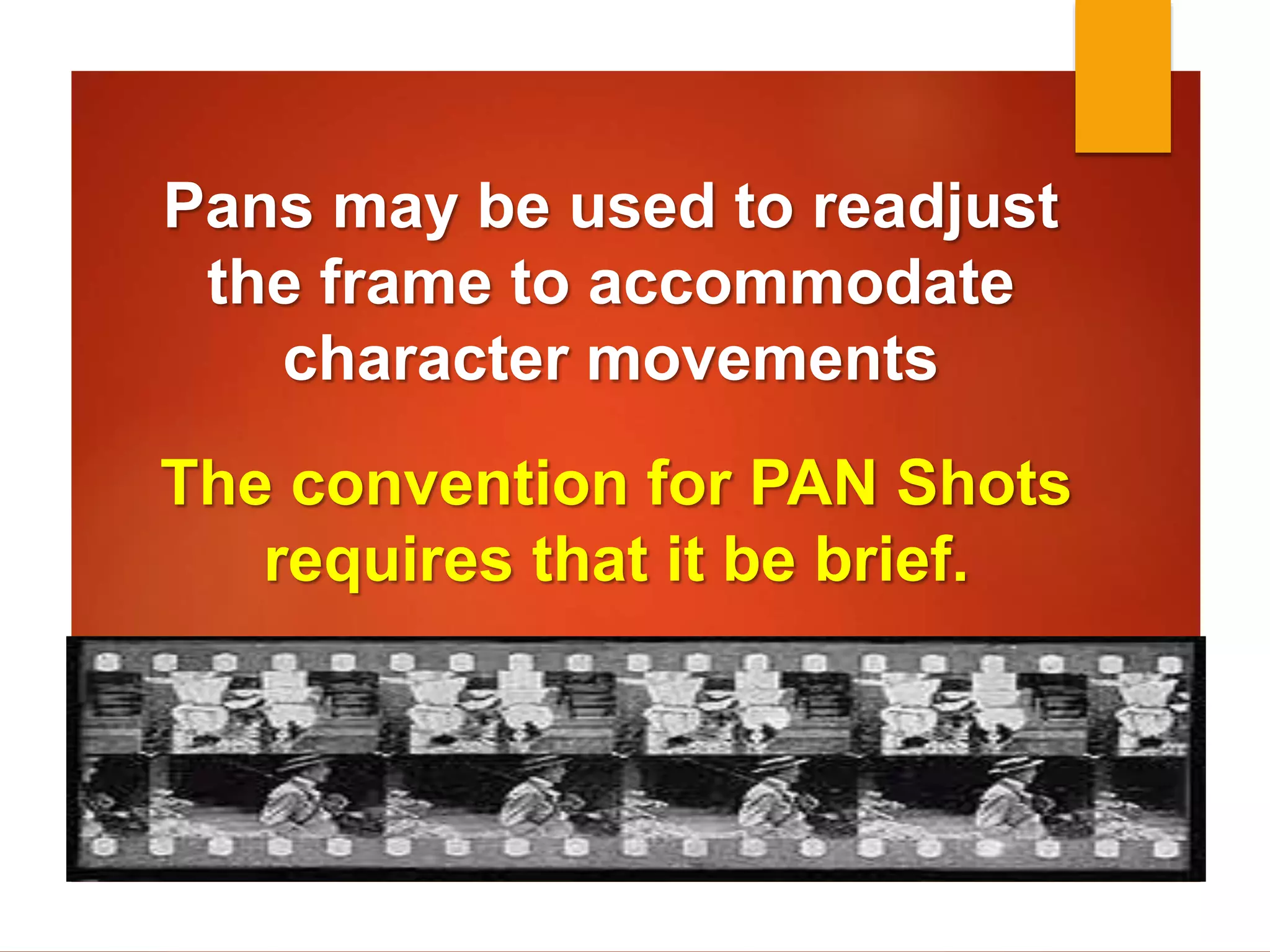
Pans may be used to readjust 
the frame to accommodate 
character movements 
The convention for PAN Shots 
requires that it be brief.
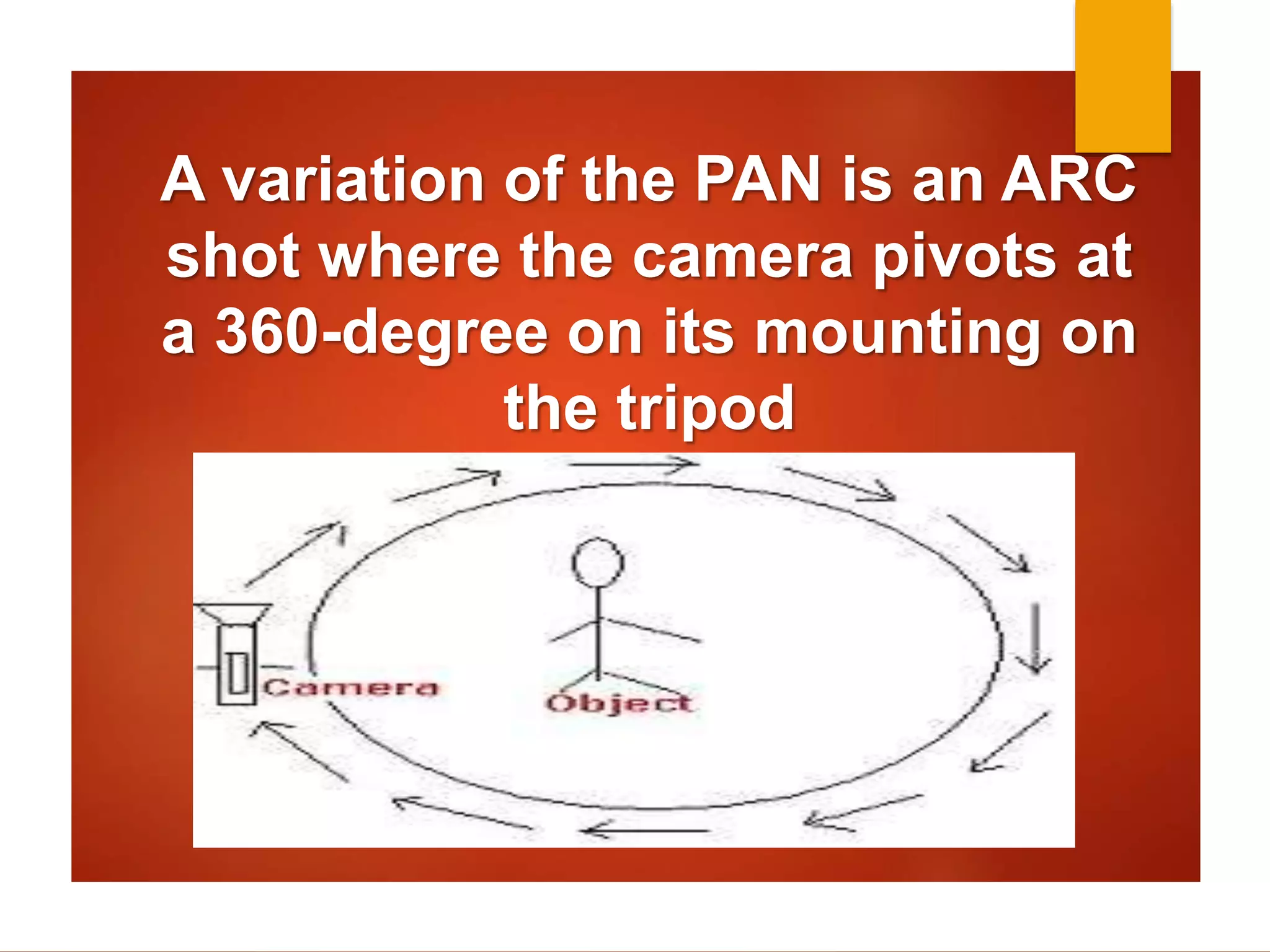
A variation of the PAN is an ARC 
shot where the camera pivots at 
a 360-degree on its mounting on 
the tripod
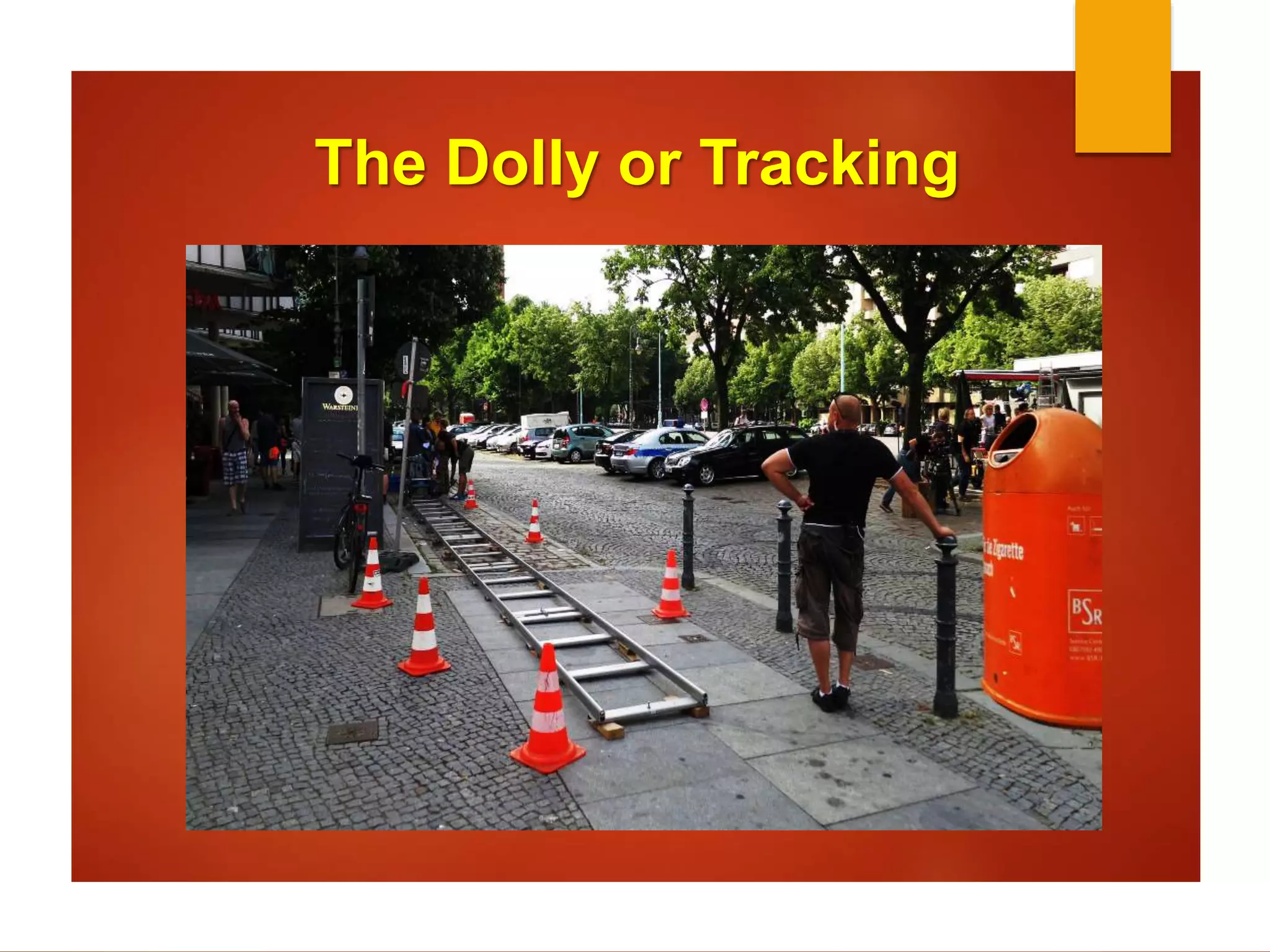
The Dolly or Tracking
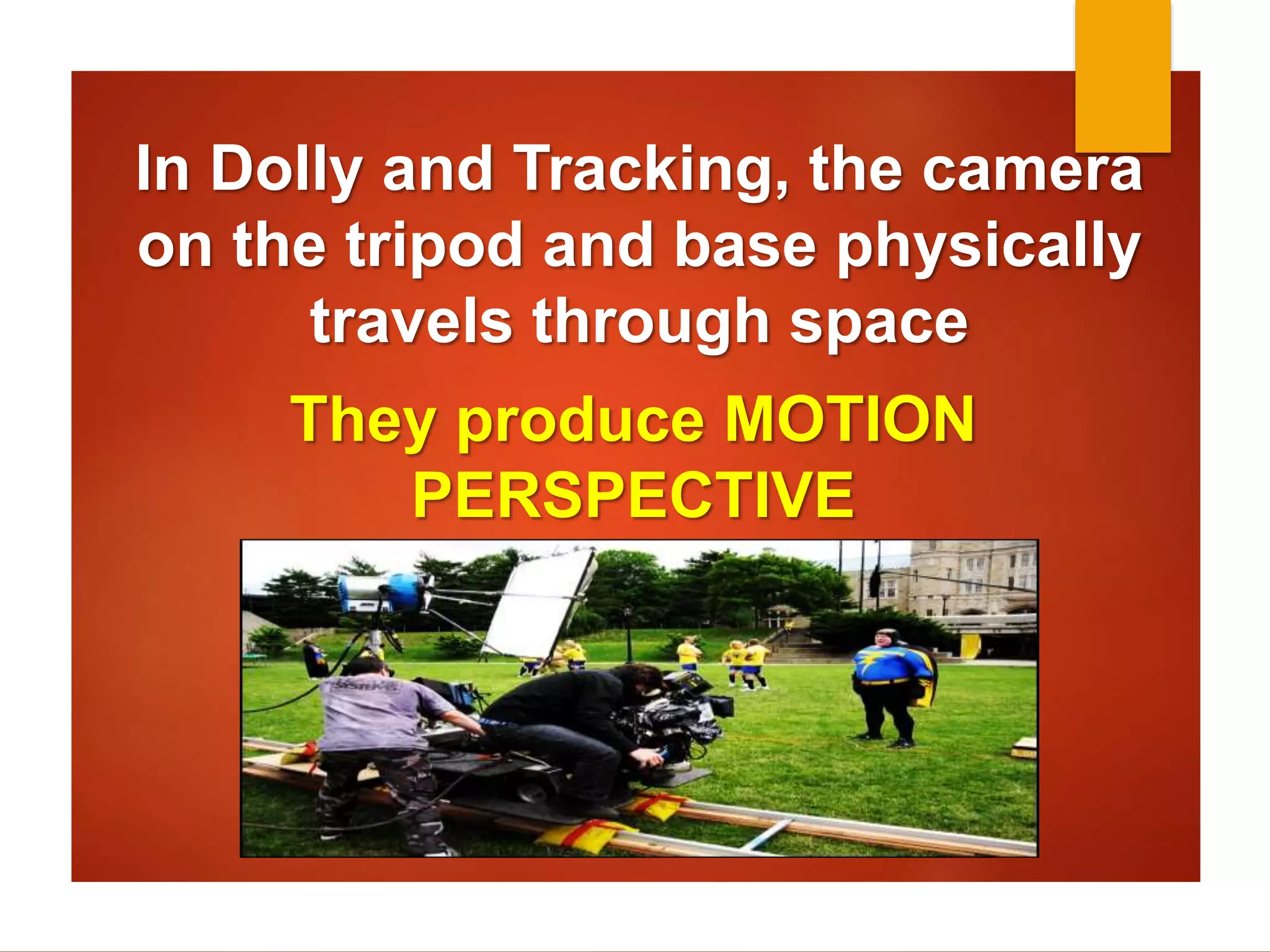
In Dolly and Tracking, the camera 
on the tripod and base physically 
travels through space 
They produce MOTION 
PERSPECTIVE
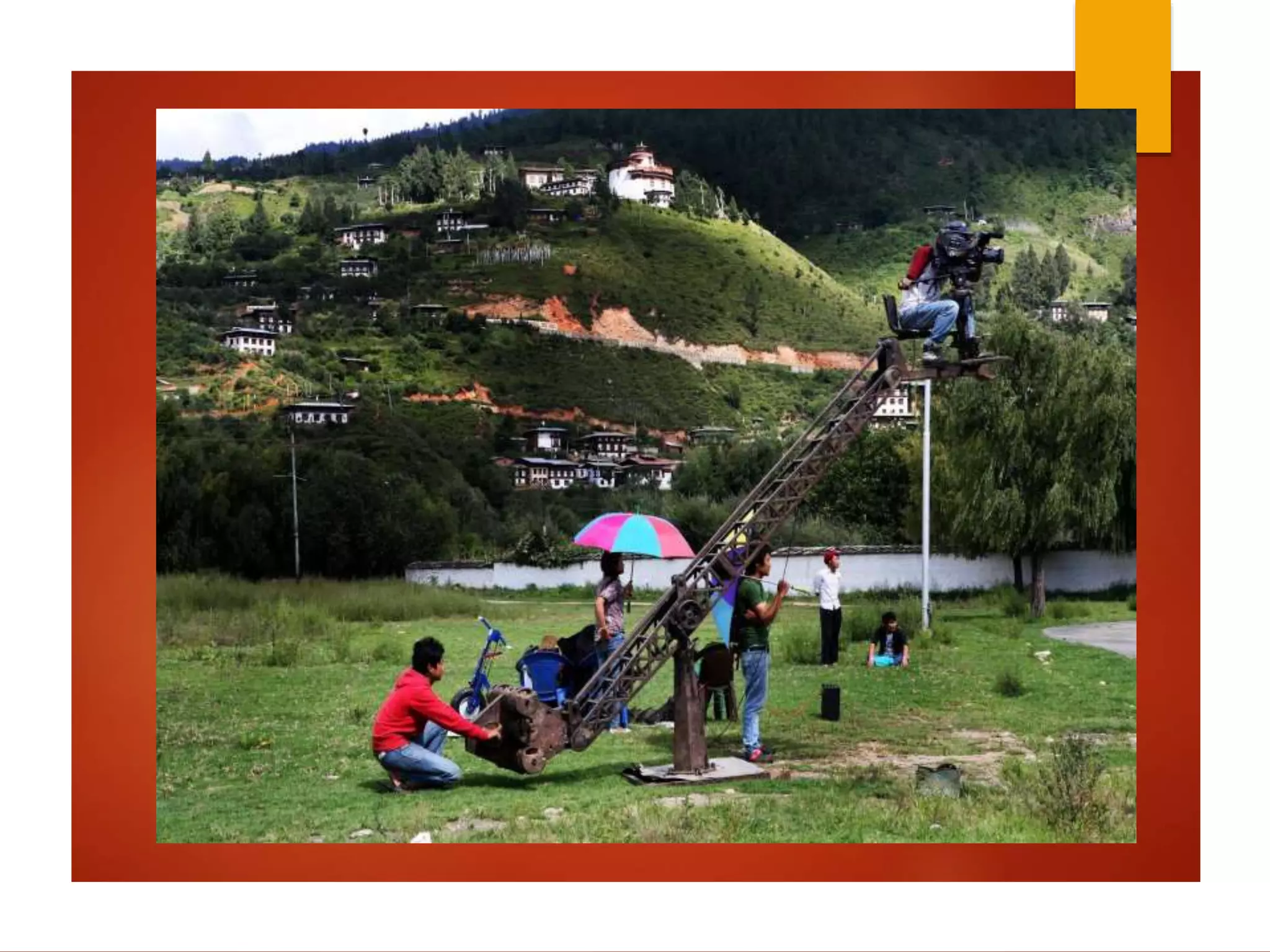
The BOOM or CRANE 
When a scene’s action 
requires a wider expanse or 
area to be covered and when 
the action should be shown 
on a high angle, the camera 
is mounted on a CRANE or 
BOOM mechanism
Mounting the camera on a 
boom or crane creates a 
powerful dramatic effect by 
revealing the scale of the 
scene action that any other 
camera movement cannot 
achieve.
Using the STEADICAM
The STEADICAM is a 
mechanical system that 
produces very steady, jitter-free, 
images from hand-held 
camerawork 
The word STEADICAM is both 
a trademark of the mechanism 
and a filmmaking technique
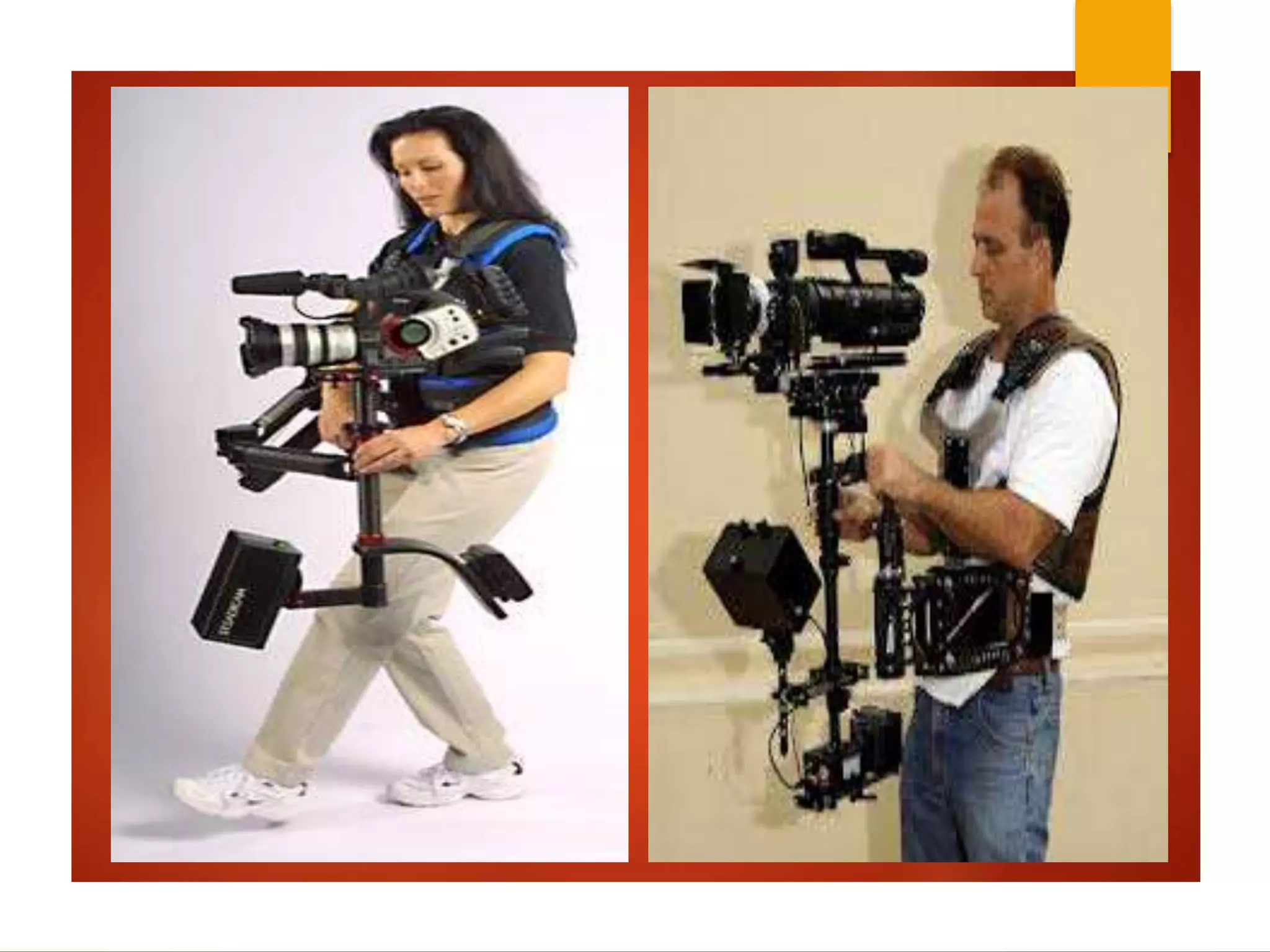
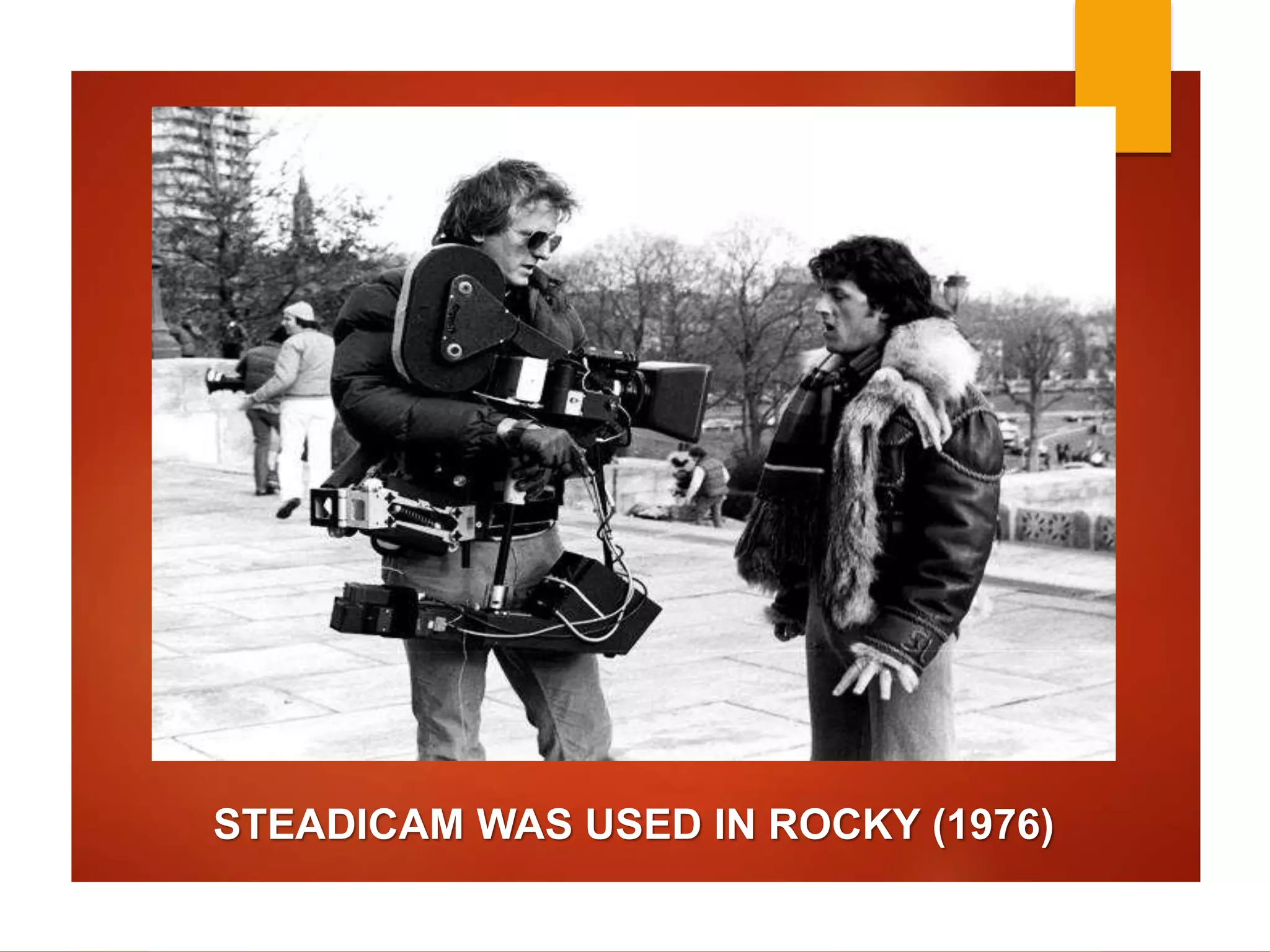
STEADICAM consists of a vest 
worn by the camera operator 
that has a stabilizing support 
arm connecting the camera to 
the operator’s vest. 
A video-assist viewing system 
is attached to the camera so 
that the operator can view 
what the camera is seeing
Using STEADICAM, the 
operator can move the 
camera through space in a 
completely smooth and fluid 
manner as if the camera is 
an extension of his/her own 
body
STEADICAM is used in narrative 
and documentary filmmaking 
There are digital cameras that 
have steadicam capabilities 
integrated in its mechanism
STEADICAM WAS USED IN ROCKY (1976)
To reveal dramatic 
information by enlarging the 
viewer’s field of view 
Able to narrow and focus 
attention on significant 
objects of characters
It expresses a dynamic sense of 
movement that makes a shot or 
scene more sensous and 
dramatically exciting 
It visualizes important 
thematic ideas
Camera movements were always 
applied to “manually” held 
cameras for analog filmmaking 
Today, camera movements can 
be created digitally during 
post-production 
Digital technology can also 
create very long camera moves
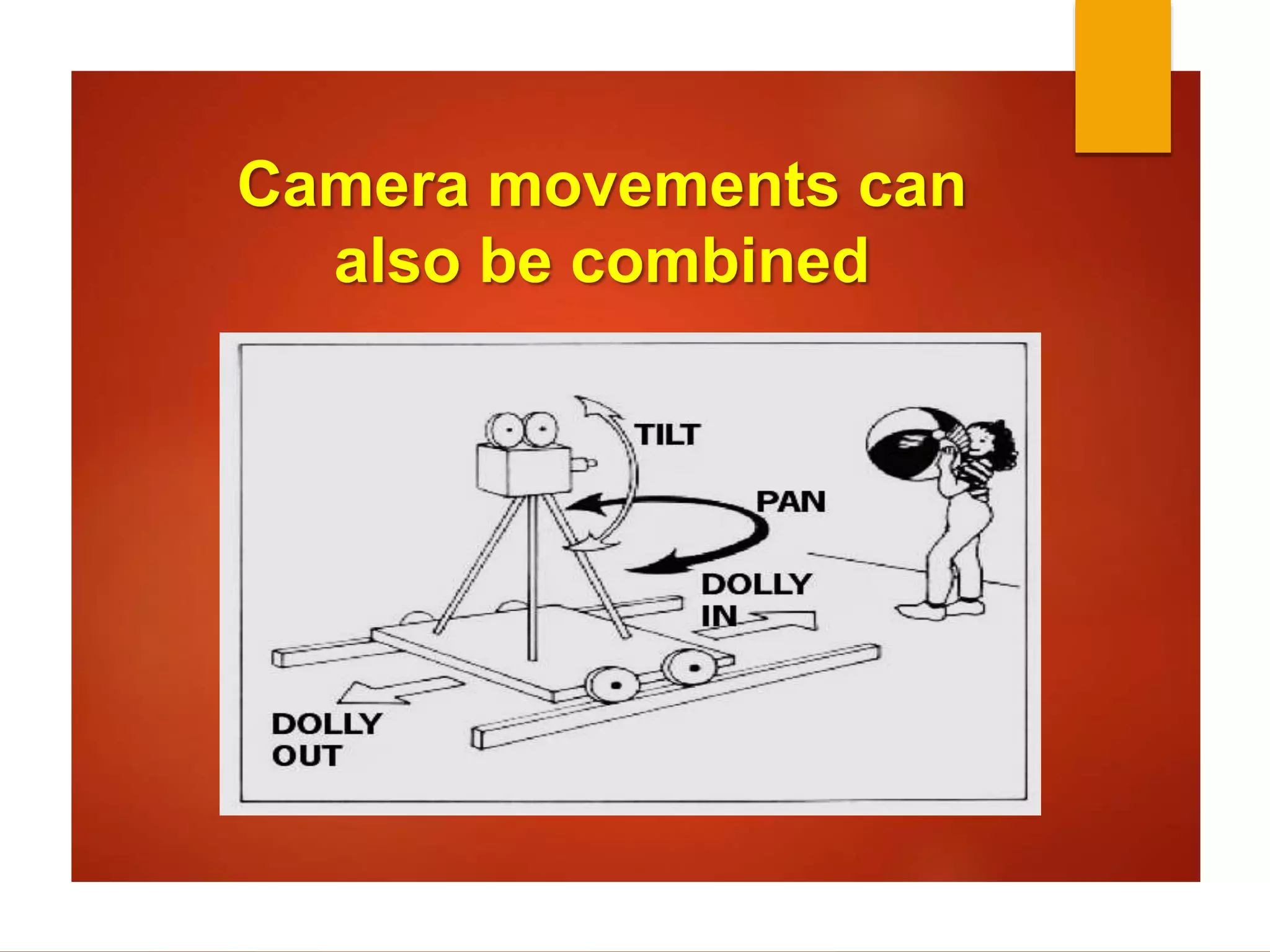
Camera movements can 
also be combined
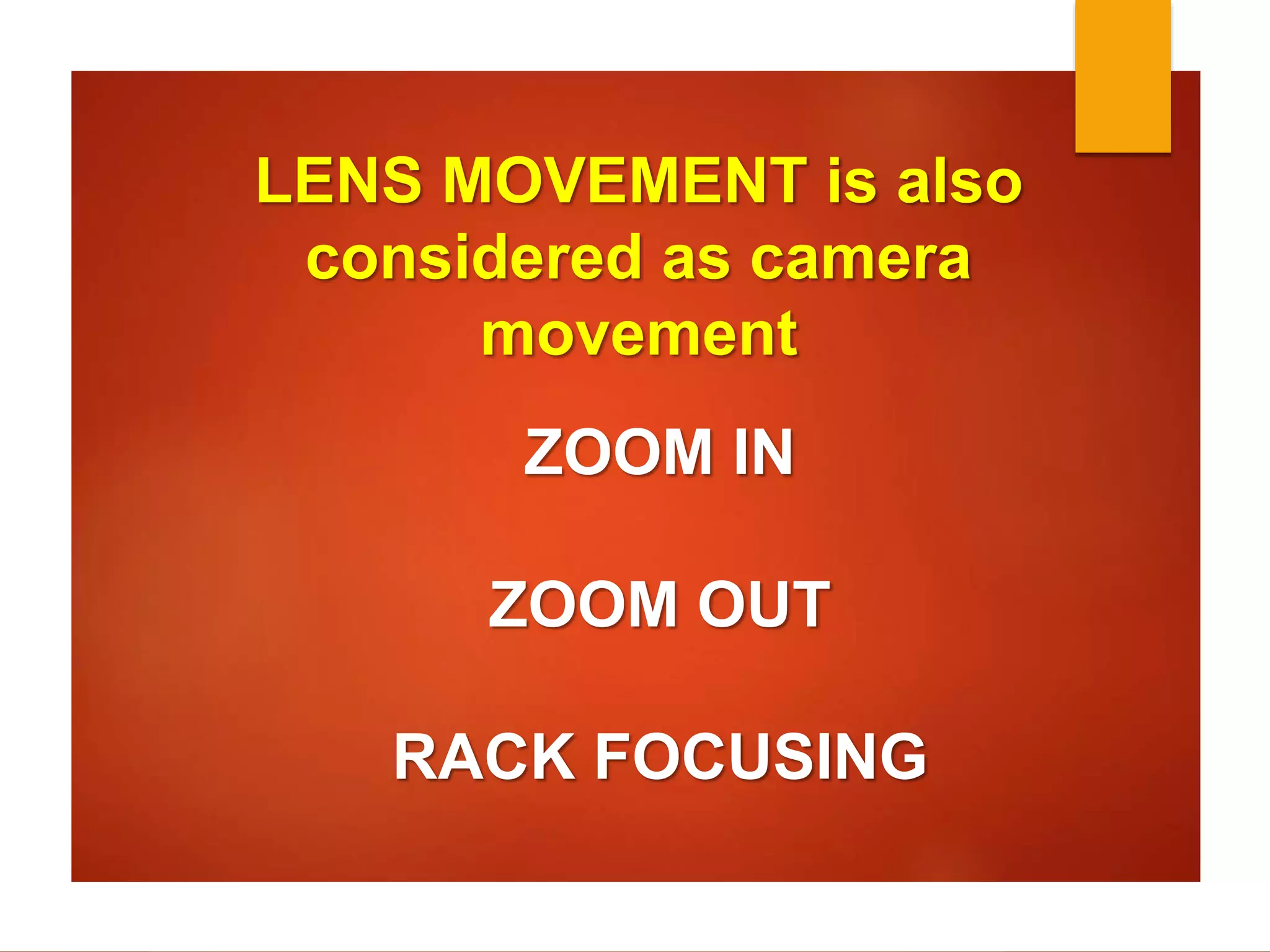
LENS MOVEMENT is also 
considered as camera 
movement 
ZOOM IN 
ZOOM OUT 
RACK FOCUSING
Rack focus is a 
change of focus 
from one plane 
of depth to 
another 
Usually used in 
OTS or Over 
The Shoulder 
Shot
In creating a ZOOM shot, one 
needs a ZOOM LENS to be 
attached to the camera 
ZOOM LENSES have a variable 
focal length.
Zooming changes the 
size of the filmed subject 
without changing the 
distance between the 
subject and camera
There are situations 
that zooming can be 
combined with 
camera movements to 
create unusual shots
In filmmaking and related fields, 
a film frame is one of the many 
still images which compose the 
complete moving picture. 
It can also refer to the edges of 
the image as seen in a camera 
viewfinder or projected on a 
screen.
When directors place 
actors in the frame, they 
make choices in relation to 
the way the actors’ bodies 
will be situated in the space 
(frame) and how they will 
move within the frame or 
external to the frame.
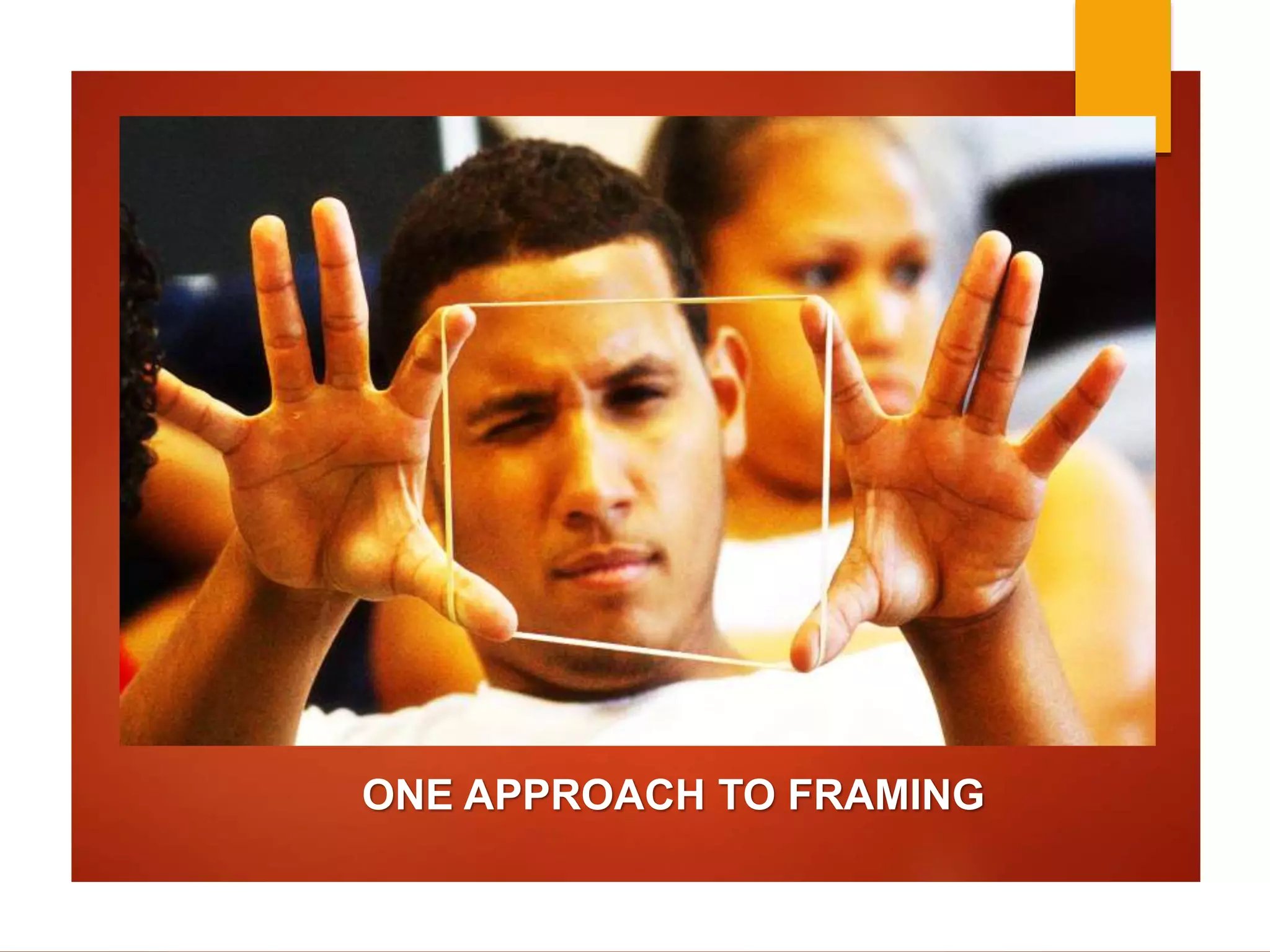
ONE APPROACH TO FRAMING
A FRAME IN A FILM
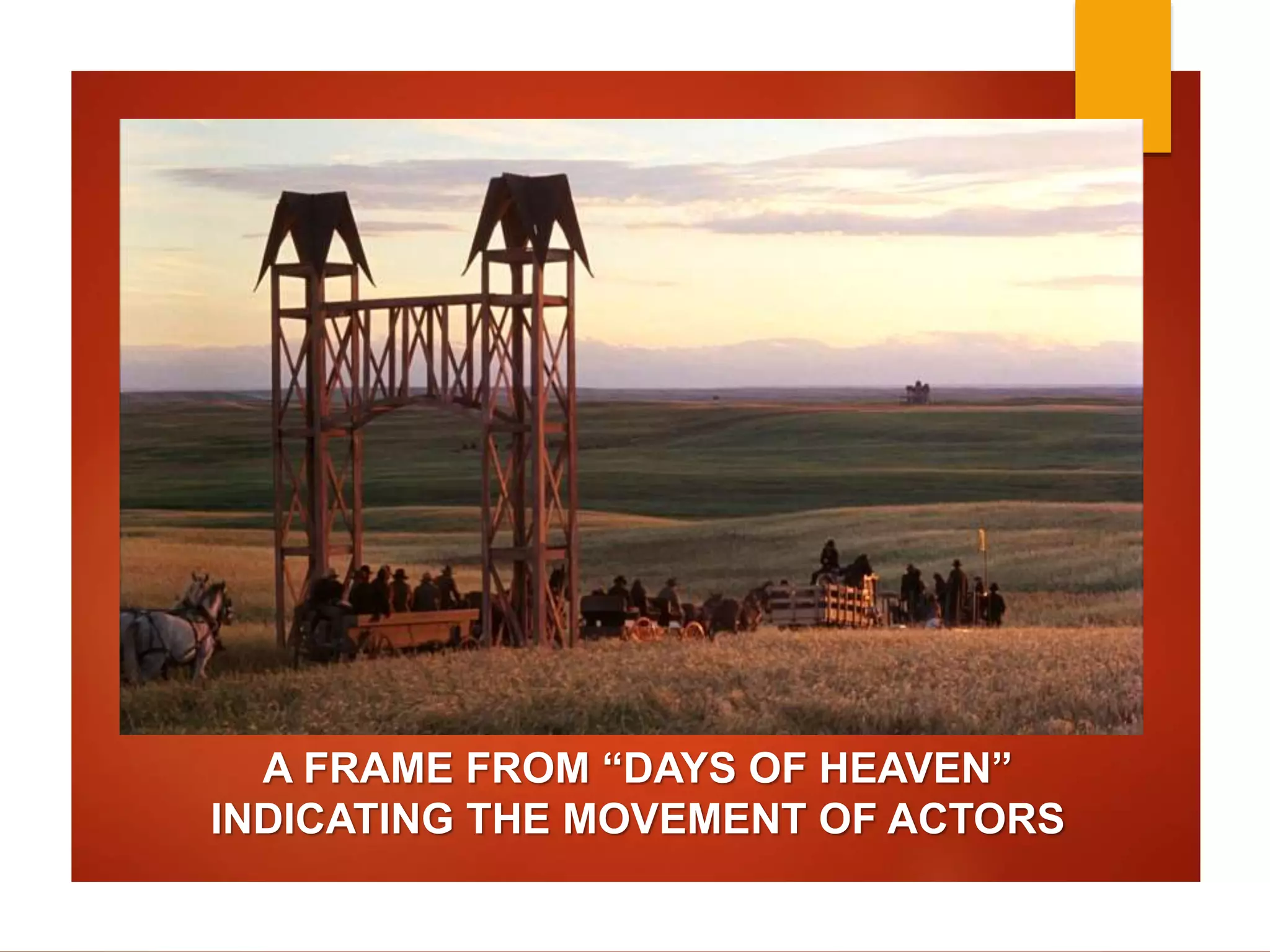
A FRAME FROM “DAYS OF HEAVEN” 
INDICATING THE MOVEMENT OF ACTORS
FRAMING STYLES 
TIGHT FRAMING 
LOOSE FRAMING 
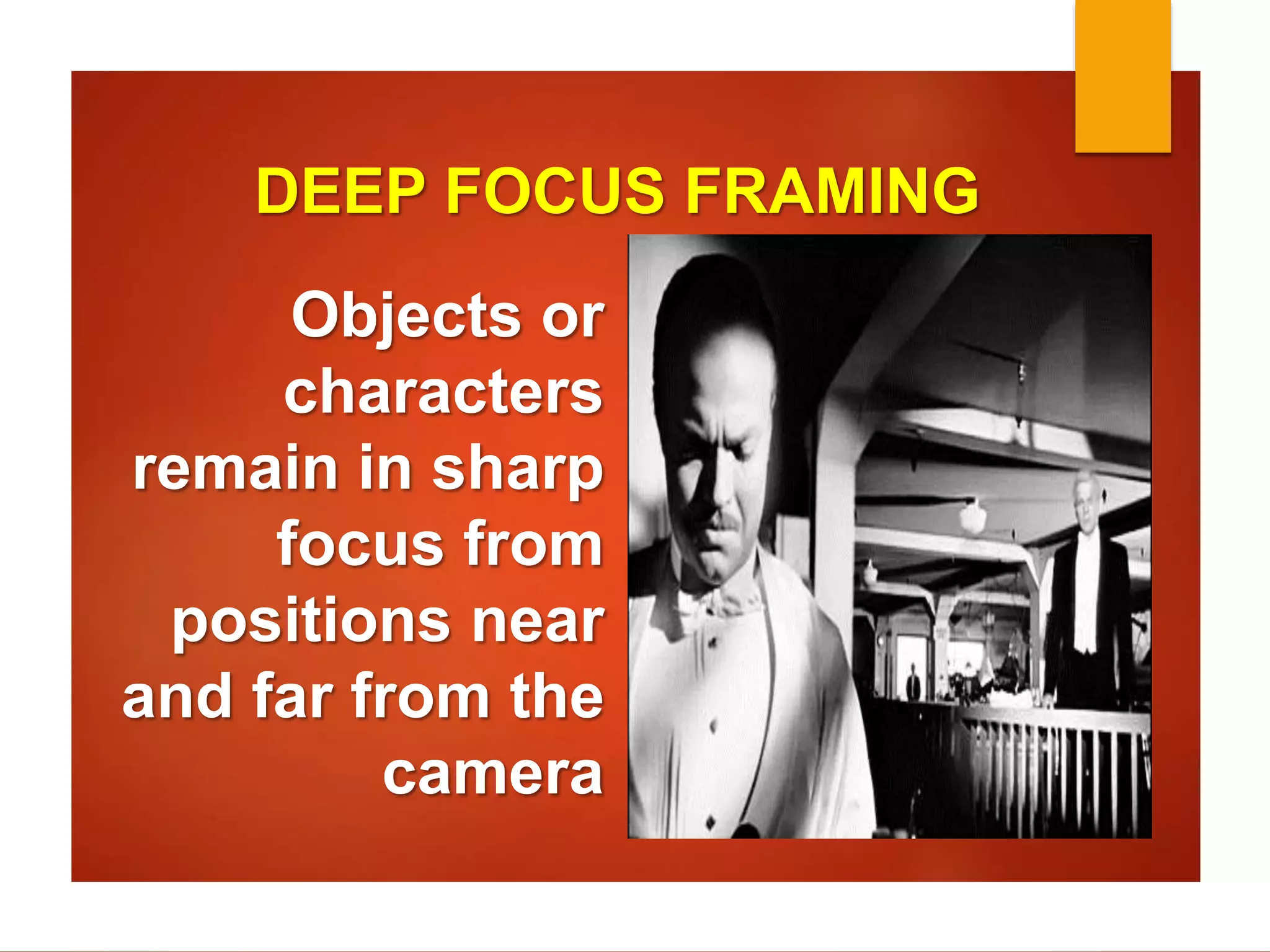
DEEP FOCUS FRAMING
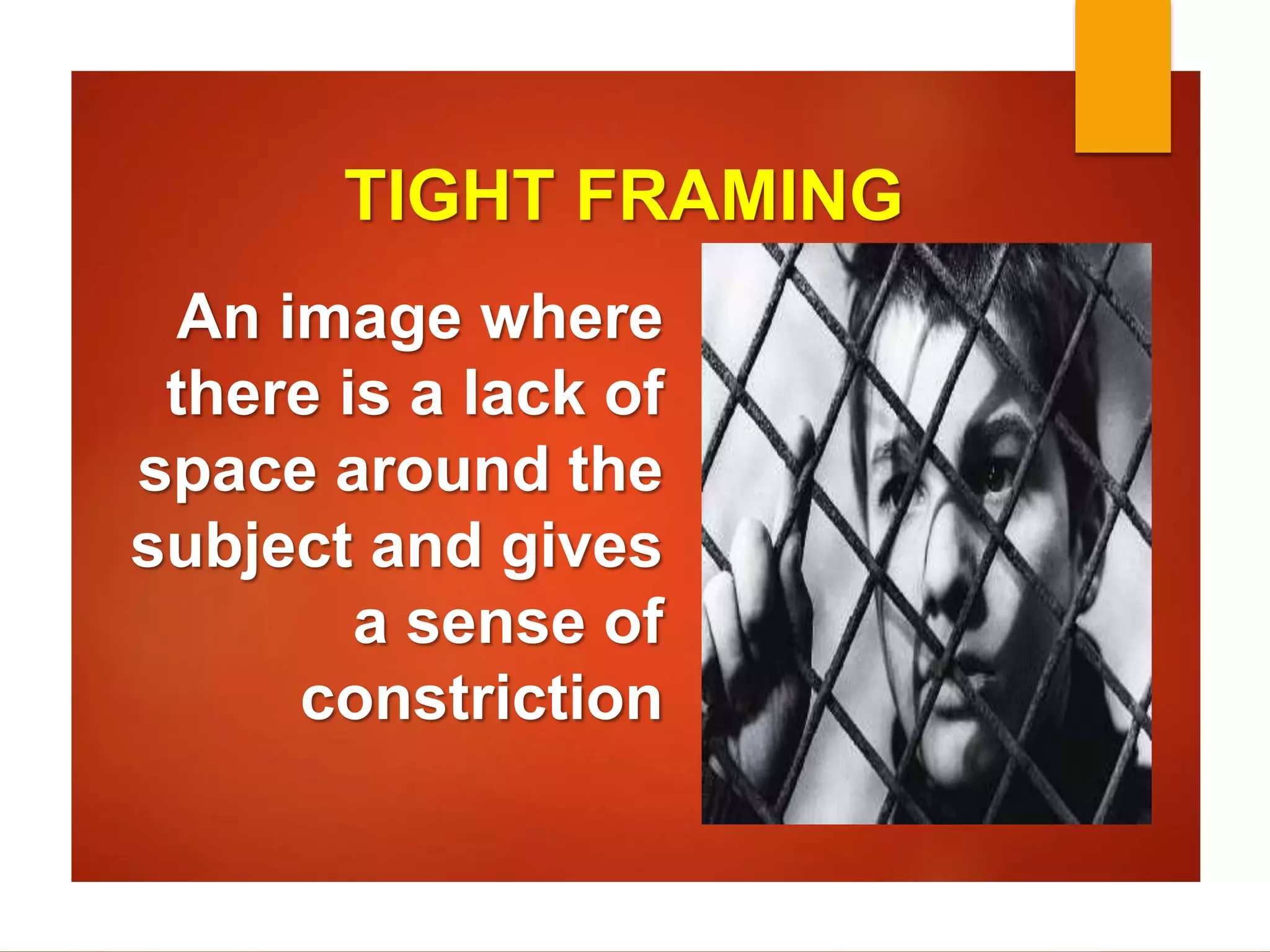
TIGHT FRAMING 
An image where 
there is a lack of 
space around the 
subject and gives 
a sense of 
constriction
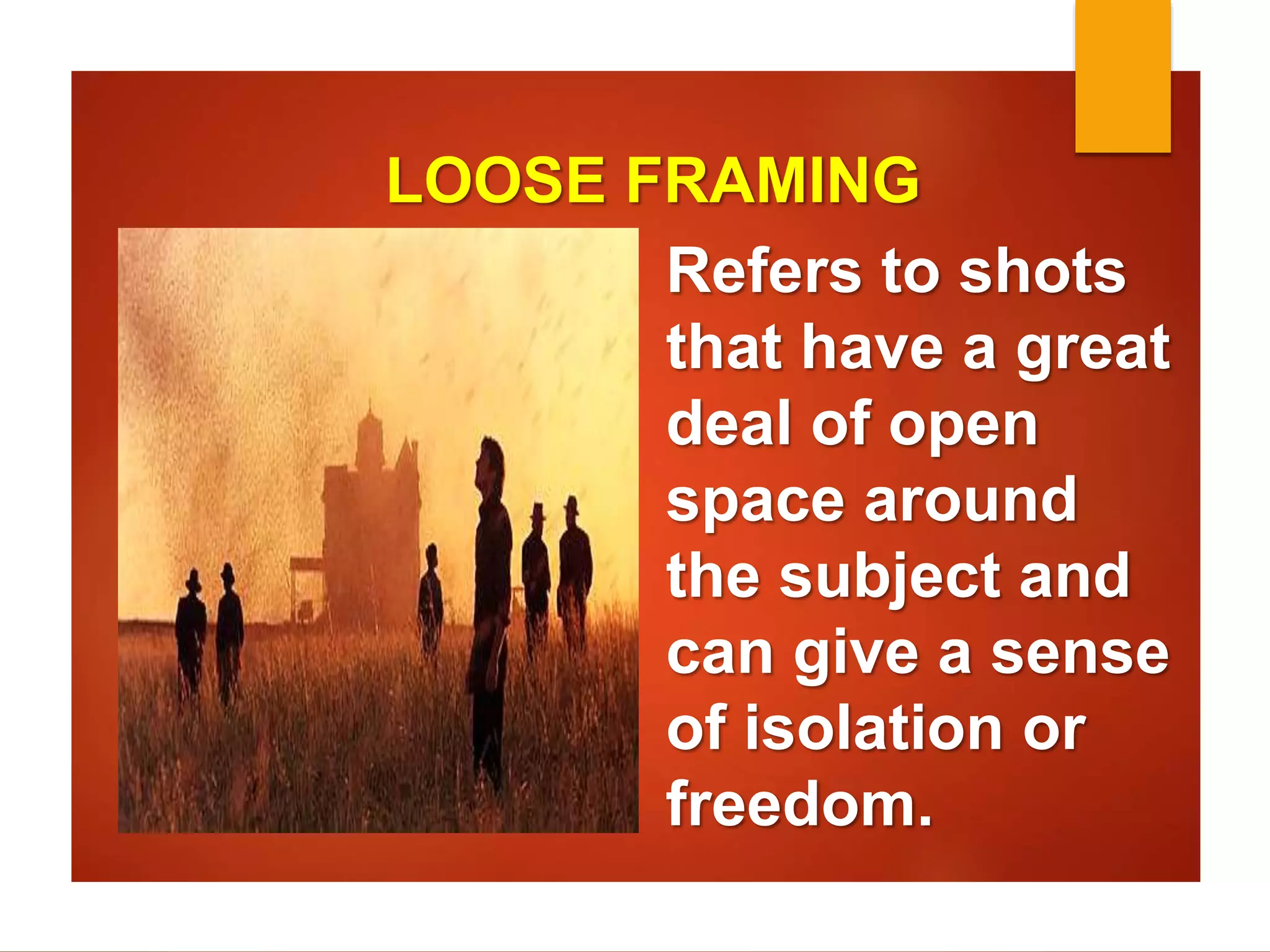
LOOSE FRAMING 
Refers to shots 
that have a great 
deal of open 
space around 
the subject and 
can give a sense 
of isolation or 
freedom.
DEEP FOCUS FRAMING 
Objects or 
characters 
remain in sharp 
focus from 
positions near 
and far from the 
camera
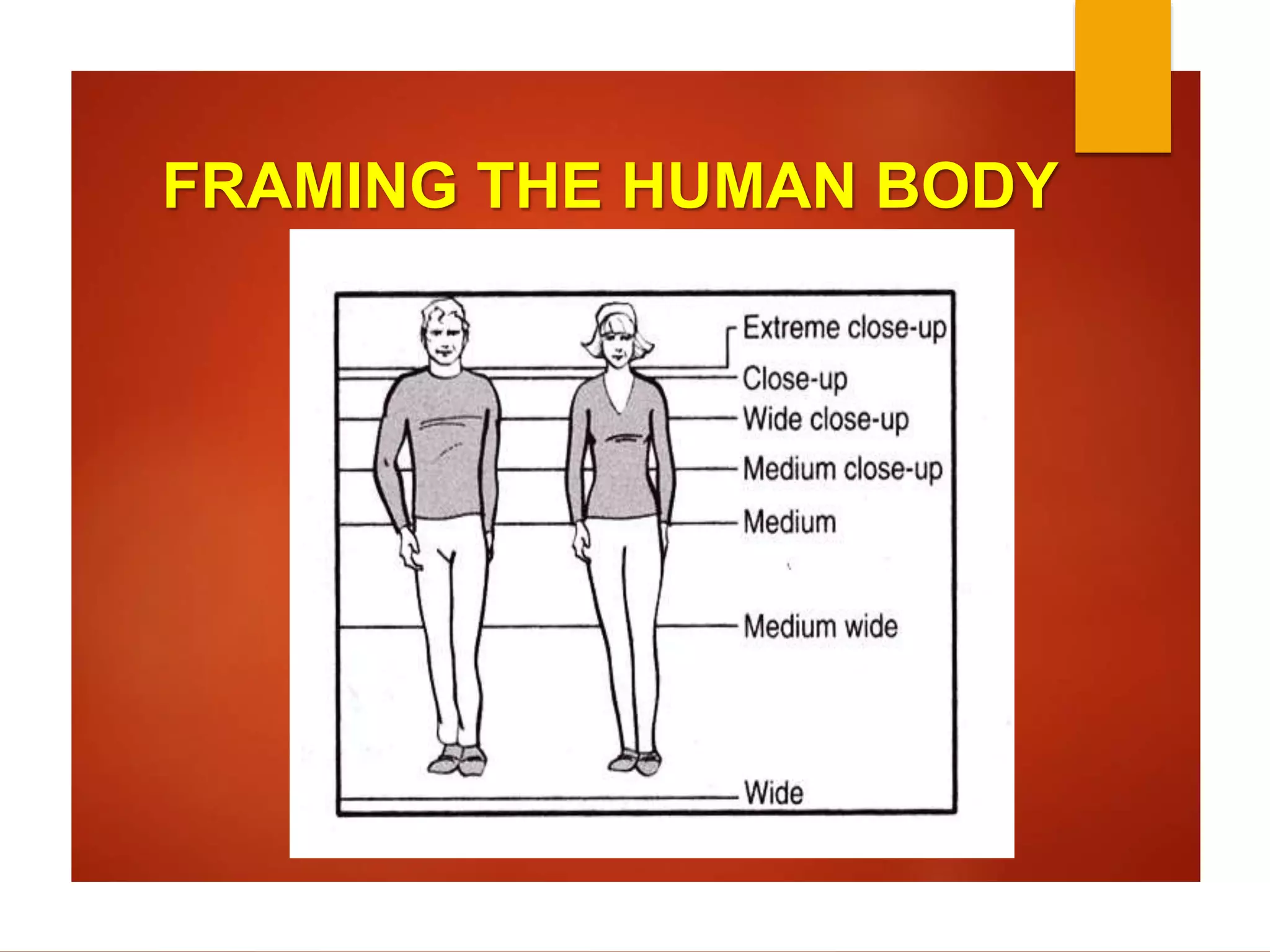
FRAMING THE HUMAN BODY
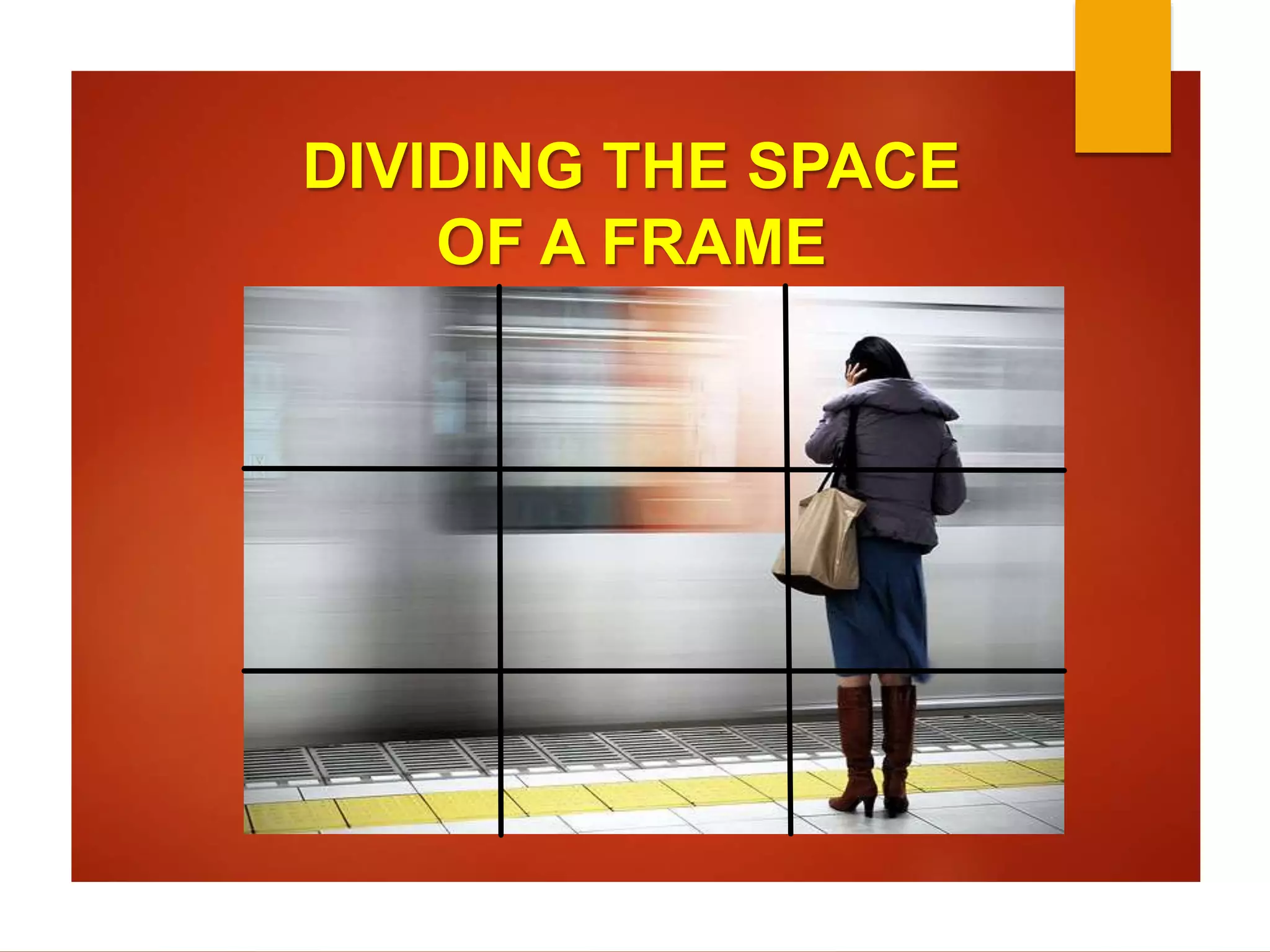
DIVIDING THE SPACE 
OF A FRAME
Space in the film frame refers to 
the space that is around a 
subject, usually the part of the 
frame that’s empty or filled with 
a vast expanse of sky, water or 
some other simple background 
element that doesn’t have a lot 
of distracting elements
TYPES OF SPACE 
IN A FRAME 
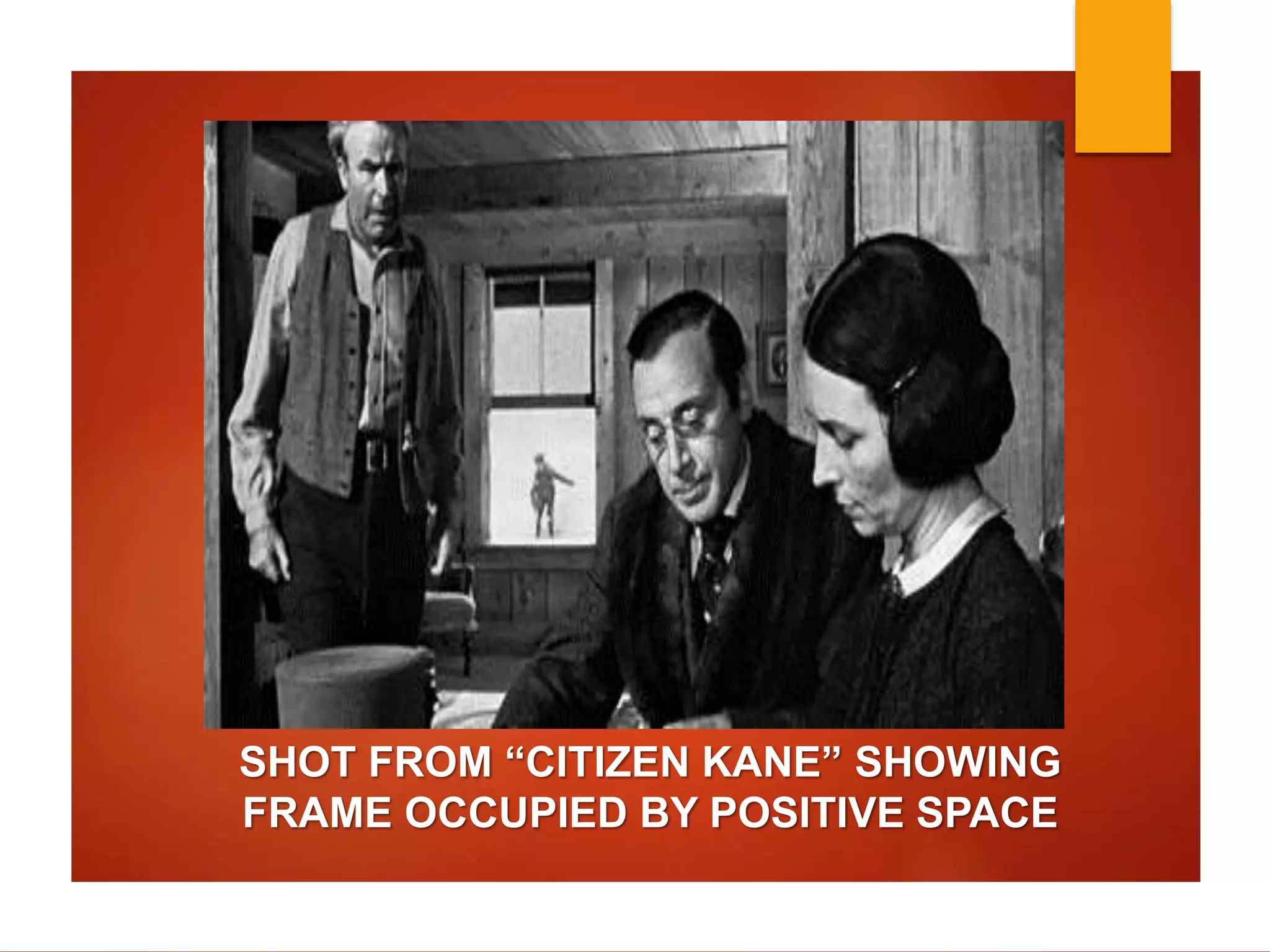
POSITIVE SPACE 
NEGATIVE SPACE
POSITIVE SPACE 
Refers to 
the objects 
and 
actors/subj 
ects that 
occupy the 
film frame.
SHOT FROM “CITIZEN KANE” SHOWING 
FRAME OCCUPIED BY POSITIVE SPACE
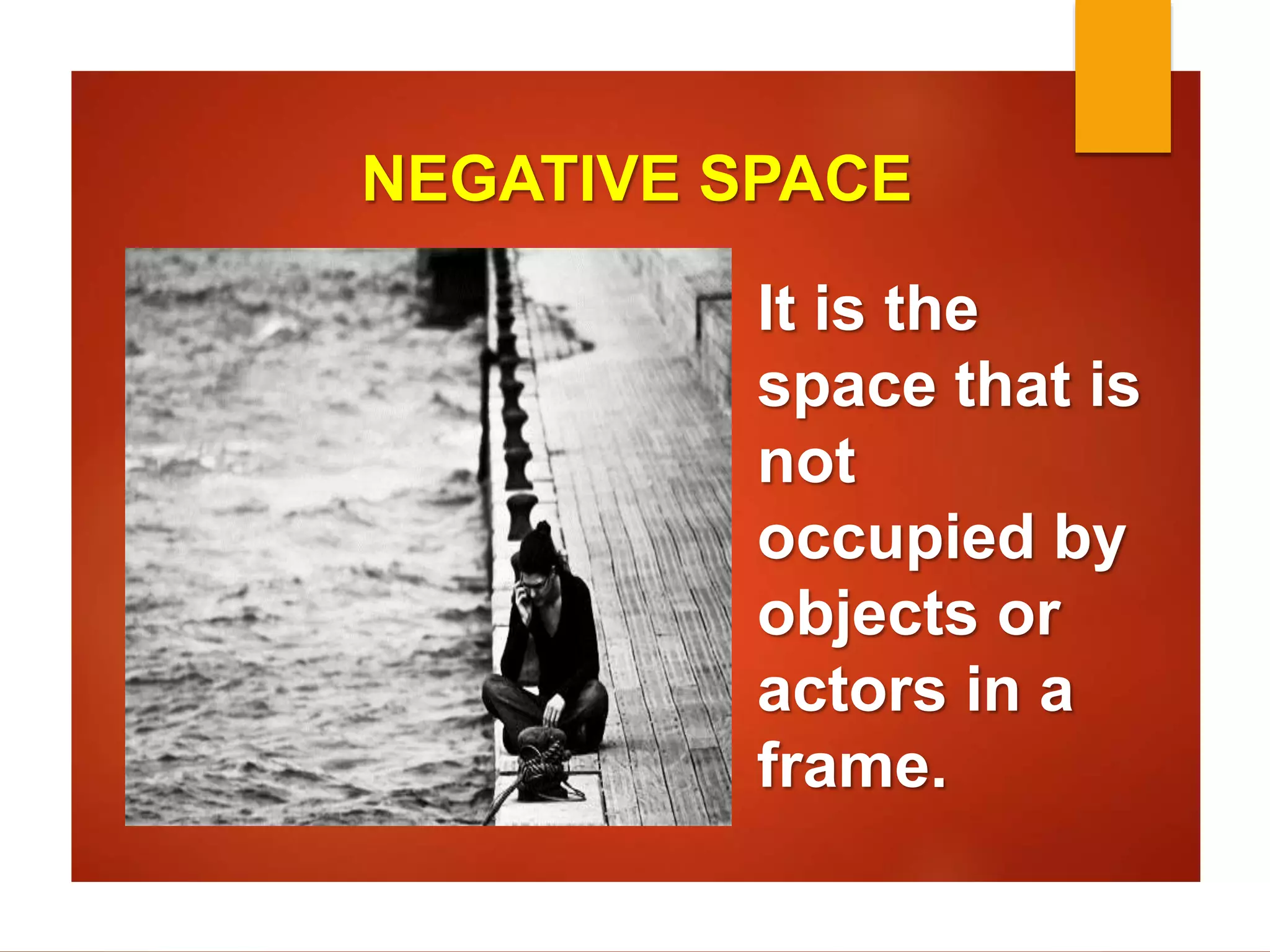
NEGATIVE SPACE 
It is the 
space that is 
not 
occupied by 
objects or 
actors in a 
frame.
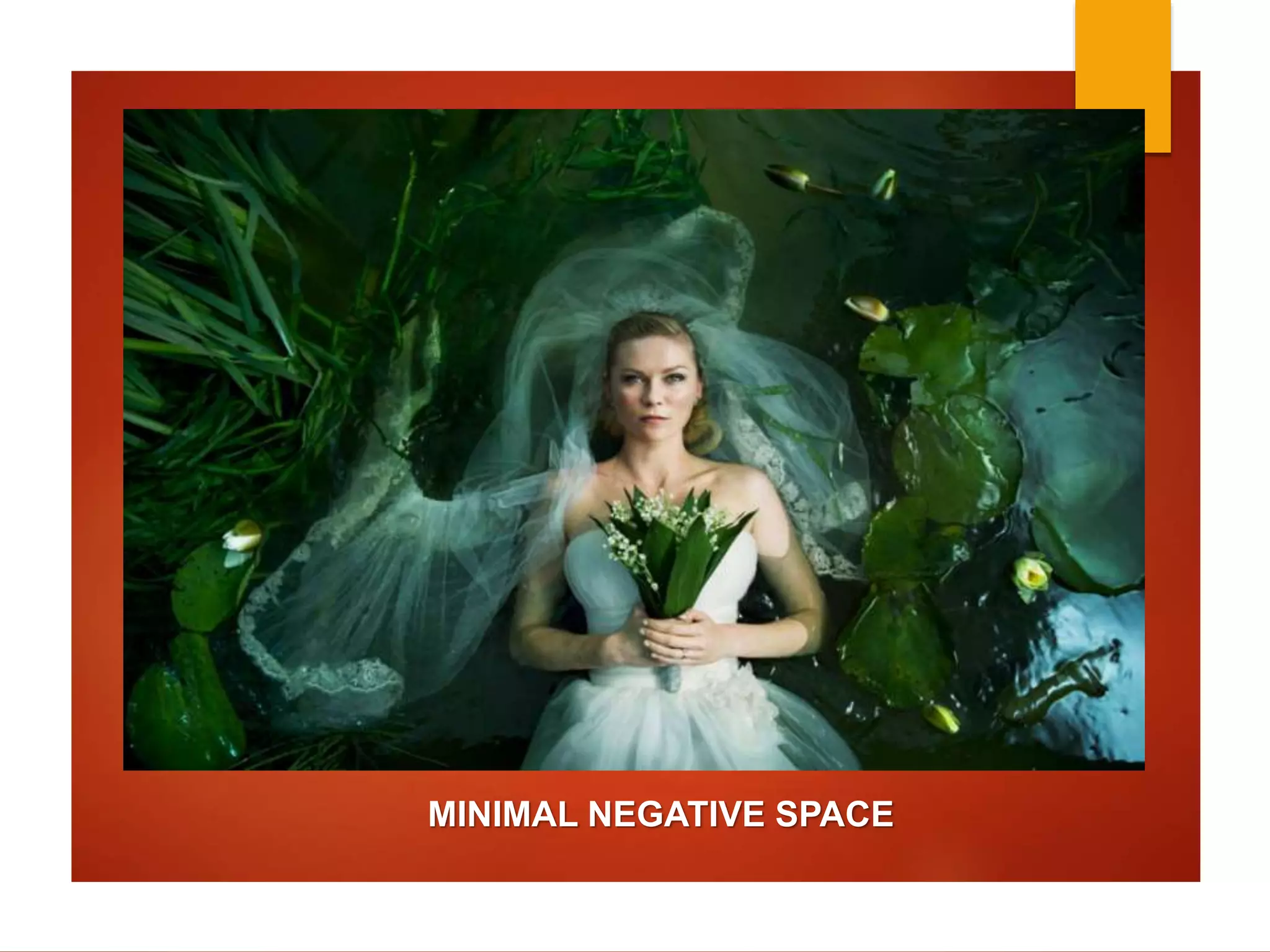
MINIMAL NEGATIVE SPACE
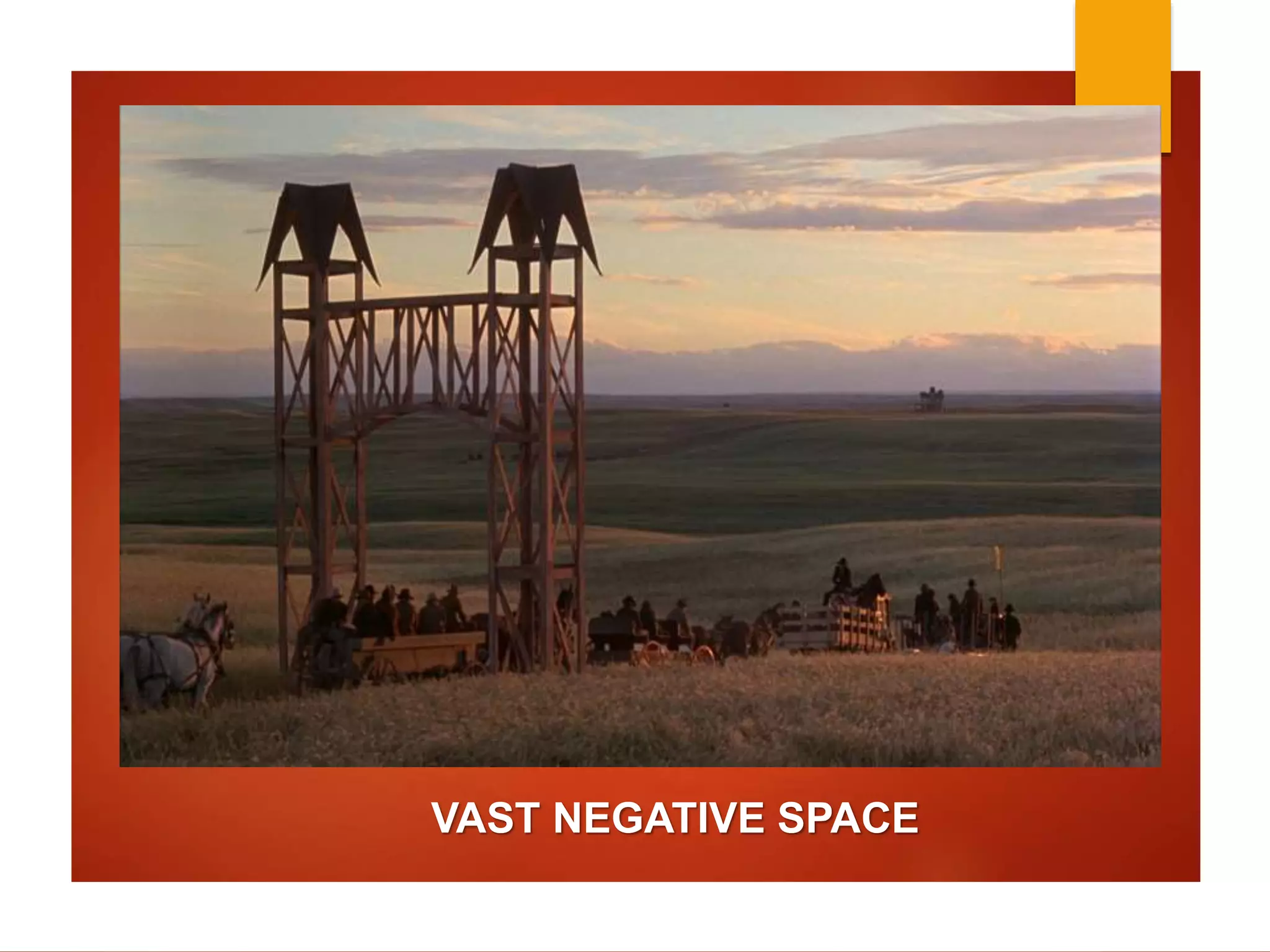
VAST NEGATIVE SPACE
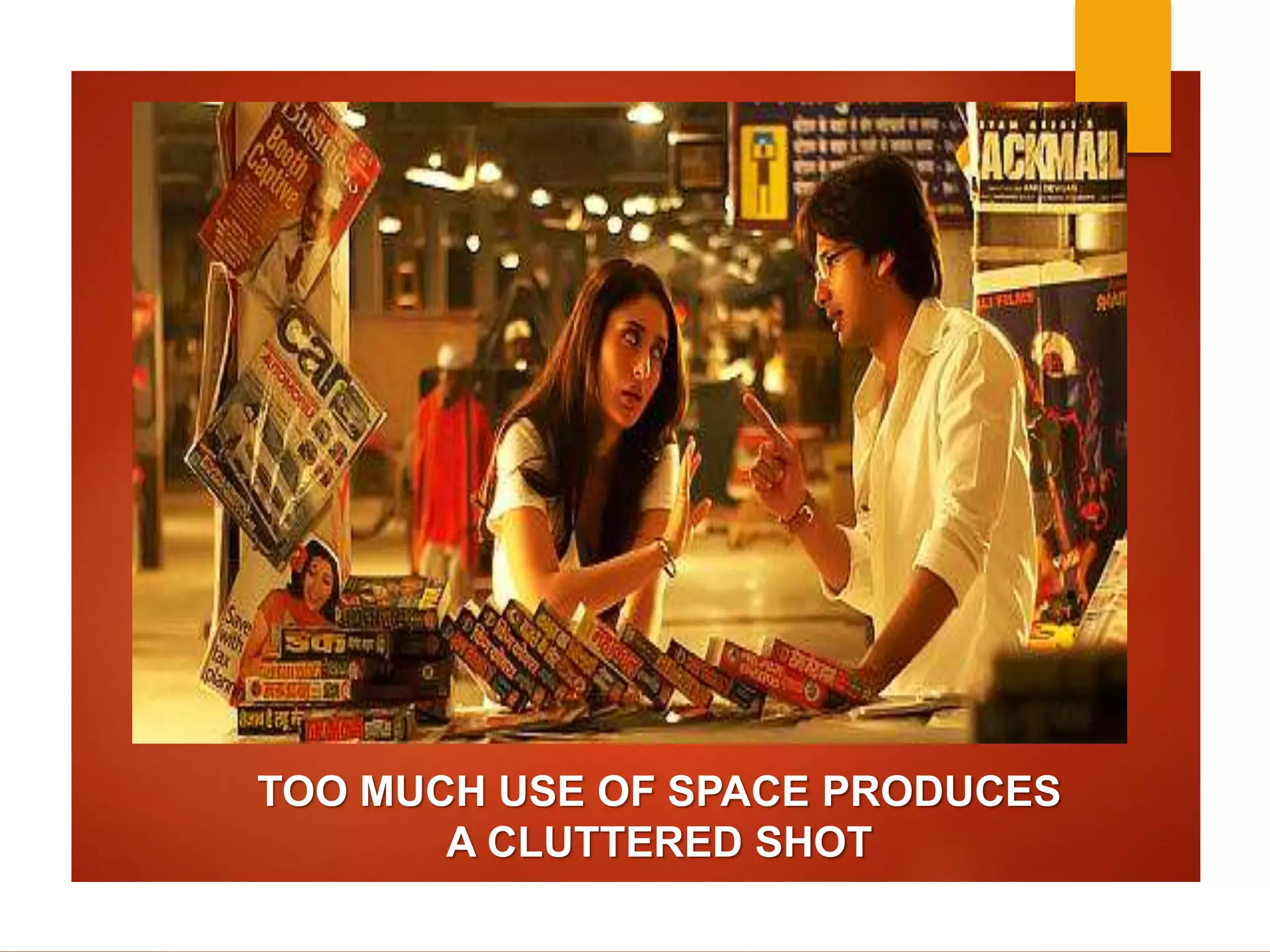
TOO MUCH USE OF SPACE PRODUCES 
A CLUTTERED SHOT
THE RULE OF SPACE 
This rule states that if the subject 
is not looking directly to the 
camera, or looks out of the 
frame, there should be enough 
space for the subject to look 
into. This technique creates 
intrigue in the minds of the 
viewers
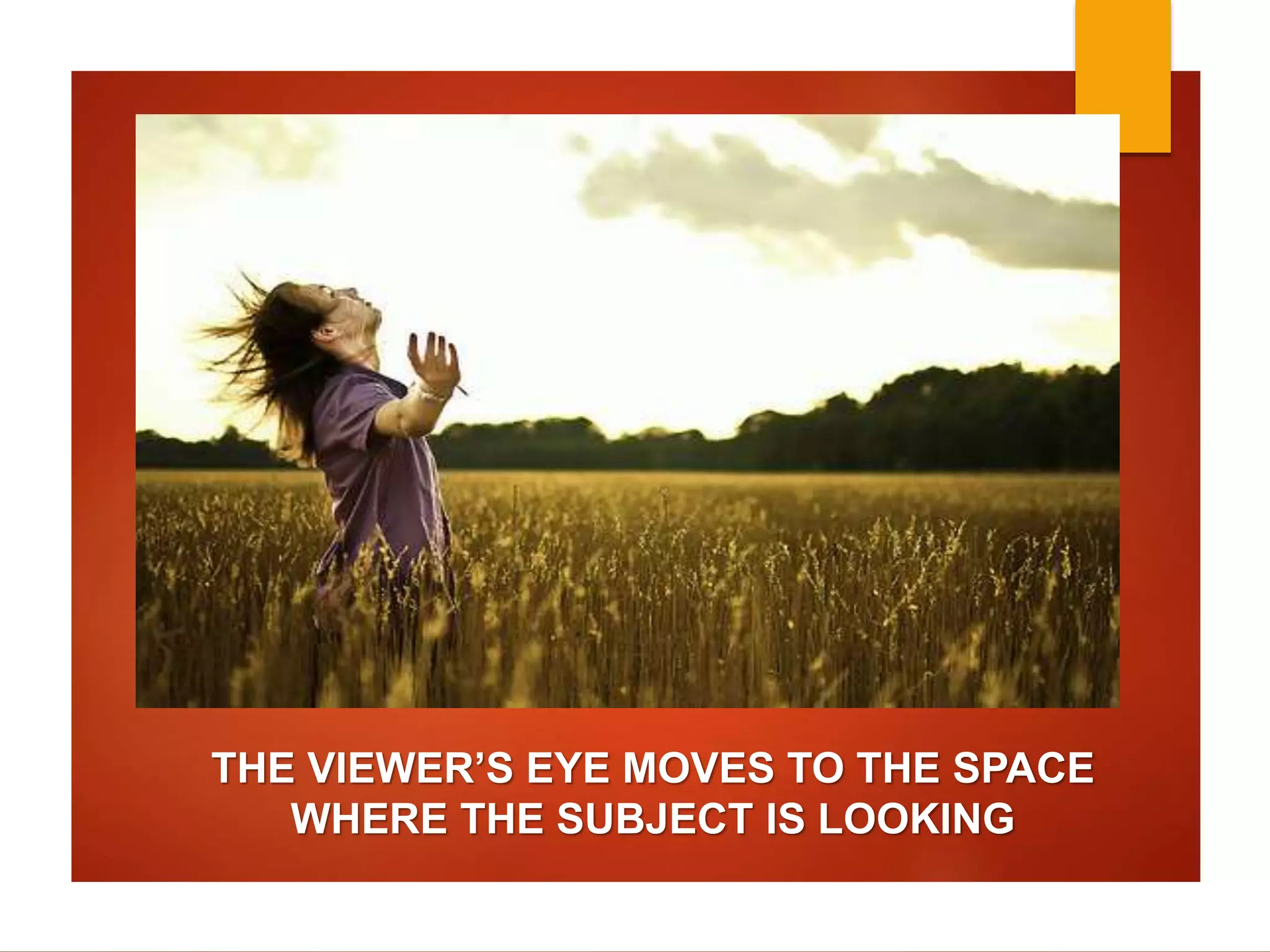
THE VIEWER’S EYE MOVES TO THE SPACE 
WHERE THE SUBJECT IS LOOKING
WHAT IS THE WOMAN LOOKING AT?
IMAGE SIZE IS IMPORTANT 
IN FRAMING
Film is a complex intertwining of 
language and image. 
From the beginnings of film as 
a silent medium, it has made 
language as a focal point 
through the subtitling technique 
that propels the film narrative
Visual meaning is embodied 
in film and we understand the 
meaning of images through 
the way we interact with the 
world around us. 
We construct IMAGE 
SCHEMAS as we watch a film
Image Schema is a concept in 
Conceptual Metaphor Theory 
by Lakoff and Johnson in 1999. 
It states that our knowledge of 
abstract phenomena is only 
possible by linking these to 
concrete experiences.
When we watch a film, the series 
of shots and scenes are 
essentially incomplete and have 
gaps. 
It is incomplete because visuals 
have limitations in describing 
what language can as in a written 
novel or story
Also, a film’s incompleteness 
is the result of certain film 
conventions that have to be 
followed. 
Films have to have a total 
running time of 1 ½ to 2 hours 
only
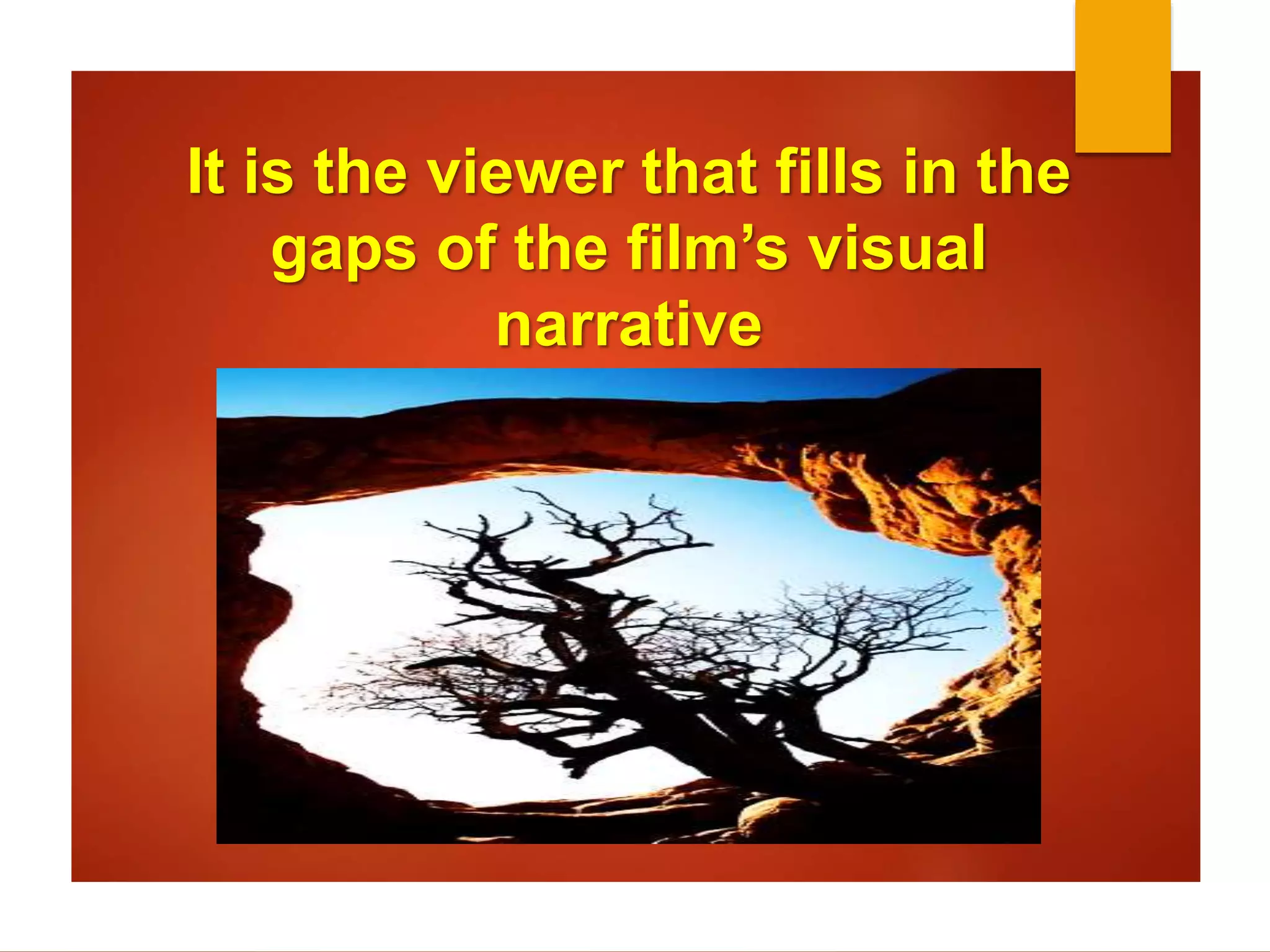
It is the viewer that fills in the 
gaps of the film’s visual 
narrative
The film frame acts like a 
container where things appear 
in and out of view in front of the 
viewer 
The camera moves to reveal or 
conceal objects and characters 
and characters can enter and 
exit frame
Another concept explaining 
meaning in film images is 
SIMULACRUM 
It is the representation or 
imitation of a person or thing. 
The film, MATRIX best shows 
the meaning of simulacrum
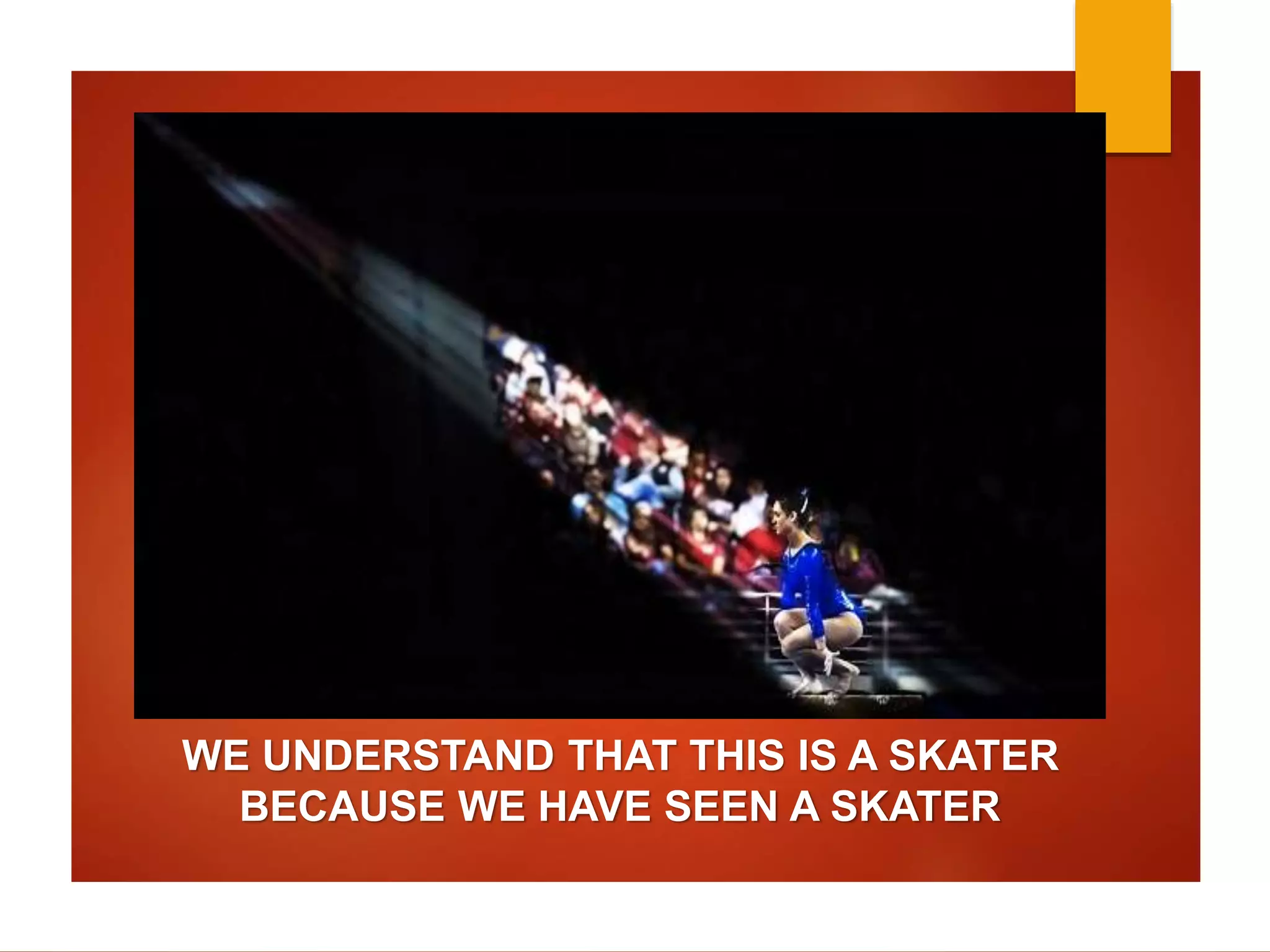
WE UNDERSTAND THAT THIS IS A SKATER 
BECAUSE WE HAVE SEEN A SKATER
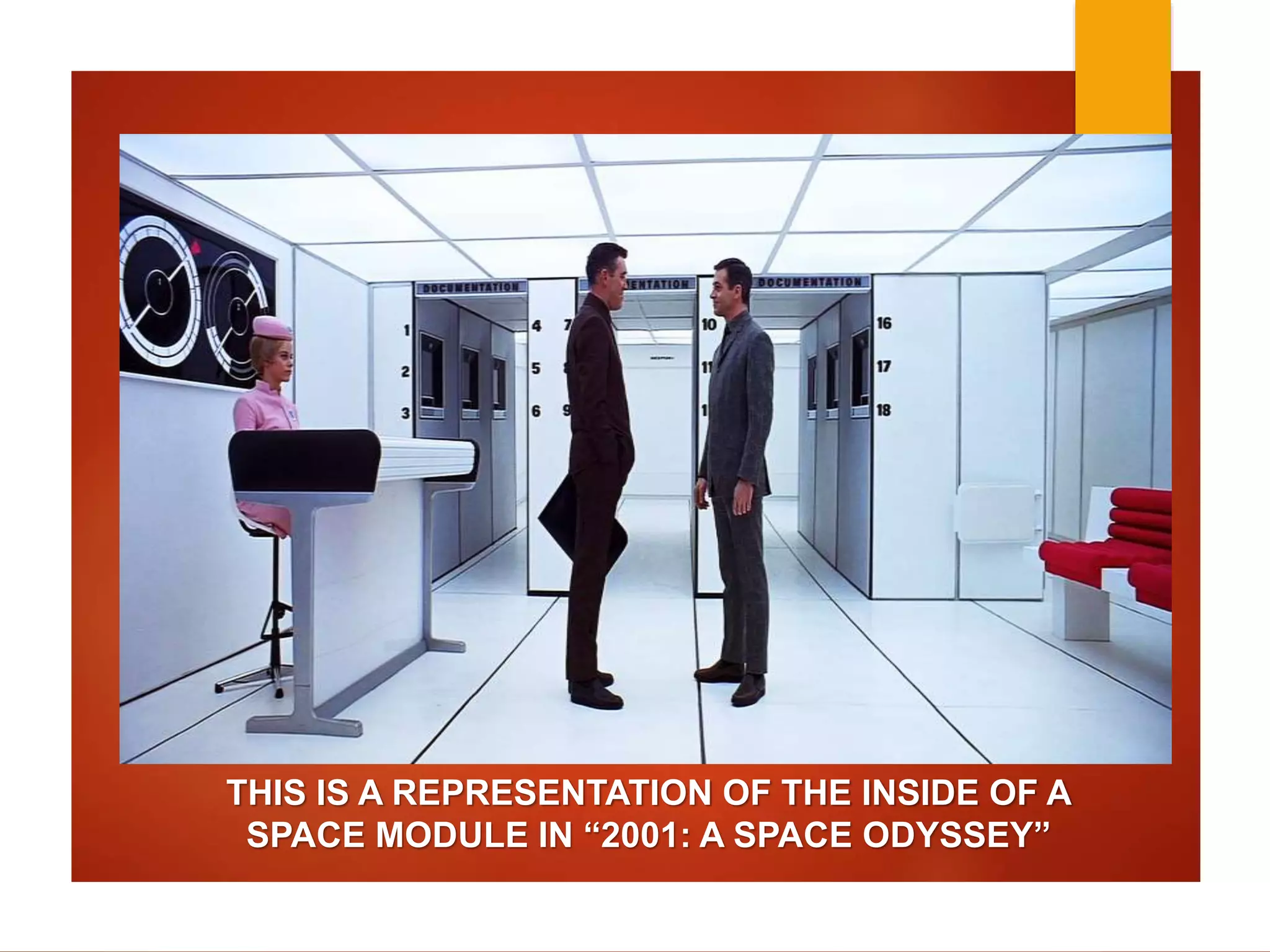
THIS IS A REPRESENTATION OF THE INSIDE OF A 
SPACE MODULE IN “2001: A SPACE ODYSSEY”
Mise en scene camera movement

Mise en scene camera movement

  • 1.
    A Lecture byProf. Dr. Arminda V. Santiago SCIM 2103 2nd Semester 2014/2015 (A141) October 9, 2014
  • 2.
    Camera Movement isthe way the camera frames a scene while the actors are moving. The movement of actors propels the visual story
  • 3.
    Camera movement isthe same in context as MOBILE FRAMING The mobile frame means that parameters such as camera height, camera angle, camera level and distance may all change during the course of a shot.
  • 4.
    The camera’s perspective not only changes from shot to shot but it can also shift and move within the shot Camera movement shifts the boundaries and coordinates of the frame
  • 6.
    The Pan andTilt The Dolly or Tracking The Boom or Crane Steadicam
  • 7.
    The Pan Itis a lateral movement onscreen Camera pivots from left to right or vice versa
  • 8.
    The camera pivotsvertically up and down or vice versa This movement is used to call attention to new areas of the scene The Tilt
  • 9.
    Pans may beused to readjust the frame to accommodate character movements The convention for PAN Shots requires that it be brief.
  • 10.
    A variation ofthe PAN is an ARC shot where the camera pivots at a 360-degree on its mounting on the tripod
  • 11.
    The Dolly orTracking
  • 12.
    In Dolly andTracking, the camera on the tripod and base physically travels through space They produce MOTION PERSPECTIVE
  • 13.
    The BOOM orCRANE When a scene’s action requires a wider expanse or area to be covered and when the action should be shown on a high angle, the camera is mounted on a CRANE or BOOM mechanism
  • 15.
    Mounting the cameraon a boom or crane creates a powerful dramatic effect by revealing the scale of the scene action that any other camera movement cannot achieve.
  • 16.
  • 17.
    The STEADICAM isa mechanical system that produces very steady, jitter-free, images from hand-held camerawork The word STEADICAM is both a trademark of the mechanism and a filmmaking technique
  • 18.
    STEADICAM consists ofa vest worn by the camera operator that has a stabilizing support arm connecting the camera to the operator’s vest. A video-assist viewing system is attached to the camera so that the operator can view what the camera is seeing
  • 20.
    Using STEADICAM, the operator can move the camera through space in a completely smooth and fluid manner as if the camera is an extension of his/her own body
  • 21.
    STEADICAM is usedin narrative and documentary filmmaking There are digital cameras that have steadicam capabilities integrated in its mechanism
  • 22.
    STEADICAM WAS USEDIN ROCKY (1976)
  • 23.
    To reveal dramatic information by enlarging the viewer’s field of view Able to narrow and focus attention on significant objects of characters
  • 24.
    It expresses adynamic sense of movement that makes a shot or scene more sensous and dramatically exciting It visualizes important thematic ideas
  • 25.
    Camera movements werealways applied to “manually” held cameras for analog filmmaking Today, camera movements can be created digitally during post-production Digital technology can also create very long camera moves
  • 26.
    Camera movements can also be combined
  • 27.
    LENS MOVEMENT isalso considered as camera movement ZOOM IN ZOOM OUT RACK FOCUSING
  • 28.
    Rack focus isa change of focus from one plane of depth to another Usually used in OTS or Over The Shoulder Shot
  • 29.
    In creating aZOOM shot, one needs a ZOOM LENS to be attached to the camera ZOOM LENSES have a variable focal length.
  • 30.
    Zooming changes the size of the filmed subject without changing the distance between the subject and camera
  • 31.
    There are situations that zooming can be combined with camera movements to create unusual shots
  • 33.
    In filmmaking andrelated fields, a film frame is one of the many still images which compose the complete moving picture. It can also refer to the edges of the image as seen in a camera viewfinder or projected on a screen.
  • 34.
    When directors place actors in the frame, they make choices in relation to the way the actors’ bodies will be situated in the space (frame) and how they will move within the frame or external to the frame.
  • 35.
  • 36.
    A FRAME INA FILM
  • 37.
    A FRAME FROM“DAYS OF HEAVEN” INDICATING THE MOVEMENT OF ACTORS
  • 38.
    FRAMING STYLES TIGHTFRAMING LOOSE FRAMING DEEP FOCUS FRAMING
  • 39.
    TIGHT FRAMING Animage where there is a lack of space around the subject and gives a sense of constriction
  • 40.
    LOOSE FRAMING Refersto shots that have a great deal of open space around the subject and can give a sense of isolation or freedom.
  • 41.
    DEEP FOCUS FRAMING Objects or characters remain in sharp focus from positions near and far from the camera
  • 42.
  • 43.
    DIVIDING THE SPACE OF A FRAME
  • 44.
    Space in thefilm frame refers to the space that is around a subject, usually the part of the frame that’s empty or filled with a vast expanse of sky, water or some other simple background element that doesn’t have a lot of distracting elements
  • 45.
    TYPES OF SPACE IN A FRAME POSITIVE SPACE NEGATIVE SPACE
  • 46.
    POSITIVE SPACE Refersto the objects and actors/subj ects that occupy the film frame.
  • 47.
    SHOT FROM “CITIZENKANE” SHOWING FRAME OCCUPIED BY POSITIVE SPACE
  • 48.
    NEGATIVE SPACE Itis the space that is not occupied by objects or actors in a frame.
  • 49.
  • 50.
  • 51.
    TOO MUCH USEOF SPACE PRODUCES A CLUTTERED SHOT
  • 52.
    THE RULE OFSPACE This rule states that if the subject is not looking directly to the camera, or looks out of the frame, there should be enough space for the subject to look into. This technique creates intrigue in the minds of the viewers
  • 53.
    THE VIEWER’S EYEMOVES TO THE SPACE WHERE THE SUBJECT IS LOOKING
  • 54.
    WHAT IS THEWOMAN LOOKING AT?
  • 55.
    IMAGE SIZE ISIMPORTANT IN FRAMING
  • 57.
    Film is acomplex intertwining of language and image. From the beginnings of film as a silent medium, it has made language as a focal point through the subtitling technique that propels the film narrative
  • 58.
    Visual meaning isembodied in film and we understand the meaning of images through the way we interact with the world around us. We construct IMAGE SCHEMAS as we watch a film
  • 59.
    Image Schema isa concept in Conceptual Metaphor Theory by Lakoff and Johnson in 1999. It states that our knowledge of abstract phenomena is only possible by linking these to concrete experiences.
  • 60.
    When we watcha film, the series of shots and scenes are essentially incomplete and have gaps. It is incomplete because visuals have limitations in describing what language can as in a written novel or story
  • 61.
    Also, a film’sincompleteness is the result of certain film conventions that have to be followed. Films have to have a total running time of 1 ½ to 2 hours only
  • 62.
    It is theviewer that fills in the gaps of the film’s visual narrative
  • 63.
    The film frameacts like a container where things appear in and out of view in front of the viewer The camera moves to reveal or conceal objects and characters and characters can enter and exit frame
  • 64.
    Another concept explaining meaning in film images is SIMULACRUM It is the representation or imitation of a person or thing. The film, MATRIX best shows the meaning of simulacrum
  • 65.
    WE UNDERSTAND THATTHIS IS A SKATER BECAUSE WE HAVE SEEN A SKATER
  • 66.
    THIS IS AREPRESENTATION OF THE INSIDE OF A SPACE MODULE IN “2001: A SPACE ODYSSEY”