GRAMMAR
OF SHOTS
PRESENTATION
OF TV
PRODUCTION
ANGLE OF
SHOTS
TABLE OF
CONTENTS
• Long shot (LS)
• Astablihing shot
• Long shot (LS)
• Medium shots
• Close-up (CU)
• Extreme Long Shot
• Extreme Close-Up
• Angle of Shots
• Bird’s Eye
• Over the Shoulder
• Low-Angle
• High-Angle
• Dutch Angle/Tilt
INTRODUCTION
Basic camera shots are those
that refer to the indication of
subject size within the frame.
There are some different types
of basic camera shots
CLOSE-UP
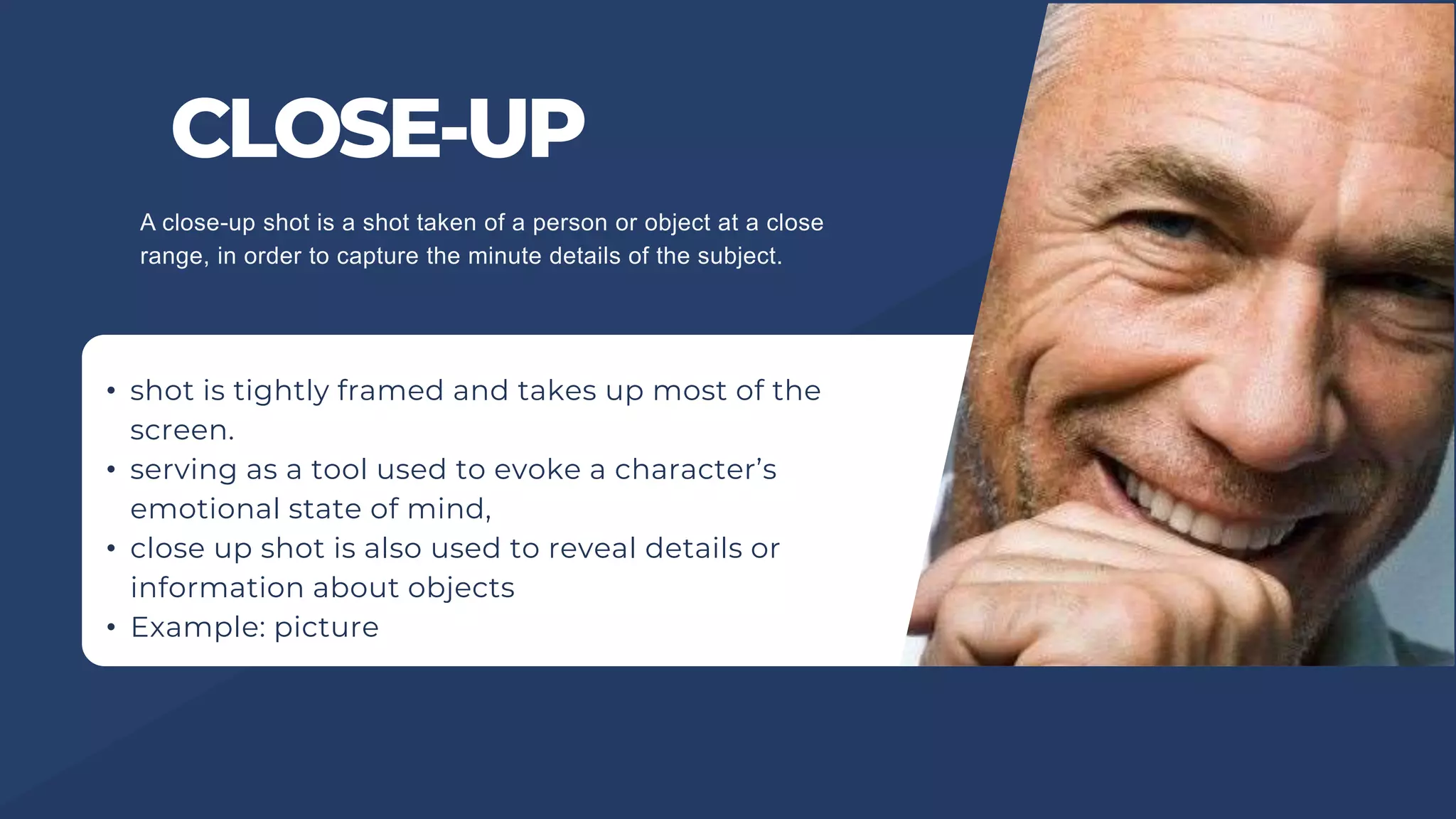
• shot is tightly framed and takes up most of the
screen.
• serving as a tool used to evoke a character’s
emotional state of mind,
• close up shot is also used to reveal details or
information about objects
• Example: picture
A close-up shot is a shot taken of a person or object at a close
range, in order to capture the minute details of the subject.
MEDIUM SHOT
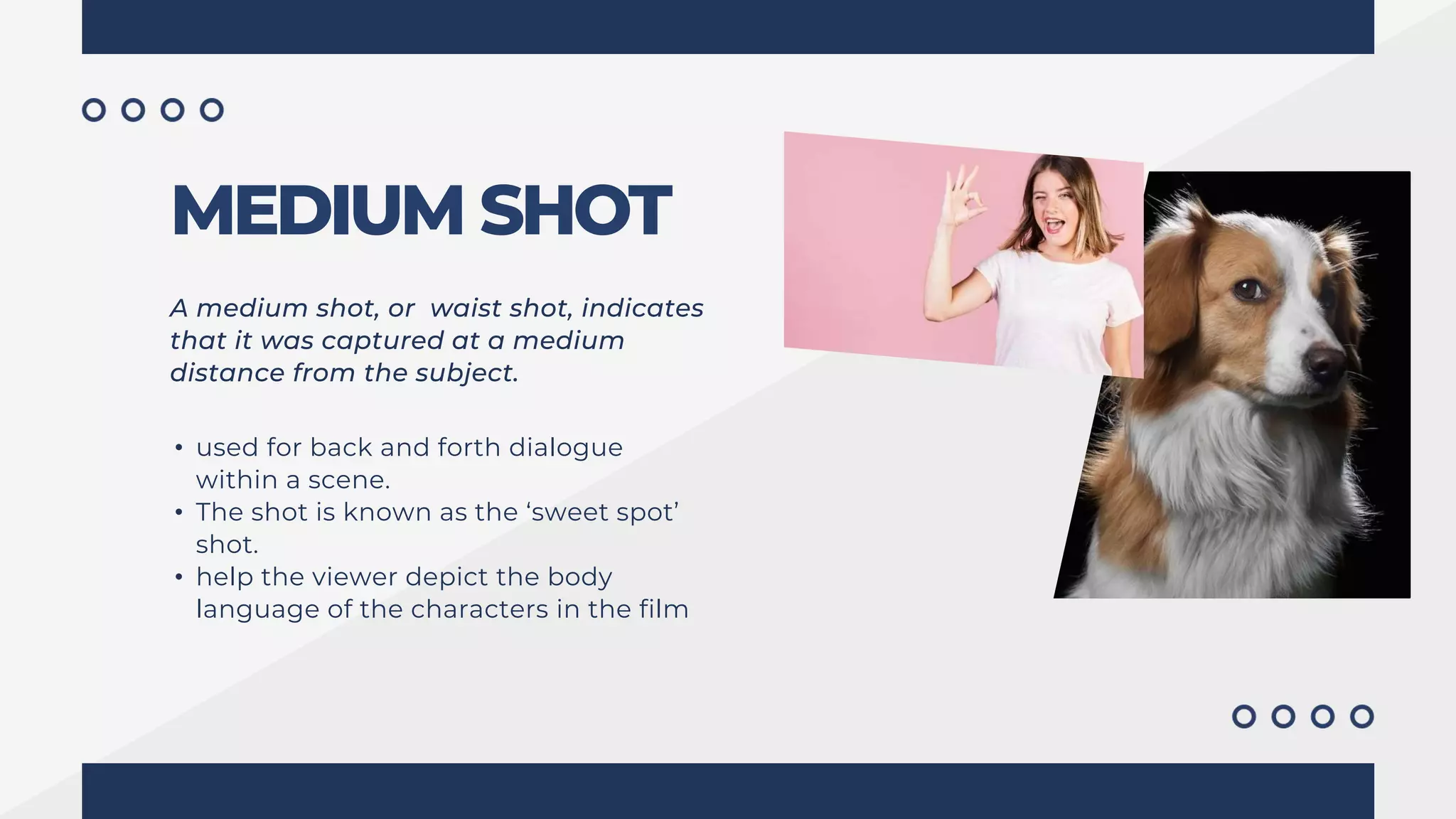
A medium shot, or waist shot, indicates
that it was captured at a medium
distance from the subject.
• used for back and forth dialogue
within a scene.
• The shot is known as the ‘sweet spot’
shot.
• help the viewer depict the body
language of the characters in the film
LONG SHOT
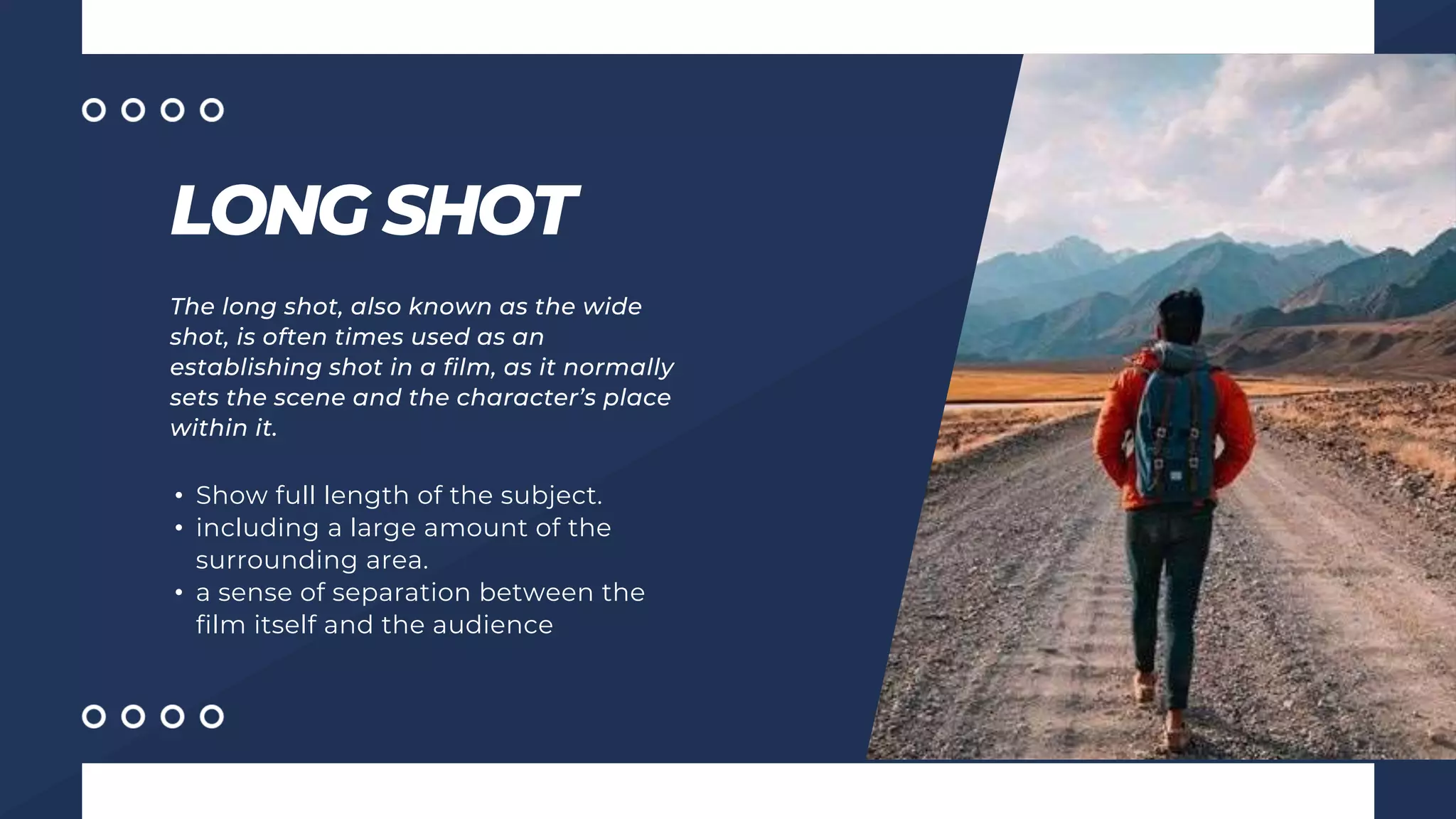
The long shot, also known as the wide
shot, is often times used as an
establishing shot in a film, as it normally
sets the scene and the character’s place
within it.
• Show full length of the subject.
• including a large amount of the
surrounding area.
• a sense of separation between the
film itself and the audience
EXTREME CLOSE-UP
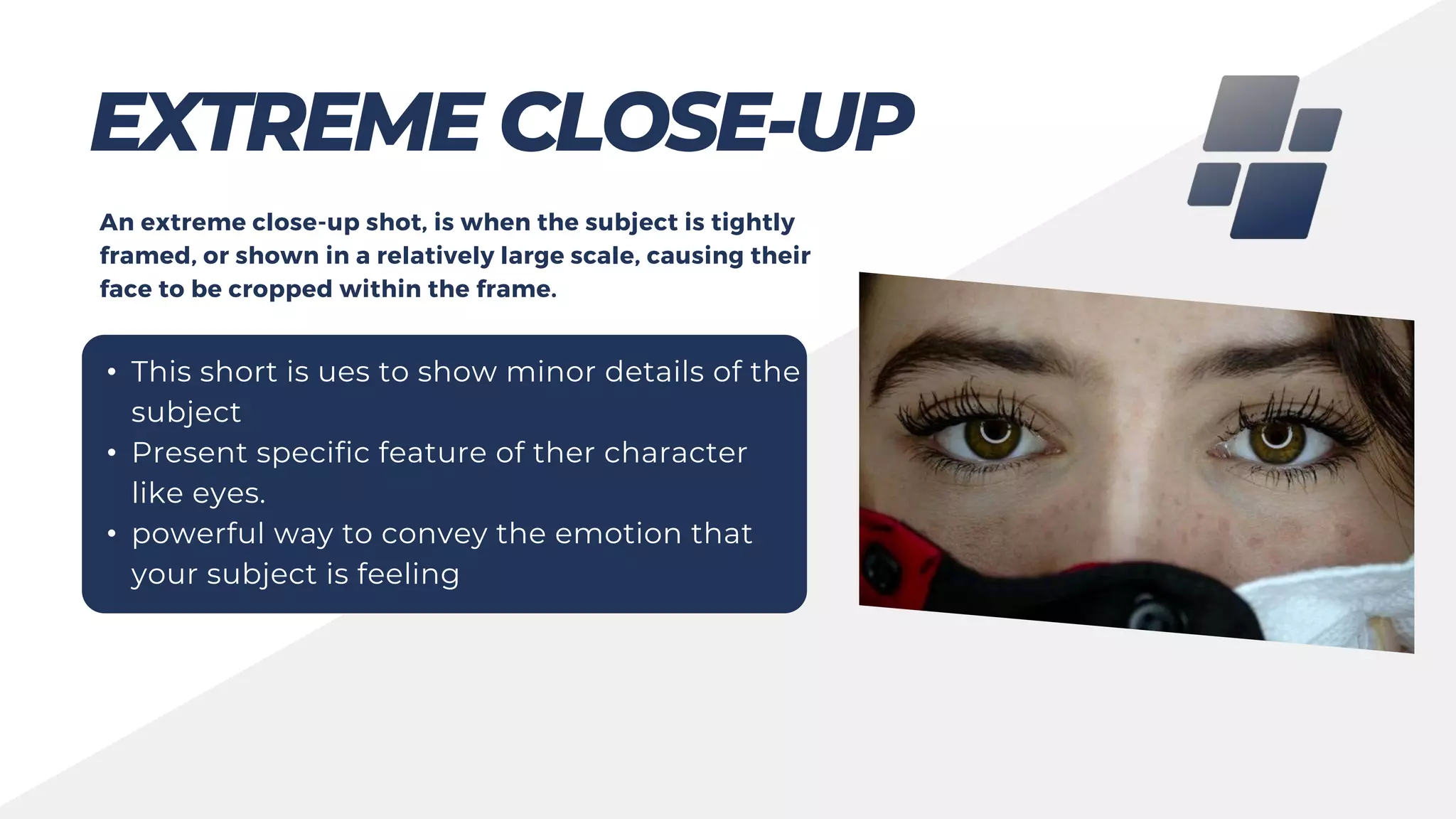
• This short is ues to show minor details of the
subject
• Present specific feature of ther character
like eyes.
• powerful way to convey the emotion that
your subject is feeling
An extreme close-up shot, is when the subject is tightly
framed, or shown in a relatively large scale, causing their
face to be cropped within the frame.
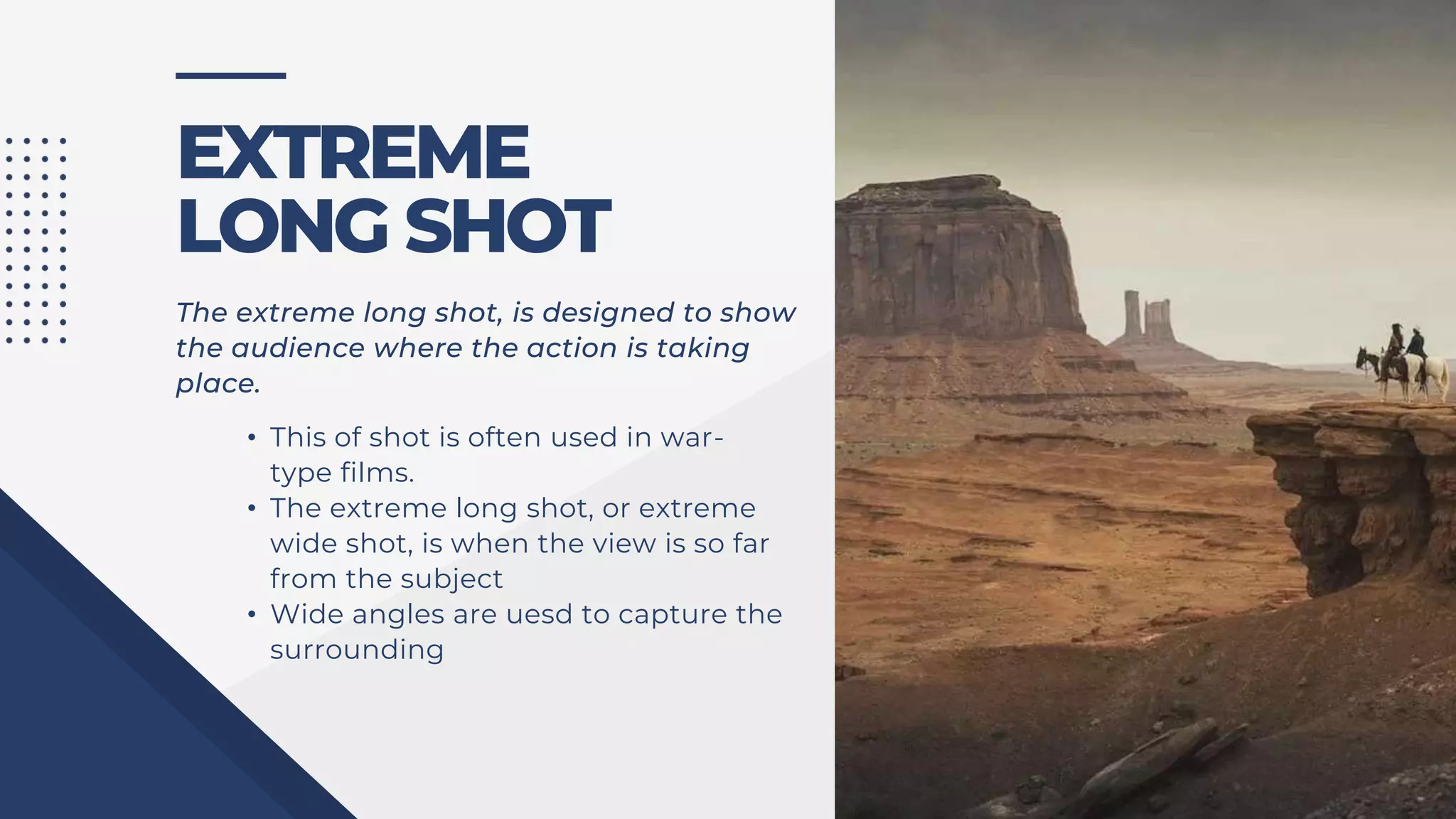
EXTREME
LONG SHOT
• This of shot is often used in war-
type films.
• The extreme long shot, or extreme
wide shot, is when the view is so far
from the subject
• Wide angles are uesd to capture the
surrounding
The extreme long shot, is designed to show
the audience where the action is taking
place.
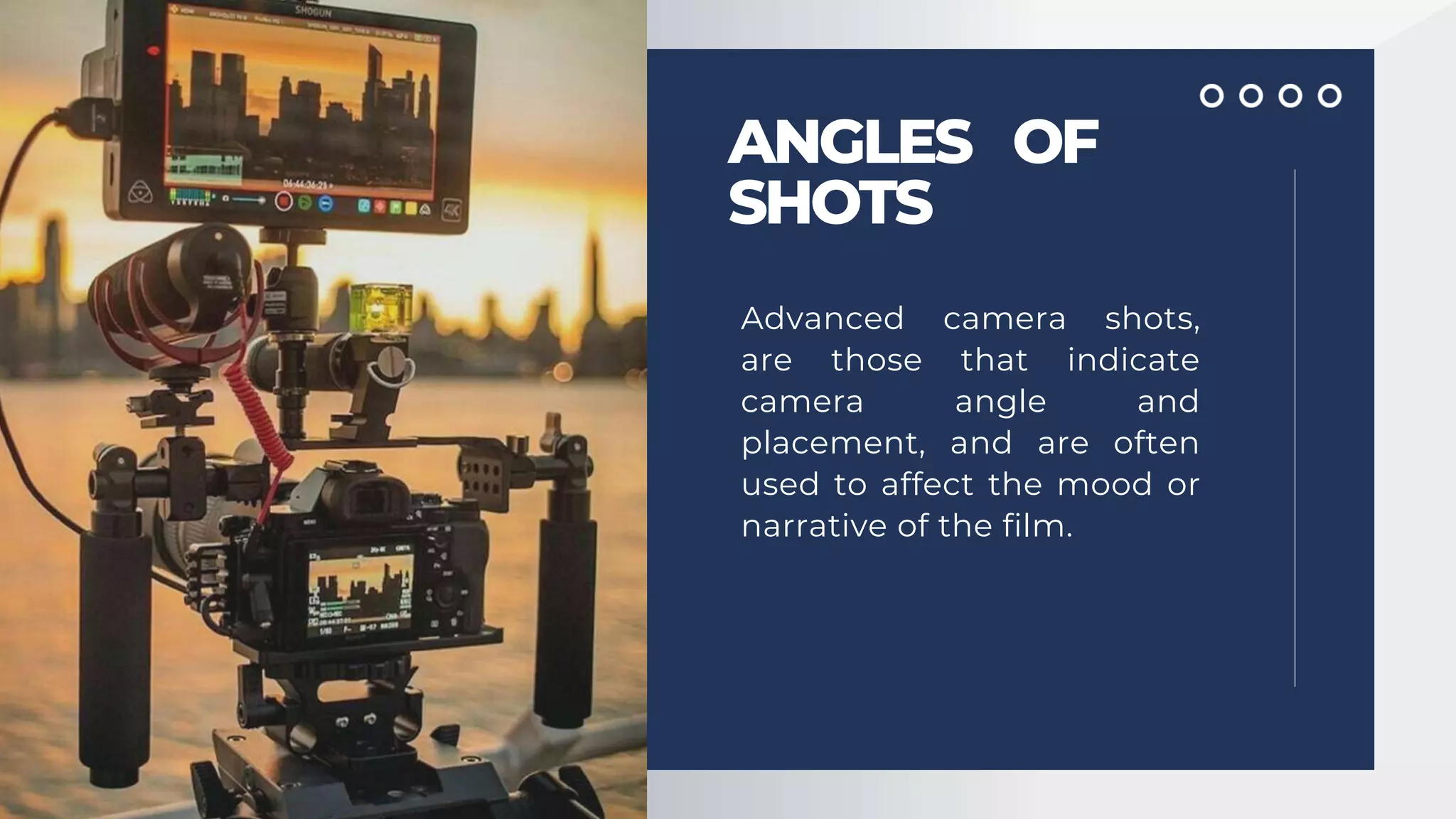
ANGLES OF
SHOTS
Advanced camera shots,
are those that indicate
camera angle and
placement, and are often
used to affect the mood or
narrative of the film.
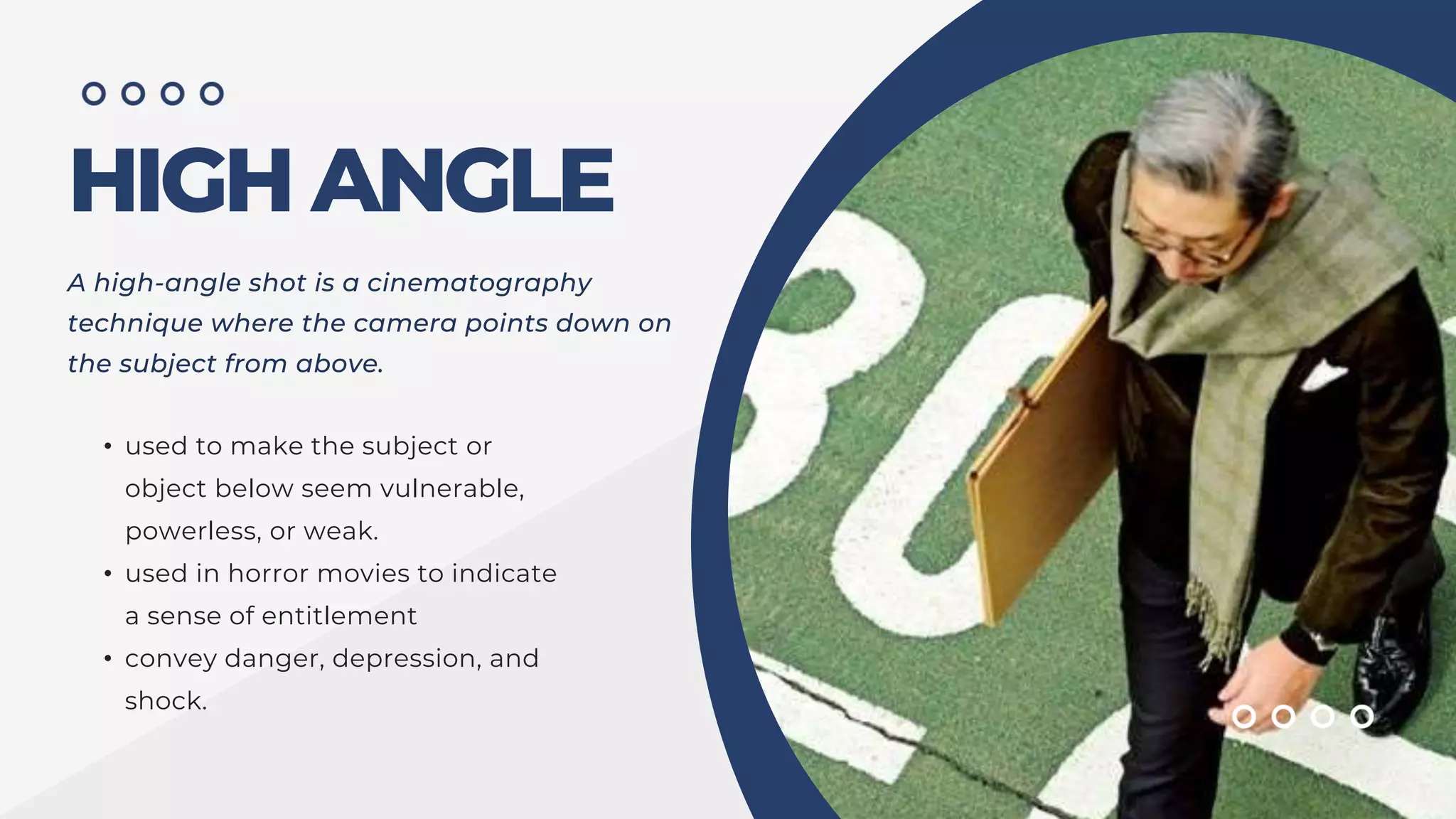
HIGH ANGLE
A high-angle shot is a cinematography
technique where the camera points down on
the subject from above.
• used to make the subject or
object below seem vulnerable,
powerless, or weak.
• used in horror movies to indicate
a sense of entitlement
• convey danger, depression, and
shock.
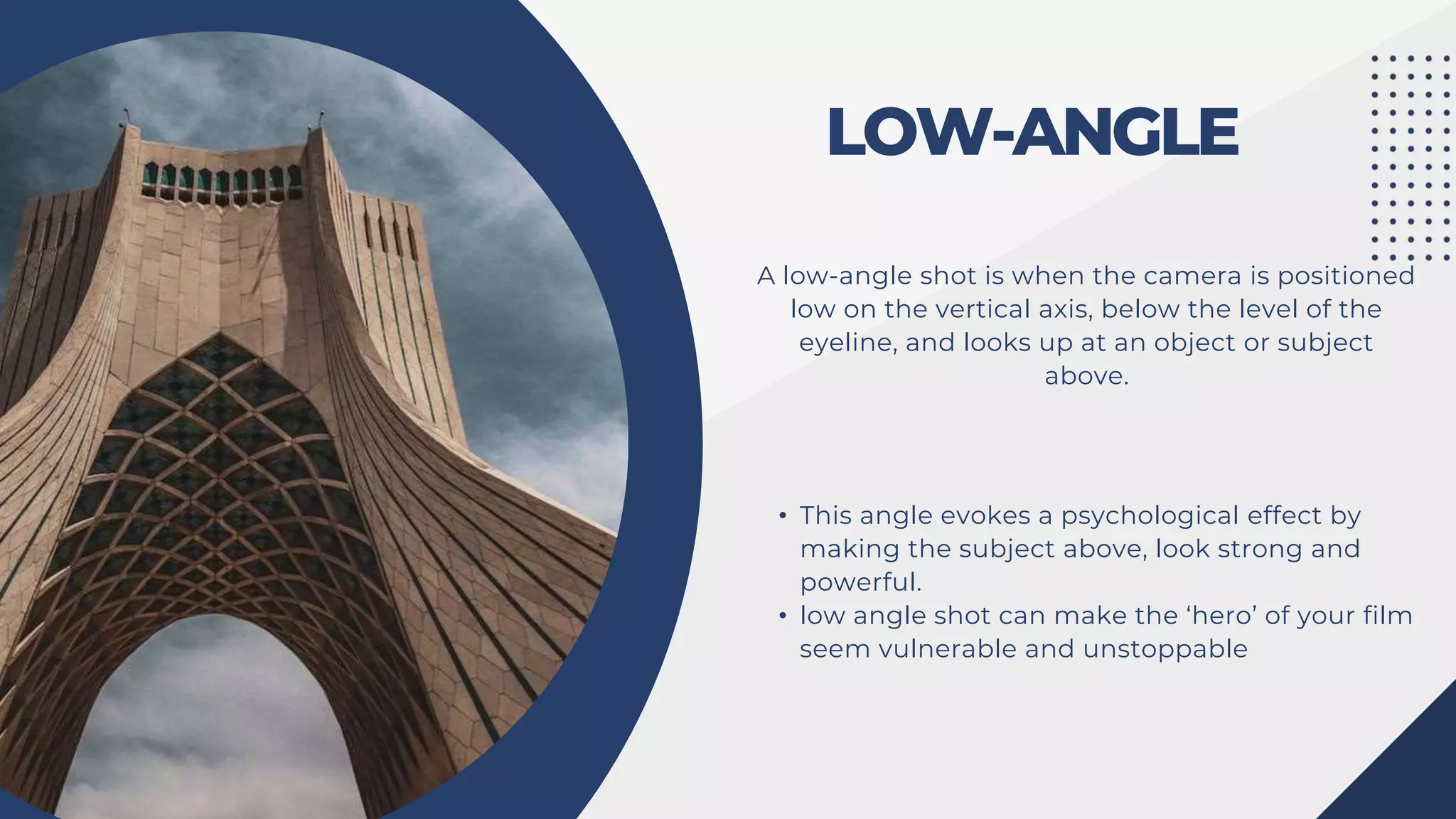
LOW-ANGLE
A low-angle shot is when the camera is positioned
low on the vertical axis, below the level of the
eyeline, and looks up at an object or subject
above.
• This angle evokes a psychological effect by
making the subject above, look strong and
powerful.
• low angle shot can make the ‘hero’ of your film
seem vulnerable and unstoppable
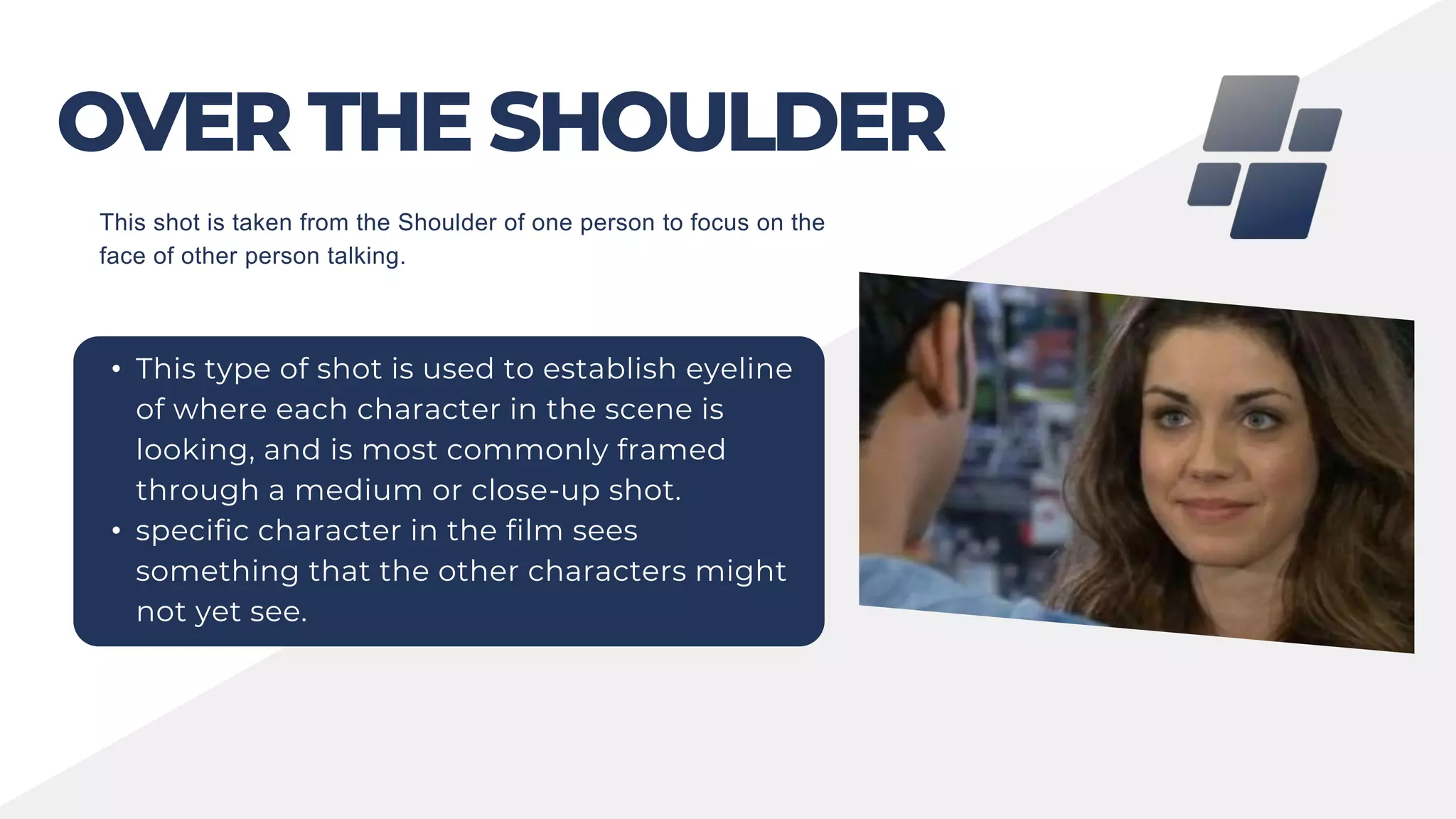
OVER THE SHOULDER
• This type of shot is used to establish eyeline
of where each character in the scene is
looking, and is most commonly framed
through a medium or close-up shot.
• specific character in the film sees
something that the other characters might
not yet see.
This shot is taken from the Shoulder of one person to focus on the
face of other person talking.
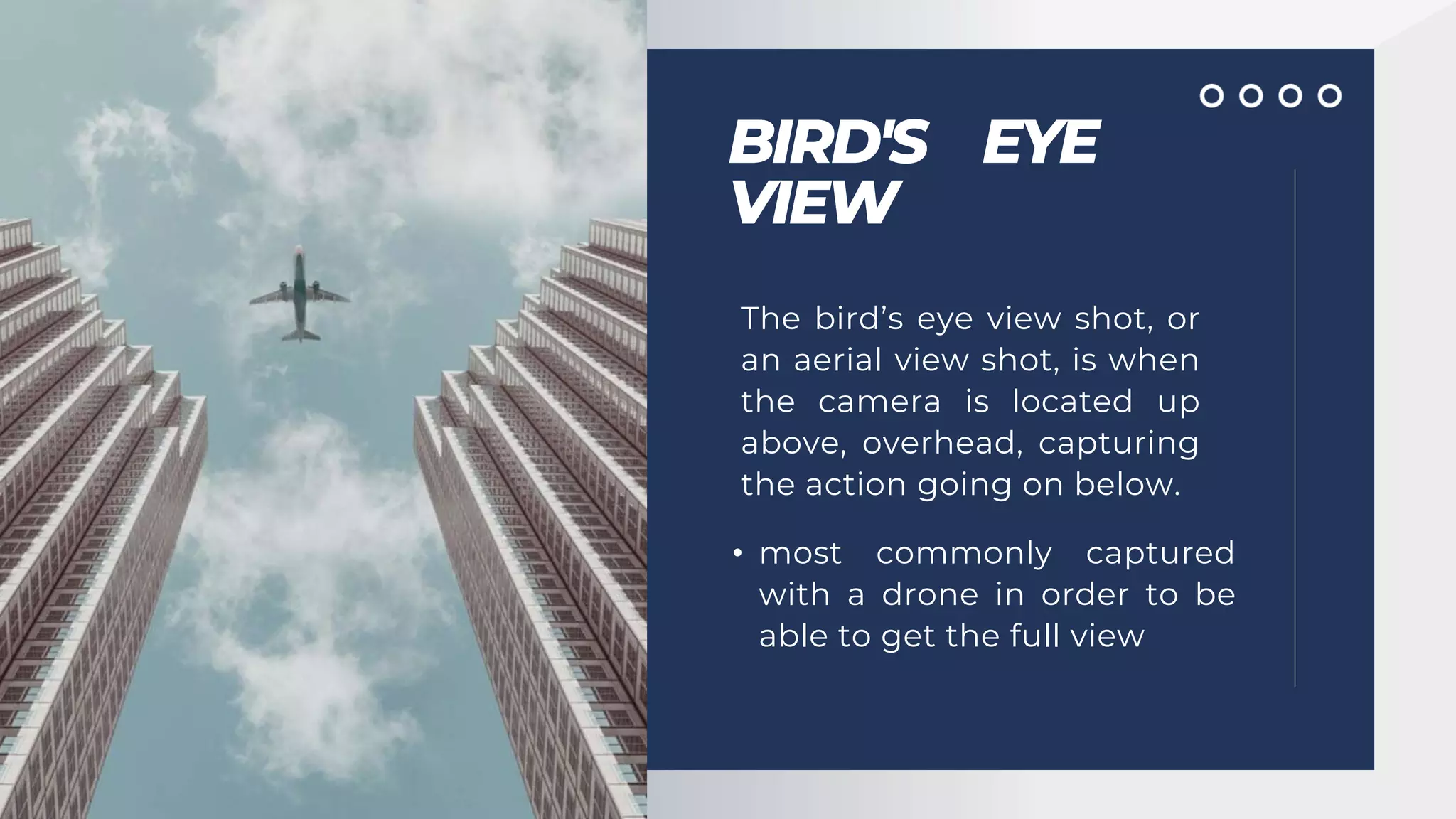
BIRD'S EYE
VIEW
The bird’s eye view shot, or
an aerial view shot, is when
the camera is located up
above, overhead, capturing
the action going on below.
• most commonly captured
with a drone in order to be
able to get the full view
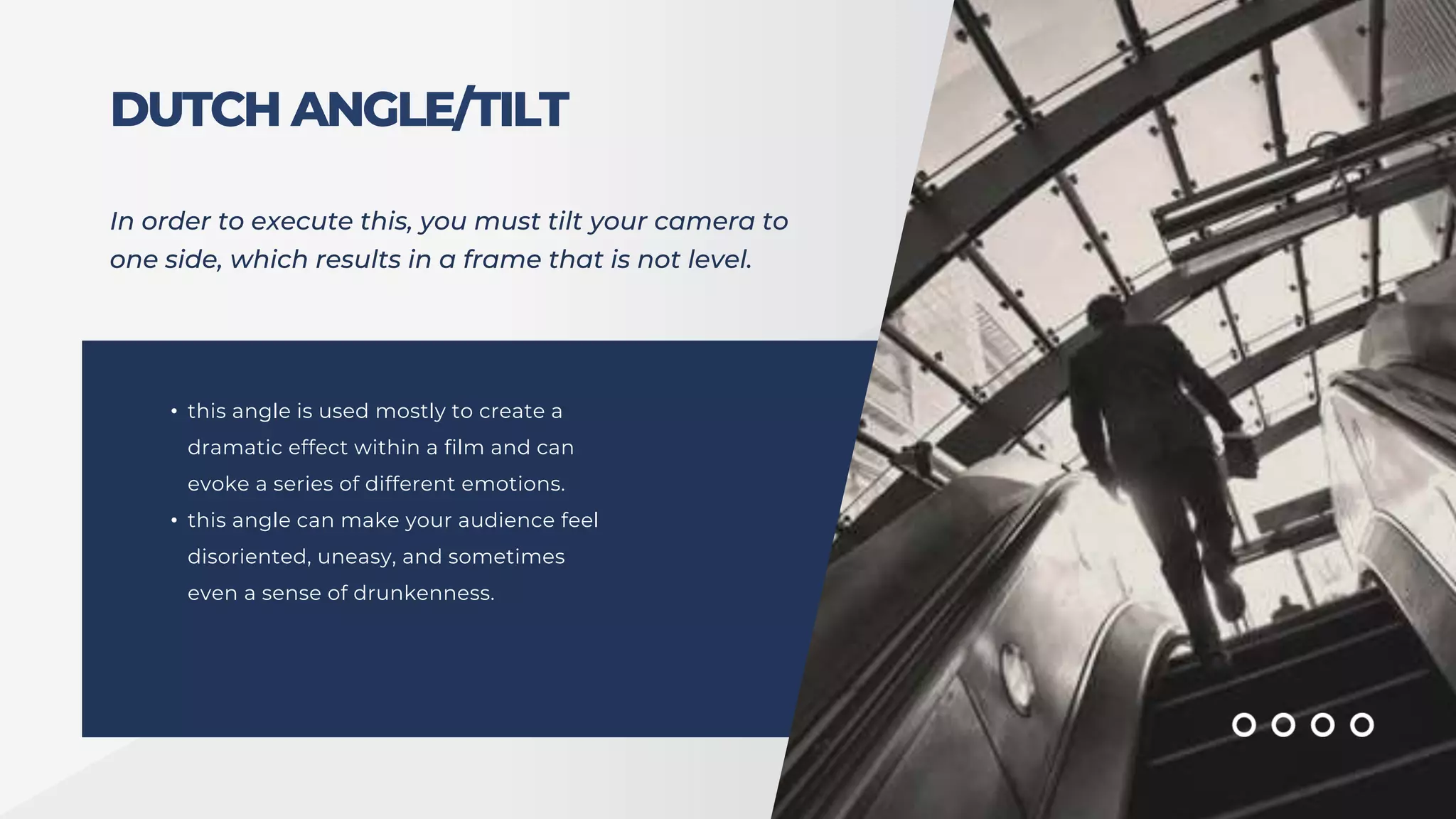
DUTCH ANGLE/TILT
In order to execute this, you must tilt your camera to
one side, which results in a frame that is not level.
• this angle is used mostly to create a
dramatic effect within a film and can
evoke a series of different emotions.
• this angle can make your audience feel
disoriented, uneasy, and sometimes
even a sense of drunkenness.
Thank you

Grammar of shots and angles

  • 1.
  • 2.
  • 3.
    TABLE OF CONTENTS • Longshot (LS) • Astablihing shot • Long shot (LS) • Medium shots • Close-up (CU) • Extreme Long Shot • Extreme Close-Up • Angle of Shots • Bird’s Eye • Over the Shoulder • Low-Angle • High-Angle • Dutch Angle/Tilt
  • 4.
    INTRODUCTION Basic camera shotsare those that refer to the indication of subject size within the frame. There are some different types of basic camera shots
  • 5.
    CLOSE-UP • shot istightly framed and takes up most of the screen. • serving as a tool used to evoke a character’s emotional state of mind, • close up shot is also used to reveal details or information about objects • Example: picture A close-up shot is a shot taken of a person or object at a close range, in order to capture the minute details of the subject.
  • 6.
    MEDIUM SHOT A mediumshot, or waist shot, indicates that it was captured at a medium distance from the subject. • used for back and forth dialogue within a scene. • The shot is known as the ‘sweet spot’ shot. • help the viewer depict the body language of the characters in the film
  • 7.
    LONG SHOT The longshot, also known as the wide shot, is often times used as an establishing shot in a film, as it normally sets the scene and the character’s place within it. • Show full length of the subject. • including a large amount of the surrounding area. • a sense of separation between the film itself and the audience
  • 8.
    EXTREME CLOSE-UP • Thisshort is ues to show minor details of the subject • Present specific feature of ther character like eyes. • powerful way to convey the emotion that your subject is feeling An extreme close-up shot, is when the subject is tightly framed, or shown in a relatively large scale, causing their face to be cropped within the frame.
  • 9.
    EXTREME LONG SHOT • Thisof shot is often used in war- type films. • The extreme long shot, or extreme wide shot, is when the view is so far from the subject • Wide angles are uesd to capture the surrounding The extreme long shot, is designed to show the audience where the action is taking place.
  • 10.
    ANGLES OF SHOTS Advanced camerashots, are those that indicate camera angle and placement, and are often used to affect the mood or narrative of the film.
  • 11.
    HIGH ANGLE A high-angleshot is a cinematography technique where the camera points down on the subject from above. • used to make the subject or object below seem vulnerable, powerless, or weak. • used in horror movies to indicate a sense of entitlement • convey danger, depression, and shock.
  • 12.
    LOW-ANGLE A low-angle shotis when the camera is positioned low on the vertical axis, below the level of the eyeline, and looks up at an object or subject above. • This angle evokes a psychological effect by making the subject above, look strong and powerful. • low angle shot can make the ‘hero’ of your film seem vulnerable and unstoppable
  • 13.
    OVER THE SHOULDER •This type of shot is used to establish eyeline of where each character in the scene is looking, and is most commonly framed through a medium or close-up shot. • specific character in the film sees something that the other characters might not yet see. This shot is taken from the Shoulder of one person to focus on the face of other person talking.
  • 14.
    BIRD'S EYE VIEW The bird’seye view shot, or an aerial view shot, is when the camera is located up above, overhead, capturing the action going on below. • most commonly captured with a drone in order to be able to get the full view
  • 15.
    DUTCH ANGLE/TILT In orderto execute this, you must tilt your camera to one side, which results in a frame that is not level. • this angle is used mostly to create a dramatic effect within a film and can evoke a series of different emotions. • this angle can make your audience feel disoriented, uneasy, and sometimes even a sense of drunkenness.
  • 16.