Angle Example What Is It? 
High Angle 
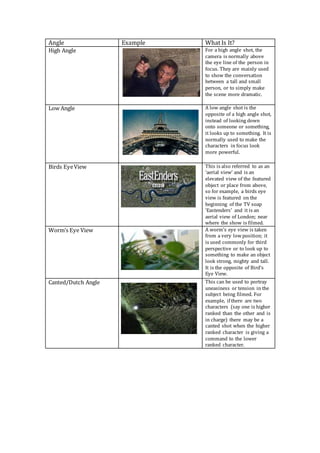
For a high angle shot, the 
camera is normally above 
the eye line of the person in 
focus. They are mainly used 
to show the conversation 
between a tall and small 
person, or to simply make 
the scene more dramatic. 
Low Angle 
A low angle shot is the 
opposite of a high angle shot, 
instead of looking down 
onto someone or something, 
it looks up to something. It is 
normally used to make the 
characters in focus look 
more powerful. 
Birds Eye View 
This is also referred to as an 
‘aerial view’ and is an 
elevated view of the featured 
object or place from above, 
so for example, a birds eye 
view is featured on the 
beginning of the TV soap 
‘Eastenders’ and it is an 
aerial view of London; near 
where the show is filmed. 
Worm’s Eye View 
A worm’s eye view is taken 
from a very low position; it 
is used commonly for third 
perspective or to look up to 
something to make an object 
look strong, mighty and tall. 
It is the opposite of Bird’s 
Eye View. 
Canted/Dutch Angle 
This can be used to portray 
uneasiness or tension in the 
subject being filmed. For 
example, if there are two 
characters (say one is higher 
ranked than the other and is 
in charge) there may be a 
canted shot when the higher 
ranked character is giving a 
command to the lower 
ranked character.
Movement Example What Is It? 
Pan-Static Camera 
Movement (From Left To 
Right 
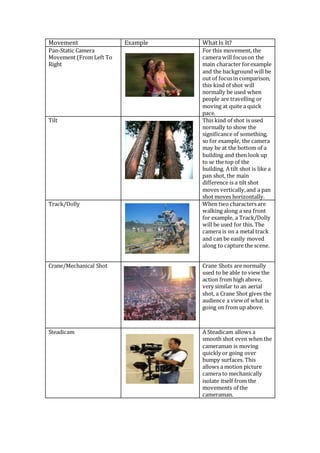
For this movement, the 
camera will focus on the 
main character for example 
and the background will be 
out of focus in comparison, 
this kind of shot will 
normally be used when 
people are travelling or 
moving at quite a quick 
pace. 
Tilt 
This kind of shot is used 
normally to show the 
significance of something, 
so for example, the camera 
may be at the bottom of a 
building and then look up 
to se the top of the 
building. A tilt shot is like a 
pan shot, the main 
difference is a tilt shot 
moves vertically, and a pan 
shot moves horizontally. 
Track/Dolly 
When two characters are 
walking along a sea front 
for example, a Track/Dolly 
will be used for this. The 
camera is on a metal track 
and can be easily moved 
along to capture the scene. 
Crane/Mechanical Shot 
Crane Shots are normally 
used to be able to view the 
action from high above, 
very similar to an aerial 
shot, a Crane Shot gives the 
audience a view of what is 
going on from up above. 
Steadicam 
A Steadicam allows a 
smooth shot even when the 
cameraman is moving 
quickly or going over 
bumpy surfaces. This 
allows a motion picture 
camera to mechanically 
isolate itself from the 
movements of the 
cameraman.
Zoom/Reverse Zoom 
(Zoom In And Out) 
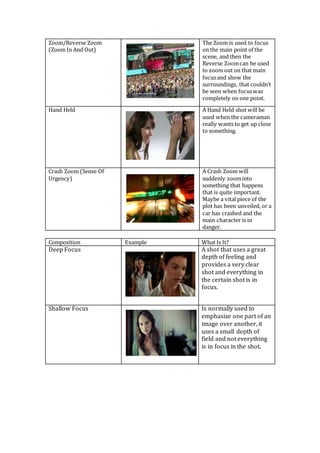
The Zoom is used to focus 
on the main point of the 
scene, and then the 
Reverse Zoom can be used 
to zoom out on that main 
focus and show the 
surroundings, that couldn’t 
be seen when focus was 
completely on one point. 
Hand Held 
A Hand Held shot will be 
used when the cameraman 
really wants to get up close 
to something. 
Crash Zoom (Sense Of 
Urgency) 
A Crash Zoom will 
suddenly zoom into 
something that happens 
that is quite important. 
Maybe a vital piece of the 
plot has been unveiled, or a 
car has crashed and the 
main character is in 
danger. 
Composition Example What Is It? 
Deep Focus 
A shot that uses a great 
depth of feeling and 
provides a very clear 
shot and everything in 
the certain shot is in 
focus. 
Shallow Focus 
Is normally used to 
emphasize one part of an 
image over another, it 
uses a small depth of 
field and not everything 
is in focus in the shot.
Pull Focus 
A Pull Focus is where you 
are focused on a certain 
thing during the shot, but 
you move that focus onto 
something else. This 
usually involves 
adjusting the focus from 
one object to another. 
Rule of Thirds 
This spacing technique 
involves a subject been 
aligned with a guideline 
that consists of three 
lines that makes a grid of 
nine boxes. 
Eye Line Match 
This is often used to 
show when a character is 
talking to another 
character. To achieve 
this, more than one shot 
is needed and 
positioning of the actor’s 
eye line has to be at the 
same level for this to 
work. 
Camera Example What Is It? 
Long Shot In a long shot, you 
can see the 
background, scenery 
and the character. 
Everything is in 
similar focus. 
Close Up Normally used to 
show a character’s 
expression, detail on 
something or 
something key to the 
story. 
Medium Shot Only the top half of 
the character’s body 
is in this shot, and the 
background can be 
seen, it is in focus just 
like the character.
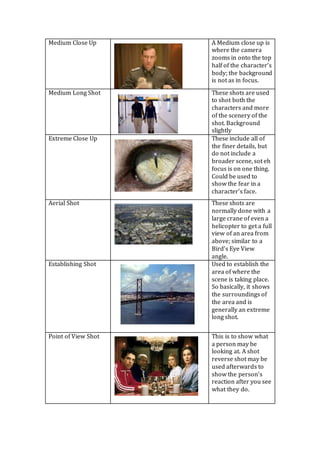
Medium Close Up A Medium close up is 
where the camera 
zooms in onto the top 
half of the character’s 
body; the background 
is not as in focus. 
Medium Long Shot These shots are used 
to shot both the 
characters and more 
of the scenery of the 
shot. Background 
slightly 
Extreme Close Up 
These include all of 
the finer details, but 
do not include a 
broader scene, sot eh 
focus is on one thing. 
Could be used to 
show the fear in a 
character’s face. 
Aerial Shot 
These shots are 
normally done with a 
large crane of even a 
helicopter to get a full 
view of an area from 
above; similar to a 
Bird’s Eye View 
angle. 
Establishing Shot 
Used to establish the 
area of where the 
scene is taking place. 
So basically, it shows 
the surroundings of 
the area and is 
generally an extreme 
long shot. 
Point of View Shot 
This is to show what 
a person may be 
looking at. A shot 
reverse shot may be 
used afterwards to 
show the person’s 
reaction after you see 
what they do.
Over The Shoulder 
Shot 
A shot of something 
taken on the angle 
from behind a 
person’s shoulder. 
The person who is in 
front of the camera, 
their head and 
shoulder act as the 
frame. 
Two Shot 
This is where there is 
more than one 
person in a shot. 
They do not 
necessarily need to 
be stood next to one 
another. This 
technique is good for 
films that have two 
main characters.

Media Glossary

  • 1.
    Angle Example WhatIs It? High Angle For a high angle shot, the camera is normally above the eye line of the person in focus. They are mainly used to show the conversation between a tall and small person, or to simply make the scene more dramatic. Low Angle A low angle shot is the opposite of a high angle shot, instead of looking down onto someone or something, it looks up to something. It is normally used to make the characters in focus look more powerful. Birds Eye View This is also referred to as an ‘aerial view’ and is an elevated view of the featured object or place from above, so for example, a birds eye view is featured on the beginning of the TV soap ‘Eastenders’ and it is an aerial view of London; near where the show is filmed. Worm’s Eye View A worm’s eye view is taken from a very low position; it is used commonly for third perspective or to look up to something to make an object look strong, mighty and tall. It is the opposite of Bird’s Eye View. Canted/Dutch Angle This can be used to portray uneasiness or tension in the subject being filmed. For example, if there are two characters (say one is higher ranked than the other and is in charge) there may be a canted shot when the higher ranked character is giving a command to the lower ranked character.
  • 2.
    Movement Example WhatIs It? Pan-Static Camera Movement (From Left To Right For this movement, the camera will focus on the main character for example and the background will be out of focus in comparison, this kind of shot will normally be used when people are travelling or moving at quite a quick pace. Tilt This kind of shot is used normally to show the significance of something, so for example, the camera may be at the bottom of a building and then look up to se the top of the building. A tilt shot is like a pan shot, the main difference is a tilt shot moves vertically, and a pan shot moves horizontally. Track/Dolly When two characters are walking along a sea front for example, a Track/Dolly will be used for this. The camera is on a metal track and can be easily moved along to capture the scene. Crane/Mechanical Shot Crane Shots are normally used to be able to view the action from high above, very similar to an aerial shot, a Crane Shot gives the audience a view of what is going on from up above. Steadicam A Steadicam allows a smooth shot even when the cameraman is moving quickly or going over bumpy surfaces. This allows a motion picture camera to mechanically isolate itself from the movements of the cameraman.
  • 3.
    Zoom/Reverse Zoom (ZoomIn And Out) The Zoom is used to focus on the main point of the scene, and then the Reverse Zoom can be used to zoom out on that main focus and show the surroundings, that couldn’t be seen when focus was completely on one point. Hand Held A Hand Held shot will be used when the cameraman really wants to get up close to something. Crash Zoom (Sense Of Urgency) A Crash Zoom will suddenly zoom into something that happens that is quite important. Maybe a vital piece of the plot has been unveiled, or a car has crashed and the main character is in danger. Composition Example What Is It? Deep Focus A shot that uses a great depth of feeling and provides a very clear shot and everything in the certain shot is in focus. Shallow Focus Is normally used to emphasize one part of an image over another, it uses a small depth of field and not everything is in focus in the shot.
  • 4.
    Pull Focus APull Focus is where you are focused on a certain thing during the shot, but you move that focus onto something else. This usually involves adjusting the focus from one object to another. Rule of Thirds This spacing technique involves a subject been aligned with a guideline that consists of three lines that makes a grid of nine boxes. Eye Line Match This is often used to show when a character is talking to another character. To achieve this, more than one shot is needed and positioning of the actor’s eye line has to be at the same level for this to work. Camera Example What Is It? Long Shot In a long shot, you can see the background, scenery and the character. Everything is in similar focus. Close Up Normally used to show a character’s expression, detail on something or something key to the story. Medium Shot Only the top half of the character’s body is in this shot, and the background can be seen, it is in focus just like the character.
  • 5.
    Medium Close UpA Medium close up is where the camera zooms in onto the top half of the character’s body; the background is not as in focus. Medium Long Shot These shots are used to shot both the characters and more of the scenery of the shot. Background slightly Extreme Close Up These include all of the finer details, but do not include a broader scene, sot eh focus is on one thing. Could be used to show the fear in a character’s face. Aerial Shot These shots are normally done with a large crane of even a helicopter to get a full view of an area from above; similar to a Bird’s Eye View angle. Establishing Shot Used to establish the area of where the scene is taking place. So basically, it shows the surroundings of the area and is generally an extreme long shot. Point of View Shot This is to show what a person may be looking at. A shot reverse shot may be used afterwards to show the person’s reaction after you see what they do.
  • 6.
    Over The Shoulder Shot A shot of something taken on the angle from behind a person’s shoulder. The person who is in front of the camera, their head and shoulder act as the frame. Two Shot This is where there is more than one person in a shot. They do not necessarily need to be stood next to one another. This technique is good for films that have two main characters.