CAMERA SHOTS
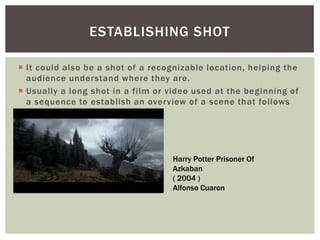
 It could also be a shot of a recognizable location, helping the
audience understand where they are.
 Usually a long shot in a film or video used at the beginning of
a sequence to establish an overview of a scene that follows
ESTABLISHING SHOT
Harry Potter Prisoner Of
Azkaban
( 2004 )
Alfonso Cuaron
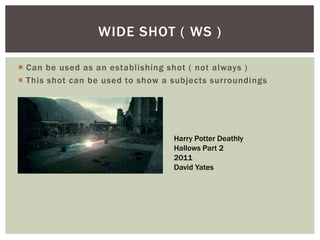
 Can be used as an establishing shot ( not always )
 This shot can be used to show a subjects surroundings
WIDE SHOT ( WS )
Harry Potter Deathly
Hallows Part 2
2011
David Yates
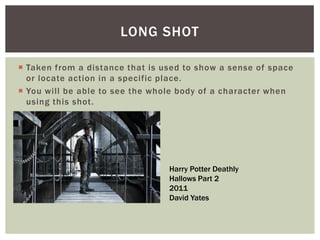
 Taken from a distance that is used to show a sense of space
or locate action in a specific place.
 You will be able to see the whole body of a character when
using this shot.
LONG SHOT
Harry Potter Deathly
Hallows Part 2
2011
David Yates
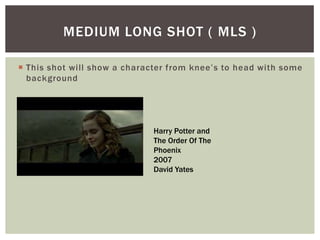
 This shot will show a character from knee’s to head with some
background
MEDIUM LONG SHOT ( MLS )
Harry Potter and
The Order Of The
Phoenix
2007
David Yates
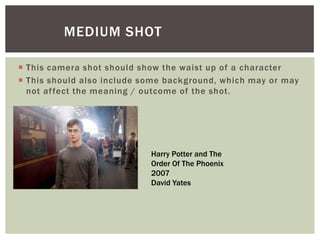
 This camera shot should show the waist up of a character
 This should also include some background, which may or may
not affect the meaning / outcome of the shot.
MEDIUM SHOT
Harry Potter and The
Order Of The Phoenix
2007
David Yates
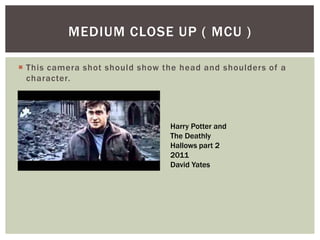
 This camera shot should show the head and shoulders of a
character.
MEDIUM CLOSE UP ( MCU )
Harry Potter and
The Deathly
Hallows part 2
2011
David Yates
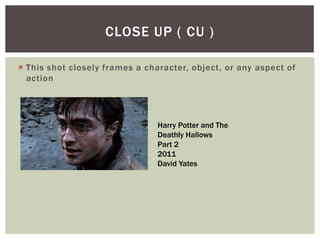
 This shot closely frames a character, object, or any aspect of
action
CLOSE UP ( CU )
Harry Potter and The
Deathly Hallows
Part 2
2011
David Yates
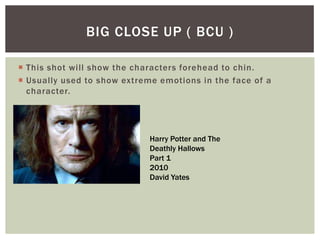
 This shot will show the characters forehead to chin.
 Usually used to show extreme emotions in the face of a
character.
BIG CLOSE UP ( BCU )
Harry Potter and The
Deathly Hallows
Part 1
2010
David Yates
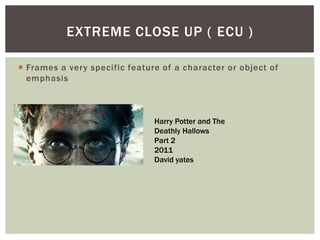
 Frames a very specific feature of a character or object of
emphasis
EXTREME CLOSE UP ( ECU )
Harry Potter and The
Deathly Hallows
Part 2
2011
David yates
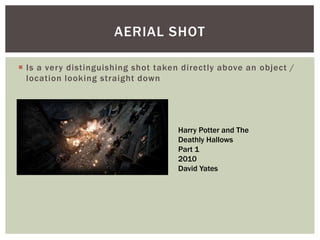
 Is a very distinguishing shot taken directly above an object /
location looking straight down
AERIAL SHOT
Harry Potter and The
Deathly Hallows
Part 1
2010
David Yates
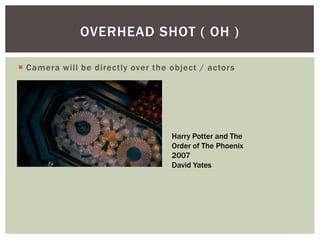
 Camera will be directly over the object / actors
OVERHEAD SHOT ( OH )
Harry Potter and The
Order of The Phoenix
2007
David Yates
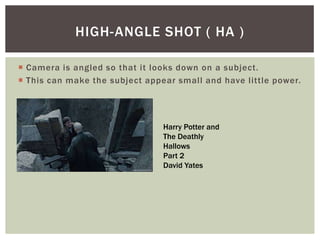
 Camera is angled so that it looks down on a subject.
 This can make the subject appear small and have little power.
HIGH-ANGLE SHOT ( HA )
Harry Potter and
The Deathly
Hallows
Part 2
David Yates
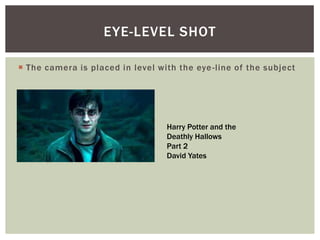
 The camera is placed in level with the eye-line of the subject
EYE-LEVEL SHOT
Harry Potter and the
Deathly Hallows
Part 2
David Yates
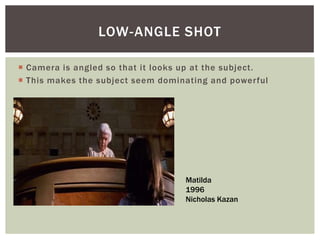
 Camera is angled so that it looks up at the subject.
 This makes the subject seem dominating and powerful
LOW-ANGLE SHOT
Matilda
1996
Nicholas Kazan
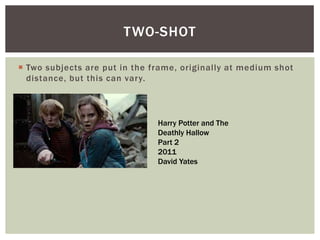
 Two subjects are put in the frame, originally at medium shot
distance, but this can vary.
TWO-SHOT
Harry Potter and The
Deathly Hallow
Part 2
2011
David Yates
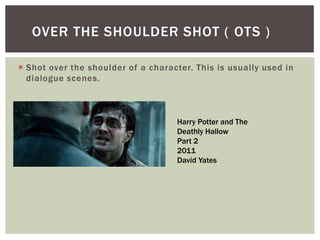
 Shot over the shoulder of a character. This is usually used in
dialogue scenes.
OVER THE SHOULDER SHOT ( OTS )
Harry Potter and The
Deathly Hallow
Part 2
2011
David Yates
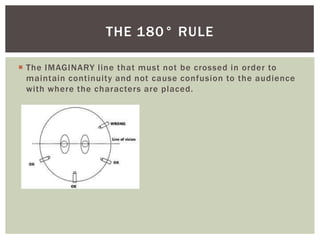
 The IMAGINARY line that must not be crossed in order to
maintain continuity and not cause confusion to the audience
with where the characters are placed.
THE 180° RULE
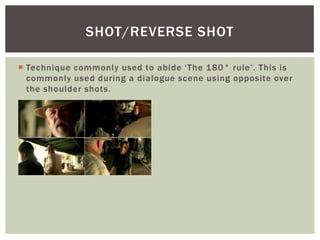
 Technique commonly used to abide ‘The 180° rule’. This is
commonly used during a dialogue scene using opposite over
the shoulder shots.
SHOT/REVERSE SHOT
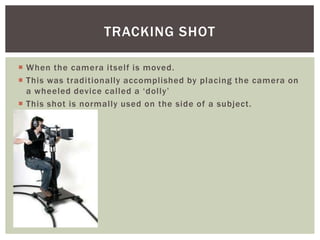
 When the camera itself is moved.
 This was traditionally accomplished by placing the camera on
a wheeled device called a ‘dolly’
 This shot is normally used on the side of a subject.
TRACKING SHOT
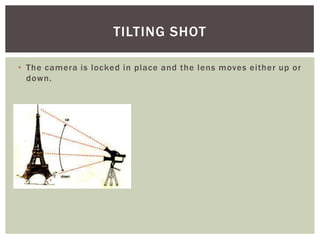
• The camera is locked in place and the lens moves either up or
down.
TILTING SHOT
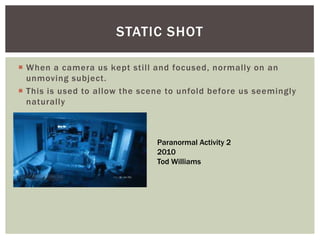
 When a camera us kept still and focused, normally on an
unmoving subject.
 This is used to allow the scene to unfold before us seemingly
naturally
STATIC SHOT
Paranormal Activity 2
2010
Tod Williams
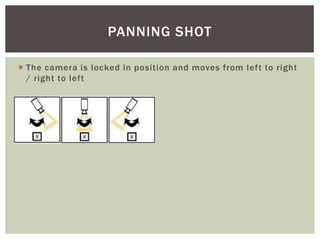
 The camera is locked in position and moves from left to right
/ right to left
PANNING SHOT
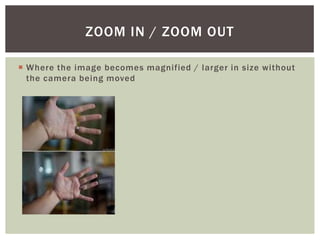
 Where the image becomes magnified / larger in size without
the camera being moved
ZOOM IN / ZOOM OUT
 The camera zooms in, while the dolly tracks out, this causes
the viewer too
ZOOM IN / TRACK OUT
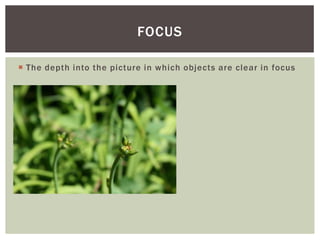
 The depth into the picture in which objects are clear in focus
FOCUS
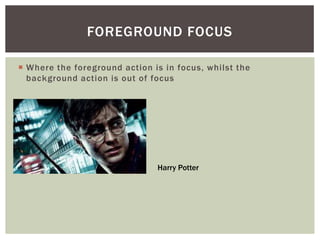
 Where the foreground action is in focus, whilst the
background action is out of focus
FOREGROUND FOCUS
Harry Potter
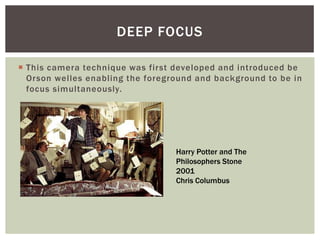
 This camera technique was first developed and introduced be
Orson welles enabling the foreground and background to be in
focus simultaneously.
DEEP FOCUS
Harry Potter and The
Philosophers Stone
2001
Chris Columbus

Camera shots

  • 1.
  • 2.
     It couldalso be a shot of a recognizable location, helping the audience understand where they are.  Usually a long shot in a film or video used at the beginning of a sequence to establish an overview of a scene that follows ESTABLISHING SHOT Harry Potter Prisoner Of Azkaban ( 2004 ) Alfonso Cuaron
  • 3.
     Can beused as an establishing shot ( not always )  This shot can be used to show a subjects surroundings WIDE SHOT ( WS ) Harry Potter Deathly Hallows Part 2 2011 David Yates
  • 4.
     Taken froma distance that is used to show a sense of space or locate action in a specific place.  You will be able to see the whole body of a character when using this shot. LONG SHOT Harry Potter Deathly Hallows Part 2 2011 David Yates
  • 5.
     This shotwill show a character from knee’s to head with some background MEDIUM LONG SHOT ( MLS ) Harry Potter and The Order Of The Phoenix 2007 David Yates
  • 6.
     This camerashot should show the waist up of a character  This should also include some background, which may or may not affect the meaning / outcome of the shot. MEDIUM SHOT Harry Potter and The Order Of The Phoenix 2007 David Yates
  • 7.
     This camerashot should show the head and shoulders of a character. MEDIUM CLOSE UP ( MCU ) Harry Potter and The Deathly Hallows part 2 2011 David Yates
  • 8.
     This shotclosely frames a character, object, or any aspect of action CLOSE UP ( CU ) Harry Potter and The Deathly Hallows Part 2 2011 David Yates
  • 9.
     This shotwill show the characters forehead to chin.  Usually used to show extreme emotions in the face of a character. BIG CLOSE UP ( BCU ) Harry Potter and The Deathly Hallows Part 1 2010 David Yates
  • 10.
     Frames avery specific feature of a character or object of emphasis EXTREME CLOSE UP ( ECU ) Harry Potter and The Deathly Hallows Part 2 2011 David yates
  • 11.
     Is avery distinguishing shot taken directly above an object / location looking straight down AERIAL SHOT Harry Potter and The Deathly Hallows Part 1 2010 David Yates
  • 12.
     Camera willbe directly over the object / actors OVERHEAD SHOT ( OH ) Harry Potter and The Order of The Phoenix 2007 David Yates
  • 13.
     Camera isangled so that it looks down on a subject.  This can make the subject appear small and have little power. HIGH-ANGLE SHOT ( HA ) Harry Potter and The Deathly Hallows Part 2 David Yates
  • 14.
     The camerais placed in level with the eye-line of the subject EYE-LEVEL SHOT Harry Potter and the Deathly Hallows Part 2 David Yates
  • 15.
     Camera isangled so that it looks up at the subject.  This makes the subject seem dominating and powerful LOW-ANGLE SHOT Matilda 1996 Nicholas Kazan
  • 16.
     Two subjectsare put in the frame, originally at medium shot distance, but this can vary. TWO-SHOT Harry Potter and The Deathly Hallow Part 2 2011 David Yates
  • 17.
     Shot overthe shoulder of a character. This is usually used in dialogue scenes. OVER THE SHOULDER SHOT ( OTS ) Harry Potter and The Deathly Hallow Part 2 2011 David Yates
  • 18.
     The IMAGINARYline that must not be crossed in order to maintain continuity and not cause confusion to the audience with where the characters are placed. THE 180° RULE
  • 19.
     Technique commonlyused to abide ‘The 180° rule’. This is commonly used during a dialogue scene using opposite over the shoulder shots. SHOT/REVERSE SHOT
  • 20.
     When thecamera itself is moved.  This was traditionally accomplished by placing the camera on a wheeled device called a ‘dolly’  This shot is normally used on the side of a subject. TRACKING SHOT
  • 21.
    • The camerais locked in place and the lens moves either up or down. TILTING SHOT
  • 22.
     When acamera us kept still and focused, normally on an unmoving subject.  This is used to allow the scene to unfold before us seemingly naturally STATIC SHOT Paranormal Activity 2 2010 Tod Williams
  • 23.
     The camerais locked in position and moves from left to right / right to left PANNING SHOT
  • 24.
     Where theimage becomes magnified / larger in size without the camera being moved ZOOM IN / ZOOM OUT
  • 25.
     The camerazooms in, while the dolly tracks out, this causes the viewer too ZOOM IN / TRACK OUT
  • 26.
     The depthinto the picture in which objects are clear in focus FOCUS
  • 27.
     Where theforeground action is in focus, whilst the background action is out of focus FOREGROUND FOCUS Harry Potter
  • 28.
     This cameratechnique was first developed and introduced be Orson welles enabling the foreground and background to be in focus simultaneously. DEEP FOCUS Harry Potter and The Philosophers Stone 2001 Chris Columbus