MEDIA CAMERA
SHOTS.
ESTABLISHING SHOT
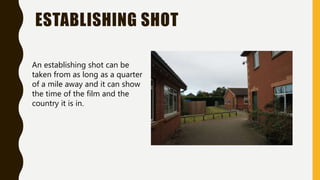
An establishing shot can be
taken from as long as a quarter
of a mile away and it can show
the time of the film and the
country it is in.
WIDE SHOT
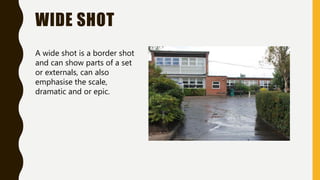
A wide shot is a border shot
and can show parts of a set
or externals, can also
emphasise the scale,
dramatic and or epic.
LONGSHOT
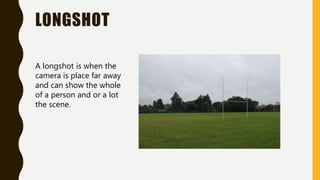
A longshot is when the
camera is place far away
and can show the whole
of a person and or a lot
the scene.
MEDIUM SHOT
A medium shot is the
most common shot and
normally shows the
characters from the waist
up and can show all the
action in the scene.
CLOSE UP
This shows little
background and shows
all of the persons face
to emphasise emotion.
Eg anger.
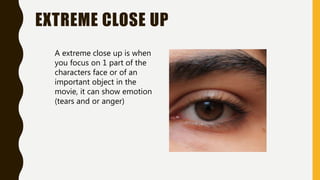
EXTREME CLOSE UP
A extreme close up is when
you focus on 1 part of the
characters face or of an
important object in the
movie, it can show emotion
(tears and or anger)
POINT OF VIEW
A Point of view shot is when you
see action from the characters
‘point of view’ or perspective and
can create a sense of tension or
discomfort. Can be used well if
the character is running in a
forest.
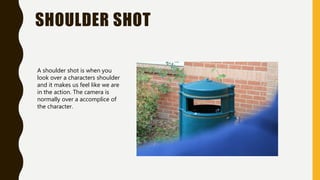
SHOULDER SHOT
A shoulder shot is when you
look over a characters shoulder
and it makes us feel like we are
in the action. The camera is
normally over a accomplice of
the character.
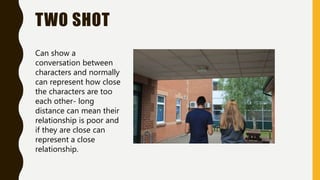
TWO SHOT
Can show a
conversation between
characters and normally
can represent how close
the characters are too
each other- long
distance can mean their
relationship is poor and
if they are close can
represent a close
relationship.
TILTS
Tilts are where the
camera is place at an
angle to show a scene
from a different angle
and can make the
watcher feel uneasy.
HIGH ANGLE
Is when the camera
looks down onto a
character and makes
the character being
looked onto seem
powerless or of less
importance.
LOW ANGLE
Is when the camera looks
up at a character and
makes them feel of
importance or superior as
they are ‘higher’ than you.
ZOOM
A zoom shot is when the
camera gets closer or
further away from a
object, can lead to close
ups.
DOLLY SHOT
A dolly shot is where a
track is laid out on set
and the camera can be
moved around freely as
it is put on a tripod or
attached possibly to a
car and balances itself
out.
HAND-HELD SHOTS
A hand-held shot is
where there is
someone running
around with a camera,
jerky and ragged
effect favoured by
filmmakers.
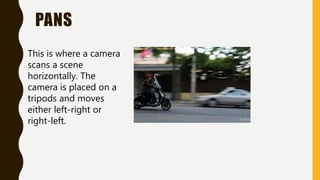
PANS
This is where a camera
scans a scene
horizontally. The
camera is placed on a
tripods and moves
either left-right or
right-left.
TRACKING
The camera moves
sideways to ‘track’ the
character, otherwise similar
to a pan.
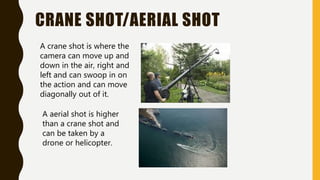
CRANE SHOT/AERIAL SHOT
A crane shot is where the
camera can move up and
down in the air, right and
left and can swoop in on
the action and can move
diagonally out of it.
A aerial shot is higher
than a crane shot and
can be taken by a
drone or helicopter.
CINEMATOGRAPHY
• Cinematography is the art of motion-picture photography, and is the technique of
making films for the cinema. It includes the shooting and development of the film.
MISE UNE SCENE
• Mise une scene is about what is in the set and consists of colour, costume, props
blocking/performance, location and lighting and is about how the directors use these
to show add depth to the plot and or could represent how a character is. For example
in 101 Dalmatians the bad woman's robe is red which could represent t he blood of
the puppies and her hair which is black and white can represent how crazy she is and
further the fact that she is the bad person in this film. Also the clothes people are
wearing can contribute to what the audience think of them as if people are wearing
better clothes it could show that they are of a higher class or social status(more
money) and if someone is wearing old torn clothes it could show that they character is
poor or not rich as there clothes are inferior to other characters who may be better off
than them.

Media camera and Cinematograpy notes

  • 1.
  • 2.
    ESTABLISHING SHOT An establishingshot can be taken from as long as a quarter of a mile away and it can show the time of the film and the country it is in.
  • 3.
    WIDE SHOT A wideshot is a border shot and can show parts of a set or externals, can also emphasise the scale, dramatic and or epic.
  • 4.
    LONGSHOT A longshot iswhen the camera is place far away and can show the whole of a person and or a lot the scene.
  • 5.
    MEDIUM SHOT A mediumshot is the most common shot and normally shows the characters from the waist up and can show all the action in the scene.
  • 6.
    CLOSE UP This showslittle background and shows all of the persons face to emphasise emotion. Eg anger.
  • 7.
    EXTREME CLOSE UP Aextreme close up is when you focus on 1 part of the characters face or of an important object in the movie, it can show emotion (tears and or anger)
  • 8.
    POINT OF VIEW APoint of view shot is when you see action from the characters ‘point of view’ or perspective and can create a sense of tension or discomfort. Can be used well if the character is running in a forest.
  • 9.
    SHOULDER SHOT A shouldershot is when you look over a characters shoulder and it makes us feel like we are in the action. The camera is normally over a accomplice of the character.
  • 10.
    TWO SHOT Can showa conversation between characters and normally can represent how close the characters are too each other- long distance can mean their relationship is poor and if they are close can represent a close relationship.
  • 11.
    TILTS Tilts are wherethe camera is place at an angle to show a scene from a different angle and can make the watcher feel uneasy.
  • 12.
    HIGH ANGLE Is whenthe camera looks down onto a character and makes the character being looked onto seem powerless or of less importance.
  • 13.
    LOW ANGLE Is whenthe camera looks up at a character and makes them feel of importance or superior as they are ‘higher’ than you.
  • 14.
    ZOOM A zoom shotis when the camera gets closer or further away from a object, can lead to close ups.
  • 15.
    DOLLY SHOT A dollyshot is where a track is laid out on set and the camera can be moved around freely as it is put on a tripod or attached possibly to a car and balances itself out.
  • 16.
    HAND-HELD SHOTS A hand-heldshot is where there is someone running around with a camera, jerky and ragged effect favoured by filmmakers.
  • 17.
    PANS This is wherea camera scans a scene horizontally. The camera is placed on a tripods and moves either left-right or right-left.
  • 18.
    TRACKING The camera moves sidewaysto ‘track’ the character, otherwise similar to a pan.
  • 19.
    CRANE SHOT/AERIAL SHOT Acrane shot is where the camera can move up and down in the air, right and left and can swoop in on the action and can move diagonally out of it. A aerial shot is higher than a crane shot and can be taken by a drone or helicopter.
  • 20.
    CINEMATOGRAPHY • Cinematography isthe art of motion-picture photography, and is the technique of making films for the cinema. It includes the shooting and development of the film.
  • 21.
    MISE UNE SCENE •Mise une scene is about what is in the set and consists of colour, costume, props blocking/performance, location and lighting and is about how the directors use these to show add depth to the plot and or could represent how a character is. For example in 101 Dalmatians the bad woman's robe is red which could represent t he blood of the puppies and her hair which is black and white can represent how crazy she is and further the fact that she is the bad person in this film. Also the clothes people are wearing can contribute to what the audience think of them as if people are wearing better clothes it could show that they are of a higher class or social status(more money) and if someone is wearing old torn clothes it could show that they character is poor or not rich as there clothes are inferior to other characters who may be better off than them.