Essentials of Performance
Management
Leadership is about nurturing and enhancing - Tom Peters
Housekeeping
 Mobile Phones
 Breaks
 Restrooms
 Note taking
 Class participation
 Introductions
Why is performance
management important?
 Contributes to the bottom line
 Improves employment relationship and communication
 Aligns performance with BR Groups values, goals and objectives
 Helps maintain high levels of performance
 Identifies learning and development needs
 Aids in succession planning
 Lets employees provide feedback
What can happen?
= Increased labour turnover
Keys to performance
management
 Communication
 Understanding personality differences
 Consistency in dealing with issues
 Motivation and reward
 Focus on helping not punishing
Effective Communication
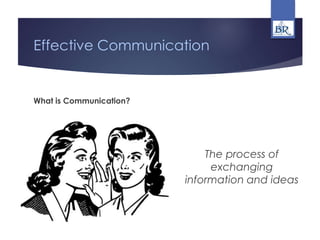
What is Communication?
The process of
exchanging
information and ideas
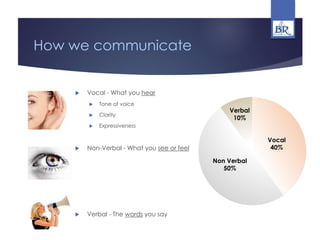
How we communicate
 Vocal - What you hear
 Tone of voice
 Clarity
 Expressiveness
 Non-Verbal - What you see or feel
 Verbal - The words you say
Non Verbal
50%
Verbal
10%
Vocal
40%
How we communicate
I didn’t say he borrowed my book
How we communicate
 Vocal - What you hear
 Tone of voice
 Clarity
 Expressiveness
 Non-Verbal - What you see or feel
 Facial expressions
 Eye contact
 Posture
 Gestures
 Verbal - The words you say
Non Verbal
50%
Verbal
10%
Vocal
40%
4 Elements of effective
communication
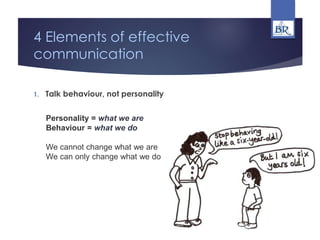
1. Talk behaviour, not personality
Personality = what we are
Behaviour = what we do
We cannot change what we are
We can only change what we do
4 Elements of effective
communication
1. Talk behaviour, not personality
4 Elements of effective
communication
2. Be specific
“I am concerned about your punctuality. You have been 15minutes
later for work for the last 3 mornings. Can you please explain to
me why?”
Instead of
“You have a bad attitude towards your job”
4 Elements of effective
communication
2. Be specific
4 Elements of effective
communication
3. Listen Actively
 Paraphrase – “Listening to you it seems as if…”
 Reflect – “So you are saying you have been trained in this before”
 Silence –
 Questions – “What other possibilities are there”
4 Elements of effective
communication
3. Listen Actively
4 Elements of effective
communication
4. Provide Feedback
 Positive
 Constructive
 Negative
 None
4 Elements of effective
communication
4. Provide Feedback
4 Elements of effective
communication
1. Talk behaviour, NOT Personality
2. Be Specific
3. Listen Actively
4. Provide Feedback
Barriers to effective
communication
 Time
 Lack of interest
 Not focused
 Feeling unwell or tired
 Use of judgement
 Closed mind
 Discomfort with the topic
 Distractions
 Distance
 Other people
When communication gets
difficult
 Sometimes we are faced with situations and people who provoke
a strong response in us.
 It is important to remember that we always have a choice in how
we respond.
Option A
• Defend our opinions
• Prepare our response
• Look for evidence to
support our opinions
• Discount evidence the
contrary
Option B
• Put your opinions on hold
• Listen actively and without
judgement
• Look for new information
• Stay open to changing your
opinion
CHOOSE
When communication gets
difficult
 Steps for pulling back
 Notice your emotional reactions and judgements
 Freeze your reactions and put it aside
 Put your attention back on the other person
When communication gets
difficult
 Steps for pulling back
Essentials of Performance
Management
Leadership is about nurturing and enhancing - Tom Peters
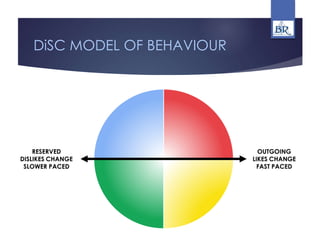
DiSC MODEL OF BEHAVIOUR
OUTGOING
LIKES CHANGE
FAST PACED
RESERVED
DISLIKES CHANGE
SLOWER PACED
DiSC MODEL OF BEHAVIOUR
TASK FOCUSED
PEOPLE FOCUSED
TASK FOCUSED
PEOPLE FOCUSED
DiSC MODEL OF BEHAVIOUR
OUTGOING
LIKES CHANGE
FAST PACED
RESERVED
DISLIKES CHANGE
SLOWER PACED
DiSC MODEL OF BEHAVIOUR
D
The Conductor
Someone who tends to
take charge and make
quick decisions
DOMINANCE
THEY ARE THEY VALUE MAY BE LIMITED BY
Self-confident Results Lack of concern for others
Direct Action Impatience
Driven Authority Insensitivity
Forceful Winning
DiSC MODEL OF BEHAVIOUR
i
THEY ARE THEY VALUE MAY BE LIMITED BY
Enthusiastic Social Recognition Impulsiveness
Charming Collaboration Disorganisation
Optimistic Relationships Lack of follow-through
Talkative Action
The Socialiser
INFLUENCE
The Supporter
STEADINESS
DiSC MODEL OF BEHAVIOUR
S
THEY ARE THEY VALUE MAY BE LIMITED BY
Helpful Stable environments Too accommodating
Supportive of others Collaboration Indecisiveness
Defending others Appreciation Avoids change
Cooperative Opportunities to help
CONSCIENTIOUS
DiSC MODEL OF BEHAVIOUR
C
THEY ARE THEY VALUE MAY BE LIMITED BY
Accurate Knowledge/Data Overly critical
Worrisome Stability Isolates themselves
Detail oriented Quality Over-analyses
Independent Precision
The Analyser
The Conductor
Someone who tends to
take charge and make
quick decisions
The Socialiser
Someone who tends to
seek out others and
interact with and
influence
The Supporter
Someone who tends to
be easy going, gentle
and considerate of
others
The Analyser
Someone who tends to
abide by rules and
pays attention to detail
CONSCIENTIOUS
STEADINESS INFLUENCE
DOMINANCE
TASK
FOCUSED
PEOPLE
FOCUSED
OUTGOINGRESERVED
ROLE PLAY 1 - MANAGER
ROLE PLAY 1 - EMPLOYEE

Essentials of performance management

  • 1.
    Essentials of Performance Management Leadershipis about nurturing and enhancing - Tom Peters
  • 2.
    Housekeeping  Mobile Phones Breaks  Restrooms  Note taking  Class participation  Introductions
  • 4.
    Why is performance managementimportant?  Contributes to the bottom line  Improves employment relationship and communication  Aligns performance with BR Groups values, goals and objectives  Helps maintain high levels of performance  Identifies learning and development needs  Aids in succession planning  Lets employees provide feedback
  • 5.
    What can happen? =Increased labour turnover
  • 6.
    Keys to performance management Communication  Understanding personality differences  Consistency in dealing with issues  Motivation and reward  Focus on helping not punishing
  • 7.
    Effective Communication What isCommunication? The process of exchanging information and ideas
  • 8.
    How we communicate Vocal - What you hear  Tone of voice  Clarity  Expressiveness  Non-Verbal - What you see or feel  Verbal - The words you say Non Verbal 50% Verbal 10% Vocal 40%
  • 9.
    How we communicate Ididn’t say he borrowed my book
  • 10.
    How we communicate Vocal - What you hear  Tone of voice  Clarity  Expressiveness  Non-Verbal - What you see or feel  Facial expressions  Eye contact  Posture  Gestures  Verbal - The words you say Non Verbal 50% Verbal 10% Vocal 40%
  • 11.
    4 Elements ofeffective communication 1. Talk behaviour, not personality Personality = what we are Behaviour = what we do We cannot change what we are We can only change what we do
  • 12.
    4 Elements ofeffective communication 1. Talk behaviour, not personality
  • 13.
    4 Elements ofeffective communication 2. Be specific “I am concerned about your punctuality. You have been 15minutes later for work for the last 3 mornings. Can you please explain to me why?” Instead of “You have a bad attitude towards your job”
  • 14.
    4 Elements ofeffective communication 2. Be specific
  • 15.
    4 Elements ofeffective communication 3. Listen Actively  Paraphrase – “Listening to you it seems as if…”  Reflect – “So you are saying you have been trained in this before”  Silence –  Questions – “What other possibilities are there”
  • 16.
    4 Elements ofeffective communication 3. Listen Actively
  • 17.
    4 Elements ofeffective communication 4. Provide Feedback  Positive  Constructive  Negative  None
  • 18.
    4 Elements ofeffective communication 4. Provide Feedback
  • 19.
    4 Elements ofeffective communication 1. Talk behaviour, NOT Personality 2. Be Specific 3. Listen Actively 4. Provide Feedback
  • 20.
    Barriers to effective communication Time  Lack of interest  Not focused  Feeling unwell or tired  Use of judgement  Closed mind  Discomfort with the topic  Distractions  Distance  Other people
  • 21.
    When communication gets difficult Sometimes we are faced with situations and people who provoke a strong response in us.  It is important to remember that we always have a choice in how we respond. Option A • Defend our opinions • Prepare our response • Look for evidence to support our opinions • Discount evidence the contrary Option B • Put your opinions on hold • Listen actively and without judgement • Look for new information • Stay open to changing your opinion CHOOSE
  • 22.
    When communication gets difficult Steps for pulling back  Notice your emotional reactions and judgements  Freeze your reactions and put it aside  Put your attention back on the other person
  • 23.
  • 24.
    Essentials of Performance Management Leadershipis about nurturing and enhancing - Tom Peters
  • 25.
    DiSC MODEL OFBEHAVIOUR OUTGOING LIKES CHANGE FAST PACED RESERVED DISLIKES CHANGE SLOWER PACED
  • 26.
    DiSC MODEL OFBEHAVIOUR TASK FOCUSED PEOPLE FOCUSED
  • 27.
    TASK FOCUSED PEOPLE FOCUSED DiSCMODEL OF BEHAVIOUR OUTGOING LIKES CHANGE FAST PACED RESERVED DISLIKES CHANGE SLOWER PACED
  • 28.
    DiSC MODEL OFBEHAVIOUR D The Conductor Someone who tends to take charge and make quick decisions DOMINANCE THEY ARE THEY VALUE MAY BE LIMITED BY Self-confident Results Lack of concern for others Direct Action Impatience Driven Authority Insensitivity Forceful Winning
  • 29.
    DiSC MODEL OFBEHAVIOUR i THEY ARE THEY VALUE MAY BE LIMITED BY Enthusiastic Social Recognition Impulsiveness Charming Collaboration Disorganisation Optimistic Relationships Lack of follow-through Talkative Action The Socialiser INFLUENCE
  • 30.
    The Supporter STEADINESS DiSC MODELOF BEHAVIOUR S THEY ARE THEY VALUE MAY BE LIMITED BY Helpful Stable environments Too accommodating Supportive of others Collaboration Indecisiveness Defending others Appreciation Avoids change Cooperative Opportunities to help
  • 31.
    CONSCIENTIOUS DiSC MODEL OFBEHAVIOUR C THEY ARE THEY VALUE MAY BE LIMITED BY Accurate Knowledge/Data Overly critical Worrisome Stability Isolates themselves Detail oriented Quality Over-analyses Independent Precision The Analyser
  • 32.
    The Conductor Someone whotends to take charge and make quick decisions The Socialiser Someone who tends to seek out others and interact with and influence The Supporter Someone who tends to be easy going, gentle and considerate of others The Analyser Someone who tends to abide by rules and pays attention to detail CONSCIENTIOUS STEADINESS INFLUENCE DOMINANCE TASK FOCUSED PEOPLE FOCUSED OUTGOINGRESERVED
  • 33.
    ROLE PLAY 1- MANAGER ROLE PLAY 1 - EMPLOYEE